
 My Inquiry
 My Account


NXP Semiconductors MC33978AES
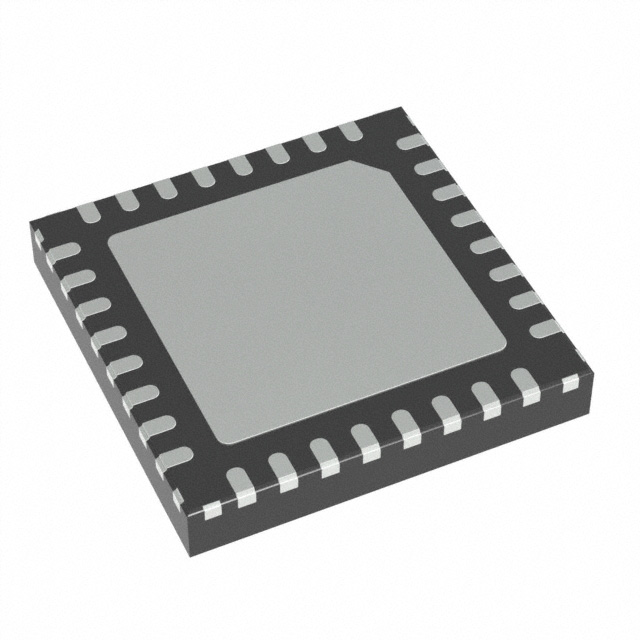
- Part No.:
- MC33978AES
- Manufacturer:
- NXP Semiconductors
- Category:
- Specialized
- Package:
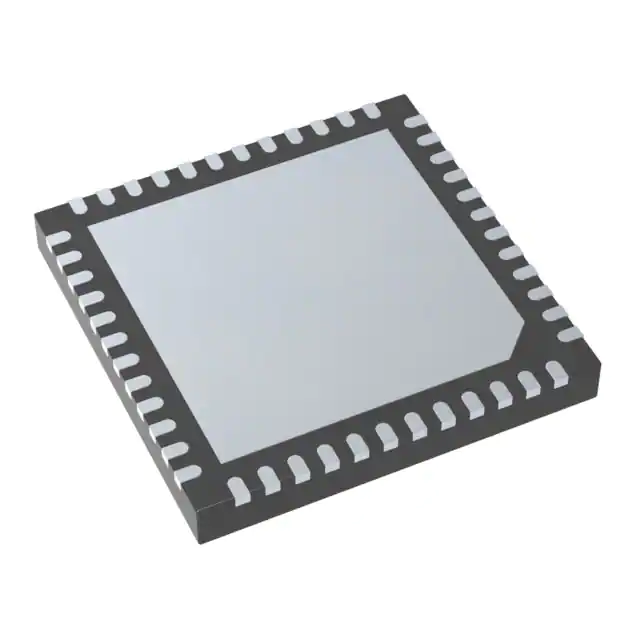
- 32-VFQFN Exposed Pad
- Datasheet:
-
 MC33978AES.pdf
- Description:
- IC INTERFACE SPECIALIZED 32QFN
- Quantity:
- Payment:

- Shipping:

Inventory:1,379
Please send an inquiry. Send us your inquiry, and we will respond immediately.
Product details
Overview
MC33978AES from NXP Semiconductors is a 22-channel automotive-grade switch detection interface IC with programmable wetting current, SPI communication, and integrated 24:1 analog multiplexer. It supports 14 switch-to-ground (SG) and 8 programmable switch (SP) inputs, operates from 4.5 V to 36 V, and delivers 30 μA VBATP quiescent current in low-power mode - enabling reliable keyless entry, door module, and body control unit applications.
For engineers reviewing the MC33978AES datasheet, MC33978AES pinout, MC33978AES application, or MC33978AES equivalent, this page provides verified functional identity, validated QFN-32 pin mapping, confirmed wetting current programmability (2–20 mA), AMUX-based battery/temperature monitoring, and real-world automotive switch interface design context - all extracted from NXP's Rev. 10 (20 August 2024) official product data sheet.
Technical Context
The MC33978AES implements dual-mode switch sensing: Normal mode enables full SPI configuration and wetting current control for contact reliability, while Low-power mode (LPM) uses an internal 192 kHz oscillator to periodically poll inputs with <30 μA VBATP supply current. Its 24:1 analog multiplexer routes SG/SP channel signals, battery voltage (via SG5 ÷6 divider), and die temperature to the AMUX output pin for MCU ADC sampling.
Switch detection uses a 4.0 V comparator threshold with 80–300 mV hysteresis and supports glitch filtering (5–18 μs) and debounce (1.2 ms in LPM). Wake-up capability is provided via WAKE_B (open-drain) and INT_B (open-drain interrupt), both configurable for edge-triggered state-change events across all 22 channels.
Key Specifications
| Parameter | Value and Actual Design Meaning |
|---|---|
| Channels | 22 total: 14 SG (switch-to-ground) + 8 SP (programmable SB/SG) |
| Wetting Current | Programmable 2–20 mA in 8 discrete levels; pulse or continuous operation |
| Supply Range | VBATP = 4.5–36 V (full parametric spec at 6–28 V); VDDQ = 3.0–5.25 V |
| LPM Quiescent Current | IBATP = 30 μA, IDDQ = 10 μA - enables automotive sleep-state compliance |
| AMUX Functionality | 24:1 analog mux with buffered AMUX output; includes SG5 ÷6 battery divider & on-die temp sensor |
| SPI Interface | 3.3 V / 5.0 V compatible; 8 MHz max clock; CS_B/MISO/MOSI/SCLK with 100 pF load timing |
| Operating Temp | -40 °C to +125 °C - qualified for under-hood and body electronics environments |
Pinout & Package
MC33978AES is housed in a 32-pin QFN (WF-Type) package with exposed thermal pad. Pin numbering follows standard QFN top-view layout (pin 1 at top-left corner, counterclockwise). The exposed pad must be connected to GND for thermal and electrical integrity.
| Pin/Terminal | Circuit Role | Design Meaning |
|---|---|---|
| GND (pins 1, 19, 20, 24, 25, 27, 28, 31) | Ground reference | Logic, analog, and power ground; multiple pins reduce impedance and improve noise immunity |
| VBATP (pins 16, 17) | Battery supply input | Primary high-voltage rail (4.5–36 V); requires external reverse-battery protection diode |
| VDDQ (pin 31) | Digital supply | 3.3 V / 5.0 V logic supply; sets SPI I/O voltage level and internal buffer thresholds |
| CS_B, SCLK, MOSI, MISO (pins 26, 27, 28, 30) | SPI interface | Standard 4-wire SPI bus; MISO is tri-state capable; all pins tolerate up to 7.0 V |
| INT_B (pin 29) | Interrupt output | Open-drain signal indicating switch state change; also accepts falling-edge wake-up in LPM |
| WAKE_B (pin 20) | Wake-up control | Open-drain output to enable system power rails; also accepts external wake-up input |
| AMUX (pin 25) | Analog multiplexer output | Buffered analog output for MCU ADC reading of battery voltage (÷6), temperature, or SG/SP signals |
| SP0–SP7 (pins 2–5, 11–14) | Programmable switch inputs | Configurable as switch-to-battery (SB) or switch-to-ground (SG); support wetting current |
| SG0–SG13 (pins 6–10, 15–24) | Switch-to-ground inputs | Dedicated SG pins with ±1.0 V to 36 V input range; each supports selectable wetting/sustain current |
Key Features
| Feature | Design Value |
|---|---|
| 22-channel switch detection | Enables centralized monitoring of door, trunk, hood, seat, and mirror switches without MCU GPIO expansion |
| Programmable wetting current (2–20 mA) | Prevents contact oxidation in harsh automotive environments; configurable per channel via SPI registers |
| Integrated 24:1 analog multiplexer | Reduces external components by consolidating battery voltage (SG5 ÷6), die temperature, and switch analog reads onto one AMUX pin |
| Low-power mode (30 μA IBATP) | Meets OEM requirements for <50 μA sleep current in body control modules and access systems |
| Glitch filtering & debounce | 5–18 μs hardware glitch rejection and 1.2 ms LPM debounce eliminate false triggers from mechanical switch bounce |
| Wide input voltage tolerance | SG/SP pins rated -1.0 V to 36 V with ±2 kV HBM ESD protection - withstands load dump, jump-start, and reverse-battery transients |
Applications
| Door Module Monitoring | Keyless Entry System |
|---|---|
Use Scenario: Real-time detection of door, trunk, and hood open/close states in vehicle body control units. IC Role / Device Role / Timing Role: MC33978AES acts as a dedicated switch interface, replacing MCU GPIOs and providing wetting current to ensure reliable contact closure detection across 22 points. Use Value: Eliminates need for external pull resistors and wetting current sources; reduces BOM count and PCB area while improving long-term contact reliability in humid/corrosive environments. |
Use Scenario: Monitoring push-button and capacitive touch inputs in passive keyless entry (PKE) fob receivers and door handle sensors. IC Role / Device Role / Timing Role: MC33978AES serves as the primary switch event detector, generating INT_B interrupts on button press/release and supporting low-latency polling in LPM between events. Use Value: Enables sub-50 μA system sleep current with fast wake-up (<1 ms), extending fob battery life while maintaining responsive user interaction. |
| Seat Position Control | Roof Module Interface |
Use Scenario: Reading multi-position seat switch arrays (forward/back, recline, height) in premium automotive seating systems. IC Role / Device Role / Timing Role: MC33978AES interfaces with up to 14 SG and 8 SP inputs to capture precise seat position states, feeding status via SPI to the seat ECU. Use Value: Supports programmable wetting current per channel to accommodate varying contact resistance across different switch types and aging profiles - ensuring consistent detection over 15+ year vehicle lifetime. |
Use Scenario: Managing sunroof, moonroof, and panoramic roof switch inputs and feedback signals in roof control modules. IC Role / Device Role / Timing Role: MC33978AES monitors limit switches, obstruction sensors, and manual override buttons using its 22-channel input capability and AMUX for analog feedback (e.g., motor current sense). Use Value: Integrated AMUX eliminates external op-amps and dividers needed for analog monitoring; SG5 ÷6 battery sensing enables accurate voltage regulation during roof actuation sequences. |
Equivalent & Alternatives
The following parts are listed as comparable options for similar switch detection interface applications.
| Alternative Part | Technical Difference | Application Difference | Selection Advice |
|---|---|---|---|
| MC33978AEK | SOICW-EP 32-pin package; AMUX offset ±10 mV (vs. ±15 mV for MC33978AES); identical electrical specs and register map | Better AMUX DC accuracy over full temperature range; preferred for precision battery sensing where offset drift matters | Select MC33978AEK when AMUX offset linearity is critical; choose MC33978AES for space-constrained layouts requiring QFN thermal performance |
| MC34978AES | Same QFN-32 package; reduced operating temperature range (-40 °C to +105 °C vs. +125 °C); identical functionality and pinout | Targeted at non-under-hood applications (e.g., interior modules) where extended junction temperature rating is unnecessary | Choose MC34978AES for cost-sensitive interior applications; retain MC33978AES for engine bay, door modules, or other 125 °C ambient environments |
Compared with MC33978AEK and MC34978AES, the MC33978AES uniquely balances QFN footprint efficiency, full automotive temperature range, and production-ready AMUX accuracy - making it optimal for next-generation compact body controllers where thermal dissipation and layout density are prioritized without sacrificing specification compliance.
Availability
MC33978AES is available at Aetrix Electronics and suitable for automotive body control units, keyless entry systems, and seat position modules requiring stable component supply, AEC-Q100-compliant sourcing, and long-term lifecycle assurance.
Supply support for MC33978AES includes scheduled delivery planning, volume procurement assistance, BOM continuity management, traceable sourcing, and lifecycle availability coordination for OEM customers, industrial embedded developers, connected-device designers, and electronics production programs.
Manufacturer
NXP Semiconductors is a global semiconductor leader specializing in secure connectivity solutions for automotive, industrial, and IoT applications, with deep expertise in automotive-grade mixed-signal ICs.
The MC33978AES belongs to NXP's SBC (System Basis Chip) family, designed specifically for robust, low-power switch interface and system supervision in automotive body electronics - emphasizing contact reliability, ESD resilience, and seamless MCU integration.
FAQ
What is the maximum wetting current supported by the MC33978AES?
The MC33978AES supports programmable wetting current levels of 2, 6, 8, 10, 12, 14, 16, or 20 mA - selectable per channel via SPI configuration registers. This range ensures compatibility with diverse switch contact materials and aging characteristics while preventing excessive power dissipation in low-duty-cycle applications.
Does the MC33978AES support both switch-to-ground and switch-to-battery configurations?
Yes, the MC33978AES supports 14 dedicated switch-to-ground (SG) inputs and 8 programmable switch (SP) inputs that can be configured as either switch-to-ground or switch-to-battery (SB) via SPI register settings. This flexibility allows unified handling of diverse switch topologies found across vehicle domains.
How does the AMUX function work on the MC33978AES?
The MC33978AES integrates a 24:1 analog multiplexer whose output appears on the AMUX pin. It routes selected SG/SP channel voltages, die temperature (8 mV/°C), or battery voltage (via SG5 ÷6 divider) to the MCU's ADC. Selection is controlled via SPI or hardwired pins (SG1/SG2/SG3), enabling flexible analog monitoring without external components.
What is the guaranteed operating temperature range for the MC33978AES?
The MC33978AES is specified for operation from -40 °C to +125 °C ambient temperature, meeting AEC-Q100 Grade 1 requirements. This range qualifies it for under-hood, door module, and other demanding automotive locations where junction temperatures may reach 150 °C during peak load conditions.
Can the MC33978AES wake up from Low-power mode using external events?
Yes, the MC33978AES supports wake-up from Low-power mode via three independent paths: falling edge on WAKE_B (input), falling edge on INT_B (input), or rising/falling edge on CS_B (SPI chip select). All wake-up sources trigger a full device initialization sequence and generate an interrupt to notify the MCU.
MC33978AES Specifications
- Product attributes
- Attribute value
- Manufacturer:
- NXP Semiconductors
- Series:
- -
- Package/Case:
- 32-VFQFN Exposed Pad
- Packaging:
- Tray
- Product Status:
- Active
- Applications:
- Multiple Switch Detection
- Interface:
- SPI
- Voltage - Supply:
- 3V ~ 5.25V
- Supplier Device Package:
- 32-QFN-EP (5x5)
- Grade:
- -
- Qualification:
- -
- Mounting Type:
- Surface Mount, Wettable Flank
MC33978AES FAQ
1.How can I place an order for MC33978AES through Aetrix?
Please submit a Request for Quotation (RFQ) for MC33978AES on Aetrix. Our sales agent will provide a competitive quotation and guide you through the order confirmation once you accept the terms.
2.Are the price and stock information for MC33978AES reliable?
The price and inventory of MC33978AES are updated periodically and may fluctuate due to market conditions. Stock and pricing data are typically refreshed every 24 hours. Quotation validity for MC33978AES is usually 5 days.
3.What payment methods are accepted for MC33978AES?
We accept Wire Transfer, PayPal, Credit Card, Western Union, MoneyGram, and Escrow for MC33978AES transactions.
Note: Certain payment methods may incur a processing fee.
4.How is shipping managed for MC33978AES?
MC33978AES orders can be shipped via leading logistics carriers, including DHL, UPS, FedEx, TNT, or Registered Mail.
Once your MC33978AES order is processed, you will receive an email with the shipment details and tracking number.
Note: Tracking information may take up to 24 hours to appear. Express delivery typically takes 3–5 business days.
5.How can I obtain technical support or documentation for MC33978AES?
For technical support, including MC33978AES datasheets, pinout diagrams, or application guidance, please contact our engineering support team. They can provide detailed documentation and assistance for your MC33978AES requirements.
6.How does Aetrix verify that MC33978AES is sourced from the original manufacturer or authorized distributors?
All MC33978AES products on Aetrix are procured from qualified distributors and authorized channels. Our dedicated quality assurance team conducts strict verification, including traceability checks and, if necessary, third-party testing. This ensures that MC33978AES meets industry standards.
7.What is the process for return or replacement of MC33978AES?
All MC33978AES units undergo pre-shipment inspection (PSI). If there is an issue with MC33978AES, returns or replacements are accepted under the following conditions:
1.Quantity discrepancies, incorrect items, or visible external defects (such as breakage or corrosion), acknowledged by Aetrix.
2.The issue is reported within 90 days of delivery.
3.The MC33978AES part is unused and in its original packaging.
Return procedure for MC33978AES:
1.Submit a request within 90 days.
2.Obtain a Return Material Authorization (RMA) from Aetrix.
MC33978AES Tags
-
NVT4857UKAZ
NXP Semiconductors
-
TCA8418RTWR
Texas Instruments
-
PCA9546APWR
Texas Instruments

-
MD0100N8-G
Microchip Technology
-
PCA9548APW,118
NXP Semiconductors
-
PCA9540BDP,118
NXP Semiconductors
-
PCA9548APWR
Texas Instruments
-
PCA9546APW,118
NXP Semiconductors
-
PTN3360DBS,518
NXP Semiconductors
-
PCA9546ABS,118
NXP Semiconductors
-
PCA9518PWR
Texas Instruments
-
PCA9545APW,118
NXP Semiconductors
Tech Hub

A practical engineering guide to 3.3V and 5V logic compatibility, input thresholds, resistor dividers, translator ICs, MOSFET level shifting, I2C pull-ups, timing limits and power-sequencing risks.

The 74HC595 uses push-pull logic outputs, while the TPIC6B595 uses 50 V open-drain DMOS sinks for higher-power loads. This guide compares timing, current limits, 3.3 V interfacing, load wiring, thermal…

The 74HC595 converts serial data into eight stable parallel outputs. This guide covers pin functions, shift and storage timing, OE and MR behavior, drive-current limits, cascading, voltage compatibilit…

A technical comparison of level-sensitive latches and edge-triggered flip-flops, covering timing windows, setup and hold limits, master–slave operation, time borrowing, race-through, HDL inference and…

A D latch stores one bit while Enable controls when data can pass. This reference covers gate-level operation, truth tables, transparency, setup and hold timing, LE versus OE, common ICs and practical …

An SR latch stores one bit through cross-coupled feedback. This engineering reference covers NOR and NAND implementations, truth tables, forbidden-state recovery, gated operation, switch debouncing, fa…

Latch circuits retain one bit through feedback. This technical reference covers SR and D latches, truth tables, transparency, timing limits, latch-versus-flip-flop behavior, applications and common log…

An engineering guide to LED driver operation, constant-current and constant-voltage outputs, linear and switching topologies, dimming, IC selection, calculations, replacement compatibility, and fault c…

Operational amplifier guide covering op amp basics, feedback, ideal vs real op amps, common configurations, buffer circuits, offset, bias current, gain-bandwidth, slew rate, rail-to-rail limits and sel…

Jumper cables guide covering safe connection order, red and black clamp placement, final ground connection, cable gauge, length, clamp quality, copper vs CCA cables, jump starter comparison and battery…


