
 My Inquiry
 My Account


NXP Semiconductors MC33AR6000BGT
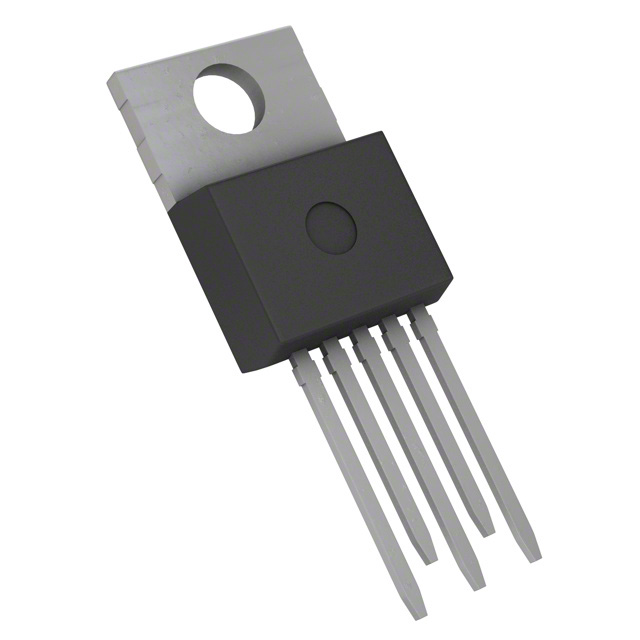
- Part No.:
- MC33AR6000BGT
- Manufacturer:
- NXP Semiconductors
- Category:
- Special Purpose Regulators
- Package:
- TO-220-5
- Datasheet:
-
 MC33AR6000BGT.pdf
- Description:
- MC33AR6000BGT - Alternator Regul
- Quantity:
- Payment:

- Shipping:

Inventory:1,498
Please send an inquiry. Send us your inquiry, and we will respond immediately.
Product details
Overview
MC33AR6000BGT from NXP Semiconductors is an automotive alternator regulator IC with integrated high-side MOSFET, internal freewheeling diode, and LIN 2.1 physical layer interface. It regulates battery voltage (10.6–16 V setpoint), delivers up to 12.0 A excitation current to the rotor coil, and supports load response control (LRC) for dynamic engine-load compensation in 12 V vehicle electrical systems.
For engineers reviewing the MC33AR6000BGT datasheet, MC33AR6000BGT pinout, MC33AR6000BGT application, or MC33AR6000BGT equivalent, this page provides verified functional identity, TO-220 package mapping, LIN-configurable regulation parameters, thermal shutdown behavior at 170 °C, and confirmed alternatives for automotive alternator control designs.
Technical Context
The MC33AR6000BGT implements a digital voltage regulation loop using phase-synchronized sampling of stator winding voltage (PH pin) to determine alternator speed and enable self-start detection. Its high-side field driver uses charge-pump gate control and integrates overcurrent protection with 8–13.5 A short-circuit threshold and thermal shutdown at 170 °C with 10 °C hysteresis.
LIN communication operates per ISO 17987-4 (v2.1), supporting configurable frame sets (11 variants via OTP) for bidirectional parameter programming - including regulation voltage, LRC ramp time, excitation current limit, and blind zone settings - and status reporting of measured battery voltage, die temperature, rotor current, and alternator RPM.
Key Specifications
| Parameter | Value and Actual Design Meaning |
|---|---|
| Regulation voltage range | 10.6 V to 16.0 V - programmable setpoint for battery charging across wide temperature and load conditions |
| Excitation current capability | Up to 12.0 A - sufficient for high-output automotive alternators with rotor coil resistance down to ~1 Ω |
| LIN interface standard | LIN 2.1 physical layer - ensures interoperability with ECU master nodes without external transceiver |
| Operating junction temperature | −40 °C to +125 °C - validated for under-hood mounting on alternator housing |
| RDS(on) (high-side MOSFET) | ≤100 mΩ at TJ = 150 °C - limits conduction loss and thermal rise during sustained excitation |
| Regulation frequency | 170–230 Hz - enables fast transient response to load changes while avoiding audible noise |
| Thermal shutdown threshold | 170 °C with 10 °C hysteresis - protects against latch-up during overload or cooling failure |
Pinout & Package
MC33AR6000BGT is supplied in a TO-220 package with exposed tab (pin 3 GND thermally connected to tab), rated for −40 °C to +125 °C ambient operation. The device has five terminals, all electrically defined and validated per NXP datasheet Rev. 5.2.
| Pin/Terminal | Circuit Role | Design Meaning |
|---|---|---|
| 1 - EXC | High-side output | Drives rotor excitation coil; integrates freewheeling path for energy recirculation during PWM off-time |
| 2 - B+A | Main power supply | Connects to vehicle battery (+); supplies internal circuitry and serves as regulation feedback reference |
| 3 - GND | Power ground | Common return for power stage and logic; thermally coupled to TO-220 tab for heat dissipation |
| 4 - BUS | LIN bus interface | Single-wire LIN physical layer I/O; compliant with ISO 17987-4 v2.1, supports wake-up and diagnostics |
| 5 - PH | Phase sensing input | Monitors stator winding AC signal to derive alternator speed, detect self-start condition, and trigger boost |
Key Features
| Feature | Design Value |
|---|---|
| Integrated high-side field driver | Eliminates need for external MOSFET and gate driver, reducing BOM count and PCB footprint in alternator modules |
| Programmable LRC and return LRC | Enables adaptive voltage response to sudden load steps (e.g., HVAC compressor engagement) without ECU intervention |
| OTP configuration | One-time programmable fuses allow factory customization of LIN frame version, voltage thresholds, and fault filters |
| Real-time diagnostic reporting | LIN-transmitted data includes measured excitation current, die temperature, battery voltage, and alternator RPM |
| Robust automotive qualification | Meets ISO 7637-2 pulse immunity (Pulse 1/2a/3a/3b), ±8 kV HBM ESD, and AEC-Q100 Grade 0 requirements |
Applications
| Engine Start-Stop Systems | Conventional 12 V Alternators |
|---|---|
Use Scenario: Regulates battery voltage during repeated engine cranking and restart cycles in micro-hybrid vehicles. IC Role / Device Role / Timing Role: High-side excitation controller with self-start detection via PH pin and LIN-synchronized voltage setpoint updates. Use Value: Maintains stable 12.8 V battery voltage during stop phases and prevents deep discharge during frequent starts. |
Use Scenario: Controls field current in belt-driven alternators for passenger cars and light commercial vehicles. IC Role / Device Role / Timing Role: Primary voltage regulator with integrated diagnostics, replacing discrete transistor-based regulators. Use Value: Reduces system cost by integrating MOSFET, diode, LIN PHY, and ADC into single TO-220 package. |
| Electric Power Steering Support | Onboard Charger Auxiliary Regulation |
Use Scenario: Supplies stable excitation during high-current EPS motor assist events that cause battery sag. IC Role / Device Role / Timing Role: LRC-enabled regulator responding to PH-derived speed and LIN-commanded voltage boost. Use Value: Prevents EPS torque reduction by maintaining ≥12.2 V battery voltage during 80 A+ EPS peak loads. |
Use Scenario: Provides regulated auxiliary power for onboard chargers in PHEVs where alternator supplies non-propulsion loads. IC Role / Device Role / Timing Role: Standalone regulator in dual-battery architectures, communicating status via LIN to vehicle gateway. Use Value: Enables coordinated charging management without requiring full CAN integration or additional microcontroller. |
Equivalent & Alternatives
The following parts are listed as comparable options for similar alternator regulator applications.
| Alternative Part | Technical Difference | Application Difference | Selection Advice |
|---|---|---|---|
| MC33AR6001BGT | Same TO-220 package and pinout; differs only in OTP configuration - pre-programmed for LIN v2.1 Version D frames with IEXC reporting enabled | Optimized for systems requiring real-time excitation current telemetry in TxFrame 1 (6-bit resolution) | Select MC33AR6001BGT when LIN frame compatibility with existing ECU firmware mandates Version D messaging and IEXC readback |
| TL866A | Discrete solution: separate LIN transceiver + high-side switch + shunt-based current sense; no integrated regulation loop or PH input | Requires external MCU for closed-loop control and lacks self-start detection or thermal compensation | Choose TL866A only for legacy designs where MC33AR6000BGT's integrated architecture conflicts with existing hardware partitioning |
Compared with MC33AR6000BGT, MC33AR6001BGT offers plug-compatible hardware with preconfigured LIN messaging but less flexibility in field-programmable parameters, while TL866A demands significant additional components and firmware development to achieve comparable functionality.
Availability
MC33AR6000BGT is available at Aetrix Electronics and suitable for automotive alternator control, engine start-stop systems, and electric power steering support requiring stable component supply across extended temperature ranges and long production lifecycles.
Supply support for MC33AR6000BGT includes scheduled delivery planning, volume procurement assistance, BOM continuity management, traceable sourcing, and lifecycle availability coordination for OEM customers, industrial embedded developers, connected-device designers, and electronics production programs.
Manufacturer
NXP Semiconductors is a global semiconductor company specializing in secure connectivity solutions for automotive, industrial, and IoT applications, with leadership in automotive power management and communication interfaces.
The AR6000 product line was designed specifically for intelligent alternator regulation in modern 12 V vehicle architectures, integrating LIN control, thermal resilience, and diagnostic telemetry to replace electromechanical and discrete electronic regulators.
FAQ
What is the maximum excitation current supported by the MC33AR6000BGT?
The MC33AR6000BGT supports up to 12.0 A of continuous excitation current through its integrated high-side MOSFET. This rating is validated under thermal conditions up to TJ = 150 °C, with current limiting activated at 8.0–13.5 A depending on OTP configuration. The device includes overcurrent protection that disables EXC output until the next regulation cycle.
Does the MC33AR6000BGT require an external freewheeling diode?
No, the MC33AR6000BGT integrates a freewheeling diode between the EXC and GND pins. This internal diode handles energy recirculation from the rotor coil during PWM off-time, eliminating the need for an external component and reducing board space and assembly cost in alternator module designs.
How does the MC33AR6000BGT achieve self-start detection?
The MC33AR6000BGT uses the PH pin to monitor stator winding AC voltage. When phase amplitude crosses defined low/high thresholds successively, the internal phase detector confirms rotation and triggers self-start mode. This allows regulation to begin without external crankshaft position signals, enabling standalone alternator operation.
Can the MC33AR6000BGT operate without a LIN master present?
Yes, the MC33AR6000BGT supports standalone "self-start" mode where regulation begins automatically based on PH input and default OTP-programmed parameters (e.g., 13.8 V setpoint). LIN communication is optional for advanced configuration and diagnostics but not required for basic voltage regulation functionality.
What thermal protection features are implemented in the MC33AR6000BGT?
The MC33AR6000BGT includes thermal shutdown at 170 °C with 10 °C hysteresis, plus thermal compensation of regulation setpoint and current limit thresholds. These features prevent damage during overload or cooling failure and maintain stable output across under-hood temperature extremes from −40 °C to +125 °C ambient.
MC33AR6000BGT Specifications
- Product attributes
- Attribute value
- Manufacturer:
- NXP Semiconductors
- Series:
- -
- Package/Case:
- TO-220-5
- Packaging:
- Bulk
- Product Status:
- Active
- Applications:
- Alternator, 3-Phase
- Voltage - Input:
- -
- Number of Outputs:
- -
- Voltage - Output:
- -
- Operating Temperature:
- -40°C ~ 125°C (TA)
- Grade:
- Automotive
- Qualification:
- -
- Mounting Type:
- Through Hole
- Supplier Device Package:
- TO-220-5
MC33AR6000BGT FAQ
1.How can I place an order for MC33AR6000BGT through Aetrix?
Please submit a Request for Quotation (RFQ) for MC33AR6000BGT on Aetrix. Our sales agent will provide a competitive quotation and guide you through the order confirmation once you accept the terms.
2.Are the price and stock information for MC33AR6000BGT reliable?
The price and inventory of MC33AR6000BGT are updated periodically and may fluctuate due to market conditions. Stock and pricing data are typically refreshed every 24 hours. Quotation validity for MC33AR6000BGT is usually 5 days.
3.What payment methods are accepted for MC33AR6000BGT?
We accept Wire Transfer, PayPal, Credit Card, Western Union, MoneyGram, and Escrow for MC33AR6000BGT transactions.
Note: Certain payment methods may incur a processing fee.
4.How is shipping managed for MC33AR6000BGT?
MC33AR6000BGT orders can be shipped via leading logistics carriers, including DHL, UPS, FedEx, TNT, or Registered Mail.
Once your MC33AR6000BGT order is processed, you will receive an email with the shipment details and tracking number.
Note: Tracking information may take up to 24 hours to appear. Express delivery typically takes 3–5 business days.
5.How can I obtain technical support or documentation for MC33AR6000BGT?
For technical support, including MC33AR6000BGT datasheets, pinout diagrams, or application guidance, please contact our engineering support team. They can provide detailed documentation and assistance for your MC33AR6000BGT requirements.
6.How does Aetrix verify that MC33AR6000BGT is sourced from the original manufacturer or authorized distributors?
All MC33AR6000BGT products on Aetrix are procured from qualified distributors and authorized channels. Our dedicated quality assurance team conducts strict verification, including traceability checks and, if necessary, third-party testing. This ensures that MC33AR6000BGT meets industry standards.
7.What is the process for return or replacement of MC33AR6000BGT?
All MC33AR6000BGT units undergo pre-shipment inspection (PSI). If there is an issue with MC33AR6000BGT, returns or replacements are accepted under the following conditions:
1.Quantity discrepancies, incorrect items, or visible external defects (such as breakage or corrosion), acknowledged by Aetrix.
2.The issue is reported within 90 days of delivery.
3.The MC33AR6000BGT part is unused and in its original packaging.
Return procedure for MC33AR6000BGT:
1.Submit a request within 90 days.
2.Obtain a Return Material Authorization (RMA) from Aetrix.
MC33AR6000BGT Tags
-
TPS51206DSQR
Texas Instruments
-
TPS51200DRCR
Texas Instruments
-
TPS51200DRCT
Texas Instruments
-
TPS62740DSSR
Texas Instruments
-
TPS51100DGQR
Texas Instruments
-
NCP51200MNTXG
onsemi
-
NCP51400MNTXG
onsemi
-
RT9026GSP
Richtek USA Inc.
-
LP2998MRX/NOPB
Texas Instruments
-
TPS51200QDRCRQ1
Texas Instruments
-
DPA423GN-TL
Power Integrations
-
LM10011SD/NOPB
Texas Instruments
Tech Hub

A practical engineering guide to 3.3V and 5V logic compatibility, input thresholds, resistor dividers, translator ICs, MOSFET level shifting, I2C pull-ups, timing limits and power-sequencing risks.

The 74HC595 uses push-pull logic outputs, while the TPIC6B595 uses 50 V open-drain DMOS sinks for higher-power loads. This guide compares timing, current limits, 3.3 V interfacing, load wiring, thermal…

The 74HC595 converts serial data into eight stable parallel outputs. This guide covers pin functions, shift and storage timing, OE and MR behavior, drive-current limits, cascading, voltage compatibilit…

A technical comparison of level-sensitive latches and edge-triggered flip-flops, covering timing windows, setup and hold limits, master–slave operation, time borrowing, race-through, HDL inference and…

A D latch stores one bit while Enable controls when data can pass. This reference covers gate-level operation, truth tables, transparency, setup and hold timing, LE versus OE, common ICs and practical …

An SR latch stores one bit through cross-coupled feedback. This engineering reference covers NOR and NAND implementations, truth tables, forbidden-state recovery, gated operation, switch debouncing, fa…

Latch circuits retain one bit through feedback. This technical reference covers SR and D latches, truth tables, transparency, timing limits, latch-versus-flip-flop behavior, applications and common log…

An engineering guide to LED driver operation, constant-current and constant-voltage outputs, linear and switching topologies, dimming, IC selection, calculations, replacement compatibility, and fault c…

Operational amplifier guide covering op amp basics, feedback, ideal vs real op amps, common configurations, buffer circuits, offset, bias current, gain-bandwidth, slew rate, rail-to-rail limits and sel…

Jumper cables guide covering safe connection order, red and black clamp placement, final ground connection, cable gauge, length, clamp quality, copper vs CCA cables, jump starter comparison and battery…


