
 My Inquiry
 My Account


NXP Semiconductors MC34017A-3P
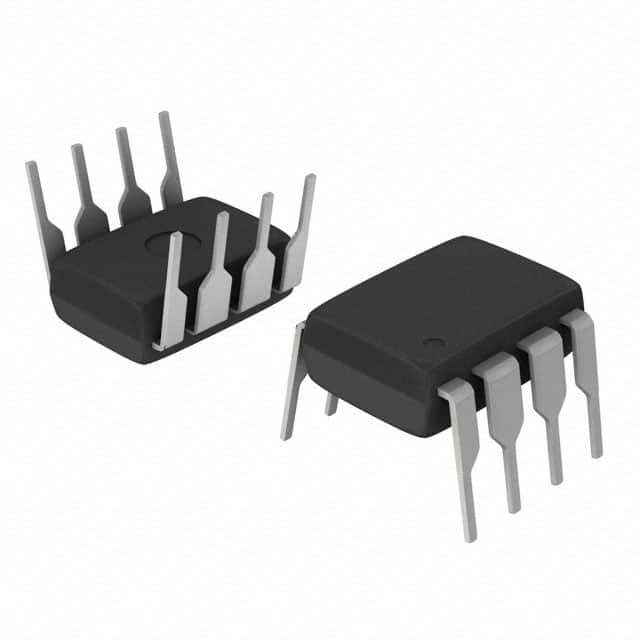
- Part No.:
- MC34017A-3P
- Manufacturer:
- NXP Semiconductors
- Category:
- Telecom
- Package:
- 8-DIP (0.300", 7.62mm)
- Datasheet:
-
 MC34017A-3P.pdf
- Description:
- IC TELECOM INTERFACE 8DIP
- Quantity:
- Payment:

- Shipping:

Inventory:1,010
Please send an inquiry. Send us your inquiry, and we will respond immediately.
Product details
Overview
MC34017A-3P from Freescale Semiconductor is a bipolar linear telephone tone ringer IC with integrated diode bridge, transient protection, and push-pull piezoelectric driver. It delivers 500 Hz high/low tone output with 23 Hz warble rate, 37 VPP output swing, and operates from -20°C to 60°C in 8-lead plastic DIP. Used in landline telephones and analog PBX terminals for audible ring indication.
For engineers reviewing the MC34017A-3P datasheet, MC34017A-3P pinout, MC34017A-3P application, or MC34017A-3P equivalent, key selection criteria include ringing start/stop voltage (34–41 VDC / 14–22 VDC), RS threshold clamp (1.5 V), RC oscillator tuning range (150–300 kΩ + 400–3000 pF), and Class A/B ringer equivalence compliance.
Technical Context
The MC34017A-3P implements a relaxation oscillator controlled by external RC network on Terminal 6 (RC), generating fO = 2.0 kHz to produce 400 Hz / 500 Hz tones at RO1/RO2 with 25 Hz warble frequency (fO/160). Its internal diode bridge rectifies AC line voltage, feeding an on-chip shunt regulator that limits RI-to-RG voltage to ~22 V and triggers SCR overcurrent protection above 50 mA.
Input detection uses current mirroring through RS (Terminal 5) with 1.2 V comparator threshold and 1.5 V internal clamp; R3 sets ringing sensitivity while C3 filters dial pulse transients. The push-pull output stage delivers ±20 mA into piezo loads with 50% duty cycle and >16 kΩ ringing impedance at 15 Hz.
Key Specifications
| Parameter | Value and Actual Design Meaning |
|---|---|
| Ringing Output Frequency | High tone: 404 Hz; low tone: 505 Hz; warble: 25 Hz - matches EIA-470B Class B ringer signature requirements |
| Ringing Start Voltage | +34 to +41 VDC / –34 to –41 VDC - ensures reliable activation across global PSTN line conditions |
| Ringing Stop Voltage | 14–16 VDC - provides hysteresis to prevent chatter during decaying ring signal |
| Output Voltage Swing | 37 VPP at VI ≥ 60 VRMS - sufficient to drive standard piezoceramic transducers without external amplification |
| RS Threshold Clamp | 1.5 V - protects comparator input from overvoltage during line surges |
| Maximum AC Input Current | 20 mA RMS - defines thermal design margin under sustained ringing load |
| Operating Temperature | –20°C to +60°C - validated for indoor residential and office telephone equipment environments |
Pinout & Package
MC34017A-3P is housed in an 8-lead plastic DIP package (suffix P), per Freescale package drawing 98A42420B, with 0.3-inch body width and 0.1-inch lead pitch.
| Pin/Terminal | Circuit Role | Design Meaning |
|---|---|---|
| 1, 8 (AC1, AC2) | Full-wave diode bridge inputs | Accepts AC ringing signal from telephone line; handles ±300 mA transient peaks |
| 2, 3 (RO1, RO2) | Tone ringer output terminals | Push-pull drive outputs delivering 37 VPP, ±20 mA to piezoelectric transducer |
| 4 (RI) | Positive supply terminal | Internally regulated ~22 V DC supply for oscillator, dividers, and output buffer |
| 5 (RS) | Threshold comparator input | Senses mirrored diode bridge current via external R3; clamped at 1.5 V |
| 6 (RC) | Oscillator timing terminal | Connects external R2/C2 network to set fO = 2.0 kHz for 500 Hz tone mode |
| 7 (RG) | Negative supply / bridge common | Reference node for all voltages; connects to telephone line ground reference |
Key Features
| Feature | Design Value |
|---|---|
| Integrated diode bridge + SCR protection | Eliminates need for 6 external diodes and discrete overcurrent protection in telephone line interface |
| Direct piezo drive with push-pull output | Enables single-chip ringer solution without external transformer or amplifier stages |
| Programmable oscillator via RC terminal | Allows precise tone frequency selection (400/505 Hz) using standard resistor/capacitor values |
| Rotary dial transient rejection | Capacitive filtering at RS input prevents false triggering from pulse-dialing noise |
| Class A/B ringer equivalence compliance | Meets EIA-470B impedance signatures (≥28 kΩ off-hook, >16 kΩ on-ring) without external compensation |
Applications
| Residential Corded Telephone | Analog PBX Extension Terminal |
|---|---|
|
Use Scenario: Standalone corded phone requiring audible ring indication on PSTN line. IC Role / Device Role / Timing Role: Primary tone generator and line-powered ringer driver. Use Value: Delivers 500 Hz dual-tone warble compliant with North American ringer standards using only two external capacitors and one resistor. |
Use Scenario: Wall-mounted analog extension in corporate PBX system with shared line voltage. IC Role / Device Role / Timing Role: Line-powered ringer subsystem with built-in transient suppression. Use Value: Withstands repeated 1500 V transients and maintains >12 kΩ ringing impedance at 23 Hz, ensuring compatibility with legacy PBX ring generators. |
| Hotel/Multi-line Phone System | Emergency Alert Device Interface |
|
Use Scenario: Multi-station hotel phone system where each unit must respond independently to ring signals. IC Role / Device Role / Timing Role: Isolated ringer circuit with programmable start/stop thresholds. Use Value: Adjustable R3 resistor enables consistent ring activation across varying line lengths and loop resistances (up to 3 km). |
Use Scenario: Low-power emergency alert device connected to analog telephone line for remote notification. IC Role / Device Role / Timing Role: Self-powered audible alarm generator activated by line voltage presence. Use Value: Draws zero quiescent current when idle; activates only above 34 VDC threshold, eliminating false alarms from line noise. |
Equivalent & Alternatives
The following parts are listed as comparable options for similar telephone tone ringer applications.
| Alternative Part | Technical Difference | Application Difference | Selection Advice |
|---|---|---|---|
| MC34017AD | Same die, SOIC-8 package (98A42564B); higher thermal resistance (θJA = 120°C/W vs. 70°C/W for DIP) | Preferred for surface-mount production; requires PCB layout revision for footprint change | Select MC34017AD only when automated SMT assembly and space constraints justify requalification. |
| SL13017A | Functionally identical architecture; updated process with tighter VSTART tolerance (±1.5 V vs. ±3.5 V) and lower RS leakage | Drop-in replacement for new designs; not recommended for field repair of legacy MC34017A-3P units due to minor bias shifts | Choose SL13017A for new designs requiring improved temperature stability and reduced component count in signature test circuits. |
Compared with MC34017AD and SL13017A, the MC34017A-3P offers proven reliability in through-hole telephony hardware, lower thermal resistance for continuous ringing, and full documentation traceability to Freescale Rev 3.0 (2006), making it preferred for long-lifecycle maintenance and repair programs.
Availability
MC34017A-3P is available at Aetrix Electronics and suitable for residential telephony, analog PBX extensions, multi-line hotel systems, and emergency alert interfaces requiring stable component supply and long-term obsolescence management.
Supply support for MC34017A-3P includes scheduled delivery planning, volume procurement assistance, BOM continuity management, traceable sourcing, and lifecycle availability coordination for OEM customers, industrial embedded developers, connected-device designers, and electronics production programs.
Manufacturer
Freescale Semiconductor was a leading designer of analog and mixed-signal ICs for automotive, industrial, and communications applications before its acquisition by NXP in 2015.
The MC34017A-3P belongs to Freescale's legacy telephone interface product line, engineered specifically for Class A/B ringer compliance, line-powered operation, and robust transient immunity in analog telephony equipment.
FAQ
What is the exact ringing frequency output of the MC34017A-3P?
The MC34017A-3P generates a high tone of 404 Hz and low tone of 505 Hz, alternating at a warble rate of 25 Hz. This is achieved by configuring the internal oscillator to 2.0 kHz (fO) and dividing by 4 and 5 respectively, with warble set to fO/160. These frequencies meet EIA-470B Class B ringer equivalence requirements and are confirmed in Table 3 of the Rev 3.0 datasheet.
Does the MC34017A-3P require external power or operate from the telephone line?
The MC34017A-3P operates entirely from the AC ringing signal on the telephone line-no external DC supply is needed. Its internal diode bridge rectifies the line voltage, feeding a shunt regulator that supplies ~22 V DC to the oscillator, frequency dividers, and output stage. This self-powered architecture is fundamental to the MC34017A-3P design and eliminates the need for auxiliary power sources in telephone hardware.
How does the MC34017A-3P reject rotary dial transients?
The MC34017A-3P rejects rotary dial transients via RC filtering at the RS terminal (Terminal 5), where capacitor C3 integrates the mirrored diode bridge current. Pulse dialing produces short-duration current spikes insufficient to charge C3 to the 1.2 V comparator threshold, preventing false triggering. This behavior is explicitly verified in the "Typical Applications" section and Test 1c of the MC34017A-3P datasheet.
What external components are mandatory for basic MC34017A-3P operation?
Four external components are mandatory for functional MC34017A-3P operation: R3 (5–18 kΩ) sets ringing sensitivity at RS; C2 (2000 pF) and R2 (150–300 kΩ) configure the 2.0 kHz oscillator on RC; and C3 (0.5–5.0 µF) filters RS input for transient rejection. These values are specified in the "External Components" table and Figure 1 of the MC34017A-3P datasheet.
Is the MC34017A-3P RoHS-compliant and lead-free?
The MC34017A-3P was manufactured prior to RoHS enforcement and is not inherently RoHS-compliant or lead-free. Freescale documented Pb-free versions separately (e.g., MC34017APR2), but the P-suffix DIP variant referenced in Rev 3.0 datasheet uses standard SnPb leads. For compliance-critical designs, consult NXP's post-acquisition cross-reference guides or consider SL13017A as a RoHS-compliant functional alternative.
MC34017A-3P Specifications
- Product attributes
- Attribute value
- Manufacturer:
- NXP Semiconductors
- Series:
- -
- Package/Case:
- 8-DIP (0.300", 7.62mm)
- Packaging:
- Tube
- Product Status:
- Obsolete
- Function:
- Tone Ringer
- Interface:
- -
- Number of Circuits:
- 1
- Voltage - Supply:
- 5V
- Current - Supply:
- 20mA
- Power (Watts):
- 1 W
- Operating Temperature:
- -20°C ~ 60°C
- Grade:
- -
- Qualification:
- -
- Mounting Type:
- Through Hole
- Supplier Device Package:
- 8-PDIP
MC34017A-3P FAQ
1.How can I place an order for MC34017A-3P through Aetrix?
Please submit a Request for Quotation (RFQ) for MC34017A-3P on Aetrix. Our sales agent will provide a competitive quotation and guide you through the order confirmation once you accept the terms.
2.Are the price and stock information for MC34017A-3P reliable?
The price and inventory of MC34017A-3P are updated periodically and may fluctuate due to market conditions. Stock and pricing data are typically refreshed every 24 hours. Quotation validity for MC34017A-3P is usually 5 days.
3.What payment methods are accepted for MC34017A-3P?
We accept Wire Transfer, PayPal, Credit Card, Western Union, MoneyGram, and Escrow for MC34017A-3P transactions.
Note: Certain payment methods may incur a processing fee.
4.How is shipping managed for MC34017A-3P?
MC34017A-3P orders can be shipped via leading logistics carriers, including DHL, UPS, FedEx, TNT, or Registered Mail.
Once your MC34017A-3P order is processed, you will receive an email with the shipment details and tracking number.
Note: Tracking information may take up to 24 hours to appear. Express delivery typically takes 3–5 business days.
5.How can I obtain technical support or documentation for MC34017A-3P?
For technical support, including MC34017A-3P datasheets, pinout diagrams, or application guidance, please contact our engineering support team. They can provide detailed documentation and assistance for your MC34017A-3P requirements.
6.How does Aetrix verify that MC34017A-3P is sourced from the original manufacturer or authorized distributors?
All MC34017A-3P products on Aetrix are procured from qualified distributors and authorized channels. Our dedicated quality assurance team conducts strict verification, including traceability checks and, if necessary, third-party testing. This ensures that MC34017A-3P meets industry standards.
7.What is the process for return or replacement of MC34017A-3P?
All MC34017A-3P units undergo pre-shipment inspection (PSI). If there is an issue with MC34017A-3P, returns or replacements are accepted under the following conditions:
1.Quantity discrepancies, incorrect items, or visible external defects (such as breakage or corrosion), acknowledged by Aetrix.
2.The issue is reported within 90 days of delivery.
3.The MC34017A-3P part is unused and in its original packaging.
Return procedure for MC34017A-3P:
1.Submit a request within 90 days.
2.Obtain a Return Material Authorization (RMA) from Aetrix.
MC34017A-3P Tags

-
LMC567CMX/NOPB
Texas Instruments
-
LM567CMX/NOPB
Texas Instruments
-
LM567CM/NOPB
Texas Instruments
-
VSC8531XMW-02
Microchip Technology
-
VSC8531XMW-05
Microchip Technology

-
GPY115C0VI
MaxLinear, Inc.
-
SI32185-A-FMR
Skyworks Solutions Inc.
-
VSC8541XMV-05
Microchip Technology
-
SI32178-B-FM1R
Skyworks Solutions Inc.
-
GPY215C0VI
MaxLinear, Inc.
-
CPC7514ZTR
Littelfuse Inc.
-
VSC8502XML-03
Microchip Technology
Tech Hub

A practical engineering guide to 3.3V and 5V logic compatibility, input thresholds, resistor dividers, translator ICs, MOSFET level shifting, I2C pull-ups, timing limits and power-sequencing risks.

The 74HC595 uses push-pull logic outputs, while the TPIC6B595 uses 50 V open-drain DMOS sinks for higher-power loads. This guide compares timing, current limits, 3.3 V interfacing, load wiring, thermal…

The 74HC595 converts serial data into eight stable parallel outputs. This guide covers pin functions, shift and storage timing, OE and MR behavior, drive-current limits, cascading, voltage compatibilit…

A technical comparison of level-sensitive latches and edge-triggered flip-flops, covering timing windows, setup and hold limits, master–slave operation, time borrowing, race-through, HDL inference and…

A D latch stores one bit while Enable controls when data can pass. This reference covers gate-level operation, truth tables, transparency, setup and hold timing, LE versus OE, common ICs and practical …

An SR latch stores one bit through cross-coupled feedback. This engineering reference covers NOR and NAND implementations, truth tables, forbidden-state recovery, gated operation, switch debouncing, fa…

Latch circuits retain one bit through feedback. This technical reference covers SR and D latches, truth tables, transparency, timing limits, latch-versus-flip-flop behavior, applications and common log…

An engineering guide to LED driver operation, constant-current and constant-voltage outputs, linear and switching topologies, dimming, IC selection, calculations, replacement compatibility, and fault c…

Operational amplifier guide covering op amp basics, feedback, ideal vs real op amps, common configurations, buffer circuits, offset, bias current, gain-bandwidth, slew rate, rail-to-rail limits and sel…

Jumper cables guide covering safe connection order, red and black clamp placement, final ground connection, cable gauge, length, clamp quality, copper vs CCA cables, jump starter comparison and battery…


