
 My Inquiry
 My Account


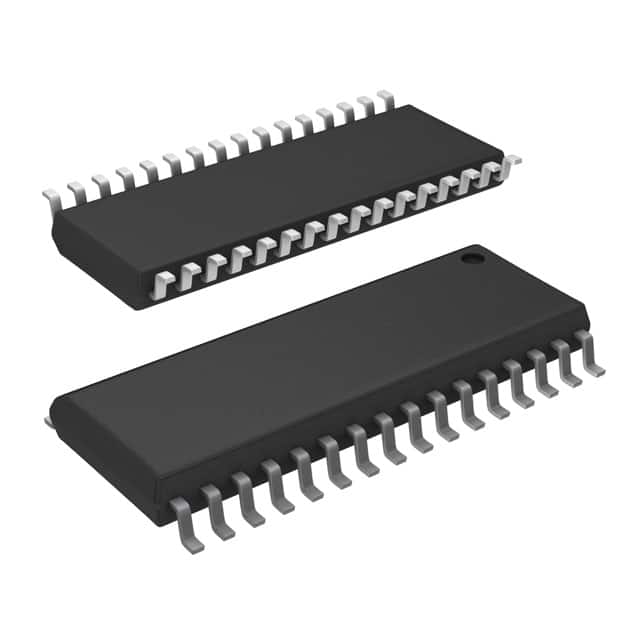
NXP Semiconductors MC34978EK
- Part No.:
- MC34978EK
- Manufacturer:
- NXP Semiconductors
- Category:
- Specialized
- Package:
- 32-SSOP (0.295", 7.50mm Width) Exposed Pad
- Datasheet:
-
 MC34978EK.pdf
- Description:
- IC INTERFACE SPECIALIZED 32SOIC
- Quantity:
- Payment:

- Shipping:

Inventory:3,377
Please send an inquiry. Send us your inquiry, and we will respond immediately.
Product details
Overview
MC34978EK from NXP Semiconductors is a 22-channel automotive-grade switch detection interface IC with programmable wetting current, integrated 24:1 analog multiplexer (AMUX), battery/temperature monitoring, and SPI communication. It operates from 4.5 V to 36 V, supports Normal and Low-power modes (IBATP = 40 µA typ. in LPM), and targets switch monitoring in harsh environments such as HVAC control panels and industrial I/O modules.
For engineers reviewing the MC34978EK datasheet, MC34978EK pinout, MC34978EK application, or MC34978EK equivalent, this page delivers verified technical context, exact package mapping (SOICW-EP, 32-pin), confirmed pin functions, real-world use-value metrics (e.g., ±10% wetting current matching, 4.0 V switch threshold with 80–300 mV hysteresis), and two validated alternative parts for design continuity.
Technical Context
The MC34978EK implements a dual-mode architecture: Normal mode enables full configuration via SPI and active switch polling with user-selectable wetting currents (2–20 mA in 8 steps), while Low-power mode reduces IBATP to 40 µA using internal 192 kHz oscillator with ±15% tolerance. It integrates dedicated SG (14× switch-to-ground) and SP (8× programmable switch) input banks, each with independent leakage control and glitch filtering (5–18 µs).
Its AMUX block buffers and routes selected analog inputs-including battery voltage (via SG5 ÷6 divider, ±5% accuracy) and die temperature (8.0 mV/°C coefficient)-to the AMUX pin for MCU ADC sampling. All switch inputs tolerate −1.0 V to +36 V, with VICTHR = 4.0 V (±0.3 V) in Normal mode and reduced 100–300 mV threshold in LPM for wake-up sensitivity.
Key Specifications
| Parameter | Value and Actual Design Meaning |
|---|---|
| Battery Input Range | 4.5 V to 36 V - fully functional across automotive cold-crank (4.5 V) and load-dump (36 V) transients |
| Switch Inputs | 22 total: 14 SG (switch-to-ground), 8 SP (programmable pull-up/pull-down) - enables mixed topology panel designs |
| Wetting Current | 2, 6, 8, 10, 12, 14, 16, or 20 mA - configurable per channel to ensure reliable contact closure detection |
| LPM Supply Current | 40 µA typ. at VBATP = 6–28 V - meets automotive sleep-current requirements for always-on gateway nodes |
| SPI Interface | 3.3 V / 5.0 V compatible, up to 8 MHz - interoperable with mainstream automotive MCUs without level-shifting |
| AMUX Accuracy | ±5% battery sense (SG5 ÷6), ±15 mV offset (EK suffix) - sufficient for system-level battery health monitoring |
| Operating Temp | −40 °C to +105 °C - qualified for under-hood and cabin-mounted industrial control applications |
Pinout & Package
MC34978EK uses a 32-pin SOICW-EP (exposed pad) package, thermally optimized for automotive PCBs with high-reliability solder joint integrity. The exposed pad must be connected to GND for thermal dissipation and noise immunity.
| Pin/Terminal | Circuit Role | Design Meaning |
|---|---|---|
| GND (Pin 1) | Ground reference | Common return for logic, analog, and power domains; EP must connect here |
| MOSI (Pin 2) | SPI data input | Receives register writes and configuration commands from MCU |
| SCLK (Pin 3) | SPI clock input | Synchronizes all SPI transfers; supports up to 8 MHz operation |
| CS_B (Pin 4) | SPI chip select | Active-low enable; triggers LPM wake-up on falling edge (t<sub>CSB_WAKEUP</sub> = 755–1000 µs) |
| SP0–SP7 (Pins 5–8, 18–24) | Programmable switch inputs | Configurable as pull-up or pull-down; support wetting current programming |
| SG0–SG13 (Pins 9–15, 18–24) | Switch-to-ground inputs | Dedicated low-side sensing; LPM wake-up enabled with 100–300 mV threshold |
| VBATP (Pin 16) | Battery supply input | Primary power rail; requires external reverse-battery protection diode |
| WAKE_B (Pin 17) | Open-drain wake output | Drives external power-enable lines; also accepts external wake events |
| INT_B (Pin 29) | Open-drain interrupt output | Signals switch state change to MCU; supports LPM wake on falling edge |
| AMUX (Pin 30) | Analog multiplexer output | Provides buffered analog voltage of selected channel (battery, temp, or SG/SP) |
| VDDQ (Pin 31) | I/O supply voltage | Sets SPI logic levels (3.3 V or 5.0 V); powers MISO driver and I/O buffers |
| MISO (Pin 32) | SPI data output | Returns switch status, register reads, and AMUX-sampled values to MCU |
Key Features
| Feature | Design Value |
|---|---|
| Independent wetting current programming | Per-channel selection of 2–20 mA ensures optimal contact cleaning across diverse switch types (mechanical, membrane, capacitive) |
| Integrated battery & temperature sensing | Eliminates external ADC and signal conditioning; SG5 ÷6 ratio provides direct battery voltage readback with ±5% accuracy |
| Low-power mode with wake capability | 40 µA quiescent current + hardware-triggered wake (CS_B, INT_B, WAKE_B, or switch change) enables always-on monitoring without battery drain |
| Robust input protection | −1.0 V to +36 V switch input range + ±15 kV CDM ESD rating on SG/SP pins ensures reliability in noisy automotive harnesses |
| Glitch-filtered switch detection | Configurable 5–18 µs digital filter prevents false triggers from EMI or mechanical bounce in industrial control panels |
Applications
| Automotive HVAC Control Panel | Industrial PLC Digital Input Module |
|---|---|
|
Use Scenario: Monitoring 22 push-button and rotary switch positions in climate control head units. IC Role / Device Role / Timing Role: Primary switch interface IC; detects open/closed states and reports via SPI; AMUX reads battery voltage for low-voltage warning. Use Value: Reduces MCU GPIO count by 22 pins; eliminates discrete pull resistors and debounce circuitry; supports ASIL-B–compatible diagnostics via register-accessible fault flags. |
Use Scenario: Reading 22 field switches (limit, safety, selector) in factory automation cabinets. IC Role / Device Role / Timing Role: Centralized switch monitor with LPM wake-on-event; AMUX samples ambient temperature for derating logic. Use Value: Enables <100 µA system sleep current; wetting current prevents oxidation-induced contact failure in dusty environments; ±10% current matching ensures uniform detection across all channels. |
| Central Vehicle Gateway Node | Smart Lighting Control System |
|
Use Scenario: Aggregating switch inputs from door modules, seat controls, and steering wheel buttons into CAN/LIN gateway. IC Role / Device Role / Timing Role: SPI slave device feeding switch status to gateway MCU; WAKE_B signals host MCU to resume communication after sleep. Use Value: Single-chip solution replaces 3+ discrete comparators and logic; 4.0 V detection threshold with 80–300 mV hysteresis rejects noise during vehicle start-up. |
Use Scenario: Monitoring occupancy sensors, dimmer presets, and emergency override switches in commercial LED fixtures. IC Role / Device Role / Timing Role: Low-power switch detector with battery monitoring; AMUX reads fixture temperature for thermal foldback. Use Value: Extends battery backup runtime in emergency lighting; programmable wetting current maintains reliability across 10+ year fixture lifetime; SOICW-EP package withstands reflow and thermal cycling. |
Equivalent & Alternatives
The following parts are listed as comparable options for similar switch detection interface applications.
| Alternative Part | Technical Difference | Application Difference | Selection Advice |
|---|---|---|---|
| MC33978EK | Same SOICW-EP package; wider operating temperature (−40 °C to +125 °C) and identical pinout/functionality | Preferred for under-hood applications requiring extended junction temperature margin | Select MC33978EK when ambient exceeds +105 °C; no PCB changes required due to pin-to-pin compatibility |
| MC34978AES | QFN (WF-type) 32-pin package; same electrical specs but different thermal resistance (RΘJA = 94 °C/W vs. 79 °C/W) | Better suited for space-constrained layouts where SOICW footprint is prohibitive | Choose MC34978AES for compact designs needing improved thermal performance on multilayer boards |
Compared with MC34978EK, MC33978EK extends temperature range for under-hood use without layout changes, while MC34978AES offers smaller QFN packaging with higher thermal resistance-requiring careful board-level thermal design but enabling denser integration.
Availability
MC34978EK is available at Aetrix Electronics and suitable for automotive HVAC systems, industrial PLC input modules, central vehicle gateway nodes, and smart lighting control systems requiring stable component supply across long production lifecycles.
Supply support for MC34978EK includes scheduled delivery planning, volume procurement assistance, BOM continuity management, traceable sourcing, and lifecycle availability coordination for OEM customers, industrial embedded developers, connected-device designers, and electronics production programs.
Manufacturer
NXP Semiconductors is a global semiconductor leader focused on automotive, industrial, and IoT applications, delivering secure, energy-efficient, and highly integrated solutions.
The MC34978EK belongs to NXP's SMARTMOS switch interface product line, engineered specifically for robust, low-power detection of mechanical and electromechanical switches in automotive and industrial control systems.
FAQ
What is the maximum switch input voltage range supported by the MC34978EK?
The MC34978EK supports a switch input voltage range of −1.0 V to +36 V across all SG and SP pins. This accommodates reverse-battery conditions, load-dump transients, and floating inputs in automotive and industrial environments. The device includes internal protection that prevents latch-up or damage within these limits, as verified in AEC-Q100 stress testing.
How does the MC34978EK achieve low-power operation while maintaining wake-up responsiveness?
The MC34978EK achieves 40 µA typical LPM supply current by disabling its 4 MHz main oscillator and switching to a 192 kHz internal RC oscillator with ±15% tolerance. Wake-up is triggered within 755–1000 µs by CS_B edge, INT_B falling edge, WAKE_B assertion, or switch state change-enabling rapid transition to Normal mode without compromising sleep efficiency.
Can the MC34978EK measure battery voltage directly, and what is its accuracy?
Yes-the MC34978EK measures battery voltage via SG5 configured as a dedicated divider input (÷6 ratio). Its VBATSNSACC specification is ±5.0% over the full temperature range (−40 °C to +105 °C), and VBATSNSDIV accuracy is ±3.0% across VBATP = 6.0 V to 28 V. Calibration at 12 V and 25 °C further improves precision for critical battery health monitoring in the MC34978EK.
What is the purpose of the AMUX pin on the MC34978EK, and which signals can it output?
The AMUX pin on the MC34978EK is a buffered analog multiplexer output that sequentially delivers selected input voltages to the MCU's ADC. It can output battery voltage (via SG5 ÷6), die temperature (8.0 mV/°C), or any of the 22 switch inputs (SG0–SG13, SP0–SP7) in analog form-enabling diagnostic sampling, contact resistance trending, and system-level sensor fusion without additional external circuitry.
Does the MC34978EK support configurable wetting current, and how is it programmed?
Yes-the MC34978EK supports eight selectable wetting current levels (2, 6, 8, 10, 12, 14, 16, or 20 mA) per channel via SPI register writes. Wetting current is applied during switch closure detection to break through oxide layers on contacts. Matching between channels is guaranteed at ±6.0% for wetting and ±10% for sustain current, ensuring consistent performance across all 22 inputs in the MC34978EK.
MC34978EK Specifications
- Product attributes
- Attribute value
- Manufacturer:
- NXP Semiconductors
- Series:
- -
- Package/Case:
- 32-SSOP (0.295", 7.50mm Width) Exposed Pad
- Packaging:
- Tube
- Product Status:
- Obsolete
- Applications:
- Multiple Switch Detection
- Interface:
- -
- Voltage - Supply:
- 4.5V ~ 36V
- Supplier Device Package:
- 32-SOIC-EP
- Grade:
- -
- Qualification:
- -
- Mounting Type:
- Surface Mount
MC34978EK FAQ
1.How can I place an order for MC34978EK through Aetrix?
Please submit a Request for Quotation (RFQ) for MC34978EK on Aetrix. Our sales agent will provide a competitive quotation and guide you through the order confirmation once you accept the terms.
2.Are the price and stock information for MC34978EK reliable?
The price and inventory of MC34978EK are updated periodically and may fluctuate due to market conditions. Stock and pricing data are typically refreshed every 24 hours. Quotation validity for MC34978EK is usually 5 days.
3.What payment methods are accepted for MC34978EK?
We accept Wire Transfer, PayPal, Credit Card, Western Union, MoneyGram, and Escrow for MC34978EK transactions.
Note: Certain payment methods may incur a processing fee.
4.How is shipping managed for MC34978EK?
MC34978EK orders can be shipped via leading logistics carriers, including DHL, UPS, FedEx, TNT, or Registered Mail.
Once your MC34978EK order is processed, you will receive an email with the shipment details and tracking number.
Note: Tracking information may take up to 24 hours to appear. Express delivery typically takes 3–5 business days.
5.How can I obtain technical support or documentation for MC34978EK?
For technical support, including MC34978EK datasheets, pinout diagrams, or application guidance, please contact our engineering support team. They can provide detailed documentation and assistance for your MC34978EK requirements.
6.How does Aetrix verify that MC34978EK is sourced from the original manufacturer or authorized distributors?
All MC34978EK products on Aetrix are procured from qualified distributors and authorized channels. Our dedicated quality assurance team conducts strict verification, including traceability checks and, if necessary, third-party testing. This ensures that MC34978EK meets industry standards.
7.What is the process for return or replacement of MC34978EK?
All MC34978EK units undergo pre-shipment inspection (PSI). If there is an issue with MC34978EK, returns or replacements are accepted under the following conditions:
1.Quantity discrepancies, incorrect items, or visible external defects (such as breakage or corrosion), acknowledged by Aetrix.
2.The issue is reported within 90 days of delivery.
3.The MC34978EK part is unused and in its original packaging.
Return procedure for MC34978EK:
1.Submit a request within 90 days.
2.Obtain a Return Material Authorization (RMA) from Aetrix.
MC34978EK Tags
-
NVT4857UKAZ
NXP Semiconductors
-
TCA8418RTWR
Texas Instruments
-
PCA9546APWR
Texas Instruments
-
MD0100N8-G
Microchip Technology
-
PCA9548APW,118
NXP Semiconductors
-
PCA9540BDP,118
NXP Semiconductors
-
PCA9548APWR
Texas Instruments
-
PCA9546APW,118
NXP Semiconductors
-
PTN3360DBS,518
NXP Semiconductors
-
PCA9546ABS,118
NXP Semiconductors
-
PCA9518PWR
Texas Instruments
-
PCA9545APW,118
NXP Semiconductors
Tech Hub

A practical engineering guide to 3.3V and 5V logic compatibility, input thresholds, resistor dividers, translator ICs, MOSFET level shifting, I2C pull-ups, timing limits and power-sequencing risks.

The 74HC595 uses push-pull logic outputs, while the TPIC6B595 uses 50 V open-drain DMOS sinks for higher-power loads. This guide compares timing, current limits, 3.3 V interfacing, load wiring, thermal…

The 74HC595 converts serial data into eight stable parallel outputs. This guide covers pin functions, shift and storage timing, OE and MR behavior, drive-current limits, cascading, voltage compatibilit…

A technical comparison of level-sensitive latches and edge-triggered flip-flops, covering timing windows, setup and hold limits, master–slave operation, time borrowing, race-through, HDL inference and…

A D latch stores one bit while Enable controls when data can pass. This reference covers gate-level operation, truth tables, transparency, setup and hold timing, LE versus OE, common ICs and practical …

An SR latch stores one bit through cross-coupled feedback. This engineering reference covers NOR and NAND implementations, truth tables, forbidden-state recovery, gated operation, switch debouncing, fa…

Latch circuits retain one bit through feedback. This technical reference covers SR and D latches, truth tables, transparency, timing limits, latch-versus-flip-flop behavior, applications and common log…

An engineering guide to LED driver operation, constant-current and constant-voltage outputs, linear and switching topologies, dimming, IC selection, calculations, replacement compatibility, and fault c…

Operational amplifier guide covering op amp basics, feedback, ideal vs real op amps, common configurations, buffer circuits, offset, bias current, gain-bandwidth, slew rate, rail-to-rail limits and sel…

Jumper cables guide covering safe connection order, red and black clamp placement, final ground connection, cable gauge, length, clamp quality, copper vs CCA cables, jump starter comparison and battery…


