
 My Inquiry
 My Account


NXP Semiconductors MC3PHACVFAE
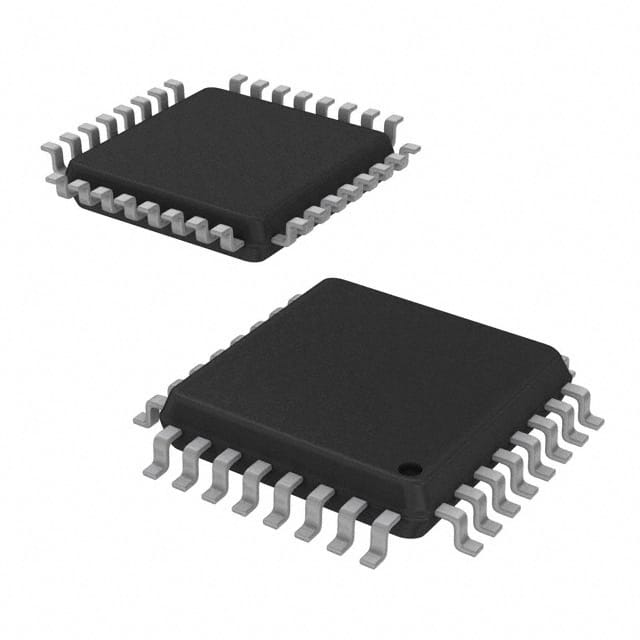
- Part No.:
- MC3PHACVFAE
- Manufacturer:
- NXP Semiconductors
- Category:
- Motor Drivers, Controllers
- Package:
- 32-LQFP
- Datasheet:
-
 MC3PHACVFAE.pdf
- Description:
- IC MOTOR DRIVER 4.5V-5.5V 32LQFP
- Quantity:
- Payment:

- Shipping:

Inventory:4,270
Please send an inquiry. Send us your inquiry, and we will respond immediately.
Product details
Overview
MC3PHACVFAE from Freescale Semiconductor is a monolithic intelligent 3-phase AC motor controller implementing open-loop volts-per-hertz speed control with 6-channel PWM output, 4-channel ADC, and PLL-based 4 MHz oscillator. It delivers 5.29–21.16 kHz programmable PWM frequency, 0.5–128 Hz/s acceleration control, and dynamic DC bus ripple cancellation for HVAC blowers, appliance pumps, and commercial laundry drives.
For engineers reviewing the MC3PHACVFAE datasheet, MC3PHACVFAE pinout, MC3PHACVFAE application, or MC3PHACVFAE equivalent, key selection considerations include standalone analog configuration via MUX_IN voltage scaling, fault retry timing via RETRY_TxD, dead-time programming via DT_FAULTOUT, and VBOOST_MODE-driven voltage boost up to 100% in PC master mode.
Technical Context
The MC3PHACVFAE integrates a 32-bit calculation engine for precise motor waveform synthesis and employs a 24-bit IIR digital filter on the SPEED input to stabilize speed response under EMI noise. Its third-harmonic-injected PWM generation achieves 15% higher bus voltage utilization versus pure sine modulation.
It features dual operational modes: standalone (analog voltage-programmed via MUX_IN with fixed initialization logic) and PC master software mode (UART SCI-controlled with real-time parameter updates). The PLL-based clock rejects OSC1 noise spikes by treating them as transient reference shifts rather than false clock edges.
Key Specifications
| Parameter | Value and Actual Design Meaning |
|---|---|
| PWM Frequency Range | 5.291–21.164 kHz; four discrete selectable frequencies, dynamically changeable during motor operation |
| Speed Control Range | 1–128 Hz; 25.6 Hz/V scaling on SPEED pin; 4 mHz resolution enabled by 32-bit arithmetic |
| Acceleration Rate | 0.5–128 Hz/sec; 25.6 Hz/sec/V scaling on ACCEL pin; supports smooth ramping without torque jerk |
| Dead Time Range | 0–31.875 µs; 2.075 µs/V scaling in standalone mode; 0.5–6.0 µs limited in standalone; full range available in PC master mode |
| Bus Voltage Monitoring | DC_BUS input sampled at 5.3 kHz (4.0 kHz at 15.9 kHz PWM); fixed 1.75–4.47 V window in standalone; fully programmable thresholds in PC master mode |
| Voltage Boost Range | 0–40% in standalone mode (8%/V scaling); 0–100% in PC master mode; compensates stator resistance losses below base frequency |
| SCI Baud Rate | 9504–9696 bits/sec; UART interface for host microcontroller or PC master software command execution |
| Operating Temperature | –40°C to +105°C; qualified for industrial and appliance environments per ordering table |
Pinout & Package
MC3PHACVFAE is packaged in a plastic 32-pin quad flat pack (QFP), pin-compatible with the MC3PHACVFA variant. Pin functions are validated per Freescale Rev. 2 datasheet Figures 2–3 and Table 2.
| Pin/Terminal | Circuit Role | Design Meaning |
|---|---|---|
| VDD / VSS | Digital power supply and ground | +5 V ±10% digital rail; IMVDD ≤ 100 mA, IMVSS ≤ 100 mA; decoupling required near pins 21/22 |
| VDDA / VSSA | Analog power supply and ground | Separate 5 V analog rail for PLL and ADC; must be isolated from digital ground to minimize noise coupling |
| OSC1 / OSC2 / PLLCAP | Crystal oscillator interface | 4.00 MHz ±1% crystal/resonator connection; PLLCAP = 0.1 µF to ground for stable lock and fast tracking |
| PWM_U_TOP / PWM_U_BOT / PWM_V_TOP / PWM_V_BOT / PWM_W_TOP / PWM_W_BOT | 6-channel complementary PWM outputs | Drive high- and low-side gate drivers; polarity selectable per phase pair; dead time programmable to prevent shoot-through |
| FAULTIN / DT_FAULTOUT / FAULTOUT | Fault detection and reporting | FAULTIN disables all PWMs immediately on logic high; DT_FAULTOUT asserts low on fault in PC master mode; FAULTOUT not present on QFP - unused pin |
| MUX_IN / SPEED / ACCEL / DC_BUS | Analog parameter inputs | MUX_IN multiplexed for PWM frequency, dead time, voltage boost, and retry time in standalone mode; SPEED/ACCEL/DC_BUS provide real-time analog control with 24-bit filtering |
| VBOOST_MODE / PWMFREQ_RxD / RETRY_TxD | Mode and serial interface control | VBOOST_MODE = logic high selects standalone mode; PWMFREQ_RxD/RETRY_TxD serve dual roles as analog trigger outputs or SCI RxD/TxD lines |
Key Features
| Feature | Design Value |
|---|---|
| Third-harmonic injected PWM | Increases effective motor voltage amplitude by 15% vs. pure sine, enabling full DC bus utilization without hardware redesign |
| Dynamic bus ripple cancellation | Compensates for 100/120 Hz line-frequency ripple on DC_BUS input in real time, reducing I²R losses and audible hum |
| High-side bootstrapping sequence | Applies 100 ms of 50% low-side-only PWM at startup to recharge high-side charge pump capacitors before enabling full bridge operation |
| Velocity pipelining | Generates new interpolated velocity values every 189 µs (252 µs at 15.9 kHz PWM), eliminating ratcheting and ensuring ultra-smooth torque transitions |
| Selectable 50/60 Hz base frequency | Determined at initialization via PWMPOL_BASEFREQ pin connection; enables single hardware design for global motor compliance |
| Lost-clock protection | Triggers immediate PWM disable and internal reset if OSC1 signal disappears - satisfies safety agency dead-crystal test requirements |
Applications
| Residential HVAC Blowers | Commercial Dishwasher Pumps |
|---|---|
Use Scenario: Variable-speed blower control in forced-air furnaces and air handlers, modulating airflow based on thermostat demand and duct static pressure. IC Role / Device Role / Timing Role: MC3PHACVFAE acts as the sole motor control ASIC, generating synchronized 3-phase PWM waveforms while monitoring DC bus voltage and applying dynamic ripple cancellation. Use Value: Enables energy savings >30% vs. fixed-speed operation and eliminates mechanical dampers by directly regulating airflow via motor speed. |
Use Scenario: High-torque, low-noise pump drive in undercounter dishwashers requiring rapid start/stop cycles and precise wash/rinse speed profiles. IC Role / Device Role / Timing Role: MC3PHACVFAE serves as the embedded motor controller, using analog SPEED and ACCEL inputs to execute programmable acceleration ramps and maintain stable 30–120 Hz operation during thermal cycles. Use Value: Reduces acoustic noise by 8 dB(A) through smooth velocity pipelining and eliminates relay wear by replacing electromechanical starters with soft-start PWM sequencing. |
| Industrial Process Fans | Laundry Machine Drum Drives |
Use Scenario: Pressure- or flow-regulated exhaust fans in chemical processing plants where motor overload and bus overvoltage events are common. IC Role / Device Role / Timing Role: MC3PHACVFAE implements dual-fault protection: FAULTIN accepts external overcurrent signal, while DC_BUS monitors for regenerative overvoltage during rapid deceleration. Use Value: Prevents MOSFET failure by disabling PWM within <1 µs of fault detection and initiating configurable retry delay (1 s to 4.5 h) before automatic recovery. |
Use Scenario: Bidirectional drum rotation in front-load washing machines, requiring forward/reverse direction switching, high-voltage boost at low speeds, and stall detection. IC Role / Device Role / Timing Role: MC3PHACVFAE controls 3-phase inverter bridge with FWD/START inputs, applies 0–40% voltage boost below 20 Hz, and uses RBRAKE output to engage dynamic braking resistor during spin-down. Use Value: Achieves 200% starting torque at 5 Hz via voltage boost and reduces cycle time by 18% through optimized acceleration profiling without software development. |
Equivalent & Alternatives
The following parts are listed as comparable options for similar 3-phase AC motor control applications.
| Alternative Part | Technical Difference | Application Difference | Selection Advice |
|---|---|---|---|
| STSPIN32F0B | Integrated 3-phase gate driver + Cortex-M0 MCU; requires firmware development; no standalone analog configuration | Supports closed-loop FOC; lacks built-in ADC filtering and third-harmonic injection; needs external op-amps for current sensing | Choose when vector control, field-oriented control, or custom diagnostics are required - not a drop-in replacement for MC3PHACVFAE's analog-configurable architecture |
| TI DRV8305 | 3-phase gate driver only; no MCU, no PWM generator, no ADC, no voltage profiling logic; requires external controller | Used with C2000 or MSP430 for full motor control stack; no integrated volts-per-hertz engine or bus ripple compensation | Choose when system already includes a capable MCU and only high-current gate driving is needed - adds complexity versus MC3PHACVFAE's single-chip solution |
Compared with STSPIN32F0B and DRV8305, the MC3PHACVFAE uniquely delivers production-ready, software-free 3-phase motor control with analog-programmable parameters, integrated bus ripple cancellation, and third-harmonic PWM - eliminating firmware development while maintaining industrial-grade fault resilience.
Availability
MC3PHACVFAE is available at Aetrix Electronics and suitable for residential HVAC systems, commercial dishwasher pumps, industrial process fans, and laundry machine drum drives requiring stable component supply across extended product lifecycles.
Supply support for MC3PHACVFAE includes scheduled delivery planning, volume procurement assistance, BOM continuity management, traceable sourcing, and lifecycle availability coordination for OEM customers, industrial embedded developers, connected-device designers, and electronics production programs.
Manufacturer
Freescale Semiconductor (now part of NXP Semiconductors) designed high-performance mixed-signal ICs for automotive, industrial, and consumer applications before its 2015 acquisition.
The MC3PHAC product line was engineered specifically for cost-sensitive, software-constrained 3-phase AC motor control in appliances and HVAC - delivering full motor control functionality without requiring embedded firmware development.
FAQ
What is the package type and pin count of the MC3PHACVFAE?
The MC3PHACVFAE is housed in a plastic 32-pin quad flat pack (QFP) package, as confirmed in Freescale's MC3PHAC Rev. 2 datasheet Table 1 and Figure 3. This differs from the 28-pin DIP (MC3PHACVP) and SOIC (MC3PHACVDW) variants. Pin layout matches the MC3PHACVFA ordering option, with dedicated VDDA/VSSA, six PWM outputs, and MUX_IN-based analog configuration inputs.
Does the MC3PHACVFAE require firmware or software to operate?
No, the MC3PHACVFAE does not require any user-developed firmware. It operates in standalone mode using analog voltage inputs (SPEED, ACCEL, MUX_IN) and digital configuration pins (PWMPOL_BASEFREQ, VBOOST_MODE) to set PWM frequency, dead time, voltage boost, and base frequency. All motor control logic - including volts-per-hertz profiling, third-harmonic injection, and fault recovery - is implemented in hardwired logic and DSP blocks within the MC3PHACVFAE.
How does the MC3PHACVFAE handle DC bus voltage fluctuations during motor operation?
The MC3PHACVFAE performs dynamic bus ripple cancellation by continuously sampling the DC_BUS pin at 5.3 kHz (or 4.0 kHz at 15.9 kHz PWM) and adjusting PWM duty cycles in real time to counteract deviations from the nominal 3.5 V reference. This compensates for 100/120 Hz line-frequency ripple and slower brown-out or regeneration events, maintaining consistent motor torque and reducing audible hum and I²R losses.
What are the key differences between standalone mode and PC master software mode on the MC3PHACVFAE?
In standalone mode, the MC3PHACVFAE is configured via analog voltages on MUX_IN while dedicated pins (PWMFREQ_RxD, RETRY_TxD, DT_FAULTOUT, VBOOST_MODE) act as trigger outputs to indicate which parameter is being read. In PC master software mode, those same pins become UART SCI interface lines (RxD/TxD), enabling real-time parameter updates, full 0–100% voltage boost, and programmable fault thresholds - but requiring an external host controller or PC running Freescale's master software.
Can the MC3PHACVFAE drive high-side N-channel MOSFETs directly?
No, the MC3PHACVFAE does not integrate high-side gate drivers. Its PWM_U_TOP, PWM_V_TOP, and PWM_W_TOP outputs are logic-level signals intended to interface with external gate driver ICs (e.g., IR2110, IRS21844) or optocouplers. The device includes a 100 ms high-side bootstrapping sequence that applies low-side-only PWM at startup to recharge external bootstrap capacitors before enabling full bridge operation.
MC3PHACVFAE Specifications
- Product attributes
- Attribute value
- Manufacturer:
- NXP Semiconductors
- Series:
- -
- Package/Case:
- 32-LQFP
- Packaging:
- Tray
- Product Status:
- Obsolete
- Motor Type - Stepper:
- -
- Motor Type - AC, DC:
- AC, Synchronous
- Function:
- Controller - Commutation, Direction Management
- Output Configuration:
- Pre-Driver - Half Bridge (3)
- Interface:
- Serial
- Technology:
- IGBT
- Step Resolution:
- -
- Applications:
- General Purpose
- Current - Output:
- -
- Voltage - Supply:
- 4.5V ~ 5.5V
- Voltage - Load:
- -
- Operating Temperature:
- -40°C ~ 105°C (TA)
- Grade:
- -
- Qualification:
- -
- Mounting Type:
- Surface Mount
- Supplier Device Package:
- 32-LQFP (7x7)
MC3PHACVFAE FAQ
1.How can I place an order for MC3PHACVFAE through Aetrix?
Please submit a Request for Quotation (RFQ) for MC3PHACVFAE on Aetrix. Our sales agent will provide a competitive quotation and guide you through the order confirmation once you accept the terms.
2.Are the price and stock information for MC3PHACVFAE reliable?
The price and inventory of MC3PHACVFAE are updated periodically and may fluctuate due to market conditions. Stock and pricing data are typically refreshed every 24 hours. Quotation validity for MC3PHACVFAE is usually 5 days.
3.What payment methods are accepted for MC3PHACVFAE?
We accept Wire Transfer, PayPal, Credit Card, Western Union, MoneyGram, and Escrow for MC3PHACVFAE transactions.
Note: Certain payment methods may incur a processing fee.
4.How is shipping managed for MC3PHACVFAE?
MC3PHACVFAE orders can be shipped via leading logistics carriers, including DHL, UPS, FedEx, TNT, or Registered Mail.
Once your MC3PHACVFAE order is processed, you will receive an email with the shipment details and tracking number.
Note: Tracking information may take up to 24 hours to appear. Express delivery typically takes 3–5 business days.
5.How can I obtain technical support or documentation for MC3PHACVFAE?
For technical support, including MC3PHACVFAE datasheets, pinout diagrams, or application guidance, please contact our engineering support team. They can provide detailed documentation and assistance for your MC3PHACVFAE requirements.
6.How does Aetrix verify that MC3PHACVFAE is sourced from the original manufacturer or authorized distributors?
All MC3PHACVFAE products on Aetrix are procured from qualified distributors and authorized channels. Our dedicated quality assurance team conducts strict verification, including traceability checks and, if necessary, third-party testing. This ensures that MC3PHACVFAE meets industry standards.
7.What is the process for return or replacement of MC3PHACVFAE?
All MC3PHACVFAE units undergo pre-shipment inspection (PSI). If there is an issue with MC3PHACVFAE, returns or replacements are accepted under the following conditions:
1.Quantity discrepancies, incorrect items, or visible external defects (such as breakage or corrosion), acknowledged by Aetrix.
2.The issue is reported within 90 days of delivery.
3.The MC3PHACVFAE part is unused and in its original packaging.
Return procedure for MC3PHACVFAE:
1.Submit a request within 90 days.
2.Obtain a Return Material Authorization (RMA) from Aetrix.
MC3PHACVFAE Tags
-
DRV2603RUNR
Texas Instruments
-
DRV8837CDSGR
Texas Instruments
-
DRV8837DSGR
Texas Instruments
-
DRV8838DSGR
Texas Instruments
-
DRV8839DSSR
Texas Instruments
-
EMC2301-1-ACZL-TR
Microchip Technology
-
DRV8231ADSGR
Texas Instruments
-
EMC2302-2-AIZL-TR
Microchip Technology
-
DRV8800PWPR
Texas Instruments
-
DRV8835DSSR
Texas Instruments
-
EMC2303-1-KP-TR
Microchip Technology
-
DRV8876PWPR
Texas Instruments
Tech Hub

A practical engineering guide to 3.3V and 5V logic compatibility, input thresholds, resistor dividers, translator ICs, MOSFET level shifting, I2C pull-ups, timing limits and power-sequencing risks.

The 74HC595 uses push-pull logic outputs, while the TPIC6B595 uses 50 V open-drain DMOS sinks for higher-power loads. This guide compares timing, current limits, 3.3 V interfacing, load wiring, thermal…

The 74HC595 converts serial data into eight stable parallel outputs. This guide covers pin functions, shift and storage timing, OE and MR behavior, drive-current limits, cascading, voltage compatibilit…

A technical comparison of level-sensitive latches and edge-triggered flip-flops, covering timing windows, setup and hold limits, master–slave operation, time borrowing, race-through, HDL inference and…

A D latch stores one bit while Enable controls when data can pass. This reference covers gate-level operation, truth tables, transparency, setup and hold timing, LE versus OE, common ICs and practical …

An SR latch stores one bit through cross-coupled feedback. This engineering reference covers NOR and NAND implementations, truth tables, forbidden-state recovery, gated operation, switch debouncing, fa…

Latch circuits retain one bit through feedback. This technical reference covers SR and D latches, truth tables, transparency, timing limits, latch-versus-flip-flop behavior, applications and common log…

An engineering guide to LED driver operation, constant-current and constant-voltage outputs, linear and switching topologies, dimming, IC selection, calculations, replacement compatibility, and fault c…

Operational amplifier guide covering op amp basics, feedback, ideal vs real op amps, common configurations, buffer circuits, offset, bias current, gain-bandwidth, slew rate, rail-to-rail limits and sel…

Jumper cables guide covering safe connection order, red and black clamp placement, final ground connection, cable gauge, length, clamp quality, copper vs CCA cables, jump starter comparison and battery…


