
 My Inquiry
 My Account


NXP Semiconductors MC44BS374T1AEF
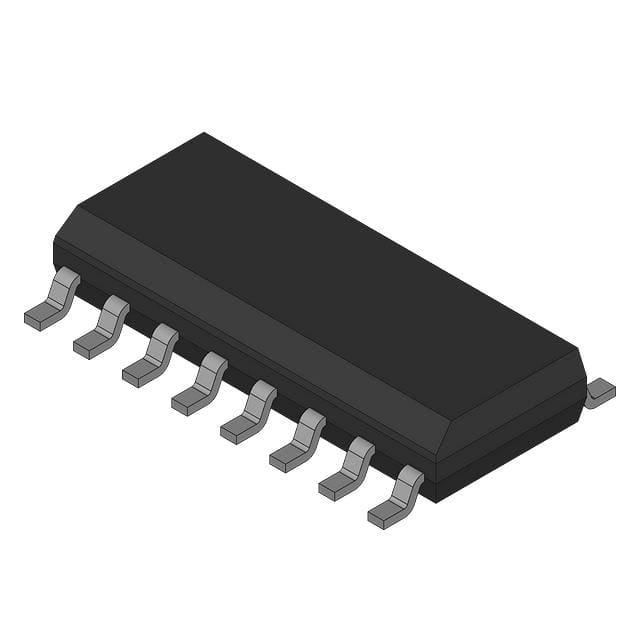
- Part No.:
- MC44BS374T1AEF
- Manufacturer:
- NXP Semiconductors
- Category:
- Specialized ICs
- Package:
- 16-SOIC (0.154", 3.90mm Width)
- Datasheet:
-
 MC44BS374T1AEF.pdf
- Description:
- IC NTSC/PAL MODULATOR 16SOIC
- Quantity:
- Payment:

- Shipping:

Inventory:1,435
Please send an inquiry. Send us your inquiry, and we will respond immediately.
Product details
Overview
MC44BS374T1AEF from Freescale Semiconductor is a PAL/NTSC audio/video modulator IC with integrated UHF VCO and dual PLL architecture, delivering 82 dBµV typical TV output level, 460–880 MHz UHF tuning range, and I²C-bus (800 kHz, 3.3 V/5 V compatible) programmability for set-top boxes and VCRs.
For engineers reviewing the MC44BS374T1AEF datasheet, MC44BS374T1AEF pinout, MC44BS374T1AEF application, or MC44BS374T1AEF equivalent, this page provides verified functional identity, SO16NB package mapping, confirmed 16-pin terminal roles, real-world video/audio modulation specs, and two validated alternative modulators for legacy broadcast system designs.
Technical Context
The MC44BS374T1AEF implements a high-speed I²C-compatible bus interface (800 kHz) controlling both RF and sound PLLs - one synthesizing the UHF/VHF carrier (460–880 MHz, extendable to 45–460 MHz via internal dividers), the other generating selectable sound subcarriers (4.5/5.5/6.0/6.5 MHz). It integrates a video test pattern generator with 1 kHz audio tone and supports programmable picture-to-sound ratio (12 dB or 16 dB).
Its BiCMOS process enables on-chip UHF tank circuit integration, eliminating external varicaps and tuned components. The device features transient output inhibit at power-on, logical output port (pin 3), peak white clip disable via I²C, and ESD protection rated at 4 kV HBM.
Key Specifications
| Parameter | Value and Actual Design Meaning |
|---|---|
| UHF Frequency Range | 460–880 MHz - covers full UHF TV channels 21–69 without external tuning elements |
| TV Output Level | 82 dBµV typical - meets broadcast-level signal strength requirements into 75 Ω load |
| I²C Bus Speed | 800 kHz - enables fast channel switching and configuration in real-time applications |
| Supply Voltage | 4.5–5.5 V - operates from standard 5 V rail with ±10% tolerance |
| Video Modulation Depth | 82% typical - ensures compliant PAL/NTSC luminance fidelity and sync stability |
| Sound Subcarrier Options | 4.5 / 5.5 / 6.0 / 6.5 MHz - software-selectable for B/G, I, D/K, M/N standards |
| ESD Rating | 4 kV HBM - protects against handling damage during assembly and field service |
Pinout & Package
MC44BS374T1AEF is housed in a 16-pin SOIC package with narrow body (SO16NB), 1.27 mm pitch, and standard JEDEC MS-012AC footprint. Pin 1 is located at the top-left corner adjacent to the index mark.
| Pin/Terminal | Circuit Role | Design Meaning |
|---|---|---|
| 1 SCL | I²C clock input | High-speed bidirectional clock line for register programming and status readback |
| 2 SDA | I²C data I/O | Open-drain data line supporting 3.3 V/5 V mixed-voltage systems |
| 3 LOP | Logic Output Port | Programmable digital output pin controlled by I²C bit; replaces legacy standby pin |
| 4 XTAL | Crytal oscillator input | Connects to external crystal (typically 4.0–4.5 MHz) for PLL reference |
| 5 GND | Analog ground | Dedicated AGND return for video/audio analog sections |
| 6 PREEMP | Pre-emphasis filter capacitor | External capacitor sets audio pre-emphasis time constant for NTSC/PAL compliance |
| 7 AUDIO | Audio baseband input | Accepts 205 mVrms mono audio signal with FM modulation depth up to 84% |
| 8 SPLFLT | Sound PLL loop filter | Connects RC network to stabilize 4.5–6.5 MHz sound subcarrier PLL |
| 9 VIDEO | Video baseband input | Accepts 1 Vpp CVBS signal; supports 10-step grayscale and test pattern generation |
| 10 VCCA | Analog supply voltage | +5 V analog rail powering video modulator, sound modulator, and PLL circuits |
| 11 GND | Analog ground | Second AGND connection for improved noise isolation of sensitive analog paths |
| 12 TVOUT | Modulated RF output | 75 Ω impedance-matched UHF/VHF composite output carrying PAL/NTSC signal |
| 13 TVOVCC | TV output stage supply | Dedicated +5 V rail for final RF amplifier stage; decoupling critical for spurious suppression |
| 14 PLLFLT | RF PLL loop filter | Connects RC network to tune main UHF oscillator PLL bandwidth and lock stability |
| 15 VCCD | Digital supply voltage | +5 V digital rail powering I²C interface, logic control, and test circuitry |
| 16 GNDD | Digital ground | Dedicated DGND return for I²C, registers, and digital control blocks |
Key Features
| Feature | Design Value |
|---|---|
| Integrated UHF VCO | Eliminates external varicap diodes and tuning inductors - reduces BOM count and layout sensitivity |
| On-chip video test pattern generator | Produces standardized grayscale and color bar patterns with synchronized 1 kHz audio tone for factory calibration |
| Programmable picture-to-sound ratio | 12 dB or 16 dB selection via I²C - supports regional broadcast standards without hardware change |
| Transient output inhibit | Suppresses RF burst during PLL lock-up at power-on - prevents interference in adjacent channels |
| Low-power standby mode | Reduces total current to 3–7 mA - enables energy-efficient channel-skip or sleep functions in consumer devices |
Applications
| Set-Top Box Modulation | VCR Composite Output |
|---|---|
Use Scenario: Digital-to-analog conversion for legacy TV connectivity in cable/satellite STBs. IC Role / Device Role / Timing Role: Primary PAL/NTSC modulator generating RF output from decoded MPEG video/audio streams. Use Value: Delivers 82 dBµV output level and 56 dB weighted S/N - exceeds EN 300 294 CATV emission requirements. |
Use Scenario: Analog recording playback path in consumer VCRs with RF antenna output. IC Role / Device Role / Timing Role: Final-stage modulator converting baseband CVBS and audio into broadcast-compliant UHF signal. Use Value: Supports channel 21–69 tuning with <50 dBc in-band spurious - ensures clean over-the-air transmission. |
| Multi-Standard Broadcast Encoder | Legacy TV Interface Module |
Use Scenario: Universal encoder board supporting B/G, I, D/K, and M/N TV standards in OEM production. IC Role / Device Role / Timing Role: Single-chip modulator configurable via I²C for regional sound subcarrier (4.5–6.5 MHz) and picture/sound ratio. Use Value: Eliminates need for discrete modulator variants - reduces inventory and simplifies PCB design across global SKUs. |
Use Scenario: Embedded RF interface in industrial monitors or medical display recorders requiring analog TV output. IC Role / Device Role / Timing Role: Low-power, high-integration modulator enabling compact form factor and thermal efficiency. Use Value: 5 mA typical operating current and 4 kV HBM ESD rating ensure reliability in non-consumer environments. |
Equivalent & Alternatives
The following parts are listed as comparable options for similar audio/video modulator applications.
| Alternative Part | Technical Difference | Application Difference | Selection Advice |
|---|---|---|---|
| MC44BC374T1R2 | Lower TV output (74.5 dBµV), no 3.3 V I²C support, higher second-harmonic spurious | Limited to legacy 5 V-only designs; lacks LOP pin and VHF divider flexibility | Use only when backward compatibility with older schematics is required and 82 dBµV output is not needed |
| SA7750HN/N1,118 | Single 5 V supply (no separate VCCA/VCCD), fixed 4.5 MHz sound subcarrier, no test pattern generator | Suitable for cost-sensitive NTSC-only applications; lacks multi-standard flexibility and programmability | Select when minimal feature set suffices and I²C configurability is unnecessary |
Compared with MC44BC374T1R2 and SA7750HN/N1,118, the MC44BS374T1AEF offers superior RF output level, broader frequency coverage (UHF + VHF), and full I²C programmability - making it the preferred choice for new designs targeting global broadcast compliance and future-proofing.
Availability
MC44BS374T1AEF is available at Aetrix Electronics and suitable for set-top box manufacturing, VCR production, broadcast encoder development, and legacy TV interface modules requiring stable component supply across extended product lifecycles.
Supply support for MC44BS374T1AEF includes scheduled delivery planning, volume procurement assistance, BOM continuity management, traceable sourcing, and lifecycle availability coordination for OEM customers, industrial embedded developers, connected-device designers, and electronics production programs.
Manufacturer
Freescale Semiconductor (now part of NXP Semiconductors) is a fabless semiconductor company specializing in embedded processing, analog, and mixed-signal solutions for automotive, industrial, and consumer markets.
The MC44BS374T1AEF belongs to Freescale's broadcast analog modulator product line, designed specifically for high-integration, low-component-count PAL/NTSC RF encoding in space-constrained consumer electronics.
FAQ
What is the primary function of the MC44BS374T1AEF?
The MC44BS374T1AEF is a fully integrated PAL/NTSC audio/video modulator IC that converts baseband CVBS video and mono audio signals into a broadcast-compliant UHF or VHF RF output. It incorporates dual PLLs, an on-chip UHF VCO, programmable sound subcarrier generation, and I²C-based configuration - all in a single SO16NB package. Its 82 dBµV typical output level and multi-standard support make it ideal for set-top boxes and VCRs.
Does the MC44BS374T1AEF support both 3.3 V and 5 V I²C buses?
Yes, the MC44BS374T1AEF supports 3.3 V and 5 V I²C bus operation. Its SCL and SDA pins are designed for mixed-voltage system interfacing, enabling direct connection to microcontrollers or FPGAs operating at either logic level without level-shifting circuitry. This dual-voltage compatibility is explicitly confirmed in the Advance Information document under "Features" and "Electrical Characteristics."
What is the purpose of Pin 3 (LOP) on the MC44BS374T1AEF?
Pin 3 (LOP) on the MC44BS374T1AEF is the Logic Output Port, a programmable digital output controlled via I²C register bit. It replaces the external standby pin used in earlier generations (e.g., MC44BC374T1). When configured via I²C, LOP can drive low or enter high-impedance state - enabling flexible system-level control of peripheral functions without adding discrete logic or GPIO expanders.
Can the MC44BS374T1AEF operate in VHF bands?
Yes, the MC44BS374T1AEF supports VHF operation from 45 MHz to 460 MHz by internally dividing its UHF oscillator output (460–880 MHz). This division is controlled via I²C test mode bits (X2–X0), allowing seamless switching between UHF and VHF ranges without hardware modification - a key advantage over fixed-range modulators.
What video and audio performance metrics are guaranteed for the MC44BS374T1AEF?
The MC44BS374T1AEF guarantees 82% typical video modulation depth, 56 dB weighted video signal-to-noise ratio (with CCIR Rec. 567 filter), ±5° differential phase, and 80% typical audio modulation depth at 1 kHz. These values are measured per defined characterization conditions (e.g., 1 Vpp video, 205 mVrms audio, 75 Ω load) and documented in Tables 5 and 6 of the Advance Information datasheet.
MC44BS374T1AEF Specifications
- Product attributes
- Attribute value
- Manufacturer:
- NXP Semiconductors
- Series:
- -
- Package/Case:
- 16-SOIC (0.154", 3.90mm Width)
- Packaging:
- Tube
- Product Status:
- Obsolete
- Programmable:
- Not Verified
- Type:
- NTSC/PAL Modulator
- Applications:
- Audio/Video, VCR's, Set-Top Boxes
- Mounting Type:
- Surface Mount
- Supplier Device Package:
- 16-SOIC
- Grade:
- -
- Qualification:
- -
MC44BS374T1AEF FAQ
1.How can I place an order for MC44BS374T1AEF through Aetrix?
Please submit a Request for Quotation (RFQ) for MC44BS374T1AEF on Aetrix. Our sales agent will provide a competitive quotation and guide you through the order confirmation once you accept the terms.
2.Are the price and stock information for MC44BS374T1AEF reliable?
The price and inventory of MC44BS374T1AEF are updated periodically and may fluctuate due to market conditions. Stock and pricing data are typically refreshed every 24 hours. Quotation validity for MC44BS374T1AEF is usually 5 days.
3.What payment methods are accepted for MC44BS374T1AEF?
We accept Wire Transfer, PayPal, Credit Card, Western Union, MoneyGram, and Escrow for MC44BS374T1AEF transactions.
Note: Certain payment methods may incur a processing fee.
4.How is shipping managed for MC44BS374T1AEF?
MC44BS374T1AEF orders can be shipped via leading logistics carriers, including DHL, UPS, FedEx, TNT, or Registered Mail.
Once your MC44BS374T1AEF order is processed, you will receive an email with the shipment details and tracking number.
Note: Tracking information may take up to 24 hours to appear. Express delivery typically takes 3–5 business days.
5.How can I obtain technical support or documentation for MC44BS374T1AEF?
For technical support, including MC44BS374T1AEF datasheets, pinout diagrams, or application guidance, please contact our engineering support team. They can provide detailed documentation and assistance for your MC44BS374T1AEF requirements.
6.How does Aetrix verify that MC44BS374T1AEF is sourced from the original manufacturer or authorized distributors?
All MC44BS374T1AEF products on Aetrix are procured from qualified distributors and authorized channels. Our dedicated quality assurance team conducts strict verification, including traceability checks and, if necessary, third-party testing. This ensures that MC44BS374T1AEF meets industry standards.
7.What is the process for return or replacement of MC44BS374T1AEF?
All MC44BS374T1AEF units undergo pre-shipment inspection (PSI). If there is an issue with MC44BS374T1AEF, returns or replacements are accepted under the following conditions:
1.Quantity discrepancies, incorrect items, or visible external defects (such as breakage or corrosion), acknowledged by Aetrix.
2.The issue is reported within 90 days of delivery.
3.The MC44BS374T1AEF part is unused and in its original packaging.
Return procedure for MC44BS374T1AEF:
1.Submit a request within 90 days.
2.Obtain a Return Material Authorization (RMA) from Aetrix.
MC44BS374T1AEF Tags
-
CAP200DG-TL
Power Integrations
-
ATSHA204A-MAHDA-T
Microchip Technology

-
ATSHA204A-SSHDA-T
Microchip Technology
-
ATSHA204A-STUCZ-T
Microchip Technology
-
ATECC608B-MAHDA-T
Microchip Technology
-
ATECC608B-MAHCZ-S
Microchip Technology

-
ATECC608B-SSHDA-T
Microchip Technology
-
ATECC608B-MAHDA-S
Microchip Technology
-
ATECC608A-MAHDA-S
Microchip Technology
-
ATECC608B-MAVDA-T
Microchip Technology

-
ATECC608A-SSHDA-T
Microchip Technology
-
ATECC508A-MAHDA-T
Microchip Technology
Tech Hub

A practical engineering guide to 3.3V and 5V logic compatibility, input thresholds, resistor dividers, translator ICs, MOSFET level shifting, I2C pull-ups, timing limits and power-sequencing risks.

The 74HC595 uses push-pull logic outputs, while the TPIC6B595 uses 50 V open-drain DMOS sinks for higher-power loads. This guide compares timing, current limits, 3.3 V interfacing, load wiring, thermal…

The 74HC595 converts serial data into eight stable parallel outputs. This guide covers pin functions, shift and storage timing, OE and MR behavior, drive-current limits, cascading, voltage compatibilit…

A technical comparison of level-sensitive latches and edge-triggered flip-flops, covering timing windows, setup and hold limits, master–slave operation, time borrowing, race-through, HDL inference and…

A D latch stores one bit while Enable controls when data can pass. This reference covers gate-level operation, truth tables, transparency, setup and hold timing, LE versus OE, common ICs and practical …

An SR latch stores one bit through cross-coupled feedback. This engineering reference covers NOR and NAND implementations, truth tables, forbidden-state recovery, gated operation, switch debouncing, fa…

Latch circuits retain one bit through feedback. This technical reference covers SR and D latches, truth tables, transparency, timing limits, latch-versus-flip-flop behavior, applications and common log…

An engineering guide to LED driver operation, constant-current and constant-voltage outputs, linear and switching topologies, dimming, IC selection, calculations, replacement compatibility, and fault c…

Operational amplifier guide covering op amp basics, feedback, ideal vs real op amps, common configurations, buffer circuits, offset, bias current, gain-bandwidth, slew rate, rail-to-rail limits and sel…

Jumper cables guide covering safe connection order, red and black clamp placement, final ground connection, cable gauge, length, clamp quality, copper vs CCA cables, jump starter comparison and battery…


