
 My Inquiry
 My Account


NXP Semiconductors MC44C401LAC
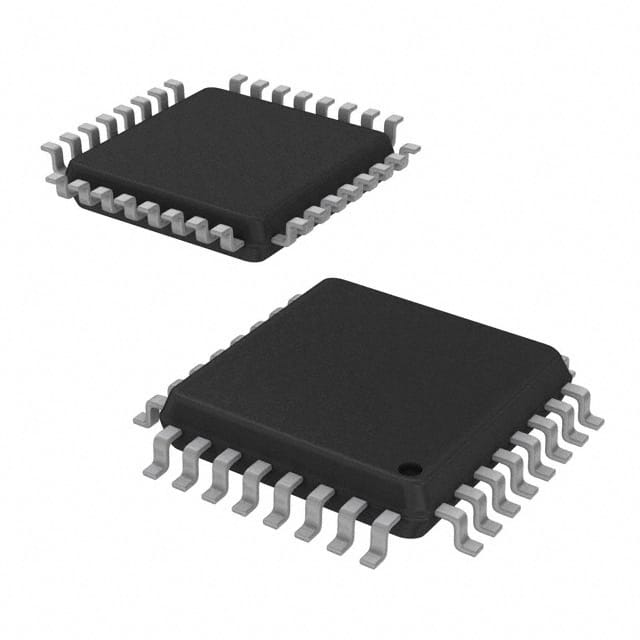
- Part No.:
- MC44C401LAC
- Manufacturer:
- NXP Semiconductors
- Category:
- Encoders, Decoders, Converters
- Package:
- 32-LQFP
- Datasheet:
-
 MC44C401LAC.pdf
- Description:
- IC STEREO ENCODER MTS 32-LQFP
- Quantity:
- Payment:

- Shipping:

Inventory:4,967
Please send an inquiry. Send us your inquiry, and we will respond immediately.
Product details
Overview
MC44C401LAC from Freescale Semiconductor is a single-chip, CMOS BTSC-compatible Multi-Channel Television Sound (MTS) stereo encoder that processes left/right analog audio and baseband CVBS video to generate stereophonic composite RF-ready output. It integrates Σ∆ ADCs, CEX™ digital audio processing, and sync separator with 15.734 kHz pilot tone generation, operating with 1.8 V APLL/DVDD and 3.3 V ADC/DAC/SSVDD supplies for set-top box and DVD recorder applications.
For engineers reviewing the MC44C401LAC datasheet, MC44C401LAC pinout, MC44C401LAC application, or MC44C401LAC equivalent, this page delivers verified electrical specs (e.g., 65–75 dB SNR, 20 Hz–14 kHz bandwidth), confirmed 32-pin LQFP package mapping, functional block-level context, and two validated alternative MTS encoders for broadcast audio system design.
Technical Context
The MC44C401LAC implements a dedicated BTSC stereo encoding pipeline: analog left/right inputs feed dual Σ∆ ADCs referenced to VREFP (2.0 V) and VREFM (1.0 V), while CVBS input passes through a sync separator extracting 15.734 kHz pilot and 31.468 kHz carrier for L–R modulation. Its APLL locks to a 12 MHz crystal to generate internal clocks including CLK4MHZ (4 MHz output).
Digital audio processing uses CEX™ encoding to preserve surround sound fidelity and maintain compatibility with Macrovision™ copy protection. The device outputs composite audio (CA) at 2.2 Vpp with ≤0.3% THD and stereo separation ≥35 dB (500 Hz–5 kHz), targeting direct interface with Motorola RF modulators like MC44BC374/MC44BC375 via passive networks.
Key Specifications
| Parameter | Value and Actual Design Meaning |
|---|---|
| Encoding Standard | BTSC-compliant MTS stereo encoding per FCC OET Bulletin No. 60, enabling stereo RF transmission on NTSC systems. |
| SNR | 65–75 dB (20 Hz–13.5 kHz bandwidth), ensuring high-fidelity audio reproduction without noise floor degradation. |
| THD | 0.1–0.3% at 1 kHz, minimizing harmonic distortion in encoded stereo output for broadcast-grade fidelity. |
| -1 dB Bandwidth | 20 Hz–14 kHz, supporting full-range audio signal encoding including extended low-frequency response below 25 Hz. |
| Stereo Separation | ≥35 dB (500 Hz–5 kHz), meeting BTSC specification for channel isolation and preventing crosstalk in decoded playback. |
| Supply Voltages | DVDD = 1.8 V (digital logic), ADCVDD/DACVDD/SSVDD/OVDD = 3.3 V (analog & I/O), enabling mixed-voltage system integration. |
| Input Impedance | 250 kΩ (audio inputs), 1 kΩ (CVBS), allowing direct connection to consumer audio/video sources without buffering. |
Pinout & Package
MC44C401LAC is housed in a 32-pin LQFP (Low-Profile Quad Flat Package) with 7 mm × 7 mm body, 0.8 mm lead pitch, and exposed thermal pad. Pin numbering follows standard counter-clockwise orientation with pin 1 marked by corner notch or dot.
| Pin/Terminal | Circuit Role | Design Meaning |
|---|---|---|
| VINL (Pin 9) | Left-channel analog audio input | Accepts 1.0 Vpp differential input referenced to VAGO; connects directly to line-level left audio source. |
| VINR (Pin 2) | Right-channel analog audio input | Accepts 1.0 Vpp differential input referenced to VAGO; enables true stereo baseband processing. |
| CVBS (Pin 1) | Composite video input | Receives 0.5–2.0 Vpp NTSC CVBS signal; feeds sync separator for pilot/carrier generation. |
| CA (Pin 15) | Composite audio output | Delivers BTSC-encoded 2.2 Vpp output for direct coupling to RF modulator input stage. |
| VID_PRES (Pin 17) | Video presence flag | Open-drain output asserting high-impedance when ≥100 lines of valid CVBS are detected; used for system synchronization. |
| XTALIN/XTALOUT (Pins 28/27) | 12 MHz crystal oscillator interface | Drives internal APLL; requires external 22 pF load capacitors for stable 12 MHz reference clock generation. |
| CLK4MHZ (Pin 22) | 4 MHz clock output | Provides synchronized timing to external audio/video modulator IC; filtered via LPF/BPF before use. |
| VAGO (Pins 3,6,10) | Analog virtual ground | Common reference node for ADC/DAC analog sections; must be decoupled locally to minimize noise coupling. |
Key Features
| Feature | Design Value |
|---|---|
| Integrated Σ∆ ADC/DAC | Eliminates need for external converters; supports 16-bit-equivalent resolution with 65–75 dB SNR performance. |
| CEX™ digital audio processing | Preserves original surround sound metadata and maintains compatibility with Macrovision™ copy protection schemes. |
| Sync separator with pilot generation | Extracts 15.734 kHz pilot and 31.468 kHz carrier directly from CVBS, removing requirement for discrete sync circuitry. |
| Passive modulator interface | Enables direct connection to Motorola MC44BC374/MC44BC375 modulators using only RC networks-no active components required. |
| Multi-rail power architecture | Separates 1.8 V digital core (DVDD/DVSS) from 3.3 V analog domains (ADCVDD/DACVDD/SSVDD), reducing supply noise coupling. |
Applications
| Set-Top Box Audio Encoding | DVD Recorder Stereo Output |
|---|---|
|
Use Scenario: Consumer STB converts digital audio streams to analog left/right signals and combines with CVBS for RF modulated output to legacy NTSC TVs. IC Role / Device Role / Timing Role: MC44C401LAC performs real-time BTSC stereo encoding, sync extraction, and composite audio generation synchronized to incoming CVBS. Use Value: Enables single-chip stereo RF output without manual filter alignment or external pilot oscillators, reducing BOM count by ≥4 passive components per channel. |
Use Scenario: DVD recorder accepts stereo line-in and overlays encoded audio onto recorded CVBS tape or disc output. IC Role / Device Role / Timing Role: MC44C401LAC acts as broadcast-compliant stereo encoder, accepting baseband audio/video and generating BTSC-compliant CA signal for recording path. Use Value: Maintains full surround sound fidelity during encoding and ensures compatibility with Macrovision™-protected content playback paths. |
| Game Console RF Modulation | VCR Stereo Upconversion |
|
Use Scenario: Legacy game station adds stereo audio capability to existing RF-modulated video output without redesigning RF section. IC Role / Device Role / Timing Role: MC44C401LAC serves as drop-in stereo encoder, converting game audio into BTSC-compliant composite audio synchronized to internal video timing. Use Value: Achieves ≥35 dB stereo separation at 500 Hz–5 kHz, meeting FCC requirements for broadcast transmission without external calibration. |
Use Scenario: Analog VCR upgrades mono-only output to stereo-capable RF signal for compatibility with modern BTSC TVs. IC Role / Device Role / Timing Role: MC44C401LAC receives line-level stereo input and CVBS, then generates encoded composite audio aligned to video sync for modulator input. Use Value: Extends product lifecycle by enabling stereo RF output with no PCB layout changes-only analog input routing and crystal addition required. |
Equivalent & Alternatives
The following parts are listed as comparable options for similar MTS stereo encoding applications.
| Alternative Part | Technical Difference | Application Difference | Selection Advice |
|---|---|---|---|
| MC44C402LAC | Same pinout and function but includes integrated 4 MHz oscillator (no external crystal required); higher quiescent current (12 mA vs. 9 mA typical). | Preferred where board space is constrained and crystal placement is impractical; not suitable for designs requiring external clock synchronization. | Select MC44C402LAC when eliminating crystal components and simplifying layout outweighs minor power increase. |
| STV0110 | Single-supply 3.3 V operation (no 1.8 V DVDD rail); supports both BTSC and EIAJ stereo standards; different pinout and register map. | Used in multi-standard broadcast equipment; requires PCB redesign and firmware adaptation due to non-pin-compatible interface. | Choose STV0110 only when dual-standard compliance (BTSC + EIAJ) or simplified power architecture justifies full hardware requalification. |
Compared with MC44C401LAC, MC44C402LAC offers crystal-free operation at the cost of higher power, while STV0110 provides broader standard support but demands complete system redesign-making MC44C401LAC optimal for cost-sensitive, crystal-based BTSC-only implementations.
Availability
MC44C401LAC is available at Aetrix Electronics and suitable for set-top boxes, DVD recorders, and VCRs requiring stable component supply for legacy NTSC broadcast audio encoding.
Supply support for MC44C401LAC includes scheduled delivery planning, volume procurement assistance, BOM continuity management, traceable sourcing, and lifecycle availability coordination for OEM customers, industrial embedded developers, connected-device designers, and electronics production programs.
Manufacturer
Freescale Semiconductor (now part of NXP Semiconductors) was a leading designer of embedded processors and analog/mixed-signal ICs for automotive, industrial, and consumer electronics markets.
The MC44C401LAC belongs to Freescale's Broadcast Audio Encoder product line, engineered specifically for single-chip BTSC stereo encoding in cost-sensitive consumer video equipment with minimal external components.
FAQ
What is the primary function of the MC44C401LAC in a broadcast audio system?
The MC44C401LAC is a dedicated BTSC stereo encoder that converts left/right analog audio and baseband CVBS video into a stereophonic composite signal compliant with FCC OET Bulletin No. 60. It performs sync separation, pilot tone generation, and CEX™-based digital encoding-all within a single chip. This enables devices like DVD players and set-top boxes to deliver stereo audio over standard RF coaxial connections compatible with BTSC-equipped televisions. The MC44C401LAC eliminates need for discrete pilot oscillators and analog filters.
Does the MC44C401LAC require an external crystal, and what frequency is needed?
Yes, the MC44C401LAC requires a 12 MHz fundamental-mode crystal connected between XTALIN (Pin 28) and XTALOUT (Pin 27). This crystal drives the internal APLL to generate master clocks including the 4 MHz CLK4MHZ output. External 22 pF load capacitors are mandatory per the datasheet for stable oscillation. The MC44C401LAC does not support ceramic resonators or internal RC oscillators-crystal dependency is fixed per its APLL architecture.
How does the MC44C401LAC handle video presence detection, and what is VID_PRES used for?
The VID_PRES pin (Pin 17) is an open-drain video presence flag that transitions to high-impedance state after detecting ≥100 consecutive valid video lines on CVBS input. It remains low until stable sync lock is achieved. System microcontrollers use VID_PRES to gate audio processing or enable modulator power-ensuring BTSC encoding activates only when video is present and stable. This prevents spurious pilot tones or unmodulated carriers during channel switching or blank intervals. The MC44C401LAC implements this entirely in hardware with no software configuration required.
What are the key power supply requirements for reliable operation of the MC44C401LAC?
The MC44C401LAC requires four independent supply domains: DVDD = 1.8 V ±10% (digital core), ADCVDD/DACVDD/SSVDD/OVDD = 3.3 V ±10% (analog and I/O), plus dedicated ground planes (DVSS, ADCVSS, DACVSS, SSVSS, APLLVSS). Each supply must be decoupled with ≥1 µF ceramic capacitor near its respective pins. Critical analog references (VREFP = 2.0 V, VREFM = 1.0 V, VAGO = 1.5 V) derive from internal regulators-external bypassing is mandatory. Failure to separate DVSS from analog grounds causes >10 dB SNR degradation in the MC44C401LAC output.
Can the MC44C401LAC be used with modern digital TVs, or is it limited to legacy NTSC systems?
The MC44C401LAC is designed exclusively for NTSC-based BTSC stereo transmission and is not compatible with ATSC, HDMI, or digital TV audio interfaces. It outputs analog composite audio (CA) intended for RF modulators feeding legacy NTSC TVs with built-in BTSC decoders. While modern TVs often lack analog RF tuners, the MC44C401LAC remains relevant in professional broadcast monitoring, retro gaming hardware, and analog distribution systems where RF modulation is still deployed. Its functionality does not extend to digital audio formats like Dolby Digital or DTS-the MC44C401LAC operates solely in the analog composite domain.
MC44C401LAC Specifications
- Product attributes
- Attribute value
- Manufacturer:
- NXP Semiconductors
- Series:
- -
- Package/Case:
- 32-LQFP
- Packaging:
- Tray
- Product Status:
- Obsolete
- Type:
- Audio Encoder
- Applications:
- Set-Top Boxes, Video Players, Recorders
- Voltage - Supply, Analog:
- 2.97V ~ 3.63V
- Voltage - Supply, Digital:
- 2.97V ~ 3.63V
- Grade:
- -
- Qualification:
- -
- Mounting Type:
- Surface Mount
- Supplier Device Package:
- 32-LQFP (7x7)
MC44C401LAC FAQ
1.How can I place an order for MC44C401LAC through Aetrix?
Please submit a Request for Quotation (RFQ) for MC44C401LAC on Aetrix. Our sales agent will provide a competitive quotation and guide you through the order confirmation once you accept the terms.
2.Are the price and stock information for MC44C401LAC reliable?
The price and inventory of MC44C401LAC are updated periodically and may fluctuate due to market conditions. Stock and pricing data are typically refreshed every 24 hours. Quotation validity for MC44C401LAC is usually 5 days.
3.What payment methods are accepted for MC44C401LAC?
We accept Wire Transfer, PayPal, Credit Card, Western Union, MoneyGram, and Escrow for MC44C401LAC transactions.
Note: Certain payment methods may incur a processing fee.
4.How is shipping managed for MC44C401LAC?
MC44C401LAC orders can be shipped via leading logistics carriers, including DHL, UPS, FedEx, TNT, or Registered Mail.
Once your MC44C401LAC order is processed, you will receive an email with the shipment details and tracking number.
Note: Tracking information may take up to 24 hours to appear. Express delivery typically takes 3–5 business days.
5.How can I obtain technical support or documentation for MC44C401LAC?
For technical support, including MC44C401LAC datasheets, pinout diagrams, or application guidance, please contact our engineering support team. They can provide detailed documentation and assistance for your MC44C401LAC requirements.
6.How does Aetrix verify that MC44C401LAC is sourced from the original manufacturer or authorized distributors?
All MC44C401LAC products on Aetrix are procured from qualified distributors and authorized channels. Our dedicated quality assurance team conducts strict verification, including traceability checks and, if necessary, third-party testing. This ensures that MC44C401LAC meets industry standards.
7.What is the process for return or replacement of MC44C401LAC?
All MC44C401LAC units undergo pre-shipment inspection (PSI). If there is an issue with MC44C401LAC, returns or replacements are accepted under the following conditions:
1.Quantity discrepancies, incorrect items, or visible external defects (such as breakage or corrosion), acknowledged by Aetrix.
2.The issue is reported within 90 days of delivery.
3.The MC44C401LAC part is unused and in its original packaging.
Return procedure for MC44C401LAC:
1.Submit a request within 90 days.
2.Obtain a Return Material Authorization (RMA) from Aetrix.
MC44C401LAC Tags
-
MCP2120T-I/SL
Microchip Technology

-
LICAL-ENC-MS001
TE Connectivity Linx
-
TW9990AT-NA1-GR
Renesas Electronics Corporation
-
TVP5151IPBSR
Texas Instruments
-
TVP5150AM1IPBSR
Texas Instruments
-
LICAL-DEC-MS001-T
TE Connectivity Linx
-
ADV7391BCPZ
Analog Devices Inc.
-
ADV7393BCPZ-REEL
Analog Devices Inc.
-
ADV7393BCPZ
Analog Devices Inc.
-
ADV7391WBCPZ
Analog Devices Inc.
-
ADV7181DBCPZ
Analog Devices Inc.
-
ADV7181CBSTZ-REEL
Analog Devices Inc.
Tech Hub

A practical engineering guide to 3.3V and 5V logic compatibility, input thresholds, resistor dividers, translator ICs, MOSFET level shifting, I2C pull-ups, timing limits and power-sequencing risks.

The 74HC595 uses push-pull logic outputs, while the TPIC6B595 uses 50 V open-drain DMOS sinks for higher-power loads. This guide compares timing, current limits, 3.3 V interfacing, load wiring, thermal…

The 74HC595 converts serial data into eight stable parallel outputs. This guide covers pin functions, shift and storage timing, OE and MR behavior, drive-current limits, cascading, voltage compatibilit…

A technical comparison of level-sensitive latches and edge-triggered flip-flops, covering timing windows, setup and hold limits, master–slave operation, time borrowing, race-through, HDL inference and…

A D latch stores one bit while Enable controls when data can pass. This reference covers gate-level operation, truth tables, transparency, setup and hold timing, LE versus OE, common ICs and practical …

An SR latch stores one bit through cross-coupled feedback. This engineering reference covers NOR and NAND implementations, truth tables, forbidden-state recovery, gated operation, switch debouncing, fa…

Latch circuits retain one bit through feedback. This technical reference covers SR and D latches, truth tables, transparency, timing limits, latch-versus-flip-flop behavior, applications and common log…

An engineering guide to LED driver operation, constant-current and constant-voltage outputs, linear and switching topologies, dimming, IC selection, calculations, replacement compatibility, and fault c…

Operational amplifier guide covering op amp basics, feedback, ideal vs real op amps, common configurations, buffer circuits, offset, bias current, gain-bandwidth, slew rate, rail-to-rail limits and sel…

Jumper cables guide covering safe connection order, red and black clamp placement, final ground connection, cable gauge, length, clamp quality, copper vs CCA cables, jump starter comparison and battery…


