
 My Inquiry
 My Account


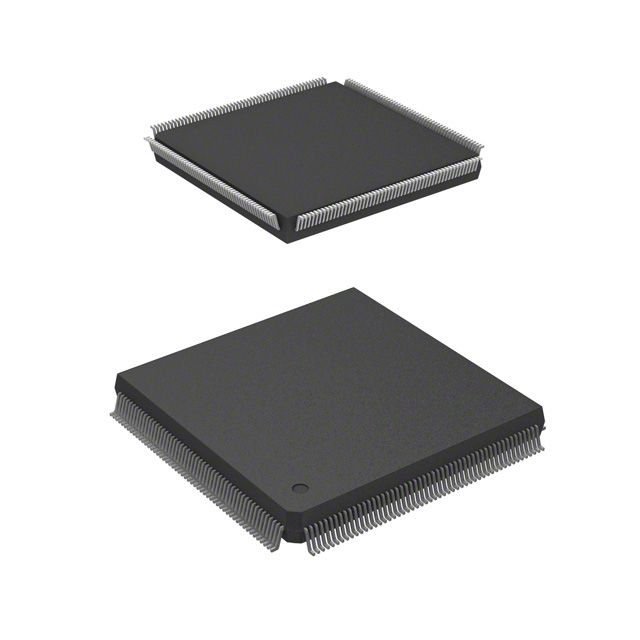
NXP Semiconductors MC68302CRC16C
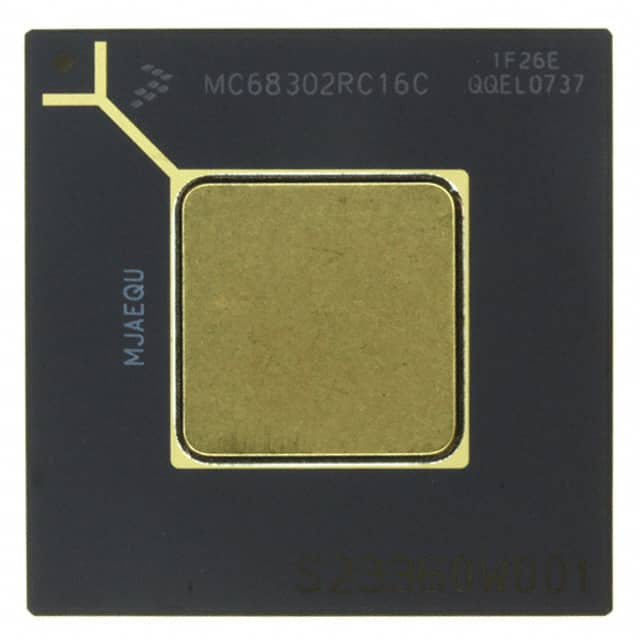
- Part No.:
- MC68302CRC16C
- Manufacturer:
- NXP Semiconductors
- Category:
- Microprocessors
- Package:
- 132-BPGA Exposed Pad
- Datasheet:
-
 MC68302CRC16C.pdf
- Description:
- IC MPU M683XX 16MHZ 132PGA
- Quantity:
- Payment:

- Shipping:

Inventory:3,321
Please send an inquiry. Send us your inquiry, and we will respond immediately.
Product details
Overview
MC68302CRC16C from Freescale Semiconductor is a 32-bit integrated communications microcontroller unit (ICM) with on-chip CPU32 core, dual UARTs, SCC, timer system, and DMA controller. It operates at 16 MHz maximum CPU frequency, supports 32-bit address/data bus, and integrates interrupt controller and system integration module (SIM). It targets industrial serial communication gateways requiring deterministic real-time response.
For engineers reviewing the MC68302CRC16C datasheet, MC68302CRC16C pinout, MC68302CRC16C application, or MC68302CRC16C equivalent, key selection criteria include its 16 MHz CPU clock rating, 32-bit bus interface timing (e.g., tchfcadv ≤ 27 ns), integrated SCC for HDLC/SDLC, dual UART support, and SIM-based peripheral control without external glue logic.
Technical Context
The MC68302CRC16C implements the Motorola CPU32 32-bit core with 32-bit ALU, 32-bit registers, and 32-bit linear addressing. Its System Integration Module (SIM) provides bus arbitration, interrupt control, chip select generation, and clock distribution for internal peripherals including SCC, UARTs, timers, and DMA.
It supports synchronous and asynchronous bus protocols via programmable wait-state generation and timing control registers. The SCC handles full-duplex serial protocols (HDLC, SDLC, Bisync, async), while dual UARTs provide independent RS-232/RS-485-capable channels with programmable baud rates and FIFO-like buffering.
Key Specifications
| Parameter | Value and Actual Design Meaning |
|---|---|
| CPU Core | CPU32 32-bit architecture with 32-bit data path and 32-bit address bus |
| Max CPU Frequency | 16 MHz - defines instruction throughput and real-time interrupt latency ceiling |
| Bus Interface | 32-bit multiplexed address/data bus with programmable wait states and timing control |
| Integrated Peripherals | SCC (synchronous serial controller), two UARTs, four 16-bit timers, DMA controller, interrupt controller |
| Memory Support | External program/data memory access via 32-bit bus; no on-chip Flash or RAM |
| Package | 208-pin Ceramic Pin Grid Array (CPGA) - requires socketed or reflow-compatible PCB layout |
| Operating Voltage | 5 V ±10% - compatible with legacy industrial TTL-level systems |
Pinout & Package
MC68302CRC16C uses a 208-pin Ceramic Pin Grid Array (CPGA) package with 1.27 mm pitch, designed for high-reliability industrial applications requiring thermal stability and hermetic sealing.
| Pin/Terminal | Circuit Role | Design Meaning |
|---|---|---|
| AS | Address Strobe | Indicates valid address on bus; initiates memory/peripheral access cycle |
| DS | Data Strobe | Valid during read/write data transfer; synchronized with AS for bus protocol compliance |
| R/W | Read/Write Control | Active-high for read, active-low for write; controls direction of data bus drivers |
| DTACK | Data Transfer Acknowledge | Handshake signal confirming data validity; enables wait-state insertion |
| IRQ1–IRQ7 | Interrupt Request Inputs | Level-sensitive priority-encoded inputs managed by on-chip interrupt controller |
| SCC_TxCLK / SCC_RxCLK | SCC Clock Inputs | Provide synchronous timing for HDLC/SDLC frame transmission and reception |
Key Features
| Feature | Design Value |
|---|---|
| CPU32 Core Integration | 32-bit instruction set compatibility with M68000 family; eliminates need for external CPU |
| System Integration Module (SIM) | On-chip bus controller, interrupt arbiter, and chip-select generator reduce external logic count by ≥70% |
| Synchronous Communications Controller (SCC) | Single-chip HDLC/SDLC/Bisync protocol handling with CRC generation/checking |
| Dual Independent UARTs | Two full-duplex UARTs with separate baud rate generators and status registers |
| Programmable Timer System | Four 16-bit timers supporting input capture, output compare, and PWM generation |
Applications
| Industrial Protocol Gateway | Telecom Line Card Controller |
|---|---|
Use Scenario: Bridging Modbus RTU over RS-485 to TCP/IP via Ethernet interface. IC Role / Device Role / Timing Role: MC68302CRC16C acts as master protocol translator with UART-driven fieldbus interface and SCC-managed packet framing. Use Value: Eliminates external UARTs and protocol ASICs; reduces BOM cost by consolidating serial I/O and real-time scheduling in one IC. |
Use Scenario: Controlling T1/E1 line interface units (LIUs) in legacy telecom access equipment. IC Role / Device Role / Timing Role: MC68302CRC16C serves as line card controller managing framing, alarm monitoring, and maintenance messaging via SCC HDLC mode. Use Value: Leverages built-in SCC with CRC-16 and bit-stuffing to meet GR-499 and ITU-T G.704 timing requirements without FPGA logic. |
| Embedded Serial Terminal Server | Real-Time Data Logger |
Use Scenario: Multi-port RS-232 terminal server connecting legacy lab instruments to networked SCADA systems. IC Role / Device Role / Timing Role: MC68302CRC16C hosts dual UARTs for concurrent serial sessions and manages TCP/IP stack offload via external controller. Use Value: Enables deterministic UART interrupt latency (<1.2 µs at 16 MHz) critical for time-stamped command-response logging. |
Use Scenario: Standalone environmental sensor aggregator sampling analog inputs and storing timestamped data to CompactFlash. IC Role / Device Role / Timing Role: MC68302CRC16C executes real-time sampling schedule using timer-triggered ADC reads and DMA transfers to memory-mapped storage. Use Value: On-chip DMA controller moves sensor data without CPU intervention, preserving 100% CPU bandwidth for time-critical event processing. |
Equivalent & Alternatives
The following parts are listed as comparable options for similar communications microcontroller applications.
| Alternative Part | Technical Difference | Application Difference | Selection Advice |
|---|---|---|---|
| MC68360RC25C | Higher 25 MHz CPU32 clock; adds QUICC engine, enhanced SCC, and integrated Ethernet MAC | Supports 10BASE-T Ethernet bridging; not pin-compatible due to 256-pin PQFP package | Select when adding LAN connectivity and higher throughput is required; requires PCB redesign |
| AMCC PowerPC-based MPC8260AZUU | PowerPC 603e core at 266 MHz; includes RISC architecture, PCI interface, and security engine | Targets modern secure gateway designs; lacks native SCC but offers flexible serial engines (SMT) | Choose for future-proofing and cryptographic acceleration; incompatible instruction set and peripheral register map |
Compared with MC68302CRC16C, MC68360RC25C delivers higher serial throughput and integrated Ethernet but demands layout changes, while MPC8260AZUU offers superior compute performance and security features at the cost of software migration effort and loss of direct SCC protocol support.
Availability
MC68302CRC16C is available at Aetrix Electronics and suitable for industrial protocol gateways, telecom line cards, embedded terminal servers, and real-time data loggers requiring stable component supply and long-term obsolescence management.
Supply support for MC68302CRC16C includes scheduled delivery planning, volume procurement assistance, BOM continuity management, traceable sourcing, and lifecycle availability coordination for OEM customers, industrial embedded developers, connected-device designers, and electronics production programs.
Manufacturer
Freescale Semiconductor was a leading designer of embedded processors and analog/mixed-signal ICs, acquired by NXP Semiconductors in 2015. Its legacy products remain widely deployed in industrial and telecom infrastructure.
The MC68302CRC16C belongs to the Motorola/Freescale 68300 family of integrated communications microcontrollers, engineered specifically for deterministic serial communications in resource-constrained embedded systems.
FAQ
What is the maximum operating frequency of the MC68302CRC16C?
The MC68302CRC16C is rated for a maximum CPU clock frequency of 16 MHz. This specification is defined by the CPU32 core's timing margins and validated across temperature and voltage ranges per Freescale's 1997 datasheet. Operation above 16 MHz may result in undefined instruction execution or bus timing violations. The MC68302CRC16C does not support overclocking or frequency binning beyond this rating.
Does the MC68302CRC16C include on-chip Flash or RAM memory?
No, the MC68302CRC16C contains no on-chip non-volatile or volatile memory. It relies entirely on external memory mapped via its 32-bit address/data bus. Program code and data must reside in external EPROM, SRAM, or DRAM devices controlled through the System Integration Module (SIM). This architecture allows flexible memory sizing but requires careful bus timing design for MC68302CRC16C interface stability.
How many serial communication interfaces does the MC68302CRC16C support?
The MC68302CRC16C integrates one Synchronous Communications Controller (SCC) supporting HDLC, SDLC, Bisync, and async modes, plus two independent Universal Asynchronous Receiver/Transmitters (UARTs). All three interfaces operate concurrently with dedicated clock domains and interrupt vectors. The SCC and UARTs share no internal buffers, enabling simultaneous multi-protocol operation essential for MC68302CRC16C-based protocol gateways.
What package type is used for the MC68302CRC16C?
The MC68302CRC16C uses a 208-pin Ceramic Pin Grid Array (CPGA) package with 1.27 mm pitch and hermetically sealed construction. This package provides superior thermal stability and long-term reliability for industrial environments but requires specialized reflow or socketed mounting. The CPGA footprint differs significantly from plastic QFP or LQFP packages used in later derivatives like the MC68360.
Is the MC68302CRC16C pin-compatible with other members of the 68300 family?
No, the MC68302CRC16C is not pin-compatible with other 68300-family devices such as the MC68306 or MC68360. Its 208-pin CPGA package and signal assignment-including dedicated SCC clocks, SIM control lines, and bus strobes-are unique to the MC68302 series. Migration to MC68360RC25C requires complete PCB redesign due to different pin count, package type (256-pin PQFP), and signal routing.
MC68302CRC16C Specifications
- Product attributes
- Attribute value
- Manufacturer:
- NXP Semiconductors
- Package/Case:
- 132-BPGA Exposed Pad
- Series:
- M683xx
- Packaging:
- Tray
- Product Status:
- Obsolete
- Core Processor:
- M68000
- Number of Cores/Bus Width:
- 1 Core, 8/16-Bit
- Speed:
- 16MHz
- Co-Processors/DSP:
- Communications; RISC CPM
- RAM Controllers:
- DRAM
- Graphics Acceleration:
- No
- Display & Interface Controllers:
- -
- Ethernet:
- -
- SATA:
- -
- USB:
- -
- Voltage - I/O:
- 5.0V
- Operating Temperature:
- -40°C ~ 85°C (TA)
- Grade:
- -
- Qualification:
- -
- Security Features:
- -
- Mounting Type:
- Through Hole
- Supplier Device Package:
- 132-PGA (34.5x34.5)
- Additional Interfaces:
- GCI, IDL, ISDN, NMSI, PCM, SCPI
MC68302CRC16C FAQ
1.How can I place an order for MC68302CRC16C through Aetrix?
Please submit a Request for Quotation (RFQ) for MC68302CRC16C on Aetrix. Our sales agent will provide a competitive quotation and guide you through the order confirmation once you accept the terms.
2.Are the price and stock information for MC68302CRC16C reliable?
The price and inventory of MC68302CRC16C are updated periodically and may fluctuate due to market conditions. Stock and pricing data are typically refreshed every 24 hours. Quotation validity for MC68302CRC16C is usually 5 days.
3.What payment methods are accepted for MC68302CRC16C?
We accept Wire Transfer, PayPal, Credit Card, Western Union, MoneyGram, and Escrow for MC68302CRC16C transactions.
Note: Certain payment methods may incur a processing fee.
4.How is shipping managed for MC68302CRC16C?
MC68302CRC16C orders can be shipped via leading logistics carriers, including DHL, UPS, FedEx, TNT, or Registered Mail.
Once your MC68302CRC16C order is processed, you will receive an email with the shipment details and tracking number.
Note: Tracking information may take up to 24 hours to appear. Express delivery typically takes 3–5 business days.
5.How can I obtain technical support or documentation for MC68302CRC16C?
For technical support, including MC68302CRC16C datasheets, pinout diagrams, or application guidance, please contact our engineering support team. They can provide detailed documentation and assistance for your MC68302CRC16C requirements.
6.How does Aetrix verify that MC68302CRC16C is sourced from the original manufacturer or authorized distributors?
All MC68302CRC16C products on Aetrix are procured from qualified distributors and authorized channels. Our dedicated quality assurance team conducts strict verification, including traceability checks and, if necessary, third-party testing. This ensures that MC68302CRC16C meets industry standards.
7.What is the process for return or replacement of MC68302CRC16C?
All MC68302CRC16C units undergo pre-shipment inspection (PSI). If there is an issue with MC68302CRC16C, returns or replacements are accepted under the following conditions:
1.Quantity discrepancies, incorrect items, or visible external defects (such as breakage or corrosion), acknowledged by Aetrix.
2.The issue is reported within 90 days of delivery.
3.The MC68302CRC16C part is unused and in its original packaging.
Return procedure for MC68302CRC16C:
1.Submit a request within 90 days.
2.Obtain a Return Material Authorization (RMA) from Aetrix.
MC68302CRC16C Tags
-
AT91SAM9260B-CU-999
Microchip Technology
-
AT91SAM9G25-CU
Microchip Technology
-
ATSAMA5D27C-CU
Microchip Technology
-
AT91SAM9X35-CU
Microchip Technology
-
AT91SAM9X25-CU
Microchip Technology
-
MCIMX6Y2CVM08AB
NXP Semiconductors
.JPG)
-
AM3352BZCZ100
Texas Instruments
-
AT91SAM9260B-CU
Microchip Technology
-
AT91SAM9260B-QU
Microchip Technology
-
ATSAMA5D31A-CU
Microchip Technology
-
AT91SAM9G20B-CU-999
Microchip Technology
-
MCIMX6Y2CVM05AB
NXP Semiconductors
Tech Hub

A practical engineering guide to 3.3V and 5V logic compatibility, input thresholds, resistor dividers, translator ICs, MOSFET level shifting, I2C pull-ups, timing limits and power-sequencing risks.

The 74HC595 uses push-pull logic outputs, while the TPIC6B595 uses 50 V open-drain DMOS sinks for higher-power loads. This guide compares timing, current limits, 3.3 V interfacing, load wiring, thermal…

The 74HC595 converts serial data into eight stable parallel outputs. This guide covers pin functions, shift and storage timing, OE and MR behavior, drive-current limits, cascading, voltage compatibilit…

A technical comparison of level-sensitive latches and edge-triggered flip-flops, covering timing windows, setup and hold limits, master–slave operation, time borrowing, race-through, HDL inference and…

A D latch stores one bit while Enable controls when data can pass. This reference covers gate-level operation, truth tables, transparency, setup and hold timing, LE versus OE, common ICs and practical …

An SR latch stores one bit through cross-coupled feedback. This engineering reference covers NOR and NAND implementations, truth tables, forbidden-state recovery, gated operation, switch debouncing, fa…

Latch circuits retain one bit through feedback. This technical reference covers SR and D latches, truth tables, transparency, timing limits, latch-versus-flip-flop behavior, applications and common log…

An engineering guide to LED driver operation, constant-current and constant-voltage outputs, linear and switching topologies, dimming, IC selection, calculations, replacement compatibility, and fault c…

Operational amplifier guide covering op amp basics, feedback, ideal vs real op amps, common configurations, buffer circuits, offset, bias current, gain-bandwidth, slew rate, rail-to-rail limits and sel…

Jumper cables guide covering safe connection order, red and black clamp placement, final ground connection, cable gauge, length, clamp quality, copper vs CCA cables, jump starter comparison and battery…


