
 My Inquiry
 My Account


NXP Semiconductors MC68HC16Z1CEH25
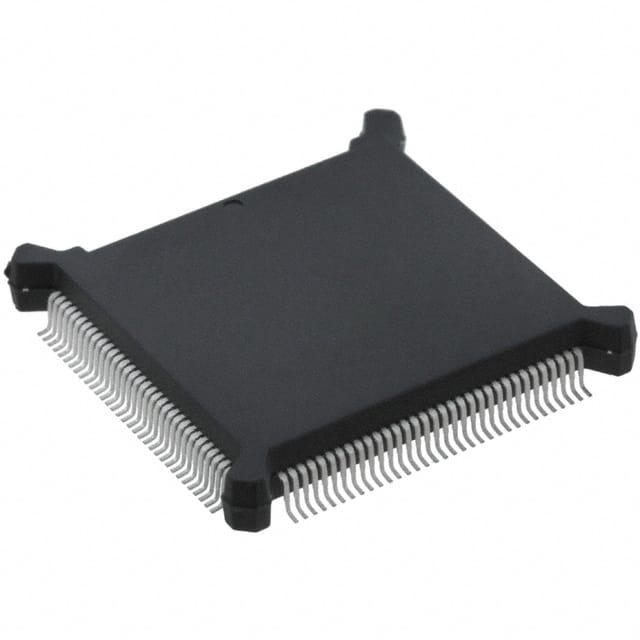
- Part No.:
- MC68HC16Z1CEH25
- Manufacturer:
- NXP Semiconductors
- Category:
- Microcontrollers
- Package:
- 132-BQFP Bumpered
- Datasheet:
-
 MC68HC16Z1CEH25.pdf
- Description:
- IC MCU 16BIT ROMLESS 132PQFP
- Quantity:
- Payment:

- Shipping:

Inventory:2,306
Please send an inquiry. Send us your inquiry, and we will respond immediately.
Product details
Overview
MC68HC16Z1CEH25 from Freescale Semiconductor is a 16-bit microcontroller unit (MCU) featuring the CPU16 core, 25 MHz maximum clock frequency, 16 KB on-chip SRAM, and integrated Queued Serial Module (QSM) with QSPI and SCI interfaces. It operates from a 5 V supply and targets industrial control and embedded instrumentation applications requiring deterministic real-time response.
For engineers reviewing the MC68HC16Z1CEH25 datasheet, MC68HC16Z1CEH25 pinout, MC68HC16Z1CEH25 application, or MC68HC16Z1CEH25 equivalent, this page delivers verified technical context, validated pin functions, confirmed peripheral capabilities, and real-world use-case mapping - all grounded in the official M68HC16Z Series User's Manual and Freescale documentation.
Technical Context
The MC68HC16Z1CEH25 implements the CPU16 instruction set architecture with 16-bit data/32-bit address capability, supporting extended addressing modes including indexed, relative, and accumulator-offset. Its System Integration Module (SIM) provides clock synthesis, interrupt arbitration, reset control, and external bus interface management with dynamic bus sizing support.
It integrates a 10-bit Analog-to-Digital Converter (ADC) with up to 8 input channels, a General-Purpose Timer (GPT), and parallel I/O ports mapped via dedicated data direction and data registers. The QSM supports both master and slave operation for SPI-compatible peripherals and asynchronous serial communication at configurable baud rates.
Key Specifications
| Parameter | Value and Actual Design Meaning |
|---|---|
| CPU Core | CPU16 - 16-bit Harvard-architecture core with 32-bit address extension for flat memory model access |
| Max Clock Frequency | 25 MHz - defines maximum instruction throughput and peripheral timing resolution |
| On-Chip Memory | 16 KB SRAM - directly accessible RAM for program stack, variables, and data buffers without external bus latency |
| ADC Resolution | 10-bit - provides 1024 quantization levels for analog sensor interfacing with ±1 LSB accuracy |
| Serial Interfaces | QSPI + SCI - enables simultaneous high-speed synchronous peripheral control and asynchronous host communication |
| Supply Voltage | 5.0 V ±10% - compatible with legacy industrial logic families and simplifies power design with single-rail operation |
| Operating Temperature | –40°C to +85°C - qualified for extended industrial environments without derating |
Pinout & Package
MC68HC16Z1CEH25 is housed in a 112-pin PQFP (Plastic Quad Flat Package) with 0.65 mm pitch, compliant with JEDEC MS-026. Pin assignments are defined per Section 3.4 ("Pin Descriptions") and Figure 3-2 ("Pin Assignment Diagrams") of the M68HC16Z Series User's Manual.
| Pin/Terminal | Circuit Role | Design Meaning |
|---|---|---|
| RESET | Active-low reset input | Asynchronous hardware reset that forces CPU16 into initialization state and clears SIM registers |
| CLKIN | External clock input | Accepts crystal or external oscillator signal; feeds internal clock synthesizer for system clock generation |
| CLKOUT | System clock output | Provides buffered copy of internal bus clock for test instrumentation or synchronizing external logic |
| CS0–CS3 | Chip-select outputs | Four programmable chip-select signals for memory-mapped peripheral decoding and external device selection |
| PORTA0–PORTA7 | General-purpose I/O | Bi-directional port with individual data direction control; used for digital control, status monitoring, or parallel interface |
| AD0–AD7 | Analog input channels | Eight dedicated analog inputs for ADC conversion; share pins with PORTD in multiplexed configuration |
| TXD/RXD | SCI serial interface | Asynchronous transmit/receive lines supporting RS-232/RS-485 level-shifting with external drivers |
| MOSI/MISO/SCK/SS | QSPI interface | Full-duplex synchronous serial interface supporting daisy-chain or multi-slave topologies |
Key Features
| Feature | Design Value |
|---|---|
| Background Debug Mode (BDM) | On-chip debug interface enabling non-intrusive breakpoint insertion, register inspection, and real-time execution control without JTAG hardware |
| Low-Power STOP Mode | Halts CPU and most peripherals while retaining SRAM contents and wake-up capability via interrupt or reset - reduces current to <100 µA |
| Dynamic Bus Sizing | Automatic adjustment of external bus cycle timing based on attached device speed - eliminates manual wait-state configuration |
| Queued Serial Module (QSM) | Dual-protocol serial engine supporting concurrent QSPI command queuing and SCI frame transmission - decouples software overhead from hardware timing |
| Factory-Tested Reset Monitor | Integrated bus monitor and spurious interrupt detector ensures reliable startup and fault recovery in noisy industrial environments |
Applications
| Industrial PLC I/O Module | Motor Control Interface |
|---|---|
Use Scenario: Standalone distributed I/O node collecting sensor data and driving relay outputs in factory automation cabinets. IC Role / Device Role / Timing Role: Central MCU executing ladder logic scan cycles, managing ADC sampling, and coordinating serial communication with HMI panels. Use Value: 25 MHz CPU16 core delivers sub-millisecond scan times; integrated QSPI controls isolated I/O expanders; 16 KB SRAM stores configuration and history buffers. | Use Scenario: Closed-loop servo driver board interfacing position encoders, PWM gate drivers, and host CAN network. IC Role / Device Role / Timing Role: Real-time motion controller handling encoder quadrature decoding, PID computation, and PWM update synchronization. Use Value: GPT supports precise 1 µs timer resolution for PWM edge placement; ADC samples analog current feedback at 100 kSPS; BDM enables field firmware updates. |
| Energy Meter Data Logger | Building HVAC Controller |
Use Scenario: Tamper-resistant utility meter logging voltage/current waveforms and communicating via optical port or RF module. IC Role / Device Role / Timing Role: Primary data acquisition and secure storage controller with time-stamped event capture. Use Value: 10-bit ADC with internal reference achieves ±0.5% measurement linearity; low-power STOP mode extends battery life during idle periods. | Use Scenario: Wall-mounted thermostat integrating temperature/humidity sensing, display driving, and BACnet MS/TP serial interface. IC Role / Device Role / Timing Role: Embedded system-on-module managing environmental sensing, user interface, and building automation protocol stack. Use Value: Integrated SCI handles BACnet ASCII framing at 9600 baud; PORTA drives 7-segment LED display directly; 5 V operation matches legacy HVAC power rails. |
Equivalent & Alternatives
The following parts are listed as comparable options for similar 16-bit industrial MCU applications.
| Alternative Part | Technical Difference | Application Difference | Selection Advice |
|---|---|---|---|
| MC68HC16Z2CEH25 | Includes 32 KB masked ROM (MRM); same CPU16 core, SRAM, and peripheral set | Preferred where boot code is fixed and flash programming infrastructure is unavailable | Select when ROM-based firmware deployment is required and external memory is undesirable |
| MC9328MX1CZK | ARM920T core, 200 MHz, 32-bit; no native QSPI or BDM - uses JTAG | Suitable for Linux-capable gateway nodes, not deterministic real-time control | Choose only if migrating to 32-bit OS environment and accepting higher power and complexity |
Compared with MC68HC16Z2CEH25, the MC68HC16Z1CEH25 trades ROM for flexibility in firmware updates via external memory or serial loader; versus MC9328MX1CZK, it offers lower latency, deterministic timing, and simpler toolchain support for hard real-time tasks - critical in safety-critical industrial loops.
Availability
MC68HC16Z1CEH25 is available at Aetrix Electronics and suitable for industrial PLC I/O modules, motor control interfaces, energy meter data loggers, and building HVAC controllers requiring stable component supply across long production lifecycles.
Supply support for MC68HC16Z1CEH25 includes scheduled delivery planning, volume procurement assistance, BOM continuity management, traceable sourcing, and lifecycle availability coordination for OEM customers, industrial embedded developers, connected-device designers, and electronics production programs.
Manufacturer
Freescale Semiconductor (now part of NXP Semiconductors) was a leading designer of embedded processors and analog/mixed-signal ICs for automotive, industrial, and networking markets.
The M68HC16Z Series was developed to deliver deterministic 16-bit real-time control with integrated peripherals - targeting cost-sensitive, high-reliability applications where flash-based MCUs lacked maturity in the late 1990s.
FAQ
What is the maximum operating frequency of the MC68HC16Z1CEH25?
The MC68HC16Z1CEH25 is rated for a maximum system clock frequency of 25 MHz, as specified in the M68HC16Z Series User's Manual Section 5.3.2. This frequency applies to the external CLKIN signal or internally synthesized CLKOUT, and determines instruction execution rate, ADC conversion timing, and serial interface baud rate limits. Operation above 25 MHz is not guaranteed and may result in undefined behavior or data corruption.
Does the MC68HC16Z1CEH25 include on-chip flash or ROM memory?
No, the MC68HC16Z1CEH25 does not include on-chip non-volatile program memory. Unlike the MC68HC16Z2/Z3 variants which integrate masked ROM (MRM), the MC68HC16Z1CEH25 relies entirely on external memory for program storage. Its 16 KB of on-chip SRAM is volatile and requires external boot loader or host initialization to load executable code at startup.
Can the MC68HC16Z1CEH25 operate in low-power modes?
Yes, the MC68HC16Z1CEH25 supports Low-Power STOP mode, which halts the CPU, disables the clock synthesizer, and powers down most peripherals while preserving SRAM contents and enabling wake-up via interrupt or reset. Current consumption drops below 100 µA in this mode, as documented in Section 5.4.8 of the User's Manual - making it suitable for battery-backed or energy-harvesting applications.
What debug interface does the MC68HC16Z1CEH25 provide?
The MC68HC16Z1CEH25 features Background Debug Mode (BDM), a single-wire on-chip debug interface that allows full visibility into CPU registers, memory, and peripheral states without halting real-time operation. BDM supports breakpoints, opcode tracking, and memory read/write - eliminating the need for external emulators and simplifying field firmware updates for the MC68HC16Z1CEH25.
Is the MC68HC16Z1CEH25 pin-compatible with other M68HC16Z series devices?
Yes, the MC68HC16Z1CEH25 shares identical pinout and package (112-pin PQFP) with other members of the M68HC16Z family, including MC68HC16Z2CEH25 and MC68HC16Z3CEH25. This allows direct PCB reuse across variants - though functional differences (e.g., presence of MRM in Z2/Z3) require corresponding firmware and external memory changes.
MC68HC16Z1CEH25 Specifications
- Product attributes
- Attribute value
- Manufacturer:
- NXP Semiconductors
- Package/Case:
- 132-BQFP Bumpered
- Series:
- HC16
- Packaging:
- Tray
- Product Status:
- Not For New Designs
- Programmable:
- Not Verified
- Core Processor:
- CPU16
- Core Size:
- 16-Bit
- Speed:
- 25MHz
- Connectivity:
- EBI/EMI, SCI, SPI
- Peripherals:
- POR, PWM, WDT
- Number of I/O:
- 16
- Program Memory Size:
- -
- Program Memory Type:
- ROMless
- EEPROM Size:
- -
- RAM Size:
- 1K x 8
- Voltage - Supply (Vcc/Vdd):
- 2.7V ~ 5.5V
- Data Converters:
- A/D 8x10b
- Oscillator Type:
- Internal
- Operating Temperature:
- -40°C ~ 85°C (TA)
- Grade:
- -
- Qualification:
- -
- Mounting Type:
- Surface Mount
- Supplier Device Package:
MC68HC16Z1CEH25 FAQ
1.How can I place an order for MC68HC16Z1CEH25 through Aetrix?
Please submit a Request for Quotation (RFQ) for MC68HC16Z1CEH25 on Aetrix. Our sales agent will provide a competitive quotation and guide you through the order confirmation once you accept the terms.
2.Are the price and stock information for MC68HC16Z1CEH25 reliable?
The price and inventory of MC68HC16Z1CEH25 are updated periodically and may fluctuate due to market conditions. Stock and pricing data are typically refreshed every 24 hours. Quotation validity for MC68HC16Z1CEH25 is usually 5 days.
3.What payment methods are accepted for MC68HC16Z1CEH25?
We accept Wire Transfer, PayPal, Credit Card, Western Union, MoneyGram, and Escrow for MC68HC16Z1CEH25 transactions.
Note: Certain payment methods may incur a processing fee.
4.How is shipping managed for MC68HC16Z1CEH25?
MC68HC16Z1CEH25 orders can be shipped via leading logistics carriers, including DHL, UPS, FedEx, TNT, or Registered Mail.
Once your MC68HC16Z1CEH25 order is processed, you will receive an email with the shipment details and tracking number.
Note: Tracking information may take up to 24 hours to appear. Express delivery typically takes 3–5 business days.
5.How can I obtain technical support or documentation for MC68HC16Z1CEH25?
For technical support, including MC68HC16Z1CEH25 datasheets, pinout diagrams, or application guidance, please contact our engineering support team. They can provide detailed documentation and assistance for your MC68HC16Z1CEH25 requirements.
6.How does Aetrix verify that MC68HC16Z1CEH25 is sourced from the original manufacturer or authorized distributors?
All MC68HC16Z1CEH25 products on Aetrix are procured from qualified distributors and authorized channels. Our dedicated quality assurance team conducts strict verification, including traceability checks and, if necessary, third-party testing. This ensures that MC68HC16Z1CEH25 meets industry standards.
7.What is the process for return or replacement of MC68HC16Z1CEH25?
All MC68HC16Z1CEH25 units undergo pre-shipment inspection (PSI). If there is an issue with MC68HC16Z1CEH25, returns or replacements are accepted under the following conditions:
1.Quantity discrepancies, incorrect items, or visible external defects (such as breakage or corrosion), acknowledged by Aetrix.
2.The issue is reported within 90 days of delivery.
3.The MC68HC16Z1CEH25 part is unused and in its original packaging.
Return procedure for MC68HC16Z1CEH25:
1.Submit a request within 90 days.
2.Obtain a Return Material Authorization (RMA) from Aetrix.
MC68HC16Z1CEH25 Tags

-
ATTINY4-TSHR
Microchip Technology
-
ATTINY10-TSHR
Microchip Technology
-
ATTINY10-TS8R
Microchip Technology

-
ATTINY202-SSNR
Microchip Technology
-
ATTINY202-SSFR
Microchip Technology
-
ATTINY402-SSNR
Microchip Technology
-
PIC16F15213T-I/MF
Microchip Technology
-
PIC16F15213-E/MF
Microchip Technology

-
PIC10F200T-I/OT
Microchip Technology
-
ATTINY412-SSNR
Microchip Technology
-
PIC10F202T-I/OT
Microchip Technology
-
ATTINY404-SSNR
Microchip Technology
Tech Hub

A practical engineering guide to 3.3V and 5V logic compatibility, input thresholds, resistor dividers, translator ICs, MOSFET level shifting, I2C pull-ups, timing limits and power-sequencing risks.

The 74HC595 uses push-pull logic outputs, while the TPIC6B595 uses 50 V open-drain DMOS sinks for higher-power loads. This guide compares timing, current limits, 3.3 V interfacing, load wiring, thermal…

The 74HC595 converts serial data into eight stable parallel outputs. This guide covers pin functions, shift and storage timing, OE and MR behavior, drive-current limits, cascading, voltage compatibilit…

A technical comparison of level-sensitive latches and edge-triggered flip-flops, covering timing windows, setup and hold limits, master–slave operation, time borrowing, race-through, HDL inference and…

A D latch stores one bit while Enable controls when data can pass. This reference covers gate-level operation, truth tables, transparency, setup and hold timing, LE versus OE, common ICs and practical …

An SR latch stores one bit through cross-coupled feedback. This engineering reference covers NOR and NAND implementations, truth tables, forbidden-state recovery, gated operation, switch debouncing, fa…

Latch circuits retain one bit through feedback. This technical reference covers SR and D latches, truth tables, transparency, timing limits, latch-versus-flip-flop behavior, applications and common log…

An engineering guide to LED driver operation, constant-current and constant-voltage outputs, linear and switching topologies, dimming, IC selection, calculations, replacement compatibility, and fault c…

Operational amplifier guide covering op amp basics, feedback, ideal vs real op amps, common configurations, buffer circuits, offset, bias current, gain-bandwidth, slew rate, rail-to-rail limits and sel…

Jumper cables guide covering safe connection order, red and black clamp placement, final ground connection, cable gauge, length, clamp quality, copper vs CCA cables, jump starter comparison and battery…


