
 My Inquiry
 My Account


NXP Semiconductors MC68HC705KJ1CP
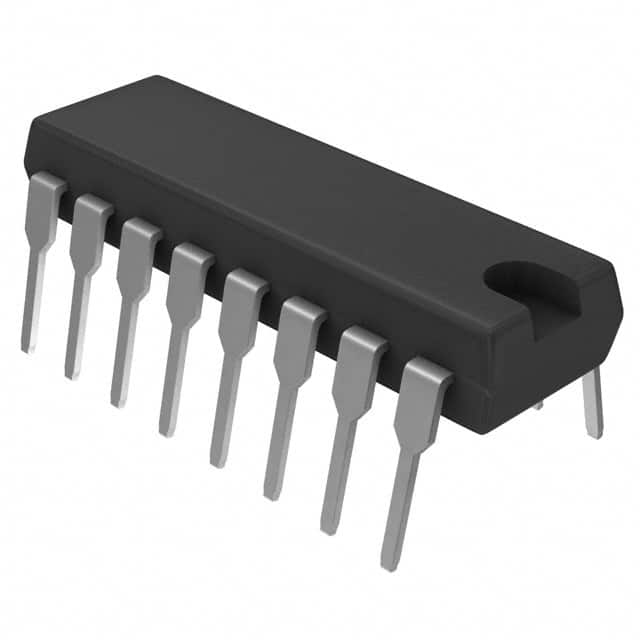
- Part No.:
- MC68HC705KJ1CP
- Manufacturer:
- NXP Semiconductors
- Category:
- Microcontrollers
- Package:
- 16-DIP (0.300", 7.62mm)
- Datasheet:
-
 MC68HC705KJ1CP.pdf
- Description:
- IC MCU 8BIT 1.2KB OTP 16DIP
- Quantity:
- Payment:

- Shipping:

Inventory:3,543
Please send an inquiry. Send us your inquiry, and we will respond immediately.
Product details
Overview
MC68HC705KJ1CP from Freescale Semiconductor is a 8-bit HCMOS microcontroller in the M68HC05 family, featuring a 4.0-MHz internal operating frequency at 5.0 V, 1240 Bytes of EPROM/OTPROM, 64 Bytes of RAM, and integrated peripherals including a 15-stage multifunction timer and COP watchdog. It delivers robust noise immunity and supports keyboard scan with interrupt on four I/O pins for embedded control in industrial sensors and appliance interfaces.
For engineers reviewing the MC68HC705KJ1CP datasheet, MC68HC705KJ1CP pinout, MC68HC705KJ1CP application, or MC68HC705KJ1CP equivalent, key selection criteria include its 10 bidirectional I/O lines (with 10-mA sink and 5.5-mA source capability), fully static operation, selectable oscillator options (crystal, ceramic resonator, RC, or external clock), and support for stop/wait/data-retention low-power modes.
Technical Context
The MC68HC705KJ1CP implements the 68HC05 CPU core with accumulator, index register, stack pointer, and condition code register. Its instruction set includes inherent, immediate, direct, extended, and indexed addressing modes, supporting read-modify-write, bit manipulation, and control instructions for deterministic real-time control.
It integrates memory-mapped I/O registers, a 15-stage timer with real-time and overflow interrupts, and a configurable COP watchdog with timeout period determined by internal prescaler. The MCU supports edge- or level-sensitive external interrupt triggering via IRQ/VPP and provides software-programmable pulldowns on all I/O pins.
Key Specifications
| Parameter | Value and Actual Design Meaning |
|---|---|
| Core Architecture | 8-bit 68HC05 CPU with accumulator, index register, and condition code register |
| Operating Frequency | 4.0 MHz at 5.0 V - defines maximum instruction throughput and real-time response latency |
| Memory | 1240 Bytes EPROM/OTPROM + 64 Bytes RAM - sufficient for small firmware images and runtime variables |
| I/O Capability | 10 bidirectional pins; 10-mA sink on all, 5.5-mA source on six - drives LEDs, relays, and logic-level interfaces directly |
| Timer | 15-stage multifunction timer with real-time and overflow interrupts - enables precise timing, PWM generation, and event counting |
| Power Modes | Stop, wait, and data-retention modes - reduces current draw to µA range while preserving RAM and register state |
| Oscillator Options | Crystal, ceramic resonator, RC network (with/without external resistor), or external clock - enables flexible clock source selection per system constraints |
Pinout & Package
MC68HC705KJ1CP is housed in a 16-pin plastic dual in-line package (PDIP), Case #648, with 0.3-inch body width and 0.1-inch lead pitch. Pin assignments are standardized across the KJ1 family and validated per Freescale Rev. 4.1 datasheet.
| Pin/Terminal | Circuit Role | Design Meaning |
|---|---|---|
| 1 (RESET) | Reset input with internal pullup and steering diode | Active-low reset; internal VDD-connected pullup ensures reliable power-on initialization |
| 2 (OSC1) | Oscillator input | Accepts crystal/resonator/clock signal; connects to internal oscillator amplifier |
| 3 (OSC2) | Oscillator output | Drives crystal/resonator feedback path; unused in external clock mode |
| 4 (PB3) | Port B bit 3 | Bidirectional I/O with programmable pulldown; no interrupt capability |
| 5 (PB2) | Port B bit 2 | Bidirectional I/O with programmable pulldown; no interrupt capability |
| 6 (VDD) | Positive supply | Single 5.0-V supply rail; requires local 0.1-µF bypass capacitor |
| 7 (VSS) | Ground | Reference return for all digital and analog functions |
| 8 (PA7) | Port A bit 7 | Bidirectional I/O; functions as OSC1 in oscillator configurations |
| 16 (IRQ/VPP) | Interrupt request / programming voltage | Edge- or level-sensitive interrupt input; supplies 12.5 V during EPROM programming |
| 15–9 (PA0–PA6) | Port A bits 0–6 | Bidirectional I/O; PA0–PA3 support keyboard-scan interrupt; all support pulldown enable |
Key Features
| Feature | Design Value |
|---|---|
| Robust noise immunity | Hardened I/O structure and internal filtering reduce susceptibility to EMI in industrial environments |
| Software-programmable pulldowns | Enables weak pull-down on all 10 I/O pins without external components - simplifies keypad and switch interface design |
| Selectable COP watchdog | Configurable enable/disable and timeout period - prevents runaway code while allowing flexibility in debug vs. production builds |
| Keyboard scan with interrupt | Hardware-assisted scanning on PA0–PA3 with interrupt on keypress - eliminates polling overhead in human-interface applications |
| Fully static operation | No minimum clock speed requirement - supports zero-frequency stop mode and ultra-low-power wake-on-interrupt operation |
Applications
| Industrial Sensor Interface | Home Appliance Control |
|---|---|
Use Scenario: Monitoring temperature, pressure, or flow in HVAC or process control systems using analog comparators and discrete inputs. IC Role / Device Role / Timing Role: Central controller executing sensor polling, calibration routines, and actuator drive logic with deterministic timing. Use Value: 10-mA sink capability directly drives indicator LEDs and relay drivers; COP watchdog ensures fail-safe shutdown on firmware hang. |
Use Scenario: Managing user interface, motor sequencing, and safety interlocks in washing machines or microwaves. IC Role / Device Role / Timing Role: Real-time coordinator of keypad input, display updates, and timed heating/cooling cycles. Use Value: Keyboard-scan interrupt on PA0–PA3 reduces CPU load; 64 Bytes RAM stores operational state across power cycles in data-retention mode. |
| Embedded Power Supply Monitor | Legacy Automotive Body Control |
Use Scenario: Voltage supervision and fault logging in DC-DC converters or battery chargers. IC Role / Device Role / Timing Role: Standalone supervisor detecting overvoltage, undervoltage, and thermal faults with nonvolatile event logging. Use Value: EPROM security prevents unauthorized firmware extraction; illegal address reset protects against corrupted jump vectors. |
Use Scenario: Controlling interior lighting, window lifts, or mirror adjustment in pre-2005 automotive platforms. IC Role / Device Role / Timing Role: Low-cost, pin-constrained node handling discrete switch inputs and lamp outputs. Use Value: 5.5-mA source on six I/O pins drives incandescent lamps directly; RC oscillator option eliminates crystal cost in non-timing-critical modules. |
Equivalent & Alternatives
The following parts are listed as comparable options for similar microcontroller applications.
| Alternative Part | Technical Difference | Application Difference | Selection Advice |
|---|---|---|---|
| MC68HC705P6CP | 16 KB ROM, 128 Bytes RAM, 20-pin SOIC; lacks OTPROM and keyboard-scan interrupt | Higher memory capacity but no built-in keypad support; suited for larger control tasks without UI | Select when firmware size exceeds 1240 Bytes and I/O count >10 is required |
| MC68HC908JK3E | Enhanced 908 core, 4 KB Flash, 256 Bytes RAM, 16-pin SOIC; supports SPI and enhanced COP | Flash reprogrammability and richer peripheral set; not OTPROM-limited or EPROM-security constrained | Choose for field-upgradable firmware and modern toolchain support where legacy OTPROM is not mandated |
Compared with MC68HC705KJ1CP, the MC68HC705P6CP offers greater memory but no keyboard-scan hardware, while the MC68HC908JK3E replaces OTPROM with Flash and adds serial interfaces - both require PCB layout changes and firmware porting effort.
Availability
MC68HC705KJ1CP is available at Aetrix Electronics and suitable for industrial sensor interfaces, home appliance control, embedded power supply monitors, and legacy automotive body control requiring stable component supply and long-term lifecycle support.
Supply support for MC68HC705KJ1CP includes scheduled delivery planning, volume procurement assistance, BOM continuity management, traceable sourcing, and lifecycle availability coordination for OEM customers, industrial embedded developers, connected-device designers, and electronics production programs.
Manufacturer
Freescale Semiconductor (now part of NXP Semiconductors) was a leading designer of embedded processors and analog/mixed-signal ICs, known for automotive, industrial, and consumer microcontrollers.
The MC68HC705KJ1CP belongs to the M68HC05 family, engineered for cost-sensitive, low-pin-count embedded control applications where OTPROM security, noise immunity, and minimal external components are critical.
FAQ
What is the maximum operating frequency of the MC68HC705KJ1CP?
The MC68HC705KJ1CP operates at a maximum internal frequency of 4.0 MHz when supplied with 5.0 V. This frequency is achieved using the on-chip oscillator with crystal or ceramic resonator; RC oscillator variants (e.g., MC68HRC705KJ1) exhibit temperature- and voltage-dependent variation and are rated lower. The MCU supports fully static operation, meaning it functions correctly down to 0 Hz in stop mode.
Does the MC68HC705KJ1CP support in-circuit programming?
No, the MC68HC705KJ1CP uses OTPROM (one-time programmable read-only memory) and requires parallel programming via the IRQ/VPP pin at 12.5 V. It does not support in-circuit serial programming (ICSP) or Flash-based reprogramming. Programming must be performed before soldering or using a dedicated EPROM programmer with appropriate socket and voltage control.
What I/O features distinguish the MC68HC705KJ1CP from generic 8-bit microcontrollers?
The MC68HC705KJ1CP provides 10-mA sink capability on all 10 I/O pins and 5.5-mA source on six - enabling direct LED and relay driving without external buffers. It also includes hardware keyboard-scan interrupt on PA0–PA3 and software-configurable pulldowns on every I/O pin, reducing BOM count and simplifying mechanical switch interfacing compared to general-purpose MCUs.
Can the MC68HC705KJ1CP operate from a 3.3-V supply?
No, the MC68HC705KJ1CP is specified only for 5.0-V operation per its electrical characteristics (Section 10.5 of Rev. 4.1 datasheet). While related variants like MC68HLC705KJ1 support low-voltage crystal operation, the MC68HC705KJ1CP requires VDD = 5.0 V ± 10%. Using 3.3 V will result in undefined behavior, failed resets, or inability to program OTPROM.
How is EPROM security implemented on the MC68HC705KJ1CP?
The MC68HC705KJ1CP implements EPROM security via a mask option bit that disables external read access to the OTPROM contents after programming. When enabled, attempts to read memory outside the vector area return invalid data. Freescale explicitly states this is a deterrent-not absolute protection-and is intended to raise the barrier against casual copying, not resist sophisticated physical attacks.
MC68HC705KJ1CP Specifications
- Product attributes
- Attribute value
- Manufacturer:
- NXP Semiconductors
- Package/Case:
- 16-DIP (0.300", 7.62mm)
- Series:
- HC05
- Packaging:
- Tube
- Product Status:
- Obsolete
- Programmable:
- Not Verified
- Core Processor:
- HC05
- Core Size:
- 8-Bit
- Speed:
- 4MHz
- Connectivity:
- -
- Peripherals:
- POR, WDT
- Number of I/O:
- 10
- Program Memory Size:
- 1.2KB (1.2K x 8)
- Program Memory Type:
- OTP
- EEPROM Size:
- -
- RAM Size:
- 64 x 8
- Voltage - Supply (Vcc/Vdd):
- 3V ~ 5.5V
- Data Converters:
- -
- Oscillator Type:
- Internal
- Operating Temperature:
- -40°C ~ 85°C (TA)
- Grade:
- -
- Qualification:
- -
- Mounting Type:
- Through Hole
- Supplier Device Package:
MC68HC705KJ1CP FAQ
1.How can I place an order for MC68HC705KJ1CP through Aetrix?
Please submit a Request for Quotation (RFQ) for MC68HC705KJ1CP on Aetrix. Our sales agent will provide a competitive quotation and guide you through the order confirmation once you accept the terms.
2.Are the price and stock information for MC68HC705KJ1CP reliable?
The price and inventory of MC68HC705KJ1CP are updated periodically and may fluctuate due to market conditions. Stock and pricing data are typically refreshed every 24 hours. Quotation validity for MC68HC705KJ1CP is usually 5 days.
3.What payment methods are accepted for MC68HC705KJ1CP?
We accept Wire Transfer, PayPal, Credit Card, Western Union, MoneyGram, and Escrow for MC68HC705KJ1CP transactions.
Note: Certain payment methods may incur a processing fee.
4.How is shipping managed for MC68HC705KJ1CP?
MC68HC705KJ1CP orders can be shipped via leading logistics carriers, including DHL, UPS, FedEx, TNT, or Registered Mail.
Once your MC68HC705KJ1CP order is processed, you will receive an email with the shipment details and tracking number.
Note: Tracking information may take up to 24 hours to appear. Express delivery typically takes 3–5 business days.
5.How can I obtain technical support or documentation for MC68HC705KJ1CP?
For technical support, including MC68HC705KJ1CP datasheets, pinout diagrams, or application guidance, please contact our engineering support team. They can provide detailed documentation and assistance for your MC68HC705KJ1CP requirements.
6.How does Aetrix verify that MC68HC705KJ1CP is sourced from the original manufacturer or authorized distributors?
All MC68HC705KJ1CP products on Aetrix are procured from qualified distributors and authorized channels. Our dedicated quality assurance team conducts strict verification, including traceability checks and, if necessary, third-party testing. This ensures that MC68HC705KJ1CP meets industry standards.
7.What is the process for return or replacement of MC68HC705KJ1CP?
All MC68HC705KJ1CP units undergo pre-shipment inspection (PSI). If there is an issue with MC68HC705KJ1CP, returns or replacements are accepted under the following conditions:
1.Quantity discrepancies, incorrect items, or visible external defects (such as breakage or corrosion), acknowledged by Aetrix.
2.The issue is reported within 90 days of delivery.
3.The MC68HC705KJ1CP part is unused and in its original packaging.
Return procedure for MC68HC705KJ1CP:
1.Submit a request within 90 days.
2.Obtain a Return Material Authorization (RMA) from Aetrix.
MC68HC705KJ1CP Tags

-
ATTINY4-TSHR
Microchip Technology
-
ATTINY10-TSHR
Microchip Technology
-
ATTINY10-TS8R
Microchip Technology

-
ATTINY202-SSNR
Microchip Technology
-
ATTINY202-SSFR
Microchip Technology
-
ATTINY402-SSNR
Microchip Technology
-
PIC16F15213T-I/MF
Microchip Technology
-
PIC16F15213-E/MF
Microchip Technology

-
PIC10F200T-I/OT
Microchip Technology
-
ATTINY412-SSNR
Microchip Technology
-
PIC10F202T-I/OT
Microchip Technology
-
ATTINY404-SSNR
Microchip Technology
Tech Hub

A practical engineering guide to 3.3V and 5V logic compatibility, input thresholds, resistor dividers, translator ICs, MOSFET level shifting, I2C pull-ups, timing limits and power-sequencing risks.

The 74HC595 uses push-pull logic outputs, while the TPIC6B595 uses 50 V open-drain DMOS sinks for higher-power loads. This guide compares timing, current limits, 3.3 V interfacing, load wiring, thermal…

The 74HC595 converts serial data into eight stable parallel outputs. This guide covers pin functions, shift and storage timing, OE and MR behavior, drive-current limits, cascading, voltage compatibilit…

A technical comparison of level-sensitive latches and edge-triggered flip-flops, covering timing windows, setup and hold limits, master–slave operation, time borrowing, race-through, HDL inference and…

A D latch stores one bit while Enable controls when data can pass. This reference covers gate-level operation, truth tables, transparency, setup and hold timing, LE versus OE, common ICs and practical …

An SR latch stores one bit through cross-coupled feedback. This engineering reference covers NOR and NAND implementations, truth tables, forbidden-state recovery, gated operation, switch debouncing, fa…

Latch circuits retain one bit through feedback. This technical reference covers SR and D latches, truth tables, transparency, timing limits, latch-versus-flip-flop behavior, applications and common log…

An engineering guide to LED driver operation, constant-current and constant-voltage outputs, linear and switching topologies, dimming, IC selection, calculations, replacement compatibility, and fault c…

Operational amplifier guide covering op amp basics, feedback, ideal vs real op amps, common configurations, buffer circuits, offset, bias current, gain-bandwidth, slew rate, rail-to-rail limits and sel…

Jumper cables guide covering safe connection order, red and black clamp placement, final ground connection, cable gauge, length, clamp quality, copper vs CCA cables, jump starter comparison and battery…


