
 My Inquiry
 My Account


NXP Semiconductors MC68HC908EY16MFA
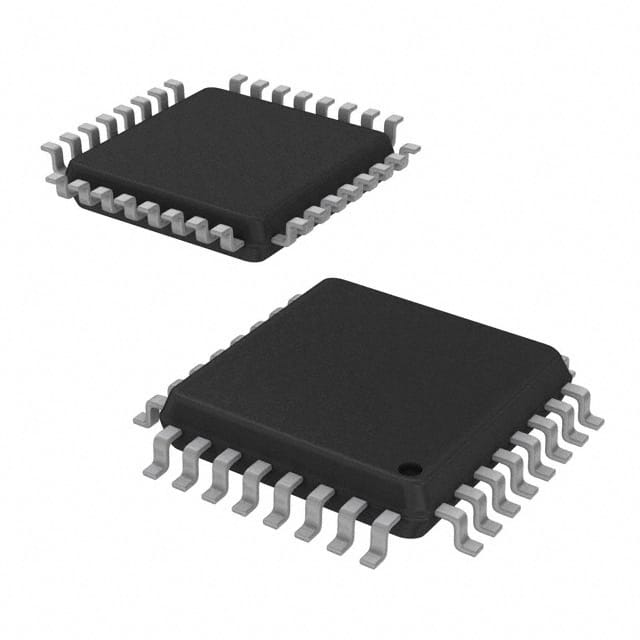
- Part No.:
- MC68HC908EY16MFA
- Manufacturer:
- NXP Semiconductors
- Category:
- Microcontrollers
- Package:
- 32-LQFP
- Datasheet:
-
 MC68HC908EY16MFA.pdf
- Description:
- IC MCU 8BIT 16KB FLASH 32LQFP
- Quantity:
- Payment:

- Shipping:

Inventory:3,416
Please send an inquiry. Send us your inquiry, and we will respond immediately.
Product details
Overview
MC68HC908EY16MFA from NXP (formerly Freescale) is an 8-bit HCS08-core microcontroller with 16 KB on-chip Flash memory, 512 B RAM, and integrated peripherals including 10-bit ADC, ESCI, SPI, dual timers (TIMA/TIMB), BEMF counter, and keyboard interrupt module. It operates at up to 8 MHz bus frequency and supports automotive-grade temperature range (–40°C to +125°C) in a 44-pin QFP package.
For engineers reviewing the MC68HC908EY16MFA datasheet, MC68HC908EY16MFA pinout, MC68HC908EY16MFA application, or MC68HC908EY16MFA equivalent, key selection criteria include Flash endurance (100k erase/write cycles), internal clock generator trim capability, LVI reset threshold (typically 2.5 V), and support for low-power wait/stop modes in motor control and sensor interface designs.
Technical Context
The MC68HC908EY16MFA implements the HCS08 CPU core with 16-bit address space, 8-bit data path, and enhanced instruction set including bit manipulation and indexed addressing. Its Internal Clock Generator (ICG) integrates a digitally controlled oscillator (DCO), modulo-N divider, and frequency comparator for precise internal clock synthesis without external crystal.
Peripheral integration includes a 10-bit successive-approximation ADC with 8 input channels, ESCI supporting asynchronous full-duplex UART operation, and dedicated BEMF counter for brushless DC motor commutation timing. All modules are memory-mapped and accessible via standard I/O registers with configurable interrupt vectors.
Key Specifications
| Parameter | Value and Actual Design Meaning |
|---|---|
| Core Architecture | HCS08 8-bit CPU with 16-bit address bus and enhanced instruction set for efficient embedded control |
| Flash Memory | 16 KB on-chip Flash with 100,000 erase/write cycles and block protection for firmware security |
| RAM Size | 512 bytes of on-chip RAM for variable storage and stack operations |
| ADC Resolution | 10-bit SAR ADC with 8 analog inputs, programmable conversion time, and left/right-justified result formatting |
| Max Bus Frequency | 8 MHz - determines real-time instruction throughput and peripheral timing resolution |
| Operating Voltage | 2.7–5.5 V - enables direct interface with 3.3 V and 5 V logic systems without level translation |
| Temperature Range | –40°C to +125°C - qualified for under-hood automotive and industrial motor control environments |
Pinout & Package
MC68HC908EY16MFA is housed in a 44-pin Quad Flat Package (QFP) with 0.8 mm lead pitch and exposed thermal pad. Package dimensions are 10 × 10 × 1.4 mm (L × W × H), compliant with JEDEC MS-026.
| Pin/Terminal | Circuit Role | Design Meaning |
|---|---|---|
| VDD, VSS | Power supply and ground | Dual power domains: VDD/VSS for digital logic; VDDA/VSSA for analog subsystem isolation |
| PTC4/OSC1, PTC3/OSC2 | Crystal oscillator inputs | Supports external 1–8 MHz crystal or ceramic resonator for precise clock source |
| RST | Active-low reset input | Asynchronous reset with internal pull-up; triggers hardware initialization and vector fetch |
| IRQ | External interrupt request | Edge-triggered interrupt input with configurable polarity for external event capture |
| PTB7–PTB0 | Analog input / timer channel | 8-channel ADC inputs (AD7–AD0) and dual timer capture/compare pins (TBCH1/TBCH0) |
| PTE1/RxD, PTE0/TxD | ESCI serial interface | Full-duplex UART I/O supporting baud rates up to 115.2 kbps at 8 MHz bus clock |
| PTD1/TACH1, PTD0/TACH0 | Tachometer inputs | Dedicated inputs for RPM sensing in BLDC motor applications using BEMF counter module |
Key Features
| Feature | Design Value |
|---|---|
| BEMF Counter Module | Hardware-accelerated back-EMF zero-crossing detection for sensorless BLDC motor commutation |
| Internal Clock Generator (ICG) | Digitally trimmed DCO with ±2% accuracy over voltage/temperature, eliminating need for external crystal in cost-sensitive designs |
| Low-Voltage Inhibit (LVI) | Configurable reset threshold (2.5 V typical) with hysteresis prevents erratic operation during brown-out conditions |
| Computer Operating Properly (COP) | Watchdog timer with selectable timeout (0.5 ms–1.6 s) ensures system recovery from software lockup |
| Keyboard Interrupt (KBD) | Hardware scan engine for up to 32-key matrix with automatic debouncing and interrupt-on-change |
Applications
| Brushless DC Motor Control | Automotive Body Electronics |
|---|---|
Use Scenario: Sensorless commutation of 3-phase BLDC fans or pumps in HVAC and cooling systems. IC Role / Device Role / Timing Role: Primary controller executing commutation logic, reading BEMF zero-crossings, and driving gate drivers via PWM outputs. Use Value: Eliminates Hall-effect sensors and reduces BOM cost while maintaining precise 120° commutation timing via hardware BEMF counter. | Use Scenario: Central body controller managing door locks, window lifts, and mirror adjustment. IC Role / Device Role / Timing Role: Real-time I/O coordinator with KBD scanning, ESCI diagnostics, and LIN-compatible serial communication. Use Value: Integrates keyboard scan, UART, and ADC in one chip-reducing component count and PCB area versus discrete solutions. |
| Industrial Sensor Interface | Appliance Control Unit |
Use Scenario: Temperature, pressure, and current monitoring in industrial PLC I/O modules. IC Role / Device Role / Timing Role: Analog front-end processor converting sensor signals via 10-bit ADC and transmitting data over ESCI to host MCU. Use Value: On-chip 10-bit ADC with programmable sample time and reference options enables accurate 12-bit-equivalent measurements with minimal external components. | Use Scenario: Main control unit in washing machines, dishwashers, and refrigerators. IC Role / Device Role / Timing Role: System orchestrator managing motor drive, user interface, safety interlocks, and energy monitoring. Use Value: Flash endurance (100k cycles) and LVI protection ensure reliable firmware updates and stable operation across wide input voltage fluctuations. |
Equivalent & Alternatives
The following parts are listed as comparable options for similar microcontroller applications.
| Alternative Part | Technical Difference | Application Difference | Selection Advice |
|---|---|---|---|
| MC9RS08KA8CFD | RS08 core, 8 KB Flash, no BEMF counter, lower max frequency (20 MHz core, but 10 MHz bus) | Lacks dedicated BEMF hardware; requires software-based zero-crossing detection | Choose when cost sensitivity outweighs motor control performance requirements |
| S9KEAZ128AMLH | Kinetis E-series ARM Cortex-M0+, 128 KB Flash, 16 KB RAM, integrated CAN, higher power consumption | Offers CAN interface and larger memory but requires different toolchain and layout | Choose for future-proofing, CAN connectivity, or higher computational demands |
Compared with MC9RS08KA8CFD and S9KEAZ128AMLH, the MC68HC908EY16MFA delivers optimal balance of mature HCS08 toolchain support, hardware BEMF acceleration, and automotive-grade reliability - making it uniquely suited for cost-constrained, high-volume BLDC motor control where deterministic timing is critical.
Availability
MC68HC908EY16MFA is available at Aetrix Electronics and suitable for automotive body control, industrial motor drives, appliance control units, and sensor interface modules requiring stable component supply across extended temperature ranges and long production lifecycles.
Supply support for MC68HC908EY16MFA includes scheduled delivery planning, volume procurement assistance, BOM continuity management, traceable sourcing, and lifecycle availability coordination for OEM customers, industrial embedded developers, connected-device designers, and electronics production programs.
Manufacturer
NXP Semiconductors is a global semiconductor leader specializing in secure connectivity solutions for automotive, industrial, and IoT applications.
The MC68HC908EY16MFA belongs to the legacy HCS08 microcontroller family, designed specifically for cost-sensitive, real-time embedded control in automotive and industrial motor systems with emphasis on analog integration and low-power operation.
FAQ
What is the maximum operating frequency of the MC68HC908EY16MFA?
The MC68HC908EY16MFA supports a maximum bus frequency of 8 MHz. This is derived from its internal clock generator's DCO output divided by the modulo-N divider. The actual core instruction execution rate depends on the selected bus prescaler; most instructions execute in 1–3 bus cycles. The MC68HC908EY16MFA maintains timing integrity across its full –40°C to +125°C operating range due to factory-trimmed ICG calibration.
Does the MC68HC908EY16MFA include a hardware BEMF counter?
Yes, the MC68HC908EY16MFA includes a dedicated BEMF Counter Module (BEMF) that detects back-EMF zero-crossing events on motor windings. This hardware accelerator eliminates the need for software-based edge detection and enables precise, jitter-free commutation timing in sensorless BLDC motor applications - a key differentiator versus general-purpose MCUs without this feature.
What packaging and pin count does the MC68HC908EY16MFA use?
The MC68HC908EY16MFA is supplied in a 44-pin Quad Flat Package (QFP) with 0.8 mm lead pitch and an exposed thermal pad. This package supports reflow soldering and provides mechanical stability for automotive vibration environments. Pin assignments include dedicated tachometer inputs (TACH0/TACH1), ESCI serial lines (TxD/RxD), and 8-channel ADC inputs mapped to Port B pins - all documented in Chapter 1.4 of the MC68HC908EY16MFA datasheet.
How many Flash erase/write cycles does the MC68HC908EY16MFA support?
The MC68HC908EY16MFA guarantees 100,000 erase/write cycles for its 16 KB on-chip Flash memory. Each Flash block can be independently protected via the FLASH Block Protect Register (FBPROT), allowing selective locking of bootloader or calibration sections. Endurance testing was performed per JEDEC JESD22-A117, and wear-leveling must be implemented in firmware if field updates exceed cycle limits in specific sectors.
Is the MC68HC908EY16MFA qualified for automotive applications?
Yes, the MC68HC908EY16MFA is AEC-Q100 qualified for automotive applications. It meets Grade 1 specifications (–40°C to +125°C ambient operating temperature), includes Low-Voltage Inhibit (LVI) with hysteresis, COP watchdog, and robust ESD protection (±2 kV HBM). Its Flash memory and I/O structures are validated for automotive longevity requirements, and the part number suffix "MFA" explicitly denotes the automotive-grade variant with extended temperature screening.
MC68HC908EY16MFA Specifications
- Product attributes
- Attribute value
- Manufacturer:
- NXP Semiconductors
- Package/Case:
- 32-LQFP
- Series:
- HC08
- Packaging:
- Tray
- Product Status:
- Obsolete
- Programmable:
- Verified
- Core Processor:
- HC08
- Core Size:
- 8-Bit
- Speed:
- 8MHz
- Connectivity:
- LINbus, SCI, SPI
- Peripherals:
- POR, PWM
- Number of I/O:
- 24
- Program Memory Size:
- 16KB (16K x 8)
- Program Memory Type:
- FLASH
- EEPROM Size:
- -
- RAM Size:
- 512 x 8
- Voltage - Supply (Vcc/Vdd):
- 4.5V ~ 5.5V
- Data Converters:
- A/D 8x10b
- Oscillator Type:
- Internal
- Operating Temperature:
- -40°C ~ 125°C (TA)
- Grade:
- -
- Qualification:
- -
- Mounting Type:
- Surface Mount
- Supplier Device Package:
MC68HC908EY16MFA FAQ
1.How can I place an order for MC68HC908EY16MFA through Aetrix?
Please submit a Request for Quotation (RFQ) for MC68HC908EY16MFA on Aetrix. Our sales agent will provide a competitive quotation and guide you through the order confirmation once you accept the terms.
2.Are the price and stock information for MC68HC908EY16MFA reliable?
The price and inventory of MC68HC908EY16MFA are updated periodically and may fluctuate due to market conditions. Stock and pricing data are typically refreshed every 24 hours. Quotation validity for MC68HC908EY16MFA is usually 5 days.
3.What payment methods are accepted for MC68HC908EY16MFA?
We accept Wire Transfer, PayPal, Credit Card, Western Union, MoneyGram, and Escrow for MC68HC908EY16MFA transactions.
Note: Certain payment methods may incur a processing fee.
4.How is shipping managed for MC68HC908EY16MFA?
MC68HC908EY16MFA orders can be shipped via leading logistics carriers, including DHL, UPS, FedEx, TNT, or Registered Mail.
Once your MC68HC908EY16MFA order is processed, you will receive an email with the shipment details and tracking number.
Note: Tracking information may take up to 24 hours to appear. Express delivery typically takes 3–5 business days.
5.How can I obtain technical support or documentation for MC68HC908EY16MFA?
For technical support, including MC68HC908EY16MFA datasheets, pinout diagrams, or application guidance, please contact our engineering support team. They can provide detailed documentation and assistance for your MC68HC908EY16MFA requirements.
6.How does Aetrix verify that MC68HC908EY16MFA is sourced from the original manufacturer or authorized distributors?
All MC68HC908EY16MFA products on Aetrix are procured from qualified distributors and authorized channels. Our dedicated quality assurance team conducts strict verification, including traceability checks and, if necessary, third-party testing. This ensures that MC68HC908EY16MFA meets industry standards.
7.What is the process for return or replacement of MC68HC908EY16MFA?
All MC68HC908EY16MFA units undergo pre-shipment inspection (PSI). If there is an issue with MC68HC908EY16MFA, returns or replacements are accepted under the following conditions:
1.Quantity discrepancies, incorrect items, or visible external defects (such as breakage or corrosion), acknowledged by Aetrix.
2.The issue is reported within 90 days of delivery.
3.The MC68HC908EY16MFA part is unused and in its original packaging.
Return procedure for MC68HC908EY16MFA:
1.Submit a request within 90 days.
2.Obtain a Return Material Authorization (RMA) from Aetrix.
MC68HC908EY16MFA Tags

-
ATTINY4-TSHR
Microchip Technology
-
ATTINY10-TSHR
Microchip Technology
-
ATTINY10-TS8R
Microchip Technology

-
ATTINY202-SSNR
Microchip Technology
-
ATTINY202-SSFR
Microchip Technology
-
ATTINY402-SSNR
Microchip Technology

-
PIC16F15213T-I/MF
Microchip Technology
-
PIC16F15213-E/MF
Microchip Technology

-
PIC10F200T-I/OT
Microchip Technology
-
ATTINY412-SSNR
Microchip Technology
-
PIC10F202T-I/OT
Microchip Technology

-
ATTINY404-SSNR
Microchip Technology
Tech Hub

A practical engineering guide to 3.3V and 5V logic compatibility, input thresholds, resistor dividers, translator ICs, MOSFET level shifting, I2C pull-ups, timing limits and power-sequencing risks.

The 74HC595 uses push-pull logic outputs, while the TPIC6B595 uses 50 V open-drain DMOS sinks for higher-power loads. This guide compares timing, current limits, 3.3 V interfacing, load wiring, thermal…

The 74HC595 converts serial data into eight stable parallel outputs. This guide covers pin functions, shift and storage timing, OE and MR behavior, drive-current limits, cascading, voltage compatibilit…

A technical comparison of level-sensitive latches and edge-triggered flip-flops, covering timing windows, setup and hold limits, master–slave operation, time borrowing, race-through, HDL inference and…

A D latch stores one bit while Enable controls when data can pass. This reference covers gate-level operation, truth tables, transparency, setup and hold timing, LE versus OE, common ICs and practical …

An SR latch stores one bit through cross-coupled feedback. This engineering reference covers NOR and NAND implementations, truth tables, forbidden-state recovery, gated operation, switch debouncing, fa…

Latch circuits retain one bit through feedback. This technical reference covers SR and D latches, truth tables, transparency, timing limits, latch-versus-flip-flop behavior, applications and common log…

An engineering guide to LED driver operation, constant-current and constant-voltage outputs, linear and switching topologies, dimming, IC selection, calculations, replacement compatibility, and fault c…

Operational amplifier guide covering op amp basics, feedback, ideal vs real op amps, common configurations, buffer circuits, offset, bias current, gain-bandwidth, slew rate, rail-to-rail limits and sel…

Jumper cables guide covering safe connection order, red and black clamp placement, final ground connection, cable gauge, length, clamp quality, copper vs CCA cables, jump starter comparison and battery…


