
 My Inquiry
 My Account


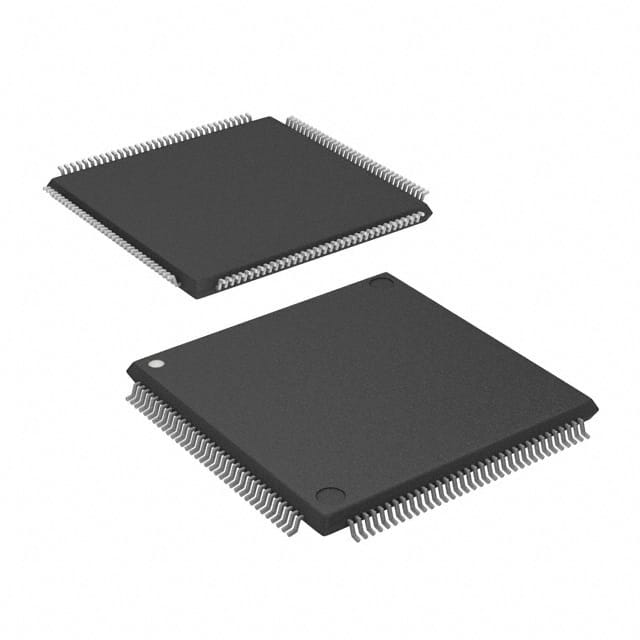
NXP Semiconductors MC68LK332GCPV16
- Part No.:
- MC68LK332GCPV16
- Manufacturer:
- NXP Semiconductors
- Category:
- Microcontrollers
- Package:
- 144-LQFP
- Datasheet:
-
 MC68LK332GCPV16.pdf
- Description:
- IC MCU 32BIT ROMLESS 144LQFP
- Quantity:
- Payment:

- Shipping:

Inventory:4,017
Please send an inquiry. Send us your inquiry, and we will respond immediately.
Product details
Overview
MC68LK332GCPV16 from Freescale Semiconductor (formerly Motorola) is a 32-bit modular microcontroller featuring CPU32 core, System Integration Module (SIM), Time Processor Unit (TPU), Queued Serial Module (QSM), and 2-Kbyte TPURAM. It operates at 16 MHz with −40°C to +85°C temperature range in 132-pin PQFP package, and is used in motion control systems requiring deterministic real-time I/O timing and embedded motor sequencing.
For engineers reviewing the MC68LK332GCPV16 datasheet, MC68LK332GCPV16 pinout, MC68LK332GCPV16 application, or MC68LK332GCPV16 equivalent, key selection considerations include TPU channel count (16), static RAM size (2 KB), PLL-based clock synthesis, external bus interface width (16-bit data/24-bit address), and industrial temperature grade compatibility.
Technical Context
The MC68LK332GCPV16 implements a modular architecture centered on the intermodule bus (IMB), enabling independent operation of CPU32, SIM, TPU, QSM, and TPURAM. Its TPU executes time-critical tasks autonomously via 16 programmable channels with priority levels and dual timer counters, eliminating CPU intervention for PWM generation, quadrature decoding, or input capture.
System clocking uses a PLL synthesizer with selectable reference (XTAL/EXTAL), supporting dynamic frequency changes up to 16 MHz while maintaining full static operation. The SIM provides 11 chip-select outputs, programmable GPIO ports (PE, PF, PC), watchdog timers, and bus monitoring logic - all configurable via supervisor-accessible registers mapped at $YFFA00–$YFFAFF.
Key Specifications
| Parameter | Value and Actual Design Meaning |
|---|---|
| CPU Core | CPU32 - 32-bit CISC core with virtual memory support, background debugging mode, and fully static operation. |
| Max Clock Frequency | 16 MHz - system clock speed validated for industrial temperature range (−40°C to +85°C). |
| TPU Channels | 16 independent bidirectional channels (TPUCH[15:0]) - each supports any time function including PWM, edge detection, and pulse width measurement. |
| RAM Size | 2 Kbytes TPURAM - configurable as general-purpose SRAM or TPU microcode emulation memory. |
| Bus Interface | 16-bit data bus / 24-bit address bus - supports external memory and peripherals via programmable chip selects CS[10:0]. |
| Package | 132-pin Plastic Quad Flat Package (PQFP) - surface-mount, 0.65 mm pitch, JEDEC MS-026AC compliant. |
| Operating Temperature | −40°C to +85°C - qualified for industrial environments without derating. |
Pinout & Package
MC68LK332GCPV16 is housed in a 132-pin PQFP (Plastic Quad Flat Package) with 0.65 mm lead pitch, compliant with JEDEC standard MS-026AC. Pin assignments follow Motorola/Freescale MC68332 family layout, with dedicated TPU channel pins, dual-function GPIO ports (PE, PF, PC), and QSM serial I/O (PQS[7:0]).
| Pin/Terminal | Circuit Role | Design Meaning |
|---|---|---|
| ADDR[23:0] | Address Bus | 24-bit multiplexed address output for external memory/peripheral access. |
| DATA[15:0] | Data Bus | 16-bit bidirectional data path supporting byte/word transfers and dynamic bus sizing. |
| TPUCH[15:0] | TPU Channel I/O | 16 dedicated bidirectional pins for autonomous time-based functions (e.g., PWM, capture, compare). |
| PQS[7:0] | Queued Serial Port | 8-pin serial I/O group supporting QSPI (master/slave) and SCI protocols with hardware queuing. |
| PE[7:0], PF[7:0], PC[6:0] | General-Purpose I/O | Three configurable digital I/O ports with direction control, interrupt capability, and alternate functions. |
| RESET, HALT, BERR | System Control | Asynchronous reset input, bus halt request, and bus error reporting for fault recovery and debug. |
Key Features
| Feature | Design Value |
|---|---|
| Modular IMB Architecture | Enables concurrent execution across CPU32, TPU, and QSM - critical for deterministic real-time response in motion control. |
| Autonomous TPU Engine | Offloads 16-channel timing tasks (e.g., motor commutation, encoder counting) from CPU, reducing latency and jitter. |
| PLL-Based Clock Synthesis | Generates stable 16 MHz system clock from 32.768 kHz crystal or external oscillator; supports runtime frequency scaling. |
| Background Debugging Mode | Hardware-supported debug via BKPT/DSCLK/DSI/DSO pins - enables non-intrusive code inspection and breakpoint execution. |
| Industrial Bus Protection | Integrated watchdog timer, bus monitor, HALT monitor, and spurious interrupt detection - reduces need for external safety circuitry. |
Applications
| Motion Control System | Industrial PLC I/O Module |
|---|---|
|
Use Scenario: Closed-loop servo drive controlling brushless DC motors in CNC machinery. IC Role / Device Role / Timing Role: Primary controller executing position loop, generating 6-channel PWM via TPU, and managing encoder feedback through PQS and TPU capture. Use Value: Deterministic 16-channel TPU eliminates software timing jitter, enabling sub-microsecond PWM resolution and synchronized motor phase switching. |
Use Scenario: Distributed I/O node in factory automation network handling analog/digital sensor inputs and relay outputs. IC Role / Device Role / Timing Role: Local intelligence unit interfacing with fieldbus (via QSM SCI), processing sensor data, and driving discrete outputs using PE/PF ports. Use Value: Integrated 16-bit external bus and 11 chip-selects allow direct connection to ADCs, DACs, and opto-isolated drivers without glue logic. |
| Automated Test Equipment | Power Converter Controller |
|
Use Scenario: Precision waveform generator and measurement subsystem in benchtop ATE platforms. IC Role / Device Role / Timing Role: Timing engine synchronizing DAC updates, ADC sampling, and trigger events using TPU channels and TPURAM lookup tables. Use Value: 2-Kbyte TPURAM configured as microcode RAM enables fast, reprogrammable waveform generation without CPU overhead. |
Use Scenario: Digital controller for three-phase AC-DC rectifiers with active PFC and isolated DC-DC stages. IC Role / Device Role / Timing Role: Real-time regulator executing PID loops, generating interleaved gate drive signals, and monitoring overvoltage/overcurrent faults. Use Value: Fully static CPU32 and TPU allow safe low-power stop (LPSTOP) during idle cycles while preserving register state and TPU operation. |
Equivalent & Alternatives
The following parts are listed as comparable options for similar 32-bit motion control microcontroller applications.
| Alternative Part | Technical Difference | Application Difference | Selection Advice |
|---|---|---|---|
| MC68332GCFC16 | Same CPU32 core, TPU, QSM, and TPURAM; identical 132-pin PQFP package and 16 MHz rating, but rated for −40°C to +85°C without "LK" suffix designation. | Functionally identical; used in legacy designs where MC68LK332GCPV16 was rebranded under updated Freescale part numbering. | Select MC68332GCFC16 when sourcing from authorized distributors with full traceability and current lifecycle status. |
| MC9328MX1CZK50 | ARM920T core, no TPU; relies on software-timed GPIO or peripheral timers for motion control functions; larger 256-pin BGA package. | Lacks hardware-accelerated time processing - requires significant firmware effort to replicate MC68LK332GCPV16's deterministic TPU behavior. | Consider only for new designs requiring higher MIPS and Linux support, with willingness to implement TPU-equivalent functionality in software. |
Compared with MC68LK332GCPV16, MC68332GCFC16 offers identical architecture and pinout with verified industrial qualification, while MC9328MX1CZK50 trades deterministic hardware timing for general-purpose processing power - making the former a drop-in replacement and the latter a platform-level redesign candidate.
Availability
MC68LK332GCPV16 is available at Aetrix Electronics and suitable for motion control systems, industrial PLC modules, automated test equipment, and power converter controllers requiring stable component supply across extended product lifecycles.
Supply support for MC68LK332GCPV16 includes scheduled delivery planning, volume procurement assistance, BOM continuity management, traceable sourcing, and lifecycle availability coordination for OEM customers, industrial embedded developers, connected-device designers, and electronics production programs.
Manufacturer
Freescale Semiconductor (now part of NXP Semiconductors) pioneered high-integration microcontrollers for real-time industrial control, emphasizing modularity, determinism, and long-term availability.
The MC68LK332GCPV16 belongs to the MC68332 family designed specifically for motion control and embedded automation applications requiring autonomous hardware timing, robust bus interfacing, and industrial-grade reliability.
FAQ
What is the primary function of the TPU in the MC68LK332GCPV16?
The Time Processor Unit (TPU) in the MC68LK332GCPV16 is a dedicated 16-channel microengine that executes time-critical I/O operations independently of the CPU32 core. It handles functions such as PWM generation, quadrature encoder input, input capture, output compare, and pulse width measurement - all with sub-microsecond timing precision. This offloads timing tasks from the main CPU, ensuring deterministic real-time performance essential for motion control applications using the MC68LK332GCPV16.
Does the MC68LK332GCPV16 support external memory expansion?
Yes, the MC68LK332GCPV16 supports external memory expansion via its 24-bit address bus and 16-bit data bus, with eleven programmable chip-select outputs (CS[10:0]) and dedicated control signals including AS, R/W, DS, and BERR. Each chip select has associated base address and option registers in the SIM, allowing flexible memory mapping for ROM, RAM, and peripheral devices - a key capability confirmed in the MC68LK332GCPV16's external bus interface specification.
What debugging interfaces does the MC68LK332GCPV16 provide?
The MC68LK332GCPV16 includes a hardware-supported Background Debugging Mode (BDM) accessible through four dedicated pins: BKPT/DSCLK, DSI/IFETCH, DSO/IPIPE, and RESET. This interface enables non-intrusive program loading, breakpoint setting, register inspection, and single-stepping without requiring a JTAG adapter. The BDM functionality is integral to the CPU32 core and fully documented in the MC68LK332GCPV16 technical summary.
Is the MC68LK332GCPV16 pin-compatible with other MC68332 variants?
Yes, the MC68LK332GCPV16 is pin-compatible with other 132-pin PQFP variants of the MC68332 family, including MC68332GCFC16 and MC68332GVFC16. All share identical pin assignments for ADDR[23:0], DATA[15:0], TPUCH[15:0], PQS[7:0], and GPIO ports (PE, PF, PC), as verified in Figure 2 of the MC68332TS/D datasheet. Differences are limited to temperature grade and internal configuration - not pinout.
What power management features does the MC68LK332GCPV16 offer?
The MC68LK332GCPV16 includes a low-power stop (LPSTOP) instruction that halts the system clock while preserving register and memory contents - enabled by its fully static CPU32 design. It also supports selective module gating and standby RAM retention via VSTBY supply. These features allow deep power-down states in battery-backed or energy-sensitive applications, with full state recovery upon wake-up - a capability explicitly specified for the MC68LK332GCPV16 in its technical summary.
MC68LK332GCPV16 Specifications
- Product attributes
- Attribute value
- Manufacturer:
- NXP Semiconductors
- Package/Case:
- 144-LQFP
- Series:
- M683xx
- Packaging:
- Tray
- Product Status:
- Obsolete
- Programmable:
- Not Verified
- Core Processor:
- CPU32
- Core Size:
- 32-Bit Single-Core
- Speed:
- 16.78MHz
- Connectivity:
- EBI/EMI, SCI, SPI, UART/USART
- Peripherals:
- POR, PWM, WDT
- Number of I/O:
- 15
- Program Memory Size:
- -
- Program Memory Type:
- ROMless
- EEPROM Size:
- -
- RAM Size:
- 2K x 8
- Voltage - Supply (Vcc/Vdd):
- 3V ~ 3.6V
- Data Converters:
- -
- Oscillator Type:
- Internal
- Operating Temperature:
- -40°C ~ 85°C (TA)
- Grade:
- -
- Qualification:
- -
- Mounting Type:
- Surface Mount
- Supplier Device Package:
MC68LK332GCPV16 FAQ
1.How can I place an order for MC68LK332GCPV16 through Aetrix?
Please submit a Request for Quotation (RFQ) for MC68LK332GCPV16 on Aetrix. Our sales agent will provide a competitive quotation and guide you through the order confirmation once you accept the terms.
2.Are the price and stock information for MC68LK332GCPV16 reliable?
The price and inventory of MC68LK332GCPV16 are updated periodically and may fluctuate due to market conditions. Stock and pricing data are typically refreshed every 24 hours. Quotation validity for MC68LK332GCPV16 is usually 5 days.
3.What payment methods are accepted for MC68LK332GCPV16?
We accept Wire Transfer, PayPal, Credit Card, Western Union, MoneyGram, and Escrow for MC68LK332GCPV16 transactions.
Note: Certain payment methods may incur a processing fee.
4.How is shipping managed for MC68LK332GCPV16?
MC68LK332GCPV16 orders can be shipped via leading logistics carriers, including DHL, UPS, FedEx, TNT, or Registered Mail.
Once your MC68LK332GCPV16 order is processed, you will receive an email with the shipment details and tracking number.
Note: Tracking information may take up to 24 hours to appear. Express delivery typically takes 3–5 business days.
5.How can I obtain technical support or documentation for MC68LK332GCPV16?
For technical support, including MC68LK332GCPV16 datasheets, pinout diagrams, or application guidance, please contact our engineering support team. They can provide detailed documentation and assistance for your MC68LK332GCPV16 requirements.
6.How does Aetrix verify that MC68LK332GCPV16 is sourced from the original manufacturer or authorized distributors?
All MC68LK332GCPV16 products on Aetrix are procured from qualified distributors and authorized channels. Our dedicated quality assurance team conducts strict verification, including traceability checks and, if necessary, third-party testing. This ensures that MC68LK332GCPV16 meets industry standards.
7.What is the process for return or replacement of MC68LK332GCPV16?
All MC68LK332GCPV16 units undergo pre-shipment inspection (PSI). If there is an issue with MC68LK332GCPV16, returns or replacements are accepted under the following conditions:
1.Quantity discrepancies, incorrect items, or visible external defects (such as breakage or corrosion), acknowledged by Aetrix.
2.The issue is reported within 90 days of delivery.
3.The MC68LK332GCPV16 part is unused and in its original packaging.
Return procedure for MC68LK332GCPV16:
1.Submit a request within 90 days.
2.Obtain a Return Material Authorization (RMA) from Aetrix.
MC68LK332GCPV16 Tags

-
ATTINY4-TSHR
Microchip Technology
-
ATTINY10-TSHR
Microchip Technology
-
ATTINY10-TS8R
Microchip Technology

-
ATTINY202-SSNR
Microchip Technology
-
ATTINY202-SSFR
Microchip Technology
-
ATTINY402-SSNR
Microchip Technology
-
PIC16F15213T-I/MF
Microchip Technology
-
PIC16F15213-E/MF
Microchip Technology

-
PIC10F200T-I/OT
Microchip Technology
-
ATTINY412-SSNR
Microchip Technology
-
PIC10F202T-I/OT
Microchip Technology
-
ATTINY404-SSNR
Microchip Technology
Tech Hub

A practical engineering guide to 3.3V and 5V logic compatibility, input thresholds, resistor dividers, translator ICs, MOSFET level shifting, I2C pull-ups, timing limits and power-sequencing risks.

The 74HC595 uses push-pull logic outputs, while the TPIC6B595 uses 50 V open-drain DMOS sinks for higher-power loads. This guide compares timing, current limits, 3.3 V interfacing, load wiring, thermal…

The 74HC595 converts serial data into eight stable parallel outputs. This guide covers pin functions, shift and storage timing, OE and MR behavior, drive-current limits, cascading, voltage compatibilit…

A technical comparison of level-sensitive latches and edge-triggered flip-flops, covering timing windows, setup and hold limits, master–slave operation, time borrowing, race-through, HDL inference and…

A D latch stores one bit while Enable controls when data can pass. This reference covers gate-level operation, truth tables, transparency, setup and hold timing, LE versus OE, common ICs and practical …

An SR latch stores one bit through cross-coupled feedback. This engineering reference covers NOR and NAND implementations, truth tables, forbidden-state recovery, gated operation, switch debouncing, fa…

Latch circuits retain one bit through feedback. This technical reference covers SR and D latches, truth tables, transparency, timing limits, latch-versus-flip-flop behavior, applications and common log…

An engineering guide to LED driver operation, constant-current and constant-voltage outputs, linear and switching topologies, dimming, IC selection, calculations, replacement compatibility, and fault c…

Operational amplifier guide covering op amp basics, feedback, ideal vs real op amps, common configurations, buffer circuits, offset, bias current, gain-bandwidth, slew rate, rail-to-rail limits and sel…

Jumper cables guide covering safe connection order, red and black clamp placement, final ground connection, cable gauge, length, clamp quality, copper vs CCA cables, jump starter comparison and battery…


