
 My Inquiry
 My Account


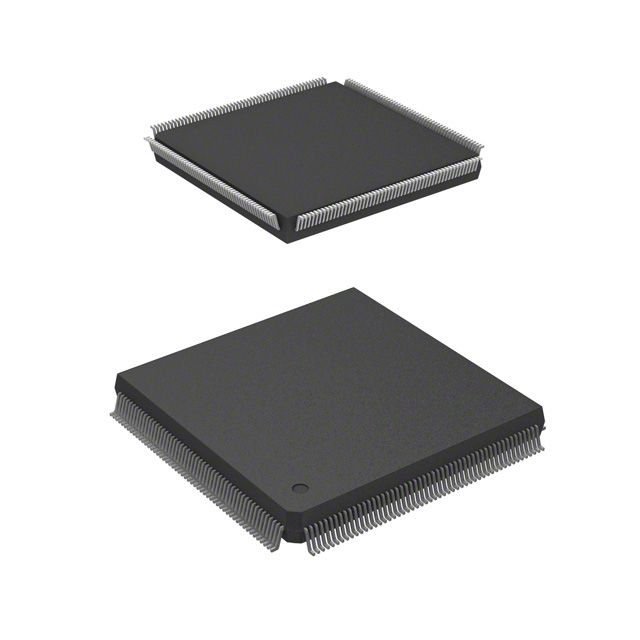
NXP Semiconductors MC68MH360CAI25L
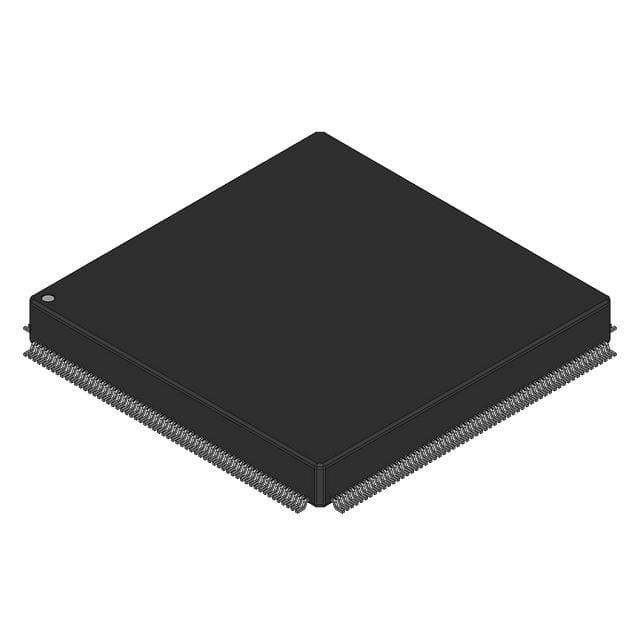
- Part No.:
- MC68MH360CAI25L
- Manufacturer:
- NXP Semiconductors
- Category:
- Microprocessors
- Package:
- 240-BFQFP
- Datasheet:
-
 MC68MH360CAI25L.pdf
- Description:
- IC MPU M683XX 25MHZ 240FQFP
- Quantity:
- Payment:

- Shipping:

Inventory:2,459
Please send an inquiry. Send us your inquiry, and we will respond immediately.
Product details
Overview
MC68MH360CAI25L from Freescale Semiconductor is a QUICC (Quad Integrated Communications Controller) microcontroller unit integrating a 25 MHz ColdFire core, dual-channel T1/E1 multichannel controller (QMC), four SCCs, and CPM-based communications processing. It supports HDLC/transparent serial protocols, time-slot assignment for TDM interfaces, and MSC (Multi-Subchannel) microcode for subchannelized ISDN BRI/PRI framing. Used in telecom access gateways and ISDN BRI bridges.
For engineers reviewing the MC68MH360CAI25L datasheet, MC68MH360CAI25L pinout, MC68MH360CAI25L application, or MC68MH360CAI25L equivalent, key selection criteria include QMC channel count (64 logical channels), T1/E1 frame sync capability, CPM offload efficiency, and support for MSC microcode-driven subchannel routing in ISDN S/T or U interface designs.
Technical Context
The MC68MH360CAI25L implements a dedicated Communications Processor Module (CPM) separate from its 25 MHz ColdFire CPU core, enabling concurrent real-time protocol handling across four Serial Communication Controllers (SCCs). Its QMC subsystem manages up to 64 time slots with programmable Rx/Tx mapping via Time Slot Assignment Tables stored in dual-ported RAM.
It supports both HDLC and transparent serial modes per channel, with full interrupt-driven buffer descriptor management, global overrun/underrun detection, and on-the-fly SCC reconfiguration. The MSC microcode extension enables two-bit subchannel multiplexing within a single T1/E1 timeslot - critical for cost-efficient ISDN BRI termination.
Key Specifications
| Parameter | Value and Actual Design Meaning |
|---|---|
| CPU Core | ColdFire V2 core @ 25 MHz - delivers deterministic real-time control with low power consumption for embedded telecom edge devices. |
| QMC Channels | 64 logical channels - enables simultaneous handling of multiple ISDN BRI lines or E1/T1 trunk segments without external framing logic. |
| SCCs | 4 independent Serial Communication Controllers - each configurable as HDLC, transparent, or UART, supporting mixed protocol stacks. |
| Memory Interface | 32-bit data bus, 24-bit address bus - supports up to 16 MB external DRAM/SRAM for packet buffers and parameter RAM. |
| T1/E1 Support | Native T1 (1.544 Mbps) and E1 (2.048 Mbps) framing - includes FSC/DCL generation, CRC-4 insertion/checking, and robbed-bit signaling handling. |
| MSC Microcode | Enabled firmware extension - allows two-bit subchannel demultiplexing per timeslot, essential for ISDN BRI S/T interface aggregation. |
Pinout & Package
MC68MH360CAI25L is housed in a 256-pin PQFP (Plastic Quad Flat Package) with 0.65 mm pitch, thermally enhanced for industrial temperature operation (–40°C to +85°C). Pinout follows Freescale's standard QUICC32 footprint compatible with MC68EN360 and MPC860MH families.
| Pin/Terminal | Circuit Role | Design Meaning |
|---|---|---|
| CLKIN | External Clock Input | Accepts 25 MHz crystal or oscillator input to drive ColdFire core and CPM timing domains synchronously. |
| TSARx / TSATx | Time Slot Assignment RAM Address | Directly maps QMC internal dual-ported RAM for Rx/Tx time slot table pointer registers (TSATRx/TSATTx). |
| SCC1_Tx / SCC1_Rx | Serial Data I/O | Dedicated differential or single-ended pins for SCC1 HDLC/transparent channel - supports RS-485, V.35, or ISDN S/T physical layer interfacing. |
| FSC / DCL | Frame Sync & Data Clock | Outputs frame synchronization and bit clock signals for T1/E1 line interfaces - programmable polarity and phase alignment. |
| INT0–INT3 | Interrupt Request Inputs | Four priority-encoded interrupt inputs for external event signaling - used for alarm reporting, line status changes, or external controller handshaking. |
Key Features
| Feature | Design Value |
|---|---|
| QMC Time Slot Assignment | Programmable 64-slot Rx/Tx mapping via dual-ported RAM - eliminates need for external TDM switch ICs in multi-line ISDN concentrators. |
| On-the-Fly SCC Reconfiguration | Dynamic mode switching between HDLC and transparent without reset - enables runtime protocol adaptation in hybrid telecom/data networks. |
| Buffer Descriptor Management | Hardware-accelerated Rx/Tx BD chaining with automatic wrap-around and status flagging - reduces CPU overhead for high-throughput packet forwarding. |
| Global Error Detection | Dedicated GUN/GOV flags for FIFO underrun/overrun - provides deterministic error recovery in bursty TDM traffic without software polling. |
| MPC860MH Compatibility | Shared memory map and QMC register set with MPC860MH - simplifies migration path to PowerQUICC architecture for higher throughput designs. |
Applications
| ISDN BRI Access Gateway | T1/E1 Channel Bank |
|---|---|
|
Use Scenario: Aggregating up to 16 ISDN BRI lines into a single T1/E1 trunk for PBX interconnection or VoIP gateway front-end. IC Role / Device Role / Timing Role: MC68MH360CAI25L acts as the line-side TDM controller and protocol processor, managing S/T interface timing, B-channel multiplexing, and D-channel HDLC framing. Use Value: Enables full BRI line termination with MSC microcode subchanneling - reducing component count by eliminating discrete ISDN transceivers and TDM switches. |
Use Scenario: Providing 24/30-channel T1/E1 interface for remote DSLAM or fiber node aggregation in last-mile access networks. IC Role / Device Role / Timing Role: MC68MH360CAI25L serves as the primary TDM controller, generating FSC/DCL, performing CRC-4 checking, and routing timeslots to internal Ethernet or external packet processors. Use Value: Delivers deterministic T1/E1 framing at 25 MHz core speed with zero software intervention for frame sync - meeting GR-474 and ITU-T G.704 compliance requirements. |
| Ethernet-to-BRI Bridge | Industrial Protocol Converter |
|
Use Scenario: Bridging Ethernet LAN traffic to ISDN BRI for secure backup WAN links in SCADA or retail POS systems. IC Role / Device Role / Timing Role: MC68MH360CAI25L handles BRI Layer 1/2 termination, PPP/HDLC encapsulation, and Ethernet MAC interface via its integrated CPM DMA engine. Use Value: Integrates full BRI stack offload (including L2 LAPD and D-channel signaling) - freeing host CPU for application-layer encryption and QoS policy enforcement. |
Use Scenario: Converting Modbus RTU over RS-485 to TCP/IP over Ethernet in factory automation gateways. IC Role / Device Role / Timing Role: MC68MH360CAI25L uses SCC2 in transparent mode for serial protocol parsing and SCC3 for Ethernet MAC control - synchronizing serial and packet domains via shared CPM resources. Use Value: Achieves sub-10 ms end-to-end latency for serial-to-Ethernet conversion using hardware-assisted buffer descriptors and zero-copy DMA transfers. |
Equivalent & Alternatives
The following parts are listed as comparable options for similar multichannel TDM controller applications.
| Alternative Part | Technical Difference | Application Difference | Selection Advice |
|---|---|---|---|
| MPC860MHZQ25D4 | PowerPC 603e core @ 25 MHz; identical QMC and SCC register set; larger on-chip RAM (4 KB vs. 2 KB); supports PCI interface. | Better suited for higher-bandwidth packet processing where CPM offload must coexist with PCI-hosted network processors. | Select when migrating from ColdFire to PowerQUICC ecosystem or requiring PCI expansion capability. |
| MC68EN360CZP25 | No QMC block; only basic SCCs and Ethernet MAC; lacks time-slot assignment and MSC microcode; lower pin count (160-pin PQFP). | Targeted at simpler Ethernet-to-serial bridges without TDM aggregation needs. | Select only for cost-sensitive non-TDM applications where QMC functionality is unnecessary. |
Compared with MPC860MHZQ25D4 and MC68EN360CZP25, the MC68MH360CAI25L uniquely balances ColdFire real-time determinism, full QMC-based T1/E1 channel bank capability, and MSC microcode - making it the optimal choice for ISDN BRI concentrators and legacy TDM edge nodes requiring minimal BOM complexity.
Availability
MC68MH360CAI25L is available at Aetrix Electronics and suitable for ISDN access gateways, T1/E1 channel banks, Ethernet-to-BRI bridges, and industrial protocol converters requiring stable component supply across extended product lifecycles.
Supply support for MC68MH360CAI25L includes scheduled delivery planning, volume procurement assistance, BOM continuity management, traceable sourcing, and lifecycle availability coordination for OEM customers, industrial embedded developers, connected-device designers, and electronics production programs.
Manufacturer
Freescale Semiconductor (now part of NXP Semiconductors) was a leading designer of embedded processors and analog/mixed-signal ICs for automotive, industrial, and networking markets.
The MC68MH360CAI25L belongs to the QUICC family - engineered specifically for carrier-grade TDM interface consolidation, ISDN protocol acceleration, and deterministic real-time communications processing in telecom edge infrastructure.
FAQ
What is the maximum number of logical channels supported by the QMC in MC68MH360CAI25L?
The QMC in MC68MH360CAI25L supports up to 64 logical channels through programmable time-slot assignment tables. This capacity is implemented in dual-ported RAM and enables full T1 (24-channel) or E1 (30-channel) trunk handling with spare slots for signaling or future expansion. Each logical channel can be independently configured for HDLC or transparent mode via its CHAMR register.
Does MC68MH360CAI25L support ISDN S/T physical layer directly?
No, MC68MH360CAI25L does not integrate ISDN S/T line drivers or receivers. It provides the digital baseband interface (FSC, DCL, and serial data) and protocol processing (LAPD, MSC microcode), requiring external components like MC145574 or ZL501xx for S/T physical layer compliance. The MC68MH360CAI25L generates precise frame sync and data clocks aligned to 2.048 MHz or 1.544 MHz standards.
How does the MSC microcode in MC68MH360CAI25L improve ISDN BRI efficiency?
The MSC microcode in MC68MH360CAI25L enables two-bit subchannel multiplexing within a single T1/E1 timeslot, allowing up to four B-channels to share one timeslot. This doubles effective BRI line density per physical interface - reducing required TDM bandwidth and external PHY count. The microcode executes within the CPM, requiring no CPU cycles or additional memory.
What is the operating temperature range for MC68MH360CAI25L?
The MC68MH360CAI25L is rated for industrial temperature operation from –40°C to +85°C. This specification is guaranteed under continuous operation with proper PCB thermal design and meets Freescale's qualification standards for extended-life telecom equipment deployed in uncontrolled environments such as street cabinets or remote DSLAMs.
Can MC68MH360CAI25L replace MC68360 in existing designs?
MC68MH360CAI25L is a direct functional superset of MC68360 with added QMC and MSC capabilities. Pin compatibility is maintained in the 256-pin PQFP package, and register-level backward compatibility is preserved for all legacy SCC and CPM functions. However, QMC-specific registers and memory-mapped regions require updated initialization code and parameter RAM layout.
MC68MH360CAI25L Specifications
- Product attributes
- Attribute value
- Manufacturer:
- NXP Semiconductors
- Package/Case:
- 240-BFQFP
- Series:
- M683xx
- Packaging:
- Tray
- Product Status:
- Obsolete
- Core Processor:
- CPU32+
- Number of Cores/Bus Width:
- 1 Core, 32-Bit
- Speed:
- 25MHz
- Co-Processors/DSP:
- Communications; CPM
- RAM Controllers:
- DRAM
- Graphics Acceleration:
- No
- Display & Interface Controllers:
- -
- Ethernet:
- 10Mbps (1)
- SATA:
- -
- USB:
- -
- Voltage - I/O:
- 5.0V
- Operating Temperature:
- -40°C ~ 85°C (TA)
- Grade:
- -
- Qualification:
- -
- Security Features:
- -
- Mounting Type:
- Surface Mount
- Supplier Device Package:
- 240-FQFP (32x32)
- Additional Interfaces:
- SCC, SMC, SPI
MC68MH360CAI25L FAQ
1.How can I place an order for MC68MH360CAI25L through Aetrix?
Please submit a Request for Quotation (RFQ) for MC68MH360CAI25L on Aetrix. Our sales agent will provide a competitive quotation and guide you through the order confirmation once you accept the terms.
2.Are the price and stock information for MC68MH360CAI25L reliable?
The price and inventory of MC68MH360CAI25L are updated periodically and may fluctuate due to market conditions. Stock and pricing data are typically refreshed every 24 hours. Quotation validity for MC68MH360CAI25L is usually 5 days.
3.What payment methods are accepted for MC68MH360CAI25L?
We accept Wire Transfer, PayPal, Credit Card, Western Union, MoneyGram, and Escrow for MC68MH360CAI25L transactions.
Note: Certain payment methods may incur a processing fee.
4.How is shipping managed for MC68MH360CAI25L?
MC68MH360CAI25L orders can be shipped via leading logistics carriers, including DHL, UPS, FedEx, TNT, or Registered Mail.
Once your MC68MH360CAI25L order is processed, you will receive an email with the shipment details and tracking number.
Note: Tracking information may take up to 24 hours to appear. Express delivery typically takes 3–5 business days.
5.How can I obtain technical support or documentation for MC68MH360CAI25L?
For technical support, including MC68MH360CAI25L datasheets, pinout diagrams, or application guidance, please contact our engineering support team. They can provide detailed documentation and assistance for your MC68MH360CAI25L requirements.
6.How does Aetrix verify that MC68MH360CAI25L is sourced from the original manufacturer or authorized distributors?
All MC68MH360CAI25L products on Aetrix are procured from qualified distributors and authorized channels. Our dedicated quality assurance team conducts strict verification, including traceability checks and, if necessary, third-party testing. This ensures that MC68MH360CAI25L meets industry standards.
7.What is the process for return or replacement of MC68MH360CAI25L?
All MC68MH360CAI25L units undergo pre-shipment inspection (PSI). If there is an issue with MC68MH360CAI25L, returns or replacements are accepted under the following conditions:
1.Quantity discrepancies, incorrect items, or visible external defects (such as breakage or corrosion), acknowledged by Aetrix.
2.The issue is reported within 90 days of delivery.
3.The MC68MH360CAI25L part is unused and in its original packaging.
Return procedure for MC68MH360CAI25L:
1.Submit a request within 90 days.
2.Obtain a Return Material Authorization (RMA) from Aetrix.
MC68MH360CAI25L Tags
-
AT91SAM9260B-CU-999
Microchip Technology
-
AT91SAM9G25-CU
Microchip Technology
-
ATSAMA5D27C-CU
Microchip Technology
-
AT91SAM9X35-CU
Microchip Technology
-
AT91SAM9X25-CU
Microchip Technology
-
MCIMX6Y2CVM08AB
NXP Semiconductors
.JPG)
-
AM3352BZCZ100
Texas Instruments
-
AT91SAM9260B-CU
Microchip Technology
-
AT91SAM9260B-QU
Microchip Technology
-
ATSAMA5D31A-CU
Microchip Technology
-
AT91SAM9G20B-CU-999
Microchip Technology
-
MCIMX6Y2CVM05AB
NXP Semiconductors
Tech Hub

A practical engineering guide to 3.3V and 5V logic compatibility, input thresholds, resistor dividers, translator ICs, MOSFET level shifting, I2C pull-ups, timing limits and power-sequencing risks.

The 74HC595 uses push-pull logic outputs, while the TPIC6B595 uses 50 V open-drain DMOS sinks for higher-power loads. This guide compares timing, current limits, 3.3 V interfacing, load wiring, thermal…

The 74HC595 converts serial data into eight stable parallel outputs. This guide covers pin functions, shift and storage timing, OE and MR behavior, drive-current limits, cascading, voltage compatibilit…

A technical comparison of level-sensitive latches and edge-triggered flip-flops, covering timing windows, setup and hold limits, master–slave operation, time borrowing, race-through, HDL inference and…

A D latch stores one bit while Enable controls when data can pass. This reference covers gate-level operation, truth tables, transparency, setup and hold timing, LE versus OE, common ICs and practical …

An SR latch stores one bit through cross-coupled feedback. This engineering reference covers NOR and NAND implementations, truth tables, forbidden-state recovery, gated operation, switch debouncing, fa…

Latch circuits retain one bit through feedback. This technical reference covers SR and D latches, truth tables, transparency, timing limits, latch-versus-flip-flop behavior, applications and common log…

An engineering guide to LED driver operation, constant-current and constant-voltage outputs, linear and switching topologies, dimming, IC selection, calculations, replacement compatibility, and fault c…

Operational amplifier guide covering op amp basics, feedback, ideal vs real op amps, common configurations, buffer circuits, offset, bias current, gain-bandwidth, slew rate, rail-to-rail limits and sel…

Jumper cables guide covering safe connection order, red and black clamp placement, final ground connection, cable gauge, length, clamp quality, copper vs CCA cables, jump starter comparison and battery…


