
 My Inquiry
 My Account


NXP Semiconductors MC68SEC000CAA20
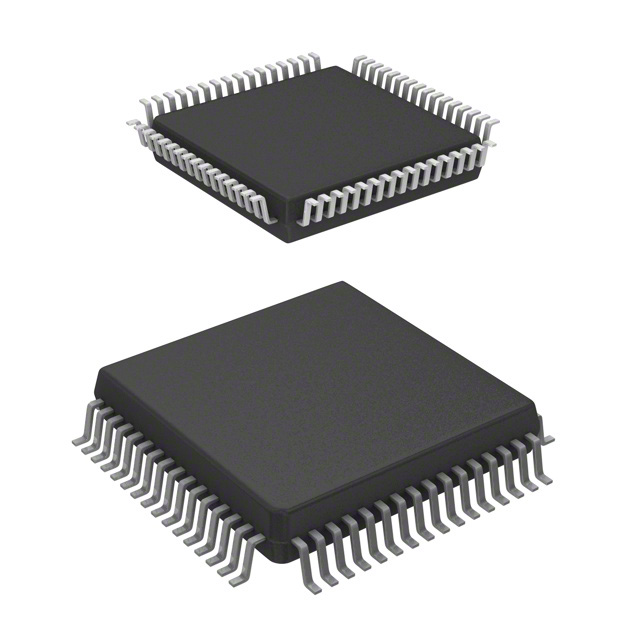
- Part No.:
- MC68SEC000CAA20
- Manufacturer:
- NXP Semiconductors
- Category:
- Microprocessors
- Package:
- 64-QFP
- Datasheet:
-
 MC68SEC000CAA20.pdf
- Description:
- IC MPU M680X0 20MHZ 64QFP
- Quantity:
- Payment:

- Shipping:

Inventory:2,335
Please send an inquiry. Send us your inquiry, and we will respond immediately.
Product details
Overview
MC68SEC000 from Motorola (now NXP/Freescale) is a static 32-bit embedded microprocessor engineered for ultra-low-power applications. It delivers pin-for-pin compatibility with the MC68EC000, operates at 20 MHz, supports 3.3V or 5.0V supply, features 24-bit address/16-bit data bus, and achieves 0.5 µA standby current - enabling use in battery-powered handheld devices like PDAs and portable test equipment.
For engineers reviewing the MC68SEC000 datasheet, MC68SEC000 pinout, MC68SEC000 application, or MC68SEC000 equivalent, key selection considerations include static operation capability, M68000 family object-code compatibility, 64-pin QFP/TQFP package footprint, low-voltage power management, and interrupt-level support up to seven priority levels.
Technical Context
The MC68SEC000 implements a fully static HCMOS version of the M68000 architecture, allowing clock suspension without state loss. Its internal 32-bit registers, 16-Mbyte linear addressing range, and 14 addressing modes enable efficient high-level language execution while maintaining binary compatibility across the M68000 Family.
Hardware compatibility with the MC68EC000 extends to pinout, bus timing, and control signal behavior - including AS, R/W, UDS/LDS, DTACK, and IPL0–IPL2 interrupt prioritization. The processor supports configurable 8-/16-bit data bus width via the MODE pin and provides function code outputs (FC2–FC0) for supervisor/user mode and address space identification.
Key Specifications
| Parameter | Value and Actual Design Meaning |
|---|---|
| Core Architecture | M68000-family 32-bit CPU with static design enabling zero-power clock halt |
| Max Clock Frequency | 20 MHz - defines maximum instruction throughput and real-time response latency |
| Supply Voltage | 3.3V or 5.0V - dual-voltage operation enables drop-in replacement in legacy 5V systems or new low-power 3.3V designs |
| Standby Current | 0.5 µA typical at 3.3V - enables multi-year battery life in always-on portable instrumentation |
| Address Bus Width | 24-bit - supports 16 Mbyte linear memory map for embedded OS and application code storage |
| Data Bus Width | Statically selectable 8- or 16-bit - reduces PCB trace count and simplifies interface to legacy peripherals |
| Interrupt Levels | 7 priority levels (IPL0–IPL2 + AVEC) - enables deterministic real-time servicing of multiple external events |
Pinout & Package
MC68SEC000 is available in two 64-pin surface-mount packages: plastic Quad Flat Pack (14.0 mm × 14.0 mm, 0.8 mm lead pitch) and Thin Quad Flat Pack (10.0 mm × 10.0 mm, 0.5 mm lead pitch). Both share identical pin assignment per Figure 3 of the product brief.
| Pin/Terminal | Circuit Role | Design Meaning |
|---|---|---|
| A23–A0 | 24-bit unidirectional address bus | Drives memory/peripheral address during non-interrupt cycles; A3–A1 encode interrupt level during vector fetch |
| D15–D0 | 16-bit bidirectional data bus | Transfers instructions/data; width reduced to 8-bit when MODE = low |
| AS | Address Strobe | Indicates valid address on A23–A0; used by peripherals to latch address |
| R/W | Read/Write control | High = read, low = write; synchronizes data direction on D15–D0 |
| UDS/LDS | Upper/Lower Data Strobes | Select byte lanes during 16-bit transfers; both active for full-word access |
| DTACK | Data Transfer Acknowledge | Externally generated signal confirming bus cycle completion; enables asynchronous peripheral interfacing |
| IPL0–IPL2 | Interrupt Priority Level inputs | Three-bit encoded input selecting one of seven maskable interrupt levels |
| RESET/HALT | System control inputs | RESET initializes CPU state; HALT suspends execution while preserving registers and bus state |
Key Features
| Feature | Design Value |
|---|---|
| Static core implementation | Enables indefinite clock stoppage with zero current draw and full register retention - critical for intermittent-sensing applications |
| Pin-for-pin compatibility with MC68EC000 | Allows direct hardware replacement in existing 64-pin QFP designs without PCB revision or layout change |
| M68000 family object-code compatibility | Permits reuse of compiled firmware, toolchains, and debug infrastructure across 68K-based platforms |
| Configurable 8-/16-bit data bus | Reduces system cost and complexity by supporting legacy 8-bit peripherals without glue logic |
| Seven-level priority interrupt controller | Supports deterministic real-time response to time-critical events such as sensor triggers or communication timeouts |
Applications
| Portable Medical Instruments | Industrial Handheld Testers |
|---|---|
|
Use Scenario: Battery-powered digital multimeter with LCD display, serial communication, and auto-ranging circuitry. IC Role / Device Role / Timing Role: Main system controller executing measurement algorithms, managing user interface, and coordinating ADC/DAC peripherals. Use Value: 0.5 µA static standby current extends battery life to >2 years; 24-bit addressing accommodates firmware, calibration tables, and UI assets in on-board Flash. |
Use Scenario: Ruggedized field tester for loop calibration, thermocouple simulation, and HART protocol diagnostics. IC Role / Device Role / Timing Role: Embedded host processor handling analog front-end control, communication stack, and real-time display updates. Use Value: Pin compatibility with MC68EC000 allows reuse of proven industrial PCB layouts; static operation enables instant wake-from-sleep response to button press or signal event. |
| Consumer Electronic Games | Smart Sensor Nodes |
|
Use Scenario: Low-cost handheld game console with cartridge-based ROM, monochrome LCD, and tactile keypad. IC Role / Device Role / Timing Role: Game logic engine executing interpreted bytecode or native assembly, driving display controller and audio DAC. Use Value: 20 MHz clock and 16-Mbyte addressing support smooth animation and layered game state; 3.3V operation reduces power supply complexity and heat generation. |
Use Scenario: Wireless environmental monitor with temperature/humidity sensing, RF transceiver, and energy-harvesting power management. IC Role / Device Role / Timing Role: Central decision-making unit scheduling sensor reads, processing data, and initiating RF transmission bursts. Use Value: HALT mode + 0.5 µA quiescent current minimizes energy drain between sampling intervals; interrupt-driven design ensures timely response to threshold breaches. |
Equivalent & Alternatives
The following parts are listed as comparable options for similar embedded microprocessor applications.
| Alternative Part | Technical Difference | Application Difference | Selection Advice |
|---|---|---|---|
| MC68EC000RC20 | Non-static CMOS implementation; higher 15 mA active current; no sub-µA standby mode | Lacks low-power sleep capability; requires continuous clock and active power regulation | Select when legacy 5V-only systems demand identical timing but power budget permits higher idle draw |
| MC68332ACPV16 | Integrated 32-bit CPU + QSM (Queued Serial Module) + TIM (Time Processor Unit); 16 MHz max; no M68000 object-code compatibility | Offers on-chip peripherals reducing BOM count but requires full firmware rewrite | Select when system integration outweighs software reuse - e.g., new designs needing CAN/UART/TIM without external ICs |
Compared with MC68EC000RC20 and MC68332ACPV16, the MC68SEC000 uniquely balances ultra-low static power, full M68000 binary compatibility, and minimal hardware redesign - making it optimal for extending battery life in field-upgradable legacy 68K-based products.
Availability
MC68SEC000 is available at Aetrix Electronics and suitable for portable medical instruments, industrial handheld testers, consumer electronic games, and smart sensor nodes requiring stable component supply and long-term obsolescence management.
Supply support for MC68SEC000 includes scheduled delivery planning, volume procurement assistance, BOM continuity management, traceable sourcing, and lifecycle availability coordination for OEM customers, industrial embedded developers, connected-device designers, and electronics production programs.
Manufacturer
Motorola Semiconductor (later Freescale, now NXP) pioneered high-reliability embedded processors for industrial and communications markets, emphasizing architectural longevity and ecosystem compatibility.
The MC68SEC000 belongs to the M68000 Family static microprocessor line, designed specifically to extend battery life in portable 32-bit systems while preserving software and hardware investment in the established 68K architecture.
FAQ
What voltage levels does the MC68SEC000 support?
The MC68SEC000 supports dual-supply operation at either 3.3V or 5.0V, enabling backward compatibility with legacy 5V M68EC000 designs and forward compatibility with modern low-voltage systems. This flexibility eliminates the need for level-shifting circuitry when upgrading existing boards, and the 3.3V mode directly enables lower power consumption - especially critical in battery-operated applications where the MC68SEC000 is deployed.
Is the MC68SEC000 pin-compatible with the MC68EC000?
Yes, the MC68SEC000 is explicitly specified as pin-for-pin compatible with the MC68EC000 in the 64-pin plastic QFP package. Signal assignments, timing behavior, and electrical characteristics match closely enough to allow direct substitution without PCB modification. This compatibility is confirmed in Motorola's official product brief and applies to all control, address, data, and interrupt signals - making the MC68SEC000 a seamless upgrade path for lowering system power in deployed MC68EC000-based hardware.
What is the lowest power state achievable with the MC68SEC000?
The MC68SEC000 achieves a typical standby current of 0.5 µA at 3.3V when placed in static low-power mode - accomplished by halting the clock while retaining full register and memory state. This quiescent current enables multi-year battery operation in intermittently active devices. The MC68SEC000 datasheet specifies this value under defined conditions and confirms that no external power gating is required, distinguishing it from non-static alternatives like the MC68EC000 which cannot sustain zero-clock operation.
Does the MC68SEC000 support 8-bit peripheral interfacing?
Yes, the MC68SEC000 supports static 8-bit data bus operation via the MODE pin. When MODE is asserted low, the processor restricts data transfers to D7–D0 only, effectively presenting an 8-bit interface to peripherals such as legacy UARTs, LCD controllers, or simple I/O expanders. This eliminates the need for external bus transceivers or address decoding logic in cost-sensitive designs - a verified capability documented in the MC68SEC000 product brief and functional signal description section.
What development tools are compatible with the MC68SEC000?
All third-party development tools qualified for the MC68EC000 - including assemblers, C compilers, in-circuit emulators, and debuggers - are directly compatible with the MC68SEC000 due to its object-code and hardware compatibility. Motorola's documentation explicitly states that no toolchain modifications are needed. This full toolchain continuity significantly reduces firmware porting effort and accelerates time-to-market for designs migrating from MC68EC000 to MC68SEC000, preserving investments in existing M68000-family software infrastructure.
MC68SEC000CAA20 Specifications
- Product attributes
- Attribute value
- Manufacturer:
- NXP Semiconductors
- Package/Case:
- 64-QFP
- Series:
- M680x0
- Packaging:
- Tray
- Product Status:
- Obsolete
- Core Processor:
- EC000
- Number of Cores/Bus Width:
- 1 Core, 32-Bit
- Speed:
- 20MHz
- Co-Processors/DSP:
- -
- RAM Controllers:
- -
- Graphics Acceleration:
- No
- Display & Interface Controllers:
- -
- Ethernet:
- -
- SATA:
- -
- USB:
- -
- Voltage - I/O:
- 3.3V, 5.0V
- Operating Temperature:
- -40°C ~ 85°C (TA)
- Grade:
- -
- Qualification:
- -
- Security Features:
- -
- Mounting Type:
- Surface Mount
- Supplier Device Package:
- 64-QFP (14x14)
- Additional Interfaces:
- -
MC68SEC000CAA20 FAQ
1.How can I place an order for MC68SEC000CAA20 through Aetrix?
Please submit a Request for Quotation (RFQ) for MC68SEC000CAA20 on Aetrix. Our sales agent will provide a competitive quotation and guide you through the order confirmation once you accept the terms.
2.Are the price and stock information for MC68SEC000CAA20 reliable?
The price and inventory of MC68SEC000CAA20 are updated periodically and may fluctuate due to market conditions. Stock and pricing data are typically refreshed every 24 hours. Quotation validity for MC68SEC000CAA20 is usually 5 days.
3.What payment methods are accepted for MC68SEC000CAA20?
We accept Wire Transfer, PayPal, Credit Card, Western Union, MoneyGram, and Escrow for MC68SEC000CAA20 transactions.
Note: Certain payment methods may incur a processing fee.
4.How is shipping managed for MC68SEC000CAA20?
MC68SEC000CAA20 orders can be shipped via leading logistics carriers, including DHL, UPS, FedEx, TNT, or Registered Mail.
Once your MC68SEC000CAA20 order is processed, you will receive an email with the shipment details and tracking number.
Note: Tracking information may take up to 24 hours to appear. Express delivery typically takes 3–5 business days.
5.How can I obtain technical support or documentation for MC68SEC000CAA20?
For technical support, including MC68SEC000CAA20 datasheets, pinout diagrams, or application guidance, please contact our engineering support team. They can provide detailed documentation and assistance for your MC68SEC000CAA20 requirements.
6.How does Aetrix verify that MC68SEC000CAA20 is sourced from the original manufacturer or authorized distributors?
All MC68SEC000CAA20 products on Aetrix are procured from qualified distributors and authorized channels. Our dedicated quality assurance team conducts strict verification, including traceability checks and, if necessary, third-party testing. This ensures that MC68SEC000CAA20 meets industry standards.
7.What is the process for return or replacement of MC68SEC000CAA20?
All MC68SEC000CAA20 units undergo pre-shipment inspection (PSI). If there is an issue with MC68SEC000CAA20, returns or replacements are accepted under the following conditions:
1.Quantity discrepancies, incorrect items, or visible external defects (such as breakage or corrosion), acknowledged by Aetrix.
2.The issue is reported within 90 days of delivery.
3.The MC68SEC000CAA20 part is unused and in its original packaging.
Return procedure for MC68SEC000CAA20:
1.Submit a request within 90 days.
2.Obtain a Return Material Authorization (RMA) from Aetrix.
MC68SEC000CAA20 Tags
-
AT91SAM9260B-CU-999
Microchip Technology
-
AT91SAM9G25-CU
Microchip Technology
-
ATSAMA5D27C-CU
Microchip Technology
-
AT91SAM9X35-CU
Microchip Technology
-
AT91SAM9X25-CU
Microchip Technology
-
MCIMX6Y2CVM08AB
NXP Semiconductors
.JPG)
-
AM3352BZCZ100
Texas Instruments
-
AT91SAM9260B-CU
Microchip Technology
-
AT91SAM9260B-QU
Microchip Technology
-
ATSAMA5D31A-CU
Microchip Technology
-
AT91SAM9G20B-CU-999
Microchip Technology
-
MCIMX6Y2CVM05AB
NXP Semiconductors
Tech Hub

A practical engineering guide to 3.3V and 5V logic compatibility, input thresholds, resistor dividers, translator ICs, MOSFET level shifting, I2C pull-ups, timing limits and power-sequencing risks.

The 74HC595 uses push-pull logic outputs, while the TPIC6B595 uses 50 V open-drain DMOS sinks for higher-power loads. This guide compares timing, current limits, 3.3 V interfacing, load wiring, thermal…

The 74HC595 converts serial data into eight stable parallel outputs. This guide covers pin functions, shift and storage timing, OE and MR behavior, drive-current limits, cascading, voltage compatibilit…

A technical comparison of level-sensitive latches and edge-triggered flip-flops, covering timing windows, setup and hold limits, master–slave operation, time borrowing, race-through, HDL inference and…

A D latch stores one bit while Enable controls when data can pass. This reference covers gate-level operation, truth tables, transparency, setup and hold timing, LE versus OE, common ICs and practical …

An SR latch stores one bit through cross-coupled feedback. This engineering reference covers NOR and NAND implementations, truth tables, forbidden-state recovery, gated operation, switch debouncing, fa…

Latch circuits retain one bit through feedback. This technical reference covers SR and D latches, truth tables, transparency, timing limits, latch-versus-flip-flop behavior, applications and common log…

An engineering guide to LED driver operation, constant-current and constant-voltage outputs, linear and switching topologies, dimming, IC selection, calculations, replacement compatibility, and fault c…

Operational amplifier guide covering op amp basics, feedback, ideal vs real op amps, common configurations, buffer circuits, offset, bias current, gain-bandwidth, slew rate, rail-to-rail limits and sel…

Jumper cables guide covering safe connection order, red and black clamp placement, final ground connection, cable gauge, length, clamp quality, copper vs CCA cables, jump starter comparison and battery…


