
 My Inquiry
 My Account


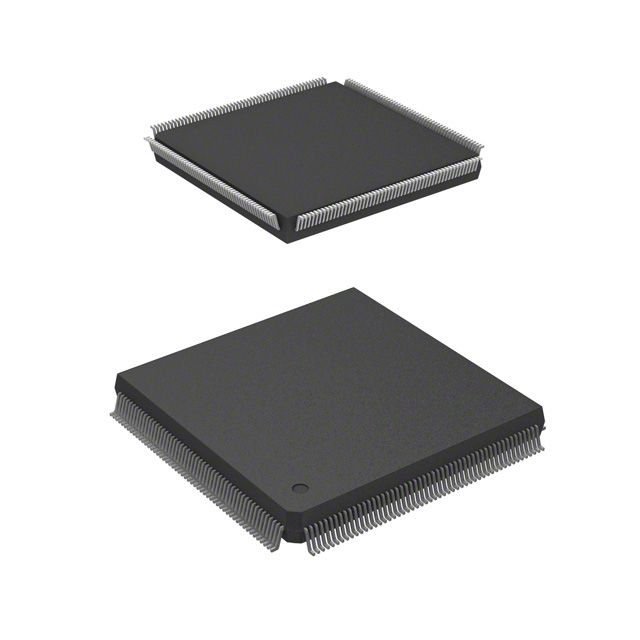
NXP Semiconductors MC68SEC000FU20
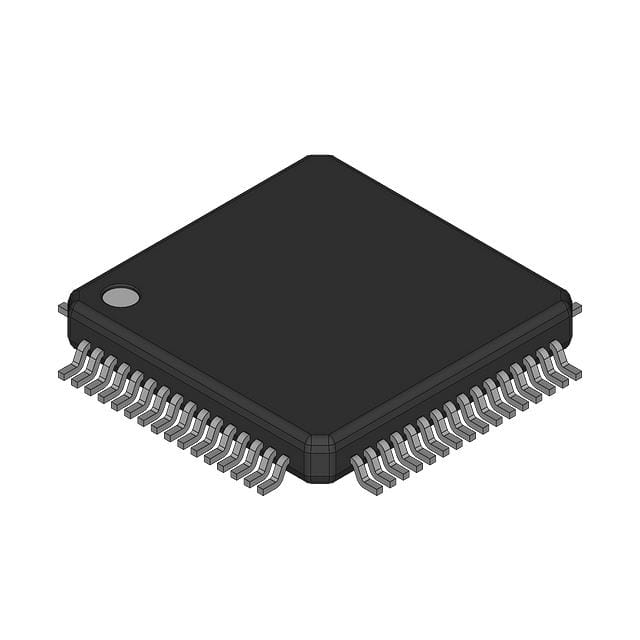
- Part No.:
- MC68SEC000FU20
- Manufacturer:
- NXP Semiconductors
- Category:
- Microprocessors
- Package:
- 64-QFP
- Datasheet:
-
 MC68SEC000FU20.pdf
- Description:
- IC MPU M680X0 20MHZ 64QFP
- Quantity:
- Payment:

- Shipping:

Inventory:4,592
Please send an inquiry. Send us your inquiry, and we will respond immediately.
Product details
Overview
MC68SEC000 from Motorola is a static 32-bit embedded microprocessor designed for ultra-low-power portable systems. It delivers 20 MHz operation at 3.3V or 5V, consumes only 0.5 µA in static standby mode, supports 16-Mbyte linear addressing, and features a 24-bit address bus with statically selectable 8-/16-bit data bus - enabling use in battery-operated handheld consumer devices.
For engineers reviewing the MC68SEC000 datasheet, MC68SEC000 pinout, MC68SEC000 application, or MC68SEC000 equivalent, key selection criteria include static low-power operation, M68000 family object-code compatibility, pin-for-pin equivalence with MC68EC000, and support for memory-mapped I/O in space-constrained embedded designs.
Technical Context
The MC68SEC000 implements a fully static HCMOS version of the M68000 architecture with eight 32-bit data registers and eight 32-bit address registers. Its execution unit supports 56 instruction types across 14 addressing modes and operates on five main data types.
Hardware compatibility with the MC68EC000 includes identical pinout in QFP/TQFP packages and synchronous bus control via AS, R/W, UDS/LDS, and DTACK. Interrupt handling provides seven priority levels with autovectoring (AVEC) and nonmaskable Level 7 interrupt support.
Key Specifications
| Parameter | Value and Actual Design Meaning |
|---|---|
| Core Architecture | M68000 32-bit static design with full object-code compatibility across the family |
| Max Clock Frequency | 20 MHz - defines maximum deterministic instruction throughput in synchronous systems |
| Supply Voltage | 3.3V or 5.0V - enables direct integration into legacy 5V or modern low-voltage 3.3V embedded platforms |
| Standby Current | 0.5 µA typical at 3.3V - allows indefinite battery-powered sleep without state loss |
| Address Bus Width | 24-bit - supports up to 16 Mbytes of linear memory-mapped address space |
| Data Bus Width | Statically selectable 8- or 16-bit - reduces PCB trace count and simplifies interface to narrow peripherals |
| Interrupt Levels | 7 priority levels with IPL0–IPL2 inputs and nonmaskable Level 7 - enables deterministic real-time response hierarchy |
Pinout & Package
MC68SEC000 is offered in two 64-lead surface-mount packages: plastic Quad Flat Pack (14.0 mm × 14.0 mm, 0.8 mm lead pitch) and Thin Quad Flat Pack (10.0 mm × 10.0 mm, 0.5 mm lead pitch).
| Pin/Terminal | Circuit Role | Design Meaning |
|---|---|---|
| A23–A0 | 24-bit unidirectional address bus | Drives external memory/peripheral address decoding; A3–A1 encode interrupt level during service |
| D15–D0 | 16-bit bidirectional data bus | Transfers instructions/data; width selected statically via MODE pin for 8- or 16-bit peripheral interfacing |
| AS | Address Strobe | Indicates valid address on A-bus; initiates asynchronous bus cycle timing sequence |
| R/W | Read/Write control | Directs data flow direction on D-bus; active-high = read, active-low = write |
| UDS/LDS | Upper/Lower Data Strobes | Enable byte-level access to 16-bit data bus; essential for mixed-width memory mapping |
| DTACK | Data Transfer Acknowledge | Externally generated handshake signal confirming completion of asynchronous transfer |
| RESET/HALT | System control inputs | Reset initializes internal state; HALT stops clock while preserving registers and bus state |
| IPL2–IPL0 | Interrupt Priority Level inputs | Three-bit encoding of active interrupt level (0–7); enables hardware prioritization without software polling |
Key Features
| Feature | Design Value |
|---|---|
| Static core architecture | Enables zero-clock-stop operation with full register and bus state retention - critical for battery life in PDA and portable instrumentation |
| Pin-for-pin compatibility with MC68EC000 | Allows drop-in replacement in existing 64-pin QFP layouts without PCB redesign or firmware modification |
| Full M68000 family object-code compatibility | Permits reuse of established toolchains, debuggers, and application code across 68K-based platforms |
| 24-bit address + 16-bit data bus | Supports efficient access to up to 16 Mbytes of memory while maintaining compact external interface footprint |
| Seven-level vectored interrupt system | Reduces interrupt latency and eliminates software polling overhead in real-time embedded control tasks |
Applications
| Personal Digital Assistant (PDA) | Portable Test & Measurement Equipment |
|---|---|
Use Scenario: Handheld device requiring extended battery life between charges while executing complex UI and data logging tasks. IC Role / Device Role / Timing Role: Main application processor managing display, touch input, flash storage, and serial communication peripherals. Use Value: 0.5 µA static standby current enables weeks of shelf life; 20 MHz performance sustains responsive user interaction without thermal throttling. |
Use Scenario: Battery-powered multimeter or oscilloscope module performing real-time analog sampling and waveform rendering. IC Role / Device Role / Timing Role: Central controller coordinating ADC acquisition, LCD refresh, button polling, and USB/RS-232 data upload. Use Value: Static architecture allows precise timing control over sampling intervals; 16-Mbyte addressing supports large calibration tables and firmware overlays. |
| Electronic Gaming Handheld | Smart Consumer Remote Control |
Use Scenario: Compact game console running sprite-based 2D games with audio feedback and persistent save states. IC Role / Device Role / Timing Role: Game logic engine interfacing to keypad matrix, audio DAC, and monochrome LCD driver. Use Value: Pin compatibility with MC68EC000 enables reuse of mature game development toolchains; 8-/16-bit bus select simplifies connection to cost-optimized display controllers. |
Use Scenario: Advanced universal remote supporting IR learning, RF backchannel, and cloud synchronization via BLE bridge. IC Role / Device Role / Timing Role: Embedded host processor managing IR protocol stacks, flash-based macro storage, and low-power wireless co-processor interface. Use Value: 3.3V operation aligns with modern RF IC supply rails; HALT mode enables sub-µA wake-on-IR detection without external watchdog circuitry. |
Equivalent & Alternatives
The following parts are listed as comparable options for similar embedded microprocessor applications.
| Alternative Part | Technical Difference | Application Difference | Selection Advice |
|---|---|---|---|
| MC68EC000RC20 | Non-static CMOS implementation; higher standby current (~5 mA); requires continuous clock; same 64-pin QFP package | Lacks true static sleep mode - unsuitable for multi-week battery operation | Select when board layout already uses MC68EC000 and power budget permits active clocking during idle |
| MC68332ACPV16 | Integrated QSM (Queued Serial Module), TIM (Timer), and 8-channel 10-bit ADC; 16 MHz max; 132-pin PQFP | Higher integration reduces BOM count but increases footprint and complexity for simple control tasks | Select when system requires on-chip peripherals beyond basic CPU functionality and PCB area allows larger package |
Compared with MC68EC000RC20 and MC68332ACPV16, the MC68SEC000 uniquely balances ultra-low static power, full M68000 software compatibility, and minimal external component requirements - making it optimal for space- and energy-constrained portable designs where peripheral integration is handled externally.
Availability
MC68SEC000 is available at Aetrix Electronics and suitable for personal digital assistants, portable test equipment, electronic gaming handhelds, and smart remote controls requiring stable component supply and long-term lifecycle support.
Supply support for MC68SEC000 includes scheduled delivery planning, volume procurement assistance, BOM continuity management, traceable sourcing, and lifecycle availability coordination for OEM customers, industrial embedded developers, connected-device designers, and electronics production programs.
Manufacturer
Motorola Semiconductor (later Freescale, now NXP) pioneered high-reliability embedded microprocessors for industrial and consumer applications with emphasis on architectural longevity and toolchain stability.
The MC68SEC000 belongs to the M68000 Family product line, engineered specifically to extend the life of 32-bit embedded designs through static low-power operation while preserving full software and hardware compatibility with legacy 68K systems.
FAQ
What is the operating voltage range supported by the MC68SEC000?
The MC68SEC000 operates across two nominal supply rails: 3.3V ±0.3V and 5.0V ±0.5V. This dual-voltage capability allows direct integration into both legacy 5V systems and modern low-power 3.3V designs without level-shifting circuitry. The MC68SEC000 maintains full functional specification and timing compliance across this range, including its 0.5 µA standby current rating at 3.3V.
Is the MC68SEC000 pin-compatible with the MC68EC000?
Yes, the MC68SEC000 is explicitly designed as a pin-for-pin replacement for the MC68EC000 in both 64-pin plastic QFP and TQFP packages. Signal names, pin positions, and electrical characteristics match identically, enabling drop-in substitution in existing MC68EC000-based PCBs. The MC68SEC000 retains identical bus control signaling (AS, R/W, UDS/LDS, DTACK) and interrupt interface (IPL0–IPL2, AVEC).
Does the MC68SEC000 support 32-bit data operations?
No - the MC68SEC000 features a 32-bit internal architecture but implements a 16-bit external data bus (D15–D0). Data transfers occur in 16-bit words or 8-bit bytes (selected via MODE pin), not 32-bit units. Its 32-bit registers and ALU enable efficient 32-bit arithmetic and addressing, but external memory/peripheral interfaces are limited to 16-bit width per cycle.
How does the MC68SEC000 achieve ultra-low standby current?
The MC68SEC000 achieves 0.5 µA typical standby current through a fully static HCMOS design that allows the clock to be stopped indefinitely without losing register or bus state. Unlike dynamic CMOS processors, no refresh cycles or leakage-mitigating bias circuits are required. The HALT signal disables the internal clock generator while preserving all internal latches, enabling immediate resumption upon wake-up - a capability confirmed in the MC68SEC000 Product Brief and Addendum to M68000 Users Manual.
What development tools are compatible with the MC68SEC000?
All third-party development tools qualified for the MC68EC000 - including assemblers, C compilers, in-circuit emulators, and debuggers - are directly compatible with the MC68SEC000 due to full object-code and hardware compatibility. Motorola's High Performance Embedded Systems Source Catalog (BR729/D Rev. 4) lists validated tools, and the MC68SEC000 inherits full support from the M68000 Family Programmer's Reference Manual (M68000PM/AD).
MC68SEC000FU20 Specifications
- Product attributes
- Attribute value
- Manufacturer:
- NXP Semiconductors
- Package/Case:
- 64-QFP
- Series:
- M680x0
- Packaging:
- Tray
- Product Status:
- Obsolete
- Core Processor:
- EC000
- Number of Cores/Bus Width:
- 1 Core, 32-Bit
- Speed:
- 20MHz
- Co-Processors/DSP:
- -
- RAM Controllers:
- -
- Graphics Acceleration:
- No
- Display & Interface Controllers:
- -
- Ethernet:
- -
- SATA:
- -
- USB:
- -
- Voltage - I/O:
- 3.3V, 5.0V
- Operating Temperature:
- 0°C ~ 70°C (TA)
- Grade:
- -
- Qualification:
- -
- Security Features:
- -
- Mounting Type:
- Surface Mount
- Supplier Device Package:
- 64-QFP (14x14)
- Additional Interfaces:
- -
MC68SEC000FU20 FAQ
1.How can I place an order for MC68SEC000FU20 through Aetrix?
Please submit a Request for Quotation (RFQ) for MC68SEC000FU20 on Aetrix. Our sales agent will provide a competitive quotation and guide you through the order confirmation once you accept the terms.
2.Are the price and stock information for MC68SEC000FU20 reliable?
The price and inventory of MC68SEC000FU20 are updated periodically and may fluctuate due to market conditions. Stock and pricing data are typically refreshed every 24 hours. Quotation validity for MC68SEC000FU20 is usually 5 days.
3.What payment methods are accepted for MC68SEC000FU20?
We accept Wire Transfer, PayPal, Credit Card, Western Union, MoneyGram, and Escrow for MC68SEC000FU20 transactions.
Note: Certain payment methods may incur a processing fee.
4.How is shipping managed for MC68SEC000FU20?
MC68SEC000FU20 orders can be shipped via leading logistics carriers, including DHL, UPS, FedEx, TNT, or Registered Mail.
Once your MC68SEC000FU20 order is processed, you will receive an email with the shipment details and tracking number.
Note: Tracking information may take up to 24 hours to appear. Express delivery typically takes 3–5 business days.
5.How can I obtain technical support or documentation for MC68SEC000FU20?
For technical support, including MC68SEC000FU20 datasheets, pinout diagrams, or application guidance, please contact our engineering support team. They can provide detailed documentation and assistance for your MC68SEC000FU20 requirements.
6.How does Aetrix verify that MC68SEC000FU20 is sourced from the original manufacturer or authorized distributors?
All MC68SEC000FU20 products on Aetrix are procured from qualified distributors and authorized channels. Our dedicated quality assurance team conducts strict verification, including traceability checks and, if necessary, third-party testing. This ensures that MC68SEC000FU20 meets industry standards.
7.What is the process for return or replacement of MC68SEC000FU20?
All MC68SEC000FU20 units undergo pre-shipment inspection (PSI). If there is an issue with MC68SEC000FU20, returns or replacements are accepted under the following conditions:
1.Quantity discrepancies, incorrect items, or visible external defects (such as breakage or corrosion), acknowledged by Aetrix.
2.The issue is reported within 90 days of delivery.
3.The MC68SEC000FU20 part is unused and in its original packaging.
Return procedure for MC68SEC000FU20:
1.Submit a request within 90 days.
2.Obtain a Return Material Authorization (RMA) from Aetrix.
MC68SEC000FU20 Tags
-
AT91SAM9260B-CU-999
Microchip Technology
-
AT91SAM9G25-CU
Microchip Technology
-
ATSAMA5D27C-CU
Microchip Technology
-
AT91SAM9X35-CU
Microchip Technology
-
AT91SAM9X25-CU
Microchip Technology
-
MCIMX6Y2CVM08AB
NXP Semiconductors
.JPG)
-
AM3352BZCZ100
Texas Instruments
-
AT91SAM9260B-CU
Microchip Technology
-
AT91SAM9260B-QU
Microchip Technology
-
ATSAMA5D31A-CU
Microchip Technology
-
AT91SAM9G20B-CU-999
Microchip Technology
-
MCIMX6Y2CVM05AB
NXP Semiconductors
Tech Hub

A practical engineering guide to 3.3V and 5V logic compatibility, input thresholds, resistor dividers, translator ICs, MOSFET level shifting, I2C pull-ups, timing limits and power-sequencing risks.

The 74HC595 uses push-pull logic outputs, while the TPIC6B595 uses 50 V open-drain DMOS sinks for higher-power loads. This guide compares timing, current limits, 3.3 V interfacing, load wiring, thermal…

The 74HC595 converts serial data into eight stable parallel outputs. This guide covers pin functions, shift and storage timing, OE and MR behavior, drive-current limits, cascading, voltage compatibilit…

A technical comparison of level-sensitive latches and edge-triggered flip-flops, covering timing windows, setup and hold limits, master–slave operation, time borrowing, race-through, HDL inference and…

A D latch stores one bit while Enable controls when data can pass. This reference covers gate-level operation, truth tables, transparency, setup and hold timing, LE versus OE, common ICs and practical …

An SR latch stores one bit through cross-coupled feedback. This engineering reference covers NOR and NAND implementations, truth tables, forbidden-state recovery, gated operation, switch debouncing, fa…

Latch circuits retain one bit through feedback. This technical reference covers SR and D latches, truth tables, transparency, timing limits, latch-versus-flip-flop behavior, applications and common log…

An engineering guide to LED driver operation, constant-current and constant-voltage outputs, linear and switching topologies, dimming, IC selection, calculations, replacement compatibility, and fault c…

Operational amplifier guide covering op amp basics, feedback, ideal vs real op amps, common configurations, buffer circuits, offset, bias current, gain-bandwidth, slew rate, rail-to-rail limits and sel…

Jumper cables guide covering safe connection order, red and black clamp placement, final ground connection, cable gauge, length, clamp quality, copper vs CCA cables, jump starter comparison and battery…


