
 My Inquiry
 My Account


NXP Semiconductors MC7447AVU1420LB
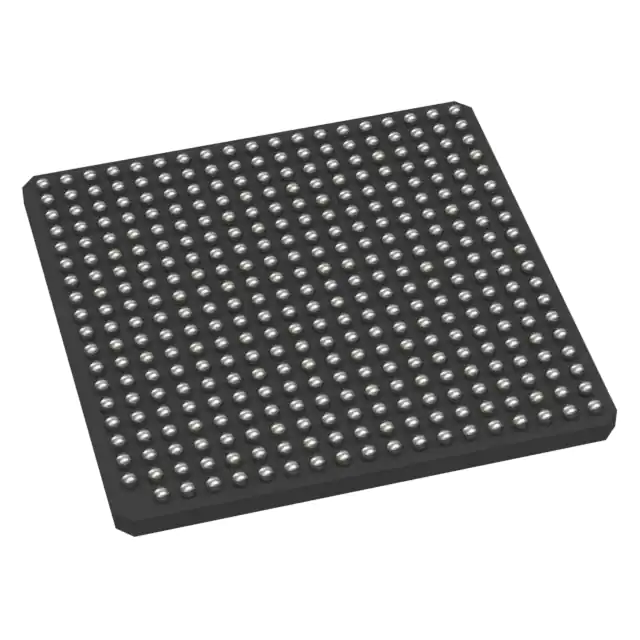
- Part No.:
- MC7447AVU1420LB
- Manufacturer:
- NXP Semiconductors
- Category:
- Microprocessors
- Package:
- 360-BCBGA, FCCBGA
- Datasheet:
-
 MC7447AVU1420LB.pdf
- Description:
- IC MPU MPC74XX 1.42GHZ 360FCCBGA
- Quantity:
- Payment:

- Shipping:

Inventory:3,747
Please send an inquiry. Send us your inquiry, and we will respond immediately.
Product details
Overview
MC7447AVU1420LB from Freescale Semiconductor is a 1420 MHz PowerPC G4 RISC microprocessor with 32-Kbyte L1 instruction and data caches, 512-Kbyte unified on-die L2 cache, and integrated AltiVec SIMD engine. It implements full PowerPC 32-bit architecture, supports MPX/60x bus protocols, and targets high-performance networking and embedded computing systems requiring deterministic real-time processing.
For engineers reviewing the MC7447AVU1420LB datasheet, MC7447AVU1420LB pinout, MC7447AVU1420LB application, or MC7447AVU1420LB equivalent, key selection criteria include its 1.3 V core supply, dynamic frequency switching (DFS), temperature diode, 360-ball ceramic BGA package, and support for big/little-endian operation in mission-critical control and signal processing platforms.
Technical Context
The MC7447AVU1420LB features a seven-stage superscalar pipeline with up to 16 instructions in flight, eleven independent execution units (including four integer, five vector, and one FPU), and hardware-enforced MESI coherency for multiprocessing. Its memory subsystem includes dual 32-Kbyte 8-way set-associative L1 caches and a fully pipelined 512-Kbyte 8-way L2 cache delivering 32 bytes/cycle to L1.
It integrates JTAG/COP debug interface, time base counter/decrementer, performance monitor, and thermal management via DFS and on-die temperature diode. Core voltage derating (1.2 V) and three low-power states-Nap, Sleep, and Deep Sleep-are supported for power-constrained embedded deployments.
Key Specifications
| Parameter | Value and Actual Design Meaning |
|---|---|
| Core Frequency | 1420 MHz - Maximum guaranteed operating frequency at 1.3 V ±50 mV core supply |
| L1 Cache | 32-Kbyte instruction + 32-Kbyte data - Harvard architecture, 8-way set-associative, PLRU replacement, parity-protected |
| L2 Cache | 512-Kbyte unified - On-die, 8-way set-associative, 64-byte line size, parity-protected, 9-cycle L1 miss latency |
| Power Supply | VDD = 1.3 V ±50 mV - Nominal core voltage; supports 1.2 V derated mode for reduced power consumption |
| Thermal Diode | Integrated - Enables real-time die-junction temperature monitoring without external sensors |
| Dynamic Frequency Switching | Software-controlled halving of core clock - Reduces power by ~50% in Nap/Sleep modes while preserving state |
| Bus Interface | MPX/60x-compatible - Supports 1.8 V or 2.5 V I/O signaling via BVSEL pin configuration |
Pinout & Package
MC7447AVU1420LB is housed in a surface-mount 360-ball ceramic ball grid array (HCTE) package with 1.27 mm pitch, RoHS-compliant, and designed for high-thermal-performance PCB mounting using thermal vias and copper pour under the die.
| Pin/Terminal | Circuit Role | Design Meaning |
|---|---|---|
| BVSEL | Bus Voltage Select | Determines I/O voltage level (1.8 V or 2.5 V) at reset; must match OVDD supply to avoid functional failure |
| HRESET | Hardware Reset Input | Asynchronous active-low reset that initializes all internal registers and forces PLL relock sequence |
| TCK/TMS/TDI/TDO | JTAG Boundary-Scan Interface | IEEE 1149.1-compliant test/debug port supporting in-system programming and structural verification |
| CLKIN | System Clock Input | Accepts differential or single-ended SYSCLK reference; feeds PLL to generate 1420 MHz core clock |
| VDD / AVDD / OVDD | Power Supply Inputs | Separate 1.3 V core (VDD/AVDD) and configurable 1.8 V/2.5 V I/O (OVDD) rails with strict voltage sequencing requirements |
Key Features
| Feature | Design Value |
|---|---|
| AltiVec SIMD Engine | Four vector units (VIU1/VIU2/VFPU/VPU) with 32-entry VR file enabling parallel 128-bit integer/floating-point operations for media and signal processing |
| Out-of-Order Execution | 16-entry completion queue and 16 rename buffers per register file (GPR/FPR/VR) supporting speculative execution and branch misprediction recovery |
| Memory Management | Dual MMUs with 128-entry 2-way TLBs, 8 IBAT/DBAT registers, and hardware/software page table walk for 52-bit virtual addressing |
| Cache Coherency | Hardware-enforced MESI protocol across L1 data cache and external bus; separate L1 instruction cache snooping disabled except for icbi instruction |
| Low-Power Operation | Three hierarchical sleep states (Nap/Sleep/Deep Sleep) with JTAG-accessible status and automatic PLL unlock/rellock on wake-up |
Applications
| Telecom Baseband Processing | Industrial Real-Time Control |
|---|---|
Use Scenario: Base station channel coding, modulation/demodulation, and packet forwarding in LTE macrocells. IC Role / Device Role / Timing Role: Primary application processor executing real-time DSP kernels via AltiVec acceleration and managing multi-channel DMA transfers over MPX bus. Use Value: 1420 MHz core + 512-Kbyte L2 enables sustained 2.3 Dhrystone MIPs/MHz throughput while DFS reduces thermal load during low-traffic intervals. |
Use Scenario: Deterministic motion control in CNC machines with sub-microsecond jitter tolerance. IC Role / Device Role / Timing Role: Central controller running RTOS with time-base counter and decrementer for precise interrupt scheduling and servo loop timing. Use Value: Seven-stage pipeline with single-cycle integer throughput and hardware branch prediction ensures bounded worst-case execution time for safety-critical tasks. |
| Avionics Data Concentrators | Secure Network Appliances |
Use Scenario: ARINC 664 (AFDX) end-system aggregation of sensor and actuator data in fly-by-wire systems. IC Role / Device Role / Timing Role: High-integrity compute node performing time-triggered communication stack processing and health monitoring. Use Value: Integrated temperature diode and junction-to-board thermal resistance (RθJB = 10°C/W) enable closed-loop thermal throttling without external components. |
Use Scenario: Firewall/UTM appliance performing deep packet inspection and encryption offload. IC Role / Device Role / Timing Role: Host processor managing crypto accelerators and network interfaces via MPX bus with cache-coherent memory sharing. Use Value: Hardware MESI coherency and 16 outstanding L1–L2 transactions allow concurrent packet buffering, parsing, and signature matching without software cache management overhead. |
Equivalent & Alternatives
The following parts are listed as comparable options for similar RISC microprocessor applications.
| Alternative Part | Technical Difference | Application Difference | Selection Advice |
|---|---|---|---|
| MPC7447AEC1420B | Same 1420 MHz speed grade but in 360-pin ceramic land grid array (LGA) package; no ball grid array | LGA variant requires different PCB layout, thermal pad design, and reflow profile; not interchangeable without board revision | Select only when mechanical constraints prohibit BGA mounting or require socket-based prototyping |
| MPC7447AVT1267B | Lower 1267 MHz frequency grade; identical architecture, L2 cache, and feature set including DFS and temperature diode | Suitable for thermally constrained or cost-sensitive designs where 1420 MHz headroom is unnecessary | Choose for lower power envelope (18.3 W typical vs. 21.0 W) and relaxed thermal design without sacrificing AltiVec or cache capabilities |
Compared with MPC7447AEC1420B and MPC7447AVT1267B, MC7447AVU1420LB uniquely combines maximum 1420 MHz performance, BGA packaging for high-density routing, and full thermal/power management features-making it optimal for space-constrained, high-throughput embedded systems where peak deterministic compute is required.
Availability
MC7447AVU1420LB is available at Aetrix Electronics and suitable for telecom infrastructure, industrial automation, avionics, and secure networking applications requiring stable component supply and long-term lifecycle support.
Supply support for MC7447AVU1420LB includes scheduled delivery planning, volume procurement assistance, BOM continuity management, traceable sourcing, and lifecycle availability coordination for OEM customers, industrial embedded developers, connected-device designers, and electronics production programs.
Manufacturer
Freescale Semiconductor (now part of NXP Semiconductors) is a fabless semiconductor company specializing in embedded processing, connectivity, and analog solutions for automotive, industrial, and networking markets.
The MPC7447A family was designed as a high-performance, low-power evolution of the PowerPC G4 architecture-targeting demanding embedded computing applications where AltiVec acceleration, cache coherency, and thermal-aware operation are critical.
FAQ
What is the core voltage requirement for MC7447AVU1420LB?
The MC7447AVU1420LB requires a nominal core supply of 1.3 V ±50 mV DC. It also supports a derated 1.2 V ±50 mV mode for reduced power consumption, provided core frequency constraints specified in Section 5.3 of the hardware specifications are observed. Both VDD and AVDD must be supplied at the same voltage level, and strict sequencing relative to OVDD is mandatory to prevent latch-up or functional failure.
Does MC7447AVU1420LB support little-endian operation?
Yes, MC7447AVU1420LB supports both big-endian and little-endian operation modes, including misaligned little-endian accesses. Endianness is controlled dynamically via the MSR[LE] bit and can be switched on-the-fly without pipeline flush. This capability is essential for interoperability with x86-based peripherals and legacy software stacks in heterogeneous embedded systems.
How does Dynamic Frequency Switching (DFS) work on MC7447AVU1420LB?
DFS on MC7447AVU1420LB allows software to halve the core clock frequency (e.g., from 1420 MHz to 710 MHz) while maintaining full architectural state and cache coherency. It operates in Nap, Sleep, and Deep Sleep modes and is implemented via the HID0[DFSE] bit and HID1[DFSS] field. No external hardware changes are needed-only firmware-level register writes and PLL relock handling per the MPC7450 Reference Manual.
What package type is used for MC7447AVU1420LB?
MC7447AVU1420LB uses a surface-mount 360-ball ceramic ball grid array (HCTE) package with 1.27 mm pitch and RoHS-compliant finish. The package features an exposed thermal pad on the underside for direct PCB thermal coupling and is qualified for industrial temperature range operation (0°C to 105°C junction).
Is MC7447AVU1420LB pin-compatible with earlier MPC7447 variants?
Yes, MC7447AVU1420LB is footprint-compatible and a drop-in replacement for MPC7447 in applications using 1.3 V core supply, as confirmed in Freescale's Hardware Specifications Rev. 5. It retains identical pinout, electrical characteristics, and bus timing-but adds Dynamic Frequency Switching and an integrated temperature diode not present in the base MPC7447.
MC7447AVU1420LB Specifications
- Product attributes
- Attribute value
- Manufacturer:
- NXP Semiconductors
- Package/Case:
- 360-BCBGA, FCCBGA
- Series:
- MPC74xx
- Packaging:
- Tray
- Product Status:
- Obsolete
- Core Processor:
- PowerPC G4
- Number of Cores/Bus Width:
- 1 Core, 32-Bit
- Speed:
- 1.42GHz
- Co-Processors/DSP:
- Multimedia; SIMD
- RAM Controllers:
- -
- Graphics Acceleration:
- No
- Display & Interface Controllers:
- -
- Ethernet:
- -
- SATA:
- -
- USB:
- -
- Voltage - I/O:
- 1.8V, 2.5V
- Operating Temperature:
- 0°C ~ 105°C (TA)
- Grade:
- -
- Qualification:
- -
- Security Features:
- -
- Mounting Type:
- Surface Mount
- Supplier Device Package:
- 360-FCCBGA (25x25)
- Additional Interfaces:
- -
MC7447AVU1420LB FAQ
1.How can I place an order for MC7447AVU1420LB through Aetrix?
Please submit a Request for Quotation (RFQ) for MC7447AVU1420LB on Aetrix. Our sales agent will provide a competitive quotation and guide you through the order confirmation once you accept the terms.
2.Are the price and stock information for MC7447AVU1420LB reliable?
The price and inventory of MC7447AVU1420LB are updated periodically and may fluctuate due to market conditions. Stock and pricing data are typically refreshed every 24 hours. Quotation validity for MC7447AVU1420LB is usually 5 days.
3.What payment methods are accepted for MC7447AVU1420LB?
We accept Wire Transfer, PayPal, Credit Card, Western Union, MoneyGram, and Escrow for MC7447AVU1420LB transactions.
Note: Certain payment methods may incur a processing fee.
4.How is shipping managed for MC7447AVU1420LB?
MC7447AVU1420LB orders can be shipped via leading logistics carriers, including DHL, UPS, FedEx, TNT, or Registered Mail.
Once your MC7447AVU1420LB order is processed, you will receive an email with the shipment details and tracking number.
Note: Tracking information may take up to 24 hours to appear. Express delivery typically takes 3–5 business days.
5.How can I obtain technical support or documentation for MC7447AVU1420LB?
For technical support, including MC7447AVU1420LB datasheets, pinout diagrams, or application guidance, please contact our engineering support team. They can provide detailed documentation and assistance for your MC7447AVU1420LB requirements.
6.How does Aetrix verify that MC7447AVU1420LB is sourced from the original manufacturer or authorized distributors?
All MC7447AVU1420LB products on Aetrix are procured from qualified distributors and authorized channels. Our dedicated quality assurance team conducts strict verification, including traceability checks and, if necessary, third-party testing. This ensures that MC7447AVU1420LB meets industry standards.
7.What is the process for return or replacement of MC7447AVU1420LB?
All MC7447AVU1420LB units undergo pre-shipment inspection (PSI). If there is an issue with MC7447AVU1420LB, returns or replacements are accepted under the following conditions:
1.Quantity discrepancies, incorrect items, or visible external defects (such as breakage or corrosion), acknowledged by Aetrix.
2.The issue is reported within 90 days of delivery.
3.The MC7447AVU1420LB part is unused and in its original packaging.
Return procedure for MC7447AVU1420LB:
1.Submit a request within 90 days.
2.Obtain a Return Material Authorization (RMA) from Aetrix.
MC7447AVU1420LB Tags
-
AT91SAM9260B-CU-999
Microchip Technology
-
AT91SAM9G25-CU
Microchip Technology
-
ATSAMA5D27C-CU
Microchip Technology
-
AT91SAM9X35-CU
Microchip Technology
-
AT91SAM9X25-CU
Microchip Technology
-
MCIMX6Y2CVM08AB
NXP Semiconductors
.JPG)
-
AM3352BZCZ100
Texas Instruments
-
AT91SAM9260B-CU
Microchip Technology
-
AT91SAM9260B-QU
Microchip Technology
-
ATSAMA5D31A-CU
Microchip Technology
-
AT91SAM9G20B-CU-999
Microchip Technology
-
MCIMX6Y2CVM05AB
NXP Semiconductors
Tech Hub

A practical engineering guide to 3.3V and 5V logic compatibility, input thresholds, resistor dividers, translator ICs, MOSFET level shifting, I2C pull-ups, timing limits and power-sequencing risks.

The 74HC595 uses push-pull logic outputs, while the TPIC6B595 uses 50 V open-drain DMOS sinks for higher-power loads. This guide compares timing, current limits, 3.3 V interfacing, load wiring, thermal…

The 74HC595 converts serial data into eight stable parallel outputs. This guide covers pin functions, shift and storage timing, OE and MR behavior, drive-current limits, cascading, voltage compatibilit…

A technical comparison of level-sensitive latches and edge-triggered flip-flops, covering timing windows, setup and hold limits, master–slave operation, time borrowing, race-through, HDL inference and…

A D latch stores one bit while Enable controls when data can pass. This reference covers gate-level operation, truth tables, transparency, setup and hold timing, LE versus OE, common ICs and practical …

An SR latch stores one bit through cross-coupled feedback. This engineering reference covers NOR and NAND implementations, truth tables, forbidden-state recovery, gated operation, switch debouncing, fa…

Latch circuits retain one bit through feedback. This technical reference covers SR and D latches, truth tables, transparency, timing limits, latch-versus-flip-flop behavior, applications and common log…

An engineering guide to LED driver operation, constant-current and constant-voltage outputs, linear and switching topologies, dimming, IC selection, calculations, replacement compatibility, and fault c…

Operational amplifier guide covering op amp basics, feedback, ideal vs real op amps, common configurations, buffer circuits, offset, bias current, gain-bandwidth, slew rate, rail-to-rail limits and sel…

Jumper cables guide covering safe connection order, red and black clamp placement, final ground connection, cable gauge, length, clamp quality, copper vs CCA cables, jump starter comparison and battery…


