
 My Inquiry
 My Account


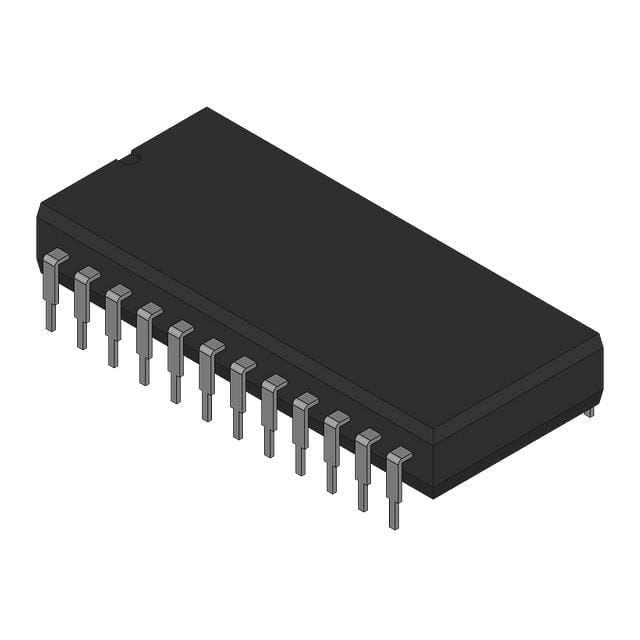
onsemi MC74F543N
- Part No.:
- MC74F543N
- Manufacturer:
- onsemi
- Package:
- -
- Datasheet:
-
 MC74F543N.pdf
- Description:
- REGISTERED BUS TRANSCEIVER, F/FA
- Quantity:
- Payment:

- Shipping:

Inventory:2,874
Please send an inquiry. Send us your inquiry, and we will respond immediately.
Product details
Overview
MC74F543N from ON Semiconductor (formerly Motorola) is an octal registered transceiver with non-inverting data path, dual back-to-back 8-bit D-latch registers, independent A→B and B→A control logic, 3-state outputs, and TTL-compatible interface. It supports bidirectional data flow in industrial bus interfaces requiring latch-controlled buffering and high-drive B-side outputs (64 mA sink).
For engineers reviewing the MC74F543N datasheet, pinout, applications, or equivalent options, key selection criteria include guaranteed 3-state glitchless power-up behavior, separate LE/OE controls per direction, asymmetric output drive (A: 24 mA / B: 64 mA), and Fast Schottky TTL timing compatibility at 70 MHz max clock frequency.
Technical Context
The MC74F543N implements two independent 8-bit register paths: A-to-B uses LEAB/EAB/OEAB for latching and enabling, while B-to-A uses LEBA/EBA/OEBA. Each path operates transparently when latch enable is low and stores on rising edge of latch enable.
It combines 74F245 (transceiver) and 74F373 (octal latch) functions in one 24-pin PDIP package. Output buffers are fully 3-state with high-impedance during power-off, and DC specs guarantee VOL ≤ 0.55 V at IOL = 64 mA on B outputs and VOH ≥ 2.0 V at IOH = –15 mA.
Key Specifications
| Parameter | Value and Actual Design Meaning |
|---|---|
| Logic Family | Fast Schottky TTL - ensures 70 MHz operation with 3–8 ns propagation delays and robust noise immunity in legacy bus systems. |
| Data Width | 8-bit bidirectional - supports full byte-wide data transfer between two buses with independent direction control. |
| Output Drive | B outputs sink 64 mA - enables direct driving of heavy loads (e.g., terminated backplanes, multiple TTL inputs) without external buffers. |
| Input Thresholds | VIH = 2.0 V, VIL = 0.8 V - compatible with standard TTL logic levels and tolerant of marginal signal swing. |
| Power Supply | VCC = 4.5–5.5 V - operates across full industrial TTL range with ICCZ ≤ 125 mA in active state. |
| ESD Protection | >4000 V HBM - provides handling robustness during assembly and board-level integration. |
Pinout & Package
MC74F543N is supplied in a 24-pin plastic DIP (Case 724-03, N suffix), with 0.6-inch wide body and 0.3-inch lead spacing.
| Pin/Terminal | Circuit Role | Design Meaning |
|---|---|---|
| 1, 2, 3, 4, 5, 6, 7, 8 | A0–A7 Inputs/Outputs | A-side bidirectional data terminals; 3-state enabled by OEAB/OEBA; sink 24 mA / source 3.0 mA. |
| 9, 10, 11, 12, 13, 14, 15, 16 | B0–B7 Inputs/Outputs | B-side bidirectional data terminals; higher drive capability (sink 64 mA / source 15 mA); controlled independently. |
| 17, 19 | LEAB, LEBA | Latch Enable inputs - low enables transparency; rising edge latches data into respective register. |
| 18, 20 | OEAB, OEBA | Output Enable inputs - low activates 3-state drivers for corresponding direction; high forces high-impedance. |
| 21, 22 | EAB, EBA | Enable inputs - low permits data flow through latch path; required for both transparent and latched modes. |
| 23 | GND | Ground reference for all logic and output stages. |
| 24 | VCC | +5 V supply for TTL-compatible operation; decoupling recommended near pin. |
Key Features
| Feature | Design Value |
|---|---|
| Dual independent register paths | Enables simultaneous A→B latching and B→A transparent flow without contention or timing conflict. |
| Glitchless 3-state during power sequencing | Prevents bus contention during system power-up/down by holding outputs in high-Z until valid VCC is established. |
| Asymmetric output drive strength | B-side 64 mA sink supports legacy backplane loading; A-side 24 mA balances speed and fanout for controller-side interfacing. |
| Separate LE/E/OE controls per direction | Allows fine-grained timing control - e.g., latch A→B data while keeping B→A path transparent for status reads. |
Applications
| Industrial Bus Interface | Legacy System Data Buffering |
|---|---|
Use Scenario: Isolating microcontroller address/data bus from peripheral expansion slots in programmable logic controllers. IC Role / Device Role / Timing Role: Bidirectional registered transceiver managing time-multiplexed AD bus handshaking with latch synchronization. Use Value: Eliminates need for discrete 74F245 + 74F373 pair; reduces PCB area and interconnect delay while ensuring deterministic setup/hold timing. | Use Scenario: Interfacing 8-bit ISA bus peripherals to modern FPGA-based bridge controllers in retro-computing hardware. IC Role / Device Role / Timing Role: Level-shifting and registered buffering between TTL-compatible ISA signals and FPGA I/O banks. Use Value: Provides guaranteed 3-state isolation during FPGA configuration and reset, preventing bus conflicts during boot. |
| Test Equipment Data Acquisition | Automated Manufacturing Fixture |
Use Scenario: Capturing parallel sensor data streams from multiple analog front-ends into a central test sequencer. IC Role / Device Role / Timing Role: Synchronized sampling node using LEAB to capture snapshot of 8-channel ADC outputs before readout. Use Value: Enables precise timestamp alignment across channels via common LEAB edge, with B-side driving high-capacitance test bus. | Use Scenario: Controlling 8-bit pneumatic valve banks in automated PCBA functional testers. IC Role / Device Role / Timing Role: Latched output driver where OEBA holds valves steady while LEBA updates next command set. Use Value: Prevents transient valve actuation during update; B-side 64 mA drive directly energizes solenoid coils without external drivers. |
Equivalent & Alternatives
The following parts are listed as comparable options for similar octal registered transceiver applications.
| Alternative Part | Technical Difference | Application Difference | Selection Advice |
|---|---|---|---|
| SN74F543N | Identical pinout, function, and AC/DC specs; manufactured by Texas Instruments under same 74F logic family spec. | No functional deviation; suitable for drop-in replacement where TI-sourced parts are preferred for supply chain diversification. | Select SN74F543N if TI's long-term availability program or alternate qualification documentation is required. |
| MC74F544N | Inverting data path (vs. MC74F543N's non-inverting); otherwise identical pinout, timing, and drive specs. | Requires logic inversion in upstream/downstream circuitry; not interchangeable without design revision. | Choose MC74F544N only when system-level signal polarity mandates inversion - e.g., matching inverted bus arbitration lines. |
Compared with SN74F543N and MC74F544N, the MC74F543N offers non-inverting data integrity critical for transparent bus mirroring, while its asymmetric B-side drive supports heavier loads than either alternative can deliver without added buffering.
Availability
MC74F543N is available at Aetrix Electronics and suitable for industrial bus interface, legacy system data buffering, test equipment data acquisition, and automated manufacturing fixture applications requiring stable component supply despite end-of-life status.
Supply support for MC74F543N includes scheduled delivery planning, volume procurement assistance, BOM continuity management, traceable sourcing, and lifecycle availability coordination for OEM customers, industrial embedded developers, connected-device designers, and electronics production programs.
Manufacturer
ON Semiconductor (formerly Motorola Semiconductor) is a global supplier of high-performance silicon solutions for automotive, industrial, cloud, and IoT applications.
The MC74F543N belongs to the 74F Fast TTL logic family, designed specifically for high-speed, low-power registered data transfer in industrial control and computer peripheral systems requiring deterministic timing and robust drive capability.
FAQ
What is the operating temperature range for the MC74F543N?
The MC74F543N is specified for operation from 0°C to +70°C ambient temperature. This industrial-grade range ensures reliable performance in programmable logic controllers, test equipment, and factory automation systems where thermal management is constrained but not extreme. All DC and AC parameters - including VOL, VOH, tPLH, and fMAX - are guaranteed across this full range at VCC = 4.5–5.5 V.
Does the MC74F543N support true bidirectional data flow without external control logic?
Yes, the MC74F543N supports autonomous bidirectional flow via dedicated control pins: EAB/LEAB/OEAB govern A→B direction, while EBA/LEBA/OEBA manage B→A. This eliminates need for external direction-control logic or multiplexers. For example, LEAB can latch data from A while LEBA remains low to allow real-time B→A monitoring - a capability confirmed in the Function Table and Logic Diagram.
What is the maximum clock frequency supported by the MC74F543N in transparent mode?
The MC74F543N supports a maximum clock frequency of 70 MHz in transparent mode (An ↔ Bn path), as specified in the AC Electrical Characteristics table under fMAX. This value is guaranteed over the full operating temperature range (0°C to +70°C) and supply voltage (VCC = 4.5–5.5 V), with CL = 50 pF load. Propagation delays range from 3.0 ns (typ) to 8.5 ns (max) for An↔Bn transitions.
How does the MC74F543N handle power-up and power-down sequencing?
The MC74F543N features glitchless 3-state outputs during power-up and power-down. When VCC rises or falls, outputs remain in high-impedance state until supply stabilizes - verified by the "High Impedance Outputs in Power Off State" feature and tested per JEDEC standards. This prevents bus contention in multi-device systems and eliminates need for external power-on reset circuitry to control OE pins.
Can the MC74F543N replace both a 74F245 and a 74F373 in the same design?
Yes - the MC74F543N integrates the core functionality of both the 74F245 (octal transceiver) and 74F373 (octal D-latch) into a single 24-pin device. Its dual-register architecture allows independent latching and 3-state control per direction, eliminating inter-chip skew and reducing board space. The datasheet explicitly states "Combines 74F245 and 74F373 Type Functions in One Chip", and functional equivalence is confirmed by identical pin assignments and timing behavior.
MC74F543N Specifications
- Product attributes
- Attribute value
- Manufacturer:
- onsemi
- Series:
- *
- Package/Case:
- -
- Packaging:
- Bulk
- Product Status:
- Active
- Logic Type:
- -
- Number of Elements:
- -
- Number of Bits per Element:
- -
- Input Type:
- -
- Output Type:
- -
- Current - Output High, Low:
- -
- Voltage - Supply:
- -
- Operating Temperature:
- -
- Grade:
- -
- Qualification:
- -
- Mounting Type:
- -
- Supplier Device Package:
- -
MC74F543N FAQ
1.How can I place an order for MC74F543N through Aetrix?
Please submit a Request for Quotation (RFQ) for MC74F543N on Aetrix. Our sales agent will provide a competitive quotation and guide you through the order confirmation once you accept the terms.
2.Are the price and stock information for MC74F543N reliable?
The price and inventory of MC74F543N are updated periodically and may fluctuate due to market conditions. Stock and pricing data are typically refreshed every 24 hours. Quotation validity for MC74F543N is usually 5 days.
3.What payment methods are accepted for MC74F543N?
We accept Wire Transfer, PayPal, Credit Card, Western Union, MoneyGram, and Escrow for MC74F543N transactions.
Note: Certain payment methods may incur a processing fee.
4.How is shipping managed for MC74F543N?
MC74F543N orders can be shipped via leading logistics carriers, including DHL, UPS, FedEx, TNT, or Registered Mail.
Once your MC74F543N order is processed, you will receive an email with the shipment details and tracking number.
Note: Tracking information may take up to 24 hours to appear. Express delivery typically takes 3–5 business days.
5.How can I obtain technical support or documentation for MC74F543N?
For technical support, including MC74F543N datasheets, pinout diagrams, or application guidance, please contact our engineering support team. They can provide detailed documentation and assistance for your MC74F543N requirements.
6.How does Aetrix verify that MC74F543N is sourced from the original manufacturer or authorized distributors?
All MC74F543N products on Aetrix are procured from qualified distributors and authorized channels. Our dedicated quality assurance team conducts strict verification, including traceability checks and, if necessary, third-party testing. This ensures that MC74F543N meets industry standards.
7.What is the process for return or replacement of MC74F543N?
All MC74F543N units undergo pre-shipment inspection (PSI). If there is an issue with MC74F543N, returns or replacements are accepted under the following conditions:
1.Quantity discrepancies, incorrect items, or visible external defects (such as breakage or corrosion), acknowledged by Aetrix.
2.The issue is reported within 90 days of delivery.
3.The MC74F543N part is unused and in its original packaging.
Return procedure for MC74F543N:
1.Submit a request within 90 days.
2.Obtain a Return Material Authorization (RMA) from Aetrix.
MC74F543N Tags

-
SN74LVC1G17DBVR
Texas Instruments
-
SN74LVC1G07DCKR
Texas Instruments
-
SN74LVC1G17DCKR
Texas Instruments
-
SN74LVC1G07DBVR
Texas Instruments
-
SN74LVC1G125DCKR
Texas Instruments
-
SN74AHCT1G126DBVR
Texas Instruments
-
SN74LVC1G125DBVR
Texas Instruments
-
SN74AHCT1G125DBVR
Texas Instruments

-
SN74LVC2G17DBVR
Texas Instruments
-
SN74LVC2G07DCKR
Texas Instruments
-
SN74LVC1G34DCKR
Texas Instruments
-
SN74LVC2G17DCKR
Texas Instruments
Tech Hub
Counterfeit components can hide behind convincing markings and passing basic function tests. This engineering reference covers source traceability, external inspection, X-ray, XRF, electrical testing, …

A practical engineering and sourcing framework covering lifecycle verification, lifetime-buy calculations, replacement qualification, supplier checks and counterfeit-risk controls.

TTL and CMOS logic families differ in thresholds, loading, output drive, power and timing. This engineering guide compares 74HC and 74HCT, calculates noise margins and checks 3.3 V/5 V compatibility.

A practical engineering guide to 3.3V and 5V logic compatibility, input thresholds, resistor dividers, translator ICs, MOSFET level shifting, I2C pull-ups, timing limits and power-sequencing risks.

The 74HC595 uses push-pull logic outputs, while the TPIC6B595 uses 50 V open-drain DMOS sinks for higher-power loads. This guide compares timing, current limits, 3.3 V interfacing, load wiring, thermal…

The 74HC595 converts serial data into eight stable parallel outputs. This guide covers pin functions, shift and storage timing, OE and MR behavior, drive-current limits, cascading, voltage compatibilit…

A technical comparison of level-sensitive latches and edge-triggered flip-flops, covering timing windows, setup and hold limits, master–slave operation, time borrowing, race-through, HDL inference and…

A D latch stores one bit while Enable controls when data can pass. This reference covers gate-level operation, truth tables, transparency, setup and hold timing, LE versus OE, common ICs and practical …

An SR latch stores one bit through cross-coupled feedback. This engineering reference covers NOR and NAND implementations, truth tables, forbidden-state recovery, gated operation, switch debouncing, fa…

Latch circuits retain one bit through feedback. This technical reference covers SR and D latches, truth tables, transparency, timing limits, latch-versus-flip-flop behavior, applications and common log…


