
 My Inquiry
 My Account


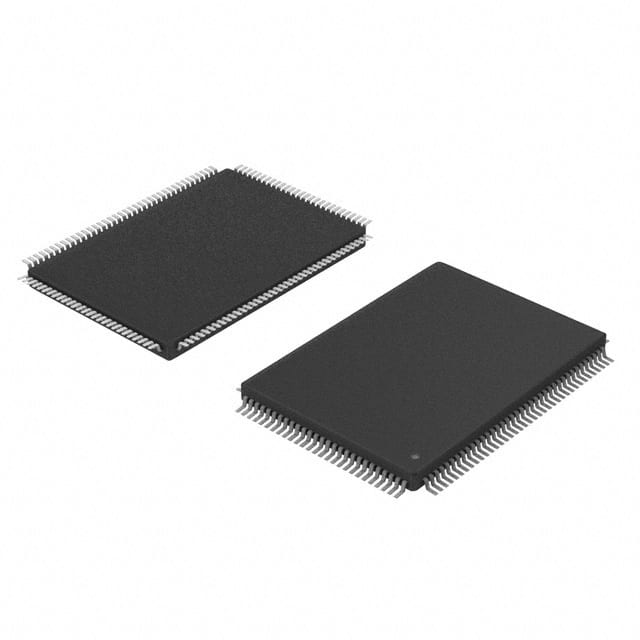
NXP Semiconductors MCIMX233CAG4C
- Part No.:
- MCIMX233CAG4C
- Manufacturer:
- NXP Semiconductors
- Category:
- Microprocessors
- Package:
- 128-LQFP
- Datasheet:
-
 MCIMX233CAG4C.pdf
- Description:
- IC MPU I.MX23 454MHZ 128LQFP
- Quantity:
- Payment:

- Shipping:

Inventory:375
Please send an inquiry. Send us your inquiry, and we will respond immediately.
Product details
Overview
MCIMX233CAG4C from NXP is a 32-bit ARM926EJ-S™ multimedia applications processor operating at up to 454 MHz, integrating power management, stereo ADC/DAC with headphone amplifier, 1.5 W mono speaker amplifier, LCDIF (8-bit serial), and 12-bit LRADC - deployed in portable media players and graphical HMI panels for industrial applications.
For engineers reviewing the MCIMX233CAG4C datasheet, MCIMX233CAG4C pinout, MCIMX233CAG4C application, or MCIMX233CAG4C equivalent, key selection considerations include its -40°C to +85°C industrial temperature range, 128-pin LQFP package, single debug + single application UART, 2 A/D channels, and absence of mono speaker amplifier and dual I2S compared to the 169 BGA variant.
Technical Context
The MCIMX233CAG4C implements an Arm926EJ-S core with 16 KB I-cache and 16 KB D-cache, clocked to 454 MHz, and integrates on-die DC-DC converters supporting Li-Ion battery input and USB/wall adapter direct power. It boots from NAND flash with hardware BCH 20-bit or Reed-Solomon 8-bit ECC support.
Its multimedia subsystem includes an LCD interface limited to 8-bit serial mode (no 24-bit parallel), a pixel processing pipeline (PXP) for display frame pre-processing, and analog audio I/O with stereo ADC/DAC plus headphone amplification - but excludes mono speaker amplifier and TV encoder found in the BGA variant.
Key Specifications
| Parameter | Value and Actual Design Meaning |
|---|---|
| CPU Core | ARM926EJ-S™ @ 454 MHz with 16 KB I-cache and 16 KB D-cache - enables real-time multimedia execution without external cache. |
| Operating Temperature | -40°C to +85°C - qualified for industrial embedded environments including factory HMIs and home automation gateways. |
| Package | 128-pin LQFP - supports low-cost PCB manufacturing with ≤4 layers, no BGA reflow requirements. |
| Memory Interface | Single chip enable, 64 MB address space - limits external DDR1/mDDR and NAND capacity vs. BGA variant's dual CE/128 MB. |
| Audio Interfaces | Stereo ADC/DAC + headphone amp; no mono speaker amp or TV encoder - targets audio peripherals and VoIP handsets, not standalone media playback. |
| Serial Peripherals | 1 debug UART + 1 application UART; SSP1 (4-bit); 2× I²C; 2× SPI - sufficient for sensor hub + display + USB host control in cost-sensitive devices. |
| Analog Inputs | 2-channel 12-bit LRADC - supports rotary encoder, battery voltage monitoring, and simple touch sensing (no dedicated touchscreen controller). |
Pinout & Package
MCIMX233CAG4C is housed in a 128-pin LQFP package (20 mm × 20 mm, 0.5 mm pitch) with exposed thermal pad. Pin functions align with the i.MX233 LQFP signal mapping defined in NXP reference manual IMX23RM, Rev. 4.
| Pin/Terminal | Circuit Role | Design Meaning |
|---|---|---|
| VDDIO | I/O supply rail | 3.3 V tolerant; powers all GPIO, UART, SPI, I²C, and LCDIF pins - requires local 3.3 V regulation. |
| VDDA | Analog supply | Separate 3.3 V input for ADC/DAC and audio blocks - must be filtered to minimize noise coupling into analog paths. |
| VDDRTC | Real-time clock supply | Backup 3.3 V or coin-cell input for RTC operation during main power loss - enables calendar/timekeeping in sleep modes. |
| USB_DP / USB_DM | USB 2.0 HS PHY differential pair | Integrated transceiver supports host/device mode; requires 27 Ω series resistors and 15 kΩ pull-down on DM for device enumeration. |
| LRADC_IN0 / LRADC_IN1 | Low-resolution analog inputs | Dedicated 12-bit inputs for battery sensing, rotary encoder, or resistive touch - no internal reference; uses VDDA as reference. |
| LCD_D0–D7 | LCD data bus (serial mode) | 8-bit multiplexed interface for 8-bit serial LCD panels only - no support for 16-/24-bit parallel RGB or TFT timing signals. |
Key Features
| Feature | Design Value |
|---|---|
| Integrated DC-DC converter with 4 LDO outputs | Reduces external PMIC count; supplies core, memory, I/O, and analog rails from single Li-Ion or 5 V source - cuts BOM cost by ≥3 components. |
| Stereo audio ADC/DAC + headphone amplifier | Enables full-duplex voice capture/playback in VoIP handsets or audio remotes without codec IC - eliminates external audio path components. |
| Hardware PXP graphics accelerator | Performs alpha blending, rotation, scaling, and color-space conversion off-CPU - reduces CPU load by ~40% during UI rendering on VGA-resolution displays. |
| NAND boot with 20-bit BCH ECC | Supports reliable boot from SLC/MLC NAND; corrects up to 20 bit errors per 512-byte sector - extends flash lifetime in unmanaged NAND deployments. |
| Secure boot with AES-128 & SHA-1 | Verifies signed firmware images using OTP-stored keys - prevents unauthorized code execution in industrial HMI and home gateway applications. |
Applications
| Portable Media Players | VoIP Handsets |
|---|---|
Use Scenario: Battery-powered handheld device playing MP3/WMA files with OLED or small TFT display and physical button navigation. IC Role / Device Role / Timing Role: Main applications processor handling audio decode, UI rendering via PXP, and USB mass storage interface. Use Value: Integrated stereo DAC and headphone amp eliminate external audio codec; 454 MHz ARM9 delivers smooth playlist navigation with <50 ms UI response. | Use Scenario: SIP-based desk phone with microphone input, speaker output, and Ethernet/USB connectivity for office or remote work. IC Role / Device Role / Timing Role: Central SoC managing VoIP stack, audio sampling (ADC), playback (DAC), and USB HID for headset control. Use Value: On-chip stereo ADC/DAC + headphone amp supports full-duplex voice with <15 ms end-to-end latency; integrated USB PHY simplifies PC attachment. |
| Home Automation Gateways | Industrial HMI Panels |
Use Scenario: Wall-mounted controller aggregating Zigbee/Z-Wave sensors and relaying commands to HVAC, lighting, and security systems. IC Role / Device Role / Timing Role: Application processor running Linux-based gateway OS, managing multiple wireless stacks and local web UI. Use Value: Single-chip power management enables direct Li-Ion or 5 V wall adapter operation; 2× UART + 2× SPI support concurrent radio coexistence. | Use Scenario: Panel-mounted operator interface in packaging machinery or PLC-controlled assembly lines with pushbuttons and LED indicators. IC Role / Device Role / Timing Role: Real-time UI controller driving monochrome or grayscale LCD, reading rotary encoders and GPIOs, logging events to NAND. Use Value: -40°C to +85°C rating ensures reliability in factory environments; LRADC channels monitor supply voltage and temperature sensors without external ADC. |
Equivalent & Alternatives
The following parts are listed as comparable options for similar multimedia applications processor applications.
| Alternative Part | Technical Difference | Application Difference | Selection Advice |
|---|---|---|---|
| MCIMX233DJM4C | 169-pin MAPBGA; -10°C to +70°C; dual UARTs, 6 LRADC channels, 2× I2S, mono speaker amp, 24-bit parallel LCDIF | Supports touchscreen GUIs, richer audio I/O, and higher-resolution displays - suited for portable navigation devices and digital picture frames | Select when requiring full i.MX233 feature set and commercial temperature grade; requires 6+ layer PCB and BGA assembly capability |
| i.MX283 | ARM9 @ 454 MHz; 128-pin LQFP; -40°C to +85°C; adds CAN, Ethernet MAC, and enhanced security (AES-256, RNG) | Targets industrial control and automotive body electronics where CAN/Ethernet connectivity and stronger crypto are mandatory | Choose for new designs needing fieldbus support or FIPS-aligned secure boot; software-compatible but pinout differs |
Compared with MCIMX233CAG4C, MCIMX233DJM4C offers expanded peripheral count and display capability at the cost of higher assembly complexity, while i.MX283 trades some analog integration for industrial networking and hardened security - making MCIMX233CAG4C optimal for cost-constrained, battery-powered consumer HMI where analog audio and simple LCD are primary needs.
Availability
MCIMX233CAG4C is available at Aetrix Electronics and suitable for portable media players, VoIP handsets, home automation gateways, and industrial HMI panels requiring stable component supply across extended temperature ranges and long production lifecycles.
Supply support for MCIMX233CAG4C includes scheduled delivery planning, volume procurement assistance, BOM continuity management, traceable sourcing, and lifecycle availability coordination for OEM customers, industrial embedded developers, connected-device designers, and electronics production programs.
Manufacturer
NXP Semiconductors is a global semiconductor company headquartered in Eindhoven, Netherlands, specializing in secure connectivity solutions for automotive, industrial, and IoT markets.
The i.MX233 product line was designed to deliver low-power, cost-optimized ARM9-based multimedia processing for battery-operated consumer and industrial edge devices - emphasizing analog integration, NAND reliability, and simplified power architecture.
FAQ
What is the maximum operating frequency of the MCIMX233CAG4C?
The MCIMX233CAG4C features an ARM926EJ-S™ core rated for operation up to 454 MHz. This frequency is guaranteed across its full industrial temperature range (-40°C to +85°C) and supported by on-chip PLL and dynamic voltage scaling. The MCIMX233CAG4C achieves this performance while maintaining low active power consumption, enabling sustained operation in thermally constrained portable designs.
Does the MCIMX233CAG4C support NAND flash boot with error correction?
Yes, the MCIMX233CAG4C supports booting directly from NAND flash with hardware-accelerated error correction. It implements both 20-bit BCH and 8-bit Reed-Solomon ECC engines, correcting up to 20 bit errors per 512-byte sector. This capability ensures robust firmware loading from SLC, MLC, or managed NAND devices - critical for long-life industrial deployments where flash wear is a concern. The MCIMX233CAG4C does not require external ECC logic.
What audio interfaces are integrated into the MCIMX233CAG4C?
The MCIMX233CAG4C integrates stereo analog audio ADC and DAC with dedicated headphone amplifier circuitry, supporting 16-bit/44.1 kHz audio I/O. It also includes S/PDIF digital output and a Serial Audio Interface (I2S) - though only one I2S channel is enabled in the 128 LQFP package. Notably, the MCIMX233CAG4C omits the mono speaker amplifier and TV encoder present in the 169 BGA variant, targeting compact audio peripherals rather than standalone media playback.
Can the MCIMX233CAG4C drive a standard VGA-resolution LCD panel?
The MCIMX233CAG4C's LCD interface supports up to VGA (640×480) resolution, but only in 8-bit serial mode - not 24-bit parallel RGB. It lacks the 24-bit parallel LCDIF signals available in the 169 BGA variant. Therefore, it can drive serial-interface TFTs or character LCDs compatible with 8-bit multiplexed timing, but cannot natively drive standard parallel RGB VGA panels without external bridge ICs. The MCIMX233CAG4C relies on its PXP engine for display preprocessing to maintain UI responsiveness within this constraint.
What is the package type and thermal specification of the MCIMX233CAG4C?
The MCIMX233CAG4C is supplied in a 128-pin LQFP package measuring 20 mm × 20 mm with 0.5 mm lead pitch and an exposed thermal pad. Its specified operating junction temperature range is -40°C to +85°C, and it is characterized for industrial-grade reliability. The LQFP format avoids BGA assembly complexity while providing adequate thermal dissipation for typical 454 MHz ARM9 workloads - making the MCIMX233CAG4C suitable for cost-sensitive, thermally moderate embedded applications.
MCIMX233CAG4C Specifications
- Product attributes
- Attribute value
- Manufacturer:
- NXP Semiconductors
- Package/Case:
- 128-LQFP
- Series:
- i.MX23
- Packaging:
- Tray
- Product Status:
- Active
- Core Processor:
- ARM926EJ-S
- Number of Cores/Bus Width:
- 1 Core, 32-Bit
- Speed:
- 454MHz
- Co-Processors/DSP:
- Data; DCP
- RAM Controllers:
- DRAM
- Graphics Acceleration:
- No
- Display & Interface Controllers:
- LCD, Touchscreen
- Ethernet:
- -
- SATA:
- -
- USB:
- USB 2.0 + PHY (1)
- Voltage - I/O:
- 2.0V, 2.5V, 2.7V, 3.0V, 3.3V
- Operating Temperature:
- -40°C ~ 85°C (TA)
- Grade:
- -
- Qualification:
- -
- Security Features:
- Cryptography, Hardware ID
- Mounting Type:
- Surface Mount
- Supplier Device Package:
- 128-LQFP (14x14)
- Additional Interfaces:
- I2C, I2S, MMC/SD/SDIO, SAI, SPI, SSI, SSP, UART
MCIMX233CAG4C FAQ
1.How can I place an order for MCIMX233CAG4C through Aetrix?
Please submit a Request for Quotation (RFQ) for MCIMX233CAG4C on Aetrix. Our sales agent will provide a competitive quotation and guide you through the order confirmation once you accept the terms.
2.Are the price and stock information for MCIMX233CAG4C reliable?
The price and inventory of MCIMX233CAG4C are updated periodically and may fluctuate due to market conditions. Stock and pricing data are typically refreshed every 24 hours. Quotation validity for MCIMX233CAG4C is usually 5 days.
3.What payment methods are accepted for MCIMX233CAG4C?
We accept Wire Transfer, PayPal, Credit Card, Western Union, MoneyGram, and Escrow for MCIMX233CAG4C transactions.
Note: Certain payment methods may incur a processing fee.
4.How is shipping managed for MCIMX233CAG4C?
MCIMX233CAG4C orders can be shipped via leading logistics carriers, including DHL, UPS, FedEx, TNT, or Registered Mail.
Once your MCIMX233CAG4C order is processed, you will receive an email with the shipment details and tracking number.
Note: Tracking information may take up to 24 hours to appear. Express delivery typically takes 3–5 business days.
5.How can I obtain technical support or documentation for MCIMX233CAG4C?
For technical support, including MCIMX233CAG4C datasheets, pinout diagrams, or application guidance, please contact our engineering support team. They can provide detailed documentation and assistance for your MCIMX233CAG4C requirements.
6.How does Aetrix verify that MCIMX233CAG4C is sourced from the original manufacturer or authorized distributors?
All MCIMX233CAG4C products on Aetrix are procured from qualified distributors and authorized channels. Our dedicated quality assurance team conducts strict verification, including traceability checks and, if necessary, third-party testing. This ensures that MCIMX233CAG4C meets industry standards.
7.What is the process for return or replacement of MCIMX233CAG4C?
All MCIMX233CAG4C units undergo pre-shipment inspection (PSI). If there is an issue with MCIMX233CAG4C, returns or replacements are accepted under the following conditions:
1.Quantity discrepancies, incorrect items, or visible external defects (such as breakage or corrosion), acknowledged by Aetrix.
2.The issue is reported within 90 days of delivery.
3.The MCIMX233CAG4C part is unused and in its original packaging.
Return procedure for MCIMX233CAG4C:
1.Submit a request within 90 days.
2.Obtain a Return Material Authorization (RMA) from Aetrix.
MCIMX233CAG4C Tags
-
AT91SAM9260B-CU-999
Microchip Technology
-
AT91SAM9G25-CU
Microchip Technology
-
ATSAMA5D27C-CU
Microchip Technology
-
AT91SAM9X35-CU
Microchip Technology
-
AT91SAM9X25-CU
Microchip Technology
-
MCIMX6Y2CVM08AB
NXP Semiconductors
.JPG)
-
AM3352BZCZ100
Texas Instruments
-
AT91SAM9260B-CU
Microchip Technology
-
AT91SAM9260B-QU
Microchip Technology
-
ATSAMA5D31A-CU
Microchip Technology
-
AT91SAM9G20B-CU-999
Microchip Technology
-
MCIMX6Y2CVM05AB
NXP Semiconductors
Tech Hub

A practical engineering guide to 3.3V and 5V logic compatibility, input thresholds, resistor dividers, translator ICs, MOSFET level shifting, I2C pull-ups, timing limits and power-sequencing risks.

The 74HC595 uses push-pull logic outputs, while the TPIC6B595 uses 50 V open-drain DMOS sinks for higher-power loads. This guide compares timing, current limits, 3.3 V interfacing, load wiring, thermal…

The 74HC595 converts serial data into eight stable parallel outputs. This guide covers pin functions, shift and storage timing, OE and MR behavior, drive-current limits, cascading, voltage compatibilit…

A technical comparison of level-sensitive latches and edge-triggered flip-flops, covering timing windows, setup and hold limits, master–slave operation, time borrowing, race-through, HDL inference and…

A D latch stores one bit while Enable controls when data can pass. This reference covers gate-level operation, truth tables, transparency, setup and hold timing, LE versus OE, common ICs and practical …

An SR latch stores one bit through cross-coupled feedback. This engineering reference covers NOR and NAND implementations, truth tables, forbidden-state recovery, gated operation, switch debouncing, fa…

Latch circuits retain one bit through feedback. This technical reference covers SR and D latches, truth tables, transparency, timing limits, latch-versus-flip-flop behavior, applications and common log…

An engineering guide to LED driver operation, constant-current and constant-voltage outputs, linear and switching topologies, dimming, IC selection, calculations, replacement compatibility, and fault c…

Operational amplifier guide covering op amp basics, feedback, ideal vs real op amps, common configurations, buffer circuits, offset, bias current, gain-bandwidth, slew rate, rail-to-rail limits and sel…

Jumper cables guide covering safe connection order, red and black clamp placement, final ground connection, cable gauge, length, clamp quality, copper vs CCA cables, jump starter comparison and battery…


