
 My Inquiry
 My Account


NXP Semiconductors MCIMX258CVM4
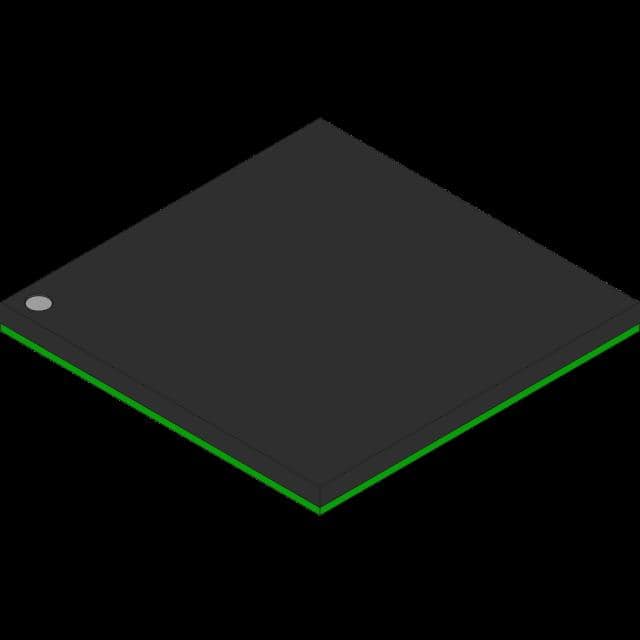
- Part No.:
- MCIMX258CVM4
- Manufacturer:
- NXP Semiconductors
- Category:
- Microprocessors
- Package:
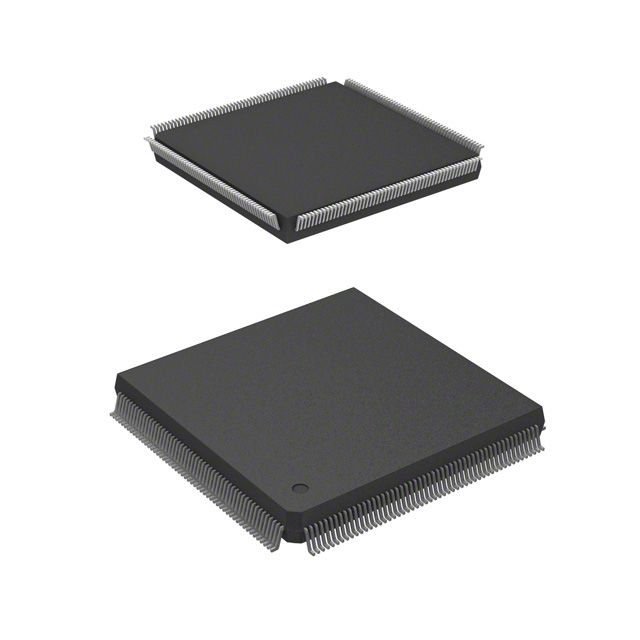
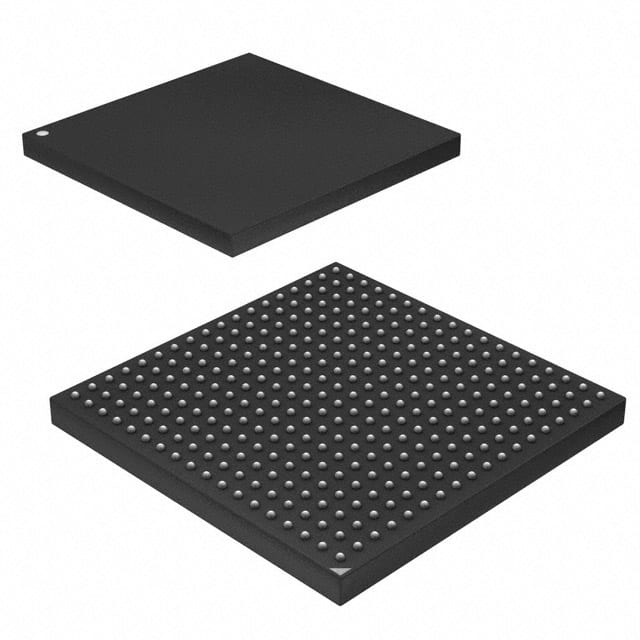
- 400-LFBGA
- Datasheet:
-
 MCIMX258CVM4.pdf
- Description:
- IC MPU I.MX25 400MHZ 400LFBGA
- Quantity:
- Payment:

- Shipping:

Inventory:2,416
Please send an inquiry. Send us your inquiry, and we will respond immediately.
Product details
Overview
MCIMX258CVM4 from NXP Semiconductors (formerly Freescale) is an ARM926EJ-S-based multimedia applications processor operating at up to 400 MHz, featuring 128 KB on-chip SRAM, integrated 10/100 Ethernet MAC, dual USB PHYs (HS OTG + FS Host), and hardware security including DryIce tamper detection and secure boot. It targets industrial HMI, residential gateways, and patient-monitoring devices requiring extended temperature operation.
For engineers reviewing the MCIMX258CVM4 datasheet, MCIMX258CVM4 pinout, MCIMX258CVM4 application, or MCIMX258CVM4 equivalent, key selection considerations include its –40°C to +85°C industrial temperature grade, MAPBGA-400 (17 × 17 mm, 0.8 mm pitch) package, FlexCAN v2.0 support, ESAI audio interface, dual SIM card controllers, and differentiated security features versus i.MX253/257 variants.
Technical Context
The MCIMX258CVM4 implements a single ARM926EJ-S core with 16 KB L1 instruction and 16 KB L1 data cache, running at up to 400 MHz under 1.38–1.52 V core supply. Its memory subsystem supports DDR2 at 133 MHz via a dedicated EMI controller with NAND, NOR, PSRAM, and SDRAM interfaces.
Peripherals include two FlexCAN 2.0B modules, ESAI for high-fidelity audio routing, dual eSDHC controllers supporting SD/SDIO/MMC in 1-/4-/8-bit modes, and a touchscreen controller with 12-bit ADC. Security is enforced through DryIce real-time clock with tamper detection, IIM fuse-based key storage, and secure boot verification.
Key Specifications
| Parameter | Value and Actual Design Meaning |
|---|---|
| CPU Core | ARM926EJ-S, 400 MHz max - enables deterministic real-time control and Linux-capable embedded OS execution. |
| On-chip Memory | 128 KB SRAM - eliminates need for external RAM in RTOS-based low-power LCD applications. |
| Temperature Range | –40°C to +85°C - qualified for industrial and medical environments without derating. |
| Package | MAPBGA-400, 17 × 17 mm, 0.8 mm pitch - standard BGA footprint compatible with automated PCB assembly. |
| Ethernet Interface | 10/100 Mbps FEC - provides IEEE 802.3-compliant wired connectivity without external MAC or PHY. |
| USB Interfaces | HS USB 2.0 OTG + FS USB Host with integrated PHYs - reduces BOM count and board space vs discrete PHY solutions. |
| Security Features | DryIce RTC + tamper detection, IIM fuses, secure boot - enables DRM, secure firmware updates, and POS-level key protection. |
Pinout & Package
MCIMX258CVM4 is housed in a plastic MAPBGA-400 package (Case 5284), measuring 17 mm × 17 mm with 0.8 mm ball pitch. Ball map and signal assignments are defined in Section 4 of IMX25CEC Rev. 10 (pages 124–135).
| Pin/Terminal | Circuit Role | Design Meaning |
|---|---|---|
| BAT_VDD | DryIce backup power input | Supplies RTC and secure keys during main power loss; requires coin cell or supercap for retention. |
| NVCC_DRYICE | DryIce regulated output | Provides 1.0–1.55 V to external tamper circuits; mandates ≥4 µF external capacitor for power-loss protection. |
| TAMPER_A / TAMPER_B | External tamper detect inputs | Active-high signals triggering immediate key erasure and RTC invalidation upon physical intrusion detection. |
| MESH_C / MESH_D | Wire-mesh tamper detection pair | PCB-routed mesh lines that generate tamper event when shorted or floated - used for enclosure breach monitoring. |
| USBPHY1_RREF | USB PHY1 reference current setting | Requires external 10 kΩ ±1% resistor to GND to calibrate HS USB PHY bias current. |
| OSC32K_EXTAL / OSC32K_XTAL | 32.768 kHz crystal interface | Analog pins for precision RTC timing; configuration depends on OSC_BYP pin state per datasheet Table 4. |
Key Features
| Feature | Design Value |
|---|---|
| Hardware Security Subsystem | DryIce RTC with active tamper detection, IIM fuse bank for cryptographic keys, and secure boot chain - meets requirements for payment terminals and HIPAA-compliant medical devices. |
| FlexCAN v2.0B Dual Channels | Two independent CAN 2.0B controllers supporting 1 Mbps operation - enables redundant fieldbus communication in industrial automation and building control systems. |
| ESAI Audio Interface | Full-duplex serial audio port with independent TX/RX clock generators - supports SPDIF transceivers, multi-channel codecs, and DSP offload without CPU intervention. |
| Smart LCD Controller (LCDC) | Supports passive and active matrix displays (CSTN/TFT) with alpha blending - delivers rich GUI rendering for HMI panels without external graphics accelerator. |
| Programmable IOMUX | Up to 8 output sources per pin and 4 input destinations - allows dynamic pin function reassignment in software to optimize PCB layout and reduce layer count. |
| eSDHC v2.0 Dual Controllers | Two independent SD/SDIO/MMC hosts supporting 4-/8-bit wide bus, high-speed mode, and up to 416 Mbps (MMC @ 8-bit) - enables dual-storage redundancy or simultaneous card reader + Wi-Fi module interfacing. |
Applications
| Industrial HMI Panels | Residential Smart Gateways |
|---|---|
|
Use Scenario: Touch-enabled control interface for HVAC, lighting, and energy monitoring in commercial buildings. IC Role / Device Role / Timing Role: Main application processor executing Linux-based UI stack, managing resistive touchscreen via TSC/ADC, and driving TFT display via LCDC. Use Value: Integrated 128 KB SRAM enables ultra-low-power LCD refresh; FlexCAN and ESAI support local sensor networks and voice feedback without external controllers. |
Use Scenario: Central hub aggregating Zigbee/Z-Wave sensors, managing smart metering data, and providing web-based remote access. IC Role / Device Role / Timing Role: System-on-chip host running embedded Linux, handling Ethernet backhaul, USB-connected cellular modem, and secure OTA firmware updates. Use Value: Hardware security (DryIce + IIM) ensures trusted boot and encrypted data storage; dual eSDHC supports local logging and removable diagnostics media. |
| Patient Monitoring Terminals | Electronic Point-of-Sale (POS) |
|
Use Scenario: Bedside vital sign display with biometric authentication, alarm logging, and HL7-over-Ethernet transmission. IC Role / Device Role / Timing Role: Real-time processor managing ADC-sampled analog inputs, secure credential validation, and time-stamped audit logs via DryIce RTC. Use Value: Tamper-detect pins (TAMPER_A/B, MESH_C/D) meet IEC 62304 safety requirements; –40°C to +85°C rating supports uncontrolled clinical environments. |
Use Scenario: PCI-compliant retail terminal processing EMV chip cards, NFC payments, and receipt printing over USB. IC Role / Device Role / Timing Role: Secure transaction engine using SIM interfaces for card readers, ESAI for audio prompts, and FlexCAN for peripheral expansion (cash drawer, barcode scanner). Use Value: Dual SIM controllers enable simultaneous EMV and contactless payment stacks; secure boot and fuse-programmed keys satisfy PCI PTS v6.0 cryptographic integrity requirements. |
Equivalent & Alternatives
The following parts are listed as comparable options for similar multimedia applications processor applications.
| Alternative Part | Technical Difference | Application Difference | Selection Advice |
|---|---|---|---|
| MCIMX257CVM4 | Lacks hardware security blocks (DryIce, IIM), no tamper detection, no secure boot enforcement. | Suitable for non-security-critical HMI or gateway designs where cost optimization outweighs cryptographic assurance. | Select MCIMX257CVM4 only if security certification (e.g., FIPS, Common Criteria) is not required and BOM cost is primary constraint. |
| i.MX6ULL | ARM Cortex-A7 core, 900 MHz, 512 MB DDR3 support, modern Yocto Linux BSP, but no DryIce or SIM interfaces. | Better performance and toolchain support for complex GUIs, but lacks legacy industrial interfaces (FlexCAN v2.0, SIM) and hardware tamper response. | Choose i.MX6ULL for new designs needing higher throughput and long-term software maintenance; retain MCIMX258CVM4 for legacy protocol compliance and certified security. |
Compared with MCIMX257CVM4, MCIMX258CVM4 adds mandatory security primitives for regulated markets; compared with i.MX6ULL, it retains critical industrial peripherals and deterministic low-power behavior at the expense of raw compute performance and modern OS support.
Availability
MCIMX258CVM4 is available at Aetrix Electronics and suitable for industrial HMI, residential gateways, and patient-monitoring devices requiring stable component supply across extended temperature ranges and long product lifecycles.
Supply support for MCIMX258CVM4 includes scheduled delivery planning, volume procurement assistance, BOM continuity management, traceable sourcing, and lifecycle availability coordination for OEM customers, industrial embedded developers, connected-device designers, and electronics production programs.
Manufacturer
NXP Semiconductors is a global semiconductor leader focused on secure connectivity solutions for automotive, industrial, and IoT applications, with roots in Freescale's embedded processor heritage.
The i.MX25 family was designed specifically for cost-sensitive, low-power industrial and consumer embedded systems requiring robust peripheral integration, extended temperature operation, and hardware-enforced security - positioning MCIMX258CVM4 as the highest-security variant in the series.
FAQ
What is the maximum operating frequency of the MCIMX258CVM4 processor core?
The MCIMX258CVM4 integrates an ARM926EJ-S core rated for operation up to 400 MHz. This speed is achievable under specified DC operating conditions: core supply QVDD between 1.38 V and 1.52 V, ambient temperature from –40°C to +85°C, and proper thermal management per datasheet Section 3.4. The MCIMX258CVM4 does not support overclocking beyond this specification.
Does the MCIMX258CVM4 support secure boot, and how is it implemented?
Yes, the MCIMX258CVM4 supports hardware-enforced secure boot via its Integrated Identification Module (IIM) and fuse-based key storage. During reset, the boot ROM validates digital signatures of the first-stage bootloader using keys programmed into one-time-programmable fuses. This process prevents unauthorized firmware execution and is integral to the MCIMX258CVM4's security architecture.
What are the key differences between MCIMX258CVM4 and MCIMX257CVM4?
The MCIMX258CVM4 includes hardware security features absent in MCIMX257CVM4: DryIce tamper-detection circuitry, IIM fuse bank for cryptographic keys, secure boot enforcement, and dual SIM interfaces. Both share identical CPU, memory, Ethernet, USB, and display capabilities. MCIMX258CVM4 is the only i.MX25 variant qualified for PCI PTS and FIPS-aligned applications.
Which external memory types are supported by the MCIMX258CVM4's External Memory Interface (EMI)?
The MCIMX258CVM4 EMI supports DDR2 (up to 133 MHz), Mobile DDR, SDRAM, PSRAM, NOR Flash, NAND Flash (with built-in controller), and SRAM. It does not support LPDDR2 or DDR3. Memory configuration is managed through dedicated EMI registers, and timing parameters must comply with values specified in IMX25CEC Section 3.7.
Is the MCIMX258CVM4 pin-compatible with other i.MX25 family members in the same package?
Yes, all i.MX25 variants in the 17 × 17 mm MAPBGA-400 package - including MCIMX253CVM4, MCIMX257CVM4, and MCIMX258CVM4 - share identical ball mapping and mechanical footprint per Table 103 in IMX25CEC Rev. 10. Signal functionality differs per variant, but PCB layout and soldering processes are interchangeable.
MCIMX258CVM4 Specifications
- Product attributes
- Attribute value
- Manufacturer:
- NXP Semiconductors
- Package/Case:
- 400-LFBGA
- Series:
- i.MX25
- Packaging:
- Tray
- Product Status:
- Obsolete
- Core Processor:
- ARM926EJ-S
- Number of Cores/Bus Width:
- 1 Core, 32-Bit
- Speed:
- 400MHz
- Co-Processors/DSP:
- -
- RAM Controllers:
- LPDDR, DDR, DDR2
- Graphics Acceleration:
- No
- Display & Interface Controllers:
- Keypad, LCD, Touchscreen
- Ethernet:
- 10/100Mbps (1)
- SATA:
- -
- USB:
- USB 2.0 + PHY (2)
- Voltage - I/O:
- 2.0V, 2.5V, 2.7V, 3.0V, 3.3V
- Operating Temperature:
- -40°C ~ 85°C (TA)
- Grade:
- -
- Qualification:
- -
- Security Features:
- Boot Security, Cryptography, Secure Fusebox, Secure JTAG, Secure Memory, Tamper Detection
- Mounting Type:
- Surface Mount
- Supplier Device Package:
- 400-LFBGA (17x17)
- Additional Interfaces:
- CAN, I2C, I2S, MMC/SD/SDIO, SAI, SPI, SSI, SSP, UART
MCIMX258CVM4 FAQ
1.How can I place an order for MCIMX258CVM4 through Aetrix?
Please submit a Request for Quotation (RFQ) for MCIMX258CVM4 on Aetrix. Our sales agent will provide a competitive quotation and guide you through the order confirmation once you accept the terms.
2.Are the price and stock information for MCIMX258CVM4 reliable?
The price and inventory of MCIMX258CVM4 are updated periodically and may fluctuate due to market conditions. Stock and pricing data are typically refreshed every 24 hours. Quotation validity for MCIMX258CVM4 is usually 5 days.
3.What payment methods are accepted for MCIMX258CVM4?
We accept Wire Transfer, PayPal, Credit Card, Western Union, MoneyGram, and Escrow for MCIMX258CVM4 transactions.
Note: Certain payment methods may incur a processing fee.
4.How is shipping managed for MCIMX258CVM4?
MCIMX258CVM4 orders can be shipped via leading logistics carriers, including DHL, UPS, FedEx, TNT, or Registered Mail.
Once your MCIMX258CVM4 order is processed, you will receive an email with the shipment details and tracking number.
Note: Tracking information may take up to 24 hours to appear. Express delivery typically takes 3–5 business days.
5.How can I obtain technical support or documentation for MCIMX258CVM4?
For technical support, including MCIMX258CVM4 datasheets, pinout diagrams, or application guidance, please contact our engineering support team. They can provide detailed documentation and assistance for your MCIMX258CVM4 requirements.
6.How does Aetrix verify that MCIMX258CVM4 is sourced from the original manufacturer or authorized distributors?
All MCIMX258CVM4 products on Aetrix are procured from qualified distributors and authorized channels. Our dedicated quality assurance team conducts strict verification, including traceability checks and, if necessary, third-party testing. This ensures that MCIMX258CVM4 meets industry standards.
7.What is the process for return or replacement of MCIMX258CVM4?
All MCIMX258CVM4 units undergo pre-shipment inspection (PSI). If there is an issue with MCIMX258CVM4, returns or replacements are accepted under the following conditions:
1.Quantity discrepancies, incorrect items, or visible external defects (such as breakage or corrosion), acknowledged by Aetrix.
2.The issue is reported within 90 days of delivery.
3.The MCIMX258CVM4 part is unused and in its original packaging.
Return procedure for MCIMX258CVM4:
1.Submit a request within 90 days.
2.Obtain a Return Material Authorization (RMA) from Aetrix.
MCIMX258CVM4 Tags
-
AT91SAM9260B-CU-999
Microchip Technology
-
AT91SAM9G25-CU
Microchip Technology
-
ATSAMA5D27C-CU
Microchip Technology
-
AT91SAM9X35-CU
Microchip Technology
-
AT91SAM9X25-CU
Microchip Technology
-
MCIMX6Y2CVM08AB
NXP Semiconductors
.JPG)
-
AM3352BZCZ100
Texas Instruments
-
AT91SAM9260B-CU
Microchip Technology
-
AT91SAM9260B-QU
Microchip Technology
-
ATSAMA5D31A-CU
Microchip Technology
-
AT91SAM9G20B-CU-999
Microchip Technology
-
MCIMX6Y2CVM05AB
NXP Semiconductors
Tech Hub

A practical engineering guide to 3.3V and 5V logic compatibility, input thresholds, resistor dividers, translator ICs, MOSFET level shifting, I2C pull-ups, timing limits and power-sequencing risks.

The 74HC595 uses push-pull logic outputs, while the TPIC6B595 uses 50 V open-drain DMOS sinks for higher-power loads. This guide compares timing, current limits, 3.3 V interfacing, load wiring, thermal…

The 74HC595 converts serial data into eight stable parallel outputs. This guide covers pin functions, shift and storage timing, OE and MR behavior, drive-current limits, cascading, voltage compatibilit…

A technical comparison of level-sensitive latches and edge-triggered flip-flops, covering timing windows, setup and hold limits, master–slave operation, time borrowing, race-through, HDL inference and…

A D latch stores one bit while Enable controls when data can pass. This reference covers gate-level operation, truth tables, transparency, setup and hold timing, LE versus OE, common ICs and practical …

An SR latch stores one bit through cross-coupled feedback. This engineering reference covers NOR and NAND implementations, truth tables, forbidden-state recovery, gated operation, switch debouncing, fa…

Latch circuits retain one bit through feedback. This technical reference covers SR and D latches, truth tables, transparency, timing limits, latch-versus-flip-flop behavior, applications and common log…

An engineering guide to LED driver operation, constant-current and constant-voltage outputs, linear and switching topologies, dimming, IC selection, calculations, replacement compatibility, and fault c…

Operational amplifier guide covering op amp basics, feedback, ideal vs real op amps, common configurations, buffer circuits, offset, bias current, gain-bandwidth, slew rate, rail-to-rail limits and sel…

Jumper cables guide covering safe connection order, red and black clamp placement, final ground connection, cable gauge, length, clamp quality, copper vs CCA cables, jump starter comparison and battery…


