
 My Inquiry
 My Account


NXP Semiconductors MCIMX534AVV8B
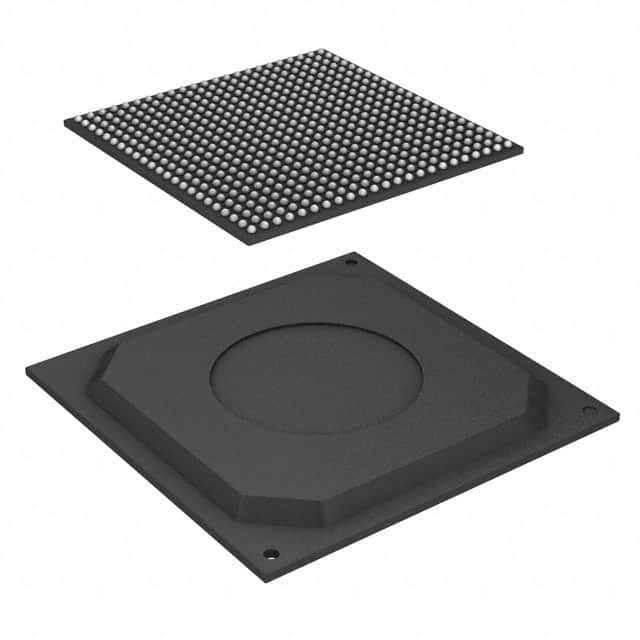
- Part No.:
- MCIMX534AVV8B
- Manufacturer:
- NXP Semiconductors
- Category:
- Microprocessors
- Package:
- 529-FBGA
- Datasheet:
-
 MCIMX534AVV8B.pdf
- Description:
- IC MPU I.MX53 800MHZ 529FBGA
- Quantity:
- Payment:

- Shipping:

Inventory:2,220
Please send an inquiry. Send us your inquiry, and we will respond immediately.
Product details
Overview
MCIMX534AVV8B from NXP Semiconductors is an automotive-grade ARM Cortex-A8 application processor operating at 800 MHz, integrating a 256 KB L2 cache, OpenGL ES 2.0 3D GPU (33 Mtri/s), OpenVG 1.1 2D GPU (200 Mpix/s), dual-display LVDS/parallel interfaces, and two FlexCAN 1 Mbps controllers - designed for instrument clusters and HMI systems requiring real-time graphics, video processing, and automotive interface compliance.
For engineers reviewing the MCIMX534AVV8B datasheet, MCIMX534AVV8B pinout, MCIMX534AVV8B application, or MCIMX534AVV8B equivalent, key selection criteria include AEC-Q100 qualification, absence of hardware video encode/decode acceleration (vs. i.MX536), LPDDR2/DDR2/DDR3-800 memory support, and TE-BGA-529 package compatibility with automotive thermal and vibration requirements.
Technical Context
The MCIMX534AVV8B implements a 64-bit AMBA AXI v1.0 bus (200 MHz) for high-bandwidth subsystems (ARM core, GPU3D, GPU2D, VPU, EXTMC), and a 32-bit AMBA AHB 2.0 bus (133 MHz) for peripheral control. Its memory hierarchy includes 32 KB L1 instruction + 32 KB L1 data caches, unified 256 KB L2 cache, and on-chip 144 KB RAM (128 KB shared + 16 KB secure/non-secure).
It integrates dedicated accelerators: IPU v3M for image scaling/rotation/color conversion, ASRC for multichannel audio sample rate conversion, SDMA for autonomous data movement, and security blocks including TrustZone, SAHARA v4 Lite (SHA-256/TRNG), SCCv2 (AES), and CSU-configured boot policy - all operating under GPC-managed power gating and dynamic clock control.
Key Specifications
| Parameter | Value and Actual Design Meaning |
|---|---|
| CPU Core | ARM Cortex-A8 @ 800 MHz with Neon SIMD and VFPv3 coprocessors - enables real-time speech processing and floating-point-intensive HMI rendering. |
| L2 Cache | 256 KB unified instruction/data cache - reduces external memory bandwidth demand and improves deterministic latency for cluster UI responsiveness. |
| Graphics Acceleration | GPU3D: OpenGL ES 2.0, 33 Mtri/s, 200 Mpix/s; GPU2D: OpenVG 1.1, 200 Mpix/s - supports concurrent HD1080p navigation map + analog gauge rendering without CPU load. |
| Memory Support | DDR2/LVDDR2-800, DDR3-800, or LPDDR2-800 up to 2 GB x32 - enables low-power, high-bandwidth graphics frame buffer and application memory in space-constrained automotive PCBs. |
| Automotive Interfaces | 2× FlexCAN 1 Mbps, MLB50, ESAI, asynchronous sample rate converter - meets ISO 11898 and automotive audio synchronization requirements for telematics integration. |
| Display Outputs | Dual independent display paths: parallel 24-bit + LVDS dual-channel (up to 165 Mpix/s total) - drives primary instrument cluster and secondary infotainment display simultaneously. |
| Security | TrustZone, A-HAB with SHA-256/2048-bit RSA, secure JTAG controller, tamper-detect mechanism - enforces secure boot and runtime isolation for OTA update and DRM-critical applications. |
Pinout & Package
MCIMX534AVV8B is housed in a 19 × 19 mm, 0.8 mm pitch TE-BGA-529 plastic package (Case HW-PWR-TEPBGA-529), RoHS-compliant and AEC-Q100 qualified for automotive temperature range (–40°C to +105°C).
| Pin/Terminal | Circuit Role | Design Meaning |
|---|---|---|
| VDD_ARM | ARM Core Power Supply | 1.2 V ±3% supply for Cortex-A8 core - requires low-noise regulation and local decoupling to maintain 800 MHz stability under dynamic load. |
| VDD_SOC | System-on-Chip Power Supply | 1.1 V ±3% supply for L2 cache, GPU, IPU, and interconnect fabric - critical for graphics throughput and memory coherency. |
| VDD_HIGH | High-Speed I/O Power | 1.8 V supply for DDR2/DDR3/LPDDR2 interfaces and USB PHY - ensures signal integrity at 800 MT/s data rates. |
| BOOT_MODE[1:0] | Boot Configuration Input | Pulled high/low at reset to select boot source (NAND, eMMC, SPI NOR, or USB) - determines initial firmware loading path and security policy enforcement. |
| FLEXCAN1_TX / FLEXCAN1_RX | Controller Area Network Interface | Differential CAN bus signals compliant with ISO 11898-2 - connects directly to automotive body control modules without level-shifting. |
| LVDS_CLK_P/N, LVDS_DATAx_P/N | LVDS Display Interface | Dual-channel LVDS differential pairs supporting WXGA@60Hz or UXGA@30Hz - enables direct connection to automotive-grade TFT displays with EMI resilience. |
Key Features
| Feature | Design Value |
|---|---|
| Smart Speed Power Management | State retention power gating (SRPG) for ARM core and Neon - enables sub-100 µA deep-sleep current while preserving register context for fast wake-up in cluster display-on-demand scenarios. |
| Autonomous Image Processing | IPU v3M with hardware de-interlacing, color space conversion, and rotation - eliminates CPU cycles for camera feed preprocessing in rear-view mirror systems. |
| Secure Boot Enforcement | A-HAB with eFUSE-programmed CSU policy and SHA-256 signature verification - prevents unauthorized firmware execution in safety-critical instrument clusters. |
| Multi-Standard Audio Routing | AUDMUX with seven programmable ports and ESAI + ASRC - supports simultaneous Bluetooth hands-free, digital radio, and navigation voice output with independent sample rate handling. |
| Flexible Memory Expansion | EXTMC supporting DDR3-800 + NAND Flash + eMMC 4.4 on shared pins - allows cost-optimized BOM with single memory controller managing graphics, OS, and media storage. |
Applications
| Digital Instrument Clusters | Head-Up Display (HUD) Controllers |
|---|---|
Use Scenario: Real-time rendering of vehicle speed, RPM, ADAS warnings, and navigation turn-by-turn on TFT-LCD cluster with <100 ms latency. IC Role / Device Role / Timing Role: Primary application processor executing QNX or Linux-based HMI stack, driving dual-display outputs via parallel + LVDS interfaces. Use Value: Integrated GPU3D/GPU2D offloads CPU from vector graphics rendering, enabling smooth 60 Hz gauge animation while maintaining headroom for CAN message parsing and sensor fusion. |
Use Scenario: Processing camera input and navigation data to generate augmented reality overlays projected onto windshield via DLP or LCoS optics. IC Role / Device Role / Timing Role: Vision preprocessor and graphics compositor - IPU handles camera de-interlacing/resizing; GPU2D overlays navigation icons onto video stream. Use Value: Hardware-accelerated image rotation and alpha blending ensures pixel-perfect alignment of virtual objects with road geometry at 60 fps, independent of CPU load. |
| Automotive Infotainment Head Units | Telematics Control Units (TCUs) |
Use Scenario: Concurrent operation of Android Automotive OS, Bluetooth A2DP audio streaming, rear-seat video playback, and voice assistant. IC Role / Device Role / Timing Role: Main SoC hosting multimedia framework, interfacing to eMMC 4.4 storage, dual USB hosts (for dongles), and HDMI/VGA output. Use Value: SDMA controller manages DMA transfers between USB, audio codecs, and DRAM - freeing CPU for speech recognition inference and reducing system-level jitter. |
Use Scenario: Secure cellular connectivity gateway aggregating CAN bus diagnostics, GPS location, and OTA firmware updates for fleet management. IC Role / Device Role / Timing Role: Secure communications hub - FlexCAN interfaces to ECU networks; TrustZone isolates modem firmware from vehicle control domains. Use Value: SCCv2 AES engine encrypts CAN logs before transmission; tamper detection erases keys if physical intrusion is detected - meeting UNECE R155 cybersecurity requirements. |
Equivalent & Alternatives
The following parts are listed as comparable options for similar application processor applications.
| Alternative Part | Technical Difference | Application Difference | Selection Advice |
|---|---|---|---|
| MCIMX536AVP8C2 | Includes hardware video encode (720p30) and decode (1080p30); identical CPU, GPU, memory, and package. | Required for systems needing onboard video recording or transcoding (e.g., dashcam integration), not supported by MCIMX534AVV8B. | Select MCIMX536AVP8C2 only when video codec acceleration is mandatory; otherwise MCIMX534AVV8B offers lower cost and same cluster/HMI capability. |
| S32G274A | ARM Cortex-A53 + Cortex-M7 dual-core, ASIL-B functional safety certification, integrated Ethernet switch, no integrated GPU2D/GPU3D. | Targeted at gateway/centralized compute with safety-critical networking; lacks graphics acceleration needed for rich HMI. | Choose S32G274A for domain controller roles requiring AUTOSAR Adaptive and safety certification; retain MCIMX534AVV8B for graphics-intensive instrument clusters. |
Compared with MCIMX536AVP8C2, MCIMX534AVV8B removes video codec hardware to reduce cost and power while retaining full HMI graphics capability; compared with S32G274A, it delivers higher 2D/3D throughput but lacks ASIL-B certification and integrated safety mechanisms - making it optimal for non-safety-critical display applications.
Availability
MCIMX534AVV8B is available at Aetrix Electronics and suitable for digital instrument clusters, head-up display controllers, automotive infotainment head units, and telematics control units requiring stable component supply across extended automotive lifecycle commitments.
Supply support for MCIMX534AVV8B includes scheduled delivery planning, volume procurement assistance, BOM continuity management, traceable sourcing, and lifecycle availability coordination for OEM customers, industrial embedded developers, connected-device designers, and electronics production programs.
Manufacturer
NXP Semiconductors is a global semiconductor company specializing in secure connectivity solutions for automotive, industrial, and IoT markets, with leadership in automotive processors and edge AI.
The i.MX53 family - including MCIMX534AVV8B - was engineered specifically for automotive infotainment and digital cluster applications, emphasizing graphics performance, automotive interface integration (CAN, MLB, ESAI), and AEC-Q100 reliability.
FAQ
What is the maximum DDR3 memory speed supported by MCIMX534AVV8B?
MCIMX534AVV8B supports DDR3-800 operation, meaning it interfaces with DDR3 SDRAM modules rated for 800 MT/s (400 MHz clock with double data rate). This is confirmed in Section 1.1 and Table 1 of the i.MX53xA datasheet (Rev. 8), where memory specification explicitly lists DDR3-800 alongside LPDDR2-800 and DDR2-800 as supported external memory types for MCIMX534AVV8B.
Does MCIMX534AVV8B include hardware video encoding or decoding capabilities?
No, MCIMX534AVV8B does not include hardware video encode or decode acceleration. As documented in Table 1 (i.MX53 Parts Functional Differences), the MCIMX534 variant is explicitly marked "no HW acceleration" for both video decode and encode, distinguishing it from the MCIMX536 which supports 1080p30 decode and 720p30 encode. The MCIMX534AVV8B relies on software-based codecs for video tasks.
What automotive qualification does MCIMX534AVV8B meet?
MCIMX534AVV8B is qualified to AEC-Q100 Grade 3 (–40°C to +85°C ambient) and Grade 2 (–40°C to +105°C ambient), as stated in Table 1 of the i.MX53xA datasheet. This qualification covers stress testing for temperature cycling, humidity, and mechanical shock - ensuring reliability in automotive cabin and instrument panel environments.
How many CAN interfaces does MCIMX534AVV8B provide, and what protocol version do they support?
MCIMX534AVV8B integrates two FlexCAN controllers, each compliant with CAN 2.0B (ISO 11898-1) and capable of 1 Mbps operation. This is verified in Table 1 (Functional Differences) and Section 3 (Modules List) of the datasheet, where "FlexCAN (2)" appears in the block diagram and module description confirms full CAN 2.0B implementation including standard/extended frames.
Is MCIMX534AVV8B pin-compatible with other i.MX53 variants such as MCIMX536AVP8C2?
Yes, MCIMX534AVV8B is pin-compatible with MCIMX536AVP8C2 and other i.MX53xA variants in the TE-BGA-529 package (19 × 19 mm, 0.8 mm pitch), as confirmed by identical package designation "Case HW-PWR-TEPBGA-529" in Table 2 (Ordering Information) and consistent pin assignments across the family's contact assignment documentation. Functionally identical pins enable drop-in replacement where video codec features are unused.
MCIMX534AVV8B Specifications
- Product attributes
- Attribute value
- Manufacturer:
- NXP Semiconductors
- Package/Case:
- 529-FBGA
- Series:
- i.MX53
- Packaging:
- Tray
- Product Status:
- Obsolete
- Core Processor:
- ARM® Cortex®-A8
- Number of Cores/Bus Width:
- 1 Core, 32-Bit
- Speed:
- 800MHz
- Co-Processors/DSP:
- Multimedia; NEON™ SIMD
- RAM Controllers:
- LPDDR2, DDR2, DDR3
- Graphics Acceleration:
- Yes
- Display & Interface Controllers:
- Keypad, LCD
- Ethernet:
- 10/100Mbps (1)
- SATA:
- SATA 1.5Gbps (1)
- USB:
- USB 2.0 (2), USB 2.0 + PHY (2)
- Voltage - I/O:
- 1.3V, 1.8V, 2.775V, 3.3V
- Operating Temperature:
- -40°C ~ 125°C (TJ)
- Grade:
- -
- Qualification:
- -
- Security Features:
- ARM TZ, Boot Security, Cryptography, RTIC, Secure Fusebox, Secure JTAG, Secure Memory, Secure RTC, Tamper Detection
- Mounting Type:
- Surface Mount
- Supplier Device Package:
- 529-FBGA (19x19)
- Additional Interfaces:
- 1-Wire, AC'97, CAN, I2C, I2S, MMC/SD, SAI, SPI, SSI, UART
MCIMX534AVV8B FAQ
1.How can I place an order for MCIMX534AVV8B through Aetrix?
Please submit a Request for Quotation (RFQ) for MCIMX534AVV8B on Aetrix. Our sales agent will provide a competitive quotation and guide you through the order confirmation once you accept the terms.
2.Are the price and stock information for MCIMX534AVV8B reliable?
The price and inventory of MCIMX534AVV8B are updated periodically and may fluctuate due to market conditions. Stock and pricing data are typically refreshed every 24 hours. Quotation validity for MCIMX534AVV8B is usually 5 days.
3.What payment methods are accepted for MCIMX534AVV8B?
We accept Wire Transfer, PayPal, Credit Card, Western Union, MoneyGram, and Escrow for MCIMX534AVV8B transactions.
Note: Certain payment methods may incur a processing fee.
4.How is shipping managed for MCIMX534AVV8B?
MCIMX534AVV8B orders can be shipped via leading logistics carriers, including DHL, UPS, FedEx, TNT, or Registered Mail.
Once your MCIMX534AVV8B order is processed, you will receive an email with the shipment details and tracking number.
Note: Tracking information may take up to 24 hours to appear. Express delivery typically takes 3–5 business days.
5.How can I obtain technical support or documentation for MCIMX534AVV8B?
For technical support, including MCIMX534AVV8B datasheets, pinout diagrams, or application guidance, please contact our engineering support team. They can provide detailed documentation and assistance for your MCIMX534AVV8B requirements.
6.How does Aetrix verify that MCIMX534AVV8B is sourced from the original manufacturer or authorized distributors?
All MCIMX534AVV8B products on Aetrix are procured from qualified distributors and authorized channels. Our dedicated quality assurance team conducts strict verification, including traceability checks and, if necessary, third-party testing. This ensures that MCIMX534AVV8B meets industry standards.
7.What is the process for return or replacement of MCIMX534AVV8B?
All MCIMX534AVV8B units undergo pre-shipment inspection (PSI). If there is an issue with MCIMX534AVV8B, returns or replacements are accepted under the following conditions:
1.Quantity discrepancies, incorrect items, or visible external defects (such as breakage or corrosion), acknowledged by Aetrix.
2.The issue is reported within 90 days of delivery.
3.The MCIMX534AVV8B part is unused and in its original packaging.
Return procedure for MCIMX534AVV8B:
1.Submit a request within 90 days.
2.Obtain a Return Material Authorization (RMA) from Aetrix.
MCIMX534AVV8B Tags
-
AT91SAM9260B-CU-999
Microchip Technology
-
AT91SAM9G25-CU
Microchip Technology
-
ATSAMA5D27C-CU
Microchip Technology
-
AT91SAM9X35-CU
Microchip Technology
-
AT91SAM9X25-CU
Microchip Technology
-
MCIMX6Y2CVM08AB
NXP Semiconductors
.JPG)
-
AM3352BZCZ100
Texas Instruments
-
AT91SAM9260B-CU
Microchip Technology
-
AT91SAM9260B-QU
Microchip Technology
-
ATSAMA5D31A-CU
Microchip Technology
-
AT91SAM9G20B-CU-999
Microchip Technology
-
MCIMX6Y2CVM05AB
NXP Semiconductors
Tech Hub

A practical engineering guide to 3.3V and 5V logic compatibility, input thresholds, resistor dividers, translator ICs, MOSFET level shifting, I2C pull-ups, timing limits and power-sequencing risks.

The 74HC595 uses push-pull logic outputs, while the TPIC6B595 uses 50 V open-drain DMOS sinks for higher-power loads. This guide compares timing, current limits, 3.3 V interfacing, load wiring, thermal…

The 74HC595 converts serial data into eight stable parallel outputs. This guide covers pin functions, shift and storage timing, OE and MR behavior, drive-current limits, cascading, voltage compatibilit…

A technical comparison of level-sensitive latches and edge-triggered flip-flops, covering timing windows, setup and hold limits, master–slave operation, time borrowing, race-through, HDL inference and…

A D latch stores one bit while Enable controls when data can pass. This reference covers gate-level operation, truth tables, transparency, setup and hold timing, LE versus OE, common ICs and practical …

An SR latch stores one bit through cross-coupled feedback. This engineering reference covers NOR and NAND implementations, truth tables, forbidden-state recovery, gated operation, switch debouncing, fa…

Latch circuits retain one bit through feedback. This technical reference covers SR and D latches, truth tables, transparency, timing limits, latch-versus-flip-flop behavior, applications and common log…

An engineering guide to LED driver operation, constant-current and constant-voltage outputs, linear and switching topologies, dimming, IC selection, calculations, replacement compatibility, and fault c…

Operational amplifier guide covering op amp basics, feedback, ideal vs real op amps, common configurations, buffer circuits, offset, bias current, gain-bandwidth, slew rate, rail-to-rail limits and sel…

Jumper cables guide covering safe connection order, red and black clamp placement, final ground connection, cable gauge, length, clamp quality, copper vs CCA cables, jump starter comparison and battery…


