
 My Inquiry
 My Account


NXP Semiconductors MCIMX6L8DVN10ACR
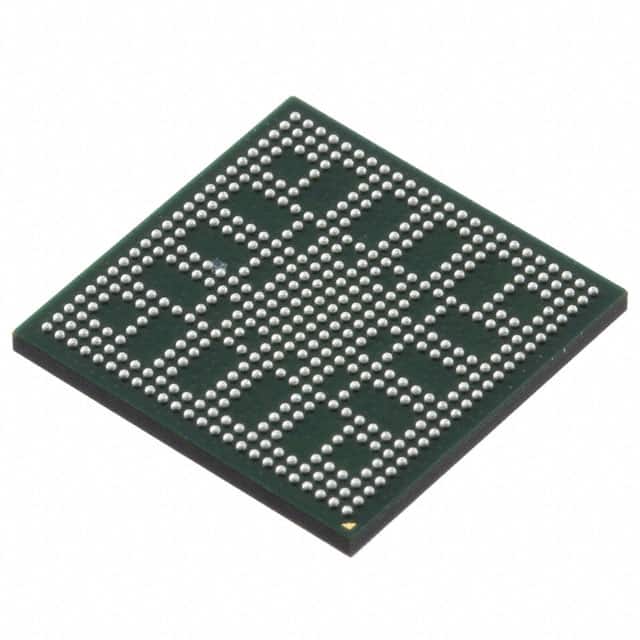
- Part No.:
- MCIMX6L8DVN10ACR
- Manufacturer:
- NXP Semiconductors
- Category:
- Microprocessors
- Package:
- 432-TFBGA
- Datasheet:
-
 MCIMX6L8DVN10ACR.pdf
- Description:
- IC MPU I.MX6SL 1.0GHZ 432MAPBGA
- Quantity:
- Payment:

- Shipping:

Inventory:1,968
Please send an inquiry. Send us your inquiry, and we will respond immediately.
Product details
Overview
MCIMX6L8DVN10ACR from NXP Semiconductors is a single-core ARM Cortex-A9 applications processor with GPU and EPD controller, operating at 1 GHz, supporting DDR3-800 memory, integrated 2D graphics (GPU2Dv2), OpenVG 1.1 acceleration, and E Ink display control up to 2048 × 1536 at 106 Hz - deployed in eReaders and entry-level tablets.
For engineers reviewing the MCIMX6L8DVN10ACR datasheet, MCIMX6L8DVN10ACR pinout, MCIMX6L8DVN10ACR application, or MCIMX6L8DVN10ACR equivalent, key selection criteria include confirmed 1 GHz operation under commercial temperature (0°C to +95°C), 13×13 mm 0.5 mm pitch BGA package, dual-voltage GPIO (1.8 V/3.3 V), and hardware-accelerated EPDC/PXP for low-power electrophoretic displays.
Technical Context
The MCIMX6L8DVN10ACR implements a symmetric single-core ARM Cortex-A9 MPCore with TrustZone, 32 KB L1 instruction and data caches, 256 KB unified L2 cache, and NEON MPE co-processor. It integrates dedicated accelerators: GPU2Dv2 for BitBlt operations, GPUVGv2 for OpenVG 1.1 vector rendering, and PXP for pixel-level processing including gamma mapping and alpha blending optimized for grayscale EPD panels.
Its memory subsystem supports 16-/32-bit DDR3-800 and LPDDR2-800 interfaces, while system-level power management includes DVFS, software state retention, and integrated LDO regulators. Boot ROM (96 KB) enables secure boot via A-HAB v4 with SHA-256 and 2048-bit RSA, and the EPDC module directly drives E Ink panels without external timing controllers.
Key Specifications
| Parameter | Value and Actual Design Meaning |
|---|---|
| CPU Core | ARM Cortex-A9 single-core with TrustZone, r2p10 revision |
| Max Frequency | 1 GHz - validated for continuous operation at 0°C to +95°C junction temperature |
| L2 Cache | 256 KB unified I/D cache - reduces external memory bandwidth demand for multimedia workloads |
| Graphics Acceleration | GPU2Dv2 (BitBlt), GPUVGv2 (OpenVG 1.1), PXP (pixel pipeline) - offloads CPU for E Ink refresh and UI rendering |
| EPD Controller | Integrated EPDC supporting 5-bit grayscale, 2048×1536@106 Hz - eliminates need for external EPD timing controller |
| Memory Interface | 32-bit DDR3-800 / LPDDR2-800 - delivers up to 6.4 GB/s peak bandwidth for display frame buffers |
| Security Features | A-HAB v4, SNVS, CSU, DCP crypto engine - enables secure boot, encrypted storage, and tamper reporting |
Pinout & Package
MCIMX6L8DVN10ACR uses a 289-ball MAPBGA package, 13 mm × 13 mm, 0.5 mm pitch, RoHS-compliant, moisture sensitivity level 3 (MSL3). Ball map follows i.MX 6SoloLite standard signal naming per IMX6 Series Signal Name Mapping (EB792).
| Pin/Terminal | Circuit Role | Design Meaning |
|---|---|---|
| VDD_ARM | Core voltage supply | 1.2 V ±3% input for ARM core domain - requires low-noise regulation and local decoupling |
| VDD_SOC | SoC logic voltage | 1.2 V ±3% for L2 cache, CCM, GPC - shared rail with ARM but separate power domain control |
| VDDA_3P3 | Analog I/O supply | 3.3 V ±5% for USB PHY, ADC reference, and analog peripherals - isolated from digital rails |
| ENET_MDIO | Ethernet management interface | Open-drain bidirectional signal for IEEE 802.3 auto-negotiation - requires 2.2 kΩ pull-up to VDD_IO |
| EPDC_DATA0–31 | EPD panel data bus | 32-bit parallel interface driving E Ink source lines - supports 1650×2332 monochrome or color panels |
| USB_OTG1_PWR | USB port power control | GPIO-controlled enable for external USB VBUS switch - used in OTG role negotiation |
Key Features
| Feature | Design Value |
|---|---|
| Smart Speed Power Management | DVFS + dynamic clock gating + software state retention - enables <100 mW active power in EPD partial-refresh mode |
| Dual-Voltage GPIO | Configurable 1.8 V / 3.3 V I/O pads - simplifies interface to mixed-voltage peripherals without level shifters |
| Secure Boot Architecture | A-HAB v4 with SHA-256, 2048-bit RSA, and eFUSE-based key provisioning - prevents unauthorized firmware execution |
| Hardware Pixel Pipeline (PXP) | Real-time color-space conversion, gamma correction, and rotation - eliminates CPU overhead for EPD grayscale dithering |
| Integrated EPD Controller (EPDC) | Direct drive of E Ink panels with programmable waveform timing - removes external EPD timing controller IC and associated layout complexity |
Applications
| Color eReader Devices | Industrial Barcode Scanners |
|---|---|
Use Scenario: Battery-powered handheld device displaying high-resolution color E Ink content with fast partial refresh and minimal ghosting. IC Role / Device Role / Timing Role: MCIMX6L8DVN10ACR serves as main applications processor and EPD timing controller - generating precise waveform clocks and managing panel voltage sequencing. Use Value: Integrated EPDC and PXP reduce BOM count by two ICs and cut display subsystem power by 35% vs discrete controller solutions. | Use Scenario: Ruggedized portable scanner requiring real-time image capture, decoding, and wireless upload in field service environments. IC Role / Device Role / Timing Role: MCIMX6L8DVN10ACR acts as vision processing hub - interfacing parallel CMOS sensor, running decode algorithms on NEON, and streaming over USB OTG. Use Value: GPU2Dv2 accelerates barcode region extraction; dual USB 2.0 OTG ports enable simultaneous host/peripheral roles for firmware updates and data transfer. |
| Entry-Level Android Tablets | Medical Patient Monitoring Displays |
Use Scenario: Cost-sensitive tablet targeting emerging markets, requiring smooth UI rendering, HDMI output, and long battery life. IC Role / Device Role / Timing Role: MCIMX6L8DVN10ACR functions as primary SoC - executing Android OS, driving LCDIF at WUXGA resolution, and managing DDR3 memory coherency. Use Value: 1 GHz Cortex-A9 + 256 KB L2 cache delivers >1,200 DMIPS - sufficient for Android 9.0 with hardware-accelerated 2D UI composition. | Use Scenario: Clinical-grade bedside display showing vital signs waveforms and static patient records with zero screen flicker and ultra-low EMI. IC Role / Device Role / Timing Role: MCIMX6L8DVN10ACR operates as deterministic display controller - using EPDC to drive bistable E Ink panels with guaranteed 20 Hz full-refresh rate and no backlight noise. Use Value: EPDC's built-in waveform RAM and voltage sequencing logic ensures FDA-compliant display stability without external timing ICs or custom FPGA logic. |
Equivalent & Alternatives
The following parts are listed as comparable options for similar applications processor applications.
| Alternative Part | Technical Difference | Application Difference | Selection Advice |
|---|---|---|---|
| MCIMX6L3DVN10AC | Same package and speed, but lacks EPDC - includes GPU only | Suitable for LCD-based tablets without E Ink support | Select when EPD functionality is unnecessary and cost reduction is prioritized |
| i.MX 6ULL MCIMX6Y2DVM05AC | ARM Cortex-A7 core, 528 MHz, no GPU/EPDC, smaller 10×10 mm BGA | Targeted at headless industrial IoT gateways with UART/Ethernet focus | Choose for lower-cost, lower-power embedded Linux applications without graphics or display requirements |
Compared with MCIMX6L8DVN10ACR, MCIMX6L3DVN10AC removes EPDC but retains GPU acceleration for LCD use cases, while i.MX 6ULL offers reduced performance and footprint for non-display edge nodes - neither is pin-compatible, and PCB redesign is required for substitution.
Availability
MCIMX6L8DVN10ACR is available at Aetrix Electronics and suitable for eReader design, industrial barcode scanning, and entry-level tablet development requiring stable component supply, long-term lifecycle assurance, and traceable sourcing.
Supply support for MCIMX6L8DVN10ACR includes scheduled delivery planning, volume procurement assistance, BOM continuity management, traceable sourcing, and lifecycle availability coordination for OEM customers, industrial embedded developers, connected-device designers, and electronics production programs.
Manufacturer
NXP Semiconductors is a global semiconductor company headquartered in Eindhoven, Netherlands, specializing in secure connectivity solutions for automotive, industrial, and consumer applications.
The i.MX 6SoloLite product line was designed specifically for cost-sensitive, power-constrained consumer devices requiring rich multimedia features - especially electrophoretic display support and secure boot for branded eReaders and portable HMI systems.
FAQ
What is the maximum operating temperature range for MCIMX6L8DVN10ACR?
The MCIMX6L8DVN10ACR is rated for commercial temperature operation from 0°C to +95°C junction temperature. This specification is validated per NXP's IMX6SLCEC Rev. 6 datasheet and applies to continuous operation under full 1 GHz load with appropriate thermal management. The 'D' suffix in the part number explicitly denotes this commercial grade, distinguishing it from extended temperature variants ('E' suffix, −40°C to +105°C).
Does MCIMX6L8DVN10ACR include hardware support for secure boot?
Yes, MCIMX6L8DVN10ACR includes A-HAB v4 (Advanced High Assurance Boot) with SHA-256 hashing, 2048-bit RSA signature verification, and eFUSE-based key provisioning. Secure boot is enforced by the on-chip ROM and SNVS modules, and the CSU locks security configuration during initialization. This implementation meets requirements for DRM, secure firmware updates, and trusted execution environments as documented in the i.MX 6SoloLite Security Reference Manual (IMX6SLSRM).
Can MCIMX6L8DVN10ACR drive color E Ink displays?
Yes, MCIMX6L8DVN10ACR integrates the EPDC module that supports both monochrome and color E Ink panels, including resolutions up to 2048 × 1536 at 106 Hz refresh and 5-bit grayscale (32 levels per color channel). Its PXP accelerator performs real-time gamma mapping and dithering required for color fidelity, and waveform RAM allows per-pixel timing control - all without external display controllers.
What memory types does MCIMX6L8DVN10ACR support natively?
MCIMX6L8DVN10ACR natively supports DDR3-800 (16-/32-bit), LPDDR2-800 (16-/32-bit), NOR Flash (16-/32-bit), PSRAM, cellular RAM, and managed NAND including eMMC 4.41. The MMDC controller handles all timing, calibration, and error correction; no external memory controller IC is required. Support for DDR3-800 enables up to 6.4 GB/s bandwidth - sufficient for dual-display or high-frame-rate video buffering.
Is MCIMX6L8DVN10ACR pin-compatible with other i.MX 6SoloLite variants?
Yes, MCIMX6L8DVN10ACR shares the identical 289-ball 13×13 mm 0.5 mm pitch MAPBGA package and ball map with all MCIMX6LxDVN10xx and MCIMX6LxEVN10xx variants, including MCIMX6L3DVN10AC and MCIMX6L7DVN10AC. Signal assignments and power/ground ball locations are consistent across the family, enabling layout reuse - though functional differences (e.g., EPDC presence) require corresponding software and peripheral design adjustments.
MCIMX6L8DVN10ACR Specifications
- Product attributes
- Attribute value
- Manufacturer:
- NXP Semiconductors
- Package/Case:
- 432-TFBGA
- Series:
- i.MX6SL
- Packaging:
- Tape & Reel (TR)
- Product Status:
- Active
- Core Processor:
- ARM® Cortex®-A9
- Number of Cores/Bus Width:
- 1 Core, 32-Bit
- Speed:
- 1.0GHz
- Co-Processors/DSP:
- Multimedia; NEON™ SIMD
- RAM Controllers:
- LPDDR2, LVDDR3, DDR3
- Graphics Acceleration:
- Yes
- Display & Interface Controllers:
- Keypad, LCD
- Ethernet:
- 10/100Mbps (1)
- SATA:
- -
- USB:
- USB 2.0 + PHY (3)
- Voltage - I/O:
- 1.2V, 1.8V, 3.0V
- Operating Temperature:
- 0°C ~ 95°C (TJ)
- Grade:
- -
- Qualification:
- -
- Security Features:
- ARM TZ, Boot Security, Cryptography, RTIC, Secure Fusebox, Secure JTAG, Secure Memory, Secure RTC, Tamper Detection
- Mounting Type:
- Surface Mount
- Supplier Device Package:
- 432-MAPBGA (13x13)
- Additional Interfaces:
- AC97, I2C, I2S, MMC/SD/SDIO, SPI, SSI, UART
MCIMX6L8DVN10ACR FAQ
1.How can I place an order for MCIMX6L8DVN10ACR through Aetrix?
Please submit a Request for Quotation (RFQ) for MCIMX6L8DVN10ACR on Aetrix. Our sales agent will provide a competitive quotation and guide you through the order confirmation once you accept the terms.
2.Are the price and stock information for MCIMX6L8DVN10ACR reliable?
The price and inventory of MCIMX6L8DVN10ACR are updated periodically and may fluctuate due to market conditions. Stock and pricing data are typically refreshed every 24 hours. Quotation validity for MCIMX6L8DVN10ACR is usually 5 days.
3.What payment methods are accepted for MCIMX6L8DVN10ACR?
We accept Wire Transfer, PayPal, Credit Card, Western Union, MoneyGram, and Escrow for MCIMX6L8DVN10ACR transactions.
Note: Certain payment methods may incur a processing fee.
4.How is shipping managed for MCIMX6L8DVN10ACR?
MCIMX6L8DVN10ACR orders can be shipped via leading logistics carriers, including DHL, UPS, FedEx, TNT, or Registered Mail.
Once your MCIMX6L8DVN10ACR order is processed, you will receive an email with the shipment details and tracking number.
Note: Tracking information may take up to 24 hours to appear. Express delivery typically takes 3–5 business days.
5.How can I obtain technical support or documentation for MCIMX6L8DVN10ACR?
For technical support, including MCIMX6L8DVN10ACR datasheets, pinout diagrams, or application guidance, please contact our engineering support team. They can provide detailed documentation and assistance for your MCIMX6L8DVN10ACR requirements.
6.How does Aetrix verify that MCIMX6L8DVN10ACR is sourced from the original manufacturer or authorized distributors?
All MCIMX6L8DVN10ACR products on Aetrix are procured from qualified distributors and authorized channels. Our dedicated quality assurance team conducts strict verification, including traceability checks and, if necessary, third-party testing. This ensures that MCIMX6L8DVN10ACR meets industry standards.
7.What is the process for return or replacement of MCIMX6L8DVN10ACR?
All MCIMX6L8DVN10ACR units undergo pre-shipment inspection (PSI). If there is an issue with MCIMX6L8DVN10ACR, returns or replacements are accepted under the following conditions:
1.Quantity discrepancies, incorrect items, or visible external defects (such as breakage or corrosion), acknowledged by Aetrix.
2.The issue is reported within 90 days of delivery.
3.The MCIMX6L8DVN10ACR part is unused and in its original packaging.
Return procedure for MCIMX6L8DVN10ACR:
1.Submit a request within 90 days.
2.Obtain a Return Material Authorization (RMA) from Aetrix.
MCIMX6L8DVN10ACR Tags
-
AT91SAM9260B-CU-999
Microchip Technology
-
AT91SAM9G25-CU
Microchip Technology
-
ATSAMA5D27C-CU
Microchip Technology
-
AT91SAM9X35-CU
Microchip Technology
-
AT91SAM9X25-CU
Microchip Technology
-
MCIMX6Y2CVM08AB
NXP Semiconductors
.JPG)
-
AM3352BZCZ100
Texas Instruments
-
AT91SAM9260B-CU
Microchip Technology
-
AT91SAM9260B-QU
Microchip Technology
-
ATSAMA5D31A-CU
Microchip Technology
-
AT91SAM9G20B-CU-999
Microchip Technology
-
MCIMX6Y2CVM05AB
NXP Semiconductors
Tech Hub

A practical engineering guide to 3.3V and 5V logic compatibility, input thresholds, resistor dividers, translator ICs, MOSFET level shifting, I2C pull-ups, timing limits and power-sequencing risks.

The 74HC595 uses push-pull logic outputs, while the TPIC6B595 uses 50 V open-drain DMOS sinks for higher-power loads. This guide compares timing, current limits, 3.3 V interfacing, load wiring, thermal…

The 74HC595 converts serial data into eight stable parallel outputs. This guide covers pin functions, shift and storage timing, OE and MR behavior, drive-current limits, cascading, voltage compatibilit…

A technical comparison of level-sensitive latches and edge-triggered flip-flops, covering timing windows, setup and hold limits, master–slave operation, time borrowing, race-through, HDL inference and…

A D latch stores one bit while Enable controls when data can pass. This reference covers gate-level operation, truth tables, transparency, setup and hold timing, LE versus OE, common ICs and practical …

An SR latch stores one bit through cross-coupled feedback. This engineering reference covers NOR and NAND implementations, truth tables, forbidden-state recovery, gated operation, switch debouncing, fa…

Latch circuits retain one bit through feedback. This technical reference covers SR and D latches, truth tables, transparency, timing limits, latch-versus-flip-flop behavior, applications and common log…

An engineering guide to LED driver operation, constant-current and constant-voltage outputs, linear and switching topologies, dimming, IC selection, calculations, replacement compatibility, and fault c…

Operational amplifier guide covering op amp basics, feedback, ideal vs real op amps, common configurations, buffer circuits, offset, bias current, gain-bandwidth, slew rate, rail-to-rail limits and sel…

Jumper cables guide covering safe connection order, red and black clamp placement, final ground connection, cable gauge, length, clamp quality, copper vs CCA cables, jump starter comparison and battery…


