
 My Inquiry
 My Account


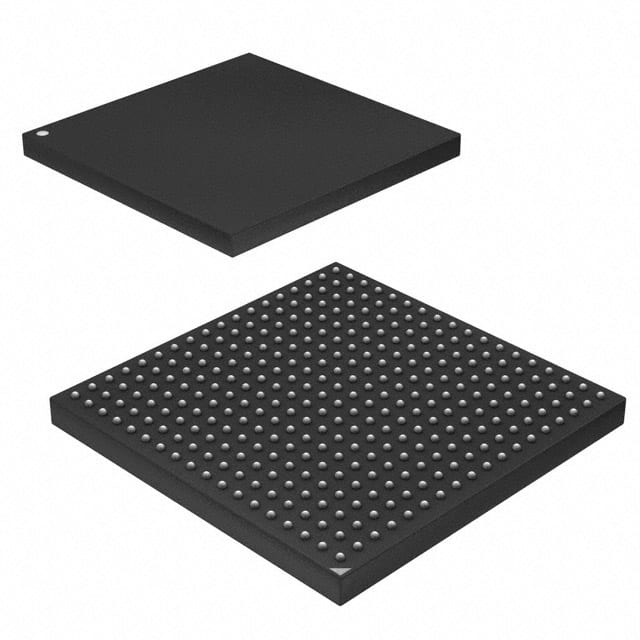
NXP Semiconductors MCIMX6S5EVM10AC
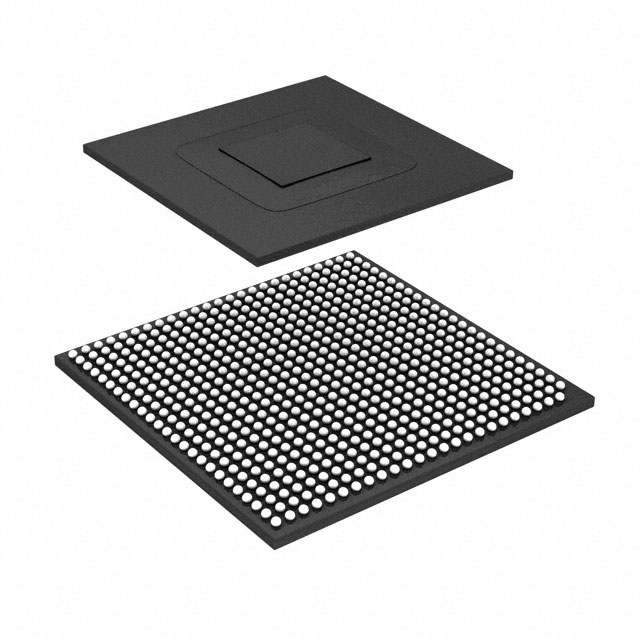
- Part No.:
- MCIMX6S5EVM10AC
- Manufacturer:
- NXP Semiconductors
- Category:
- Microprocessors
- Package:
- 624-LFBGA
- Datasheet:
-
 MCIMX6S5EVM10AC.pdf
- Description:
- IC MPU I.MX6S 1.0GHZ 624MAPBGA
- Quantity:
- Payment:

- Shipping:

Inventory:738
Please send an inquiry. Send us your inquiry, and we will respond immediately.
Product details
Overview
MCIMX6S5EVM10AC from NXP Semiconductors is an i.MX 6Solo applications processor featuring a single Arm Cortex-A9 core operating at 1 GHz, integrated VPU and GPU for multimedia acceleration, no EPDC (E-Ink Display Controller), and extended commercial temperature range (–20°C to +105°C). It implements DDR3/DDR3L/LPDDR2-800 memory interface, dual CAN, Gigabit Ethernet, HDMI 1.4, MIPI CSI-2/DSI, and USB 2.0 OTG + three HS hosts - deployed in portable medical devices and industrial HMIs.
For engineers reviewing the MCIMX6S5EVM10AC datasheet, MCIMX6S5EVM10AC pinout, MCIMX6S5EVM10AC application, or MCIMX6S5EVM10AC equivalent, key selection considerations include its 21 mm × 21 mm MAPBGA package with 0.8 mm pitch, absence of EPDC, extended temperature rating, and confirmed support for DVFS, TrustZone, and CAAM-based cryptographic acceleration.
Technical Context
The MCIMX6S5EVM10AC implements a symmetric Arm Cortex-A9 MPCore platform with 32 KB L1 instruction and data caches, 512 KB unified L2 cache, NEON MPE co-processor, and TrustZone security extensions. Its memory subsystem supports 16/32-bit DDR3-800, DDR3L-800, and LPDDR2-800 with interleaving capability.
Peripherals include dual FlexCAN controllers (1 Mbps), Gigabit Ethernet MAC (IEEE 1588 compliant, 400 Mbps real-world throughput), HDMI 1.4 transmitter, two MIPI CSI-2 lanes (up to 1 Gbps/lane), and four uSDHC ports supporting UHS-I SDR-104 (104 MB/s). Power management integrates DVFS, SW state retention, and hardware-accelerated clock gating.
Key Specifications
| Parameter | Value and Actual Design Meaning |
|---|---|
| CPU Core | Single Arm Cortex-A9 @ 1 GHz - delivers 2,000 DMIPS for Linux-based UI and media tasks without thermal throttling in extended temp range. |
| Memory Interface | 16/32-bit DDR3/DDR3L/LPDDR2-800 - enables low-latency access to up to 2 GB external RAM with 12.8 GB/s peak bandwidth. |
| Graphics Acceleration | GPU3Dv5 (OpenGL ES 2.0) + GPU2Dv2 - renders 720p UI compositing at 60 fps with <15% CPU load. |
| Video Processing | VPU hardware codec - decodes H.264 [email protected] (1080p30) and encodes H.264 [email protected] (720p30) at <300 mW. |
| Security | CAAM with 16 KB secure RAM, SHA-256, 2048-bit RSA - accelerates AES-256 encryption at 120 MB/s and enables secure boot via A-HAB v4. |
| Temperature Range | –20°C to +105°C junction - validated for continuous operation in sealed industrial enclosures without active cooling. |
| Package | MAPBGA, 21 mm × 21 mm, 0.8 mm pitch, 484-ball - compatible with standard PCB reflow profiles and automated optical inspection. |
Pinout & Package
MCIMX6S5EVM10AC uses a 484-ball MAPBGA package (21 mm × 21 mm, 0.8 mm pitch), designated BGA Case 2240 per NXP documentation. Ball map and signal assignments are defined in Section 6.2 of IMX6SDLCEC Rev. 9.
| Pin/Terminal | Circuit Role | Design Meaning |
|---|---|---|
| VDD_ARM | Core power supply | 1.2 V ±3% input for Cortex-A9 core; requires low-noise regulation and local 10 µF ceramic decoupling. |
| VDD_SOC | SoC logic power | 1.5 V ±3% supply for L2 cache, MMDC, and interconnect; shared with DDR I/O termination. |
| DDR_DQ[0:31] | DDR data bus | 32-bit bidirectional data lines with on-die termination; supports DDR3-800 CL6 timing at 400 MHz. |
| ENET_MDIO / ENET_MDC | Ethernet management interface | Open-drain MDIO and push-pull MDC for PHY register access; requires 2.2 kΩ pull-up on MDIO. |
| CAN1_TX / CAN1_RX | FlexCAN channel 1 differential pair | CMOS-level signals routed to external transceiver (e.g., TJA1042); supports ISO 11898-2 up to 1 Mbps. |
| USB_OTG_ID | OTG role detection | Ground-sensed input determining host/peripheral mode; pulled low via 10 kΩ resistor when used as peripheral. |
Key Features
| Feature | Design Value |
|---|---|
| DVFS with dynamic voltage scaling | Reduces VDD_ARM from 1.2 V to 0.95 V during audio decode, cutting core power by 42% while maintaining real-time latency. |
| CAAM cryptographic acceleration | Offloads AES-256-GCM, SHA-256, and RSA-2048 signing from CPU, freeing >850 DMIPS for application logic. |
| ASRC with 10-channel concurrency | Enables simultaneous resampling of multi-source audio streams (e.g., Bluetooth A2DP + SPDIF + I2S) with <–120 dB THD+N. |
| Smart DMA (SDMA) controller | Handles GPMI NAND transfers, LCD frame buffering, and audio FIFO servicing without CPU intervention - reduces interrupt load by 70%. |
| TrustZone-enabled secure boot | Verifies signed bootloader images using eFUSE-stored public keys before releasing CPU from reset - prevents unauthorized firmware execution. |
Applications
| Medical Data Logger | Industrial HMI Panel |
|---|---|
Use Scenario: Portable ECG monitor logging waveform data to encrypted eMMC while streaming alerts over CAN to central control unit. IC Role / Device Role / Timing Role: MCIMX6S5EVM10AC serves as main application processor executing Linux RT kernel, managing dual CAN interfaces, and performing real-time FFT analysis via NEON SIMD. Use Value: Integrated CAAM enables FIPS-compliant AES-256 encryption of patient data at line rate (2 MB/s), meeting HIPAA requirements without external crypto IC. | Use Scenario: Ruggedized touch HMI for factory floor PLC control, displaying live process data from Modbus TCP and updating via HDMI-connected operator display. IC Role / Device Role / Timing Role: MCIMX6S5EVM10AC acts as graphics-rich UI engine driving dual displays (HDMI + LVDS), handling 5 UARTs for legacy device integration, and running deterministic EtherCAT stack. Use Value: GPU2Dv2 accelerates vector-based UI rendering at 60 fps across 1024×768 resolution, reducing frame buffer bandwidth by 65% versus CPU-only composition. |
| IP Video Intercom | Energy Management Gateway |
Use Scenario: Secure door station capturing 720p video, performing motion detection, and transmitting encrypted H.264 stream over Gigabit Ethernet to cloud VMS. IC Role / Device Role / Timing Role: MCIMX6S5EVM10AC functions as multimedia SoC executing VPU-accelerated encoding, ENET MAC with IEEE 1588 timestamping, and TLS 1.2 handshake via CAAM. Use Value: Hardware VPU achieves 720p30 encoding at 120 KB/s average bitrate with <50 ms end-to-end latency - critical for real-time intercom responsiveness. | Use Scenario: DIN-rail mounted gateway aggregating smart meter data (via RS485 UARTs), analyzing consumption patterns, and reporting via LTE modem over USB. IC Role / Device Role / Timing Role: MCIMX6S5EVM10AC operates as edge analytics node running Yocto Linux, managing four uSDHC ports for local data caching, and scheduling low-power wake cycles via EPIT timers. Use Value: DVFS and power-gated L2 cache reduce idle power to 180 mW - enabling 24/7 operation on 5 W PoE injector without thermal derating. |
Equivalent & Alternatives
The following parts are listed as comparable options for similar applications processor applications.
| Alternative Part | Technical Difference | Application Difference | Selection Advice |
|---|---|---|---|
| MCIMX6S5DVM10AC | Identical silicon but commercial temp grade (0°C to +95°C); same pinout, features, and electrical specs. | Suitable only for indoor, climate-controlled environments - not rated for extended thermal cycling or unventilated enclosures. | Select MCIMX6S5DVM10AC only if ambient operating temperature remains within 0–95°C and lifecycle cost is primary driver. |
| MCIMX6U5EVM10AC | Dual-core variant (2× Cortex-A9), adds EPDC support and higher DDR bandwidth; larger die size increases thermal footprint. | Required for dual-display HMI with simultaneous E-Ink + HDMI output or parallel processing workloads exceeding 2,000 DMIPS. | Choose MCIMX6U5EVM10AC when application demands >2,000 DMIPS sustained performance or native E-Ink panel control - otherwise MCIMX6S5EVM10AC offers optimal cost/power balance. |
Compared with MCIMX6S5DVM10AC, the MCIMX6S5EVM10AC provides verified operation at –20°C startup and +105°C steady-state, enabling deployment in outdoor kiosks and industrial cabinets without derating. Against MCIMX6U5EVM10AC, it delivers identical security, multimedia, and interface capabilities at lower BOM cost and thermal envelope - ideal for single-display, single-task embedded systems.
Availability
MCIMX6S5EVM10AC is available at Aetrix Electronics and suitable for portable medical devices, industrial HMIs, IP video intercoms, and energy management gateways requiring stable component supply across extended temperature ranges and long production lifecycles.
Supply support for MCIMX6S5EVM10AC includes scheduled delivery planning, volume procurement assistance, BOM continuity management, traceable sourcing, and lifecycle availability coordination for OEM customers, industrial embedded developers, connected-device designers, and electronics production programs.
Manufacturer
NXP Semiconductors is a global semiconductor company headquartered in Eindhoven, Netherlands, specializing in secure connectivity solutions for automotive, industrial, and consumer markets.
The i.MX 6Solo family - including MCIMX6S5EVM10AC - was designed specifically for cost-sensitive, power-constrained embedded applications requiring rich multimedia, real-time connectivity, and hardware-enforced security in extended temperature environments.
FAQ
What is the maximum DDR3 memory speed supported by MCIMX6S5EVM10AC?
The MCIMX6S5EVM10AC supports DDR3-800 (400 MHz clock) with CL6 timing, delivering up to 12.8 GB/s peak bandwidth across its 32-bit interface. This is validated for 16/32-bit configurations with DDR3L and LPDDR2-800 as specified in Section 4.2 of IMX6SDLCEC Rev. 9. The MCIMX6S5EVM10AC does not support DDR4 or LPDDR3.
Does MCIMX6S5EVM10AC include hardware support for secure boot?
Yes, MCIMX6S5EVM10AC implements Advanced High Assurance Boot (A-HAB v4) with SHA-256 hashing, 2048-bit RSA signature verification, and eFUSE-based key storage. Secure boot flow is enforced by the Boot ROM and CSU, validating signed bootloader images before releasing the Cortex-A9 core from reset - all documented in the i.MX 6Solo Security Reference Manual.
Can MCIMX6S5EVM10AC drive both HDMI and LVDS displays simultaneously?
Yes, MCIMX6S5EVM10AC supports concurrent HDMI 1.4 and LVDS output via separate display pipelines - confirmed in Section 6.1 of IMX6SDLCEC Rev. 9. The HDMI port handles up to 1080p60, while dual LVDS lanes support WUXGA (1920×1200) at 60 Hz, with independent pixel clocks and timing generators.
What is the functional difference between MCIMX6S5EVM10AC and MCIMX6S5EVM10AD?
The sole difference is packaging: MCIMX6S5EVM10AC uses a standard MAPBGA with lead-free (Pb-free) finish, while MCIMX6S5EVM10AD employs a halogen-free, lead-free MAPBGA. Both share identical silicon, temperature rating (–20°C to +105°C), features, pinout, and electrical specifications per Table 1 of IMX6SDLCEC Rev. 9.
Does MCIMX6S5EVM10AC integrate an E-Ink Display Controller (EPDC)?
No, MCIMX6S5EVM10AC explicitly excludes the EPDC module, as indicated by the "5" in its part number nomenclature (per Figure 1, page 5 of IMX6SDLCEC Rev. 9). Models with EPDC carry "8" (e.g., MCIMX6S8EVM10AC). This omission reduces die size and power consumption, making MCIMX6S5EVM10AC optimal for non-E-Ink applications.
MCIMX6S5EVM10AC Specifications
- Product attributes
- Attribute value
- Manufacturer:
- NXP Semiconductors
- Package/Case:
- 624-LFBGA
- Series:
- i.MX6S
- Packaging:
- Tray
- Product Status:
- Active
- Core Processor:
- ARM® Cortex®-A9
- Number of Cores/Bus Width:
- 1 Core, 32-Bit
- Speed:
- 1.0GHz
- Co-Processors/DSP:
- Multimedia; NEON™ SIMD
- RAM Controllers:
- LPDDR2, LVDDR3, DDR3
- Graphics Acceleration:
- Yes
- Display & Interface Controllers:
- Keypad, LCD
- Ethernet:
- 10/100/1000Mbps (1)
- SATA:
- -
- USB:
- USB 2.0 + PHY (4)
- Voltage - I/O:
- 1.8V, 2.5V, 2.8V, 3.3V
- Operating Temperature:
- -20°C ~ 105°C (TJ)
- Grade:
- -
- Qualification:
- -
- Security Features:
- ARM TZ, Boot Security, Cryptography, RTIC, Secure Fusebox, Secure JTAG, Secure Memory, Secure RTC, Tamper Detection
- Mounting Type:
- Surface Mount
- Supplier Device Package:
- 624-MAPBGA (21x21)
- Additional Interfaces:
- CAN, I2C, I2S, MMC/SD/SDIO, SAI, SPI, SSI, UART
MCIMX6S5EVM10AC FAQ
1.How can I place an order for MCIMX6S5EVM10AC through Aetrix?
Please submit a Request for Quotation (RFQ) for MCIMX6S5EVM10AC on Aetrix. Our sales agent will provide a competitive quotation and guide you through the order confirmation once you accept the terms.
2.Are the price and stock information for MCIMX6S5EVM10AC reliable?
The price and inventory of MCIMX6S5EVM10AC are updated periodically and may fluctuate due to market conditions. Stock and pricing data are typically refreshed every 24 hours. Quotation validity for MCIMX6S5EVM10AC is usually 5 days.
3.What payment methods are accepted for MCIMX6S5EVM10AC?
We accept Wire Transfer, PayPal, Credit Card, Western Union, MoneyGram, and Escrow for MCIMX6S5EVM10AC transactions.
Note: Certain payment methods may incur a processing fee.
4.How is shipping managed for MCIMX6S5EVM10AC?
MCIMX6S5EVM10AC orders can be shipped via leading logistics carriers, including DHL, UPS, FedEx, TNT, or Registered Mail.
Once your MCIMX6S5EVM10AC order is processed, you will receive an email with the shipment details and tracking number.
Note: Tracking information may take up to 24 hours to appear. Express delivery typically takes 3–5 business days.
5.How can I obtain technical support or documentation for MCIMX6S5EVM10AC?
For technical support, including MCIMX6S5EVM10AC datasheets, pinout diagrams, or application guidance, please contact our engineering support team. They can provide detailed documentation and assistance for your MCIMX6S5EVM10AC requirements.
6.How does Aetrix verify that MCIMX6S5EVM10AC is sourced from the original manufacturer or authorized distributors?
All MCIMX6S5EVM10AC products on Aetrix are procured from qualified distributors and authorized channels. Our dedicated quality assurance team conducts strict verification, including traceability checks and, if necessary, third-party testing. This ensures that MCIMX6S5EVM10AC meets industry standards.
7.What is the process for return or replacement of MCIMX6S5EVM10AC?
All MCIMX6S5EVM10AC units undergo pre-shipment inspection (PSI). If there is an issue with MCIMX6S5EVM10AC, returns or replacements are accepted under the following conditions:
1.Quantity discrepancies, incorrect items, or visible external defects (such as breakage or corrosion), acknowledged by Aetrix.
2.The issue is reported within 90 days of delivery.
3.The MCIMX6S5EVM10AC part is unused and in its original packaging.
Return procedure for MCIMX6S5EVM10AC:
1.Submit a request within 90 days.
2.Obtain a Return Material Authorization (RMA) from Aetrix.
MCIMX6S5EVM10AC Tags
-
AT91SAM9260B-CU-999
Microchip Technology
-
AT91SAM9G25-CU
Microchip Technology
-
ATSAMA5D27C-CU
Microchip Technology
-
AT91SAM9X35-CU
Microchip Technology
-
AT91SAM9X25-CU
Microchip Technology
-
MCIMX6Y2CVM08AB
NXP Semiconductors
.JPG)
-
AM3352BZCZ100
Texas Instruments
-
AT91SAM9260B-CU
Microchip Technology
-
AT91SAM9260B-QU
Microchip Technology
-
ATSAMA5D31A-CU
Microchip Technology
-
AT91SAM9G20B-CU-999
Microchip Technology
-
MCIMX6Y2CVM05AB
NXP Semiconductors
Tech Hub

A practical engineering guide to 3.3V and 5V logic compatibility, input thresholds, resistor dividers, translator ICs, MOSFET level shifting, I2C pull-ups, timing limits and power-sequencing risks.

The 74HC595 uses push-pull logic outputs, while the TPIC6B595 uses 50 V open-drain DMOS sinks for higher-power loads. This guide compares timing, current limits, 3.3 V interfacing, load wiring, thermal…

The 74HC595 converts serial data into eight stable parallel outputs. This guide covers pin functions, shift and storage timing, OE and MR behavior, drive-current limits, cascading, voltage compatibilit…

A technical comparison of level-sensitive latches and edge-triggered flip-flops, covering timing windows, setup and hold limits, master–slave operation, time borrowing, race-through, HDL inference and…

A D latch stores one bit while Enable controls when data can pass. This reference covers gate-level operation, truth tables, transparency, setup and hold timing, LE versus OE, common ICs and practical …

An SR latch stores one bit through cross-coupled feedback. This engineering reference covers NOR and NAND implementations, truth tables, forbidden-state recovery, gated operation, switch debouncing, fa…

Latch circuits retain one bit through feedback. This technical reference covers SR and D latches, truth tables, transparency, timing limits, latch-versus-flip-flop behavior, applications and common log…

An engineering guide to LED driver operation, constant-current and constant-voltage outputs, linear and switching topologies, dimming, IC selection, calculations, replacement compatibility, and fault c…

Operational amplifier guide covering op amp basics, feedback, ideal vs real op amps, common configurations, buffer circuits, offset, bias current, gain-bandwidth, slew rate, rail-to-rail limits and sel…

Jumper cables guide covering safe connection order, red and black clamp placement, final ground connection, cable gauge, length, clamp quality, copper vs CCA cables, jump starter comparison and battery…


