
 My Inquiry
 My Account


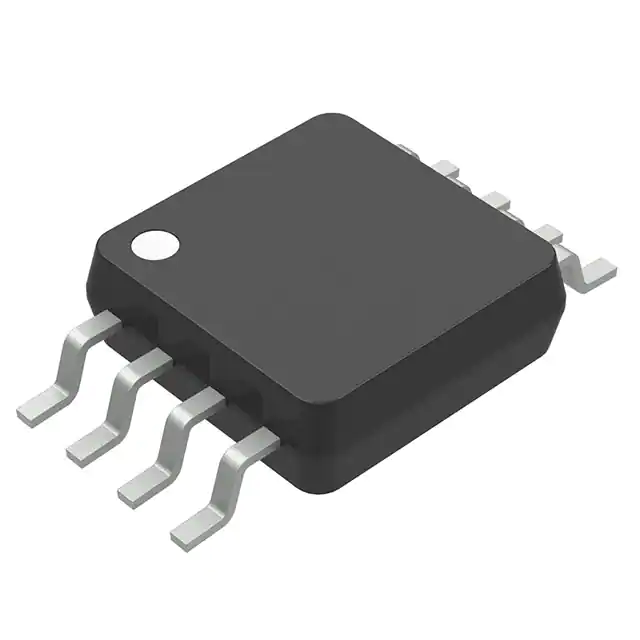
Microchip Technology MCP1630VT-E/MSVAO
- Part No.:
- MCP1630VT-E/MSVAO
- Manufacturer:
- Microchip Technology
- Category:
- DC DC Switching Controllers
- Package:
- 8-TSSOP, 8-MSOP (0.118", 3.00mm Width)
- Datasheet:
-
 MCP1630VT-E/MSVAO.pdf
- Description:
- HIGH SPEED PULSE WIDTH MODULATOR
- Quantity:
- Payment:

- Shipping:

Inventory:3,932
Please send an inquiry. Send us your inquiry, and we will respond immediately.
Product details
Overview
MCP1630VT-E/MSVAO from Microchip Technology is a high-speed, microcontroller-adaptable PWM controller for intelligent DC-DC power conversion. It supports peak current mode (MCP1630) and voltage/average current mode (MCP1630V) control, features 12 ns CS-to-VEXT delay, ±5% precise peak current limit, and operates from -40°C to +125°C. Used in smart battery chargers and bidirectional Li-Ion converters with PIC® MCU coordination.
For engineers reviewing the MCP1630VT-E/MSVAO datasheet, MCP1630VT-E/MSVAO pinout, MCP1630VT-E/MSVAO application, or MCP1630VT-E/MSVAO equivalent, key selection criteria include its 8-lead MSOP package, CMOS output driver capability, external oscillator/reference interface, UVLO (2.7–3.0 V), and thermal shutdown at 150°C.
Technical Context
The MCP1630VT-E/MSVAO implements cycle-by-cycle control via a high-speed comparator (12 ns propagation delay) and latch-based PWM logic synchronized to an external MCU-generated oscillator signal. Its error amplifier delivers rail-to-rail output clamped at 2.7 V, with internal 3:1 division feeding the CS comparator for peak current limiting in MCP1630 variants.
In MCP1630V mode (enabled by part suffix 'V'), the internal resistor divider is removed, raising the maximum CS input range to 2.7 V and supporting voltage-mode or average-current-mode operation with external ramp injection. Protection includes undervoltage lockout (2.7 V turn-on, 75 mV hysteresis), overtemperature shutdown (150°C, 18°C hysteresis), and short-circuit detection.
Key Specifications
| Parameter | Value and Actual Design Meaning |
|---|---|
| Control Modes | Peak current mode (MCP1630); voltage & average current mode (MCP1630V) |
| CS-to-VEXT Delay | 12 ns typical - enables >1 MHz switching with tight current limiting |
| Input Voltage Range | 3.0 V to 5.5 V - powers from low-voltage bias rails, compatible with 3.3 V/5 V MCUs |
| Quiescent Current | 2.8 mA typical - minimizes standby power in always-on battery systems |
| UVLO Threshold | 2.7 V (falling), 3.0 V (rising) - prevents erratic startup during brownout conditions |
| Thermal Shutdown | 150°C junction temperature - protects IC and external MOSFETs under overload |
| Output Driver Type | CMOS push-pull - directly drives low-side N-MOSFET gates or external gate drivers |
Pinout & Package
Package: 8-Lead MSOP (2 mm × 3 mm), RoHS-compliant, surface-mount.
| Pin/Terminal | Circuit Role | Design Meaning |
|---|---|---|
| 1 - COMP | Error amplifier output | Drives external compensation network; clamped at 2.7 V to set max current limit |
| 2 - FB | Inverting input of error amplifier | Receives feedback voltage/current signal for closed-loop regulation |
| 3 - CS | Current sense or ramp input | For MCP1630: 0.9 V max sensed current; for MCP1630V: 2.7 V max ramp input |
| 4 - OSC IN | External oscillator input | MCU-generated clock defining max duty cycle; high-to-low edge triggers new cycle |
| 5 - GND | Analog ground reference | Must connect to quiet analog ground plane to avoid noise coupling into CS/FB paths |
| 6 - VEXT | PWM output driver | CMOS-level output driving external MOSFET gate or driver; high-impedance during overtemperature |
| 7 - VIN | Supply input | 3.0–5.5 V bias supply; requires 0.1 µF bypass capacitor to GND |
| 8 - VREF | Reference voltage input | Rail-to-rail (0–VIN) programmable reference enabling dynamic output adjustment via MCU |
Key Features
| Feature | Design Value |
|---|---|
| High-speed comparator | 12 ns CS-to-VEXT delay enables stable >1 MHz current-mode operation |
| Microcontroller adaptability | OSC IN and VREF pins accept MCU I/O signals-enabling programmable frequency, duty cap, and output calibration |
| Flexible control architecture | Supports peak current, voltage, and average current modes via same hardware (MCP1630/MCP1630V variant mapping) |
| Integrated protection | UVLO, overtemperature shutdown (150°C), and output short-circuit detection prevent system fault propagation |
| Rail-to-rail error amplifier | 0–2.7 V output with 3.5 MHz GBWP ensures fast transient response in closed-loop regulation |
Applications
| Smart Battery Charger | Bidirectional Li-Ion Power Converter |
|---|---|
|
Use Scenario: Charging 4-cell NiMH or Li-Ion battery packs with adaptive termination and fuel gauging. IC Role / Device Role / Timing Role: MCP1630VT-E/MSVAO acts as the high-speed PWM modulator, regulated by PIC® MCU via OSC IN and VREF to adjust charge current/voltage in real time. Use Value: Enables precise constant-current/constant-voltage profiles with <12 ns current-sense latency, improving charge accuracy and thermal safety. |
Use Scenario: Single power train that both charges 4-series Li-Ion batteries from AC-DC input and supplies system bus voltage when mains are offline. IC Role / Device Role / Timing Role: MCP1630VT-E/MSVAO provides synchronous buck/boost PWM control, coordinated with SMBus communication and current sensing via external amplifiers. Use Value: Eliminates need for separate charger and regulator ICs-reducing BOM count and PCB area while maintaining fast transient response. |
| Multiple-Output/Multi-Phase PSU | AC Power Factor Correction (PFC) |
|
Use Scenario: Industrial embedded power supply requiring isolated dual outputs (e.g., +12 V and +5 V) with ripple cancellation. IC Role / Device Role / Timing Role: MCP1630VT-E/MSVAO serves as phase-aligned PWM controller per output channel, driven by MCU with 180°-shifted OSC IN signals. Use Value: Reduces input capacitor stress and eliminates beat frequencies through precise inter-channel timing control. |
Use Scenario: Active PFC stage in compact AC-DC adapters targeting >0.95 PF and low THD. IC Role / Device Role / Timing Role: MCP1630VT-E/MSVAO implements voltage-mode boost PFC using external ramp injection at CS pin and MCU-adjusted VREF for line-voltage feedforward. Use Value: Achieves tight output voltage regulation across universal AC input (90–264 VAC) without dedicated PFC controller IC. |
Equivalent & Alternatives
The following parts are listed as comparable options for similar high-speed PWM controller applications.
| Alternative Part | Technical Difference | Application Difference | Selection Advice |
|---|---|---|---|
| UC3844BD1G | Fixed-frequency current-mode controller; no external oscillator interface; 1 MHz max fSW; no VREF programmability | Used in cost-sensitive flyback SMPS where MCU coordination is unnecessary | Select UC3844BD1G only if fixed 250 kHz–500 kHz operation and minimal MCU interaction are acceptable |
| LM5117RTWT | Synchronous buck controller with integrated high-side gate driver; 50 V VIN max; no external OSC/VREF flexibility | Targeted at high-input-voltage industrial buck converters without multi-topology support | Choose LM5117RTWT when direct high-side drive and >5.5 V input capability outweigh MCU adaptability needs |
Compared with UC3844BD1G and LM5117RTWT, the MCP1630VT-E/MSVAO uniquely enables real-time MCU-driven reconfiguration of switching frequency, output setpoint, and control mode-making it optimal for intelligent, software-defined power systems rather than fixed-function converters.
Availability
MCP1630VT-E/MSVAO is available at Aetrix Electronics and suitable for smart battery charging, bidirectional Li-Ion power conversion, and AC power factor correction requiring stable component supply across automotive-grade temperature ranges.
Supply support for MCP1630VT-E/MSVAO includes scheduled delivery planning, volume procurement assistance, BOM continuity management, traceable sourcing, and lifecycle availability coordination for OEM customers, industrial embedded developers, connected-device designers, and electronics production programs.
Manufacturer
Microchip Technology Inc. is a leading provider of microcontrollers, analog, and Flash-IP solutions, serving industrial, automotive, and consumer markets with robust, qualified semiconductor products.
The MCP1630 series was designed specifically to enable MCU-based intelligent power systems-offering programmable control, high-speed current sensing, and flexible topology support for battery chargers, multi-phase PSUs, and adaptive PFC stages.
FAQ
What is the primary function of the MCP1630VT-E/MSVAO in a power system?
The MCP1630VT-E/MSVAO functions as a high-speed, microcontroller-adaptable PWM controller that generates precise duty-cycle signals for external MOSFETs or gate drivers. It performs cycle-by-cycle current or voltage regulation using feedback from FB and CS pins, with timing and reference inputs (OSC IN and VREF) fully controlled by a companion PIC® MCU. This makes MCP1630VT-E/MSVAO ideal for intelligent, software-configurable DC-DC converters where dynamic adaptation is required.
How does the 'V' in MCP1630VT-E/MSVAO affect its operation?
The 'V' suffix denotes the MCP1630V variant, which supports voltage-mode and average current-mode control-unlike the base MCP1630 limited to peak current mode. Specifically, MCP1630VT-E/MSVAO removes the internal 3:1 resistor divider on the error amplifier output, allowing full 2.7 V swing at the CS pin for external ramp injection. This enables stable operation in buck, boost, and PFC topologies where sensed inductor current is unsuitable as the modulation signal.
Can the MCP1630VT-E/MSVAO drive a MOSFET gate directly?
Yes-the MCP1630VT-E/MSVAO features a CMOS push-pull VEXT output capable of directly driving the gate of low-side N-channel MOSFETs in low-power applications. Its typical rise/fall times of 5.9 ns/6.2 ns and RDS(on) of 7 Ω (N-channel) / 10 Ω (P-channel) ensure fast switching. For high-power or high-side configurations, it is intended to drive external gate drivers-leveraging its precise timing and low propagation delay.
What protection features are built into the MCP1630VT-E/MSVAO?
The MCP1630VT-E/MSVAO integrates three critical protections: undervoltage lockout (UVLO) activating below 2.7 V on VIN with 75 mV hysteresis; overtemperature shutdown triggering at 150°C junction temperature with 18°C hysteresis; and output short-circuit detection via CS monitoring. During overtemperature events, the VEXT pin enters high-impedance state (with 100 kΩ internal pull-down), preventing uncontrolled switching and safeguarding downstream components.
Is the MCP1630VT-E/MSVAO compatible with non-Microchip microcontrollers?
Yes-while optimized for use with PIC® MCUs (as shown in application notes DS51505, DS51555), the MCP1630VT-E/MSVAO interfaces generically via digital OSC IN and analog VREF pins. Any MCU capable of generating a clean square-wave clock (≤1 MHz, 0.8–2.0 V logic levels) and sourcing a stable reference voltage (0–VIN) can fully control MCP1630VT-E/MSVAO-including ARM Cortex-M, ESP32, and TI MSP430 devices-without proprietary firmware or protocols.
MCP1630VT-E/MSVAO Specifications
- Product attributes
- Attribute value
- Manufacturer:
- Microchip Technology
- Series:
- -
- Package/Case:
- 8-TSSOP, 8-MSOP (0.118", 3.00mm Width)
- Packaging:
- Tape & Reel (TR)
- Product Status:
- Active
- Output Type:
- Transistor Driver
- Function:
- Step-Up, Step-Down, Step-Up/Step-Down
- Output Configuration:
- Positive, Isolation Capable
- Topology:
- Buck, Boost, Buck-Boost, Flyback, SEPIC
- Number of Outputs:
- 1
- Output Phases:
- 1
- Voltage - Supply (Vcc/Vdd):
- 3V ~ 5.5V
- Frequency - Switching:
- -
- Duty Cycle (Max):
- -
- Synchronous Rectifier:
- Yes
- Clock Sync:
- No
- Serial Interfaces:
- -
- Control Features:
- -
- Operating Temperature:
- -40°C ~ 125°C (TJ)
- Grade:
- Automotive
- Qualification:
- AEC-Q100
- Mounting Type:
- Surface Mount
- Supplier Device Package:
- 8-MSOP
MCP1630VT-E/MSVAO FAQ
1.How can I place an order for MCP1630VT-E/MSVAO through Aetrix?
Please submit a Request for Quotation (RFQ) for MCP1630VT-E/MSVAO on Aetrix. Our sales agent will provide a competitive quotation and guide you through the order confirmation once you accept the terms.
2.Are the price and stock information for MCP1630VT-E/MSVAO reliable?
The price and inventory of MCP1630VT-E/MSVAO are updated periodically and may fluctuate due to market conditions. Stock and pricing data are typically refreshed every 24 hours. Quotation validity for MCP1630VT-E/MSVAO is usually 5 days.
3.What payment methods are accepted for MCP1630VT-E/MSVAO?
We accept Wire Transfer, PayPal, Credit Card, Western Union, MoneyGram, and Escrow for MCP1630VT-E/MSVAO transactions.
Note: Certain payment methods may incur a processing fee.
4.How is shipping managed for MCP1630VT-E/MSVAO?
MCP1630VT-E/MSVAO orders can be shipped via leading logistics carriers, including DHL, UPS, FedEx, TNT, or Registered Mail.
Once your MCP1630VT-E/MSVAO order is processed, you will receive an email with the shipment details and tracking number.
Note: Tracking information may take up to 24 hours to appear. Express delivery typically takes 3–5 business days.
5.How can I obtain technical support or documentation for MCP1630VT-E/MSVAO?
For technical support, including MCP1630VT-E/MSVAO datasheets, pinout diagrams, or application guidance, please contact our engineering support team. They can provide detailed documentation and assistance for your MCP1630VT-E/MSVAO requirements.
6.How does Aetrix verify that MCP1630VT-E/MSVAO is sourced from the original manufacturer or authorized distributors?
All MCP1630VT-E/MSVAO products on Aetrix are procured from qualified distributors and authorized channels. Our dedicated quality assurance team conducts strict verification, including traceability checks and, if necessary, third-party testing. This ensures that MCP1630VT-E/MSVAO meets industry standards.
7.What is the process for return or replacement of MCP1630VT-E/MSVAO?
All MCP1630VT-E/MSVAO units undergo pre-shipment inspection (PSI). If there is an issue with MCP1630VT-E/MSVAO, returns or replacements are accepted under the following conditions:
1.Quantity discrepancies, incorrect items, or visible external defects (such as breakage or corrosion), acknowledged by Aetrix.
2.The issue is reported within 90 days of delivery.
3.The MCP1630VT-E/MSVAO part is unused and in its original packaging.
Return procedure for MCP1630VT-E/MSVAO:
1.Submit a request within 90 days.
2.Obtain a Return Material Authorization (RMA) from Aetrix.
MCP1630VT-E/MSVAO Tags

-
UCC28C45DR
Texas Instruments
-
UCC28C40DR
Texas Instruments
-
UCC28C43DR
Texas Instruments

-
ZXSC410E6TA
Diodes Incorporated
-
LM3524DMX/NOPB
Texas Instruments
-
LM3489MMX/NOPB
Texas Instruments
-
MIC2102YML-TR
Microchip Technology

-
LM5148RGYR
Texas Instruments
-
TL598CDR
Texas Instruments
-
LM5155DSSR
Texas Instruments
-
LM25085MYX/NOPB
Texas Instruments
-
UCC2813DTR-0
Texas Instruments
Tech Hub

TTL and CMOS logic families differ in thresholds, loading, output drive, power and timing. This engineering guide compares 74HC and 74HCT, calculates noise margins and checks 3.3 V/5 V compatibility.

A practical engineering guide to 3.3V and 5V logic compatibility, input thresholds, resistor dividers, translator ICs, MOSFET level shifting, I2C pull-ups, timing limits and power-sequencing risks.

The 74HC595 uses push-pull logic outputs, while the TPIC6B595 uses 50 V open-drain DMOS sinks for higher-power loads. This guide compares timing, current limits, 3.3 V interfacing, load wiring, thermal…

The 74HC595 converts serial data into eight stable parallel outputs. This guide covers pin functions, shift and storage timing, OE and MR behavior, drive-current limits, cascading, voltage compatibilit…

A technical comparison of level-sensitive latches and edge-triggered flip-flops, covering timing windows, setup and hold limits, master–slave operation, time borrowing, race-through, HDL inference and…

A D latch stores one bit while Enable controls when data can pass. This reference covers gate-level operation, truth tables, transparency, setup and hold timing, LE versus OE, common ICs and practical …

An SR latch stores one bit through cross-coupled feedback. This engineering reference covers NOR and NAND implementations, truth tables, forbidden-state recovery, gated operation, switch debouncing, fa…

Latch circuits retain one bit through feedback. This technical reference covers SR and D latches, truth tables, transparency, timing limits, latch-versus-flip-flop behavior, applications and common log…

An engineering guide to LED driver operation, constant-current and constant-voltage outputs, linear and switching topologies, dimming, IC selection, calculations, replacement compatibility, and fault c…

Operational amplifier guide covering op amp basics, feedback, ideal vs real op amps, common configurations, buffer circuits, offset, bias current, gain-bandwidth, slew rate, rail-to-rail limits and sel…


