
 My Inquiry
 My Account


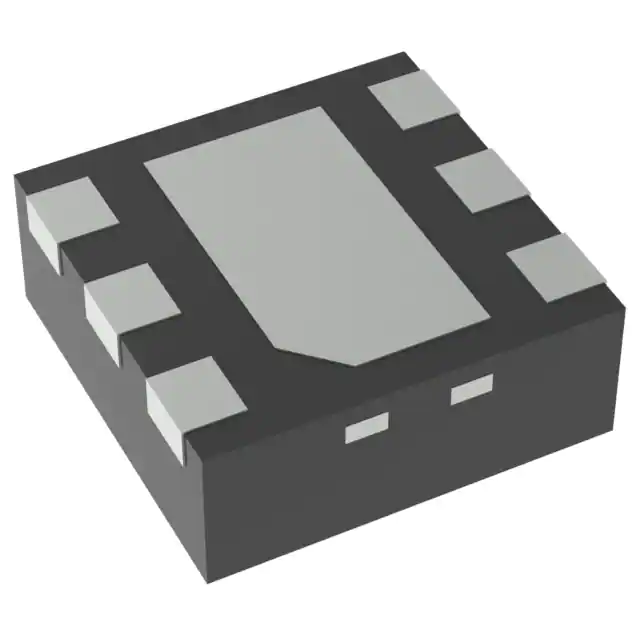
Microchip Technology MCP1703T-1802E/MC
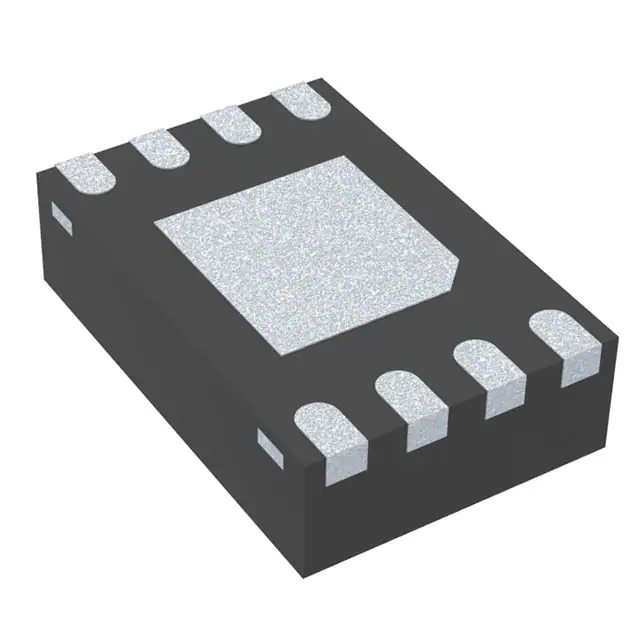
- Part No.:
- MCP1703T-1802E/MC
- Manufacturer:
- Microchip Technology
- Package:
- 8-VFDFN Exposed Pad
- Datasheet:
-
 MCP1703T-1802E/MC.pdf
- Description:
- IC REG LINEAR 1.8V 200MA 8DFN
- Quantity:
- Payment:

- Shipping:

Inventory:5,598
Please send an inquiry. Send us your inquiry, and we will respond immediately.
Product details
Overview
MCP1703T-1802E/MC from Microchip Technology is a CMOS low-dropout (LDO) linear voltage regulator delivering 250 mA output current at 1.8 V with 2.0 µA typical quiescent current, 625 mV typical dropout voltage @ 250 mA (VOUT = 2.8 V), ±0.4% output voltage tolerance at +25°C, and stable operation with 1.0–22 µF ceramic output capacitance - deployed in battery-powered smoke detectors, CO2 sensors, and microcontroller power rails.
For engineers reviewing the MCP1703T-1802E/MC datasheet, MCP1703T-1802E/MC pinout, MCP1703T-1802E/MC application, or MCP1703T-1802E/MC equivalent, key selection criteria include ultra-low IQ, input range (2.7–16.0 V), thermal shutdown behavior, SOT-23A package thermal resistance (θJA = 336°C/W), and compatibility with 1 µF ceramic output capacitors.
Technical Context
The MCP1703T-1802E/MC uses a P-channel PMOS pass transistor controlled by an internal error amplifier comparing feedback against a precision bandgap reference. Regulation is maintained across input voltages from 2.7 V to 16.0 V and load currents up to 250 mA for 1.8 V output, with dropout defined as the VIN–VOUT differential causing 2% output deviation.
Protection circuitry includes overcurrent limiting (400 mA short-circuit current) and thermal shutdown triggered at +150°C junction temperature, with automatic recovery at ~+130°C. Output stability is guaranteed with 1.0–22 µF X7R ceramic capacitors and ESR ≤ 2.0 Ω, supporting low-noise (8 µV/√Hz @ 1 kHz) and high PSRR (44 dB @ 100 Hz) performance.
Key Specifications
| Parameter | Value and Actual Design Meaning |
|---|---|
| Output Voltage | 1.8 V nominal, ±0.4% tolerance at +25°C - ensures accurate biasing of 1.8 V logic and analog circuits without calibration. |
| Quiescent Current | 2.0 µA typical - enables multi-year battery life in always-on sensor nodes drawing <100 µA average current. |
| Dropout Voltage | 625 mV typical @ 250 mA (VOUT = 2.8 V); for 1.8 V output, dropout remains ≤750 mV - supports regulation from two alkaline cells (3.0 V fresh) down to end-of-life (~2.7 V). |
| Input Voltage Range | 2.7 V to 16.0 V - accommodates 2–6 alkaline cells, single/dual Li-ion, and 9 V batteries without external pre-regulation. |
| Max Output Current | 250 mA continuous for VOUT ≥ 2.5 V; 200 mA for VOUT < 2.5 V - sufficient for MCU cores, RF transceivers, and analog front-ends in portable instrumentation. |
| Thermal Protection | Shuts down at +150°C junction temperature, restarts at ~+130°C - prevents permanent damage during sustained overload or poor PCB heatsinking. |
| Output Capacitance | Stable with 1.0–22 µF ceramic (X7R) - eliminates need for tantalum or electrolytic caps, reducing BOM cost and board area. |
Pinout & Package
Package: SOT-23A (3-pin, JEDEC MO-178AA), footprint-compatible with industry-standard SOT-23 packages; thermal pad absent - thermal performance governed by θJA = 336°C/W on 4-layer FR-4 board.
| Pin | Circuit Role | Design Meaning |
|---|---|---|
| 1 | VIN | Unregulated input supply; requires low-impedance source (≤10 Ω) and ≥1 µF ceramic decoupling close to pin for stability. |
| 2 | GND | Regulator ground reference; carries only 2.0 µA bias current - minimal trace width needed, but must be low-impedance path to load return. |
| 3 | VOUT | Regulated 1.8 V output; supplies full load current - place 1 µF ceramic capacitor within 2 mm of this pin for optimal transient response. |
Key Features
| Feature | Design Value |
|---|---|
| Ultra-low quiescent current | 2.0 µA typical enables >10-year battery life in 20 µA average-load applications like wireless smoke alarms. |
| Low-ESR ceramic capacitor support | Stable with 1–22 µF X7R ceramics - avoids costly tantalum caps and simplifies layout with no ESR tuning required. |
| Integrated protection | Overcurrent limit (400 mA short-circuit) and thermal shutdown (+150°C) eliminate need for external fault management circuitry. |
| Precision output tolerance | ±0.4% at +25°C and ±3% over –40°C to +125°C - reduces system-level calibration burden in industrial sensor modules. |
| High PSRR at low frequency | 44 dB @ 100 Hz - suppresses ripple from switching converters or noisy battery sources feeding downstream ADCs or RF ICs. |
Applications
| Smoke Detector Power | CO₂ Sensor Bias |
|---|---|
|
Use Scenario: Standby-powered optical smoke chamber with periodic self-test pulses and wireless alert transmission. IC Role / Device Role / Timing Role: Primary 1.8 V rail for MCU, IR LED driver, and RF transceiver; regulates from 3.0 V alkaline stack. Use Value: 2.0 µA IQ extends 9 V battery life beyond 5 years; 625 mV dropout allows operation until cell voltage drops to 2.42 V. |
Use Scenario: NDIR-based CO₂ monitor operating continuously in HVAC ducts with wide ambient temperature swing. IC Role / Device Role / Timing Role: Precision 1.8 V reference for thermopile amplifier and ADC; rejects line noise from shared 12 V supply. Use Value: ±0.4% initial tolerance and 50 ppm/°C TCVOUT minimize gas concentration measurement drift across –25°C to +60°C. |
| Smart Battery Pack Monitor | Industrial Data Logger |
|
Use Scenario: Fuel-gauge IC and protection circuitry inside Li-ion pack housing, powered from cell stack via step-down converter. IC Role / Device Role / Timing Role: Clean 1.8 V supply for coulomb counter and SMBus interface; rejects switching noise from buck converter. Use Value: 44 dB PSRR at 100 Hz attenuates 100 mVpk-pk ripple to <2 mVpk-pk, preventing communication errors on SMBus lines. |
Use Scenario: Solar-charged remote environmental logger sampling temperature/humidity every 10 minutes. IC Role / Device Role / Timing Role: Main 1.8 V domain regulator for ultra-low-power MCU and flash memory; operates from 3.6–14 V solar input. Use Value: 2.7–16.0 V input range accepts variable solar panel output; 1 µF ceramic stability reduces bill-of-materials count and failure modes. |
Equivalent & Alternatives
The following parts are listed as comparable options for similar LDO regulator applications.
| Alternative Part | Technical Difference | Application Difference | Selection Advice |
|---|---|---|---|
| Torex XC6206P182MR-G | 1.8 V, 250 mA, 1.0 µA IQ, SOT-23-3, but only rated to 6.0 V input - lacks 16 V capability and thermal shutdown. | Suitable for low-voltage systems (≤6 V) where lowest possible IQ is critical; not viable for 9 V battery or multi-cell alkaline inputs. | Select when input never exceeds 6 V and sub-2 µA IQ justifies reduced protection and voltage range. |
| ON Semiconductor NCP170AMX180TCG | 1.8 V, 250 mA, 500 nA IQ, SOT-23-3, 6 V max input, no thermal shutdown - superior IQ but narrower voltage and safety scope. | Optimized for energy-harvesting or coin-cell applications with strict <1 µA budget; cannot replace MCP1703T-1802E/MC in 9 V or Li-ion systems. | Choose only for ultra-low-power designs with ≤6 V input and no thermal stress risk; verify absence of thermal protection aligns with system safety requirements. |
Compared with XC6206P182MR-G and NCP170AMX180TCG, the MCP1703T-1802E/MC uniquely balances 16 V input tolerance, integrated thermal shutdown, and 2.0 µA IQ - making it the sole option among these three for robust, wide-input, battery-backed industrial sensing without compromising longevity.
Availability
MCP1703T-1802E/MC is available at Aetrix Electronics and suitable for battery-powered smoke detectors, CO2 sensors, and microcontroller power rails requiring stable component supply across extended production lifecycles.
Supply support for MCP1703T-1802E/MC includes scheduled delivery planning, volume procurement assistance, BOM continuity management, traceable sourcing, and lifecycle availability coordination for OEM customers, industrial embedded developers, connected-device designers, and electronics production programs.
Manufacturer
Microchip Technology Inc. is a U.S.-based semiconductor company specializing in microcontrollers, analog devices, and power management ICs, with broad automotive, industrial, and consumer design-in support.
The MCP1703 product line delivers micropower LDO regulators optimized for battery longevity and wide-input operation in safety-critical and portable instrumentation - targeting applications where quiescent current, dropout, and reliability outweigh raw speed or integration.
FAQ
What is the maximum input voltage rating for the MCP1703T-1802E/MC?
The MCP1703T-1802E/MC has an absolute maximum input voltage rating of +18 V, with a recommended operating range of 2.7 V to 16.0 V. Exceeding 18 V risks permanent damage per Absolute Maximum Ratings. The device maintains regulation across its full 2.7–16.0 V operating window, enabling use with 9 V alkaline batteries and multi-cell Li-ion stacks without external clamping.
Does the MCP1703T-1802E/MC require an external capacitor on the VOUT pin?
Yes, the MCP1703T-1802E/MC requires a minimum 1.0 µF ceramic (X7R) output capacitor placed within 2 mm of the VOUT pin for small-signal stability. The datasheet confirms stability with 1–22 µF ceramic capacitors and ESR up to 2.0 Ω. Omitting this capacitor causes oscillation and unregulated output, regardless of load current.
What is the thermal shutdown behavior of the MCP1703T-1802E/MC?
The MCP1703T-1802E/MC activates thermal shutdown at +150°C junction temperature and automatically recovers when junction temperature falls to approximately +130°C. This hysteresis prevents rapid cycling during overload. The SOT-23A package's θJA = 336°C/W means even modest power dissipation (e.g., 150 mW) raises junction temperature significantly above ambient - PCB copper area directly impacts trip point timing.
Can the MCP1703T-1802E/MC be used as a precision voltage reference?
Yes, the MCP1703T-1802E/MC is explicitly qualified for voltage reference use: its ±0.4% output tolerance at +25°C, 50 ppm/°C temperature coefficient, and low 8 µV/√Hz noise make it suitable for ratio-metric ADC references in microcontroller-based sensors. Application Note AN765 confirms its use in calibrated bridge sensor interfaces where initial offset is trimmed in production.
Is the MCP1703T-1802E/MC pin-compatible with other SOT-23-3 LDOs?
No - while the MCP1703T-1802E/MC uses the standard SOT-23A outline, its pinout (VIN–GND–VOUT) differs from common alternatives like the LM1117 (VIN–VOUT–GND) and AP2112 (VIN–GND–VOUT). Physical fit does not guarantee functional compatibility; PCB layout must match the specific VIN/GND/VOUT assignment shown in DS22049F Figure 3-1.
MCP1703T-1802E/MC Specifications
- Product attributes
- Attribute value
- Manufacturer:
- Microchip Technology
- Series:
- -
- Package/Case:
- 8-VFDFN Exposed Pad
- Packaging:
- Tape & Reel (TR)
- Product Status:
- Active
- Output Configuration:
- Positive
- Output Type:
- Fixed
- Number of Regulators:
- 1
- Voltage - Input (Max):
- 16V
- Voltage - Output (Min/Fixed):
- 1.8V
- Voltage - Output (Max):
- -
- Voltage Dropout (Max):
- -
- Current - Output:
- 200mA
- Current - Quiescent (Iq):
- 5 µA
- Current - Supply (Max):
- -
- PSRR:
- 44dB (100Hz)
- Control Features:
- -
- Protection Features:
- Over Current, Over Temperature, Short Circuit
- Operating Temperature:
- -40°C ~ 125°C
- Grade:
- -
- Qualification:
- -
- Mounting Type:
- Surface Mount
- Supplier Device Package:
- 8-DFN (2x3)
MCP1703T-1802E/MC FAQ
1.How can I place an order for MCP1703T-1802E/MC through Aetrix?
Please submit a Request for Quotation (RFQ) for MCP1703T-1802E/MC on Aetrix. Our sales agent will provide a competitive quotation and guide you through the order confirmation once you accept the terms.
2.Are the price and stock information for MCP1703T-1802E/MC reliable?
The price and inventory of MCP1703T-1802E/MC are updated periodically and may fluctuate due to market conditions. Stock and pricing data are typically refreshed every 24 hours. Quotation validity for MCP1703T-1802E/MC is usually 5 days.
3.What payment methods are accepted for MCP1703T-1802E/MC?
We accept Wire Transfer, PayPal, Credit Card, Western Union, MoneyGram, and Escrow for MCP1703T-1802E/MC transactions.
Note: Certain payment methods may incur a processing fee.
4.How is shipping managed for MCP1703T-1802E/MC?
MCP1703T-1802E/MC orders can be shipped via leading logistics carriers, including DHL, UPS, FedEx, TNT, or Registered Mail.
Once your MCP1703T-1802E/MC order is processed, you will receive an email with the shipment details and tracking number.
Note: Tracking information may take up to 24 hours to appear. Express delivery typically takes 3–5 business days.
5.How can I obtain technical support or documentation for MCP1703T-1802E/MC?
For technical support, including MCP1703T-1802E/MC datasheets, pinout diagrams, or application guidance, please contact our engineering support team. They can provide detailed documentation and assistance for your MCP1703T-1802E/MC requirements.
6.How does Aetrix verify that MCP1703T-1802E/MC is sourced from the original manufacturer or authorized distributors?
All MCP1703T-1802E/MC products on Aetrix are procured from qualified distributors and authorized channels. Our dedicated quality assurance team conducts strict verification, including traceability checks and, if necessary, third-party testing. This ensures that MCP1703T-1802E/MC meets industry standards.
7.What is the process for return or replacement of MCP1703T-1802E/MC?
All MCP1703T-1802E/MC units undergo pre-shipment inspection (PSI). If there is an issue with MCP1703T-1802E/MC, returns or replacements are accepted under the following conditions:
1.Quantity discrepancies, incorrect items, or visible external defects (such as breakage or corrosion), acknowledged by Aetrix.
2.The issue is reported within 90 days of delivery.
3.The MCP1703T-1802E/MC part is unused and in its original packaging.
Return procedure for MCP1703T-1802E/MC:
1.Submit a request within 90 days.
2.Obtain a Return Material Authorization (RMA) from Aetrix.
MCP1703T-1802E/MC Tags
-
MIC5504-1.8YM5-TR
Microchip Technology
-
MIC5504-3.3YM5-TR
Microchip Technology
-
MIC5365-3.0YC5-TR
Microchip Technology
-
MIC5365-1.8YC5-TR
Microchip Technology
-
MIC5365-2.5YC5-TR
Microchip Technology
-
MIC5365-3.3YC5-TR
Microchip Technology
-
MIC5365-3.3YD5-TR
Microchip Technology
-
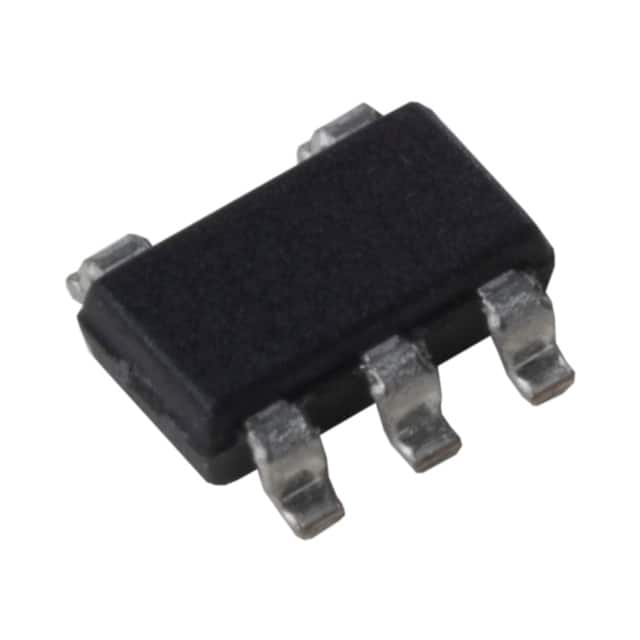
MIC5317-3.3YM5-TR
Microchip Technology
-
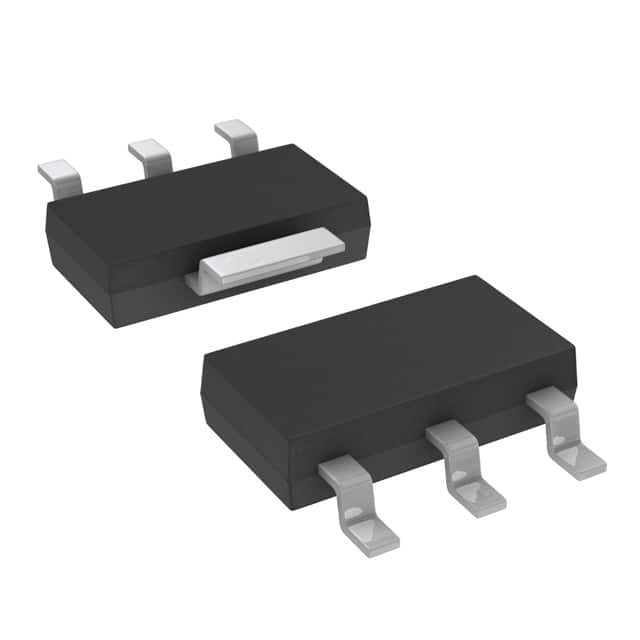
TLV1117LV33DCYR
Texas Instruments
-
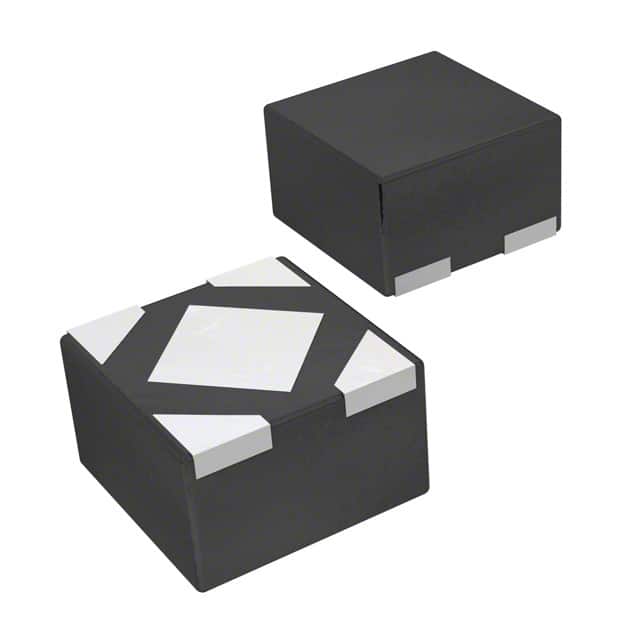
MIC5317-3.3YMT-TZ
Microchip Technology
-
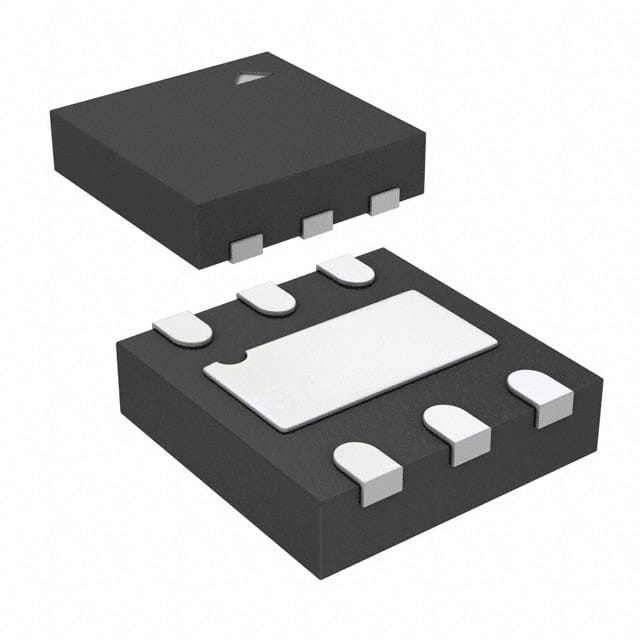
MIC5528-3.3YMT-TR
Microchip Technology
-
TLV75801PDRVR
Texas Instruments
Tech Hub

TTL and CMOS logic families differ in thresholds, loading, output drive, power and timing. This engineering guide compares 74HC and 74HCT, calculates noise margins and checks 3.3 V/5 V compatibility.

A practical engineering guide to 3.3V and 5V logic compatibility, input thresholds, resistor dividers, translator ICs, MOSFET level shifting, I2C pull-ups, timing limits and power-sequencing risks.

The 74HC595 uses push-pull logic outputs, while the TPIC6B595 uses 50 V open-drain DMOS sinks for higher-power loads. This guide compares timing, current limits, 3.3 V interfacing, load wiring, thermal…

The 74HC595 converts serial data into eight stable parallel outputs. This guide covers pin functions, shift and storage timing, OE and MR behavior, drive-current limits, cascading, voltage compatibilit…

A technical comparison of level-sensitive latches and edge-triggered flip-flops, covering timing windows, setup and hold limits, master–slave operation, time borrowing, race-through, HDL inference and…

A D latch stores one bit while Enable controls when data can pass. This reference covers gate-level operation, truth tables, transparency, setup and hold timing, LE versus OE, common ICs and practical …

An SR latch stores one bit through cross-coupled feedback. This engineering reference covers NOR and NAND implementations, truth tables, forbidden-state recovery, gated operation, switch debouncing, fa…

Latch circuits retain one bit through feedback. This technical reference covers SR and D latches, truth tables, transparency, timing limits, latch-versus-flip-flop behavior, applications and common log…

An engineering guide to LED driver operation, constant-current and constant-voltage outputs, linear and switching topologies, dimming, IC selection, calculations, replacement compatibility, and fault c…

Operational amplifier guide covering op amp basics, feedback, ideal vs real op amps, common configurations, buffer circuits, offset, bias current, gain-bandwidth, slew rate, rail-to-rail limits and sel…


