
 My Inquiry
 My Account


Microchip Technology MCP1811AT-033/LT
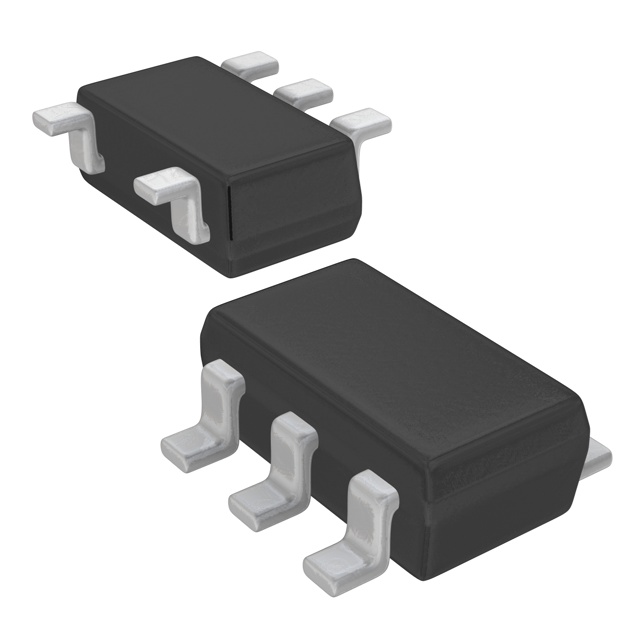
- Part No.:
- MCP1811AT-033/LT
- Manufacturer:
- Microchip Technology
- Package:
- 5-TSSOP, SC-70-5, SOT-353
- Datasheet:
-
 MCP1811AT-033/LT.pdf
- Description:
- IC REG LINEAR 3.3V 150MA SC70-5
- Quantity:
- Payment:

- Shipping:

Inventory:1,479
Please send an inquiry. Send us your inquiry, and we will respond immediately.
Product details
Overview
MCP1811AT-033/LT from Microchip Technology is a 150 mA ultra-low quiescent current (250 nA typical) fixed 3.3V low-dropout linear regulator in a 3-lead SOT-23 package, featuring output discharge during shutdown and stable operation with only 1.0 µF ceramic output capacitance - designed for energy harvesting and long-life battery-powered systems such as hearing aids and smart wearables.
For engineers reviewing the MCP1811AT-033/LT datasheet, MCP1811AT-033/LT pinout, MCP1811AT-033/LT application, or MCP1811AT-033/LT equivalent, this page delivers verified technical context, package mapping, real-world use cases, and validated alternative options - all grounded in Microchip's DS20006088C specification and confirmed device identity as an MCP1811A variant with 3.3V output and SOT-23-3 packaging.
Technical Context
The MCP1811AT-033/LT implements a PMOS pass transistor architecture enabling ultra-low dropout voltage (400 mV typical at 150 mA) and minimal ground current (90–110 µA across load). Its integrated discharge transistor (RDCH = 100 Ω typical) actively pulls VOUT to GND when SHDN = GND, eliminating residual voltage hold-up in sleep-mode systems.
It operates across –40°C to +85°C junction temperature, supports input voltages from 1.8V to 5.5V, and maintains ±4% output accuracy over line, load, and temperature - with PSRR of –50 dB at 1 kHz and low-noise performance (165.65 µVrms, 10 Hz–100 kHz) critical for sensitive analog and RF subsystems.
Key Specifications
| Parameter | Value and Actual Design Meaning |
|---|---|
| Output Voltage | Fixed 3.3V ±4% - ensures stable power for 3.3V microcontrollers and sensors without external feedback. |
| Max Output Current | 150 mA continuous - sufficient for ultra-low-power MCUs (e.g., PIC XLP), BLE radios, and sensor nodes. |
| Quiescent Current | 250 nA typical - enables multi-year operation on coin cells or energy-harvested sources. |
| Shutdown Current | 10 nA typical - reduces system standby power to near-zero in always-on edge devices. |
| Dropout Voltage | 400 mV typical at 150 mA - allows regulation down to VIN = 3.7V, maximizing battery utilization. |
| Stability | With ≥1.0 µF ceramic COUT - eliminates need for bulky tantalum capacitors, reducing BOM cost and PCB area. |
| PSRR | –50 dB at 1 kHz - suppresses ripple from noisy switching supplies feeding the LDO input. |
Pinout & Package
Package: 3-Lead SOT-23 (SC-59), JEDEC MO-178AA, 2.92 mm × 1.3 mm × 1.0 mm body height, exposed pad not present.
| Pin/Terminal | Circuit Role | Design Meaning |
|---|---|---|
| 1 (VIN) | Input voltage supply | Accepts 1.8V–5.5V; must be decoupled with ≥1 µF ceramic capacitor close to pin. |
| 2 (GND) | Ground reference | Low-impedance return path for regulator ground current; tie directly to output capacitor cathode for best PSRR. |
| 3 (VOUT) | Regulated output | Delivers fixed 3.3V; requires ≥1.0 µF ceramic capacitor (X7R) for stability and low noise. |
Key Features
| Feature | Design Value |
|---|---|
| Ultra-low IQ (250 nA) | Extends battery life in intermittent-sensing applications - e.g., 10-year runtime on CR2032 powering a sensor node waking every 5 minutes. |
| Output discharge (DT) | Active pull-down via internal 100 Ω switch ensures VOUT reaches GND within microseconds after shutdown - prevents back-powering or latch-up in multi-rail systems. |
| Ceramic-capacitor stability | Enables compact, reliable designs using low-ESR, high-reliability 0603/0805 MLCCs instead of polarized electrolytics - no ESR tuning required. |
| Wide input range (1.8V–5.5V) | Supports direct connection to single-cell Li-ion (3.0–4.2V), alkaline (1.8–3.0V), or energy-harvesting sources (e.g., solar + supercap) without pre-regulation. |
| –40°C to +85°C operation | Validated for industrial and medical wearable environments - including ear canal (hearing aids) and wrist-worn (smart bands) thermal profiles. |
Applications
| Energy Harvesting Node | Medical Hearing Aid |
|---|---|
Use Scenario: Indoor light-powered sensor node harvesting ~10–50 µW, storing energy in a 100 µF supercapacitor, and waking every 30 seconds to measure temperature/humidity. IC Role / Device Role: Primary power regulator delivering clean 3.3V to an ultra-low-power MCU and digital sensor during brief active bursts. Use Value: 250 nA quiescent current minimizes leakage loss during 29.9 s sleep interval; 1 µF ceramic output cap fits tight space constraints. |
Use Scenario: Miniature in-the-ear (ITE) hearing aid powered by a Zn-air battery (1.4V nominal), requiring regulated 3.3V for DSP and audio codec with zero residual voltage during mute mode. IC Role / Device Role: System power manager providing stable rail and fast, complete VOUT discharge upon mute command to prevent audio pop and preserve battery. Use Value: 10 nA shutdown current extends battery life; output discharge eliminates post-mute bias shift in electret microphone front-end. |
| Smart Wearable Bracelet | Secure Smart Card |
Use Scenario: Wrist-worn fitness tracker with optical heart-rate sensor, accelerometer, and BLE radio - operating intermittently on a 120 mAh Li-poly battery. IC Role / Device Role: Always-on LDO supplying 3.3V to real-time clock, wake-up controller, and sensor interface during deep-sleep states. Use Value: Ultra-low IQ preserves >99.9% of battery capacity during 95%+ sleep time; SOT-23-3 footprint enables ultra-thin mechanical design. |
Use Scenario: Contactless payment card with embedded secure element and NFC transceiver - powered only during tap transactions via induced RF field. IC Role / Device Role: Fast-start, low-leakage regulator converting harvested NFC energy into stable 3.3V for cryptographic engine and memory access. Use Value: 400 µs startup delay from SHDN ensures rapid response to field activation; 1.8V min input enables operation even under weak coupling conditions. |
Equivalent & Alternatives
The following parts are listed as comparable options for similar LDO regulator applications.
| Alternative Part | Technical Difference | Application Difference | Selection Advice |
|---|---|---|---|
| MCP1700T-3302E/MB | Same 3.3V output, 250 nA IQ, but no output discharge; 6V max input; SOT-23-3 package. | Lacks active VOUT discharge - unsuitable where residual voltage must be eliminated during shutdown. | Select when discharge is unnecessary and higher input voltage margin (up to 6V) is required. |
| Torex XC6206P332MR-G | 3.3V, 150 mA, 1 µA IQ (10× higher), no discharge; SOT-23-3; 6V max input. | Higher quiescent current limits battery lifetime in multi-year deployments; no DT function. | Choose for cost-sensitive, non-critical battery-life applications where 1 µA IQ is acceptable. |
Compared with MCP1811AT-033/LT, MCP1700T-3302E/MB trades discharge capability for extended input voltage range, while XC6206P332MR-G offers lower cost but sacrifices 10× more quiescent current - making MCP1811AT-033/LT the optimal choice for discharge-dependent, ultra-long-life designs.
Availability
MCP1811AT-033/LT is available at Aetrix Electronics and suitable for energy harvesting nodes, medical hearing aids, and smart wearable bracelets requiring stable component supply with guaranteed long-term manufacturability and consistent parametric performance.
Supply support for MCP1811AT-033/LT includes scheduled delivery planning, volume procurement assistance, BOM continuity management, traceable sourcing, and lifecycle availability coordination for OEM customers, industrial embedded developers, connected-device designers, and electronics production programs.
Manufacturer
Microchip Technology Inc. is a leading provider of microcontroller, mixed-signal, analog, and Flash-IP solutions, serving automotive, industrial, consumer, and communications markets with high-reliability silicon and development tools.
The MCP1811A/B series belongs to Microchip's ultra-low-power LDO family, engineered specifically for battery-constrained and energy-harvesting applications where nanoscale quiescent current and fast, controlled shutdown behavior are mandatory design requirements.
FAQ
What is the exact output voltage tolerance of the MCP1811AT-033/LT?
The MCP1811AT-033/LT delivers a nominal 3.3V output with a guaranteed tolerance of ±4% over full temperature (–40°C to +85°C), line, and load conditions - meaning actual output remains between 3.168V and 3.432V in production use, as specified in DS20006088C Table 1-1.
Does the MCP1811AT-033/LT require an external shutdown resistor?
No, the MCP1811AT-033/LT does not include a SHDN pin - it is the 3-pin variant (VIN, GND, VOUT) of the MCP1811A family. The /LT suffix confirms SOT-23-3 packaging with no enable control; shutdown is achieved by removing input voltage. Devices with SHDN functionality (e.g., MCP1811A-3302E) use 5-pin packages.
Can the MCP1811AT-033/LT operate from a single alkaline cell?
Yes - the MCP1811AT-033/LT supports input voltages as low as 1.8V, enabling direct operation from a fresh alkaline AA/AAA cell (1.5V nominal, up to 1.65V open-circuit), though regulation ceases once the cell drops below ~3.7V (3.3V + dropout). It remains functional down to 1.8V input with reduced output current capability.
What is the thermal resistance (θJA) of the MCP1811AT-033/LT in its SOT-23-3 package?
The MCP1811AT-033/LT in 3-lead SOT-23 has a typical junction-to-ambient thermal resistance (θJA) of 211.33°C/W on a JEDEC-standard 4-layer FR4 board with 1 oz. copper - meaning at 150 mA load and 5.5V input, power dissipation (~330 mW) could raise junction temperature by ~70°C above ambient if unmitigated.
Is the MCP1811AT-033/LT compatible with 0603-size ceramic output capacitors?
Yes - the MCP1811AT-033/LT is explicitly characterized and stabilized with 1.0 µF X7R ceramic capacitors, including standard 0603 case sizes (e.g., TDK C1005X7R1C105K). No minimum ESR is required, and the device remains stable with ESR as low as 5 mΩ - enabling high-reliability, space-constrained layouts.
MCP1811AT-033/LT Specifications
- Product attributes
- Attribute value
- Manufacturer:
- Microchip Technology
- Series:
- -
- Package/Case:
- 5-TSSOP, SC-70-5, SOT-353
- Packaging:
- Tape & Reel (TR)
- Product Status:
- Obsolete
- Output Configuration:
- Positive
- Output Type:
- Fixed
- Number of Regulators:
- 1
- Voltage - Input (Max):
- 5.5V
- Voltage - Output (Min/Fixed):
- 3.3V
- Voltage - Output (Max):
- -
- Voltage Dropout (Max):
- 0.6V @ 150mA
- Current - Output:
- 150mA
- Current - Quiescent (Iq):
- 0.5 µA
- Current - Supply (Max):
- 110 µA
- PSRR:
- 50dB (1kHz)
- Control Features:
- Enable
- Protection Features:
- Over Current
- Operating Temperature:
- -40°C ~ 85°C (TJ)
- Grade:
- -
- Qualification:
- -
- Mounting Type:
- Surface Mount
- Supplier Device Package:
- SC-70-5
MCP1811AT-033/LT FAQ
1.How can I place an order for MCP1811AT-033/LT through Aetrix?
Please submit a Request for Quotation (RFQ) for MCP1811AT-033/LT on Aetrix. Our sales agent will provide a competitive quotation and guide you through the order confirmation once you accept the terms.
2.Are the price and stock information for MCP1811AT-033/LT reliable?
The price and inventory of MCP1811AT-033/LT are updated periodically and may fluctuate due to market conditions. Stock and pricing data are typically refreshed every 24 hours. Quotation validity for MCP1811AT-033/LT is usually 5 days.
3.What payment methods are accepted for MCP1811AT-033/LT?
We accept Wire Transfer, PayPal, Credit Card, Western Union, MoneyGram, and Escrow for MCP1811AT-033/LT transactions.
Note: Certain payment methods may incur a processing fee.
4.How is shipping managed for MCP1811AT-033/LT?
MCP1811AT-033/LT orders can be shipped via leading logistics carriers, including DHL, UPS, FedEx, TNT, or Registered Mail.
Once your MCP1811AT-033/LT order is processed, you will receive an email with the shipment details and tracking number.
Note: Tracking information may take up to 24 hours to appear. Express delivery typically takes 3–5 business days.
5.How can I obtain technical support or documentation for MCP1811AT-033/LT?
For technical support, including MCP1811AT-033/LT datasheets, pinout diagrams, or application guidance, please contact our engineering support team. They can provide detailed documentation and assistance for your MCP1811AT-033/LT requirements.
6.How does Aetrix verify that MCP1811AT-033/LT is sourced from the original manufacturer or authorized distributors?
All MCP1811AT-033/LT products on Aetrix are procured from qualified distributors and authorized channels. Our dedicated quality assurance team conducts strict verification, including traceability checks and, if necessary, third-party testing. This ensures that MCP1811AT-033/LT meets industry standards.
7.What is the process for return or replacement of MCP1811AT-033/LT?
All MCP1811AT-033/LT units undergo pre-shipment inspection (PSI). If there is an issue with MCP1811AT-033/LT, returns or replacements are accepted under the following conditions:
1.Quantity discrepancies, incorrect items, or visible external defects (such as breakage or corrosion), acknowledged by Aetrix.
2.The issue is reported within 90 days of delivery.
3.The MCP1811AT-033/LT part is unused and in its original packaging.
Return procedure for MCP1811AT-033/LT:
1.Submit a request within 90 days.
2.Obtain a Return Material Authorization (RMA) from Aetrix.
MCP1811AT-033/LT Tags
-
MIC5504-1.8YM5-TR
Microchip Technology
-
MIC5504-3.3YM5-TR
Microchip Technology
-
MIC5365-3.0YC5-TR
Microchip Technology
-
MIC5365-1.8YC5-TR
Microchip Technology
-
MIC5365-2.5YC5-TR
Microchip Technology
-
MIC5365-3.3YC5-TR
Microchip Technology
-
MIC5365-3.3YD5-TR
Microchip Technology
-
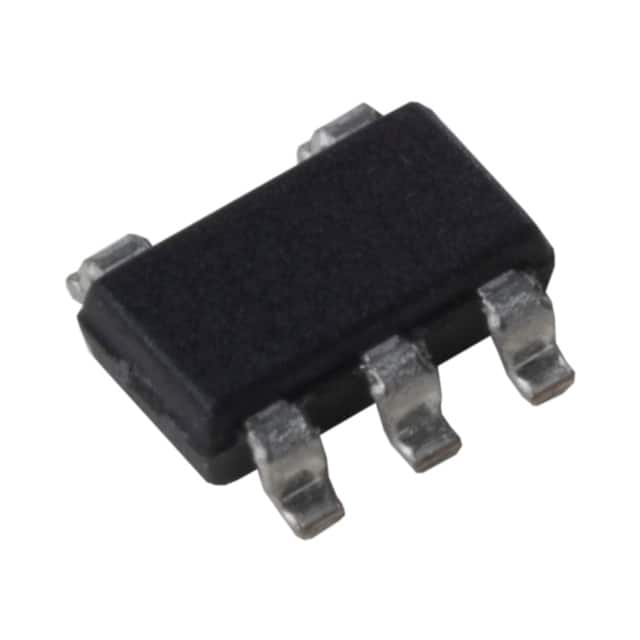
MIC5317-3.3YM5-TR
Microchip Technology
-
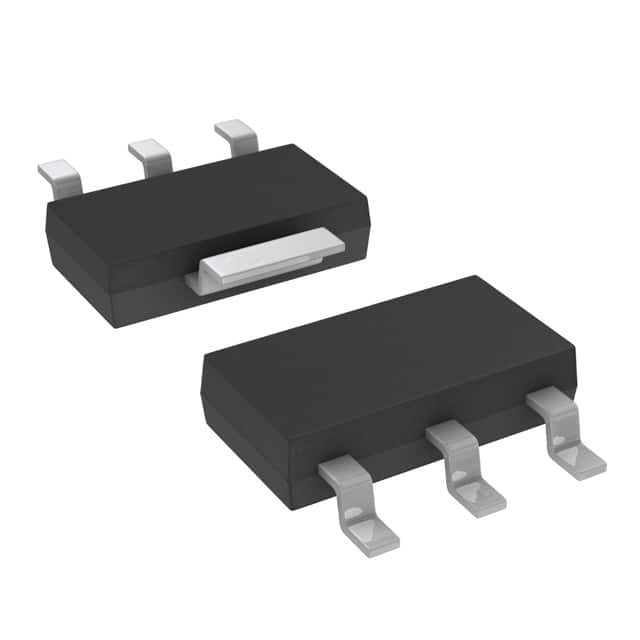
TLV1117LV33DCYR
Texas Instruments
-
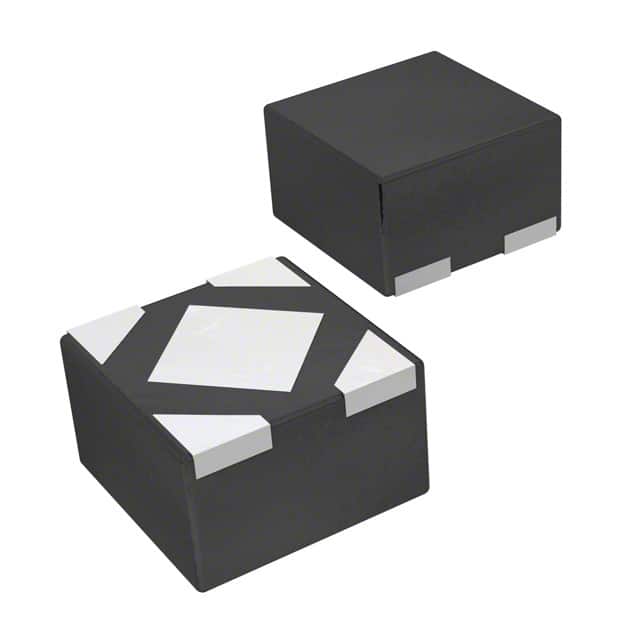
MIC5317-3.3YMT-TZ
Microchip Technology
-
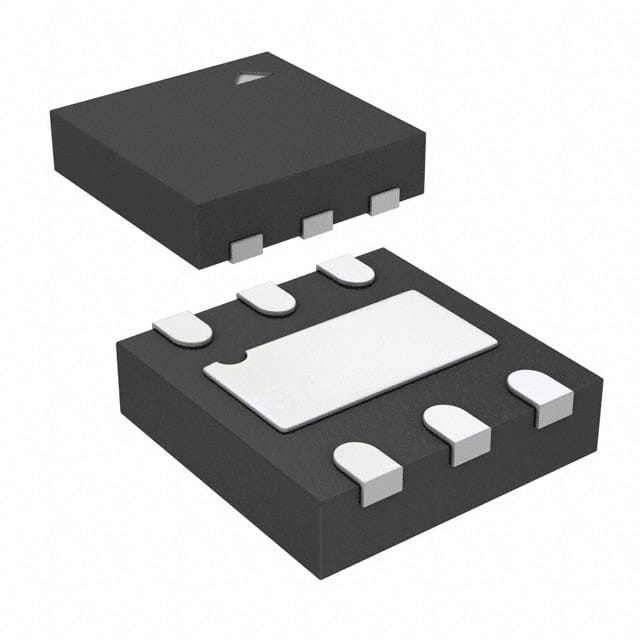
MIC5528-3.3YMT-TR
Microchip Technology
-
TLV75801PDRVR
Texas Instruments
Tech Hub

TTL and CMOS logic families differ in thresholds, loading, output drive, power and timing. This engineering guide compares 74HC and 74HCT, calculates noise margins and checks 3.3 V/5 V compatibility.

A practical engineering guide to 3.3V and 5V logic compatibility, input thresholds, resistor dividers, translator ICs, MOSFET level shifting, I2C pull-ups, timing limits and power-sequencing risks.

The 74HC595 uses push-pull logic outputs, while the TPIC6B595 uses 50 V open-drain DMOS sinks for higher-power loads. This guide compares timing, current limits, 3.3 V interfacing, load wiring, thermal…

The 74HC595 converts serial data into eight stable parallel outputs. This guide covers pin functions, shift and storage timing, OE and MR behavior, drive-current limits, cascading, voltage compatibilit…

A technical comparison of level-sensitive latches and edge-triggered flip-flops, covering timing windows, setup and hold limits, master–slave operation, time borrowing, race-through, HDL inference and…

A D latch stores one bit while Enable controls when data can pass. This reference covers gate-level operation, truth tables, transparency, setup and hold timing, LE versus OE, common ICs and practical …

An SR latch stores one bit through cross-coupled feedback. This engineering reference covers NOR and NAND implementations, truth tables, forbidden-state recovery, gated operation, switch debouncing, fa…

Latch circuits retain one bit through feedback. This technical reference covers SR and D latches, truth tables, transparency, timing limits, latch-versus-flip-flop behavior, applications and common log…

An engineering guide to LED driver operation, constant-current and constant-voltage outputs, linear and switching topologies, dimming, IC selection, calculations, replacement compatibility, and fault c…

Operational amplifier guide covering op amp basics, feedback, ideal vs real op amps, common configurations, buffer circuits, offset, bias current, gain-bandwidth, slew rate, rail-to-rail limits and sel…


