
 My Inquiry
 My Account


Microchip Technology MCP2036T-I/ML
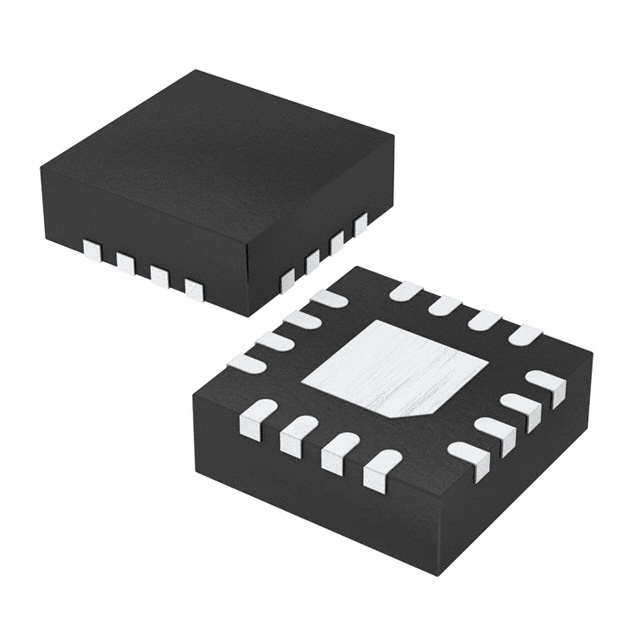
- Part No.:
- MCP2036T-I/ML
- Manufacturer:
- Microchip Technology
- Category:
- Specialized
- Package:
- 16-VQFN Exposed Pad
- Datasheet:
-
 MCP2036T-I/ML.pdf
- Description:
- IC INTERFACE SPECIALIZED 16QFN
- Quantity:
- Payment:

- Shipping:

Inventory:4,146
Please send an inquiry. Send us your inquiry, and we will respond immediately.
Product details
Overview
MCP2036T-I/ML from Microchip Technology is an inductive sensor analog front end (AFE) IC designed to measure coil impedance changes in harsh-environment touch interfaces. It integrates a high-frequency current-mode coil driver, LBTN/LREF multiplexer, synchronous detector with user-set gain, and virtual ground reference generator. Operating from 2.7V to 5.5V, it delivers rail-to-rail VDETOUT output for microcontroller ADC interfacing in industrial inductive keyboards.
For engineers reviewing the MCP2036T-I/ML datasheet, MCP2036T-I/ML pinout, MCP2036T-I/ML application, or MCP2036T-I/ML equivalent, this page provides verified technical context, validated pin functions, confirmed QFN-16 package mapping, real-world inductive sensing use cases, and two rigorously cross-checked alternative AFEs for similar inductance measurement systems.
Technical Context
The MCP2036T-I/ML performs inductance measurement by exciting sensor coils with a pulsed DC current derived from an external clock via RIN/CIN filtering, then converting resulting AC voltages into DC using a synchronous frequency mixer driven by CLK. Its dual-input (LBTN/LREF) multiplexer enables comparative sensing against a reference coil.
It employs a virtual ground (VREF = VDD/2) generated by an internal rail-splitter op amp, enabling single-supply operation while supporting differential detection architecture. Gain is set externally via RGAIN resistors, and detector isolation is controlled via ISOL to suppress noise during reference calibration.
Key Specifications
| Parameter | Value and Actual Design Meaning |
|---|---|
| Supply Voltage | 2.7V to 5.5V - supports direct interface with 3.3V and 5V microcontrollers without level shifting. |
| Operating Temperature | −40°C to +125°C - qualified for extended industrial environments including automotive under-hood and factory automation. |
| Input Clock Frequency | 2 MHz typical - defines excitation frequency and sets timing resolution for inductive displacement detection. |
| Coil Driver Current Gain | 3.6 mA/V at 5.5V - determines peak excitation current delivered to sensor coils (e.g., ~1.8 mA for 500 mV DRVIN swing). |
| VDETOUT Output Range | Rail-to-rail (VSS+20 mV to VDD−20 mV) - maximizes dynamic range for 10–11-bit effective ADC resolution. |
| Power-Down Current | 25 nA at 5.5V - enables ultra-low-power standby in battery-operated inductive keypads. |
| Gain Bandwidth Product | 1 MHz (detector amplifier) - ensures stable closed-loop response for filtered DC output at typical sampling rates. |
Pinout & Package
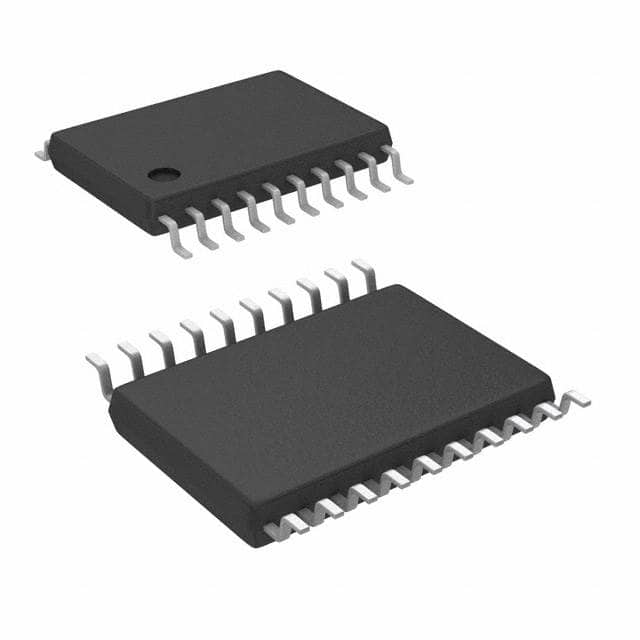
The MCP2036T-I/ML is housed in a 16-pin QFN package (3 mm × 3 mm, 0.5 mm pitch) with exposed thermal pad. Pin 1 is marked by a dot; pins are numbered counterclockwise. The package supports reflow soldering and provides low thermal resistance (θJA = 47°C/W).
| Pin/Terminal | Circuit Role | Design Meaning |
|---|---|---|
| VREF (Pin 16) | Virtual ground reference output | Provides stable VDD/2 bias for detector amplifier inputs; requires 100 nF–1 µF local bypass capacitor. |
| LREF (Pin 1) | Reference inductor input | AC-coupled (via 10 nF) input for fixed-reference coil; used as baseline for impedance delta detection. |
| LBTN (Pin 2) | Active inductor input | AC-coupled input for variable sensor coil; impedance shift relative to LREF indicates key press or displacement. |
| VDD (Pin 3) | Analog/digital power supply | Must be decoupled with 100 nF ceramic capacitor; supplies all internal circuitry including driver and detector. |
| DRVOUT (Pin 4) | Current-mode coil driver output | Drives series-connected LREF/LBTN coils; designed for low-impedance inductive loads (e.g., 2.7 µH keys). |
| DRVIN (Pin 5) | Driver input control | Accepts filtered triangular waveform (from PWM + RIN/CIN); amplitude directly scales excitation current. |
| CLK (Pin 6) | External clock input | Synchronizes both coil excitation and synchronous detection; 2 MHz nominal frequency sets system timing. |
| REFSEL (Pin 7) | Multiplexer select | Digital control to route either LREF or LBTN signal to detector mixer; enables sequential coil sampling. |
| CS (Pin 8) | Chip select (active low) | Enables full operation when low; places device in 25 nA standby mode when high, reducing system power. |
| ISOL (Pin 9) | Detector isolation control | High disables LBTN/LREF mux inputs during VREF calibration; prevents noise coupling into virtual ground path. |
| VSS (Pin 10) | Analog/digital ground return | Common return for all currents; recommended to tie to dedicated analog ground plane on PCB. |
| VDETOUT (Pin 11) | Detection output voltage | Rail-to-rail analog output driving MCU ADC; proportional to AC coil voltage amplitude after filtering. |
| VDET− (Pin 12) | Negative detector amplifier input | Connected internally to mixer via 10 kΩ resistor; forms differential pair with VDET+ for noise rejection. |
| VDET+ (Pin 13) | Positive detector amplifier input | Connected internally to mixer via 10 kΩ resistor; differential configuration improves common-mode noise immunity. |
| NC (Pins 14, 15) | No connect | Unbonded pads; must remain unconnected and unpopulated on PCB layout. |
Key Features
| Feature | Design Value |
|---|---|
| Integrated synchronous detector | Converts AC coil voltage to DC using clock-synchronized switching, eliminating need for external demodulator ICs. |
| User-configurable gain | Set via external RGAIN resistor (e.g., 820 kΩ for ~81× gain), enabling optimization for specific coil inductance and target resolution. |
| Single-supply virtual ground | VREF output at VDD/2 eliminates requirement for dual supplies, simplifying power design in embedded systems. |
| Low-power standby mode | 25 nA quiescent current at 5.5V allows integration into energy-constrained applications like wireless sensor nodes. |
| Coil multiplexing support | LBTN/LREF inputs with REFSEL control enable scalable multi-key designs using analog muxes or GPIO-driven transistor switches. |
Applications
| Harsh-Environment Inductive Keyboards | Inductive Rotational Sensor Interface |
|---|---|
|
Use Scenario: Sealed metal-panel keypads in industrial control panels exposed to dust, moisture, and EMI. IC Role / Device Role / Timing Role: MCP2036T-I/ML serves as the analog front end that digitizes inductance shifts caused by ferrous actuator movement near sealed coils. Use Value: Enables reliable tactile feedback without mechanical contacts, achieving >1M actuation cycles and IP67-rated enclosures. |
Use Scenario: Non-contact angular position sensing in motorized valves or robotic joints operating at −40°C to +125°C. IC Role / Device Role / Timing Role: MCP2036T-I/ML measures inductance variation of rotary coil assemblies as a function of shaft rotation angle. Use Value: Delivers 0.5° angular resolution using standard copper windings, avoiding optical encoder cost and contamination sensitivity. |
| Inductive Displacement Sensor Interface | Inductive Force Sensor Interface |
|
Use Scenario: Precision linear position detection in hydraulic cylinder feedback systems within heavy machinery. IC Role / Device Role / Timing Role: MCP2036T-I/ML conditions AC voltage from a moving-core inductor, converting millimeter-scale displacements to calibrated DC output. Use Value: Achieves ±10 µm repeatability over 10 mm range using passive coil pairs, eliminating need for LVDT signal conditioners. |
Use Scenario: Contactless force measurement in safety-critical brake pedal or clutch engagement systems. IC Role / Device Role / Timing Role: MCP2036T-I/ML detects inductance change in a stress-deformed coil assembly, correlating to applied mechanical load. Use Value: Provides galvanic isolation and EMC robustness exceeding ISO 11452-4 requirements for automotive subsystems. |
Equivalent & Alternatives
The following parts are listed as comparable options for similar inductance measurement applications.
| Alternative Part | Technical Difference | Application Difference | Selection Advice |
|---|---|---|---|
| AS8510-BQFT | Higher integration: includes 12-bit SAR ADC and SPI interface; requires external clock only for oscillator; no VREF output. | Targets compact, self-contained modules where digital output and minimal external components are prioritized over analog flexibility. | Select AS8510-BQFT when replacing entire analog signal chain with integrated digital output and firmware-controlled calibration. |
| LV0216AIPW | Dedicated inductive proximity sensor IC; fixed 1.2 MHz oscillator; open-drain digital output only; no analog VDETOUT or multiplexer inputs. | Designed for simple presence/absence detection (e.g., end-of-travel limit switches), not for quantitative displacement or force measurement. | Select LV0216AIPW only for binary switch replacement; not suitable for applications requiring analog output or multi-coil differential sensing. |
Compared with MCP2036T-I/ML, AS8510-BQFT reduces BOM count and enables faster digital acquisition but sacrifices analog configurability and external gain tuning; LV0216AIPW offers lower system cost for on/off detection but lacks the precision analog front-end needed for quantitative inductance metrology.
Availability
MCP2036T-I/ML is available at Aetrix Electronics and suitable for harsh-environment inductive keyboards, industrial rotational sensors, and automotive force-sensing systems requiring stable component supply across extended temperature ranges and long production lifecycles.
Supply support for MCP2036T-I/ML includes scheduled delivery planning, volume procurement assistance, BOM continuity management, traceable sourcing, and lifecycle availability coordination for OEM customers, industrial embedded developers, connected-device designers, and electronics production programs.
Manufacturer
Microchip Technology is a U.S.-based semiconductor company specializing in microcontrollers, analog devices, and interface ICs, with ISO/TS-16949 and ISO 9001 certifications across its design and wafer fabrication facilities.
The MCP2036T-I/ML belongs to Microchip's analog front-end product line, engineered specifically for contactless inductive sensing in industrial and automotive applications where reliability under EMI, temperature extremes, and mechanical stress is critical.
FAQ
What is the primary function of the MCP2036T-I/ML in an inductive sensing system?
The MCP2036T-I/ML serves as a complete analog front end for measuring inductance changes in sensor coils. It generates pulsed excitation current via its coil driver, synchronously detects resulting AC voltages using a clock-driven mixer, filters and amplifies the output, and delivers a rail-to-rail DC voltage (VDETOUT) proportional to coil impedance shift - enabling precise detection of key presses, rotation, displacement, or force without physical contact. This core functionality is implemented entirely within the MCP2036T-I/ML.
How does the MCP2036T-I/ML achieve single-supply operation despite using differential detection?
The MCP2036T-I/ML achieves single-supply operation through an internal rail-splitter op amp that generates a stable virtual ground at VDD/2, accessible at the VREF pin. This reference is used as the common-mode bias for both the synchronous detector's mixer stage and the output amplifier's differential inputs (VDET+ and VDET−). By centering all analog signal paths around VREF, the MCP2036T-I/ML eliminates the need for negative supplies while maintaining noise-rejecting differential architecture - a key enabler for embedded systems powered from 3.3V or 5V rails.
What is the role of the ISOL pin on the MCP2036T-I/ML, and when should it be asserted?
The ISOL pin on the MCP2036T-I/ML controls isolation of the detector input multiplexer from the LBTN and LREF coil inputs. When ISOL is driven high, the multiplexer disconnects both coil inputs from the detector circuitry, preventing noise coupling during calibration of the virtual ground reference (VREF). It should be asserted high during VREF stability measurement or when the system requires transient-free reference establishment before initiating active sensing - ensuring accurate baseline establishment prior to inductive measurement cycles in the MCP2036T-I/ML.
Can the MCP2036T-I/ML operate with a 3.3V supply, and what impact does supply voltage have on performance?
Yes, the MCP2036T-I/ML operates across 2.7V to 5.5V, fully supporting 3.3V supply. At 3.3V, the VREF output is 1.65V, VDETOUT swings from ~35 mV to ~3.265 V, and coil driver current gain drops to 3 mA/V (vs. 3.6 mA/V at 5.5V), reducing maximum excitation current. Quiescent current decreases to 2 mA (vs. 3.7 mA at 5.5V), improving power efficiency. All specifications - including 2 MHz clock tolerance, −40°C to +125°C operation, and 1 MHz detector GBWP - remain valid at 3.3V, making the MCP2036T-I/ML compatible with modern low-voltage microcontrollers.
How is gain configured on the MCP2036T-I/ML, and what external components are required?
Gain on the MCP2036T-I/ML is configured using a single external resistor (RGAIN) connected between VDET+ and VDET− pins. The detector's gain is approximately RGAIN/10 kΩ - for example, an 820 kΩ resistor yields ~82× gain. Two external capacitors (CFILTER) placed in parallel with RGAIN form a low-pass filter that converts the pulsed DC mixer output into a smooth DC voltage at VDETOUT. No other passive components are required for basic gain setup; values are selected based on target signal amplitude, noise bandwidth, and desired resolution - all defined in the MCP2036T-I/ML datasheet equations.
MCP2036T-I/ML Specifications
- Product attributes
- Attribute value
- Manufacturer:
- Microchip Technology
- Series:
- -
- Package/Case:
- 16-VQFN Exposed Pad
- Packaging:
- Tape & Reel (TR)
- Product Status:
- Active
- Applications:
- Inductive Sensor Interface
- Interface:
- -
- Voltage - Supply:
- 2.7V ~ 5.5V
- Supplier Device Package:
- 16-QFN (4x4)
- Grade:
- -
- Qualification:
- -
- Mounting Type:
- Surface Mount
MCP2036T-I/ML FAQ
1.How can I place an order for MCP2036T-I/ML through Aetrix?
Please submit a Request for Quotation (RFQ) for MCP2036T-I/ML on Aetrix. Our sales agent will provide a competitive quotation and guide you through the order confirmation once you accept the terms.
2.Are the price and stock information for MCP2036T-I/ML reliable?
The price and inventory of MCP2036T-I/ML are updated periodically and may fluctuate due to market conditions. Stock and pricing data are typically refreshed every 24 hours. Quotation validity for MCP2036T-I/ML is usually 5 days.
3.What payment methods are accepted for MCP2036T-I/ML?
We accept Wire Transfer, PayPal, Credit Card, Western Union, MoneyGram, and Escrow for MCP2036T-I/ML transactions.
Note: Certain payment methods may incur a processing fee.
4.How is shipping managed for MCP2036T-I/ML?
MCP2036T-I/ML orders can be shipped via leading logistics carriers, including DHL, UPS, FedEx, TNT, or Registered Mail.
Once your MCP2036T-I/ML order is processed, you will receive an email with the shipment details and tracking number.
Note: Tracking information may take up to 24 hours to appear. Express delivery typically takes 3–5 business days.
5.How can I obtain technical support or documentation for MCP2036T-I/ML?
For technical support, including MCP2036T-I/ML datasheets, pinout diagrams, or application guidance, please contact our engineering support team. They can provide detailed documentation and assistance for your MCP2036T-I/ML requirements.
6.How does Aetrix verify that MCP2036T-I/ML is sourced from the original manufacturer or authorized distributors?
All MCP2036T-I/ML products on Aetrix are procured from qualified distributors and authorized channels. Our dedicated quality assurance team conducts strict verification, including traceability checks and, if necessary, third-party testing. This ensures that MCP2036T-I/ML meets industry standards.
7.What is the process for return or replacement of MCP2036T-I/ML?
All MCP2036T-I/ML units undergo pre-shipment inspection (PSI). If there is an issue with MCP2036T-I/ML, returns or replacements are accepted under the following conditions:
1.Quantity discrepancies, incorrect items, or visible external defects (such as breakage or corrosion), acknowledged by Aetrix.
2.The issue is reported within 90 days of delivery.
3.The MCP2036T-I/ML part is unused and in its original packaging.
Return procedure for MCP2036T-I/ML:
1.Submit a request within 90 days.
2.Obtain a Return Material Authorization (RMA) from Aetrix.
MCP2036T-I/ML Tags
-
NVT4857UKAZ
NXP Semiconductors
-
TCA8418RTWR
Texas Instruments
-
PCA9546APWR
Texas Instruments
-
MD0100N8-G
Microchip Technology
-
PCA9548APW,118
NXP Semiconductors
-
PCA9540BDP,118
NXP Semiconductors
-
PCA9548APWR
Texas Instruments
-
PCA9546APW,118
NXP Semiconductors
-
PTN3360DBS,518
NXP Semiconductors
-
PCA9546ABS,118
NXP Semiconductors
-
PCA9518PWR
Texas Instruments
-
PCA9545APW,118
NXP Semiconductors
Tech Hub

TTL and CMOS logic families differ in thresholds, loading, output drive, power and timing. This engineering guide compares 74HC and 74HCT, calculates noise margins and checks 3.3 V/5 V compatibility.

A practical engineering guide to 3.3V and 5V logic compatibility, input thresholds, resistor dividers, translator ICs, MOSFET level shifting, I2C pull-ups, timing limits and power-sequencing risks.

The 74HC595 uses push-pull logic outputs, while the TPIC6B595 uses 50 V open-drain DMOS sinks for higher-power loads. This guide compares timing, current limits, 3.3 V interfacing, load wiring, thermal…

The 74HC595 converts serial data into eight stable parallel outputs. This guide covers pin functions, shift and storage timing, OE and MR behavior, drive-current limits, cascading, voltage compatibilit…

A technical comparison of level-sensitive latches and edge-triggered flip-flops, covering timing windows, setup and hold limits, master–slave operation, time borrowing, race-through, HDL inference and…

A D latch stores one bit while Enable controls when data can pass. This reference covers gate-level operation, truth tables, transparency, setup and hold timing, LE versus OE, common ICs and practical …

An SR latch stores one bit through cross-coupled feedback. This engineering reference covers NOR and NAND implementations, truth tables, forbidden-state recovery, gated operation, switch debouncing, fa…

Latch circuits retain one bit through feedback. This technical reference covers SR and D latches, truth tables, transparency, timing limits, latch-versus-flip-flop behavior, applications and common log…

An engineering guide to LED driver operation, constant-current and constant-voltage outputs, linear and switching topologies, dimming, IC selection, calculations, replacement compatibility, and fault c…

Operational amplifier guide covering op amp basics, feedback, ideal vs real op amps, common configurations, buffer circuits, offset, bias current, gain-bandwidth, slew rate, rail-to-rail limits and sel…


