
 My Inquiry
 My Account


Microchip Technology MCP2122-E/PG
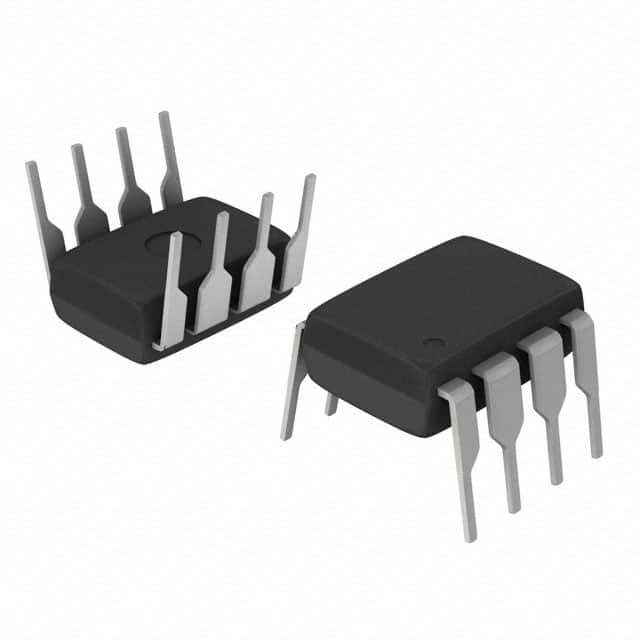
- Part No.:
- MCP2122-E/PG
- Manufacturer:
- Microchip Technology
- Category:
- Encoders, Decoders, Converters
- Package:
- 8-DIP (0.300", 7.62mm)
- Datasheet:
-
 MCP2122-E/PG.pdf
- Description:
- IC ENCODER/DECODER INFRARED 8DIP
- Quantity:
- Payment:

- Shipping:

Inventory:2,172
Please send an inquiry. Send us your inquiry, and we will respond immediately.
Product details
Overview
MCP2122-E/PG from Microchip Technology is an IrDA® 1.3-compliant infrared encoder/decoder IC that bridges UART-based host controllers to infrared optical transceivers. It supports up to 115.2 Kbaud, operates from 1.8V to 5.5V, features 16XCLK-synchronized timing, delivers 1.63 µs TXIR pulse width at full rate, and maintains 2 µA low-power mode at 1.8V and +125°C - deployed in embedded system diagnostics and firmware update links.
For engineers reviewing the MCP2122-E/PG datasheet, MCP2122-E/PG pinout, MCP2122-E/PG application, or MCP2122-E/PG equivalent, this page delivers verified electrical specs, IrDA physical layer timing constraints, UART-to-IR signal translation behavior, reset and clock interface design guidance, and validated drop-in alternatives for industrial IR communication designs.
Technical Context
The MCP2122-E/PG implements a fixed-ratio, non-programmable IrDA 1.3 encoder/decoder with synchronous 16XCLK-driven bit timing - no internal oscillator, no baud rate register, and no IrCOMM protocol stack. Its RXIR/TXIR interface strictly follows the 1.63 µs (115.2 Kbaud) to 19.53 µs (9600 baud) pulse-width encoding scheme defined in the IrDA Physical Layer v1.3 specification.
It requires external 16XCLK input (DC to 1.8432 MHz), supports Schmitt-trigger inputs on TX, RXIR, RESET, and 16XCLK, and enforces half-duplex operation: simultaneous transmit/receive is prohibited by hardware state machine design. The device enters known-reset state on RESET low and disables all outputs except RX (driven low) and TXIR (forced low).
Key Specifications
| Parameter | Value and Actual Design Meaning |
|---|---|
| IrDA Compliance | IrDA Physical Layer Specification v1.3 - ensures interoperability with certified transceivers like Vishay TFDU4300 |
| Max Baud Rate | 115.2 Kbaud - requires 1.8432 MHz 16XCLK input; limits maximum data throughput in point-to-point IR links |
| TXIR Pulse Width | 1.63 µs at 115.2 Kbaud - matches IrDA minimum detectable pulse width; reduces LED drive current vs. wider pulses |
| Supply Voltage | 1.8V to 5.5V - enables direct interfacing with 1.8V logic systems and legacy 5V microcontrollers |
| Low-Power Current | 2 µA at 1.8V/+125°C - achieved by asserting RESET low; eliminates need for external power gating in battery-powered diagnostics tools |
| Operating Temp | –40°C to +125°C - qualified for under-hood automotive diagnostics, industrial PLC configuration, and factory-floor data loggers |
| Input Thresholds | VIL = 0.2×VDD, VIH = 0.8×VDD - provides robust noise margin across full VDD range and temperature |
Pinout & Package
Package: 8-pin PDIP (Plastic Dual In-line Package), lead-free, through-hole mount - compatible with standard DIP sockets and wave-soldered industrial control boards.
| Pin/Terminal | Circuit Role | Design Meaning |
|---|---|---|
| 16XCLK | External bit clock input | Drives all internal timing; 16 edges per UART bit; must be stable before RESET release |
| TX | UART receive input | Asynchronous serial input from host controller; Schmitt-triggered for noise immunity |
| RX | UART transmit output | Asynchronous serial output to host controller; open-drain capable, 2 mA sink |
| VSS | Ground reference | Common return for logic and I/O; requires local 0.01 µF bypass capacitor |
| RESET | Active-low reset control | Pulls device into known state; forces TXIR low and RX low; includes internal noise filter |
| RXIR | IR receiver input | Accepts demodulated IrDA pulses from transceiver; Schmitt-triggered, 7 pF input capacitance |
| TXIR | IR transmitter output | Drives IR LED driver stage; 0.6 V VOL @ 2 mA; pulse-width limited per baud rate |
| VDD | Positive supply | Power for logic and I/O; supports 1.8–5.5 V; decoupling mandatory near pin |
Key Features
| Feature | Design Value |
|---|---|
| PINOUT COMPATIBILITY WITH HSDL-7000 | Enables direct replacement of Agilent HSDL-7000 in legacy IR designs without PCB rework |
| 16XCLK SYNCHRONOUS TIMING | Eliminates internal oscillator drift; guarantees precise IrDA bit timing alignment between encoder and decoder paths |
| TXIR PULSE-WIDTH LIMITER | Reduces average IR LED current at lower baud rates - extends battery life in portable diagnostic tools |
| EXTENDED TEMPERATURE RANGE | Validated operation from –40°C to +125°C supports deployment in automotive ECU programming and industrial motor drives |
| SCHMITT-TRIGGER INPUTS | Improves noise immunity on TX, RXIR, RESET, and 16XCLK pins - critical for noisy factory-floor UART lines |
Applications
| Data Logging / Field Diagnostics | Firmware Update Interface |
|---|---|
Use Scenario: Portable handheld tool reads sensor logs from remote industrial controllers via line-of-sight IR link. IC Role / Device Role / Timing Role: MCP2122-E/PG acts as UART-to-IrDA physical layer translator, synchronizing host MCU UART frames to IrDA-compliant 1.63 µs pulses using external 16XCLK. Use Value: Enables cable-free, EMI-immune data extraction in electrically noisy environments where USB/RS-232 are unreliable. | Use Scenario: Technician updates firmware on medical infusion pump using IR-enabled PC adapter. IC Role / Device Role / Timing Role: MCP2122-E/PG receives UART commands from host PC, encodes them to IrDA format, and drives external IR LED driver at 115.2 Kbaud. Use Value: Eliminates proprietary connectors and avoids regulatory re-certification required for wired updates in Class II medical devices. |
| Manufacturing Configuration | System Setup & Commissioning |
Use Scenario: Factory floor station configures parameters on HVAC controllers before shipment using IR handshake. IC Role / Device Role / Timing Role: MCP2122-E/PG decodes incoming IrDA packets from setup terminal, converts to UART stream for MCU parameter loading. Use Value: Prevents accidental misconfiguration via exposed USB ports and avoids tooling costs of custom programming jigs. | Use Scenario: Building automation installer sets network ID and calibration offsets on lighting control node via IR remote. IC Role / Device Role / Timing Role: MCP2122-E/PG interfaces PIC MCU UART to Vishay TFDU4300 transceiver, handling bidirectional IrDA packet framing at 38.4 Kbaud. Use Value: Allows commissioning without opening enclosures or exposing conductive interfaces in wet-location installations. |
Equivalent & Alternatives
The following parts are listed as comparable options for similar infrared encoder/decoder applications.
| Alternative Part | Technical Difference | Application Difference | Selection Advice |
|---|---|---|---|
| HSDL-7000 | Pinout-identical but non-lead-free; lacks 1.8V support and extended temperature qualification | Legacy designs only; not suitable for new RoHS-compliant or automotive-grade products | Select MCP2122-E/PG when lead-free compliance, 1.8V operation, or –40°C to +125°C range is required |
| MCP2120-I/P | Same family, but uses internal crystal oscillator instead of 16XCLK; supports higher max baud rate (312.5 Kbaud) | Requires external crystal; incompatible pinout (14-pin PDIP); no RESET pin | Choose MCP2122-E/PG when board space is constrained, external clock is already available, or reset control is mandatory |
Compared with HSDL-7000, MCP2122-E/PG adds RoHS compliance and extended temperature support; compared with MCP2120-I/P, it trades higher baud capability for smaller package, reset control, and 16XCLK flexibility - making it optimal for cost-sensitive, thermally demanding, or reset-critical IR interfaces.
Availability
MCP2122-E/PG is available at Aetrix Electronics and suitable for industrial diagnostics, medical device commissioning, and factory-floor configuration requiring stable component supply, long-term lifecycle assurance, and traceable sourcing.
Supply support for MCP2122-E/PG includes scheduled delivery planning, volume procurement assistance, BOM continuity management, traceable sourcing, and lifecycle availability coordination for OEM customers, industrial embedded developers, connected-device designers, and electronics production programs.
Manufacturer
Microchip Technology Inc. is a leading provider of microcontroller, analog, and connectivity solutions, headquartered in Chandler, Arizona, with global design and manufacturing operations.
The MCP2122-E/PG belongs to Microchip's IrDA encoder/decoder product line, designed specifically to simplify reliable, standards-compliant infrared communication in resource-constrained embedded systems - targeting diagnostics, configuration, and firmware update use cases.
FAQ
What is the function of the 16XCLK pin on the MCP2122-E/PG?
The 16XCLK pin on the MCP2122-E/PG serves as the external bit clock input that drives all internal timing functions. It must be supplied with a stable square wave (DC to 1.8432 MHz), where exactly 16 edges correspond to one UART bit period. This synchronous clock ensures precise IrDA-compliant encoding and decoding - unlike internal oscillator-based alternatives, the MCP2122-E/PG relies entirely on this external source for timing accuracy and jitter control.
Does the MCP2122-E/PG support full-duplex UART communication?
No, the MCP2122-E/PG does not support full-duplex UART communication. Its architecture enforces strict half-duplex operation because the IR interface can only transmit or receive at any given time - the internal state machine prevents simultaneous TXIR assertion and RXIR sampling. When RXIR detects an incoming IR pulse, TXIR is automatically disabled, and vice versa. This constraint is inherent to the MCP2122-E/PG design and aligns with IrDA Physical Layer v1.3 requirements.
What is the minimum pulse width supported by the MCP2122-E/PG at 115.2 Kbaud?
At 115.2 Kbaud, the MCP2122-E/PG supports a minimum TXIR pulse width of 1.63 µs - matching the IrDA Physical Layer v1.3 specification's minimum detectable pulse width. This value is fixed by the 16XCLK timing structure (16 edges per bit) and is confirmed in Table 2-4 of the DS21894C datasheet. The device achieves this precisely without external adjustment, ensuring compatibility with certified IrDA transceivers such as the Vishay TFDU4300.
How does the MCP2122-E/PG enter low-power mode, and what is the typical current draw?
The MCP2122-E/PG enters low-power mode when the RESET pin is driven low - disabling the internal state machine and forcing TXIR and RX to known states. At 1.8V and +125°C, the device draws just 2 µA in this mode, as specified in D020 of the DS21894C datasheet. To achieve minimum current, ensure 16XCLK is inactive and all inputs (TX, RXIR) are held static at valid logic levels. This mode is ideal for battery-powered field service tools that spend extended periods idle between IR sessions.
Is the MCP2122-E/PG pin-compatible with the Agilent HSDL-7000?
Yes, the MCP2122-E/PG is explicitly designed to be pinout-compatible with the Agilent HSDL-7000 infrared encoder/decoder. Both devices share identical 8-pin PDIP/SOIC footprints and matching pin assignments (e.g., Pin 1 = 16XCLK, Pin 2 = TX, Pin 3 = RX, etc.). This compatibility allows direct replacement in existing HSDL-7000-based designs without layout changes - though designers must verify voltage, temperature, and RoHS requirements, as the MCP2122-E/PG adds 1.8V support and extended temperature range.
MCP2122-E/PG Specifications
- Product attributes
- Attribute value
- Manufacturer:
- Microchip Technology
- Series:
- -
- Package/Case:
- 8-DIP (0.300", 7.62mm)
- Packaging:
- Tube
- Product Status:
- Obsolete
- Type:
- Infrared Encoder/Decoder
- Applications:
- Data-Logging, Data Exchange
- Voltage - Supply, Analog:
- 1.8V ~ 5.5V
- Voltage - Supply, Digital:
- 1.8V ~ 5.5V
- Grade:
- -
- Qualification:
- -
- Mounting Type:
- Through Hole
- Supplier Device Package:
- 8-PDIP
MCP2122-E/PG FAQ
1.How can I place an order for MCP2122-E/PG through Aetrix?
Please submit a Request for Quotation (RFQ) for MCP2122-E/PG on Aetrix. Our sales agent will provide a competitive quotation and guide you through the order confirmation once you accept the terms.
2.Are the price and stock information for MCP2122-E/PG reliable?
The price and inventory of MCP2122-E/PG are updated periodically and may fluctuate due to market conditions. Stock and pricing data are typically refreshed every 24 hours. Quotation validity for MCP2122-E/PG is usually 5 days.
3.What payment methods are accepted for MCP2122-E/PG?
We accept Wire Transfer, PayPal, Credit Card, Western Union, MoneyGram, and Escrow for MCP2122-E/PG transactions.
Note: Certain payment methods may incur a processing fee.
4.How is shipping managed for MCP2122-E/PG?
MCP2122-E/PG orders can be shipped via leading logistics carriers, including DHL, UPS, FedEx, TNT, or Registered Mail.
Once your MCP2122-E/PG order is processed, you will receive an email with the shipment details and tracking number.
Note: Tracking information may take up to 24 hours to appear. Express delivery typically takes 3–5 business days.
5.How can I obtain technical support or documentation for MCP2122-E/PG?
For technical support, including MCP2122-E/PG datasheets, pinout diagrams, or application guidance, please contact our engineering support team. They can provide detailed documentation and assistance for your MCP2122-E/PG requirements.
6.How does Aetrix verify that MCP2122-E/PG is sourced from the original manufacturer or authorized distributors?
All MCP2122-E/PG products on Aetrix are procured from qualified distributors and authorized channels. Our dedicated quality assurance team conducts strict verification, including traceability checks and, if necessary, third-party testing. This ensures that MCP2122-E/PG meets industry standards.
7.What is the process for return or replacement of MCP2122-E/PG?
All MCP2122-E/PG units undergo pre-shipment inspection (PSI). If there is an issue with MCP2122-E/PG, returns or replacements are accepted under the following conditions:
1.Quantity discrepancies, incorrect items, or visible external defects (such as breakage or corrosion), acknowledged by Aetrix.
2.The issue is reported within 90 days of delivery.
3.The MCP2122-E/PG part is unused and in its original packaging.
Return procedure for MCP2122-E/PG:
1.Submit a request within 90 days.
2.Obtain a Return Material Authorization (RMA) from Aetrix.
MCP2122-E/PG Tags
-
MCP2120T-I/SL
Microchip Technology

-
LICAL-ENC-MS001
TE Connectivity Linx
-
TW9990AT-NA1-GR
Renesas
-
TVP5151IPBSR
Texas Instruments
-
TVP5150AM1IPBSR
Texas Instruments
-
LICAL-DEC-MS001-T
TE Connectivity Linx
-
ADV7391BCPZ
Analog Devices Inc.
-
ADV7393BCPZ-REEL
Analog Devices Inc.
-
ADV7393BCPZ
Analog Devices Inc.
-
ADV7391WBCPZ
Analog Devices Inc.
-
ADV7181DBCPZ
Analog Devices Inc.
-
ADV7181CBSTZ-REEL
Analog Devices Inc.
Tech Hub

TTL and CMOS logic families differ in thresholds, loading, output drive, power and timing. This engineering guide compares 74HC and 74HCT, calculates noise margins and checks 3.3 V/5 V compatibility.

A practical engineering guide to 3.3V and 5V logic compatibility, input thresholds, resistor dividers, translator ICs, MOSFET level shifting, I2C pull-ups, timing limits and power-sequencing risks.

The 74HC595 uses push-pull logic outputs, while the TPIC6B595 uses 50 V open-drain DMOS sinks for higher-power loads. This guide compares timing, current limits, 3.3 V interfacing, load wiring, thermal…

The 74HC595 converts serial data into eight stable parallel outputs. This guide covers pin functions, shift and storage timing, OE and MR behavior, drive-current limits, cascading, voltage compatibilit…

A technical comparison of level-sensitive latches and edge-triggered flip-flops, covering timing windows, setup and hold limits, master–slave operation, time borrowing, race-through, HDL inference and…

A D latch stores one bit while Enable controls when data can pass. This reference covers gate-level operation, truth tables, transparency, setup and hold timing, LE versus OE, common ICs and practical …

An SR latch stores one bit through cross-coupled feedback. This engineering reference covers NOR and NAND implementations, truth tables, forbidden-state recovery, gated operation, switch debouncing, fa…

Latch circuits retain one bit through feedback. This technical reference covers SR and D latches, truth tables, transparency, timing limits, latch-versus-flip-flop behavior, applications and common log…

An engineering guide to LED driver operation, constant-current and constant-voltage outputs, linear and switching topologies, dimming, IC selection, calculations, replacement compatibility, and fault c…

Operational amplifier guide covering op amp basics, feedback, ideal vs real op amps, common configurations, buffer circuits, offset, bias current, gain-bandwidth, slew rate, rail-to-rail limits and sel…


