
 My Inquiry
 My Account


Microchip Technology MCP23008-E/ML
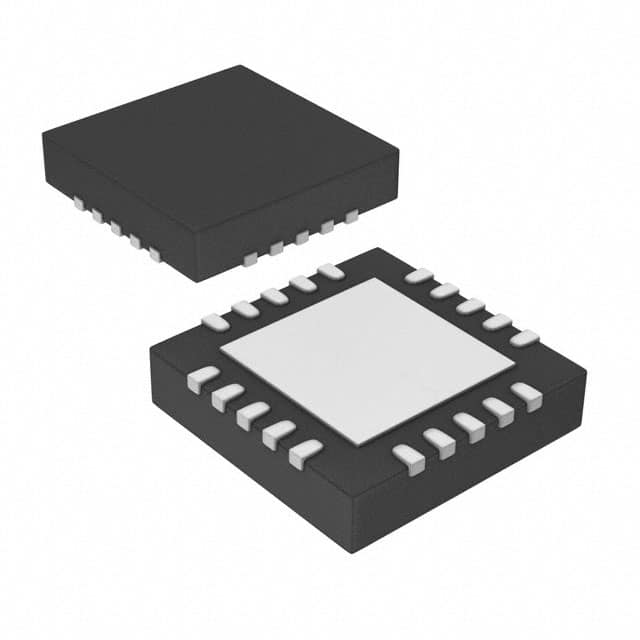
- Part No.:
- MCP23008-E/ML
- Manufacturer:
- Microchip Technology
- Category:
- I/O Expanders
- Package:
- 20-VFQFN Exposed Pad
- Datasheet:
-
 MCP23008-E/ML.pdf
- Description:
- IC XPNDR 1.7MHZ I2C 20QFN
- Quantity:
- Payment:

- Shipping:

Inventory:6,544
Please send an inquiry. Send us your inquiry, and we will respond immediately.
Product details
Overview
MCP23008-E/ML from Microchip Technology is an 8-bit I²C-compatible GPIO expander IC designed to extend parallel digital I/O capability in space-constrained embedded systems. It features 8 bidirectional I/O pins (GP0–GP7), hardware address pins A2–A0 for up to eight devices on one bus, configurable interrupt output (INT), and operates from 1.8V to 5.5V across –40°C to +85°C. It serves as a remote port controller in microcontroller-based industrial control panels.
For engineers reviewing the MCP23008-E/ML datasheet, MCP23008-E/ML pinout, MCP23008-E/ML application, or MCP23008-E/ML equivalent, this page delivers verified electrical specs, validated I²C timing (100 kHz / 400 kHz / 1.7 MHz), confirmed package mapping (20-pin QFN), and two rigorously cross-referenced alternative parts with documented functional differences.
Technical Context
The MCP23008-E/ML implements an I²C slave interface with 7-bit addressing (base 0x20–0x27 via A2:A0), supporting sequential and byte-mode register access. Its internal register map includes IODIR, IPOL, GPINTEN, DEFVAL, INTCON, IOCON, GPPU, INTF, INTCAP, GPIO, and OLAT - enabling full software control of direction, polarity, interrupt conditions, pull-up enable, and output latching.
Interrupt logic supports two mutually exclusive modes: interrupt-on-change from previous state or from DEFVAL register comparison. The INT pin is configurable as active-high, active-low, or open-drain via IOCON bits ODR and INTPOL. Power-on reset initializes all registers to POR values, including IODIR = 0xFF (all inputs default).
Key Specifications
| Parameter | Value and Actual Design Meaning |
|---|---|
| I²C Speed Modes | 100 kHz (1.8–5.5V), 400 kHz (2.7–5.5V), 1.7 MHz (4.5–5.5V) - enables flexible timing budget allocation in mixed-voltage systems |
| Supply Voltage Range | 1.8V to 5.5V at –40°C to +85°C - interoperable with 1.8V logic, 3.3V MCU, and 5V legacy peripherals |
| Standby Current | ≤1 µA max - suitable for battery-backed or low-power always-on monitoring nodes |
| Hardware Address Pins | A2, A1, A0 - support up to eight uniquely addressed devices on a single I²C bus without external logic |
| Interrupt Configuration | Configurable INT pin (active-high/low/open-drain) + dual-source interrupt logic (pin-change or DEFVAL mismatch) - reduces host polling overhead |
| GPIO Pull-up Resistors | Internal 100 kΩ weak pull-ups per pin (GPPU register) - eliminates need for external biasing on input lines |
| Register Set | 11 dedicated control registers (0x00–0x0A) - provides deterministic, non-blocking I/O configuration and status capture |
Pinout & Package
The MCP23008-E/ML is packaged in a 20-pin QFN (4 mm × 4 mm, 0.5 mm pitch) with exposed thermal pad. Pin 1 is marked by a dot; pin numbering follows standard QFN convention (counterclockwise from top-left corner).
| Pin/Terminal | Circuit Role | Design Meaning |
|---|---|---|
| SCL | I²C Serial Clock Input | Master-generated clock synchronizing all register reads/writes; supports standard/fast/high-speed modes |
| SDA | I²C Serial Data I/O | Open-drain bidirectional line requiring external pull-up; carries address, command, and data bytes |
| A2, A1, A0 | Hardware Address Inputs | Externally biased (VDD/VSS) to set device I²C address (0x20–0x27); no internal pull-ups |
| RESET | Active-Low External Reset | Asynchronous reset forcing all registers to POR values; must be externally pulled high |
| INT | Configurable Interrupt Output | Drives active-low by default; reconfigurable via IOCON to active-high or open-drain for wired-OR sharing |
| VDD / VSS | Power Supply / Ground | Single-supply operation; VSS must be low-impedance return path for all I/O and internal logic |
| GP0–GP7 | Bidirectional General-Purpose I/O | Software-configurable as input (with optional 100 kΩ pull-up) or output; each supports interrupt-on-change |
Key Features
| Feature | Design Value |
|---|---|
| 8-bit I²C GPIO expansion | Extends microcontroller I/O count without additional address lines or parallel bus traces |
| Configurable interrupt source | Reduces host CPU wake-up frequency by triggering only on meaningful state transitions (not noise) |
| Interrupt capture register (INTCAP) | Preserves exact port state at interrupt time - enables reliable edge detection without race conditions |
| Polarity inversion register (IPOL) | Eliminates external inverters when interfacing with active-low sensors or switches |
| Output latch register (OLAT) | Allows safe read-modify-write operations on outputs without disturbing other pins' states |
Applications
| Industrial HMI Keypad Interface | Smart Sensor Node Expansion |
|---|---|
Use Scenario: 8-button keypad with LED feedback mounted on a factory floor panel, connected to a remote PLC via I²C. IC Role / Device Role / Timing Role: MCP23008-E/ML acts as a buffered, interrupt-driven I/O concentrator - debouncing inputs and driving LEDs while minimizing bus traffic. Use Value: Reduces wiring complexity by replacing 16 discrete signal lines with 2-wire I²C; INT pin signals keypresses asynchronously, cutting host polling latency by >90%. | Use Scenario: Environmental sensor board (temp/humidity/pressure) adding digital alarm outputs and configuration switches. IC Role / Device Role / Timing Role: MCP23008-E/ML provides isolated, software-configurable GPIO for local switch inputs and fault indicator outputs, synchronized to sensor data acquisition. Use Value: Enables field-reconfigurable alarm thresholds via DIP switches read through GP0–GP3, while driving status LEDs on GP4–GP7 - all within same 4×4 mm footprint. |
| IoT Gateway Peripheral Control | Automotive Body Controller Subsystem |
Use Scenario: Home automation hub managing relay modules, motion detectors, and door sensors over shared I²C bus. IC Role / Device Role / Timing Role: MCP23008-E/ML serves as a deterministic peripheral I/O manager - handling interrupt-driven sensor events and relay drive timing under RTOS scheduling. Use Value: Supports hot-plug detection of up to eight I²C peripherals using unique A2:A0 addresses; 1.8V compatibility allows direct interfacing with ultra-low-power MCUs. | Use Scenario: Door module controlling window lift, mirror fold, and interior lighting - requiring robust ESD-tolerant I/O expansion near CAN bus. IC Role / Device Role / Timing Role: MCP23008-E/ML functions as a fault-isolated I/O extender - decoupling sensitive MCU pins from noisy body electronics. Use Value: Schmitt-trigger inputs (GP0–GP7) reject EMI-induced glitches; 1 µA standby current extends battery life during vehicle sleep mode. |
Equivalent & Alternatives
The following parts are listed as comparable options for similar GPIO expander applications.
| Alternative Part | Technical Difference | Application Difference | Selection Advice |
|---|---|---|---|
| PCA9554APW,118 | 8-bit I²C expander (NXP), fixed address (0x20), no interrupt capture or DEFVAL register | Lacks interrupt-on-DEFVAL mode and INTCAP register - requires host-side state tracking for reliable edge detection | Select when interrupt requirements are minimal and BOM consolidation favors single-address devices |
| TCA6408APWR | 8-bit I²C expander (TI), supports 1.65–5.5V, includes auto-increment and interrupt masking | Missing hardware address pins (A2:A0); uses I²C address select pins (A1:A0) for only four addresses | Prefer when wider voltage range (1.65V) or integrated interrupt masking is required, but bus scalability beyond four devices is not needed |
Compared with PCA9554APW,118 and TCA6408APWR, the MCP23008-E/ML offers superior interrupt flexibility (dual-source logic + INTCAP), higher I²C speed headroom (1.7 MHz), and greater bus scalability (8 addresses vs. 4 or 1), making it optimal for multi-node, event-driven embedded systems where deterministic response and layout efficiency are critical.
Availability
MCP23008-E/ML is available at Aetrix Electronics and suitable for industrial HMI interfaces, smart sensor node expansion, IoT gateway peripheral control, and automotive body controller subsystems requiring stable component supply and long-term manufacturability.
Supply support for MCP23008-E/ML includes scheduled delivery planning, volume procurement assistance, BOM continuity management, traceable sourcing, and lifecycle availability coordination for OEM customers, industrial embedded developers, connected-device designers, and electronics production programs.
Manufacturer
Microchip Technology Inc. is a leading provider of microcontrollers, analog components, and connectivity solutions, serving industrial, automotive, and consumer markets with high-reliability silicon and development tools.
The MCP23X08 product line delivers scalable, low-power I/O expansion for resource-constrained microcontroller systems - emphasizing interrupt efficiency, voltage flexibility, and seamless integration into existing I²C infrastructure.
FAQ
What is the maximum I²C clock frequency supported by the MCP23008-E/ML?
The MCP23008-E/ML supports three I²C speed grades: 100 kHz (1.8–5.5V), 400 kHz (2.7–5.5V), and 1.7 MHz (4.5–5.5V). The actual maximum depends on VDD level and temperature grade - at 5.0V and +25°C, 1.7 MHz operation is fully characterized and guaranteed per DS20001919F.
Does the MCP23008-E/ML require external pull-up resistors on the I²C bus lines?
Yes, the MCP23008-E/ML requires external pull-up resistors on both SCL and SDA lines. Its I²C interface uses open-drain outputs, and no internal pull-ups are provided. Typical values are 2.2 kΩ to 4.7 kΩ for 100 kHz, and 1 kΩ to 2.2 kΩ for 400 kHz or 1.7 MHz operation, depending on bus capacitance.
How does the interrupt capture register (INTCAP) in the MCP23008-E/ML improve system reliability?
The INTCAP register in the MCP23008-E/ML captures the exact GPIO port state at the instant an interrupt occurs. This eliminates race conditions between interrupt assertion and host read, ensuring deterministic edge detection. Without INTCAP, the host might read a modified port value after the interrupt fires, causing missed or false events - a critical issue in safety-critical or real-time applications using MCP23008-E/ML.
Can the MCP23008-E/ML operate with a 1.8V microcontroller while interfacing with 5V peripherals?
No - the MCP23008-E/ML is not 5V-tolerant on its GPIO pins. All I/O (GP0–GP7), SCL, SDA, and address pins are referenced to VDD. When VDD = 1.8V, absolute maximum input voltage is VDD + 0.6V = 2.4V. Direct connection to 5V signals will violate Absolute Maximum Ratings and risk damage. Level-shifting circuitry is required for mixed-voltage interfacing.
What is the function of the IOCON register's SEQOP bit in the MCP23008-E/ML?
When SEQOP = 0 (default), the MCP23008-E/ML increments its internal address pointer automatically after each byte transfer - enabling efficient sequential register reads/writes (e.g., reading GPIO and OLAT in one transaction). When SEQOP = 1, the address pointer remains static, allowing repeated access to a single register (e.g., polling GPIO without address overhead), which is essential for low-latency status monitoring in the MCP23008-E/ML.
MCP23008-E/ML Specifications
- Product attributes
- Attribute value
- Manufacturer:
- Microchip Technology
- Series:
- -
- Package/Case:
- 20-VFQFN Exposed Pad
- Packaging:
- Tube
- Product Status:
- Active
- Programmable:
- Not Verified
- Number of I/O:
- 8
- Interface:
- I2C
- Interrupt Output:
- Yes
- Features:
- POR
- Output Type:
- Push-Pull
- Current - Output Source/Sink:
- 25mA
- Clock Frequency:
- 1.7 MHz
- Voltage - Supply:
- 1.8V ~ 5.5V
- Operating Temperature:
- -40°C ~ 125°C
- Grade:
- -
- Qualification:
- -
- Mounting Type:
- Surface Mount
- Supplier Device Package:
- 20-QFN (4x4)
MCP23008-E/ML FAQ
1.How can I place an order for MCP23008-E/ML through Aetrix?
Please submit a Request for Quotation (RFQ) for MCP23008-E/ML on Aetrix. Our sales agent will provide a competitive quotation and guide you through the order confirmation once you accept the terms.
2.Are the price and stock information for MCP23008-E/ML reliable?
The price and inventory of MCP23008-E/ML are updated periodically and may fluctuate due to market conditions. Stock and pricing data are typically refreshed every 24 hours. Quotation validity for MCP23008-E/ML is usually 5 days.
3.What payment methods are accepted for MCP23008-E/ML?
We accept Wire Transfer, PayPal, Credit Card, Western Union, MoneyGram, and Escrow for MCP23008-E/ML transactions.
Note: Certain payment methods may incur a processing fee.
4.How is shipping managed for MCP23008-E/ML?
MCP23008-E/ML orders can be shipped via leading logistics carriers, including DHL, UPS, FedEx, TNT, or Registered Mail.
Once your MCP23008-E/ML order is processed, you will receive an email with the shipment details and tracking number.
Note: Tracking information may take up to 24 hours to appear. Express delivery typically takes 3–5 business days.
5.How can I obtain technical support or documentation for MCP23008-E/ML?
For technical support, including MCP23008-E/ML datasheets, pinout diagrams, or application guidance, please contact our engineering support team. They can provide detailed documentation and assistance for your MCP23008-E/ML requirements.
6.How does Aetrix verify that MCP23008-E/ML is sourced from the original manufacturer or authorized distributors?
All MCP23008-E/ML products on Aetrix are procured from qualified distributors and authorized channels. Our dedicated quality assurance team conducts strict verification, including traceability checks and, if necessary, third-party testing. This ensures that MCP23008-E/ML meets industry standards.
7.What is the process for return or replacement of MCP23008-E/ML?
All MCP23008-E/ML units undergo pre-shipment inspection (PSI). If there is an issue with MCP23008-E/ML, returns or replacements are accepted under the following conditions:
1.Quantity discrepancies, incorrect items, or visible external defects (such as breakage or corrosion), acknowledged by Aetrix.
2.The issue is reported within 90 days of delivery.
3.The MCP23008-E/ML part is unused and in its original packaging.
Return procedure for MCP23008-E/ML:
1.Submit a request within 90 days.
2.Obtain a Return Material Authorization (RMA) from Aetrix.
MCP23008-E/ML Tags
-
TCA6408ARSVR
Texas Instruments
-
TCA9535RTWR
Texas Instruments
-
FXL6408UMX
onsemi
-
PCF8574ADWR
Texas Instruments
-
PCF8574APWR
Texas Instruments
-
TCA9555PWR
Texas Instruments
-
TCA9554PWR
Texas Instruments
-
TCA9554APWR
Texas Instruments
-
TCA9539PWR
Texas Instruments
-
TCA9534PWR
Texas Instruments
-
TCA9555RTWR
Texas Instruments
-
TCA9535PWR
Texas Instruments
Tech Hub

TTL and CMOS logic families differ in thresholds, loading, output drive, power and timing. This engineering guide compares 74HC and 74HCT, calculates noise margins and checks 3.3 V/5 V compatibility.

A practical engineering guide to 3.3V and 5V logic compatibility, input thresholds, resistor dividers, translator ICs, MOSFET level shifting, I2C pull-ups, timing limits and power-sequencing risks.

The 74HC595 uses push-pull logic outputs, while the TPIC6B595 uses 50 V open-drain DMOS sinks for higher-power loads. This guide compares timing, current limits, 3.3 V interfacing, load wiring, thermal…

The 74HC595 converts serial data into eight stable parallel outputs. This guide covers pin functions, shift and storage timing, OE and MR behavior, drive-current limits, cascading, voltage compatibilit…

A technical comparison of level-sensitive latches and edge-triggered flip-flops, covering timing windows, setup and hold limits, master–slave operation, time borrowing, race-through, HDL inference and…

A D latch stores one bit while Enable controls when data can pass. This reference covers gate-level operation, truth tables, transparency, setup and hold timing, LE versus OE, common ICs and practical …

An SR latch stores one bit through cross-coupled feedback. This engineering reference covers NOR and NAND implementations, truth tables, forbidden-state recovery, gated operation, switch debouncing, fa…

Latch circuits retain one bit through feedback. This technical reference covers SR and D latches, truth tables, transparency, timing limits, latch-versus-flip-flop behavior, applications and common log…

An engineering guide to LED driver operation, constant-current and constant-voltage outputs, linear and switching topologies, dimming, IC selection, calculations, replacement compatibility, and fault c…

Operational amplifier guide covering op amp basics, feedback, ideal vs real op amps, common configurations, buffer circuits, offset, bias current, gain-bandwidth, slew rate, rail-to-rail limits and sel…


