
 My Inquiry
 My Account


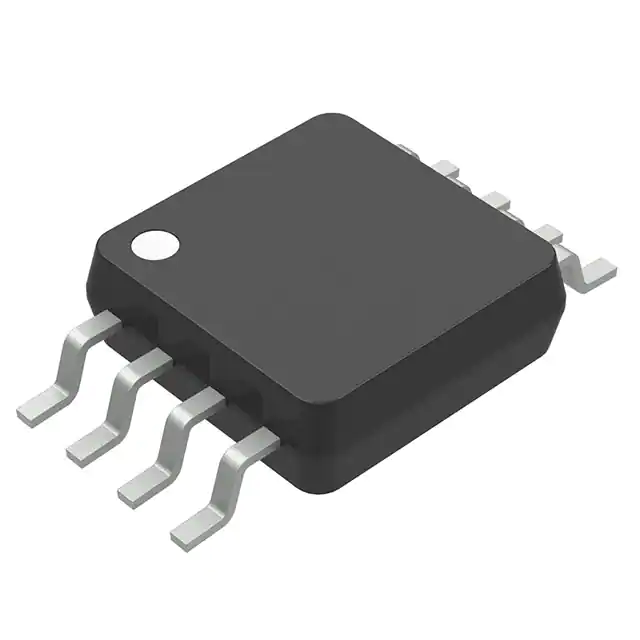
Microchip Technology MCP3426A3-E/MC
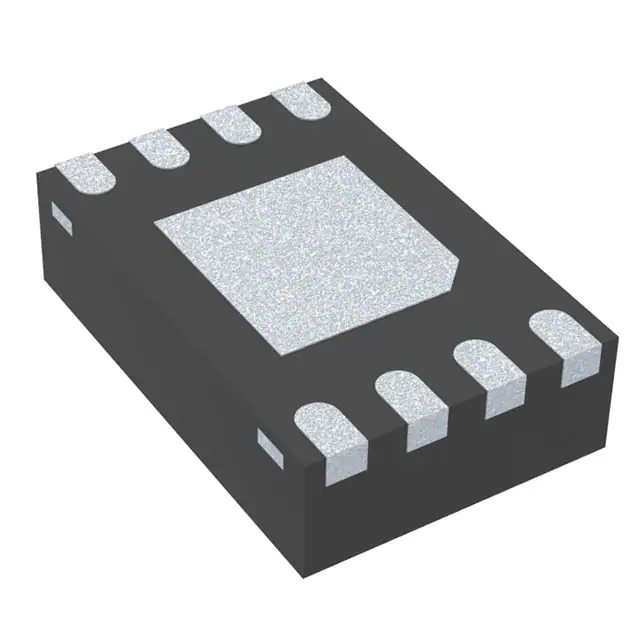
- Part No.:
- MCP3426A3-E/MC
- Manufacturer:
- Microchip Technology
- Category:
- Analog to Digital Converters (ADC)
- Package:
- 8-VFDFN Exposed Pad
- Datasheet:
-
 MCP3426A3-E/MC.pdf
- Description:
- IC ADC 16BIT SIGMA-DELTA 8DFN
- Quantity:
- Payment:

- Shipping:

Inventory:4,467
Please send an inquiry. Send us your inquiry, and we will respond immediately.
Product details
Overview
MCP3426A3-E/MC from Microchip Technology is a 16-bit ΔΣ analog-to-digital converter with two differential input channels, on-board 2.048V ±0.05% voltage reference, programmable gain amplifier (x1/x2/x4/x8), and I²C interface supporting standard/fast/high-speed modes. It delivers 15 SPS at 16-bit resolution, 10 ppm INL, and operates from 2.7V to 5.5V supply across –40°C to +125°C - used in precision RTD/thermistor temperature sensing and bridge-based pressure transducers.
For engineers reviewing the MCP3426A3-E/MC datasheet, MCP3426A3-E/MC pinout, MCP3426A3-E/MC application, or MCP3426A3-E/MC equivalent, key selection criteria include its factory-programmed I²C address, self-calibrating offset/gain per conversion, differential input impedance of 2.25 MΩ at PGA=1, low 9 µA typical standby current in 16-bit one-shot mode, and SOIC/MSOP/DFN package compatibility.
Technical Context
The MCP3426A3-E/MC implements a delta-sigma modulator with integrated programmable gain amplifier and internal 2.048V reference, enabling ±2.048V differential full-scale range scalable by PGA setting. Its on-board oscillator eliminates external timing components, and self-calibration corrects both offset and gain errors before each conversion.
It supports two conversion modes - continuous (15/60/240 SPS) and one-shot - with automatic entry into sub-1 µA standby after completion. The I²C interface uses open-drain SDA/SCL pins requiring external pull-ups and operates up to 3.4 MHz, while the factory-fixed address eliminates external address pin routing.
Key Specifications
| Parameter | Value and Actual Design Meaning |
|---|---|
| Resolution & Data Rate | 16-bit @ 15 SPS, 14-bit @ 60 SPS, 12-bit @ 240 SPS - enables trade-off between precision and throughput without firmware rework |
| Differential Input Range | ±2.048V / PGA - supports direct connection to low-level sensors like 100 Ω PT100 RTDs with PGA=8 |
| INL Accuracy | 10 ppm of FSR - ensures ≤±0.66 mV error over ±2.048V range at PGA=1, critical for weigh scale calibration |
| Reference Voltage | 2.048V ±0.05% (15 ppm/°C drift) - provides stable scaling basis for all conversions; not user-accessible |
| Supply Current | 135 µA typical (3V, continuous); 9 µA typical (16-bit one-shot) - enables battery-powered portable instrumentation |
| Operating Temperature | –40°C to +125°C - qualified for under-hood automotive and industrial control environments |
| I²C Compatibility | Standard (100 kHz), Fast (400 kHz), High-Speed (3.4 MHz) - interoperable with legacy and high-throughput microcontrollers |
Pinout & Package
The MCP3426A3-E/MC is available in 8-pin SOIC, MSOP, and 2×3 DFN packages with exposed thermal pad (EP), all sharing identical pin mapping and functional assignment.
| Pin/Terminal | Circuit Role | Design Meaning |
|---|---|---|
| CH1+, CH1− | Differential analog input channel 1 | Supports true differential measurement or single-ended (CH1− tied to VSS); max input = VSS−0.3V to VDD+0.3V |
| CH2+, CH2− | Differential analog input channel 2 | Independent second channel; identical electrical specs to CH1; enables dual-sensor monitoring |
| VDD, VSS | Power supply and ground | VDD accepts 2.7–5.5V; requires 0.1 µF ceramic + 10 µF tantalum bypassing; VSS must connect to analog ground plane |
| SDA, SCL | I²C bidirectional data and clock | Open-drain pins requiring external pull-up resistors (5–10 kΩ for standard/fast mode) |
| EP | Exposed thermal pad | Internally connected to VSS; must be soldered to PCB ground plane for thermal dissipation and noise immunity |
Key Features
| Feature | Design Value |
|---|---|
| Self-calibrating offset and gain | Per-conversion correction eliminates need for system-level calibration routines and maintains accuracy across temperature swings |
| Programmable gain amplifier (x1/x2/x4/x8) | Enables high-resolution digitization of µV-level signals from strain gauges or thermocouples without external op-amps |
| On-board 2.048V reference | Removes dependency on external reference ICs or resistor dividers, reducing BOM count and layout sensitivity |
| One-shot conversion mode | Automatically enters sub-1 µA standby after conversion - ideal for event-triggered sensing in energy-constrained IoT nodes |
| Differential input architecture | Rejects common-mode noise up to 110 dB (PGA=8), improving reliability in electrically noisy factory automation settings |
Applications
| Temperature Sensing with RTD | Bridge-Based Pressure Transducer |
|---|---|
Use Scenario: Measuring resistance change of a PT100 RTD in HVAC control panels using constant-current excitation. IC Role / Device Role / Timing Role: ADC front-end converting differential voltage across RTD with PGA=4 to resolve <10 mK temperature steps. Use Value: 10 ppm INL and on-chip reference ensure ±0.1°C accuracy over –40°C to +85°C without recalibration. |
Use Scenario: Reading output of a 350 Ω Wheatstone bridge in industrial pressure sensors exposed to vibration and EMI. IC Role / Device Role / Timing Role: High CMRR (110 dB at PGA=8) rejects common-mode noise induced by motor drives near the sensor. Use Value: Differential input structure and 15 ppm/°C reference drift enable stable 0.05% FS pressure readings across ambient temperature shifts. |
| Weigh Scale Load Cell Interface | Battery Fuel Gauge Monitoring |
Use Scenario: Digitizing mV-level output from a 2 mV/V load cell in commercial retail scales with auto-zero compensation. IC Role / Device Role / Timing Role: PGA=8 amplifies weak signal; self-calibration removes zero drift caused by mechanical stress relaxation. Use Value: 16-bit resolution at 15 SPS resolves <10 µV changes - sufficient for 10,000-count display resolution with <0.01% linearity. |
Use Scenario: Monitoring cell voltage and current sense shunt in lithium-ion battery packs for state-of-charge estimation. IC Role / Device Role / Timing Role: One-shot mode triggered by MCU every 5 seconds minimizes average current draw below 1 µA. Use Value: 9 µA typical one-shot current extends battery life in maintenance-free portable medical devices beyond 5 years. |
Equivalent & Alternatives
The following parts are listed as comparable options for similar 16-bit delta-sigma ADC applications.
| Alternative Part | Technical Difference | Application Difference | Selection Advice |
|---|---|---|---|
| ADS1115IDGSR | 4-channel, 16-bit, internal reference 2.048V (±0.05%), but no self-calibration; requires external calibration for long-term stability | Lacks per-conversion offset/gain correction - less suitable for systems requiring drift-free operation over temperature cycles | Prefer when multi-channel count outweighs calibration overhead and cost is primary constraint |
| MCP3421A0T-E/CH | Single-channel, same family, identical specs except channel count and I²C address flexibility; shares same PGA, reference, and conversion modes | Not suitable for dual-sensor applications; requires separate ICs for two independent measurements | Select only when board space permits duplication or channel isolation is mandatory |
Compared with ADS1115IDGSR and MCP3421A0T-E/CH, the MCP3426A3-E/MC uniquely combines factory-fixed I²C addressing, dual differential channels, and per-conversion self-calibration - making it optimal for compact, high-stability industrial sensor nodes where layout simplicity and long-term accuracy are prioritized over channel expansion.
Availability
MCP3426A3-E/MC is available at Aetrix Electronics and suitable for precision temperature sensing, bridge transducer interfacing, weigh scale load cell digitization, battery fuel gauge monitoring, and factory automation equipment requiring stable component supply across extended temperature ranges.
Supply support for MCP3426A3-E/MC includes scheduled delivery planning, volume procurement assistance, BOM continuity management, traceable sourcing, and lifecycle availability coordination for OEM customers, industrial embedded developers, connected-device designers, and electronics production programs.
Manufacturer
Microchip Technology Inc. is a leading provider of microcontrollers, analog devices, and Flash-IP solutions, serving automotive, industrial, consumer, and communications markets since 1989.
The MCP342X series was designed specifically for high-accuracy, low-power sensor signal conditioning in space-constrained embedded systems - emphasizing integrated reference, self-calibration, and I²C simplicity over external component count.
FAQ
What is the I²C address configuration for MCP3426A3-E/MC?
The MCP3426A3-E/MC has its I²C address factory-programmed and fixed - unlike MCP3427/MCP3428, it does not use Adr0/Adr1 pins. The default 7-bit address is 0x68 (with R/W bit), confirmed in Microchip's DS22226A datasheet Section 5.3.1. This simplifies PCB layout by eliminating external address resistors and prevents bus conflicts in multi-device systems where address uniqueness is critical.
Does MCP3426A3-E/MC support single-ended input configurations?
Yes, the MCP3426A3-E/MC supports single-ended operation: CH1− or CH2− can be tied to VSS, using CH1+ or CH2+ as the active input. However, this reduces effective resolution by ~1 LSB and forfeits common-mode noise rejection. The device's differential architecture is optimized for noise immunity, so single-ended use is recommended only when sensor topology mandates it - such as with grounded thermistors or unipolar shunt monitors.
How does the self-calibration function work in MCP3426A3-E/MC?
The MCP3426A3-E/MC performs full offset and gain calibration automatically before every conversion cycle - not just at power-up. It uses internal capacitor switching to measure zero-input offset and full-scale reference deviation, then applies real-time correction to the digital output. This ensures consistent 10 ppm INL performance across temperature gradients and supply fluctuations without host MCU intervention or external calibration routines.
What is the maximum allowable input voltage on CH1+ and CH1− pins of MCP3426A3-E/MC?
Each analog input pin (CH1+, CH1−, CH2+, CH2−) of the MCP3426A3-E/MC must remain within VSS−0.3V to VDD+0.3V. Exceeding this range forward-biases internal ESD diodes, causing leakage currents that distort conversion results or permanently damage the input stage. For a 3.3V supply, absolute limits are –0.3V to +3.6V - even if the differential signal itself stays within ±2.048V/PGA.
Can MCP3426A3-E/MC operate reliably at +125°C ambient temperature?
Yes, the MCP3426A3-E/MC is fully specified and tested for continuous operation from –40°C to +125°C ambient temperature, as stated in DS22226A-page 7. Its thermal resistance in SOIC package is 149.5°C/W, and junction temperature remains within safe limits (<150°C) under typical 135 µA supply current at 3V - provided the PCB includes adequate copper pour and the EP pad is soldered to ground for heat dissipation.
MCP3426A3-E/MC Specifications
- Product attributes
- Attribute value
- Manufacturer:
- Microchip Technology
- Series:
- -
- Package/Case:
- 8-VFDFN Exposed Pad
- Packaging:
- Tube
- Product Status:
- Active
- Number of Bits:
- 16
- Sampling Rate (Per Second):
- 15
- Number of Inputs:
- 2
- Input Type:
- Differential
- Data Interface:
- I2C
- Configuration:
- MUX-PGA-ADC
- Ratio - S/H:ADC:
- -
- Number of A/D Converters:
- 1
- Architecture:
- Sigma-Delta
- Reference Type:
- Internal
- Voltage - Supply, Analog:
- 2.7V ~ 5.5V
- Voltage - Supply, Digital:
- 2.7V ~ 5.5V
- Features:
- PGA
- Operating Temperature:
- -40°C ~ 125°C
- Supplier Device Package:
- 8-DFN (2x3)
- Mounting Type:
- Surface Mount
- Grade:
- -
- Qualification:
- -
MCP3426A3-E/MC FAQ
1.How can I place an order for MCP3426A3-E/MC through Aetrix?
Please submit a Request for Quotation (RFQ) for MCP3426A3-E/MC on Aetrix. Our sales agent will provide a competitive quotation and guide you through the order confirmation once you accept the terms.
2.Are the price and stock information for MCP3426A3-E/MC reliable?
The price and inventory of MCP3426A3-E/MC are updated periodically and may fluctuate due to market conditions. Stock and pricing data are typically refreshed every 24 hours. Quotation validity for MCP3426A3-E/MC is usually 5 days.
3.What payment methods are accepted for MCP3426A3-E/MC?
We accept Wire Transfer, PayPal, Credit Card, Western Union, MoneyGram, and Escrow for MCP3426A3-E/MC transactions.
Note: Certain payment methods may incur a processing fee.
4.How is shipping managed for MCP3426A3-E/MC?
MCP3426A3-E/MC orders can be shipped via leading logistics carriers, including DHL, UPS, FedEx, TNT, or Registered Mail.
Once your MCP3426A3-E/MC order is processed, you will receive an email with the shipment details and tracking number.
Note: Tracking information may take up to 24 hours to appear. Express delivery typically takes 3–5 business days.
5.How can I obtain technical support or documentation for MCP3426A3-E/MC?
For technical support, including MCP3426A3-E/MC datasheets, pinout diagrams, or application guidance, please contact our engineering support team. They can provide detailed documentation and assistance for your MCP3426A3-E/MC requirements.
6.How does Aetrix verify that MCP3426A3-E/MC is sourced from the original manufacturer or authorized distributors?
All MCP3426A3-E/MC products on Aetrix are procured from qualified distributors and authorized channels. Our dedicated quality assurance team conducts strict verification, including traceability checks and, if necessary, third-party testing. This ensures that MCP3426A3-E/MC meets industry standards.
7.What is the process for return or replacement of MCP3426A3-E/MC?
All MCP3426A3-E/MC units undergo pre-shipment inspection (PSI). If there is an issue with MCP3426A3-E/MC, returns or replacements are accepted under the following conditions:
1.Quantity discrepancies, incorrect items, or visible external defects (such as breakage or corrosion), acknowledged by Aetrix.
2.The issue is reported within 90 days of delivery.
3.The MCP3426A3-E/MC part is unused and in its original packaging.
Return procedure for MCP3426A3-E/MC:
1.Submit a request within 90 days.
2.Obtain a Return Material Authorization (RMA) from Aetrix.
MCP3426A3-E/MC Tags
-
ADC081C021CIMKX/NOPB
Texas Instruments
-
MCP3021A5T-E/OT
Microchip Technology
-
TLA2024IRUGR
Texas Instruments
-
MCP3221A5T-E/OT
Microchip Technology
-
MCP3221A5T-I/OT
Microchip Technology
-
MCP3221A4T-E/OT
Microchip Technology
-
MCP3221A6T-E/OT
Microchip Technology
-
MCP3221A0T-E/OT
Microchip Technology
-
MCP3221A1T-E/OT
Microchip Technology

-
ADC121S021CIMFX/NOPB
Texas Instruments
-
MCP3001-I/MS
Microchip Technology

-
MCP3001-I/SN
Microchip Technology
Tech Hub

TTL and CMOS logic families differ in thresholds, loading, output drive, power and timing. This engineering guide compares 74HC and 74HCT, calculates noise margins and checks 3.3 V/5 V compatibility.

A practical engineering guide to 3.3V and 5V logic compatibility, input thresholds, resistor dividers, translator ICs, MOSFET level shifting, I2C pull-ups, timing limits and power-sequencing risks.

The 74HC595 uses push-pull logic outputs, while the TPIC6B595 uses 50 V open-drain DMOS sinks for higher-power loads. This guide compares timing, current limits, 3.3 V interfacing, load wiring, thermal…

The 74HC595 converts serial data into eight stable parallel outputs. This guide covers pin functions, shift and storage timing, OE and MR behavior, drive-current limits, cascading, voltage compatibilit…

A technical comparison of level-sensitive latches and edge-triggered flip-flops, covering timing windows, setup and hold limits, master–slave operation, time borrowing, race-through, HDL inference and…

A D latch stores one bit while Enable controls when data can pass. This reference covers gate-level operation, truth tables, transparency, setup and hold timing, LE versus OE, common ICs and practical …

An SR latch stores one bit through cross-coupled feedback. This engineering reference covers NOR and NAND implementations, truth tables, forbidden-state recovery, gated operation, switch debouncing, fa…

Latch circuits retain one bit through feedback. This technical reference covers SR and D latches, truth tables, transparency, timing limits, latch-versus-flip-flop behavior, applications and common log…

An engineering guide to LED driver operation, constant-current and constant-voltage outputs, linear and switching topologies, dimming, IC selection, calculations, replacement compatibility, and fault c…

Operational amplifier guide covering op amp basics, feedback, ideal vs real op amps, common configurations, buffer circuits, offset, bias current, gain-bandwidth, slew rate, rail-to-rail limits and sel…


