
 My Inquiry
 My Account


Microchip Technology MCP73832T-2ATI/MC
- Part No.:
- MCP73832T-2ATI/MC
- Manufacturer:
- Microchip Technology
- Category:
- Battery Chargers
- Package:
- 8-VFDFN Exposed Pad
- Datasheet:
-
 MCP73832T-2ATI/MC.pdf
- Description:
- IC BATT CONTRL LI-ION 1CELL 8DFN
- Quantity:
- Payment:

- Shipping:

Inventory:3,231
Please send an inquiry. Send us your inquiry, and we will respond immediately.
Product details
Overview
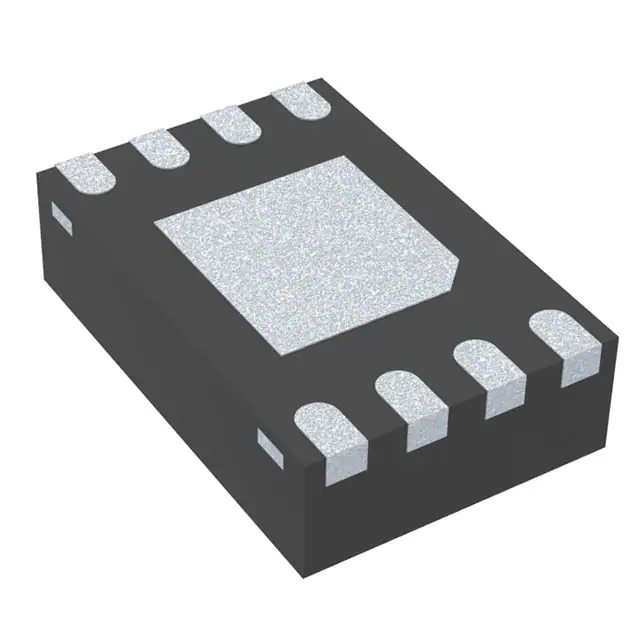
MCP73832T-2ATI/MC from Microchip Technology is a fully integrated linear lithium-ion/polymer battery charge management controller in an 8-lead 2 mm × 3 mm DFN package with exposed thermal pad. It delivers precise 4.35 V ±0.75% constant-voltage regulation, programmable 15–500 mA fast-charge current via single PROG resistor, and open-drain STAT output for host microcontroller interfacing - designed for USB-powered portable devices requiring compact, low-component-count charging solutions.
For engineers reviewing the MCP73832T-2ATI/MC datasheet, MCP73832T-2ATI/MC pinout, MCP73832T-2ATI/MC application, or MCP73832T-2ATI/MC equivalent, key selection criteria include its factory-set 4.35 V regulation voltage, thermal regulation down to 76°C/W θJA, open-drain STAT behavior in Charge Complete mode, and compatibility with Li-ion cells in space-constrained consumer electronics.
Technical Context
The MCP73832T-2ATI/MC implements a three-phase linear charge algorithm: preconditioning (trickle charge at 10%/20%/40% of IREG), constant-current fast charge, and constant-voltage regulation. Its internal P-channel MOSFET pass transistor features 350 mΩ typical RDS(ON) at 105°C, enabling efficient power delivery while supporting automatic thermal regulation that reduces charge current above ~105°C junction temperature.
Undervoltage lockout (UVLO) activates below 3.3–3.6 V with 70 mV hysteresis, and battery detection uses a 6 µA VBAT current source to distinguish presence/absence. The device enters shutdown when PROG floats (>70 kΩ) or VDD falls within 50 mV of VBAT, limiting reverse discharge leakage to <2 µA.
Key Specifications
| Parameter | Value and Actual Design Meaning |
|---|---|
| Voltage Regulation | 4.35 V ±0.75% - factory-trimmed reference ensures accurate full-charge termination for high-energy-density Li-ion cells. |
| Charge Current Range | 15–500 mA - set by single external PROG resistor (2–67 kΩ); enables flexible optimization between charge time and thermal dissipation. |
| Preconditioning Threshold | 66.5–74% of VREG - supports safe trickle-charge recovery of deeply discharged batteries before fast-charge initiation. |
| Charge Termination Ratio | 5–20% of IREG - selectable end-of-charge cutoff prevents overcharging while accommodating aging cell impedance rise. |
| Thermal Resistance (θJA) | 76°C/W - measured on 4-layer board with natural convection; enables sustained 500 mA charging without external heatsink in DFN package. |
| STAT Output Type | Open-drain - allows direct connection to microcontroller GPIO with pull-up, eliminating need for level-shifting or current-limiting resistors. |
| Operating Temperature | -40°C to +85°C ambient - fully specified across industrial temperature range for reliable operation in handheld and wearable devices. |
Pinout & Package
Package: 8-lead, 2 mm × 3 mm DFN with exposed thermal pad (EP), thermally and electrically connected to VSS.
| Pin/Terminal | Circuit Role | Design Meaning |
|---|---|---|
| 1, 2 | VDD | Battery management input supply (3.75–6 V); bypassed with ≥4.7 µF capacitor to VSS for stability and noise rejection. |
| 3, 4 | VBAT | Drain terminal of internal P-MOSFET pass transistor; connects directly to battery positive; requires ≥4.7 µF output capacitance. |
| 5 | STAT | Open-drain charge status output - LOW during active charge, high-impedance in Charge Complete mode for host polling. |
| 6 | VSS | 0 V reference - common return for battery negative, input supply ground, and exposed thermal pad (EP). |
| 7 | NC | No connection - must remain unconnected; no internal circuitry attached. |
| 8 | PROG | Current regulation set input - resistor to VSS programs fast-charge current; floating disables device (IQ = 25 µA). |
| EP | Exposed Thermal Pad | Internally tied to VSS - must be soldered to PCB copper pour with multiple vias for optimal thermal performance and EMI reduction. |
Key Features
| Feature | Design Value |
|---|---|
| Integrated Pass Transistor | P-channel MOSFET with 350 mΩ RDS(ON) eliminates external FET and gate driver, reducing BOM count and layout area. |
| Reverse Discharge Protection | Automatic blocking of battery-to-VDD current path when input is absent, limiting reverse leakage to <2 µA without external diode. |
| Thermal Regulation | Dynamic current reduction based on die temperature - maintains reliability during high-power charging without external thermal sensors. |
| Programmable Preconditioning | Selectable 10%/20%/40% trickle-charge ratio ensures safe recovery of cells below 2.8 V without risking lithium plating. |
| UVLO with Hysteresis | 3.45 V start / 3.38 V stop threshold with 70 mV hysteresis prevents oscillation during brown-out conditions near input dropout. |
Applications
| USB-Powered Portable Devices | Wearable Health Monitors |
|---|---|
Use Scenario: Compact Bluetooth earbuds powered exclusively from USB 5 V input with 200–300 mAh Li-polymer battery. IC Role / Device Role / Timing Role: Standalone linear charger managing full CC/CV profile, STAT signaling charge state to MCU over GPIO. Use Value: Eliminates need for external current-sense resistor or discrete MOSFET, reducing solution size by >30% versus discrete alternatives. |
Use Scenario: Continuous glucose monitor worn on skin with sealed 120 mAh Li-ion cell and strict thermal limits. IC Role / Device Role / Timing Role: Primary charge controller enforcing 4.35 V termination and thermal foldback to keep skin-facing surface <40°C. Use Value: Factory-trimmed voltage accuracy and built-in thermal regulation ensure compliance with medical device safety standards without firmware calibration. |
| Smart Home Sensors | Industrial Handheld Terminals |
Use Scenario: Battery-backed Zigbee motion sensor deployed in uncontrolled ambient (-25°C to +70°C) with 800 mAh Li-ion pack. IC Role / Device Role / Timing Role: Autonomous charger handling preconditioning, fast charge, and automatic recharge cycles without host intervention. Use Value: Wide -40°C to +85°C operating range and robust battery detection enable reliable field deployment without battery replacement logistics. |
Use Scenario: Ruggedized barcode scanner used 8 hrs/day with hot-swap battery support and USB-C charging port. IC Role / Device Role / Timing Role: Core charge management IC providing reverse discharge protection and UVLO immunity during cable insertion transients. Use Value: Open-drain STAT output interfaces directly to ARM Cortex-M host for real-time charge status reporting and fault logging. |
Equivalent & Alternatives
The following parts are listed as comparable options for similar linear Li-ion charge management applications.
| Alternative Part | Technical Difference | Application Difference | Selection Advice |
|---|---|---|---|
| MCP73831T-2ATI/MC | Tri-state STAT output (HIGH/LOW/Hi-Z) vs. open-drain; identical 4.35 V regulation and PROG programming. | Requires external pull-up for MCU interface; better suited for LED-only status indication without GPIO polling. | Select MCP73831T-2ATI/MC only if STAT must drive an LED directly without external components. |
| BQ24075RGTR | 4.2 V fixed regulation (±1%), 1 A max charge current, integrated LDO, different pinout and PROG scaling (1000 V/RPROG). | Lacks 4.35 V option; higher current capability but larger thermal footprint; requires different PCB layout and firmware adaptation. | Choose BQ24075RGTR only when 1 A charging or integrated LDO functionality is required and 4.2 V termination is acceptable. |
Compared with MCP73831T-2ATI/MC, the MCP73832T-2ATI/MC offers simpler host interfacing via open-drain STAT, while BQ24075RGTR provides higher current and auxiliary LDO output at the cost of reduced voltage flexibility and increased design complexity.
Availability
MCP73832T-2ATI/MC is available at Aetrix Electronics and suitable for USB-powered portable devices, wearable health monitors, smart home sensors, and industrial handheld terminals requiring stable component supply, long-term lifecycle support, and consistent parametric performance across production batches.
Supply support for MCP73832T-2ATI/MC includes scheduled delivery planning, volume procurement assistance, BOM continuity management, traceable sourcing, and lifecycle availability coordination for OEM customers, industrial embedded developers, connected-device designers, and electronics production programs.
Manufacturer
Microchip Technology Inc. is a leading provider of microcontrollers, analog, FPGA, and connectivity solutions, serving automotive, industrial, consumer, and communications markets with vertically integrated silicon and software platforms.
The MCP7383x family is designed specifically for cost-sensitive, space-constrained Li-ion/Li-polymer charging applications - emphasizing minimal external components, factory-trimmed accuracy, and robust thermal management in ultra-small packages.
FAQ
What is the exact voltage regulation setting for MCP73832T-2ATI/MC?
The MCP73832T-2ATI/MC is factory-configured for 4.35 V constant-voltage regulation with ±0.75% tolerance (4.317 V to 4.383 V). This value is laser-trimmed during production and cannot be altered by external components - it is distinct from the 4.20 V, 4.40 V, and 4.50 V variants in the same family.
How does the STAT pin behave during charge completion on MCP73832T-2ATI/MC?
On the MCP73832T-2ATI/MC, the STAT pin transitions to high-impedance (open-drain) in Charge Complete mode - it neither sources nor sinks current. This allows direct connection to a microcontroller GPIO with an external pull-up resistor for host polling, unlike the tri-state STAT of the MCP73831 variant.
Can MCP73832T-2ATI/MC safely charge a 500 mAh Li-ion cell at 500 mA?
Yes - the MCP73832T-2ATI/MC supports up to 500 mA fast-charge current when a 2.0 kΩ resistor is placed between PROG and VSS. With proper PCB thermal design (≥4-layer board, EP vias to inner ground plane), it sustains this current without entering thermal shutdown under typical ambient conditions.
What happens if the PROG pin is left floating on MCP73832T-2ATI/MC?
If the PROG pin is left floating on MCP73832T-2ATI/MC, the device enters automatic shutdown mode: charge current ceases, reverse discharge leakage drops to <2 µA, and STAT goes high-impedance. Supply current falls to 25 µA typical - making PROG an effective hardware enable/disable control.
Does MCP73832T-2ATI/MC include battery detection functionality?
Yes - MCP73832T-2ATI/MC actively sources 6 µA from the VBAT pin to detect battery presence. If VBAT rises above VREG + 100 mV (≈4.45 V), it assumes no battery is connected; otherwise, it initiates charging. This eliminates need for external detection circuitry or manual switch inputs.
MCP73832T-2ATI/MC Specifications
- Product attributes
- Attribute value
- Manufacturer:
- Microchip Technology
- Series:
- -
- Package/Case:
- 8-VFDFN Exposed Pad
- Packaging:
- Tape & Reel (TR)
- Product Status:
- Active
- Battery Chemistry:
- Lithium Ion/Polymer
- Number of Cells:
- 1
- Current - Charging:
- Constant - Programmable
- Programmable Features:
- Current
- Fault Protection:
- Over Voltage
- Charge Current - Max:
- 500mA
- Battery Pack Voltage:
- 4.2V
- Voltage - Supply (Max):
- 6V
- Interface:
- -
- Operating Temperature:
- -40°C ~ 85°C (TA)
- Grade:
- -
- Qualification:
- -
- Mounting Type:
- Surface Mount
- Supplier Device Package:
- 8-DFN (2x3)
MCP73832T-2ATI/MC FAQ
1.How can I place an order for MCP73832T-2ATI/MC through Aetrix?
Please submit a Request for Quotation (RFQ) for MCP73832T-2ATI/MC on Aetrix. Our sales agent will provide a competitive quotation and guide you through the order confirmation once you accept the terms.
2.Are the price and stock information for MCP73832T-2ATI/MC reliable?
The price and inventory of MCP73832T-2ATI/MC are updated periodically and may fluctuate due to market conditions. Stock and pricing data are typically refreshed every 24 hours. Quotation validity for MCP73832T-2ATI/MC is usually 5 days.
3.What payment methods are accepted for MCP73832T-2ATI/MC?
We accept Wire Transfer, PayPal, Credit Card, Western Union, MoneyGram, and Escrow for MCP73832T-2ATI/MC transactions.
Note: Certain payment methods may incur a processing fee.
4.How is shipping managed for MCP73832T-2ATI/MC?
MCP73832T-2ATI/MC orders can be shipped via leading logistics carriers, including DHL, UPS, FedEx, TNT, or Registered Mail.
Once your MCP73832T-2ATI/MC order is processed, you will receive an email with the shipment details and tracking number.
Note: Tracking information may take up to 24 hours to appear. Express delivery typically takes 3–5 business days.
5.How can I obtain technical support or documentation for MCP73832T-2ATI/MC?
For technical support, including MCP73832T-2ATI/MC datasheets, pinout diagrams, or application guidance, please contact our engineering support team. They can provide detailed documentation and assistance for your MCP73832T-2ATI/MC requirements.
6.How does Aetrix verify that MCP73832T-2ATI/MC is sourced from the original manufacturer or authorized distributors?
All MCP73832T-2ATI/MC products on Aetrix are procured from qualified distributors and authorized channels. Our dedicated quality assurance team conducts strict verification, including traceability checks and, if necessary, third-party testing. This ensures that MCP73832T-2ATI/MC meets industry standards.
7.What is the process for return or replacement of MCP73832T-2ATI/MC?
All MCP73832T-2ATI/MC units undergo pre-shipment inspection (PSI). If there is an issue with MCP73832T-2ATI/MC, returns or replacements are accepted under the following conditions:
1.Quantity discrepancies, incorrect items, or visible external defects (such as breakage or corrosion), acknowledged by Aetrix.
2.The issue is reported within 90 days of delivery.
3.The MCP73832T-2ATI/MC part is unused and in its original packaging.
Return procedure for MCP73832T-2ATI/MC:
1.Submit a request within 90 days.
2.Obtain a Return Material Authorization (RMA) from Aetrix.
MCP73832T-2ATI/MC Tags

-
BQ21040DBVR
Texas Instruments

-
MCP73812T-420I/OT
Microchip Technology
-
MCP73831T-2ACI/OT
Microchip Technology
-
MCP73832T-2ACI/OT
Microchip Technology
-
MCP73831T-2DCI/OT
Microchip Technology
-
MCP73832T-2DCI/OT
Microchip Technology
-
MCP73831T-2ATI/OT
Microchip Technology
-
MCP73832T-2ATI/OT
Microchip Technology
-
MCP73831T-5ACI/OT
Microchip Technology
-
MCP73832T-2ACI/MC
Microchip Technology
-
MCP73831T-2ACI/MC
Microchip Technology
-
MCP73831T-2ATI/MC
Microchip Technology
Tech Hub

TTL and CMOS logic families differ in thresholds, loading, output drive, power and timing. This engineering guide compares 74HC and 74HCT, calculates noise margins and checks 3.3 V/5 V compatibility.

A practical engineering guide to 3.3V and 5V logic compatibility, input thresholds, resistor dividers, translator ICs, MOSFET level shifting, I2C pull-ups, timing limits and power-sequencing risks.

The 74HC595 uses push-pull logic outputs, while the TPIC6B595 uses 50 V open-drain DMOS sinks for higher-power loads. This guide compares timing, current limits, 3.3 V interfacing, load wiring, thermal…

The 74HC595 converts serial data into eight stable parallel outputs. This guide covers pin functions, shift and storage timing, OE and MR behavior, drive-current limits, cascading, voltage compatibilit…

A technical comparison of level-sensitive latches and edge-triggered flip-flops, covering timing windows, setup and hold limits, master–slave operation, time borrowing, race-through, HDL inference and…

A D latch stores one bit while Enable controls when data can pass. This reference covers gate-level operation, truth tables, transparency, setup and hold timing, LE versus OE, common ICs and practical …

An SR latch stores one bit through cross-coupled feedback. This engineering reference covers NOR and NAND implementations, truth tables, forbidden-state recovery, gated operation, switch debouncing, fa…

Latch circuits retain one bit through feedback. This technical reference covers SR and D latches, truth tables, transparency, timing limits, latch-versus-flip-flop behavior, applications and common log…

An engineering guide to LED driver operation, constant-current and constant-voltage outputs, linear and switching topologies, dimming, IC selection, calculations, replacement compatibility, and fault c…

Operational amplifier guide covering op amp basics, feedback, ideal vs real op amps, common configurations, buffer circuits, offset, bias current, gain-bandwidth, slew rate, rail-to-rail limits and sel…


