
 My Inquiry
 My Account


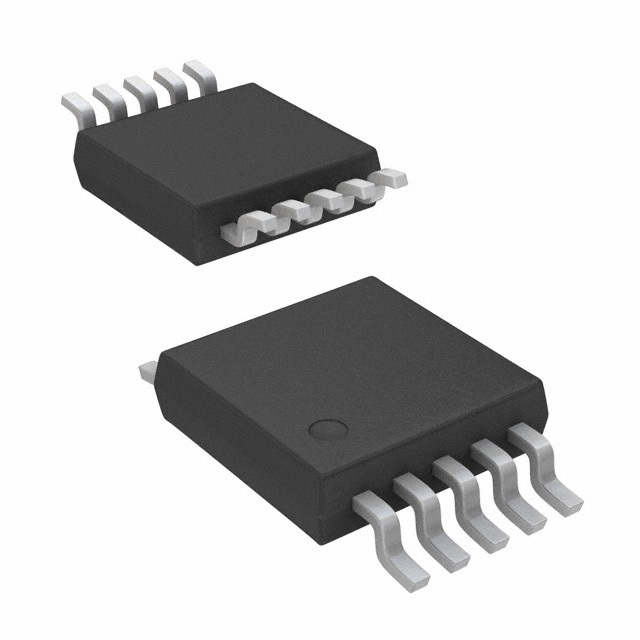
Microchip Technology MCP73833-CNI/UN
- Part No.:
- MCP73833-CNI/UN
- Manufacturer:
- Microchip Technology
- Category:
- Battery Chargers
- Package:
- 10-TFSOP, 10-MSOP (0.118", 3.00mm Width)
- Datasheet:
-
 MCP73833-CNI/UN.pdf
- Description:
- IC BATT CNTRL LI-ION 1CEL 10MSOP
- Quantity:
- Payment:

- Shipping:

Inventory:477
Please send an inquiry. Send us your inquiry, and we will respond immediately.
Product details
Overview
MCP73833-CNI/UN from Microchip Technology is a standalone linear Li-ion/Li-polymer battery charge management controller in MSOP-10 package, featuring integrated P-channel MOSFET pass transistor, ±0.75% 4.20V voltage regulation, programmable 1A max charge current via single PROG resistor, and thermal regulation with 150°C shutdown. It enables USB-compliant charging in portable devices such as Bluetooth headsets and digital cameras.
For engineers reviewing the MCP73833-CNI/UN datasheet, MCP73833-CNI/UN pinout, MCP73833-CNI/UN application, or MCP73833-CNI/UN equivalent, key selection criteria include its factory-set 4.20V regulation, 100% preconditioning current option, dual STAT outputs for LED/microcontroller status, thermistor-based temperature monitoring, and UVLO with 100mV hysteresis.
Technical Context
The MCP73833-CNI/UN implements a constant-current/constant-voltage (CC/CV) algorithm with selectable preconditioning and automatic recharge. Its internal P-channel MOSFET delivers up to 1A with 300mΩ typical RDS(on), while die-temperature-based current limiting ensures safe operation under high ambient or power conditions.
It integrates reverse discharge protection, low-dropout LDO mode for system test, and dual open-drain STAT outputs with defined logic states across six operational modes - including shutdown, standby, preconditioning, fast charge, CV, and charge complete - all coordinated by an internal timer with factory-programmed safety periods.
Key Specifications
| Parameter | Value and Actual Design Meaning |
|---|---|
| Voltage Regulation | 4.20V ±0.75% - factory-trimmed reference enabling precise single-cell Li-ion charging without external feedback components. |
| Max Charge Current | 1000mA - set by 1.0kΩ PROG-to-VSS resistor; supports full-rate charging of 180mAh–2000mAh batteries. |
| Preconditioning Ratio | 100% - allows full programmed current during trickle-charge phase for deeply depleted cells, reducing recovery time. |
| Thermal Shutdown | 150°C with 10°C hysteresis - halts charging immediately upon junction overtemperature, resuming only after safe cooldown. |
| UVLO Threshold | 3.55V start / 3.45V stop with 100mV hysteresis - prevents operation below minimum input, blocking battery discharge when VDD drops near VBAT. |
| Thermistor Bias | 50µA current source - powers standard 10kΩ NTC thermistors for accurate battery temperature qualification per JEITA standards. |
| Package Thermal Resistance | θJA = 113°C/W (MSOP-10) - requires minimal PCB copper area for thermal management in space-constrained layouts. |
Pinout & Package
MSOP-10 package (3.0 mm × 4.9 mm × 1.1 mm), exposed pad electrically tied to VSS. Pin 11 (EP) must be soldered to VSS ground plane for thermal and electrical integrity.
| Pin/Terminal | Circuit Role | Design Meaning |
|---|---|---|
| VDD (Pins 1,2) | Battery management input supply | Accepts 3.75–6V input; powers internal circuitry and enables UVLO detection; bypass with ≥1µF to VSS. |
| STAT1 (Pin 3) | Charge status output | Open-drain indicator: LOW during active charge, HI-Z at end-of-charge - drives LED or microcontroller GPIO. |
| STAT2 (Pin 4) | Charge status output | Open-drain indicator: HI-Z during charge, LOW at end-of-charge - provides complementary status for dual-LED or logic decoding. |
| VSS (Pin 5) | 0V reference | Common ground for battery negative, input supply return, and EP connection - critical for current sense accuracy. |
| PROG (Pin 6) | Current regulation set | Resistor-to-VSS sets fast charge current (IREG = 1000/RPROG); floating disables charge and limits reverse discharge to <2µA. |
| PG (Pin 7) | Power good indication | Pseudo-open-drain output: LOW when VDD > UVLO threshold and VDD > VBAT - signals valid input power for system enable. |
| THERM (Pin 8) | Thermistor input | 50µA bias current source interfaces with NTC/PTC thermistors; comparator thresholds at 1.23V/0.25V detect over/under-temperature faults. |
| VBAT (Pins 9,10) | Battery charge control output | Drain of internal P-MOSFET; connects directly to battery positive; bypass with ≥4.7µF ceramic capacitor for stability at >250mA loads. |
Key Features
| Feature | Design Value |
|---|---|
| Integrated pass transistor | Eliminates external MOSFET and gate driver, reducing BOM count and PCB footprint in compact USB-powered chargers. |
| Programmable preconditioning | 100% current ratio option enables rapid recovery of deeply discharged Li-ion cells without risking damage from excessive initial current. |
| Automatic recharge | Reinitiates charge when battery voltage falls to 94% of VREG (3.95V at 4.20V setting), maintaining full capacity without host intervention. |
| System test (LDO) mode | Enables VBAT output regulation at VREG (4.20V) with PROG-set current limit - allows battery-less system validation and firmware testing. |
| Reverse discharge protection | Blocks battery-to-input leakage to <0.25µA when VDD is absent, preserving battery charge during device storage or unplugged operation. |
Applications
| USB-Powered Portable Charger | Bluetooth Headset Charging Circuit |
|---|---|
Use Scenario: Compact wall adapter or PC-USB port supplies regulated 5V to charge embedded Li-polymer battery in handheld diagnostic tool. IC Role / Device Role / Timing Role: MCP73833-CNI/UN acts as primary CC/CV charger with integrated pass element, managing full charge cycle autonomously using STAT1/STAT2 for visual status and PG for system power-good signaling. Use Value: Enables compliance with USB 2.0 power delivery specs (≤500mA default, scalable to 1A with proper enumeration), eliminating need for external current-limiting ICs or complex host coordination. | Use Scenario: Rechargeable earbud case uses micro-USB input to maintain dual Li-ion cells between usage cycles. IC Role / Device Role / Timing Role: MCP73833-CNI/UN serves as standalone linear charger with thermistor monitoring (THERM pin) and automatic recharge, operating independently of headset MCU. Use Value: Delivers precise 4.20V regulation and 100% preconditioning to safely recover cells discharged to ≤2.8V, extending usable battery life and preventing under-voltage lockout in end devices. |
| Digital Camera Battery Pack | MP3 Player Internal Charger |
Use Scenario: Integrated charger in DSLR grip accepts 5V from AC adapter or powered USB hub to replenish removable Li-ion pack. IC Role / Device Role / Timing Role: MCP73833-CNI/UN functions as battery management unit with dual STAT outputs driving RGB LED indicators and PG signal enabling camera power-on sequencing. Use Value: Provides thermal regulation and 150°C shutdown to prevent overheating during rapid charging in thermally isolated enclosures, meeting IEC 62133 safety requirements. | Use Scenario: Portable audio player charges via micro-USB while simultaneously powering audio codec and flash memory. IC Role / Device Role / Timing Role: MCP73833-CNI/UN operates in LDO mode (via THERM pin override) to supply stable 4.20V system rail when battery is removed or deeply depleted. Use Value: Allows uninterrupted firmware updates and diagnostics without battery dependency - leveraging same IC for both charging and system power regulation. |
Equivalent & Alternatives
The following parts are listed as comparable options for similar linear Li-ion charge management applications.
| Alternative Part | Technical Difference | Application Difference | Selection Advice |
|---|---|---|---|
| BQ24075RGTR | Fixed 4.2V regulation, no programmable VREG options; 1.5A max current; integrated LDO for VBUS path; different pinout (16-pin QFN). | Lacks 100% preconditioning and thermistor interface; requires external thermal monitoring for JEITA compliance. | Select when higher current (1.5A) and integrated VBUS LDO are required, and thermistor-based temperature qualification is not mandated. |
| TP4056 | Fixed 4.2V regulation, no VREG variants; 1A max; no PG output; no thermistor input; no preconditioning configuration; SOT-23-6 package. | No temperature monitoring, no automatic recharge, no status outputs - minimal feature set for cost-sensitive, non-safety-critical applications. | Select only for ultra-low-cost, space-constrained designs where thermal safety, status feedback, and deep-discharge recovery are not required. |
Compared with BQ24075RGTR and TP4056, the MCP73833-CNI/UN uniquely combines factory-trimmed 4.20V regulation, 100% preconditioning, dual STAT outputs, thermistor interface, and PG signaling in a 10-pin MSOP - making it optimal for USB-compliant, safety-aware portable chargers requiring autonomous operation and visual/system status feedback.
Availability
MCP73833-CNI/UN is available at Aetrix Electronics and suitable for USB-powered portable chargers, Bluetooth headset battery packs, digital camera grips, MP3 player internal charging circuits, and medical handheld diagnostic tools requiring stable component supply and long-term lifecycle support.
Supply support for MCP73833-CNI/UN includes scheduled delivery planning, volume procurement assistance, BOM continuity management, traceable sourcing, and lifecycle availability coordination for OEM customers, industrial embedded developers, connected-device designers, and electronics production programs.
Manufacturer
Microchip Technology is a leading provider of microcontrollers, analog, and Flash-IP solutions, serving automotive, industrial, consumer, and communications markets with high-reliability semiconductor products.
The MCP73833-CNI/UN belongs to Microchip's dedicated linear battery charge management product line, designed specifically for space-constrained, cost-sensitive portable electronics requiring autonomous, USB-compliant, and thermally safe Li-ion charging.
FAQ
What is the factory-set voltage regulation for MCP73833-CNI/UN?
The MCP73833-CNI/UN has a factory-trimmed constant-voltage regulation of 4.20V ±0.75%, optimized for standard single-cell Li-ion and Li-polymer batteries. This value is fixed and cannot be adjusted externally - unlike other variants in the MCP73833/4 family that offer 4.35V, 4.40V, or 4.50V options. The MCP73833-CNI/UN datasheet specifies VREG = 4.20V across –40°C to +85°C ambient temperature.
How does the MCP73833-CNI/UN handle deeply depleted batteries?
The MCP73833-CNI/UN supports preconditioning at 100% of the programmed fast-charge current, allowing full-rate current delivery to batteries as low as 2.8V. This is enabled automatically when VBAT falls below the factory-set preconditioning threshold (66.5% of VREG, or ~2.79V). The MCP73833-CNI/UN remains in this mode until VBAT exceeds the threshold, then transitions smoothly to constant-current fast charge - ensuring safe and efficient recovery without external intervention.
Can MCP73833-CNI/UN operate without a battery connected?
Yes - the MCP73833-CNI/UN supports System Test (LDO) mode. By driving the THERM pin above (VDD – 100 mV) with no battery present, the device regulates VBAT to its factory-set 4.20V output, delivering up to the PROG-set current limit. This enables battery-less system validation, firmware testing, and debug power supply functionality - all using the same MCP73833-CNI/UN IC without hardware modification.
What is the function of the PG pin on MCP73833-CNI/UN?
The PG (Power Good) pin on MCP73833-CNI/UN is a pseudo-open-drain output that sinks current when VDD exceeds the UVLO start threshold (3.55V) and remains greater than VBAT. It asserts LOW to signal valid input power presence - enabling system-level power sequencing, enable/disable control of downstream regulators, or host MCU wake-up. Unlike true open-drain pins, PG has an internal diode path to VDD and must only be pulled up to VDD, not to a separate rail.
Does MCP73833-CNI/UN provide temperature monitoring for battery safety?
Yes - the MCP73833-CNI/UN integrates a precision 50µA thermistor bias current source on the THERM pin, compatible with standard 10kΩ NTC thermistors. It compares the resulting voltage against factory-set thresholds (1.23V upper, 0.25V lower) to detect over-temperature and under-temperature conditions. Upon fault detection, the MCP73833-CNI/UN immediately suspends charging, holds the timer value, and asserts STAT1/STAT2 to HI-Z while keeping PG LOW - meeting JEITA-compliant thermal qualification requirements.
MCP73833-CNI/UN Specifications
- Product attributes
- Attribute value
- Manufacturer:
- Microchip Technology
- Series:
- -
- Package/Case:
- 10-TFSOP, 10-MSOP (0.118", 3.00mm Width)
- Packaging:
- Tube
- Product Status:
- Active
- Battery Chemistry:
- Lithium Ion/Polymer
- Number of Cells:
- 1
- Current - Charging:
- Constant - Programmable
- Programmable Features:
- Current
- Fault Protection:
- Over Temperature
- Charge Current - Max:
- 1.1A
- Battery Pack Voltage:
- 4.2V
- Voltage - Supply (Max):
- 6V
- Interface:
- -
- Operating Temperature:
- -40°C ~ 85°C (TA)
- Grade:
- -
- Qualification:
- -
- Mounting Type:
- Surface Mount
- Supplier Device Package:
- 10-MSOP
MCP73833-CNI/UN FAQ
1.How can I place an order for MCP73833-CNI/UN through Aetrix?
Please submit a Request for Quotation (RFQ) for MCP73833-CNI/UN on Aetrix. Our sales agent will provide a competitive quotation and guide you through the order confirmation once you accept the terms.
2.Are the price and stock information for MCP73833-CNI/UN reliable?
The price and inventory of MCP73833-CNI/UN are updated periodically and may fluctuate due to market conditions. Stock and pricing data are typically refreshed every 24 hours. Quotation validity for MCP73833-CNI/UN is usually 5 days.
3.What payment methods are accepted for MCP73833-CNI/UN?
We accept Wire Transfer, PayPal, Credit Card, Western Union, MoneyGram, and Escrow for MCP73833-CNI/UN transactions.
Note: Certain payment methods may incur a processing fee.
4.How is shipping managed for MCP73833-CNI/UN?
MCP73833-CNI/UN orders can be shipped via leading logistics carriers, including DHL, UPS, FedEx, TNT, or Registered Mail.
Once your MCP73833-CNI/UN order is processed, you will receive an email with the shipment details and tracking number.
Note: Tracking information may take up to 24 hours to appear. Express delivery typically takes 3–5 business days.
5.How can I obtain technical support or documentation for MCP73833-CNI/UN?
For technical support, including MCP73833-CNI/UN datasheets, pinout diagrams, or application guidance, please contact our engineering support team. They can provide detailed documentation and assistance for your MCP73833-CNI/UN requirements.
6.How does Aetrix verify that MCP73833-CNI/UN is sourced from the original manufacturer or authorized distributors?
All MCP73833-CNI/UN products on Aetrix are procured from qualified distributors and authorized channels. Our dedicated quality assurance team conducts strict verification, including traceability checks and, if necessary, third-party testing. This ensures that MCP73833-CNI/UN meets industry standards.
7.What is the process for return or replacement of MCP73833-CNI/UN?
All MCP73833-CNI/UN units undergo pre-shipment inspection (PSI). If there is an issue with MCP73833-CNI/UN, returns or replacements are accepted under the following conditions:
1.Quantity discrepancies, incorrect items, or visible external defects (such as breakage or corrosion), acknowledged by Aetrix.
2.The issue is reported within 90 days of delivery.
3.The MCP73833-CNI/UN part is unused and in its original packaging.
Return procedure for MCP73833-CNI/UN:
1.Submit a request within 90 days.
2.Obtain a Return Material Authorization (RMA) from Aetrix.
MCP73833-CNI/UN Tags

-
BQ21040DBVR
Texas Instruments
-
MCP73812T-420I/OT
Microchip Technology
-
MCP73831T-2ACI/OT
Microchip Technology
-
MCP73832T-2ACI/OT
Microchip Technology
-
MCP73831T-2DCI/OT
Microchip Technology
-
MCP73832T-2DCI/OT
Microchip Technology
-
MCP73831T-2ATI/OT
Microchip Technology
-
MCP73832T-2ATI/OT
Microchip Technology
-
MCP73831T-5ACI/OT
Microchip Technology
-
MCP73832T-2ACI/MC
Microchip Technology
-
MCP73831T-2ACI/MC
Microchip Technology
-
MCP73831T-2ATI/MC
Microchip Technology
Tech Hub

TTL and CMOS logic families differ in thresholds, loading, output drive, power and timing. This engineering guide compares 74HC and 74HCT, calculates noise margins and checks 3.3 V/5 V compatibility.

A practical engineering guide to 3.3V and 5V logic compatibility, input thresholds, resistor dividers, translator ICs, MOSFET level shifting, I2C pull-ups, timing limits and power-sequencing risks.

The 74HC595 uses push-pull logic outputs, while the TPIC6B595 uses 50 V open-drain DMOS sinks for higher-power loads. This guide compares timing, current limits, 3.3 V interfacing, load wiring, thermal…

The 74HC595 converts serial data into eight stable parallel outputs. This guide covers pin functions, shift and storage timing, OE and MR behavior, drive-current limits, cascading, voltage compatibilit…

A technical comparison of level-sensitive latches and edge-triggered flip-flops, covering timing windows, setup and hold limits, master–slave operation, time borrowing, race-through, HDL inference and…

A D latch stores one bit while Enable controls when data can pass. This reference covers gate-level operation, truth tables, transparency, setup and hold timing, LE versus OE, common ICs and practical …

An SR latch stores one bit through cross-coupled feedback. This engineering reference covers NOR and NAND implementations, truth tables, forbidden-state recovery, gated operation, switch debouncing, fa…

Latch circuits retain one bit through feedback. This technical reference covers SR and D latches, truth tables, transparency, timing limits, latch-versus-flip-flop behavior, applications and common log…

An engineering guide to LED driver operation, constant-current and constant-voltage outputs, linear and switching topologies, dimming, IC selection, calculations, replacement compatibility, and fault c…

Operational amplifier guide covering op amp basics, feedback, ideal vs real op amps, common configurations, buffer circuits, offset, bias current, gain-bandwidth, slew rate, rail-to-rail limits and sel…


