
 My Inquiry
 My Account


Microchip Technology MCP73837T-NVI/MF
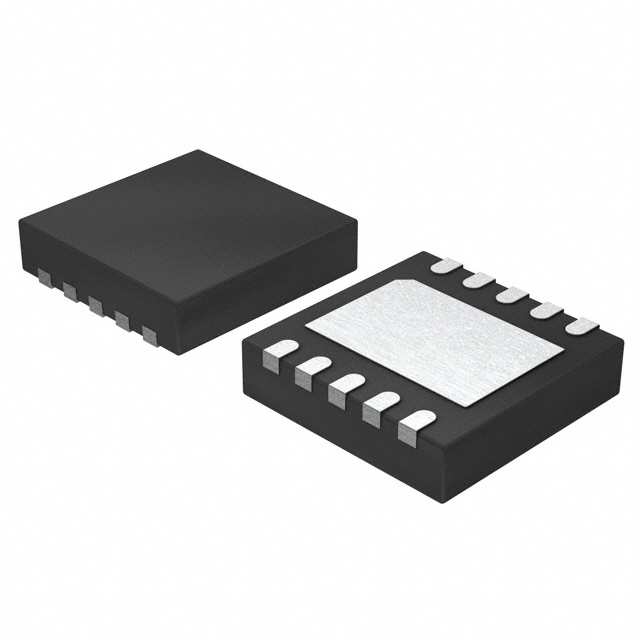
- Part No.:
- MCP73837T-NVI/MF
- Manufacturer:
- Microchip Technology
- Category:
- Battery Chargers
- Package:
- 10-VFDFN Exposed Pad
- Datasheet:
-
 MCP73837T-NVI/MF.pdf
- Description:
- IC BATT CHG LI-ION 1CELL 10DFN
- Quantity:
- Payment:

- Shipping:

Inventory:3,824
Please send an inquiry. Send us your inquiry, and we will respond immediately.
Product details
Overview
MCP73837T-NVI/MF from Microchip Technology is a fully integrated linear Li-ion/Li-polymer battery charge management controller with autonomous AC adapter or USB port source selection, ±0.5% voltage regulation accuracy, 4.20 V fixed charge voltage, thermal regulation, and dual open-drain status outputs - used in portable medical devices and ultra-mobile consumer electronics requiring dual-source charging and battery temperature monitoring.
For engineers reviewing the MCP73837T-NVI/MF datasheet, MCP73837T-NVI/MF pinout, MCP73837T-NVI/MF application, or MCP73837T-NVI/MF equivalent, key selection considerations include its 10-lead 3 mm × 3 mm DFN package, programmable AC charge current (15–1000 mA), USB-selectable 100/500 mA charge rates, integrated reverse discharge protection, and PG output for power-good indication.
Technical Context
The MCP73837T-NVI/MF implements a CC/CV charge algorithm with factory-set 4.20 V regulation, preconditioning for deeply depleted cells, and automatic recharge at 94% of VREG. It uses internal sense-FETs (350 mΩ typical RDS(ON)) and integrates UVLO with separate thresholds for USB (3.45 V start) and AC (4.15 V start) inputs.
Thermal regulation dynamically reduces charge current above die temperature thresholds (150 °C shutdown, 10 °C hysteresis), while the THERM pin supports NTC thermistor biasing via a 50 µA current source. The device includes autonomous power-source arbitration: AC adapter dominates when both VAC and VUSB are present.
Key Specifications
| Parameter | Value and Actual Design Meaning |
|---|---|
| Charge Voltage | 4.20 V ±0.5% - tightly regulated for standard single-cell Li-ion chemistry compliance |
| AC Charge Current Range | 15–1000 mA - set by PROG1 resistor (1–10 kΩ), enabling flexible system-level current scaling |
| USB Charge Current Options | 100 mA (low-power USB) or 500 mA (high-power USB) - selected via PROG2 logic level |
| Operating Temp Range | −40°C to +85°C - qualified for industrial and portable medical device environments |
| Package | 10-lead 3 mm × 3 mm DFN with exposed thermal pad - optimized for compact PCB layouts and thermal dissipation |
| UVLO Thresholds | VSTART = 3.45 V (USB), 4.15 V (AC); hysteresis = 75 mV / 55 mV - prevents oscillation during input brownout |
| Thermal Shutdown | 150°C with 10°C hysteresis - protects IC and battery under high ambient or high-current conditions |
Pinout & Package
Package: 10-lead 3 mm × 3 mm DFN with exposed thermal pad (EP), internally connected to VSS. EP must be soldered to PCB ground plane for thermal and electrical integrity.
| Pin/Terminal | Circuit Role | Design Meaning |
|---|---|---|
| VAC | AC adapter supply input | Accepts 4.3–6 V; dominates over VUSB when both present; requires ≥4.7 µF bypass to VSS |
| VUSB | USB port supply input | Accepts 4.3–6 V; enables 100/500 mA USB charging; requires ≥1 µF bypass to VSS |
| STAT1 | Open-drain charge status output | Active-low during charging; high-Z at completion; drives LED or microcontroller interrupt |
| STAT2 | Open-drain charge status output | Active-low at charge completion; high-Z during charging; complements STAT1 for dual-indicator designs |
| VSS | Ground reference | Common return for battery, inputs, and EP; must connect to exposed thermal pad |
| PROG1 | AC charge current programming input | Resistor-to-VSS sets IREG; floating disables charge; >70 kΩ forces shutdown |
| PROG2 | USB charge current select input | Logic low = 100 mA, high = 500 mA; also sets USB precondition/termination ratios |
| PG | Power-good status output | Open-drain active-low when valid input power detected on VAC or VUSB - unique to MCP73837 variant |
| THERM | Battery temperature monitor | Biased with 50 µA current source; interfaces to NTC thermistor for JEITA-compliant thermal charging control |
| VBAT | Battery positive connection | Direct connection to Li-ion cell anode; requires ≥1 µF capacitor for loop stability when battery disconnected |
Key Features
| Feature | Design Value |
|---|---|
| Autonomous dual-source selection | Eliminates external multiplexing circuitry; AC adapter takes priority over USB without host intervention |
| Integrated reverse discharge protection | Blocks battery-to-input leakage (<0.55 µA in shutdown), preserving battery life when no input power is present |
| Programmable safety timer | Configurable 4/6/8-hour timeout prevents overcharge during CV phase - critical for unattended charging |
| LDO mode for system test | Enables VBAT output regulation independent of battery presence when THERM > VDD − 100 mV |
| Preconditioning enable/disable | Factory-configured threshold (66.5% of VREG) safely recovers deeply discharged cells before fast charge |
Applications
| Smartphones & PDAs | Portable Medical Devices |
|---|---|
Use Scenario: Compact handheld device with dual-input charging (USB for field use, AC for docked operation) and strict battery safety requirements. IC Role / Device Role / Timing Role: MCP73837T-NVI/MF manages full CC/CV charge cycle, monitors battery temperature via NTC, and signals charge status via STAT1/STAT2. Use Value: Enables safe, autonomous charging without MCU supervision; ±0.5% voltage accuracy ensures optimal Li-ion cell longevity. | Use Scenario: Battery-powered glucose meter or pulse oximeter requiring reliable, low-risk charging in clinical and home settings. IC Role / Device Role / Timing Role: MCP73837T-NVI/MF provides JEITA-compliant thermal regulation, automatic recharge, and UVLO-protected input arbitration. Use Value: Prevents unsafe charging outside temperature limits; integrated reverse discharge protection extends shelf life during storage. |
| Ultra-Mobile Devices (UMD) | Digital Cameras |
Use Scenario: Sub-7-inch tablet or detachable keyboard device with space-constrained layout and dual-input flexibility. IC Role / Device Role / Timing Role: MCP73837T-NVI/MF delivers up to 1 A AC charge current, supports USB 2.0 current limits, and reports power-good status via PG pin. Use Value: Reduces BOM count by integrating pass FETs, current sense, and source selection - critical for miniaturized designs. | Use Scenario: DSLR or mirrorless camera with removable Li-ion battery pack and rapid recharge capability via AC adapter or computer USB. IC Role / Device Role / Timing Role: MCP73837T-NVI/MF executes preconditioning for cold batteries, regulates 4.20 V precisely, and terminates charge at 5% IREG. Use Value: Ensures full capacity recovery after deep discharge; thermal regulation avoids overheating during high-current AC charging. |
Equivalent & Alternatives
The following parts are listed as comparable options for similar Li-ion linear charger applications.
| Alternative Part | Technical Difference | Application Difference | Selection Advice |
|---|---|---|---|
| MCP73831T-2ACI/OT | Single-input (USB only), 4.20 V, 500 mA max, SOT-23-5 package | No AC adapter support; lacks PG, STAT2, THERM, and PROG1 programmability | Select when only USB charging is required and board space is extremely limited |
| BQ24075RGTR | 4.20 V, 1.5 A max, integrated LDO, different pinout, no PG output | Higher current capability but no power-good indicator; requires external reverse-blocking MOSFET | Select when higher charge current and integrated LDO are needed, and PG signal is not required |
Compared with MCP73831T-2ACI/OT and BQ24075RGTR, the MCP73837T-NVI/MF uniquely combines dual-input autonomy, PG output, thermal monitoring, and precise 4.20 V regulation in a 3×3 mm DFN - making it optimal for space-constrained, safety-critical dual-source applications.
Availability
MCP73837T-NVI/MF is available at Aetrix Electronics and suitable for smartphones, portable medical devices, and ultra-mobile devices requiring stable component supply, long-term lifecycle support, and RoHS-compliant packaging.
Supply support for MCP73837T-NVI/MF includes scheduled delivery planning, volume procurement assistance, BOM continuity management, traceable sourcing, and lifecycle availability coordination for OEM customers, industrial embedded developers, connected-device designers, and electronics production programs.
Manufacturer
Microchip Technology Inc. is a leading provider of microcontrollers, analog components, and battery management ICs, serving automotive, industrial, and consumer markets with high-reliability silicon solutions.
The MCP73837/8 product line was designed specifically for autonomous, dual-input Li-ion charging in space-constrained portable electronics - emphasizing integration, thermal safety, and JEITA-compliant battery protection.
FAQ
What is the fixed charge voltage of the MCP73837T-NVI/MF?
The MCP73837T-NVI/MF has a factory-set constant-voltage regulation point of 4.20 V with ±0.5% accuracy across −40°C to +85°C. This value is fixed and not user-adjustable; it complies with standard single-cell Li-ion battery specifications and eliminates the need for external voltage-setting resistors.
Does the MCP73837T-NVI/MF support both AC adapter and USB charging simultaneously?
Yes, the MCP73837T-NVI/MF autonomously selects between AC adapter (VAC) and USB (VUSB) inputs. When both are present, VAC takes priority and sets the charge current via PROG1; VUSB is disabled as a power source but remains monitored for fallback if VAC is removed.
How does the MCP73837T-NVI/MF implement battery temperature monitoring?
The MCP73837T-NVI/MF uses its THERM pin to bias a standard 10 kΩ NTC thermistor with a 50 µA current source. Internal comparators detect upper (1.23 V) and lower (0.25 V) trip thresholds, enabling JEITA-compliant charge suspension outside safe temperature ranges - all without external op-amps or ADCs.
What is the function of the PG pin on the MCP73837T-NVI/MF?
The PG (Power-Good) pin on the MCP73837T-NVI/MF is an open-drain output that goes low when either VAC or VUSB supplies valid input power above their respective UVLO thresholds. It provides immediate system-level power-status feedback - a feature absent in the MCP73838 variant and many competing chargers.
Can the MCP73837T-NVI/MF be used without a microcontroller?
Yes, the MCP73837T-NVI/MF operates autonomously: it initiates charging upon valid input detection, executes preconditioning, transitions through CC/CV phases, terminates based on current ratio, and signals status via STAT1, STAT2, and PG. No firmware or host control is required for basic operation.
MCP73837T-NVI/MF Specifications
- Product attributes
- Attribute value
- Manufacturer:
- Microchip Technology
- Series:
- -
- Package/Case:
- 10-VFDFN Exposed Pad
- Packaging:
- Tape & Reel (TR)
- Product Status:
- Active
- Battery Chemistry:
- Lithium Ion/Polymer
- Number of Cells:
- 1
- Current - Charging:
- Constant - Programmable
- Programmable Features:
- -
- Fault Protection:
- Over Voltage
- Charge Current - Max:
- 1.1A
- Battery Pack Voltage:
- 4.35V
- Voltage - Supply (Max):
- 6V
- Interface:
- USB
- Operating Temperature:
- -40°C ~ 85°C (TA)
- Grade:
- -
- Qualification:
- -
- Mounting Type:
- Surface Mount
- Supplier Device Package:
- 10-DFN (3x3)
MCP73837T-NVI/MF FAQ
1.How can I place an order for MCP73837T-NVI/MF through Aetrix?
Please submit a Request for Quotation (RFQ) for MCP73837T-NVI/MF on Aetrix. Our sales agent will provide a competitive quotation and guide you through the order confirmation once you accept the terms.
2.Are the price and stock information for MCP73837T-NVI/MF reliable?
The price and inventory of MCP73837T-NVI/MF are updated periodically and may fluctuate due to market conditions. Stock and pricing data are typically refreshed every 24 hours. Quotation validity for MCP73837T-NVI/MF is usually 5 days.
3.What payment methods are accepted for MCP73837T-NVI/MF?
We accept Wire Transfer, PayPal, Credit Card, Western Union, MoneyGram, and Escrow for MCP73837T-NVI/MF transactions.
Note: Certain payment methods may incur a processing fee.
4.How is shipping managed for MCP73837T-NVI/MF?
MCP73837T-NVI/MF orders can be shipped via leading logistics carriers, including DHL, UPS, FedEx, TNT, or Registered Mail.
Once your MCP73837T-NVI/MF order is processed, you will receive an email with the shipment details and tracking number.
Note: Tracking information may take up to 24 hours to appear. Express delivery typically takes 3–5 business days.
5.How can I obtain technical support or documentation for MCP73837T-NVI/MF?
For technical support, including MCP73837T-NVI/MF datasheets, pinout diagrams, or application guidance, please contact our engineering support team. They can provide detailed documentation and assistance for your MCP73837T-NVI/MF requirements.
6.How does Aetrix verify that MCP73837T-NVI/MF is sourced from the original manufacturer or authorized distributors?
All MCP73837T-NVI/MF products on Aetrix are procured from qualified distributors and authorized channels. Our dedicated quality assurance team conducts strict verification, including traceability checks and, if necessary, third-party testing. This ensures that MCP73837T-NVI/MF meets industry standards.
7.What is the process for return or replacement of MCP73837T-NVI/MF?
All MCP73837T-NVI/MF units undergo pre-shipment inspection (PSI). If there is an issue with MCP73837T-NVI/MF, returns or replacements are accepted under the following conditions:
1.Quantity discrepancies, incorrect items, or visible external defects (such as breakage or corrosion), acknowledged by Aetrix.
2.The issue is reported within 90 days of delivery.
3.The MCP73837T-NVI/MF part is unused and in its original packaging.
Return procedure for MCP73837T-NVI/MF:
1.Submit a request within 90 days.
2.Obtain a Return Material Authorization (RMA) from Aetrix.
MCP73837T-NVI/MF Tags

-
BQ21040DBVR
Texas Instruments
-
MCP73812T-420I/OT
Microchip Technology
-
MCP73831T-2ACI/OT
Microchip Technology
-
MCP73832T-2ACI/OT
Microchip Technology
-
MCP73831T-2DCI/OT
Microchip Technology
-
MCP73832T-2DCI/OT
Microchip Technology
-
MCP73831T-2ATI/OT
Microchip Technology
-
MCP73832T-2ATI/OT
Microchip Technology
-
MCP73831T-5ACI/OT
Microchip Technology
-
MCP73832T-2ACI/MC
Microchip Technology
-
MCP73831T-2ACI/MC
Microchip Technology
-
MCP73831T-2ATI/MC
Microchip Technology
Tech Hub

TTL and CMOS logic families differ in thresholds, loading, output drive, power and timing. This engineering guide compares 74HC and 74HCT, calculates noise margins and checks 3.3 V/5 V compatibility.

A practical engineering guide to 3.3V and 5V logic compatibility, input thresholds, resistor dividers, translator ICs, MOSFET level shifting, I2C pull-ups, timing limits and power-sequencing risks.

The 74HC595 uses push-pull logic outputs, while the TPIC6B595 uses 50 V open-drain DMOS sinks for higher-power loads. This guide compares timing, current limits, 3.3 V interfacing, load wiring, thermal…

The 74HC595 converts serial data into eight stable parallel outputs. This guide covers pin functions, shift and storage timing, OE and MR behavior, drive-current limits, cascading, voltage compatibilit…

A technical comparison of level-sensitive latches and edge-triggered flip-flops, covering timing windows, setup and hold limits, master–slave operation, time borrowing, race-through, HDL inference and…

A D latch stores one bit while Enable controls when data can pass. This reference covers gate-level operation, truth tables, transparency, setup and hold timing, LE versus OE, common ICs and practical …

An SR latch stores one bit through cross-coupled feedback. This engineering reference covers NOR and NAND implementations, truth tables, forbidden-state recovery, gated operation, switch debouncing, fa…

Latch circuits retain one bit through feedback. This technical reference covers SR and D latches, truth tables, transparency, timing limits, latch-versus-flip-flop behavior, applications and common log…

An engineering guide to LED driver operation, constant-current and constant-voltage outputs, linear and switching topologies, dimming, IC selection, calculations, replacement compatibility, and fault c…

Operational amplifier guide covering op amp basics, feedback, ideal vs real op amps, common configurations, buffer circuits, offset, bias current, gain-bandwidth, slew rate, rail-to-rail limits and sel…


