
 My Inquiry
 My Account


Microchip Technology MCP79400T-I/MNY
- Part No.:
- MCP79400T-I/MNY
- Manufacturer:
- Microchip Technology
- Category:
- Real Time Clocks
- Package:
- 8-WFDFN Exposed Pad
- Datasheet:
-
 MCP79400T-I/MNY.pdf
- Description:
- IC RTC CLK/CALENDAR I2C 8TDFN
- Quantity:
- Payment:

- Shipping:

Inventory:4,059
Please send an inquiry. Send us your inquiry, and we will respond immediately.
Product details
Overview
MCP79400T-I/MNY from Microchip Technology is a battery-backed I²C Real-Time Clock/Calendar (RTCC) IC with integrated 64-byte SRAM and unprogrammed 64-bit protected EEPROM. It maintains time across hours, minutes, seconds, day of week, date, month, and year with leap-year compensation to 2399, operates from 1.8V–5.5V, draws just 1.2 µA at 3.3V, and supports dual programmable alarms - used in industrial control panels requiring accurate timestamping during power loss.
For engineers reviewing the MCP79400T-I/MNY datasheet, MCP79400T-I/MNY pinout, MCP79400T-I/MNY application, or MCP79400T-I/MNY equivalent, key selection criteria include its ±1 ppm digital trimming resolution, power-fail timestamp logging, open-drain multifunction pin (MFP) for alarm/square-wave output, I²C interface up to 400 kHz, and TDFN-8 package compatibility with space-constrained embedded designs.
Technical Context
The MCP79400T-I/MNY implements a fully autonomous RTCC using an internal 32.768 kHz oscillator circuit optimized for 6–9 pF crystals, with on-chip digital trimming (±129 ppm range, ±1 ppm resolution) to correct frequency drift. Its timekeeping registers are buffered to prevent rollover errors during reads, and all values are stored in BCD format.
Power management includes automatic switchover between VCC and VBAT (1.3V–5.5V), with dedicated power-fail timestamp registers (PWRDN/PWRUP) that log exact time of backup activation and primary supply restoration. The I²C interface uses two distinct slave addresses: 0xD8/D9 for RTCC/SRAM and 0xA8/A9 for EEPROM, with separate unlock sequences required for protected writes.
Key Specifications
| Parameter | Value and Actual Design Meaning |
|---|---|
| Oscillator Frequency | 32.768 kHz crystal reference; enables precise timekeeping with ±1 ppm trimming resolution |
| Timekeeping Current | 1.2 µA typical at 3.3V VCC; ensures multi-year operation on coin-cell backup |
| Backup Current | 925 nA typical at 3.0V VBAT; sustains RTC + SRAM retention during extended main-power outages |
| I²C Speed | Up to 400 kHz (fast-mode); supports high-throughput register access without bus contention |
| Operating Voltage | 1.8V–5.5V VCC; compatible with both 3.3V and 5V system rails |
| Temperature Range | −40°C to +85°C (Industrial grade); validated for use in factory automation and outdoor metering |
| Memory | 64-byte battery-backed SRAM + 8-byte protected EEPROM; retains configuration and unique IDs across power cycles |
Pinout & Package
Package: 8-pin 2×3 mm TDFN (exposed pad, optional VSS connection).
| Pin/Terminal | Circuit Role | Design Meaning |
|---|---|---|
| X1 | Crystal Input / External Clock Input | Accepts 32.768 kHz crystal or external clock; enables oscillator bypass via EXTOSC bit |
| X2 | Crystal Output | Drives crystal resonator; left floating when external clock mode is active |
| VBAT | Backup Supply Input | Provides power to RTC and SRAM during VCC loss; switchover threshold 1.3–1.7V |
| VSS | Ground Reference | Common return for analog/digital domains; exposed pad may be tied to VSS for thermal relief |
| SDA | I²C Bidirectional Data | Open-drain; requires external pull-up (2 kΩ for 400 kHz); supports ACK/NACK protocol |
| SCL | I²C Clock Input | Master-generated clock; defines timing for data sampling and address recognition |
| MFP | Multifunction Output | Open-drain alarm/square-wave/general-purpose output; configured via CONTROL register bits |
| VCC | Main Power Supply | Primary operating voltage source; powers logic, I²C interface, and oscillator circuitry |
Key Features
| Feature | Design Value |
|---|---|
| Dual Programmable Alarms | Two independent alarms configurable down to second granularity, each with maskable fields (e.g., alarm only on matching hour/day) |
| Power-Fail Timestamp | Automatically logs exact time of VCC dropout and recovery into dedicated PWRDN/PWRUP registers - critical for forensic event analysis |
| Digital Trimming | ±129 ppm adjustment range with ±1 ppm resolution; eliminates need for external load capacitor tuning |
| Protected EEPROM | 8-byte write-protected area requiring unlock sequence; prevents accidental overwrites of MAC-like identifiers or calibration data |
| 12/24-Hour Mode Support | Runtime-selectable time format via RTCHOUR register bit; preserves BCD encoding and leap-year logic regardless of mode |
Applications
| Industrial Control Panel | Smart Energy Meter |
|---|---|
Use Scenario: Time-stamping of PLC-triggered events and operator actions during brownouts or scheduled maintenance. IC Role / Device Role / Timing Role: Primary RTCC with battery-backed SRAM storing last valid state and EEPROM holding firmware version ID. Use Value: Enables deterministic audit trail reconstruction after power interruption, meeting IEC 61000-4-11 compliance requirements. | Use Scenario: Recording energy consumption intervals and tariff-switching events under fluctuating grid conditions. IC Role / Device Role / Timing Role: High-accuracy timebase for billing cycle alignment; MFP drives LED pulse output synchronized to kWh increments. Use Value: Maintains sub-second timing integrity across 10+ year deployments with <1 ppm/year drift after trimming. |
| Medical Infusion Pump | Building Automation Controller |
Use Scenario: Logging drug delivery start/stop times and error events during battery-only operation. IC Role / Device Role / Timing Role: Fail-safe timekeeper retaining therapy session timestamps even if main MCU resets or loses power. Use Value: Provides FDA 21 CFR Part 11-compliant audit logs with tamper-resistant power-fail timestamps. | Use Scenario: Scheduling HVAC setpoint changes and occupancy-based lighting control across seasonal daylight shifts. IC Role / Device Role / Timing Role: Central calendar engine managing weekly/monthly schedules; alarms trigger relay control via MFP. Use Value: Eliminates need for host MCU real-time scheduling overhead, reducing firmware complexity and latency. |
Equivalent & Alternatives
The following parts are listed as comparable options for similar real-time clock/calendar applications.
| Alternative Part | Technical Difference | Application Difference | Selection Advice |
|---|---|---|---|
| DS3231M+ | Integrated TCXO (±2 ppm accuracy); higher quiescent current (1.3 µA vs. 1.2 µA); no protected EEPROM | Better stability over temperature; lacks EEPROM for secure ID storage | Select DS3231M+ when absolute accuracy across −40°C to +85°C is prioritized over EEPROM security |
| PCF8563T | No digital trimming; fixed 32.768 kHz oscillator; 236-byte RAM; no power-fail timestamp registers | Lower cost; insufficient for applications requiring forensic timestamping of power transitions | Choose PCF8563T only for basic timekeeping where power-loss event logging is unnecessary |
Compared with DS3231M+ and PCF8563T, the MCP79400T-I/MNY uniquely combines field-programmable trimming, dedicated power-fail timestamp registers, and protected EEPROM in a single TDFN-8 package - making it optimal for industrial systems requiring traceable, tamper-resistant time and identity management.
Availability
MCP79400T-I/MNY is available at Aetrix Electronics and suitable for industrial control panels, smart energy meters, medical infusion pumps, and building automation controllers requiring stable component supply across long production lifecycles.
Supply support for MCP79400T-I/MNY includes scheduled delivery planning, volume procurement assistance, BOM continuity management, traceable sourcing, and lifecycle availability coordination for OEM customers, industrial embedded developers, connected-device designers, and electronics production programs.
Manufacturer
Microchip Technology is a U.S.-based semiconductor manufacturer specializing in microcontrollers, analog devices, and timing solutions, with a focus on reliability and long-term product availability.
The MCP7940X family is designed for embedded systems needing autonomous, battery-backed timekeeping with data integrity - targeting industrial, medical, and utility metering applications where timestamp accuracy and power-loss resilience are mandatory.
FAQ
What is the oscillator configuration flexibility of the MCP79400T-I/MNY?
The MCP79400T-I/MNY supports both external 32.768 kHz crystal (with X1/X2 pins) and external clock input (via X1 only). Crystal mode uses on-chip digital trimming for ±1 ppm resolution; clock mode disables internal oscillator via EXTOSC bit. Both configurations maintain full timekeeping functionality and power-fail timestamp logging in the MCP79400T-I/MNY.
How does the MCP79400T-I/MNY handle power transitions between VCC and VBAT?
The MCP79400T-I/MNY automatically switches to VBAT when VCC drops below 1.3–1.7V (VTRIP range), preserving RTC registers, 64-byte SRAM, and oscillator operation. It logs exact timestamps of both switchover (PWRDN registers) and recovery (PWRUP registers). The MCP79400T-I/MNY continues timekeeping with 925 nA typical backup current at 3.0V VBAT.
Can the protected EEPROM in the MCP79400T-I/MNY be used for secure device identification?
Yes - the MCP79400T-I/MNY includes 8 bytes (64 bits) of protected EEPROM accessible only after a documented unlock sequence (writing specific values to EEUNLOCK register). This prevents accidental overwrites and makes it suitable for storing EUI-48/EUI-64 equivalents or custom identifiers. Unlike MCP79401/MCP79402, the MCP79400T-I/MNY ships unprogrammed, allowing end-user customization.
What are the I²C addressing and memory map distinctions in the MCP79400T-I/MNY?
The MCP79400T-I/MNY uses two I²C slave addresses: 0xD8/D9 (R/W) for RTCC registers (0x00–0x1F) and SRAM (0x20–0x5F), and 0xA8/A9 (R/W) for protected EEPROM (0xF0–0xF7). Address ranges outside these - including 0x60–0xEF and 0xF8–0xFF - are unimplemented and generate NACK. This separation enforces secure access control in the MCP79400T-I/MNY.
Does the MCP79400T-I/MNY support alarm functionality with flexible masking?
Yes - the MCP79400T-I/MNY features two independent alarms (ALM0/ALM1) with per-field masking bits (e.g., ALM0MSK0–ALM0MSK2). Each alarm can trigger on seconds, minutes, hours, weekday, date, or month - enabling precise event scheduling (e.g., "alarm every Monday at 09:00"). Alarm output is routed to the MFP pin, configurable as open-drain interrupt or square-wave signal in the MCP79400T-I/MNY.
MCP79400T-I/MNY Specifications
- Product attributes
- Attribute value
- Manufacturer:
- Microchip Technology
- Series:
- -
- Package/Case:
- 8-WFDFN Exposed Pad
- Packaging:
- Tape & Reel (TR)
- Product Status:
- Active
- Programmable:
- Not Verified
- Type:
- Clock/Calendar
- Features:
- Alarm, Leap Year, Square Wave Output, SRAM, Unique ID
- Memory Size:
- 64B
- Time Format:
- HH:MM:SS (12/24 hr)
- Date Format:
- YY-MM-DD-dd
- Interface:
- I2C, 2-Wire Serial
- Voltage - Supply:
- 1.8V ~ 5.5V
- Voltage - Supply, Battery:
- 1.3V ~ 5.5V
- Current - Timekeeping (Max):
- 1.2µA (Typ) @ 3.3V
- Operating Temperature:
- -40°C ~ 85°C
- Mounting Type:
- Surface Mount
- Grade:
- -
- Qualification:
- -
- Supplier Device Package:
- 8-TDFN (2x3)
MCP79400T-I/MNY FAQ
1.How can I place an order for MCP79400T-I/MNY through Aetrix?
Please submit a Request for Quotation (RFQ) for MCP79400T-I/MNY on Aetrix. Our sales agent will provide a competitive quotation and guide you through the order confirmation once you accept the terms.
2.Are the price and stock information for MCP79400T-I/MNY reliable?
The price and inventory of MCP79400T-I/MNY are updated periodically and may fluctuate due to market conditions. Stock and pricing data are typically refreshed every 24 hours. Quotation validity for MCP79400T-I/MNY is usually 5 days.
3.What payment methods are accepted for MCP79400T-I/MNY?
We accept Wire Transfer, PayPal, Credit Card, Western Union, MoneyGram, and Escrow for MCP79400T-I/MNY transactions.
Note: Certain payment methods may incur a processing fee.
4.How is shipping managed for MCP79400T-I/MNY?
MCP79400T-I/MNY orders can be shipped via leading logistics carriers, including DHL, UPS, FedEx, TNT, or Registered Mail.
Once your MCP79400T-I/MNY order is processed, you will receive an email with the shipment details and tracking number.
Note: Tracking information may take up to 24 hours to appear. Express delivery typically takes 3–5 business days.
5.How can I obtain technical support or documentation for MCP79400T-I/MNY?
For technical support, including MCP79400T-I/MNY datasheets, pinout diagrams, or application guidance, please contact our engineering support team. They can provide detailed documentation and assistance for your MCP79400T-I/MNY requirements.
6.How does Aetrix verify that MCP79400T-I/MNY is sourced from the original manufacturer or authorized distributors?
All MCP79400T-I/MNY products on Aetrix are procured from qualified distributors and authorized channels. Our dedicated quality assurance team conducts strict verification, including traceability checks and, if necessary, third-party testing. This ensures that MCP79400T-I/MNY meets industry standards.
7.What is the process for return or replacement of MCP79400T-I/MNY?
All MCP79400T-I/MNY units undergo pre-shipment inspection (PSI). If there is an issue with MCP79400T-I/MNY, returns or replacements are accepted under the following conditions:
1.Quantity discrepancies, incorrect items, or visible external defects (such as breakage or corrosion), acknowledged by Aetrix.
2.The issue is reported within 90 days of delivery.
3.The MCP79400T-I/MNY part is unused and in its original packaging.
Return procedure for MCP79400T-I/MNY:
1.Submit a request within 90 days.
2.Obtain a Return Material Authorization (RMA) from Aetrix.
MCP79400T-I/MNY Tags

-
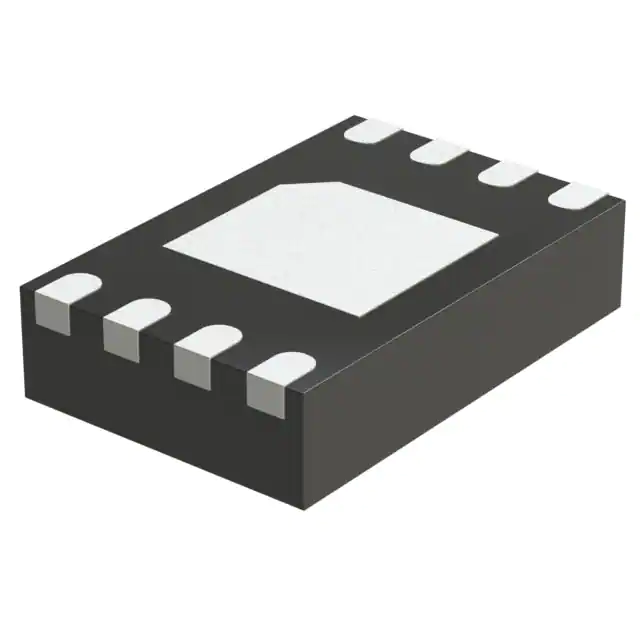
MCP7940N-I/SN
Microchip Technology
-
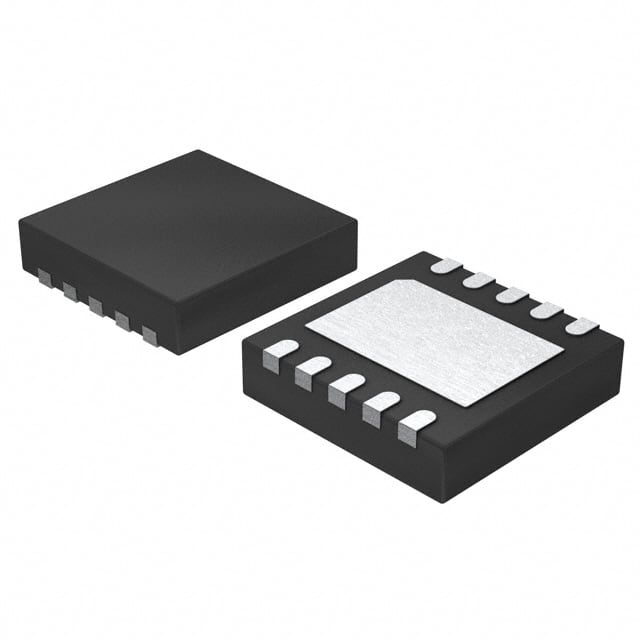
MCP7940MT-I/MNY
Microchip Technology
-
PCF85063ATL/1,118
NXP USA Inc.
-
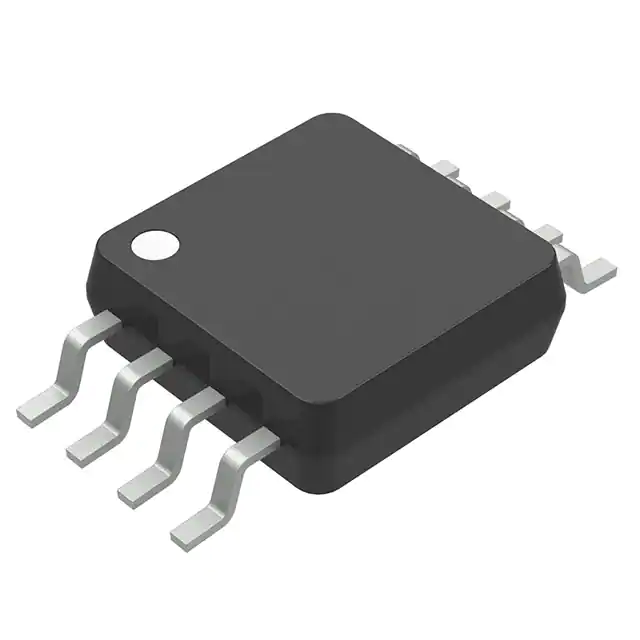
MCP7940NT-I/SN
Microchip Technology
-
MCP7940NT-I/MS
Microchip Technology
-
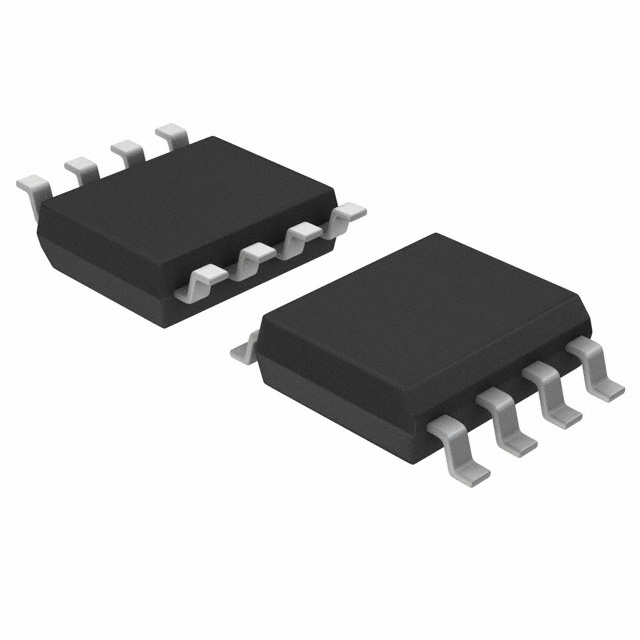
MCP7940N-I/MS
Microchip Technology
-
PCF85063AT/AY
NXP USA Inc.
-
PCF85063TP/1Z
NXP Semiconductors
-
PCF85063ATT/AJ
NXP USA Inc.
-
MCP7940NT-E/SN
Microchip Technology
-
MCP7940NT-I/MNY
Microchip Technology
-
MCP79400T-I/SN
Microchip Technology
Tech Hub

TTL and CMOS logic families differ in thresholds, loading, output drive, power and timing. This engineering guide compares 74HC and 74HCT, calculates noise margins and checks 3.3 V/5 V compatibility.

A practical engineering guide to 3.3V and 5V logic compatibility, input thresholds, resistor dividers, translator ICs, MOSFET level shifting, I2C pull-ups, timing limits and power-sequencing risks.

The 74HC595 uses push-pull logic outputs, while the TPIC6B595 uses 50 V open-drain DMOS sinks for higher-power loads. This guide compares timing, current limits, 3.3 V interfacing, load wiring, thermal…

The 74HC595 converts serial data into eight stable parallel outputs. This guide covers pin functions, shift and storage timing, OE and MR behavior, drive-current limits, cascading, voltage compatibilit…

A technical comparison of level-sensitive latches and edge-triggered flip-flops, covering timing windows, setup and hold limits, master–slave operation, time borrowing, race-through, HDL inference and…

A D latch stores one bit while Enable controls when data can pass. This reference covers gate-level operation, truth tables, transparency, setup and hold timing, LE versus OE, common ICs and practical …

An SR latch stores one bit through cross-coupled feedback. This engineering reference covers NOR and NAND implementations, truth tables, forbidden-state recovery, gated operation, switch debouncing, fa…

Latch circuits retain one bit through feedback. This technical reference covers SR and D latches, truth tables, transparency, timing limits, latch-versus-flip-flop behavior, applications and common log…

An engineering guide to LED driver operation, constant-current and constant-voltage outputs, linear and switching topologies, dimming, IC selection, calculations, replacement compatibility, and fault c…

Operational amplifier guide covering op amp basics, feedback, ideal vs real op amps, common configurations, buffer circuits, offset, bias current, gain-bandwidth, slew rate, rail-to-rail limits and sel…


