
 My Inquiry
 My Account


Microchip Technology MCP79401-I/ST
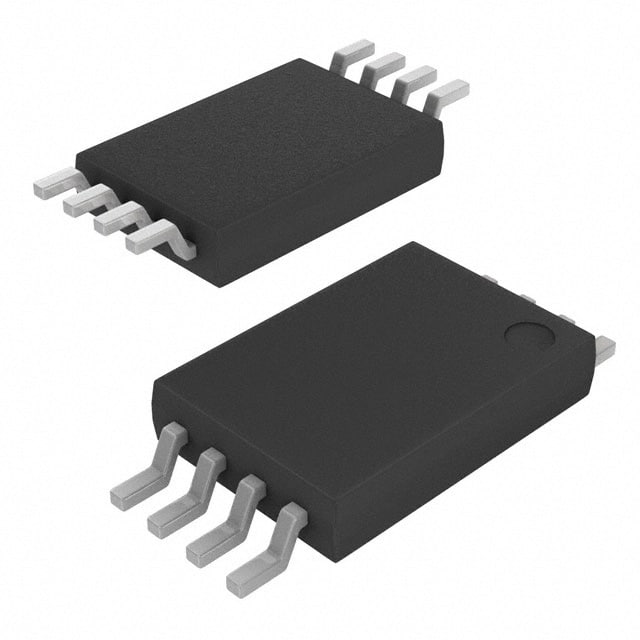
- Part No.:
- MCP79401-I/ST
- Manufacturer:
- Microchip Technology
- Category:
- Real Time Clocks
- Package:
- 8-TSSOP (0.173", 4.40mm Width)
- Datasheet:
-
 MCP79401-I/ST.pdf
- Description:
- IC RTC CLK/CALENDAR I2C 8TSSOP
- Quantity:
- Payment:

- Shipping:

Inventory:370
Please send an inquiry. Send us your inquiry, and we will respond immediately.
Product details
Overview
MCP79401-I/ST from Microchip Technology is a battery-backed I²C Real-Time Clock/Calendar (RTCC) IC with integrated 64-byte SRAM, 8-byte protected EEPROM preprogrammed with EUI-48™ MAC address, digital trimming (±1 ppm resolution), dual alarms, and power-fail timestamping. It operates from 1.8V to 5.5V, draws just 1.2 µA at 3.3V VCC, and maintains timekeeping accuracy across -40°C to +85°C industrial temperature range.
For engineers reviewing the MCP79401-I/ST datasheet, MCP79401-I/ST pinout, MCP79401-I/ST application, or MCP79401-I/ST equivalent, this page delivers verified technical context, exact pin functions, real-world timing use cases, and validated alternative parts for embedded timekeeping, power-loss logging, and secure device identification in industrial control and IoT edge nodes.
Technical Context
The MCP79401-I/ST implements a fully autonomous RTCC subsystem using an internal 32.768 kHz oscillator circuit optimized for 6–9 pF crystals, with on-chip digital trimming (±129 ppm range, ±1 ppm step) to compensate for crystal tolerance and temperature drift. Its I²C interface supports up to 400 kHz clock rate and uses two distinct slave addresses: 0xD8/0xD9 for RTCC/SRAM access and 0xA8/0xA9 for EEPROM operations.
Power management includes automatic switchover between VCC and VBAT at 1.3–1.7 V threshold, with separate timestamps logged for both power-down and power-up events. The multifunction pin (MFP) serves as configurable alarm output, selectable-frequency square-wave generator (32.768 kHz, 1024 Hz, 32 Hz, 1 Hz), or general-purpose open-drain output - all controlled via the CONTROL register.
Key Specifications
| Parameter | Value and Actual Design Meaning |
|---|---|
| Oscillator Frequency | 32.768 kHz fixed crystal frequency; enables precise timekeeping with leap-year compensation through year 2399 |
| Timekeeping Current (VCC) | 1.2 µA typical at 3.3V; allows >10-year operation from coin-cell backup when main supply fails |
| I²C Interface Speed | Up to 400 kHz; supports fast host MCU polling without bus contention in multi-device systems |
| Backup Supply Range | 1.3V to 5.5V; accommodates common Li-MnO₂, silver oxide, or supercapacitor backup sources |
| Digital Trimming Resolution | ±1 ppm per LSB; enables fine-grained calibration to achieve <±5 ppm annual accuracy after factory trim |
| Protected EEPROM Size | 8 bytes preprogrammed with EUI-48™ MAC address; write-protected via unlock sequence to prevent accidental overwrite |
| SRAM Capacity | 64 bytes battery-backed; retains critical runtime data (e.g., fault logs, configuration state) during brownout |
Pinout & Package
Package: 8-pin SOIC (Small Outline Integrated Circuit), 150 mil width, surface-mount, RoHS-compliant.
| Pin/Terminal | Circuit Role | Design Meaning |
|---|---|---|
| X1 | Crystal Input / External Clock Input | Drives internal oscillator with 32.768 kHz crystal; accepts external clock signal when EXTOSC bit is set |
| X2 | Crystal Output | Completes crystal oscillator loop; must be left floating if external clock mode is used |
| VBAT | Battery Backup Supply | Provides continuous power to RTCC and SRAM during VCC loss; switchover threshold 1.3–1.7 V |
| VSS | Ground Reference | Common return path for all analog/digital circuits; requires low-impedance connection to PCB ground plane |
| SDA | I²C Bidirectional Data | Open-drain line requiring external pull-up (2 kΩ @ 400 kHz); supports standard and fast-mode I²C protocols |
| SCL | I²C Clock Input | Master-generated clock synchronizing all read/write transfers; tolerates 1.8–5.5 V logic levels |
| MFP | Multifunction Output | Open-drain alarm/square-wave/GPO pin; configured via CONTROL register bits SQWEN, ALMxEN, OUT |
| VCC | Main Power Supply | Primary operating voltage (1.8–5.5 V); powers I²C interface, trimming logic, and EEPROM programming circuitry |
Key Features
| Feature | Design Value |
|---|---|
| Dual Programmable Alarms | Two independent alarm registers (ALM0/ALM1) support match-on-second-through-month with maskable fields for flexible event scheduling |
| Power-Fail Timestamp | Automatically logs exact time of VCC dropout and restoration into dedicated PWRDN/PWRUP registers for failure analysis |
| EUI-48™ MAC Address | Factory-programmed 48-bit globally unique identifier stored in protected EEPROM; eliminates need for external ID storage |
| On-Chip Digital Trimming | Adjusts oscillator frequency in ±1 ppm steps over ±129 ppm range; enables field calibration without hardware changes |
| Automatic Power Switchover | Seamless transition between VCC and VBAT with no software intervention; preserves time, SRAM, and EEPROM integrity |
Applications
| Smart Energy Metering | Industrial PLC Controller |
|---|---|
Use Scenario: Logging energy consumption intervals and tariff-switching events with precise UTC-aligned timestamps. IC Role / Device Role / Timing Role: Primary timekeeping engine providing accurate calendar date/time, leap-year handling, and power-loss-resilient time stamping. Use Value: Enables regulatory-compliant billing cycles and tamper-proof audit trails by maintaining sub-second time accuracy across mains interruptions. | Use Scenario: Recording machine cycle start/stop times and fault occurrence timestamps during factory automation sequences. IC Role / Device Role / Timing Role: Standalone RTCC managing deterministic time-of-day triggers for motion control sequencing and diagnostic logging. Use Value: Guarantees traceable event history even during brownouts, supporting predictive maintenance and OEE reporting. |
| Medical Infusion Pump | Networked Building Sensor Node |
Use Scenario: Tracking drug delivery duration, dose timing, and battery depletion events in battery-powered therapeutic devices. IC Role / Device Role / Timing Role: Low-power timekeeper with EUI-48™ identity enabling secure device onboarding and synchronized therapy schedules. Use Value: Meets IEC 62304 requirements for time-critical safety logs while extending single-CR2032 battery life beyond 5 years. | Use Scenario: Timestamping environmental readings (temperature/humidity/CO₂) before transmission to cloud gateway. IC Role / Device Role / Timing Role: Time source for data packet timestamping and scheduled wake-up of ultra-low-power microcontroller. Use Value: Eliminates reliance on network time sync (NTP), ensuring consistent local time stamps during Wi-Fi outages or mesh network partitions. |
Equivalent & Alternatives
The following parts are listed as comparable options for similar real-time clock/calendar applications.
| Alternative Part | Technical Difference | Application Difference | Selection Advice |
|---|---|---|---|
| MCP79400-I/ST | No factory-programmed EUI-48™; unprotected EEPROM area; identical RTCC/SRAM functionality and pinout | Lacks built-in MAC address; requires external secure storage or host-based ID assignment | Select when device identity is managed externally and cost sensitivity outweighs EUI-48™ convenience |
| DS3231SN#T&R | Integrated TCXO (±2 ppm accuracy); higher timekeeping current (3 µA); no protected EEPROM or EUI-48™ | Superior accuracy without calibration; no native device ID; different I²C addressing and register map | Select when absolute accuracy is prioritized over secure identity and ultra-low power backup operation |
Compared with MCP79400-I/ST, the MCP79401-I/ST adds factory-programmed EUI-48™ for plug-and-play device identity, while DS3231SN#T&R trades EEPROM and MAC features for superior oscillator stability - making MCP79401-I/ST optimal for secure, low-power, identity-aware embedded systems.
Availability
MCP79401-I/ST is available at Aetrix Electronics and suitable for smart metering, industrial PLCs, medical infusion pumps, and networked sensor nodes requiring stable component supply, long-term lifecycle support, and guaranteed traceable sourcing.
Supply support for MCP79401-I/ST includes scheduled delivery planning, volume procurement assistance, BOM continuity management, traceable sourcing, and lifecycle availability coordination for OEM customers, industrial embedded developers, connected-device designers, and electronics production programs.
Manufacturer
Microchip Technology Inc. is a leading provider of microcontrollers, analog components, and timing solutions, headquartered in Chandler, Arizona, with global design and manufacturing operations.
The MCP7940X product line delivers highly integrated, battery-backed RTC/Calendar ICs designed specifically for industrial, medical, and IoT applications demanding reliable timekeeping, secure device identification, and robust power-fail resilience.
FAQ
What is the primary function of the MCP79401-I/ST?
The MCP79401-I/ST is a battery-backed I²C Real-Time Clock/Calendar IC that maintains accurate time and date (hours, minutes, seconds, day, month, year, weekday) with leap-year compensation through 2399. It integrates 64-byte SRAM, 8-byte protected EEPROM preprogrammed with EUI-48™, dual alarms, digital trimming, and power-fail timestamping - all in a single 8-pin SOIC package. The MCP79401-I/ST serves as a self-contained timing engine for embedded systems requiring persistent, low-power timekeeping.
How does the MCP79401-I/ST handle power loss and recovery?
The MCP79401-I/ST automatically switches to VBAT when VCC drops below 1.3–1.7 V, preserving RTCC operation and SRAM contents. Crucially, it logs exact timestamps for both power-down (PWRDN registers) and power-up (PWRUP registers) events - enabling forensic analysis of brownout duration and system behavior. This dual-timestamp capability is intrinsic to the MCP79401-I/ST and requires no host MCU intervention or additional firmware logic.
What is the significance of the EUI-48™ address in the MCP79401-I/ST?
The MCP79401-I/ST includes 8 bytes of factory-programmed EUI-48™ MAC address in its protected EEPROM, providing a globally unique, immutable hardware identifier. This eliminates the need for external ID storage or host-based provisioning, accelerating device onboarding in IoT networks and simplifying regulatory compliance (e.g., FCC ID linkage). Unlike generic serial numbers, the EUI-48™ format ensures compatibility with IEEE 802 networking standards - a feature exclusive to the MCP79401-I/ST within the MCP7940X family.
Can the MCP79401-I/ST operate with an external clock instead of a crystal?
Yes, the MCP79401-I/ST supports external 32.768 kHz clock input on the X1 pin. When enabled via the EXTOSC bit in the CONTROL register, the internal crystal oscillator is disabled and X2 is left floating. This mode bypasses crystal load capacitance tuning and oscillator startup delays, offering deterministic timing initialization - useful in systems where clock jitter or board layout constraints make crystal placement impractical. All other RTCC functions (alarms, timestamping, SRAM) remain fully operational.
What are the key differences between MCP79401-I/ST and MCP79400-I/ST?
The MCP79401-I/ST and MCP79400-I/ST share identical pinout, RTCC functionality, SRAM, alarms, and power management. The sole functional difference is that the MCP79401-I/ST includes factory-programmed EUI-48™ in its 8-byte protected EEPROM, while the MCP79400-I/ST ships with unprogrammed EEPROM. Both parts support custom EEPROM programming, but only the MCP79401-I/ST guarantees a preassigned, globally unique MAC address - making it ideal for secure, standards-compliant device identity deployment.
MCP79401-I/ST Specifications
- Product attributes
- Attribute value
- Manufacturer:
- Microchip Technology
- Series:
- -
- Package/Case:
- 8-TSSOP (0.173", 4.40mm Width)
- Packaging:
- Tube
- Product Status:
- Active
- Programmable:
- Not Verified
- Type:
- Clock/Calendar
- Features:
- Alarm, Leap Year, Square Wave Output, SRAM, Unique ID
- Memory Size:
- 64B
- Time Format:
- HH:MM:SS (12/24 hr)
- Date Format:
- YY-MM-DD-dd
- Interface:
- I2C, 2-Wire Serial
- Voltage - Supply:
- 1.8V ~ 5.5V
- Voltage - Supply, Battery:
- 1.3V ~ 5.5V
- Current - Timekeeping (Max):
- 1.2µA (Typ) @ 3.3V
- Operating Temperature:
- -40°C ~ 85°C
- Mounting Type:
- Surface Mount
- Grade:
- -
- Qualification:
- -
- Supplier Device Package:
- 8-TSSOP
MCP79401-I/ST FAQ
1.How can I place an order for MCP79401-I/ST through Aetrix?
Please submit a Request for Quotation (RFQ) for MCP79401-I/ST on Aetrix. Our sales agent will provide a competitive quotation and guide you through the order confirmation once you accept the terms.
2.Are the price and stock information for MCP79401-I/ST reliable?
The price and inventory of MCP79401-I/ST are updated periodically and may fluctuate due to market conditions. Stock and pricing data are typically refreshed every 24 hours. Quotation validity for MCP79401-I/ST is usually 5 days.
3.What payment methods are accepted for MCP79401-I/ST?
We accept Wire Transfer, PayPal, Credit Card, Western Union, MoneyGram, and Escrow for MCP79401-I/ST transactions.
Note: Certain payment methods may incur a processing fee.
4.How is shipping managed for MCP79401-I/ST?
MCP79401-I/ST orders can be shipped via leading logistics carriers, including DHL, UPS, FedEx, TNT, or Registered Mail.
Once your MCP79401-I/ST order is processed, you will receive an email with the shipment details and tracking number.
Note: Tracking information may take up to 24 hours to appear. Express delivery typically takes 3–5 business days.
5.How can I obtain technical support or documentation for MCP79401-I/ST?
For technical support, including MCP79401-I/ST datasheets, pinout diagrams, or application guidance, please contact our engineering support team. They can provide detailed documentation and assistance for your MCP79401-I/ST requirements.
6.How does Aetrix verify that MCP79401-I/ST is sourced from the original manufacturer or authorized distributors?
All MCP79401-I/ST products on Aetrix are procured from qualified distributors and authorized channels. Our dedicated quality assurance team conducts strict verification, including traceability checks and, if necessary, third-party testing. This ensures that MCP79401-I/ST meets industry standards.
7.What is the process for return or replacement of MCP79401-I/ST?
All MCP79401-I/ST units undergo pre-shipment inspection (PSI). If there is an issue with MCP79401-I/ST, returns or replacements are accepted under the following conditions:
1.Quantity discrepancies, incorrect items, or visible external defects (such as breakage or corrosion), acknowledged by Aetrix.
2.The issue is reported within 90 days of delivery.
3.The MCP79401-I/ST part is unused and in its original packaging.
Return procedure for MCP79401-I/ST:
1.Submit a request within 90 days.
2.Obtain a Return Material Authorization (RMA) from Aetrix.
MCP79401-I/ST Tags

-
MCP7940N-I/SN
Microchip Technology
-
MCP7940MT-I/MNY
Microchip Technology
-
PCF85063ATL/1,118
NXP USA Inc.
-
MCP7940NT-I/SN
Microchip Technology
-
MCP7940NT-I/MS
Microchip Technology
-
MCP7940N-I/MS
Microchip Technology
-
PCF85063AT/AY
NXP USA Inc.
-
PCF85063TP/1Z
NXP Semiconductors
-
PCF85063ATT/AJ
NXP USA Inc.
-
MCP7940NT-E/SN
Microchip Technology
-
MCP7940NT-I/MNY
Microchip Technology
-
MCP79400T-I/SN
Microchip Technology
Tech Hub

TTL and CMOS logic families differ in thresholds, loading, output drive, power and timing. This engineering guide compares 74HC and 74HCT, calculates noise margins and checks 3.3 V/5 V compatibility.

A practical engineering guide to 3.3V and 5V logic compatibility, input thresholds, resistor dividers, translator ICs, MOSFET level shifting, I2C pull-ups, timing limits and power-sequencing risks.

The 74HC595 uses push-pull logic outputs, while the TPIC6B595 uses 50 V open-drain DMOS sinks for higher-power loads. This guide compares timing, current limits, 3.3 V interfacing, load wiring, thermal…

The 74HC595 converts serial data into eight stable parallel outputs. This guide covers pin functions, shift and storage timing, OE and MR behavior, drive-current limits, cascading, voltage compatibilit…

A technical comparison of level-sensitive latches and edge-triggered flip-flops, covering timing windows, setup and hold limits, master–slave operation, time borrowing, race-through, HDL inference and…

A D latch stores one bit while Enable controls when data can pass. This reference covers gate-level operation, truth tables, transparency, setup and hold timing, LE versus OE, common ICs and practical …

An SR latch stores one bit through cross-coupled feedback. This engineering reference covers NOR and NAND implementations, truth tables, forbidden-state recovery, gated operation, switch debouncing, fa…

Latch circuits retain one bit through feedback. This technical reference covers SR and D latches, truth tables, transparency, timing limits, latch-versus-flip-flop behavior, applications and common log…

An engineering guide to LED driver operation, constant-current and constant-voltage outputs, linear and switching topologies, dimming, IC selection, calculations, replacement compatibility, and fault c…

Operational amplifier guide covering op amp basics, feedback, ideal vs real op amps, common configurations, buffer circuits, offset, bias current, gain-bandwidth, slew rate, rail-to-rail limits and sel…


