
 My Inquiry
 My Account


Microchip Technology MCP79401T-I/SN
- Part No.:
- MCP79401T-I/SN
- Manufacturer:
- Microchip Technology
- Category:
- Real Time Clocks
- Package:
- 8-SOIC (0.154", 3.90mm Width)
- Datasheet:
-
 MCP79401T-I/SN.pdf
- Description:
- IC RTC CLK/CALENDAR I2C 8SOIC
- Quantity:
- Payment:

- Shipping:

Inventory:2,331
Please send an inquiry. Send us your inquiry, and we will respond immediately.
Product details
Overview
MCP79401T-I/SN from Microchip Technology is a battery-backed I²C Real-Time Clock/Calendar (RTCC) IC with integrated 64-byte SRAM, 8-byte protected EEPROM preprogrammed with EUI-48™ MAC address, dual programmable alarms, and digital trimming for ±1 ppm resolution. It operates from 1.8V to 5.5V, draws only 1.2 µA at 3.3V during timekeeping, and supports power-fail timestamp logging - used in industrial metering, embedded controllers, and IoT edge nodes requiring accurate, low-power time stamping.
For engineers reviewing the MCP79401T-I/SN datasheet, MCP79401T-I/SN pinout, MCP79401T-I/SN application, or MCP79401T-I/SN equivalent, key selection criteria include I²C interface compliance (up to 400 kHz), backup current ≤925 nA at 3.0V, 32.768 kHz crystal optimization (6–9 pF), ±129 ppm digital trim range, and TSSOP-8 package compatibility with SOIC/MSOP/TDFN footprints.
Technical Context
The MCP79401T-I/SN implements a fully autonomous RTCC subsystem using an on-chip oscillator control loop with digital frequency trimming applied to a 32.768 kHz external crystal. Its register-mapped architecture separates timekeeping (0x00–0x1F), SRAM (0x20–0x5F), and protected EEPROM (0xF0–0xF7) into distinct I²C address spaces (1101111x and 1010111x), enabling concurrent access isolation.
Power management includes automatic switchover between VCC and VBAT (1.3–5.5V) with timestamp capture on both transition edges, while alarm logic supports independent match conditions across seconds, minutes, hours, date, month, and weekday - all configurable via dedicated ALM0/ALM1 registers with mask bits and interrupt flags.
Key Specifications
| Parameter | Value and Actual Design Meaning |
|---|---|
| I²C Speed | Up to 400 kHz - enables high-throughput configuration and timestamp reads without bus contention in multi-device systems. |
| Timekeeping Current | 1.2 µA at 3.3V - ensures >10-year battery life with typical coin-cell backup in always-on applications. |
| Backup Current | 925 nA at 3.0V - minimizes drain on backup supply during extended mains loss, preserving SRAM and RTC state. |
| Digital Trim Range | ±129 ppm in ±1 ppm steps - allows precise calibration against crystal tolerance and temperature drift without external components. |
| Oscillator Frequency | 32.768 kHz - standard low-power timing reference compatible with industry-standard tuning fork crystals. |
| EEPROM Capacity | 8 bytes preprogrammed with EUI-48™ - provides factory-assigned, tamper-resistant node identity for secure device onboarding. |
| Operating Temp | −40°C to +85°C - qualified for industrial environments including smart grid meters and factory automation controllers. |
Pinout & Package
Package: 8-pin TSSOP (lead-free, RoHS-compliant, 3.0 × 4.4 mm body, 0.65 mm pitch).
| Pin/Terminal | Circuit Role | Design Meaning |
|---|---|---|
| X1 | Crystal Input / External Clock Input | Accepts 32.768 kHz crystal or buffered clock signal; enables oscillator bypass mode when EXTOSC=1. |
| X2 | Crystal Output | Drives crystal resonator; left floating when external clock mode is active. |
| VBAT | Backup Supply Input | Provides power path for RTC and SRAM retention during VCC dropout; switchover threshold 1.3–1.7 V. |
| VSS | Ground Reference | Common return for analog/digital domains; must be low-impedance connection to minimize noise coupling into oscillator. |
| SDA | I²C Bidirectional Data | Open-drain interface requiring external pull-up; supports standard/fast-mode I²C up to 400 kHz. |
| SCL | I²C Clock Input | Master-generated clock synchronizing all register transfers; Schmitt-trigger input for noise immunity. |
| MFP | Multi-Function Output | Configurable as alarm pulse, square-wave clock output (1 Hz to 32.768 kHz), or general-purpose open-drain driver. |
| VCC | Main Power Supply | Primary operating voltage (1.8–5.5 V); powers I²C interface, trimming logic, and EEPROM programming circuitry. |
Key Features
| Feature | Design Value |
|---|---|
| Power-Fail Timestamp | Logs exact time of VCC dropout and restoration in dedicated PWRDN/PWRUP registers - critical for event correlation in energy monitoring. |
| Dual Independent Alarms | Each alarm supports full-time/date masking (seconds through month) and polarity-selectable interrupt assertion on MFP - enables scheduled wake-up or status alerts. |
| Protected EEPROM | 8-byte write-protected area with unlock sequence prevents accidental overwrite; factory-programmed EUI-48™ ensures unique network identity. |
| Leap-Year Compensation | Automatically adjusts calendar through year 2399 - eliminates firmware overhead for date arithmetic in embedded host MCUs. |
| 12/24-Hour Mode Support | Runtime-selectable time format via RTCHOUR register bit - simplifies UI integration across global markets. |
Applications
| Smart Energy Metering | Industrial PLC Controller |
|---|---|
Use Scenario: Accurate timestamping of kWh consumption events and tariff switching during grid outages. IC Role / Device Role / Timing Role: Primary time source maintaining calendar integrity and power-loss timestamps under intermittent AC supply. Use Value: Enables regulatory-compliant billing logs with sub-second accuracy and guaranteed data retention during 10+ second blackouts. | Use Scenario: Synchronizing cyclic I/O scan execution and logging machine fault timestamps across distributed modules. IC Role / Device Role / Timing Role: Standalone RTCC providing deterministic timebase independent of PLC CPU uptime or watchdog resets. Use Value: Ensures traceable event sequencing even after unexpected controller reboots or brownout recovery. |
| Medical Infusion Pump | IoT Edge Gateway |
Use Scenario: Recording drug delivery start/stop times and duration-critical therapy intervals with battery backup. IC Role / Device Role / Timing Role: Fail-safe timekeeper retaining calibrated time and therapy logs during main power removal for maintenance. Use Value: Meets IEC 62304 traceability requirements with auditable power-fail timestamps and tamper-resistant EUI-48™ device ID. | Use Scenario: Aggregating sensor readings with precise UTC-aligned timestamps before cellular/Wi-Fi upload. IC Role / Device Role / Timing Role: Low-power time reference enabling duty-cycled radio operation and synchronized data batching. Use Value: Reduces average system current by >40% versus MCU-based RTC, extending battery life in remote deployments. |
Equivalent & Alternatives
The following parts are listed as comparable options for similar real-time clock/calendar applications.
| Alternative Part | Technical Difference | Application Difference | Selection Advice |
|---|---|---|---|
| MCP79400T-I/SN | No factory-programmed EUI-48™; unprogrammed EEPROM; identical RTC/SRAM/trim/alarm functionality. | Suitable where custom MAC assignment is handled externally or not required. | Select when device identity is managed in firmware or host MCU, reducing cost by $0.12/unit. |
| DS3231M+ | Integrated TCXO (±2 ppm accuracy); higher timekeeping current (3 µA); no protected EEPROM or EUI-48™. | Better accuracy in wide-temperature environments but lacks secure identity storage. | Choose when absolute time accuracy outweighs MAC address needs and backup current budget allows ≥3× higher drain. |
Compared with MCP79400T-I/SN, the MCP79401T-I/SN adds factory-assigned EUI-48™ for plug-and-play network integration; compared with DS3231M+, it trades ±2 ppm TCXO stability for lower power, EEPROM security, and seamless I²C address compatibility in existing Microchip-based designs.
Availability
MCP79401T-I/SN is available at Aetrix Electronics and suitable for industrial metering, medical device logging, and IoT gateway timing applications requiring stable component supply, long-term lifecycle support, and RoHS-compliant packaging.
Supply support for MCP79401T-I/SN includes scheduled delivery planning, volume procurement assistance, BOM continuity management, traceable sourcing, and lifecycle availability coordination for OEM customers, industrial embedded developers, connected-device designers, and electronics production programs.
Manufacturer
Microchip Technology Inc. is a leading provider of microcontrollers, analog devices, and timing solutions, headquartered in Chandler, Arizona, with global design and manufacturing operations.
The MCP7940X product line delivers highly integrated, low-power RTC/Calendar ICs with embedded memory and alarm functions - designed specifically for resource-constrained embedded systems needing reliable, battery-backed timekeeping without MCU intervention.
FAQ
What is the primary function of the MCP79401T-I/SN?
The MCP79401T-I/SN is a battery-backed I²C Real-Time Clock/Calendar IC that maintains accurate time and date (including leap-year compensation through 2399), stores 64 bytes of SRAM and 8 bytes of protected EEPROM preprogrammed with EUI-48™, and supports dual programmable alarms. It serves as a standalone timing peripheral in systems where host MCU resources are limited or power efficiency is critical.
Does the MCP79401T-I/SN require external load capacitors for its 32.768 kHz crystal?
Yes, the MCP79401T-I/SN requires external load capacitors on X1 and X2 pins to match the crystal's specified load capacitance (6–9 pF). The device does not integrate load capacitance; CX1 and CX2 values must be selected per Equation 5-1 in the datasheet to ensure stable oscillation and meet ±129 ppm trim range specifications.
How does the power-fail timestamp feature work in the MCP79401T-I/SN?
The MCP79401T-I/SN automatically logs the exact time of VCC dropout (in PWRDN registers) and VCC restoration (in PWRUP registers) using internal counters. This occurs during switchover between main and backup power, with timestamps stored in BCD format and accessible via I²C - enabling forensic analysis of power events without host MCU involvement.
Can the MCP79401T-I/SN operate using an external clock instead of a crystal?
Yes, the MCP79401T-I/SN supports external 32.768 kHz clock input on the X1 pin when the EXTOSC bit in the CONTROL register is set. In this mode, X2 is left floating, and the internal crystal oscillator circuit is disabled - useful when system-level clock distribution eliminates need for discrete crystal placement.
What is the significance of the EUI-48™ address in the MCP79401T-I/SN?
The MCP79401T-I/SN has 8 bytes of protected EEPROM preprogrammed with a globally unique EUI-48™ MAC address, compliant with IEEE 802 standards. This enables zero-touch network onboarding in IoT gateways and industrial controllers, eliminating manual MAC provisioning and ensuring cryptographic binding between hardware identity and firmware credentials.
MCP79401T-I/SN Specifications
- Product attributes
- Attribute value
- Manufacturer:
- Microchip Technology
- Series:
- -
- Package/Case:
- 8-SOIC (0.154", 3.90mm Width)
- Packaging:
- Tape & Reel (TR)
- Product Status:
- Active
- Programmable:
- Not Verified
- Type:
- Clock/Calendar
- Features:
- Alarm, Leap Year, Square Wave Output, SRAM, Unique ID
- Memory Size:
- 64B
- Time Format:
- HH:MM:SS (12/24 hr)
- Date Format:
- YY-MM-DD-dd
- Interface:
- I2C, 2-Wire Serial
- Voltage - Supply:
- 1.8V ~ 5.5V
- Voltage - Supply, Battery:
- 1.3V ~ 5.5V
- Current - Timekeeping (Max):
- 1.2µA (Typ) @ 3.3V
- Operating Temperature:
- -40°C ~ 85°C
- Mounting Type:
- Surface Mount
- Grade:
- -
- Qualification:
- -
- Supplier Device Package:
- 8-SOIC
MCP79401T-I/SN FAQ
1.How can I place an order for MCP79401T-I/SN through Aetrix?
Please submit a Request for Quotation (RFQ) for MCP79401T-I/SN on Aetrix. Our sales agent will provide a competitive quotation and guide you through the order confirmation once you accept the terms.
2.Are the price and stock information for MCP79401T-I/SN reliable?
The price and inventory of MCP79401T-I/SN are updated periodically and may fluctuate due to market conditions. Stock and pricing data are typically refreshed every 24 hours. Quotation validity for MCP79401T-I/SN is usually 5 days.
3.What payment methods are accepted for MCP79401T-I/SN?
We accept Wire Transfer, PayPal, Credit Card, Western Union, MoneyGram, and Escrow for MCP79401T-I/SN transactions.
Note: Certain payment methods may incur a processing fee.
4.How is shipping managed for MCP79401T-I/SN?
MCP79401T-I/SN orders can be shipped via leading logistics carriers, including DHL, UPS, FedEx, TNT, or Registered Mail.
Once your MCP79401T-I/SN order is processed, you will receive an email with the shipment details and tracking number.
Note: Tracking information may take up to 24 hours to appear. Express delivery typically takes 3–5 business days.
5.How can I obtain technical support or documentation for MCP79401T-I/SN?
For technical support, including MCP79401T-I/SN datasheets, pinout diagrams, or application guidance, please contact our engineering support team. They can provide detailed documentation and assistance for your MCP79401T-I/SN requirements.
6.How does Aetrix verify that MCP79401T-I/SN is sourced from the original manufacturer or authorized distributors?
All MCP79401T-I/SN products on Aetrix are procured from qualified distributors and authorized channels. Our dedicated quality assurance team conducts strict verification, including traceability checks and, if necessary, third-party testing. This ensures that MCP79401T-I/SN meets industry standards.
7.What is the process for return or replacement of MCP79401T-I/SN?
All MCP79401T-I/SN units undergo pre-shipment inspection (PSI). If there is an issue with MCP79401T-I/SN, returns or replacements are accepted under the following conditions:
1.Quantity discrepancies, incorrect items, or visible external defects (such as breakage or corrosion), acknowledged by Aetrix.
2.The issue is reported within 90 days of delivery.
3.The MCP79401T-I/SN part is unused and in its original packaging.
Return procedure for MCP79401T-I/SN:
1.Submit a request within 90 days.
2.Obtain a Return Material Authorization (RMA) from Aetrix.
MCP79401T-I/SN Tags

-
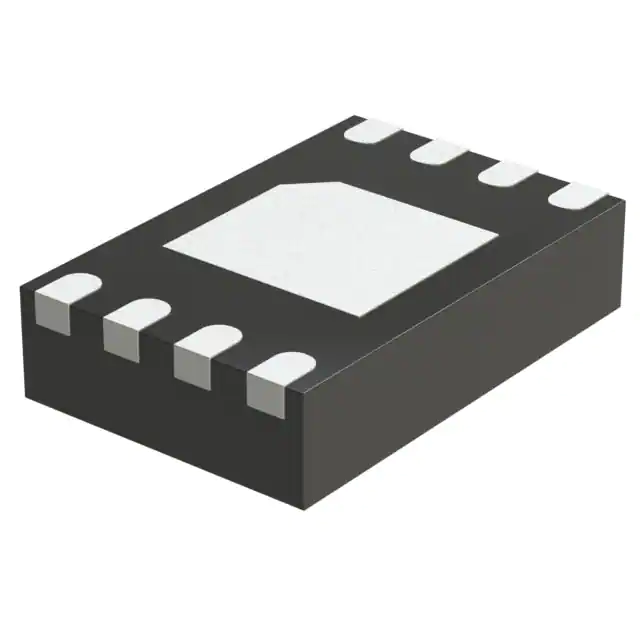
MCP7940N-I/SN
Microchip Technology
-
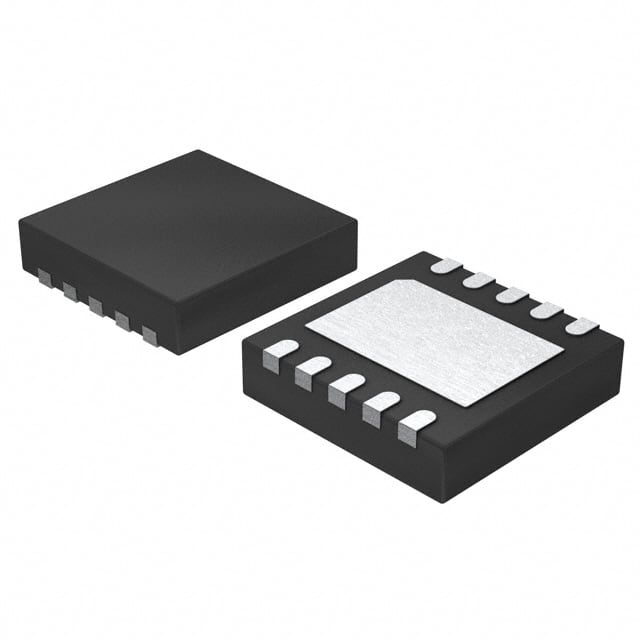
MCP7940MT-I/MNY
Microchip Technology
-
PCF85063ATL/1,118
NXP USA Inc.
-
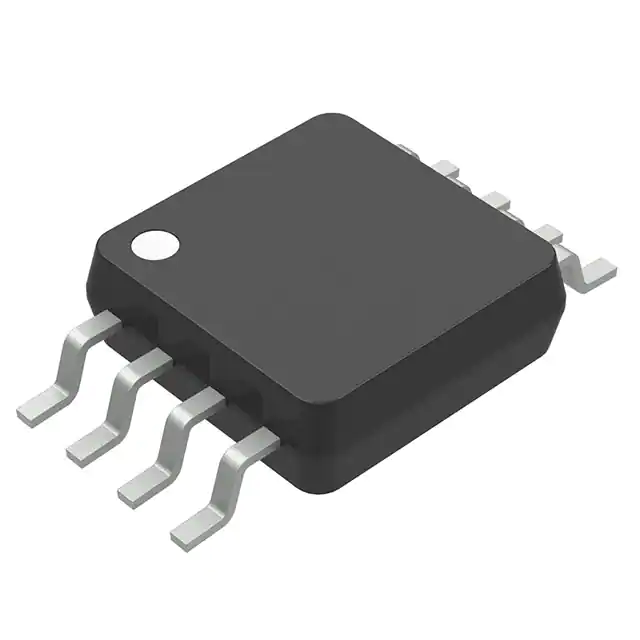
MCP7940NT-I/SN
Microchip Technology
-
MCP7940NT-I/MS
Microchip Technology
-
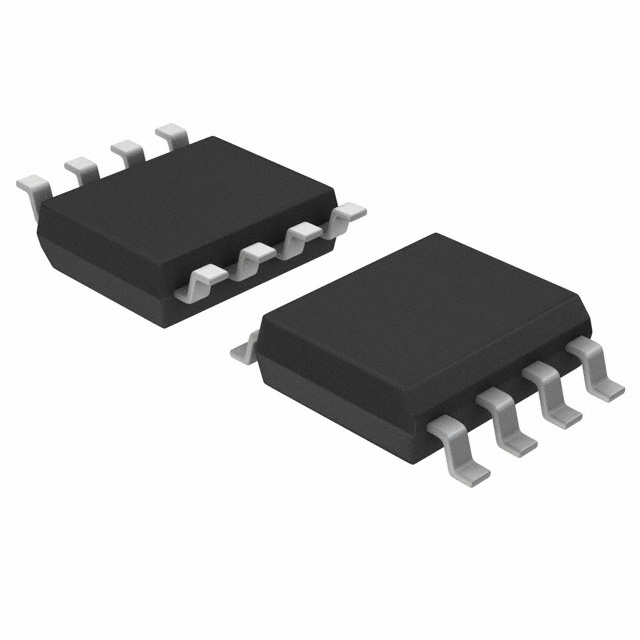
MCP7940N-I/MS
Microchip Technology
-
PCF85063AT/AY
NXP USA Inc.
-
PCF85063TP/1Z
NXP Semiconductors
-
PCF85063ATT/AJ
NXP USA Inc.
-
MCP7940NT-E/SN
Microchip Technology
-
MCP7940NT-I/MNY
Microchip Technology
-
MCP79400T-I/SN
Microchip Technology
Tech Hub

TTL and CMOS logic families differ in thresholds, loading, output drive, power and timing. This engineering guide compares 74HC and 74HCT, calculates noise margins and checks 3.3 V/5 V compatibility.

A practical engineering guide to 3.3V and 5V logic compatibility, input thresholds, resistor dividers, translator ICs, MOSFET level shifting, I2C pull-ups, timing limits and power-sequencing risks.

The 74HC595 uses push-pull logic outputs, while the TPIC6B595 uses 50 V open-drain DMOS sinks for higher-power loads. This guide compares timing, current limits, 3.3 V interfacing, load wiring, thermal…

The 74HC595 converts serial data into eight stable parallel outputs. This guide covers pin functions, shift and storage timing, OE and MR behavior, drive-current limits, cascading, voltage compatibilit…

A technical comparison of level-sensitive latches and edge-triggered flip-flops, covering timing windows, setup and hold limits, master–slave operation, time borrowing, race-through, HDL inference and…

A D latch stores one bit while Enable controls when data can pass. This reference covers gate-level operation, truth tables, transparency, setup and hold timing, LE versus OE, common ICs and practical …

An SR latch stores one bit through cross-coupled feedback. This engineering reference covers NOR and NAND implementations, truth tables, forbidden-state recovery, gated operation, switch debouncing, fa…

Latch circuits retain one bit through feedback. This technical reference covers SR and D latches, truth tables, transparency, timing limits, latch-versus-flip-flop behavior, applications and common log…

An engineering guide to LED driver operation, constant-current and constant-voltage outputs, linear and switching topologies, dimming, IC selection, calculations, replacement compatibility, and fault c…

Operational amplifier guide covering op amp basics, feedback, ideal vs real op amps, common configurations, buffer circuits, offset, bias current, gain-bandwidth, slew rate, rail-to-rail limits and sel…


