
 My Inquiry
 My Account


Microchip Technology MCP98242T-BE/ST
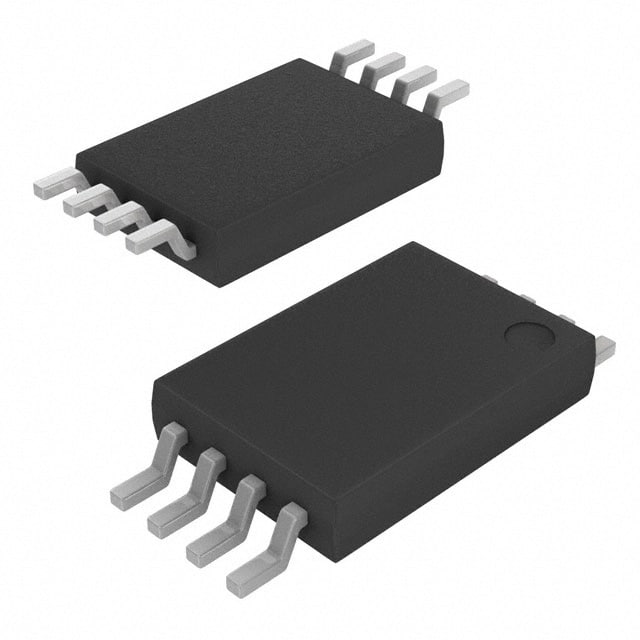
- Part No.:
- MCP98242T-BE/ST
- Manufacturer:
- Microchip Technology
- Category:
- Thermal Management
- Package:
- 8-TSSOP (0.173", 4.40mm Width)
- Datasheet:
-
 MCP98242T-BE/ST.pdf
- Description:
- IC MEMORY MOD TEMP SENSOR 8TSSOP
- Quantity:
- Payment:

- Shipping:

Inventory:4,707
Please send an inquiry. Send us your inquiry, and we will respond immediately.
Product details
Overview
MCP98242T-BE/ST from Microchip Technology is a JEDEC JC42.4-compliant digital temperature sensor with integrated 256-byte serial EEPROM, optimized for DDR memory module SPD applications. It delivers ±0.5°C typical accuracy from +75°C to +95°C, operates from 3.0V to 3.6V, draws 200 µA typical active current and 3 µA max shutdown current, and interfaces via I²C/SMBus. It is deployed in DIMM modules for real-time thermal monitoring and vendor data storage.
For engineers reviewing the MCP98242T-BE/ST datasheet, MCP98242T-BE/ST pinout, MCP98242T-BE/ST application, or MCP98242T-BE/ST equivalent, key selection criteria include JEDEC JC42.4 compliance, 0.25°C resolution capability, programmable event boundaries (TUPPER/TLOWER/TCRIT), permanent/software write-protect EEPROM, and open-drain Event output polarity configuration for thermostat or interrupt use.
Technical Context
The MCP98242T-BE/ST integrates a band-gap temperature sensor and ΔΣ ADC with user-programmable registers for boundary hysteresis, shutdown mode, and event output configuration (comparator/interrupt/critical). Its EEPROM is partitioned into permanently or reversibly write-protected lower 128 bytes (00h–7Fh) for SPD data and unprotected upper 128 bytes (80h–FFh) for general storage.
It implements SMBus/I²C Standard Mode timing (10–100 kHz), supports up to eight devices on one bus via A2/A1/A0 address pins, and features a 40 ms serial interface timeout for the temperature sensor (not EEPROM). The Event pin is open-drain with 0.4 V max VOL at 3 mA and 1 µA max IOH.
Key Specifications
| Parameter | Value and Actual Design Meaning |
|---|---|
| Temperature Range | −40°C to +125°C operating; −20°C to +125°C specified accuracy range |
| Accuracy | ±0.5°C typ. / ±1°C max. from +75°C to +95°C per JEDEC JC42.4 |
| Resolution | Configurable down to 0.0625°C; default 0.25°C/bit for fine thermal control |
| Supply Voltage | 3.0V to 3.6V - matches DDR SPD power rail; 2.3V POR threshold ensures reliable startup |
| Active Current | 200 µA typical - enables low-power thermal monitoring in always-on DIMM subsystems |
| Shutdown Current | ≤3 µA maximum - preserves system-level power budget during idle periods |
| EEPROM Size | 256 bytes organized as 256×8 - sufficient for full JEDEC SPD byte map plus vendor extensions |
Pinout & Package
Package: 8-pin TDFN (2 mm × 3 mm, exposed thermal pad). Pin 9 (EP) is internally connected to GND and must be soldered to PCB ground plane for thermal and electrical integrity.
| Pin/Terminal | Circuit Role | Design Meaning |
|---|---|---|
| A0 | Slave Address LSB | Configures device I²C address bit 0; tied high/low to select among 8 possible addresses (0011xxx) |
| A1 | Slave Address MSB-1 | Configures device I²C address bit 1; enables multi-drop SPD bus with up to 8 MCP98242T-BE/ST units |
| A2 | Slave Address MSB-2 | Configures device I²C address bit 2; required for DIMM modules sharing same SMBus segment |
| GND | Ground Reference | System return path for analog sensor, digital logic, and EP thermal dissipation |
| SDA | Bidirectional Data Line | I²C/SMBus data channel; requires external pull-up; supports ACK/NAK and repeated start protocols |
| SCLK | Clock Input | Master-generated clock; defines timing for all register reads/writes and EEPROM access |
| Event | Open-Drain Alert Output | Asserts on temperature violation; configurable as active-high comparator, active-low interrupt, or critical-only signal |
| VDD | Power Supply | 3.0–3.6V input; powers both sensor and EEPROM; includes internal POR circuitry |
Key Features
| Feature | Design Value |
|---|---|
| JEDEC JC42.4 Compliance | Fully satisfies mobile platform memory thermal sensor requirements for DDR2/DDR3 DIMMs |
| Programmable Event Boundaries | TUPPER/TLOWER/TCRIT registers enable custom thermal trip points with hysteresis (0°C–6°C) |
| SPD-Optimized EEPROM | Lower 128 bytes support permanent (PWP) or software-reversible (SWP) write-protection for JEDEC SPD data integrity |
| Flexible Event Output Mode | Configurable as thermostat comparator (active-high/low) or microprocessor interrupt with status flag |
| Low-Power Shutdown | Halts temperature conversion while retaining register state and EEPROM accessibility |
Applications
| DIMM Thermal Monitoring | Server Memory Subsystem |
|---|---|
Use Scenario: Real-time ambient temperature tracking on DDR3/DDR4 memory modules during high-load compute cycles. IC Role / Device Role / Timing Role: Primary JEDEC-compliant thermal sensor providing SPD-accessible temperature data to memory controller or BMC. Use Value: Enables dynamic memory throttling before thermal derating occurs, preserving data integrity and system uptime. | Use Scenario: Multi-DIMM thermal coordination in dual-socket servers where memory temperature affects CPU power management. IC Role / Device Role / Timing Role: Distributed temperature node feeding aggregated thermal metrics to platform firmware via SMBus. Use Value: Supports precise per-module thermal profiling, reducing conservative system-wide throttling and improving performance density. |
| Laptop Memory Management | Industrial Embedded Memory Modules |
Use Scenario: Compact DDR3L DIMMs in fanless ultrabooks requiring silent thermal regulation without airflow dependency. IC Role / Device Role / Timing Role: Standalone SPD-integrated sensor enabling OS-level thermal awareness and adaptive DRAM refresh rate control. Use Value: Extends battery life by minimizing unnecessary refresh overhead while preventing thermal-induced bit errors. | Use Scenario: Ruggedized memory modules deployed in industrial PCs operating continuously at 70°C ambient. IC Role / Device Role / Timing Role: High-reliability SPD companion storing calibrated thermal offset data and vendor-specific revision info. Use Value: Ensures traceable thermal calibration across production batches and field upgrades via protected EEPROM space. |
Equivalent & Alternatives
The following parts are listed as comparable options for similar temperature-sensing-with-SPD-EEPROM applications.
| Alternative Part | Technical Difference | Application Difference | Selection Advice |
|---|---|---|---|
| AT30TS74-MA8Y | ±0.5°C accuracy over 0°C–+85°C only; no TCRIT register; 128-byte EEPROM | Limited to commercial-temperature DIMMs; lacks critical trip functionality required for server-grade SPD | Select when JEDEC JC42.4 compliance and extended +125°C operation are not required |
| LM75BIMM/NOPB | Standalone temperature sensor only; no EEPROM; ±2°C accuracy; 8-pin MSOP package | Requires external EEPROM for SPD; increases BOM count and layout complexity on memory modules | Choose only if SPD functionality is handled separately and cost-per-node is prioritized over integration |
Compared with AT30TS74-MA8Y and LM75BIMM/NOPB, the MCP98242T-BE/ST uniquely combines JEDEC JC42.4 compliance, full 256-byte SPD EEPROM with write-protection, and three independent programmable trip thresholds - making it the only single-chip solution qualified for DDR3/DDR4 server and industrial DIMM thermal management.
Availability
MCP98242T-BE/ST is available at Aetrix Electronics and suitable for DIMM modules, server memory subsystems, and industrial embedded memory applications requiring stable component supply, JEDEC-compliant thermal sensing, and SPD EEPROM integration.
Supply support for MCP98242T-BE/ST includes scheduled delivery planning, volume procurement assistance, BOM continuity management, traceable sourcing, and lifecycle availability coordination for OEM customers, industrial embedded developers, connected-device designers, and electronics production programs.
Manufacturer
Microchip Technology Inc. is a leading provider of microcontrollers, analog components, and connectivity solutions, serving automotive, industrial, and computing markets with high-reliability silicon.
The MCP98242 product line was designed specifically for JEDEC JC42.4-compliant memory module thermal monitoring and Serial Presence Detect (SPD) data storage, targeting DDR2/DDR3/DDR4 DIMM manufacturers.
FAQ
What is the primary application domain for the MCP98242T-BE/ST?
The MCP98242T-BE/ST is engineered for DDR memory modules compliant with JEDEC JC42.4 specifications. It serves as both a precision temperature sensor and SPD EEPROM in DIMMs used in laptops, servers, and industrial PCs. Its integrated 256-byte EEPROM stores vendor ID, memory timing parameters, and thermal calibration data, while its ±0.5°C accuracy in the +75°C to +95°C range meets strict thermal monitoring requirements for modern DRAM operation. The MCP98242T-BE/ST is not intended for general-purpose temperature sensing outside SPD-constrained environments.
Does the MCP98242T-BE/ST support I²C Fast Mode or only Standard Mode?
The MCP98242T-BE/ST supports I²C Standard Mode only, with a maximum clock frequency of 100 kHz as specified in its timing diagram. It does not support Fast Mode (400 kHz) or Fast Mode Plus (1 MHz). This limitation aligns with SMBus 2.0 compliance and ensures robust communication in electrically noisy DIMM environments. The device implements a 40 ms serial interface timeout for the temperature sensor block, and its SDA/SCL DC characteristics (VIH = 2.1 V min, VOL = 0.4 V max at 3 mA) are validated for 3.0–3.6 V operation. Using the MCP98242T-BE/ST above 100 kHz may result in unreliable register access or EEPROM writes.
How is EEPROM write protection implemented on the MCP98242T-BE/ST?
The MCP98242T-BE/ST implements two distinct EEPROM write-protection mechanisms: Permanent Write-Protection (PWP) and Software Reversible Write-Protection (SWP), both applicable to the lower 128 bytes (addresses 00h–7Fh). PWP is activated by applying 8–12 V to the A0 pin, which irreversibly locks those bytes. SWP is controlled via internal register bits and can be toggled in-system using standard I²C commands. The upper 128 bytes (80h–FFh) remain fully writable with no protection. This architecture allows DIMM vendors to lock critical SPD fields (e.g., manufacturer ID, memory type) while retaining flexibility for runtime-calibrated thermal offsets or firmware version stamps stored in the upper block - a feature essential for field-upgradable memory modules.
Can the MCP98242T-BE/ST operate outside the 3.0V–3.6V supply range?
No, the MCP98242T-BE/ST is specified and characterized exclusively for 3.0V to 3.6V operation. Its Power-on Reset (POR) threshold is 2.3V for the temperature sensor and 1.6V for the EEPROM, but functional operation below 3.0V is not guaranteed. Electrical characteristics - including accuracy (±0.5°C), conversion time (65–125 ms), and I²C timing - are validated only within the 3.0–3.6V window. Operating the MCP98242T-BE/ST at 2.9V or 3.7V risks degraded accuracy, increased shutdown current, or communication failures. For systems with wider voltage rails, an LDO regulator must be used to deliver a stable 3.3V ±0.3V supply to the MCP98242T-BE/ST's VDD pin.
What thermal response time does the MCP98242T-BE/ST exhibit in its TDFN package?
In its 8-pin TDFN-8 (2 mm × 3 mm) package, the MCP98242T-BE/ST achieves a thermal response time (tRES) of 0.7 seconds to reach 63% of final temperature when transitioning from 25°C air to 125°C oil bath. This value is measured under standardized conditions and reflects the combined thermal mass and conductivity of the die, package, and exposed pad (EP). The EP must be soldered to a PCB ground plane to achieve this spec; omitting EP connection degrades thermal response and increases junction-to-ambient resistance (θJA = 41°C/W with EP, vs. >100°C/W without). This rapid response enables timely detection of thermal transients in high-speed memory subsystems, supporting proactive throttling before DRAM reliability limits are breached.
MCP98242T-BE/ST Specifications
- Product attributes
- Attribute value
- Manufacturer:
- Microchip Technology
- Series:
- -
- Package/Case:
- 8-TSSOP (0.173", 4.40mm Width)
- Packaging:
- Tape & Reel (TR)
- Product Status:
- Obsolete
- Function:
- Temp Monitoring System (Sensor), DIMM DDR Memory
- Sensor Type:
- Internal
- Sensing Temperature:
- -40°C ~ 125°C
- Accuracy:
- ±3°C(Max)
- Topology:
- ADC (Sigma Delta), Register Bank
- Output Type:
- I2C/SMBus
- Output Alarm:
- Yes
- Output Fan:
- Yes
- Voltage - Supply:
- 3V ~ 3.6V
- Operating Temperature:
- -40°C ~ 125°C
- Grade:
- -
- Qualification:
- -
- Mounting Type:
- Surface Mount
- Supplier Device Package:
- 8-TSSOP
MCP98242T-BE/ST FAQ
1.How can I place an order for MCP98242T-BE/ST through Aetrix?
Please submit a Request for Quotation (RFQ) for MCP98242T-BE/ST on Aetrix. Our sales agent will provide a competitive quotation and guide you through the order confirmation once you accept the terms.
2.Are the price and stock information for MCP98242T-BE/ST reliable?
The price and inventory of MCP98242T-BE/ST are updated periodically and may fluctuate due to market conditions. Stock and pricing data are typically refreshed every 24 hours. Quotation validity for MCP98242T-BE/ST is usually 5 days.
3.What payment methods are accepted for MCP98242T-BE/ST?
We accept Wire Transfer, PayPal, Credit Card, Western Union, MoneyGram, and Escrow for MCP98242T-BE/ST transactions.
Note: Certain payment methods may incur a processing fee.
4.How is shipping managed for MCP98242T-BE/ST?
MCP98242T-BE/ST orders can be shipped via leading logistics carriers, including DHL, UPS, FedEx, TNT, or Registered Mail.
Once your MCP98242T-BE/ST order is processed, you will receive an email with the shipment details and tracking number.
Note: Tracking information may take up to 24 hours to appear. Express delivery typically takes 3–5 business days.
5.How can I obtain technical support or documentation for MCP98242T-BE/ST?
For technical support, including MCP98242T-BE/ST datasheets, pinout diagrams, or application guidance, please contact our engineering support team. They can provide detailed documentation and assistance for your MCP98242T-BE/ST requirements.
6.How does Aetrix verify that MCP98242T-BE/ST is sourced from the original manufacturer or authorized distributors?
All MCP98242T-BE/ST products on Aetrix are procured from qualified distributors and authorized channels. Our dedicated quality assurance team conducts strict verification, including traceability checks and, if necessary, third-party testing. This ensures that MCP98242T-BE/ST meets industry standards.
7.What is the process for return or replacement of MCP98242T-BE/ST?
All MCP98242T-BE/ST units undergo pre-shipment inspection (PSI). If there is an issue with MCP98242T-BE/ST, returns or replacements are accepted under the following conditions:
1.Quantity discrepancies, incorrect items, or visible external defects (such as breakage or corrosion), acknowledged by Aetrix.
2.The issue is reported within 90 days of delivery.
3.The MCP98242T-BE/ST part is unused and in its original packaging.
Return procedure for MCP98242T-BE/ST:
1.Submit a request within 90 days.
2.Obtain a Return Material Authorization (RMA) from Aetrix.
MCP98242T-BE/ST Tags
-
EMC2101-ACZL-TR
Microchip Technology
-
MCP9844T-BE/MNY
Microchip Technology
-
EMC2101-R-ACZL-TR
Microchip Technology
-
MCP98244T-BE/MNY
Microchip Technology

-
TC670ECHTR
Microchip Technology
-
SE98ATP,547
NXP Semiconductors
-
AMC6821SDBQR
Texas Instruments

-
MAX6604AATA+T
Analog Devices Inc./Maxim Integrated
-
ADT7475ARQZ-REEL
onsemi
-
MAX6643LBBAEE+
Analog Devices Inc./Maxim Integrated
-
MAX6684ESA+T
Analog Devices Inc./Maxim Integrated
-
MAX6639AEE+
Analog Devices Inc./Maxim Integrated
Tech Hub

TTL and CMOS logic families differ in thresholds, loading, output drive, power and timing. This engineering guide compares 74HC and 74HCT, calculates noise margins and checks 3.3 V/5 V compatibility.

A practical engineering guide to 3.3V and 5V logic compatibility, input thresholds, resistor dividers, translator ICs, MOSFET level shifting, I2C pull-ups, timing limits and power-sequencing risks.

The 74HC595 uses push-pull logic outputs, while the TPIC6B595 uses 50 V open-drain DMOS sinks for higher-power loads. This guide compares timing, current limits, 3.3 V interfacing, load wiring, thermal…

The 74HC595 converts serial data into eight stable parallel outputs. This guide covers pin functions, shift and storage timing, OE and MR behavior, drive-current limits, cascading, voltage compatibilit…

A technical comparison of level-sensitive latches and edge-triggered flip-flops, covering timing windows, setup and hold limits, master–slave operation, time borrowing, race-through, HDL inference and…

A D latch stores one bit while Enable controls when data can pass. This reference covers gate-level operation, truth tables, transparency, setup and hold timing, LE versus OE, common ICs and practical …

An SR latch stores one bit through cross-coupled feedback. This engineering reference covers NOR and NAND implementations, truth tables, forbidden-state recovery, gated operation, switch debouncing, fa…

Latch circuits retain one bit through feedback. This technical reference covers SR and D latches, truth tables, transparency, timing limits, latch-versus-flip-flop behavior, applications and common log…

An engineering guide to LED driver operation, constant-current and constant-voltage outputs, linear and switching topologies, dimming, IC selection, calculations, replacement compatibility, and fault c…

Operational amplifier guide covering op amp basics, feedback, ideal vs real op amps, common configurations, buffer circuits, offset, bias current, gain-bandwidth, slew rate, rail-to-rail limits and sel…


