
 My Inquiry
 My Account


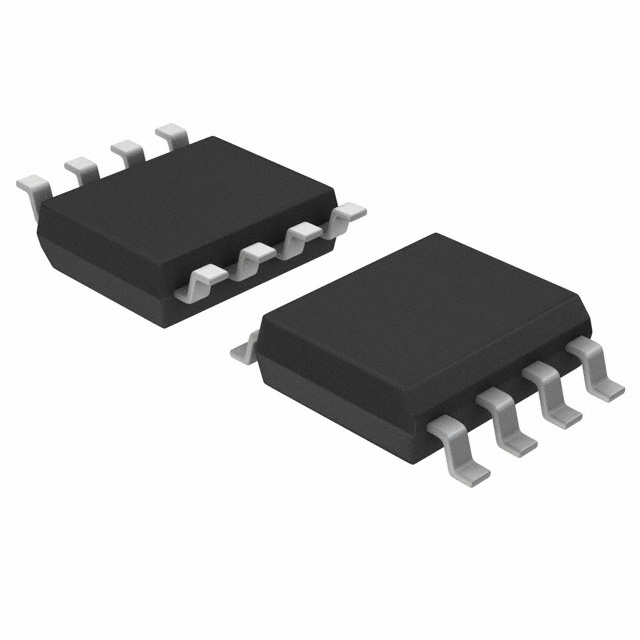
NXP Semiconductors MCZ33290EF
- Part No.:
- MCZ33290EF
- Manufacturer:
- NXP Semiconductors
- Category:
- Specialized
- Package:
- 8-SOIC (0.154", 3.90mm Width)
- Datasheet:
-
 MCZ33290EF.pdf
- Description:
- IC INTERFACE SPECIALIZED 8SOIC
- Quantity:
- Payment:

- Shipping:

Inventory:1,998
Please send an inquiry. Send us your inquiry, and we will respond immediately.
Product details
Overview
MCZ33290EF from Freescale Semiconductor is an ISO K-line serial link interface IC designed for automotive on-board diagnostics (OBD) communication between microcontrollers and external diagnostic tools via the ISO 9141-2 physical layer. It operates from 8.0 V to 18 V VBB, supports -40°C to +125°C ambient temperature, features thermal shutdown with hysteresis, and delivers robust short-circuit protection on the ISO pin. Its primary role is level translation and bus driving in vehicle diagnostic ports.
For engineers reviewing the MCZ33290EF datasheet, MCZ33290EF pinout, MCZ33290EF application, or MCZ33290EF equivalent, key selection considerations include its ISO 9141-2 compliance, 150 kbps max data rate capability, integrated pull-up/pull-down logic, 8-pin SOICN Pb-free package, and fault-tolerant design for battery voltage transients and ESD.
Technical Context
The MCZ33290EF implements a bi-directional half-duplex K-line interface using SMARTMOS process technology, integrating CMOS logic, bipolar/MOS analog circuitry, and DMOS power FETs. It provides level-shifting between 5 V microcontroller logic (VDD) and battery-level (VBB) signaling while maintaining ISO 9141-2 timing and voltage thresholds.
Its internal architecture includes a current-limited active pull-down driver on the ISO line, an internal passive pull-up to VBB, thermal shutdown at 150–170°C, and input hysteresis on the ISO pin (0.05–0.1 × VBB). The device enters low-current sleep mode when CEN is low, drawing only 50 µA from VBB.
Key Specifications
| Parameter | Value and Actual Design Meaning |
|---|---|
| VBB Supply Range | 8.0 V to 18 V - supports full automotive battery range including cold-crank and load-dump conditions |
| Operating Temperature | -40°C to +125°C - qualified for under-hood automotive environments |
| ISO Short-Circuit Limit | 50 mA to 1000 mA - protects against sustained bus shorts without latch-up |
| Fall Time (ISO) | ≤2.0 µs - enables up to 150 kbps data rate per ISO 9141-2 timing constraints |
| ESD Protection | ±2000 V HBM - meets automotive system-level ESD requirements with minimal external components |
| Thermal Shutdown | 150°C (min), 170°C (typ) - self-protects during overtemperature events with hysteresis |
| VDD Sleep Current | ≤0.1 mA - minimizes MCU-side power draw during diagnostic idle states |
Pinout & Package
MCZ33290EF is housed in an 8-pin SOICN (Small Outline Integrated Circuit, Narrow) surface-mount plastic package, Pb-free compliant (EF suffix), with 1.27 mm pitch and JEDEC MS-012AC footprint.
| Pin/Terminal | Circuit Role | Design Meaning |
|---|---|---|
| 1 - VBB | Battery supply input | Accepts 8–18 V vehicle battery rail; includes internal transient protection and reverse-battery blocking support |
| 2 - NC | No-connect terminal | Must remain unconnected; not guaranteed open; no internal connection |
| 3 - GND | Signal and power return | Common reference for VDD, VBB, TX, RX, and ISO; critical for noise immunity and thermal stability |
| 4 - ISO | K-line bus interface | Bi-directional half-duplex data path; internally pulled up to VBB and actively driven low; short-circuit protected |
| 5 - TX | Microcontroller transmit input | CMOS-compatible logic input (0.3/0.7×VDD thresholds); internal pull-up to VDD ensures fail-safe high state |
| 6 - RX | Microcontroller receive output | CMOS logic output (0.2/0.8×VDD thresholds); translates ISO bus voltage to MCU logic levels |
| 7 - VDD | Digital logic supply | 5 V ±5% supply for internal logic; decoupling required near pin for noise rejection |
| 8 - CEN | Chip enable control | Active-high enable; pulls down internally (2–40 µA); drives device into <50 µA VBB sleep mode when low |
Key Features
| Feature | Design Value |
|---|---|
| ISO K-line short-circuit protection | Current-limited ISO output prevents damage during bus faults without external fusing |
| Thermal shutdown with hysteresis | Auto-recovery after cooling avoids latch-up and enables safe operation in high-ambient environments |
| Integrated VBB pull-up and active pull-down | Eliminates need for external bias resistors on K-line, reducing BOM count and layout area |
| Standby mode with zero VBat drain | VBB current drops to 50 µA while VDD remains powered - ideal for always-on diagnostic port designs |
| 8.0 kV ESD capability with minimal externals | Meets IEC 61000-4-2 Level 4 with only capacitor/zener on ISO/VBB - simplifies EMC design |
Applications
| OBD-II Diagnostic Port | Vehicle Telematics Gateway |
|---|---|
Use Scenario: Standard 16-pin OBD-II connector in passenger vehicles used by service technicians to read DTCs and perform bidirectional tests. IC Role / Device Role / Timing Role: K-line physical layer transceiver translating between 5 V MCU UART and ISO 9141-2 bus timing/voltage levels. Use Value: Enables reliable communication across full battery voltage range (8–18 V) and extreme temperatures (-40°C to +125°C) without external level shifters or protection circuits. | Use Scenario: Embedded telematics unit connecting vehicle CAN/K-line networks to cellular modems for remote diagnostics and firmware updates. IC Role / Device Role / Timing Role: Isolates and conditions K-line signals before routing to MCU for protocol parsing and cloud upload. Use Value: Provides fault-tolerant K-line interface with thermal shutdown and short-circuit current limiting - critical for unattended field-deployed units. |
| Aftermarket Scan Tool Interface | Automotive ECU Production Test |
Use Scenario: Handheld scan tools requiring direct K-line access to legacy ECUs for compatibility with pre-OBD-II and early OBD-II vehicles. IC Role / Device Role / Timing Role: Robust physical layer driver supporting up to 10 nF parasitic capacitance - accommodates long cables and multiple connectors. Use Value: Maintains signal integrity and timing compliance (≤2.0 µs fall time) even with high-capacitance test harnesses, ensuring reliable diagnostics. | Use Scenario: Automated end-of-line (EOL) test systems verifying ECU functionality prior to vehicle assembly. IC Role / Device Role / Timing Role: K-line interface embedded in test fixture to emulate diagnostic tool communication with target ECU. Use Value: Withstands repeated hot-plug cycles and bus shorts during production testing due to integrated current limiting and thermal protection. |
Equivalent & Alternatives
The following parts are listed as comparable options for similar ISO K-line interface applications.
| Alternative Part | Technical Difference | Application Difference | Selection Advice |
|---|---|---|---|
| MC33290D/R2 | Same die, non-Pb-free SOICN package (D suffix); identical electrical specs and pinout | Not RoHS-compliant; unsuitable for EU/China automotive markets requiring Pb-free certification | Select MCZ33290EF/R2 for new designs requiring RoHS and ELV compliance. |
| TJA1054T/CM | Single-supply (5 V only), no VBB input; lower VBB tolerance (max 16 V); different pinout and enable logic | Lacks battery-supplied robustness; requires external level-shifting for 12 V bus; not drop-in compatible | Choose only if system uses regulated 5 V supply and does not require direct battery interfacing. |
Compared with MC33290D/R2, MCZ33290EF/R2 offers identical performance with Pb-free packaging for regulatory compliance; compared with TJA1054T/CM, it provides superior battery-voltage resilience, integrated VBB regulation support, and true ISO 9141-2 timing compliance without external components.
Availability
MCZ33290EF is available at Aetrix Electronics and suitable for automotive OBD-II diagnostic ports, telematics gateways, aftermarket scan tools, and ECU production test systems requiring stable component supply across extended temperature and voltage ranges.
Supply support for MCZ33290EF includes scheduled delivery planning, volume procurement assistance, BOM continuity management, traceable sourcing, and lifecycle availability coordination for OEM customers, industrial embedded developers, connected-device designers, and electronics production programs.
Manufacturer
Freescale Semiconductor (now part of NXP Semiconductors) was a leading designer of automotive and industrial analog/mixed-signal ICs, known for robust process technologies like SMARTMOS.
The MCZ33290EF belongs to Freescale's ISO 9141 K-line interface product line, engineered specifically for automotive diagnostic communication with emphasis on fault tolerance, wide supply range, and AEC-Q100-qualified reliability.
FAQ
What is the maximum data rate supported by the MCZ33290EF?
The MCZ33290EF supports a maximum data rate of 150 kbps, determined by its ≤2.0 µs ISO fall time and compliance with ISO 9141-2 timing requirements. This allows full implementation of the K-line physical layer without external timing compensation. The MCZ33290EF achieves this across its full operating temperature and voltage range.
Does the MCZ33290EF require external pull-up resistors on the ISO line?
No, the MCZ33290EF includes an internal pull-up to VBB on the ISO pin, eliminating the need for an external resistor in standard configurations. However, an external 510 Ω pull-up with reverse-battery diode is recommended for enhanced fault protection in automotive environments. The MCZ33290EF's internal architecture is designed to operate correctly with or without that external component.
How does the MCZ33290EF handle battery voltage transients such as load dump?
The MCZ33290EF is rated for 45 V peak VBB load dump and 40 V ISO clamp voltage, with nonrepetitive clamping energy of 10 mJ. It survives double-battery jump-start conditions for up to 10 minutes. These ratings are achieved through SMARTMOS DMOS protection structures. The MCZ33290EF maintains functional integrity during these events but may temporarily exceed parametric limits per datasheet note 2.
Is the MCZ33290EF pin-compatible with the MC33290D/R2?
Yes, the MCZ33290EF/R2 and MC33290D/R2 share identical pinout, package outline (8-pin SOICN), and electrical specifications - differing only in Pb-free (EF) versus leaded (D) packaging. No PCB layout changes are needed when migrating from MC33290D/R2 to MCZ33290EF/R2, making it a direct replacement for RoHS compliance upgrades.
What is the purpose of the CEN pin on the MCZ33290EF?
The CEN (Chip Enable) pin on the MCZ33290EF controls active/sleep mode: logic high enables normal operation; logic low places the device in standby, reducing VBB current to ≤50 µA while retaining VDD-powered logic readiness. It features an internal 2–40 µA pull-down, allowing simple open-drain MCU control. This function is essential for low-power diagnostic port designs where the MCZ33290EF must remain responsive without draining the vehicle battery.
MCZ33290EF Specifications
- Product attributes
- Attribute value
- Manufacturer:
- NXP Semiconductors
- Series:
- -
- Package/Case:
- 8-SOIC (0.154", 3.90mm Width)
- Packaging:
- Tube
- Product Status:
- Obsolete
- Applications:
- -
- Interface:
- Serial
- Voltage - Supply:
- 8V ~ 18V
- Supplier Device Package:
- 8-SOIC
- Grade:
- Automotive
- Qualification:
- -
- Mounting Type:
- Surface Mount
MCZ33290EF FAQ
1.How can I place an order for MCZ33290EF through Aetrix?
Please submit a Request for Quotation (RFQ) for MCZ33290EF on Aetrix. Our sales agent will provide a competitive quotation and guide you through the order confirmation once you accept the terms.
2.Are the price and stock information for MCZ33290EF reliable?
The price and inventory of MCZ33290EF are updated periodically and may fluctuate due to market conditions. Stock and pricing data are typically refreshed every 24 hours. Quotation validity for MCZ33290EF is usually 5 days.
3.What payment methods are accepted for MCZ33290EF?
We accept Wire Transfer, PayPal, Credit Card, Western Union, MoneyGram, and Escrow for MCZ33290EF transactions.
Note: Certain payment methods may incur a processing fee.
4.How is shipping managed for MCZ33290EF?
MCZ33290EF orders can be shipped via leading logistics carriers, including DHL, UPS, FedEx, TNT, or Registered Mail.
Once your MCZ33290EF order is processed, you will receive an email with the shipment details and tracking number.
Note: Tracking information may take up to 24 hours to appear. Express delivery typically takes 3–5 business days.
5.How can I obtain technical support or documentation for MCZ33290EF?
For technical support, including MCZ33290EF datasheets, pinout diagrams, or application guidance, please contact our engineering support team. They can provide detailed documentation and assistance for your MCZ33290EF requirements.
6.How does Aetrix verify that MCZ33290EF is sourced from the original manufacturer or authorized distributors?
All MCZ33290EF products on Aetrix are procured from qualified distributors and authorized channels. Our dedicated quality assurance team conducts strict verification, including traceability checks and, if necessary, third-party testing. This ensures that MCZ33290EF meets industry standards.
7.What is the process for return or replacement of MCZ33290EF?
All MCZ33290EF units undergo pre-shipment inspection (PSI). If there is an issue with MCZ33290EF, returns or replacements are accepted under the following conditions:
1.Quantity discrepancies, incorrect items, or visible external defects (such as breakage or corrosion), acknowledged by Aetrix.
2.The issue is reported within 90 days of delivery.
3.The MCZ33290EF part is unused and in its original packaging.
Return procedure for MCZ33290EF:
1.Submit a request within 90 days.
2.Obtain a Return Material Authorization (RMA) from Aetrix.
MCZ33290EF Tags
-
NVT4857UKAZ
NXP Semiconductors
-
TCA8418RTWR
Texas Instruments
-
PCA9546APWR
Texas Instruments

-
MD0100N8-G
Microchip Technology
-
PCA9548APW,118
NXP Semiconductors
-
PCA9540BDP,118
NXP Semiconductors
-
PCA9548APWR
Texas Instruments
-
PCA9546APW,118
NXP Semiconductors
-
PTN3360DBS,518
NXP Semiconductors
-
PCA9546ABS,118
NXP Semiconductors
-
PCA9518PWR
Texas Instruments
-
PCA9545APW,118
NXP Semiconductors
Tech Hub

A practical engineering guide to 3.3V and 5V logic compatibility, input thresholds, resistor dividers, translator ICs, MOSFET level shifting, I2C pull-ups, timing limits and power-sequencing risks.

The 74HC595 uses push-pull logic outputs, while the TPIC6B595 uses 50 V open-drain DMOS sinks for higher-power loads. This guide compares timing, current limits, 3.3 V interfacing, load wiring, thermal…

The 74HC595 converts serial data into eight stable parallel outputs. This guide covers pin functions, shift and storage timing, OE and MR behavior, drive-current limits, cascading, voltage compatibilit…

A technical comparison of level-sensitive latches and edge-triggered flip-flops, covering timing windows, setup and hold limits, master–slave operation, time borrowing, race-through, HDL inference and…

A D latch stores one bit while Enable controls when data can pass. This reference covers gate-level operation, truth tables, transparency, setup and hold timing, LE versus OE, common ICs and practical …

An SR latch stores one bit through cross-coupled feedback. This engineering reference covers NOR and NAND implementations, truth tables, forbidden-state recovery, gated operation, switch debouncing, fa…

Latch circuits retain one bit through feedback. This technical reference covers SR and D latches, truth tables, transparency, timing limits, latch-versus-flip-flop behavior, applications and common log…

An engineering guide to LED driver operation, constant-current and constant-voltage outputs, linear and switching topologies, dimming, IC selection, calculations, replacement compatibility, and fault c…

Operational amplifier guide covering op amp basics, feedback, ideal vs real op amps, common configurations, buffer circuits, offset, bias current, gain-bandwidth, slew rate, rail-to-rail limits and sel…

Jumper cables guide covering safe connection order, red and black clamp placement, final ground connection, cable gauge, length, clamp quality, copper vs CCA cables, jump starter comparison and battery…


