
 My Inquiry
 My Account


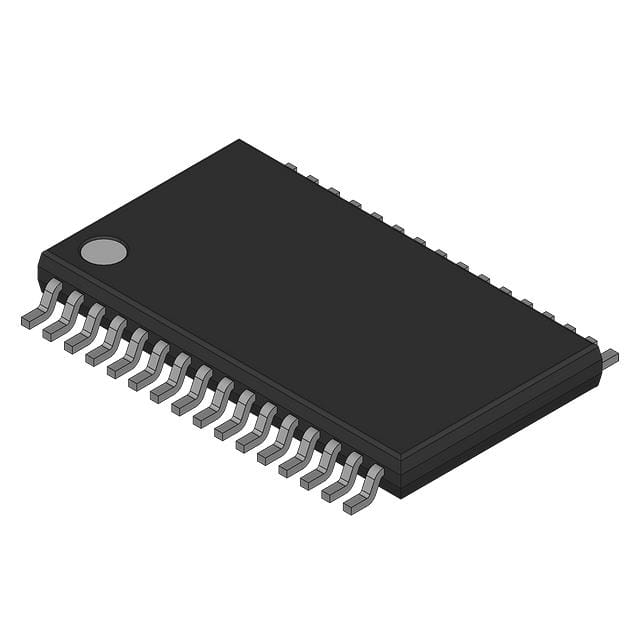
NXP Semiconductors MCZ33730EK
- Part No.:
- MCZ33730EK
- Manufacturer:
- NXP Semiconductors
- Category:
- Voltage Regulators - Linear + Switching
- Package:
- 32-SSOP (0.295", 7.50mm Width) Exposed Pad
- Datasheet:
-
 MCZ33730EK.pdf
- Description:
- IC REG QD BUCK/LNR SYNC 32SOIC
- Quantity:
- Payment:

- Shipping:

Inventory:3,885
Please send an inquiry. Send us your inquiry, and we will respond immediately.
Product details
Overview
MCZ33730EK from NXP Semiconductors (formerly Freescale) is an automotive-grade multi-output power supply IC integrating a 5.0 V buck regulator (3.5 A current limit), three programmable linear regulators (VDD3, VDDL, VKAM), two protected 5.0 V sensor supplies (VREF1/VREF2), reverse battery protection FET drive, and supervisory reset circuitry. It operates from 4.5–26.5 V input and supports power sequencing for 32-bit microcontrollers in engine control units and body electronics.
For engineers reviewing the MCZ33730EK datasheet, MCZ33730EK pinout, MCZ33730EK application, or MCZ33730EK equivalent, key selection criteria include its adjustable switching frequency (100–500 kHz), slew-rate control (SR pin), ±3% VDDL/VDD3 accuracy, ±15% VKAM accuracy, and -40 °C to +125 °C operating range with SOICW-EP package.
Technical Context
The MCZ33730EK implements a fixed-frequency PWM voltage-mode buck controller with external frequency programming via FREQ pin and slew-rate adjustment via SR pin connection (SW, BOOT, or open). Its internal architecture includes separate sleep/wake circuitry, bandgap reference, and independent reset detection for VDDH, VDDL, VDD3, and VKAM outputs.
Linear regulation is achieved using external NPN pass transistors for VDD3 and VDDL (feedback at VDD3/VDDL pins), while VKAM operates as a standalone standby regulator powered from KA_VBAT. VREF1/VREF2 are protected 5.0 V outputs sourced from VDDH through internal protection FETs, rated for ±100 mA and short-circuit robustness.
Key Specifications
| Parameter | Value and Actual Design Meaning |
|---|---|
| Input Voltage Range | 4.5 V to 26.5 V on KA_VBAT; 6.0 V to 26.5 V on VBAT - enables operation across cold-crank (4.5 V) and load-dump (26.5 V) conditions. |
| Buck Regulator Output | 5.0 V ±2% (VDDH), 2.0 A max - powers VREF1/VREF2, VDD3/VDDL base drives, and MCU core logic. |
| VDDL/VDD3 Accuracy | ±3% over line/load/temperature - ensures stable 3.3 V supply for 32-bit MCU I/O and peripherals. |
| VKAM Accuracy | ±15% down to 4.5 V KA_VBAT - guarantees keep-alive memory retention during deep sleep. |
| Switching Frequency | 100–500 kHz, resistor-programmable - allows EMI optimization and inductor size trade-offs. |
| Quiescent Current (Sleep) | ≤500 µA with VKAM active only - meets automotive low-power standby requirements. |
| Thermal Shutdown | 150 °C activation, 5 °C hysteresis - protects against sustained overload in under-hood environments. |
Pinout & Package
MCZ33730EK uses a 32-lead SOICW-EP (exposed pad) package, thermally optimized for automotive under-hood applications. The exposed pad is electrically and thermally connected to GND.
| Pin/Terminal | Circuit Role | Design Meaning |
|---|---|---|
| HRT | Hardware Reset Timer | External resistor sets POR delay (0–68 ms); critical for MCU boot timing coordination. |
| RSTKAM, RSTH, RSTL, RST3 | Open-Drain Reset Outputs | Independent monitoring of VKAM, VDDH, VDDL, VDD3; pulled low on undervoltage/overvoltage fault. |
| VREF1 / VREF2 | Protected 5.0 V Sensor Supplies | Short-circuit and reverse-battery protected; deliver up to 100 mA each to external sensors. |
| P1 / P2 / P3 | Voltage Programming Inputs | Logic-level pins (GND/VBAT) selecting 8 combinations of VDD3/VDDL/VKAM output voltages per Table 7. |
| SR | Slew-Rate Control | Configures SW node edge rate: slow (SR→SW), medium (open), fast (SR→BOOT) - reduces EMI during switching. |
| PFD | Protection FET Gate Drive | Drives external N-channel MOSFET for reverse-battery protection - eliminates need for discrete diode. |
| VIGN / REGON | Wake-Up Control Inputs | VIGN accepts battery-level ignition signal; REGON is 5 V logic hold-on input - enables controlled shutdown sequencing. |
| KA_VBAT | Keep-Alive Supply Input | Reverse-battery protected input powering VKAM and sleep circuitry down to 4.5 V - maintains memory during ignition-off. |
Key Features
| Feature | Design Value |
|---|---|
| Adjustable Buck Frequency | 100–500 kHz via external resistor on FREQ pin - enables EMI compliance across vehicle platforms. |
| Programmable Linear Outputs | VDD3/VDDL/VKAM voltages set by P1/P2/P3 logic states - supports multiple MCU families without hardware change. |
| Integrated Power Sequencing | Hardware-controlled startup order (VKAM → VDDH → VDDL/VDD3) - prevents latch-up in complex SoC systems. |
| Reverse Battery Protection Drive | Dedicated PFD output driving external N-FET - achieves <100 mΩ effective protection impedance with no voltage drop. |
| Protected Sensor Supplies | VREF1/VREF2 with 500 mΩ on-resistance and ±450 mA short-circuit limit - sustains sensor operation during cable faults. |
Applications
| Engine Control Unit (ECU) | Body Control Module (BCM) |
|---|---|
Use Scenario: Powers 32-bit MCU, CAN transceivers, and analog front-end in gasoline/diesel engine management systems. IC Role / Device Role / Timing Role: Primary power sequencer delivering VDDH (5.0 V), VDDL (3.3 V), VKAM (5.0 V standby), and protected VREF1/VREF2 to crank-angle, MAP, and O2 sensors. Use Value: Enables cold-crank operation down to 4.5 V KA_VBAT while maintaining ±3% VDDL accuracy for MCU real-time execution. | Use Scenario: Supplies gateway MCU, LIN transceivers, and door/window motor drivers in centralized body electronics. IC Role / Device Role / Timing Role: Dual-mode regulator providing wake-up power (VIGN-triggered VDDH/VDDL) and always-on VKAM for RTC and security RAM. Use Value: Achieves ≤500 µA sleep current with VKAM active, meeting OEM requirements for <100 µA module quiescent draw. |
| Advanced Driver Assistance System (ADAS) Camera ECU | Electric Power Steering (EPS) Control Unit |
Use Scenario: Powers image signal processor, ISP, and high-speed serializer in rear-view or surround-view camera modules. IC Role / Device Role / Timing Role: Delivers low-noise 3.3 V (VDDL) for digital logic and 5.0 V protected (VREF1) for CMOS image sensor biasing. Use Value: Slew-rate control (SR pin) minimizes switching noise coupling into analog sensor paths, preserving SNR. | Use Scenario: Supplies torque-control MCU, gate drivers, and current-sense amplifiers in steer-by-wire systems. IC Role / Device Role / Timing Role: Provides fault-tolerant VDDH (5.0 V), VDDL (3.3 V), and redundant VKAM (5.0 V) with independent reset monitoring (RSTH/RSTL/RSTKAM). Use Value: Four dedicated open-drain reset outputs enable ASIL-B compliant diagnostics without external supervisors. |
Equivalent & Alternatives
The following parts are listed as comparable options for similar multi-output automotive power supply applications.
| Alternative Part | Technical Difference | Application Difference | Selection Advice |
|---|---|---|---|
| MC33730EK | Same die, improved VDDL/VDD3 reset detect circuitry vs. MCZ33730EK | Identical pinout and function; preferred for new designs per datasheet | Select MC33730EK when latest reset accuracy and qualification status are required. |
| NCP1034DR2G | Single 5.0 V buck + dual LDO (3.3 V/2.5 V); no VKAM, no VREF protection, no slew control | Lacks keep-alive supply, sensor protection, and automotive reset supervision | Use only in non-safety-critical, cost-sensitive modules without standby or sensor interface needs. |
Compared with MCZ33730EK, MC33730EK offers tighter reset threshold tolerances and updated qualification, while NCP1034DR2G provides lower integration and no automotive-grade supervision - making MCZ33730EK irreplaceable for full-featured ECU power management.
Availability
MCZ33730EK is available at Aetrix Electronics and suitable for engine control units, body control modules, ADAS camera ECUs, and electric power steering systems requiring stable component supply across extended temperature and automotive lifecycle demands.
Supply support for MCZ33730EK includes scheduled delivery planning, volume procurement assistance, BOM continuity management, traceable sourcing, and lifecycle availability coordination for OEM customers, industrial embedded developers, connected-device designers, and electronics production programs.
Manufacturer
NXP Semiconductors is a global semiconductor leader focused on secure connectivity solutions for automotive, industrial, and IoT applications.
The MCZ33730EK belongs to NXP's automotive power management IC portfolio, designed specifically to consolidate multiple regulated supplies, supervision, and protection functions for 32-bit MCU-based electronic control units in harsh automotive environments.
FAQ
What is the primary function of the MCZ33730EK in automotive systems?
The MCZ33730EK serves as a fully integrated multi-output power supply IC for automotive electronic control units. It delivers regulated 5.0 V (VDDH), 3.3 V (VDDL/VDD3), and standby 5.0 V (VKAM) supplies, two protected 5.0 V sensor rails (VREF1/VREF2), and comprehensive supervision including four independent reset outputs. Its design targets seamless power sequencing and fault resilience for Freescale/NXP 32-bit microcontrollers in engine, body, and safety-critical systems. The MCZ33730EK replaces discrete regulator + supervisor combinations with a single AEC-Q100 qualified device.
How does the MCZ33730EK handle reverse battery protection?
The MCZ33730EK does not integrate a reverse battery protection FET but provides a dedicated Protection FET Drive (PFD) output pin that actively controls an external N-channel MOSFET. This gate driver enables low-loss, bidirectional reverse polarity protection with minimal forward voltage drop - unlike diode-based solutions. The PFD output is designed to interface directly with standard automotive-grade N-FETs, and the MCZ33730EK datasheet specifies drive strength and timing to ensure reliable turn-on/turn-off during fault conditions. This architecture preserves efficiency while meeting ISO 7637-2 pulse test requirements.
Can the MCZ33730EK operate during cold-crank conditions?
Yes, the MCZ33730EK is explicitly designed for cold-crank operation. Its VKAM standby regulator remains functional down to 4.5 V on the KA_VBAT pin, and the main buck regulator (VDDH) operates from 6.0 V to 26.5 V on VBAT - covering the full automotive battery range including cranking dips. The device incorporates undervoltage lockout (UVLO) with 0.1 V hysteresis and start-up voltage thresholds validated at 4.5 V, ensuring reliable power-up even when battery voltage sags below nominal. All linear regulators (VDDL, VDD3, VKAM) maintain specified accuracy and current capability throughout this range, as confirmed in the Static Electrical Characteristics table.
What is the role of the SR (Slew-Rate) pin on the MCZ33730EK?
The SR pin on the MCZ33730EK controls the edge rate of the internal high-side switch node (SW) to reduce electromagnetic interference (EMI). By connecting SR to SW (slow), leaving it open (medium), or connecting it to BOOT (fast), designers adjust the dV/dt of the switching waveform - directly impacting conducted and radiated emissions. This feature is critical for automotive EMC compliance, especially in densely packed ECUs where switching noise can couple into sensitive analog sensor paths like those fed by VREF1/VREF2. The MCZ33730EK datasheet provides measured SW rise/fall times for all three configurations, enabling precise EMI tuning without changing layout or magnetics.
How are output voltages programmed on the MCZ33730EK?
Output voltages for VDD3, VDDL, and VKAM on the MCZ33730EK are programmed using three logic-level inputs: P1, P2, and P3. Each pin is tied either to GND (logic low) or KA_VBAT (logic high) to select one of eight predefined voltage combinations per Table 7 in the datasheet - for example, P1=L/P2=H/P3=L yields VKAM = 5.0 V, VDDL = 3.3 V, VDD3 = 3.3 V. These pins must never float and require explicit termination. The programming is non-volatile and takes effect immediately at power-up; no serial interface or configuration registers are involved. This resistor-free, hardware-only method ensures deterministic behavior and eliminates firmware dependencies during boot.
MCZ33730EK Specifications
- Product attributes
- Attribute value
- Manufacturer:
- NXP Semiconductors
- Series:
- -
- Package/Case:
- 32-SSOP (0.295", 7.50mm Width) Exposed Pad
- Packaging:
- Tube
- Product Status:
- Obsolete
- Topology:
- Step-Down (Buck) Synchronous (1), Linear (LDO) (3)
- Number of Outputs:
- 4
- Frequency - Switching:
- 100kHz ~ 500kHz
- Voltage/Current - Output 1:
- 5V, 3.5A
- Voltage/Current - Output 2:
- Programmable
- Voltage/Current - Output 3:
- Programmable
- w/LED Driver:
- No
- w/Supervisor:
- No
- w/Sequencer:
- No
- Voltage - Supply:
- 4.5V ~ 26.5V
- Operating Temperature:
- -40°C ~ 125°C
- Grade:
- -
- Qualification:
- -
- Mounting Type:
- Surface Mount
- Supplier Device Package:
- 32-SOIC-EP
MCZ33730EK FAQ
1.How can I place an order for MCZ33730EK through Aetrix?
Please submit a Request for Quotation (RFQ) for MCZ33730EK on Aetrix. Our sales agent will provide a competitive quotation and guide you through the order confirmation once you accept the terms.
2.Are the price and stock information for MCZ33730EK reliable?
The price and inventory of MCZ33730EK are updated periodically and may fluctuate due to market conditions. Stock and pricing data are typically refreshed every 24 hours. Quotation validity for MCZ33730EK is usually 5 days.
3.What payment methods are accepted for MCZ33730EK?
We accept Wire Transfer, PayPal, Credit Card, Western Union, MoneyGram, and Escrow for MCZ33730EK transactions.
Note: Certain payment methods may incur a processing fee.
4.How is shipping managed for MCZ33730EK?
MCZ33730EK orders can be shipped via leading logistics carriers, including DHL, UPS, FedEx, TNT, or Registered Mail.
Once your MCZ33730EK order is processed, you will receive an email with the shipment details and tracking number.
Note: Tracking information may take up to 24 hours to appear. Express delivery typically takes 3–5 business days.
5.How can I obtain technical support or documentation for MCZ33730EK?
For technical support, including MCZ33730EK datasheets, pinout diagrams, or application guidance, please contact our engineering support team. They can provide detailed documentation and assistance for your MCZ33730EK requirements.
6.How does Aetrix verify that MCZ33730EK is sourced from the original manufacturer or authorized distributors?
All MCZ33730EK products on Aetrix are procured from qualified distributors and authorized channels. Our dedicated quality assurance team conducts strict verification, including traceability checks and, if necessary, third-party testing. This ensures that MCZ33730EK meets industry standards.
7.What is the process for return or replacement of MCZ33730EK?
All MCZ33730EK units undergo pre-shipment inspection (PSI). If there is an issue with MCZ33730EK, returns or replacements are accepted under the following conditions:
1.Quantity discrepancies, incorrect items, or visible external defects (such as breakage or corrosion), acknowledged by Aetrix.
2.The issue is reported within 90 days of delivery.
3.The MCZ33730EK part is unused and in its original packaging.
Return procedure for MCZ33730EK:
1.Submit a request within 90 days.
2.Obtain a Return Material Authorization (RMA) from Aetrix.
MCZ33730EK Tags

-
TPS6521905RHBR
Texas Instruments
-
MIC3385YHL-TR
Microchip Technology
-
A4402ELPTR-T
Allegro MicroSystems
-
LM26480SQ-AA/NOPB
Texas Instruments
-
A4402KLPTR-T
Allegro MicroSystems
-
BD71847AMWV-E2
ROHM Semiconductor
-
ADP5040ACPZ-1-R7
Analog Devices Inc.
-
LT3048IDC#TRPBF
Analog Devices Inc.
-
ADP5037ACPZ-R7
Analog Devices Inc.
-
XRP7714ILB-F
MaxLinear, Inc.
-
LTC3260EDE#TRPBF
Analog Devices Inc.
-
LTC3260EMSE#PBF
Analog Devices Inc.
Tech Hub

A practical engineering guide to 3.3V and 5V logic compatibility, input thresholds, resistor dividers, translator ICs, MOSFET level shifting, I2C pull-ups, timing limits and power-sequencing risks.

The 74HC595 uses push-pull logic outputs, while the TPIC6B595 uses 50 V open-drain DMOS sinks for higher-power loads. This guide compares timing, current limits, 3.3 V interfacing, load wiring, thermal…

The 74HC595 converts serial data into eight stable parallel outputs. This guide covers pin functions, shift and storage timing, OE and MR behavior, drive-current limits, cascading, voltage compatibilit…

A technical comparison of level-sensitive latches and edge-triggered flip-flops, covering timing windows, setup and hold limits, master–slave operation, time borrowing, race-through, HDL inference and…

A D latch stores one bit while Enable controls when data can pass. This reference covers gate-level operation, truth tables, transparency, setup and hold timing, LE versus OE, common ICs and practical …

An SR latch stores one bit through cross-coupled feedback. This engineering reference covers NOR and NAND implementations, truth tables, forbidden-state recovery, gated operation, switch debouncing, fa…

Latch circuits retain one bit through feedback. This technical reference covers SR and D latches, truth tables, transparency, timing limits, latch-versus-flip-flop behavior, applications and common log…

An engineering guide to LED driver operation, constant-current and constant-voltage outputs, linear and switching topologies, dimming, IC selection, calculations, replacement compatibility, and fault c…

Operational amplifier guide covering op amp basics, feedback, ideal vs real op amps, common configurations, buffer circuits, offset, bias current, gain-bandwidth, slew rate, rail-to-rail limits and sel…

Jumper cables guide covering safe connection order, red and black clamp placement, final ground connection, cable gauge, length, clamp quality, copper vs CCA cables, jump starter comparison and battery…


