
 My Inquiry
 My Account


NXP Semiconductors MCZ33880EW
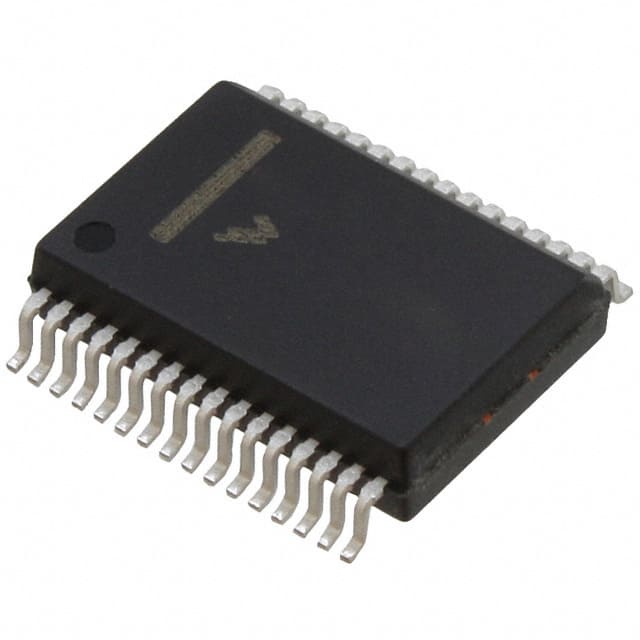
- Part No.:
- MCZ33880EW
- Manufacturer:
- NXP Semiconductors
- Package:
- 32-BSSOP (0.295", 7.50mm Width)
- Datasheet:
-
 MCZ33880EW.pdf
- Description:
- IC PWR SWITCH N-CHAN 1:8 32SOIC
- Quantity:
- Payment:

- Shipping:

Inventory:1,947
Please send an inquiry. Send us your inquiry, and we will respond immediately.
Product details
Overview
MCZ33880EW from NXP Semiconductors (formerly Freescale) is a configurable octal high-side/low-side power switch IC with 8-bit SPI control and dual PWM-direct inputs (IN5, IN6). It delivers RDS(ON) ≤ 0.55 Ω at 25°C, supports 0.8–2.0 A current-limited outputs, and operates across 5.5–24.5 V VPWR for automotive body electronics load driving.
For engineers reviewing the MCZ33880EW datasheet, MCZ33880EW pinout, MCZ33880EW application, or MCZ33880EW equivalent, this page provides verified technical context, real-world timing behavior, thermal grounding requirements for SOICW-32, fault reporting logic, and validated alternatives for automotive lighting and solenoid control designs.
Technical Context
The MCZ33880EW integrates SMARTMOS™ 5 technology-combining CMOS logic, bipolar/MOS analog circuitry, and independent double-diffused DMOS output transistors-to achieve <4.0 mA VDD supply current and <12 mA VPWR active current. Its architecture enables hardware-configurable high-side or low-side drive per channel, with individual +45 V (low-side) and –20 V (high-side) output clamping during inductive switching.
It implements cascaded fault reporting via SPI DO line, where each rising edge of SCLK shifts out one output's status bit (logic 1 = fault), synchronized with DI input shifting. The EN pin controls internal charge pump activation, and IN5/IN6 pins support OR-gated PWM control up to 2.0 kHz for outputs 5 and 6 without SPI interaction.
Key Specifications
| Parameter | Value and Actual Design Meaning |
|---|---|
| Supply Range (VPWR) | 5.5 V to 24.5 V - supports full automotive battery range including cold-crank and load-dump conditions. |
| RDS(ON) (25°C) | 0.55 Ω typical - enables <1 W conduction loss per channel at 1.5 A, reducing thermal stress in SOICW-32 package. |
| Output Current Limit | 0.8 A to 2.0 A - programmable per channel via external resistor; protects incandescent lamps and solenoids from overcurrent. |
| Output Clamp Voltage | +45 V (low-side), –20 V (high-side) - suppresses inductive kickback without external TVS diodes in most automotive loads. |
| SPI Interface Speed | Up to 6.0 MHz - allows sub-10 μs command latency for real-time load sequencing and diagnostics. |
| Standby Current (IPWR) | 5.0 μA max at 13 V / 95°C - enables always-on functionality in body control modules without battery drain. |
| Thermal Ground Pins | Pins 8, 9, 24, 25 (TGND) - must be connected to PCB ground plane to achieve RθJL = 18°C/W and sustain 1.7 W power dissipation. |
Pinout & Package
MCZ33880EW uses a 32-pin SOICW (wide-body) package (Case 1324-02) with four dedicated thermal ground pins (TGND) for enhanced heat dissipation. Pin layout supports flexible high-side or low-side configuration per output pair (Dx/Sx), SPI interface (CS/SCLK/DI/DO), dual PWM direct control (IN5/IN6), and system enable (EN).
| Pin/Terminal | Circuit Role | Design Meaning |
|---|---|---|
| GND (Pin 1) | Digital reference ground | Reference for logic signals; must be isolated from high-current return paths to avoid noise coupling into SPI interface. |
| VDD (Pin 2) | Logic supply input | 5.0 V ±5%; undervoltage lockout at 3.9 V disables outputs to prevent erratic behavior during brownout. |
| TGND (Pins 8, 9, 24, 25) | Internal die substrate connection | Direct thermal path to PCB ground plane; mandatory for thermal performance-RθJL = 18°C/W only when all four are soldered. |
| CS (Pin 18) | SPI chip select | Active-low; falling edge initiates fault status shift-out; rising edge latches new output states from shift register. |
| IN5 / IN6 (Pins 19, 14) | PWM direct control inputs | OR-gated with SPI bits for outputs 5 and 6; enables independent PWM dimming without SPI traffic overhead. |
| DO (Pin 32) | SPI fault status output | Tri-state until CS low; shifts out 8-bit fault word MSB-first on rising SCLK edges-bit = 1 indicates open/short/overtemp. |
Key Features
| Feature | Design Value |
|---|---|
| Hardware-configurable high-/low-side topology | Each of 8 outputs independently wired as high-side (Sx to load, Dx to battery) or low-side (Dx to load, Sx to GND) without reprogramming. |
| Independent overtemperature shutdown | TLIM = 155–185°C with 5–15°C hysteresis-prevents thermal runaway while allowing recovery after cooling. |
| Open-load detection (off-state) | IOCO = 0.3–1.0 mA threshold-identifies broken filaments or disconnected solenoids before enabling output. |
| Reverse battery protection | Integrated on VPWR pin-survives –16 V applied for indefinite duration without external components. |
| Cascadable fault reporting | Single DO line reports faults from multiple daisy-chained MCZ33880EW devices-reduces MCU GPIO count in multi-channel systems. |
Applications
| Automotive Interior Lighting | Engine Bay Solenoid Control |
|---|---|
|
Use Scenario: Driving 12 V incandescent dome lights, map lights, and courtesy lamps in modern BCMs. IC Role / Device Role: High-side switch with current limiting and open-load detection to replace discrete relays and fuses. Use Value: Eliminates need for external current-sense resistors and TVS diodes-reduces BOM cost by ≥30% versus discrete solutions. |
Use Scenario: Controlling fuel injector shutoff valves, EGR actuators, and turbocharger wastegate solenoids. IC Role / Device Role: Low-side driver with –20 V clamp and short-circuit autoretry to handle inductive kickback and intermittent faults. Use Value: Enables diagnostic logging of solenoid open/short events via SPI-supports OBD-II compliance without additional sensors. |
| Commercial Vehicle HVAC Blower Stages | Truck Trailer Wiring Interface |
|
Use Scenario: Sequencing multi-stage blower motor windings using PWM-controlled outputs 5 and 6. IC Role / Device Role: Dual PWM-direct channel (IN5/IN6) with OR-gated SPI control-allows microsecond-precision speed ramping. Use Value: Achieves smooth airflow transitions without audible relay click or torque jerk-improves cabin comfort rating. |
Use Scenario: Replacing mechanical trailer connectors with solid-state load switching and fault isolation. IC Role / Device Role: Cascaded MCZ33880EW devices report open/short faults per trailer lamp circuit over single SPI bus. Use Value: Reduces wiring harness weight by 1.2 kg and eliminates 8+ fuse boxes-meets OEM weight-reduction targets. |
Equivalent & Alternatives
The following parts are listed as comparable options for similar octal high-/low-side switch applications.
| Alternative Part | Technical Difference | Application Difference | Selection Advice |
|---|---|---|---|
| MC33883 | Same pinout, but lacks IN5/IN6 PWM direct inputs and has higher RDS(ON) (0.7 Ω typ); no TGND pins-RθJA = 70°C/W vs. 18°C/W. | Not suitable for PWM-critical lighting or high-power solenoid drivers requiring thermal headroom. | Select MC33883 only if PWM control is handled entirely by MCU and board space allows larger heatsinking. |
| TPS27082L | 8-channel, 3.3 V–6.5 V logic-only supply; no VPWR operation; lower current limit (1.5 A max); no output clamping or thermal ground pins. | Limited to low-voltage industrial PLC I/O modules-not rated for 12/24 V automotive battery rails or inductive loads. | Choose TPS27082L only for 5 V embedded systems with non-inductive resistive loads and no fault-diagnostic requirements. |
Compared with MC33883 and TPS27082L, the MCZ33880EW uniquely combines automotive-grade VPWR operation (5.5–24.5 V), integrated output clamping, thermal ground optimization, and dual PWM-direct capability-making it the only option qualified for under-hood solenoid control and BCM lighting with full diagnostic coverage.
Availability
MCZ33880EW is available at Aetrix Electronics and suitable for automotive body control modules, commercial vehicle HVAC systems, and trailer wiring interfaces requiring stable component supply across extended temperature ranges (–40°C to +125°C) and long production lifecycles.
Supply support for MCZ33880EW includes scheduled delivery planning, volume procurement assistance, BOM continuity management, traceable sourcing, and lifecycle availability coordination for OEM customers, industrial embedded developers, connected-device designers, and electronics production programs.
Manufacturer
NXP Semiconductors acquired Freescale in 2015 and maintains full product support, qualification, and automotive AEC-Q100 certification for legacy Freescale analog power ICs.
The MCZ33880EW belongs to NXP's SMARTMOS™ automotive power switch family, designed specifically for replacing electromechanical relays and discrete MOSFETs in 12 V/24 V body electronics with integrated diagnostics and thermal robustness.
FAQ
What is the maximum operating voltage for MCZ33880EW on the VPWR pin?
The MCZ33880EW supports VPWR from 5.5 V to 24.5 V for full operation, with absolute maximum rating of –16 V to +50 V. This range accommodates automotive cold-crank (as low as 6 V) and load-dump (up to 40 V transient) conditions, though sustained operation above 24.5 V requires external clamping per design guidelines in the datasheet.
How does the MCZ33880EW implement open-load detection?
The MCZ33880EW detects open loads in off-state by sourcing 0.3–1.0 mA through each output and measuring voltage at Dx/Sx terminals. If voltage exceeds 1.0–3.0 V (VOUTth(F)), the device flags an open-circuit fault via the DO pin. This occurs independently per channel and requires no external components.
Can MCZ33880EW outputs be paralleled to increase current capacity?
Yes-MCZ33880EW outputs can be paralleled due to the positive temperature coefficient of its DMOS RDS(ON). Paralleling all eight outputs reduces effective RDS(ON) and increases current limit proportionally (e.g., ~16 A total with 2.0 A per channel), but thermal management must account for cumulative power dissipation in the SOICW-32 package.
What is the function of the TGND pins on MCZ33880EW?
The TGND pins (8, 9, 24, 25) connect internally to the silicon die substrate and serve as primary thermal conduction paths. They must be soldered to a large PCB ground plane to achieve RθJL = 18°C/W. Without this connection, junction temperature rise exceeds safe limits under sustained 1.7 W dissipation.
Does MCZ33880EW support daisy-chained SPI fault reporting?
Yes-the MCZ33880EW supports true daisy chaining: DO of one device connects to DI of the next, with shared SCLK and CS lines. On each CS falling edge, fault status from all devices shifts out sequentially, enabling centralized diagnostics across dozens of loads using a single MCU SPI port.
MCZ33880EW Specifications
- Product attributes
- Attribute value
- Manufacturer:
- NXP Semiconductors
- Package/Case:
- 32-BSSOP (0.295", 7.50mm Width)
- Series:
- -
- Packaging:
- Tube
- Product Status:
- Obsolete
- Switch Type:
- General Purpose
- Number of Outputs:
- 8
- Ratio - Input:Output:
- 1:8
- Output Configuration:
- High Side or Low Side
- Output Type:
- N-Channel
- Interface:
- SPI
- Voltage - Load:
- 5.5V ~ 24.5V
- Voltage - Supply (Vcc/Vdd):
- 4.75V ~ 5.25V
- Current - Output (Max):
- 800mA
- Rds On (Typ):
- 550mOhm
- Input Type:
- -
- Features:
- -
- Fault Protection:
- Current Limiting (Fixed), Open Load Detect, Over Voltage
- Operating Temperature:
- -40°C ~ 150°C (TJ)
- Grade:
- -
- Qualification:
- -
- Mounting Type:
- Surface Mount
- Supplier Device Package:
- 32-SOIC
MCZ33880EW FAQ
1.How can I place an order for MCZ33880EW through Aetrix?
Please submit a Request for Quotation (RFQ) for MCZ33880EW on Aetrix. Our sales agent will provide a competitive quotation and guide you through the order confirmation once you accept the terms.
2.Are the price and stock information for MCZ33880EW reliable?
The price and inventory of MCZ33880EW are updated periodically and may fluctuate due to market conditions. Stock and pricing data are typically refreshed every 24 hours. Quotation validity for MCZ33880EW is usually 5 days.
3.What payment methods are accepted for MCZ33880EW?
We accept Wire Transfer, PayPal, Credit Card, Western Union, MoneyGram, and Escrow for MCZ33880EW transactions.
Note: Certain payment methods may incur a processing fee.
4.How is shipping managed for MCZ33880EW?
MCZ33880EW orders can be shipped via leading logistics carriers, including DHL, UPS, FedEx, TNT, or Registered Mail.
Once your MCZ33880EW order is processed, you will receive an email with the shipment details and tracking number.
Note: Tracking information may take up to 24 hours to appear. Express delivery typically takes 3–5 business days.
5.How can I obtain technical support or documentation for MCZ33880EW?
For technical support, including MCZ33880EW datasheets, pinout diagrams, or application guidance, please contact our engineering support team. They can provide detailed documentation and assistance for your MCZ33880EW requirements.
6.How does Aetrix verify that MCZ33880EW is sourced from the original manufacturer or authorized distributors?
All MCZ33880EW products on Aetrix are procured from qualified distributors and authorized channels. Our dedicated quality assurance team conducts strict verification, including traceability checks and, if necessary, third-party testing. This ensures that MCZ33880EW meets industry standards.
7.What is the process for return or replacement of MCZ33880EW?
All MCZ33880EW units undergo pre-shipment inspection (PSI). If there is an issue with MCZ33880EW, returns or replacements are accepted under the following conditions:
1.Quantity discrepancies, incorrect items, or visible external defects (such as breakage or corrosion), acknowledged by Aetrix.
2.The issue is reported within 90 days of delivery.
3.The MCZ33880EW part is unused and in its original packaging.
Return procedure for MCZ33880EW:
1.Submit a request within 90 days.
2.Obtain a Return Material Authorization (RMA) from Aetrix.
MCZ33880EW Tags
-
TPS22919DCKR
Texas Instruments
-
MIC2091-1YM5-TR
Microchip Technology
-
MIC2090-1YM5-TR
Microchip Technology

-
TPS22995RZFR
Texas Instruments
-
TPS22975DSGR
Texas Instruments
-
SIP32510DT-T1-GE3
Vishay Siliconix
-
ULN2003D1013TR
STMicroelectronics
-
MIC2005A-1YM5-TR
Microchip Technology

-
MIC2005A-1YM6-TR
Microchip Technology
-
TPS22916BYFPR
Texas Instruments

-
TPS22917DBVR
Texas Instruments
-
ULN2003APWR
Texas Instruments
Tech Hub

A practical engineering guide to 3.3V and 5V logic compatibility, input thresholds, resistor dividers, translator ICs, MOSFET level shifting, I2C pull-ups, timing limits and power-sequencing risks.

The 74HC595 uses push-pull logic outputs, while the TPIC6B595 uses 50 V open-drain DMOS sinks for higher-power loads. This guide compares timing, current limits, 3.3 V interfacing, load wiring, thermal…

The 74HC595 converts serial data into eight stable parallel outputs. This guide covers pin functions, shift and storage timing, OE and MR behavior, drive-current limits, cascading, voltage compatibilit…

A technical comparison of level-sensitive latches and edge-triggered flip-flops, covering timing windows, setup and hold limits, master–slave operation, time borrowing, race-through, HDL inference and…

A D latch stores one bit while Enable controls when data can pass. This reference covers gate-level operation, truth tables, transparency, setup and hold timing, LE versus OE, common ICs and practical …

An SR latch stores one bit through cross-coupled feedback. This engineering reference covers NOR and NAND implementations, truth tables, forbidden-state recovery, gated operation, switch debouncing, fa…

Latch circuits retain one bit through feedback. This technical reference covers SR and D latches, truth tables, transparency, timing limits, latch-versus-flip-flop behavior, applications and common log…

An engineering guide to LED driver operation, constant-current and constant-voltage outputs, linear and switching topologies, dimming, IC selection, calculations, replacement compatibility, and fault c…

Operational amplifier guide covering op amp basics, feedback, ideal vs real op amps, common configurations, buffer circuits, offset, bias current, gain-bandwidth, slew rate, rail-to-rail limits and sel…

Jumper cables guide covering safe connection order, red and black clamp placement, final ground connection, cable gauge, length, clamp quality, copper vs CCA cables, jump starter comparison and battery…


