
 My Inquiry
 My Account


NXP Semiconductors MCZ33976EGR2
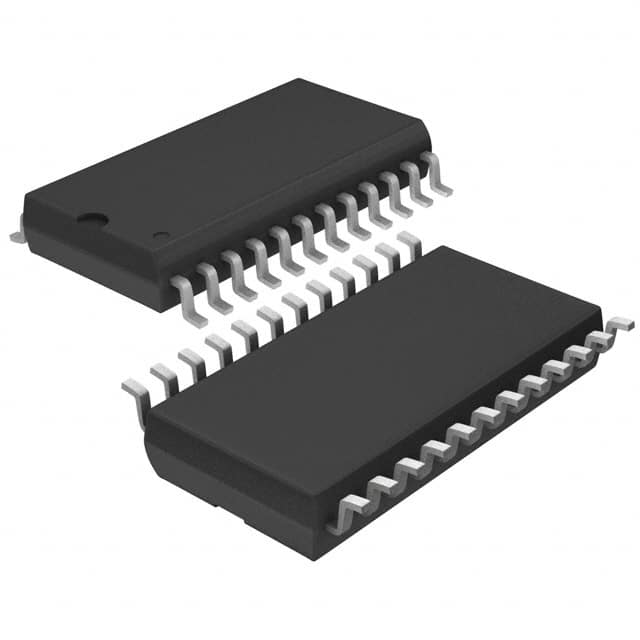
- Part No.:
- MCZ33976EGR2
- Manufacturer:
- NXP Semiconductors
- Category:
- Motor Drivers, Controllers
- Package:
- 24-SOIC (0.295", 7.50mm Width)
- Datasheet:
-
 MCZ33976EGR2.pdf
- Description:
- IC MTR DRV BIPLR 4.5-5.5V 24SOIC
- Quantity:
- Payment:

- Shipping:

Inventory:3,783
Please send an inquiry. Send us your inquiry, and we will respond immediately.
Product details
Overview
MCZ33976EGR2 from NXP Semiconductors (formerly Freescale) is a SPI-controlled dual two-phase stepper motor gauge driver IC for automotive instrument clusters. It integrates four H-bridge drivers, configurable pointer movement state machines, analog microstepping (12 steps/degree), 4096-position resolution, and 340° sweep capability - enabling precise, air-core-motor-emulating motion control of two independent gauges with minimal MCU overhead.
For engineers reviewing the MCZ33976EGR2 datasheet, MCZ33976EGR2 pinout, MCZ33976EGR2 application, or MCZ33976EGR2 equivalent, key selection considerations include its 24-pin SOICW package, VPWR range (6.5–26 V), calibrated internal oscillator (±10% accuracy), 400°/s max pointer velocity, 4500°/s² max acceleration, and compatibility with MMT-licensed AFIC 6405 and Switec MS-X15.xxx motors.
Technical Context
The MCZ33976EGR2 implements a fully integrated, channel-independent state machine for pointer positioning, acceleration profiling, and return-to-zero (RTZ) sequencing - all executed autonomously without continuous MCU intervention. Its sigma-delta ADC supports RTZ accumulator measurement, while the configurable ramp selection register (RMPSELR) enables tuning of velocity profiles per gauge.
It uses a software-calibratable internal oscillator (1.0 MHz nominal, ±10% after calibration) to govern timing-critical microstep transitions; calibration is triggered via PECCR bit PE3 using an 8.0 µs pulse on CS. The device supports daisy-chained SPI communication and reports real-time position, velocity, direction, and fault status (overtemperature, over/undervoltage) via its 16-bit status word.
Key Specifications
| Parameter | Value and Actual Design Meaning |
|---|---|
| Supply Voltage (VPWR) | 6.5 V to 26 V - supports direct battery connection in automotive 12 V systems with overvoltage protection up to 38 V. |
| Logic Supply (VDD) | 4.5 V to 5.5 V - compatible with standard 5 V MCU interfaces; under-voltage reset at 4.5 V. |
| Max Pointer Velocity | 400°/s - enables rapid gauge sweeps (e.g., fuel or speed needle movement) within human-perceptible response time. |
| Max Pointer Acceleration | 4500°/s² - ensures smooth, jerk-free motion during fast position changes, critical for driver readability. |
| Microstepping Resolution | 12 steps/degree - delivers 4096 discrete steady-state positions across 340° sweep, eliminating visible stepping artifacts. |
| SPI Interface Speed | Up to 2.0 MHz - allows efficient command updates and status reads without saturating typical automotive MCU SPI peripherals. |
| Output Current Limit | 40–170 mA per H-bridge output - configurable drive strength suitable for low-power instrumentation stepper coils. |
| Thermal Shutdown | 155°C to 180°C - protects against sustained overloads in enclosed instrument panel environments. |
Pinout & Package
MCZ33976EGR2 is housed in a 24-pin SOICW (Small Outline Integrated Circuit, Wide-body) package with exposed thermal pad (Pb-free EG suffix). Pin pitch is 1.27 mm; body width is 7.5 mm. Thermal resistance RθJA = 60°C/W enables operation at 125°C ambient when properly heatsinked.
| Pin/Terminal | Circuit Role | Design Meaning |
|---|---|---|
| COS0+, COS0−, SIN0+, SIN0− | H-Bridge Outputs 0 | Drive sine/cosine coils of first two-phase stepper motor; support four-quadrant current sourcing/sinking for bidirectional torque control. |
| COS1+, COS1−, SIN1+, SIN1− | H-Bridge Outputs 1 | Drive second independent two-phase stepper motor; identical electrical specs and timing to Channel 0 outputs. |
| GND (Pins 5–8, 17–20) | Power & Logic Ground | Eight dedicated ground pins reduce IR drop and improve thermal dissipation; shared reference for H-bridge low-side transistors and logic. |
| CS, SCLK, SI, SO | SPI Interface | Full-duplex 16-bit SPI interface compliant with 5 V CMOS levels; SO tri-stated when CS high; supports daisy-chaining. |
| RST, RTZ, VDD, VPWR | Control & Power | RST resets internal logic; RTZ is multiplexed output for non-driven coil during zeroing; VDD powers logic/SPI; VPWR supplies H-bridges. |
Key Features
| Feature | Design Value |
|---|---|
| Channel-Independent Pointer State Machine | Each gauge executes autonomous position, velocity, and acceleration control - no CPU polling or real-time interrupt servicing required. |
| Analog Microstepping (12 steps/degree) | Eliminates audible motor noise and visual stepping artifacts; achieves smooth, analog-like pointer motion indistinguishable from air-core meters. |
| Software-Calibratable Internal Oscillator | Enables ±10% clock accuracy via 8 µs CS pulse - removes need for external crystal while maintaining timing-critical motion repeatability. |
| Return-to-Zero (RTZ) with Accumulator ADC | Measures residual coil voltage during zeroing to detect mechanical end-stop contact - ensures repeatable absolute zero position without homing sensors. |
| MMT & Switec Motor Compatibility | Direct support for licensed AFIC 6405 and MS-X15.xxx motor families - simplifies migration from legacy air-core or competing stepper solutions. |
| Low Sleep Current (≤60 µA) | Enables always-on cluster functionality with minimal battery drain during vehicle sleep mode - meets OEM quiescent current requirements. |
Applications
| Automotive Speedometer | Automotive Fuel Gauge |
|---|---|
Use Scenario: Real-time display of vehicle speed derived from CAN bus or wheel sensor signals. IC Role / Device Role / Timing Role: MCZ33976EGR2 receives target position commands via SPI and autonomously drives the speedometer stepper motor to match commanded angular position. Use Value: Achieves <100 ms full-scale sweep with smooth acceleration/deceleration - meeting OEM readability and safety response standards. | Use Scenario: Visual indication of remaining fuel level based on tank sender resistance readings. IC Role / Device Role / Timing Role: MCZ33976EGR2 executes calibrated pointer movement from empty (0°) to full (340°) using preloaded ramp profiles and microstepping. Use Value: Eliminates mechanical hysteresis and temperature drift seen in traditional bimetallic gauges - improves fuel level accuracy across -40°C to +85°C. |
| Automotive Oil Pressure Gauge | Automotive Battery Voltage Monitor |
Use Scenario: Display of engine oil pressure during startup and operation using analog sensor input. IC Role / Device Role / Timing Role: MCZ33976EGR2 drives oil pressure gauge motor with configurable acceleration to avoid overshoot during rapid pressure rise. Use Value: Supports fail-safe "zero-at-failure" behavior via RTZ and overtemperature shutdown - enhances diagnostic reliability. | Use Scenario: Monitoring of 12 V system voltage to warn driver of alternator or battery faults. IC Role / Device Role / Timing Role: MCZ33976EGR2 interprets voltage-scaled digital commands and moves pointer to corresponding position on linear scale. Use Value: Integrates VPWR undervoltage/overvoltage detection - triggers automatic gauge hold or warning flash without MCU intervention. |
Equivalent & Alternatives
The following parts are listed as comparable options for similar dual stepper gauge driver applications.
| Alternative Part | Technical Difference | Application Difference | Selection Advice |
|---|---|---|---|
| MC33886AEK | Single-channel H-bridge driver (no integrated state machine); requires external MCU for motion control and microstepping. | Lacks autonomous pointer control, RTZ, and calibration - demands higher firmware overhead and external timing components. | Select when cost-sensitive designs already implement motion algorithms in host MCU and require only power-stage integration. |
| DRV8876PWPR | Single H-bridge with integrated current regulation and SPI interface; no multi-gauge support or built-in position state machine. | Requires dual devices plus external controller for two-gauge systems; no native 4096-position resolution or analog microstepping. | Choose for new designs prioritizing programmable current limits and fault reporting over autonomous gauge motion. |
Compared with MC33886AEK and DRV8876PWPR, the MCZ33976EGR2 uniquely delivers fully autonomous dual-gauge control in one IC - reducing BOM count, eliminating motion algorithm development, and ensuring consistent, calibrated pointer behavior across production units without firmware tuning.
Availability
MCZ33976EGR2 is available at Aetrix Electronics and suitable for automotive instrument clusters, EV dashboard displays, and commercial vehicle telematics requiring stable component supply, long-term lifecycle support, and AEC-Q100-compliant motion control ICs.
Supply support for MCZ33976EGR2 includes scheduled delivery planning, volume procurement assistance, BOM continuity management, traceable sourcing, and lifecycle availability coordination for OEM customers, industrial embedded developers, connected-device designers, and electronics production programs.
Manufacturer
NXP Semiconductors is a global semiconductor leader focused on automotive, industrial, and IoT applications, with deep expertise in embedded processing, connectivity, and analog power solutions.
The MCZ33976EGR2 belongs to NXP's automotive analog driver product line, designed specifically to replace electromechanical air-core meters with digitally controlled stepper-based instrumentation - delivering higher reliability, programmability, and design flexibility for modern digital dashboards.
FAQ
What is the primary function of the MCZ33976EGR2 in automotive instrument clusters?
The MCZ33976EGR2 serves as a dual-channel, SPI-controlled stepper motor gauge driver that autonomously controls the position, velocity, and acceleration of two independent instrumentation pointers - replacing traditional air-core meters with smooth, programmable, and highly repeatable motion. It integrates H-bridges, a calibrated oscillator, microstepping logic, and RTZ functionality, enabling full gauge control without continuous MCU involvement. This makes MCZ33976EGR2 ideal for speedometers, fuel gauges, and other analog-style displays in modern automotive clusters.
Does the MCZ33976EGR2 require an external crystal or resonator?
No, the MCZ33976EGR2 does not require an external crystal or resonator. It features an internal, software-calibratable oscillator with nominal frequency of 1.0 MHz and ±10% accuracy after calibration using an 8.0 µs pulse on the CS pin. This eliminates BOM cost and board space associated with external timing components while maintaining sufficient timing precision for pointer motion control. The calibration process is initiated via the PECCR register and requires no additional hardware - a key advantage of the MCZ33976EGR2 over alternatives needing external clocks.
How does the MCZ33976EGR2 handle return-to-zero (RTZ) calibration?
The MCZ33976EGR2 performs RTZ using its integrated sigma-delta ADC to measure residual voltage on the non-driven coil during zeroing - detecting mechanical end-stop contact without external sensors. The RTZ accumulator value is reported via SPI status word, allowing the host MCU to verify successful zeroing. This process is fully autonomous: once triggered via the RTZR register, the IC sequences coil energization, monitors the ADC result, and holds the pointer at true mechanical zero. This capability ensures repeatable absolute positioning across temperature and lifetime - a core requirement for the MCZ33976EGR2 in safety-critical automotive applications.
Can the MCZ33976EGR2 drive both MMT-licensed and Switec stepper motors?
Yes, the MCZ33976EGR2 is explicitly designed for compatibility with both MMT-licensed motors (e.g., AFIC 6405) and Switec MS-X15.xxx series motors. This is achieved through configurable bit PE6 in the PECCR register: writing PE6 = 0 selects MMT mode, while PE6 = 1 selects Switec mode. The IC adjusts coil drive timing, current profiles, and microstep mapping accordingly. This dual-motor support makes MCZ33976EGR2 suitable for multi-supplier strategies and legacy platform upgrades - a distinguishing feature confirmed in Freescale's official documentation and validated across production automotive programs.
What thermal protection features does the MCZ33976EGR2 include?
The MCZ33976EGR2 incorporates overtemperature shutdown (OTSD) with a trip range of 155°C to 180°C and hysteresis of 8.0°C to 16°C, preventing permanent damage during sustained overload or poor heatsinking. It also includes under- and overvoltage detection on VPWR (UV threshold 5.0–6.2 V; OV threshold 26–38 V), disabling outputs until conditions normalize. These protections operate independently of the host MCU and are reported via SPI status bits - enabling fail-safe behavior in harsh automotive environments. All thermal and voltage thresholds are production-tested and guaranteed across the -40°C to +125°C operating range specified for the MCZ33976EGR2.
MCZ33976EGR2 Specifications
- Product attributes
- Attribute value
- Manufacturer:
- NXP Semiconductors
- Series:
- -
- Package/Case:
- 24-SOIC (0.295", 7.50mm Width)
- Packaging:
- Tape & Reel (TR)
- Product Status:
- Obsolete
- Motor Type - Stepper:
- Bipolar
- Motor Type - AC, DC:
- -
- Function:
- Driver - Fully Integrated, Control and Power Stage
- Output Configuration:
- Half Bridge (8)
- Interface:
- SPI
- Technology:
- -
- Step Resolution:
- -
- Applications:
- -
- Current - Output:
- 40mA
- Voltage - Supply:
- 4.5V ~ 5.5V
- Voltage - Load:
- 6.5V ~ 26V
- Operating Temperature:
- -40°C ~ 150°C (TJ)
- Grade:
- Automotive
- Qualification:
- -
- Mounting Type:
- Surface Mount
- Supplier Device Package:
- 24-SOIC
MCZ33976EGR2 FAQ
1.How can I place an order for MCZ33976EGR2 through Aetrix?
Please submit a Request for Quotation (RFQ) for MCZ33976EGR2 on Aetrix. Our sales agent will provide a competitive quotation and guide you through the order confirmation once you accept the terms.
2.Are the price and stock information for MCZ33976EGR2 reliable?
The price and inventory of MCZ33976EGR2 are updated periodically and may fluctuate due to market conditions. Stock and pricing data are typically refreshed every 24 hours. Quotation validity for MCZ33976EGR2 is usually 5 days.
3.What payment methods are accepted for MCZ33976EGR2?
We accept Wire Transfer, PayPal, Credit Card, Western Union, MoneyGram, and Escrow for MCZ33976EGR2 transactions.
Note: Certain payment methods may incur a processing fee.
4.How is shipping managed for MCZ33976EGR2?
MCZ33976EGR2 orders can be shipped via leading logistics carriers, including DHL, UPS, FedEx, TNT, or Registered Mail.
Once your MCZ33976EGR2 order is processed, you will receive an email with the shipment details and tracking number.
Note: Tracking information may take up to 24 hours to appear. Express delivery typically takes 3–5 business days.
5.How can I obtain technical support or documentation for MCZ33976EGR2?
For technical support, including MCZ33976EGR2 datasheets, pinout diagrams, or application guidance, please contact our engineering support team. They can provide detailed documentation and assistance for your MCZ33976EGR2 requirements.
6.How does Aetrix verify that MCZ33976EGR2 is sourced from the original manufacturer or authorized distributors?
All MCZ33976EGR2 products on Aetrix are procured from qualified distributors and authorized channels. Our dedicated quality assurance team conducts strict verification, including traceability checks and, if necessary, third-party testing. This ensures that MCZ33976EGR2 meets industry standards.
7.What is the process for return or replacement of MCZ33976EGR2?
All MCZ33976EGR2 units undergo pre-shipment inspection (PSI). If there is an issue with MCZ33976EGR2, returns or replacements are accepted under the following conditions:
1.Quantity discrepancies, incorrect items, or visible external defects (such as breakage or corrosion), acknowledged by Aetrix.
2.The issue is reported within 90 days of delivery.
3.The MCZ33976EGR2 part is unused and in its original packaging.
Return procedure for MCZ33976EGR2:
1.Submit a request within 90 days.
2.Obtain a Return Material Authorization (RMA) from Aetrix.
MCZ33976EGR2 Tags
-
DRV2603RUNR
Texas Instruments
-
DRV8837CDSGR
Texas Instruments
-
DRV8837DSGR
Texas Instruments
-
DRV8838DSGR
Texas Instruments
-
DRV8839DSSR
Texas Instruments
-
EMC2301-1-ACZL-TR
Microchip Technology
-
DRV8231ADSGR
Texas Instruments
-
EMC2302-2-AIZL-TR
Microchip Technology
-
DRV8800PWPR
Texas Instruments
-
DRV8835DSSR
Texas Instruments
-
EMC2303-1-KP-TR
Microchip Technology
-
DRV8876PWPR
Texas Instruments
Tech Hub

A practical engineering guide to 3.3V and 5V logic compatibility, input thresholds, resistor dividers, translator ICs, MOSFET level shifting, I2C pull-ups, timing limits and power-sequencing risks.

The 74HC595 uses push-pull logic outputs, while the TPIC6B595 uses 50 V open-drain DMOS sinks for higher-power loads. This guide compares timing, current limits, 3.3 V interfacing, load wiring, thermal…

The 74HC595 converts serial data into eight stable parallel outputs. This guide covers pin functions, shift and storage timing, OE and MR behavior, drive-current limits, cascading, voltage compatibilit…

A technical comparison of level-sensitive latches and edge-triggered flip-flops, covering timing windows, setup and hold limits, master–slave operation, time borrowing, race-through, HDL inference and…

A D latch stores one bit while Enable controls when data can pass. This reference covers gate-level operation, truth tables, transparency, setup and hold timing, LE versus OE, common ICs and practical …

An SR latch stores one bit through cross-coupled feedback. This engineering reference covers NOR and NAND implementations, truth tables, forbidden-state recovery, gated operation, switch debouncing, fa…

Latch circuits retain one bit through feedback. This technical reference covers SR and D latches, truth tables, transparency, timing limits, latch-versus-flip-flop behavior, applications and common log…

An engineering guide to LED driver operation, constant-current and constant-voltage outputs, linear and switching topologies, dimming, IC selection, calculations, replacement compatibility, and fault c…

Operational amplifier guide covering op amp basics, feedback, ideal vs real op amps, common configurations, buffer circuits, offset, bias current, gain-bandwidth, slew rate, rail-to-rail limits and sel…

Jumper cables guide covering safe connection order, red and black clamp placement, final ground connection, cable gauge, length, clamp quality, copper vs CCA cables, jump starter comparison and battery…


