
 My Inquiry
 My Account


NXP Semiconductors MCZ33998EG
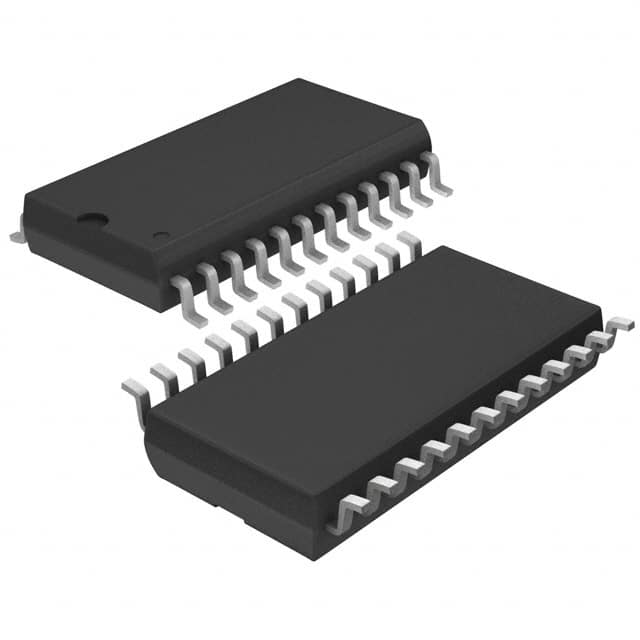
- Part No.:
- MCZ33998EG
- Manufacturer:
- NXP Semiconductors
- Category:
- Voltage Regulators - Linear + Switching
- Package:
- 24-SOIC (0.295", 7.50mm Width)
- Datasheet:
-
 MCZ33998EG.pdf
- Description:
- IC REG TRIPLE CHRPMP/LNR 24SOIC
- Quantity:
- Payment:

- Shipping:

Inventory:1,822
Please send an inquiry. Send us your inquiry, and we will respond immediately.
Product details
Overview
MCZ33998EG from NXP (formerly Freescale) is a medium-power, multi-output automotive power supply IC integrating a 5.0 V/1400 mA step-down switching regulator, a 2.6 V/400 mA linear post-regulator with external NPN pass transistor (BCP68), a 2.6 V/10 mA standby regulator (VKAM), and two protected 5.0 V/200 mA sensor supplies (VREF1/VREF2). It operates from 6.0–26.5 V input with 40 V transient tolerance and supports power sequencing for MPC5xx/683xx microcontrollers in engine control modules.
For engineers reviewing the MCZ33998EG datasheet, MCZ33998EG pinout, MCZ33998EG application, or MCZ33998EG equivalent, this page delivers verified technical context, exact pin functions, real-world timing behavior (750 kHz switching, 5–15 ms soft-start), fault management (short-to-battery/ground detection, retry timers), and validated alternative options for automotive power system design.
Technical Context
The MCZ33998EG implements sensorless current-mode control in its 750 kHz buck converter, delivering 5.0 V ±2% at up to 1400 mA total output while coordinating soft-start (5–15 ms), fault-off timing (1–10 ms), and power-on reset (5–15 ms PWROK delay). Its architecture integrates dual enable logic (EN for main supplies, SNSEN for sensor supplies), active discharge paths (RHDISCH = 1.0–15 Ω, RLDISCH = 1.0–10 Ω), and internal LDMOS switches for VREF1/VREF2 with short-circuit protection and 5–20 ms retry capability.
It features three independent regulation domains: VDDH (switching, 5.0 V), VDDL (linear post-regulated via DRVL/FBL with external BCP68), and VKAM (standby, 2.6 V). Supervision includes open-drain PWROK (monitors VDDH/VDDL undervoltage thresholds: 4.5–4.8 V / 2.1–2.5 V) and VKAMOK (monitors VKAM against bandgap reference), both with defined delay times (10–30 ms VKAMOK delay) and pull-down current specs (500–1200 nA on EN/SNSEN).
Key Specifications
| Parameter | Value and Actual Design Meaning |
|---|---|
| Input Voltage Range | 6.0–26.5 V continuous, 40 V transient survival - enables direct battery connection in 12 V/24 V automotive systems with load-dump immunity. |
| VDDH Output | 5.0 V ±2% @ 1400 mA max - powers digital/analog circuits of ECMs; regulated by integrated P-channel MOSFET (BVDSS = 45 V, ISCSW1 = −7.0 A). |
| VDDL Output | 2.6 V @ 400 mA - linear post-regulator driven by DRVL pin; requires external BCP68 NPN transistor to minimize IC power dissipation. |
| VKAM Output | 2.6 V @ 10 mA standby - low-quiescent, low-dropout regulator for keep-alive memory (SRAM, timers, CAN wake-up) during key-off. |
| VREF1/VREF2 Outputs | 5.0 V @ 200 mA each, protected by internal LDMOS switches - short-to-battery/ground detection (500–900 mA), automatic retry (5–20 ms), RDS(ON) ≤ 455 mΩ at 125°C. |
| Switching Frequency | 750 kHz nominal - enables compact magnetics (e.g., 10–15 µH inductors) and reduces EMI compared to lower-frequency alternatives. |
| Package | 24-pin SOIC-Wide (SOICW), Pb-free (EG suffix), RθJA = 60°C/W - compatible with standard automotive reflow profiles per J-STD-020C. |
Pinout & Package
MCZ33998EG is housed in a 24-pin SOIC-Wide (SOICW) package with gull-wing leads, optimized for thermal performance (RθJB = 20°C/W) and automotive reliability. Pin numbering follows standard SOICW convention (pin 1 at top-left corner, counterclockwise).
| Pin/Terminal | Circuit Role | Design Meaning |
|---|---|---|
| 1 VKAMOK | Open-drain fault indicator | Pulled low when VKAM falls below 2.1–2.5 V threshold; requires external pull-up to VKAM for keep-alive monitoring. |
| 2 KA_VPWR | Keep-alive power input | Independent supply for VKAM during ignition-off; supports dual-battery architectures (e.g., direct battery + switched rail). |
| 3 CRES | Charge pump reservoir | Connects to 22 nF capacitor; generates ~12–15 V internal bias for gate drive and LDMOS switches. |
| 4 VPWR | Main power input | Direct connection to battery; must be protected externally (e.g., MURS320 diode) against reverse polarity and transients. |
| 5–8, 17–20 GND | Power/Signal ground | Eight dedicated ground pins minimize impedance and improve noise immunity in high-current switching paths. |
| 9 VSW | Switching node | Drain of integrated P-MOSFET; connects to VPWR and inductor; critical for EMI layout and snubber design. |
| 10 PWROK | Open-drain power-good signal | Asserted high after VDDH/VDDL stabilize and power-on reset timer expires; monitors both outputs simultaneously. |
| 11 FBKB | VDDH feedback input | Connects to resistor divider from VDDH; sets 5.0 V regulation point; referenced to internal bandgap (Vbg). |
| 12 VSUM | Error amplifier summing node | Inverting input of error amp; common point of internal feedback divider; used for loop compensation. |
| 13 DRVL | VDDL base drive output | Drives base of external BCP68 NPN transistor; delivers 5–25 mA to sustain 400 mA VDDL load. |
| 14 FBL | VDDL feedback input | Senses VDDL output voltage; closes regulation loop for 2.6 V accuracy under line/load variation. |
| 15 VDDH | 5.0 V switching output | Primary power rail; supplies VDDL driver, VREF regulators, and MCU core logic; rated 1400 mA total. |
| 16 VREF2 | Sensor supply #2 output | Protected 5.0 V rail for analog sensors; automatically disabled on short-circuit and retried after 5–20 ms. |
| 21 VREF1 | Sensor supply #1 output | Identical to VREF2; independent short-circuit protection and retry; supports dual-sensor configurations. |
| 22 SNSEN | Sensor supply enable input | Active-high logic input; disables VREF1/VREF2 when pulled low; allows software-controlled sensor power gating. |
| 23 EN | Main enable input | Active-high logic input; forces full shutdown (quiescent IQVPWR = 5–15 µA) when low; monitored for wake-up. |
| 24 VKAM | 2.6 V standby regulator output | Low-dropout, low-quiescent regulator for key-off operation; supplies SRAM, timers, and CAN wake-up circuitry. |
Key Features
| Feature | Design Value |
|---|---|
| Integrated sensorless current-mode buck controller | Enables stable 750 kHz switching without external current sense resistor - reduces BOM cost and PCB area. |
| Dual independent enable inputs (EN, SNSEN) | Allows hierarchical power management: EN controls all rails, SNSEN selectively disables sensor supplies without affecting VDDH/VDDL. |
| VREF short-circuit protection with retry | Automatically shuts down VREF1/VREF2 on hard shorts (500–900 mA detect threshold) and attempts recovery after 5–20 ms - prevents latch-up in sensor faults. |
| Active discharge paths for VDDH and VDDL | RHDISCH = 1.0–15 Ω and RLDISCH = 1.0–10 Ω ensure rapid rail collapse during shutdown - critical for safe MCU reset sequencing. |
| Keep-alive regulator with VKAMOK monitoring | Provides 2.6 V @ 10 mA during key-off with dedicated fault flag (VKAMOK) - enables reliable nonvolatile memory retention and wake-up functionality. |
| Power-up delay timers for VPWR and KA_VPWR | Ensures stable input conditions before enabling regulators - prevents false starts during battery connection or cranking dips. |
Applications
| Engine Control Module (ECM) | Transmission Control Unit (TCU) |
|---|---|
|
Use Scenario: Powering MPC5xx-based engine controllers with multiple analog sensors, CAN interface, and nonvolatile memory. IC Role / Device Role / Timing Role: MCZ33998EG provides sequenced 5.0 V (VDDH), 2.6 V (VDDL), and dual 5.0 V sensor rails (VREF1/VREF2) while managing wake-up via VKAM during key-off. Use Value: Eliminates need for discrete DC-DC + LDO + supervisor combinations; reduces component count by ≥7 parts and improves fault resilience with integrated retry logic. |
Use Scenario: Supplying 5.0 V digital logic, 2.6 V analog front-end, and isolated sensor rails in automatic transmission controllers. IC Role / Device Role / Timing Role: MCZ33998EG delivers coordinated power-up (tD(VPWR) = 1–10 ms), fault detection (tDET = 0.5–2.0 µs), and retry (tRET = 5–20 ms) for robust operation under harsh drivetrain conditions. Use Value: Ensures uninterrupted sensor data acquisition during gear shifts by maintaining VREF1/VREF2 integrity despite transient shorts or EMI-induced faults. |
| Body Control Module (BCM) | Advanced Driver Assistance System (ADAS) Sensor Hub |
|
Use Scenario: Centralized power management for door modules, lighting, and LIN bus peripherals in vehicle body electronics. IC Role / Device Role / Timing Role: MCZ33998EG supplies 5.0 V (VDDH) to microcontroller, 2.6 V (VKAM) for keep-alive memory, and 5.0 V (VREF1) for ambient light/temperature sensors. Use Value: Enables true "zero-power" sleep mode via EN pin control and VKAM's 50–350 µA quiescent draw - extends battery life in parked vehicles. |
Use Scenario: Powering radar/LiDAR sensor interfaces requiring clean, protected 5.0 V rails and fast fault response in ADAS domain controllers. IC Role / Device Role / Timing Role: MCZ33998EG provides dual VREF outputs with <2 µs overcurrent detection and <20 ms retry - meets ASIL-B functional safety timing requirements for sensor redundancy. Use Value: Prevents single-point failure propagation by isolating sensor supply faults; maintains system availability through autonomous recovery without host MCU intervention. |
Equivalent & Alternatives
The following parts are listed as comparable options for similar multi-rail automotive power supply applications.
| Alternative Part | Technical Difference | Application Difference | Selection Advice |
|---|---|---|---|
| MC33FS4500AE | Higher integration: includes CAN transceiver, watchdog, and windowed reset; 5.0 V/1.5 A switching output; no external pass transistor needed for 2.6 V rail. | Targets next-gen ASIL-B systems requiring communication + supervision; lacks separate KA_VPWR pin and VKAM-specific standby optimization. | Select MC33FS4500AE when CAN physical layer and enhanced diagnostics are required; choose MCZ33998EG for cost-sensitive, proven ECM designs with discrete transistor flexibility. |
| TPS65381A-Q1 | TI device: triple-output (5.0 V/1.2 A, 3.3 V/0.6 A, 1.2 V/0.3 A); no standalone 2.6 V rail; uses external FETs for all regulators; SPI-configurable. | Designed for scalable MCU power (e.g., Hercules TMS570); requires external components for 2.6 V generation and lacks integrated sensor supply protection. | Select TPS65381A-Q1 for programmable, multi-voltage SoC power; retain MCZ33998EG where fixed 2.6 V/5.0 V rails, sensor protection, and VKAM keep-alive are mandatory. |
Compared with MC33FS4500AE and TPS65381A-Q1, the MCZ33998EG offers unique value in legacy automotive platforms via its dedicated 2.6 V standby regulator (VKAM), dual protected sensor supplies, and compatibility with discrete BCP68 transistor - reducing thermal stress on the IC while maintaining field-proven reliability in MPC5xx-based systems.
Availability
MCZ33998EG is available at Aetrix Electronics and suitable for engine control modules, transmission control units, body control modules, and ADAS sensor hubs requiring stable component supply across extended temperature ranges (−40°C to +125°C) and automotive qualification standards.
Supply support for MCZ33998EG includes scheduled delivery planning, volume procurement assistance, BOM continuity management, traceable sourcing, and lifecycle availability coordination for OEM customers, industrial embedded developers, connected-device designers, and electronics production programs.
Manufacturer
NXP Semiconductors, headquartered in Eindhoven, Netherlands, is a global leader in secure connectivity solutions for automotive, industrial, and IoT applications, with deep heritage in automotive analog power management from its Freescale acquisition.
The MCZ33998EG belongs to NXP's legacy automotive power supply family, engineered specifically for engine and transmission control modules requiring robust multi-rail sequencing, sensor supply protection, and key-off keep-alive functionality in harsh environments.
FAQ
What is the maximum continuous input voltage rating for the MCZ33998EG?
The MCZ33998EG supports a normal operating input voltage range of 6.0 V to 26.5 V on both VPWR and KA_VPWR pins. It is designed to survive 40 V transients (e.g., load dump events) without damage, though parameters are not guaranteed during such conditions. This makes the MCZ33998EG suitable for 12 V and 24 V automotive battery systems with standard protection circuitry.
Does the MCZ33998EG require an external pass transistor for the 2.6 V linear regulator (VDDL)?
Yes, the MCZ33998EG requires an external NPN pass transistor (e.g., BCP68) for the VDDL 2.6 V linear regulator. The DRVL pin drives the transistor base, and the FBL pin senses the output voltage for closed-loop regulation. This architecture offloads power dissipation from the IC die, allowing the MCZ33998EG to deliver 400 mA at 2.6 V while maintaining thermal stability in compact SOICW packaging.
How does the MCZ33998EG handle short-circuit faults on its VREF1 and VREF2 sensor supplies?
The MCZ33998EG detects short-to-battery or short-to-ground faults on VREF1/VREF2 using internal LDMOS transistors with current thresholds of 500–900 mA. Upon detection (<2 µs response), the affected output is disabled and the retry timer (5–20 ms) initiates. After expiration, the supply automatically attempts reactivation - a fully autonomous process that avoids host MCU intervention and ensures resilience in noisy sensor environments.
What is the function of the VKAMOK pin on the MCZ33998EG?
The VKAMOK pin is an open-drain output that signals a severe fault on the VKAM 2.6 V standby regulator. It is pulled low when VKAM drops below 2.1–2.5 V (relative to internal bandgap reference), indicating loss of keep-alive power to nonvolatile memory or wake-up circuitry. An external pull-up resistor to VKAM is required, and the signal enables system-level fault logging or safe shutdown during key-off operation of the MCZ33998EG.
Can the MCZ33998EG be used in ASIL-B compliant automotive systems?
The MCZ33998EG supports ASIL-B development through its built-in safety mechanisms: dual independent enable inputs (EN/SNSEN), redundant voltage monitoring (PWROK/VKAMOK), fast fault detection (<2 µs), and autonomous retry logic. While it lacks ISO 26262 certification documentation, its functional behavior - including 1–10 ms fault-off timing, 5–15 ms power-on reset, and active discharge paths - aligns with ASIL-B timing and diagnostic coverage requirements when integrated into properly architected systems.
MCZ33998EG Specifications
- Product attributes
- Attribute value
- Manufacturer:
- NXP Semiconductors
- Series:
- -
- Package/Case:
- 24-SOIC (0.295", 7.50mm Width)
- Packaging:
- Tube
- Product Status:
- Obsolete
- Topology:
- Charge Pump (1), Linear (LDO) (2)
- Number of Outputs:
- 3
- Frequency - Switching:
- 750kHz
- Voltage/Current - Output 1:
- 5V, 1.4A
- Voltage/Current - Output 2:
- 2.6V, 400mA
- Voltage/Current - Output 3:
- 2.6V, 400mA
- w/LED Driver:
- No
- w/Supervisor:
- No
- w/Sequencer:
- Yes
- Voltage - Supply:
- 6V ~ 26.5V
- Operating Temperature:
- -40°C ~ 125°C
- Grade:
- -
- Qualification:
- -
- Mounting Type:
- Surface Mount
- Supplier Device Package:
- 24-SOIC
MCZ33998EG FAQ
1.How can I place an order for MCZ33998EG through Aetrix?
Please submit a Request for Quotation (RFQ) for MCZ33998EG on Aetrix. Our sales agent will provide a competitive quotation and guide you through the order confirmation once you accept the terms.
2.Are the price and stock information for MCZ33998EG reliable?
The price and inventory of MCZ33998EG are updated periodically and may fluctuate due to market conditions. Stock and pricing data are typically refreshed every 24 hours. Quotation validity for MCZ33998EG is usually 5 days.
3.What payment methods are accepted for MCZ33998EG?
We accept Wire Transfer, PayPal, Credit Card, Western Union, MoneyGram, and Escrow for MCZ33998EG transactions.
Note: Certain payment methods may incur a processing fee.
4.How is shipping managed for MCZ33998EG?
MCZ33998EG orders can be shipped via leading logistics carriers, including DHL, UPS, FedEx, TNT, or Registered Mail.
Once your MCZ33998EG order is processed, you will receive an email with the shipment details and tracking number.
Note: Tracking information may take up to 24 hours to appear. Express delivery typically takes 3–5 business days.
5.How can I obtain technical support or documentation for MCZ33998EG?
For technical support, including MCZ33998EG datasheets, pinout diagrams, or application guidance, please contact our engineering support team. They can provide detailed documentation and assistance for your MCZ33998EG requirements.
6.How does Aetrix verify that MCZ33998EG is sourced from the original manufacturer or authorized distributors?
All MCZ33998EG products on Aetrix are procured from qualified distributors and authorized channels. Our dedicated quality assurance team conducts strict verification, including traceability checks and, if necessary, third-party testing. This ensures that MCZ33998EG meets industry standards.
7.What is the process for return or replacement of MCZ33998EG?
All MCZ33998EG units undergo pre-shipment inspection (PSI). If there is an issue with MCZ33998EG, returns or replacements are accepted under the following conditions:
1.Quantity discrepancies, incorrect items, or visible external defects (such as breakage or corrosion), acknowledged by Aetrix.
2.The issue is reported within 90 days of delivery.
3.The MCZ33998EG part is unused and in its original packaging.
Return procedure for MCZ33998EG:
1.Submit a request within 90 days.
2.Obtain a Return Material Authorization (RMA) from Aetrix.
MCZ33998EG Tags

-
TPS6521905RHBR
Texas Instruments
-
MIC3385YHL-TR
Microchip Technology
-
A4402ELPTR-T
Allegro MicroSystems
-
LM26480SQ-AA/NOPB
Texas Instruments
-
A4402KLPTR-T
Allegro MicroSystems
-
BD71847AMWV-E2
ROHM Semiconductor
-
ADP5040ACPZ-1-R7
Analog Devices Inc.
-
LT3048IDC#TRPBF
Analog Devices Inc.
-
ADP5037ACPZ-R7
Analog Devices Inc.
-
XRP7714ILB-F
MaxLinear, Inc.
-
LTC3260EDE#TRPBF
Analog Devices Inc.
-
LTC3260EMSE#PBF
Analog Devices Inc.
Tech Hub

A practical engineering guide to 3.3V and 5V logic compatibility, input thresholds, resistor dividers, translator ICs, MOSFET level shifting, I2C pull-ups, timing limits and power-sequencing risks.

The 74HC595 uses push-pull logic outputs, while the TPIC6B595 uses 50 V open-drain DMOS sinks for higher-power loads. This guide compares timing, current limits, 3.3 V interfacing, load wiring, thermal…

The 74HC595 converts serial data into eight stable parallel outputs. This guide covers pin functions, shift and storage timing, OE and MR behavior, drive-current limits, cascading, voltage compatibilit…

A technical comparison of level-sensitive latches and edge-triggered flip-flops, covering timing windows, setup and hold limits, master–slave operation, time borrowing, race-through, HDL inference and…

A D latch stores one bit while Enable controls when data can pass. This reference covers gate-level operation, truth tables, transparency, setup and hold timing, LE versus OE, common ICs and practical …

An SR latch stores one bit through cross-coupled feedback. This engineering reference covers NOR and NAND implementations, truth tables, forbidden-state recovery, gated operation, switch debouncing, fa…

Latch circuits retain one bit through feedback. This technical reference covers SR and D latches, truth tables, transparency, timing limits, latch-versus-flip-flop behavior, applications and common log…

An engineering guide to LED driver operation, constant-current and constant-voltage outputs, linear and switching topologies, dimming, IC selection, calculations, replacement compatibility, and fault c…

Operational amplifier guide covering op amp basics, feedback, ideal vs real op amps, common configurations, buffer circuits, offset, bias current, gain-bandwidth, slew rate, rail-to-rail limits and sel…

Jumper cables guide covering safe connection order, red and black clamp placement, final ground connection, cable gauge, length, clamp quality, copper vs CCA cables, jump starter comparison and battery…


