
 My Inquiry
 My Account


Microchip Technology MGC3030T-I/SS
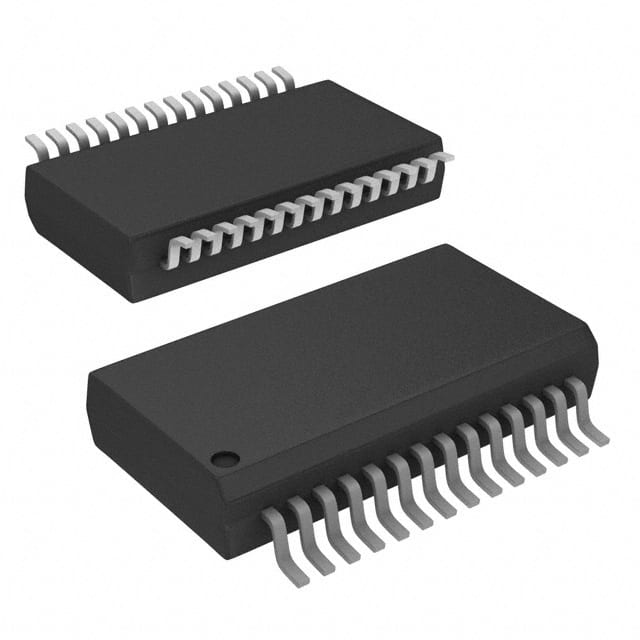
- Part No.:
- MGC3030T-I/SS
- Manufacturer:
- Microchip Technology
- Category:
- Specialized
- Package:
- 28-SSOP (0.209", 5.30mm Width)
- Datasheet:
-
 MGC3030T-I/SS.pdf
- Description:
- IC INTERFACE SPECIALIZED 28SSOP
- Quantity:
- Payment:

- Shipping:

Inventory:1,881
Please send an inquiry. Send us your inquiry, and we will respond immediately.
Product details
Overview
MGC3030T-I/SS from Microchip Technology is a 3D gesture recognition and motion tracking controller IC implementing GestIC® electrical near-field sensing. It delivers real-time free-space hand gesture detection (flick, circular, touch/tap), supports five analog receive channels and one transmit channel, operates at 3.3V with deep sleep current of 9 µA, and targets embedded human interface applications requiring low-power, host-free gesture control.
For engineers reviewing the MGC3030T-I/SS datasheet, MGC3030T-I/SS pinout, MGC3030T-I/SS application, or MGC3030T-I/SS equivalent, key selection considerations include its SSOP-28 package, absence of on-chip position tracking (vs. MGC3130), raw data streaming capability, I²C interface, and five configurable EIO pins for gesture-triggered output signaling.
Technical Context
The MGC3030T-I/SS implements a mixed-signal architecture with an integrated analog front end (AFE), digital signal processing unit (SPU), and on-chip Colibri Suite firmware. Its electrical near-field sensing operates at carrier frequencies from 44 kHz to 115 kHz, uses automatic frequency hopping and dual-stage filtering (analog + digital) for noise suppression, and achieves sub-femtofarad receiver sensitivity (<1 fF).
It supports autonomous operation via programmable self-wake-up and approach detection, enabling ultra-low-power system-level wake-on-gesture functionality. The device requires external electrode structures (PCB, ITO, conductive foil) and provides raw sensor data streaming over I²C while offloading gesture classification entirely on-chip - eliminating host CPU dependency for core gesture interpretation.
Key Specifications
| Parameter | Value and Actual Design Meaning |
|---|---|
| Function | 3D gesture recognition controller with raw data streaming - no on-chip position tracking (x,y,z) |
| Supply Voltage | 3.3 V ±5% - single-supply operation with dedicated analog/digital regulators (VCAPA/VCAPD) |
| Deep Sleep Current | 9 µA @ 3.3 V - enables battery-powered always-on gesture wake-up |
| Detection Range | 0–10 cm - defines usable free-space interaction volume above electrodes |
| Receiver Channels | 5 Rx analog inputs - supports frame+center electrode layouts for spatial coverage |
| Transmit Channel | 1 Tx analog output - drives E-field generation electrode at 44–115 kHz |
| I²C Interface | 1 × I²C (EIO4/SI0 & EIO5/SI1) - primary configuration and streaming interface |
| Operating Temp | −20°C to +85°C - qualified for industrial and consumer embedded environments |
Pinout & Package
Package: SSOP-28, 0.65 mm pitch, 7.80 × 10.50 mm footprint - surface-mount compatible with standard reflow profiles and optical inspection.
| Pin/Terminal | Circuit Role | Design Meaning |
|---|---|---|
| EIO0/TS | Configurable I/O / Transfer Status | Indicates active I²C data transfer; requires 10 kΩ pull-up for TS function |
| EIO4/SI0 & EIO5/SI1 | I/O / I²C SDA & SCL | Primary interface pins - require 1.8 kΩ pull-ups for I²C compliance |
| RX0–RX4 | Analog Inputs | Five high-sensitivity receive electrodes - connect to PCB/ITO sensing traces |
| TXD | Analog Output | Drives transmit electrode - connects to dedicated Tx trace in layered electrode stack |
| MCLR | Reset Input | Active-low master clear - requires external 10 kΩ pull-up for reliable reset assertion |
| VDD, VSS1–VSS3, VCAPA, VCAPD, VCAPS | Power & Decoupling | Separate analog/digital supplies with dedicated 4.7 µF filter caps (VCAPA/VCAPD) and bulk decoupling (2.2 µF + 100 nF on VDD) |
Key Features
| Feature | Design Value |
|---|---|
| On-chip Colibri Gesture Suite | Executes flick, circular, and touch/tap gesture classification without host CPU involvement - reduces BOM and firmware development effort |
| Approach Detection with Self Wake-up | Autonomously scans for hand presence at ~9 µA, triggering wake to full operation - enables true zero-power standby UX |
| Five EIO Pins with Gesture Port Mapping | Each EIO supports permanent high/low, toggle, pulse, or active-high/low outputs - allows direct hardware control of LEDs, relays, or MCU interrupts |
| Noise Immunity Architecture | Combines on-chip analog filtering, digital filtering, and automatic frequency hopping - maintains reliability in electrically noisy environments (e.g., white goods, audio systems) |
| Electrode Flexibility | Supports low-cost electrode materials including PCB copper, ITO touch panels, conductive paint, and LDS - lowers mechanical integration cost and enables invisible UI design |
Applications
| Audio Products | Notebooks / Keyboards |
|---|---|
Use Scenario: Volume, mute, and playback control on smart speakers and soundbars using mid-air gestures. IC Role / Device Role / Timing Role: Primary gesture processor - acquires raw electrode signals, runs Colibri Suite, and streams classified gestures via I²C to audio SoC. Use Value: Eliminates physical buttons and capacitive touch overlays while maintaining robust operation under ambient light and acoustic noise. | Use Scenario: Touchless navigation and system control on premium laptops and external keyboards. IC Role / Device Role / Timing Role: Standalone gesture controller - detects hand approach to wake system, then recognizes flick/circular gestures for cursor control or media functions. Use Value: Enables <9 µA deep sleep current during idle, extending battery life without compromising instant gesture responsiveness. |
| Home Automation | Medical Products |
Use Scenario: Non-contact control of lighting, HVAC, and blinds in smart home hubs and wall-mounted panels. IC Role / Device Role / Timing Role: Edge gesture node - processes gestures locally and triggers relay or wireless module via EIO pins, bypassing cloud round-trip latency. Use Value: Provides immediate tactile feedback through EIO-driven LEDs or buzzers, supporting intuitive user interaction without host microcontroller overhead. | Use Scenario: Sterile, glove-compatible interface for diagnostic monitors and portable medical devices. IC Role / Device Role / Timing Role: Isolated gesture acquisition unit - interfaces to main system via opto-isolated I²C, with electrode traces routed under protective overlay. Use Value: Maintains functional safety by eliminating exposed touch surfaces while meeting IEC 60601 creepage/clearance requirements via internal signal processing. |
Equivalent & Alternatives
The following parts are listed as comparable options for similar 3D gesture recognition applications.
| Alternative Part | Technical Difference | Application Difference | Selection Advice |
|---|---|---|---|
| MGC3130T-I/QFN | QFN-28 package; adds on-chip x,y,z position tracking and multi-touch finger tracking | Required where absolute hand location or multi-finger gesture differentiation is needed (e.g., air mouse, precision medical pointing) | Select MGC3130T-I/QFN only if position data is mandatory - MGC3030T-I/SS suffices for gesture-only use cases with lower BOM cost and SSOP layout compatibility |
| AT42QT1070-MAHR | Capacitive proximity/touch controller (7-channel); no 3D gesture classification or E-field sensing | Suitable for simple proximity wake-up or button replacement, not free-space gesture interpretation | Choose AT42QT1070-MAHR for cost-sensitive proximity-only designs - it lacks Colibri Suite, raw streaming, and E-field immunity to ambient light/sound |
Compared with MGC3130T-I/QFN, MGC3030T-I/SS trades position tracking for SSOP packaging and lower system integration complexity; compared with AT42QT1070-MAHR, it delivers true 3D gesture classification and superior noise immunity but requires custom electrode layout and higher design effort.
Availability
MGC3030T-I/SS is available at Aetrix Electronics and suitable for audio products, notebooks/keyboards/PC peripherals, and home automation systems requiring stable component supply, long-term lifecycle support, and consistent SSOP-28 sourcing.
Supply support for MGC3030T-I/SS includes scheduled delivery planning, volume procurement assistance, BOM continuity management, traceable sourcing, and lifecycle availability coordination for OEM customers, industrial embedded developers, connected-device designers, and electronics production programs.
Manufacturer
Microchip Technology Inc. is a U.S.-based semiconductor company specializing in microcontrollers, analog devices, and interface solutions for industrial, automotive, and consumer markets.
The MGC3030T-I/SS belongs to Microchip's GestIC® family of 3D gesture controllers, designed specifically to enable robust, low-power, host-free human-machine interfaces using electrical near-field sensing technology.
FAQ
What is the primary function of the MGC3030T-I/SS?
The MGC3030T-I/SS is a dedicated 3D gesture recognition controller that performs real-time classification of free-space hand gestures-including flick, circular, and touch/tap-using Microchip's GestIC® electrical near-field sensing. It executes the Colibri Suite on-chip, outputs classified gestures via I²C or mapped EIO pins, and does not provide on-chip x,y,z position tracking (unlike the MGC3130). The MGC3030T-I/SS is optimized for host-free, low-power gesture interfaces in consumer and industrial electronics.
Does the MGC3030T-I/SS support position tracking like the MGC3130?
No, the MGC3030T-I/SS does not support on-chip x,y,z position tracking. Per Table 2 in DS40001667F, position tracking is explicitly listed as "No" for MGC3030 and "Yes" for MGC3130. The MGC3030T-I/SS delivers only gesture recognition and raw data streaming. If absolute hand location or motion trajectory is required, the MGC3130T-I/QFN must be selected instead. The MGC3030T-I/SS remains fully functional for gesture-only applications such as volume control, media navigation, or wake-on-approach.
What package type is used for the MGC3030T-I/SS?
The MGC3030T-I/SS uses a 28-pin SSOP (Shrink Small Outline Package) with 0.65 mm lead pitch and 7.80 × 10.50 mm body dimensions, as confirmed in Table 1 of DS40001667F. This surface-mount package is compatible with standard PCB assembly processes and differs from the QFN-28 package used by the MGC3130. The SSOP footprint simplifies optical inspection and rework compared to QFN, making the MGC3030T-I/SS preferable for cost-sensitive or layout-constrained designs where thermal performance is not the primary constraint.
How does the MGC3030T-I/SS achieve low-power operation?
The MGC3030T-I/SS achieves ultra-low-power operation through three defined modes: Deep Sleep (9 µA @ 3.3 V), Programmable Self Wake-up (110 µA), and Processing Mode (20 mA). Its approach detection feature autonomously scans for hand presence during Deep Sleep using periodic low-duty-cycle RX channel sampling, then transitions to full operation only upon threshold-exceeding signal change. This architecture allows always-on gesture readiness in battery-powered devices. The MGC3030T-I/SS leverages on-chip auto-calibration and frequency adaptive input paths to maintain accuracy without continuous high-current operation.
Can the MGC3030T-I/SS interface directly with a host microcontroller?
Yes, the MGC3030T-I/SS interfaces directly with a host microcontroller via its single I²C interface (EIO4/SI0 = SDA, EIO5/SI1 = SCL), which supports configuration, library updates, and streaming of classified gesture events or raw electrode data. Additionally, its five EIO pins can be individually mapped via the Gesture Port to generate hardware-level signals (e.g., toggle, pulse, high/low active) - enabling direct control of LEDs, relays, or MCU interrupt lines without software polling. This dual-path connectivity makes the MGC3030T-I/SS suitable for both tightly coupled and host-free system architectures.
MGC3030T-I/SS Specifications
- Product attributes
- Attribute value
- Manufacturer:
- Microchip Technology
- Series:
- -
- Package/Case:
- 28-SSOP (0.209", 5.30mm Width)
- Packaging:
- Tape & Reel (TR)
- Product Status:
- Active
- Applications:
- Controller
- Interface:
- I2C
- Voltage - Supply:
- 3.3V
- Supplier Device Package:
- 28-SSOP
- Grade:
- -
- Qualification:
- -
- Mounting Type:
- Surface Mount
MGC3030T-I/SS FAQ
1.How can I place an order for MGC3030T-I/SS through Aetrix?
Please submit a Request for Quotation (RFQ) for MGC3030T-I/SS on Aetrix. Our sales agent will provide a competitive quotation and guide you through the order confirmation once you accept the terms.
2.Are the price and stock information for MGC3030T-I/SS reliable?
The price and inventory of MGC3030T-I/SS are updated periodically and may fluctuate due to market conditions. Stock and pricing data are typically refreshed every 24 hours. Quotation validity for MGC3030T-I/SS is usually 5 days.
3.What payment methods are accepted for MGC3030T-I/SS?
We accept Wire Transfer, PayPal, Credit Card, Western Union, MoneyGram, and Escrow for MGC3030T-I/SS transactions.
Note: Certain payment methods may incur a processing fee.
4.How is shipping managed for MGC3030T-I/SS?
MGC3030T-I/SS orders can be shipped via leading logistics carriers, including DHL, UPS, FedEx, TNT, or Registered Mail.
Once your MGC3030T-I/SS order is processed, you will receive an email with the shipment details and tracking number.
Note: Tracking information may take up to 24 hours to appear. Express delivery typically takes 3–5 business days.
5.How can I obtain technical support or documentation for MGC3030T-I/SS?
For technical support, including MGC3030T-I/SS datasheets, pinout diagrams, or application guidance, please contact our engineering support team. They can provide detailed documentation and assistance for your MGC3030T-I/SS requirements.
6.How does Aetrix verify that MGC3030T-I/SS is sourced from the original manufacturer or authorized distributors?
All MGC3030T-I/SS products on Aetrix are procured from qualified distributors and authorized channels. Our dedicated quality assurance team conducts strict verification, including traceability checks and, if necessary, third-party testing. This ensures that MGC3030T-I/SS meets industry standards.
7.What is the process for return or replacement of MGC3030T-I/SS?
All MGC3030T-I/SS units undergo pre-shipment inspection (PSI). If there is an issue with MGC3030T-I/SS, returns or replacements are accepted under the following conditions:
1.Quantity discrepancies, incorrect items, or visible external defects (such as breakage or corrosion), acknowledged by Aetrix.
2.The issue is reported within 90 days of delivery.
3.The MGC3030T-I/SS part is unused and in its original packaging.
Return procedure for MGC3030T-I/SS:
1.Submit a request within 90 days.
2.Obtain a Return Material Authorization (RMA) from Aetrix.
MGC3030T-I/SS Tags
-
NVT4857UKAZ
NXP Semiconductors
-
TCA8418RTWR
Texas Instruments
-
PCA9546APWR
Texas Instruments

-
MD0100N8-G
Microchip Technology
-
PCA9548APW,118
NXP Semiconductors
-
PCA9540BDP,118
NXP Semiconductors
-
PCA9548APWR
Texas Instruments
-
PCA9546APW,118
NXP Semiconductors
-
PTN3360DBS,518
NXP Semiconductors
-
PCA9546ABS,118
NXP Semiconductors
-
PCA9518PWR
Texas Instruments
-
PCA9545APW,118
NXP Semiconductors
Tech Hub

TTL and CMOS logic families differ in thresholds, loading, output drive, power and timing. This engineering guide compares 74HC and 74HCT, calculates noise margins and checks 3.3 V/5 V compatibility.

A practical engineering guide to 3.3V and 5V logic compatibility, input thresholds, resistor dividers, translator ICs, MOSFET level shifting, I2C pull-ups, timing limits and power-sequencing risks.

The 74HC595 uses push-pull logic outputs, while the TPIC6B595 uses 50 V open-drain DMOS sinks for higher-power loads. This guide compares timing, current limits, 3.3 V interfacing, load wiring, thermal…

The 74HC595 converts serial data into eight stable parallel outputs. This guide covers pin functions, shift and storage timing, OE and MR behavior, drive-current limits, cascading, voltage compatibilit…

A technical comparison of level-sensitive latches and edge-triggered flip-flops, covering timing windows, setup and hold limits, master–slave operation, time borrowing, race-through, HDL inference and…

A D latch stores one bit while Enable controls when data can pass. This reference covers gate-level operation, truth tables, transparency, setup and hold timing, LE versus OE, common ICs and practical …

An SR latch stores one bit through cross-coupled feedback. This engineering reference covers NOR and NAND implementations, truth tables, forbidden-state recovery, gated operation, switch debouncing, fa…

Latch circuits retain one bit through feedback. This technical reference covers SR and D latches, truth tables, transparency, timing limits, latch-versus-flip-flop behavior, applications and common log…

An engineering guide to LED driver operation, constant-current and constant-voltage outputs, linear and switching topologies, dimming, IC selection, calculations, replacement compatibility, and fault c…

Operational amplifier guide covering op amp basics, feedback, ideal vs real op amps, common configurations, buffer circuits, offset, bias current, gain-bandwidth, slew rate, rail-to-rail limits and sel…


