
 My Inquiry
 My Account


Microchip Technology MGC3130-I/MQ
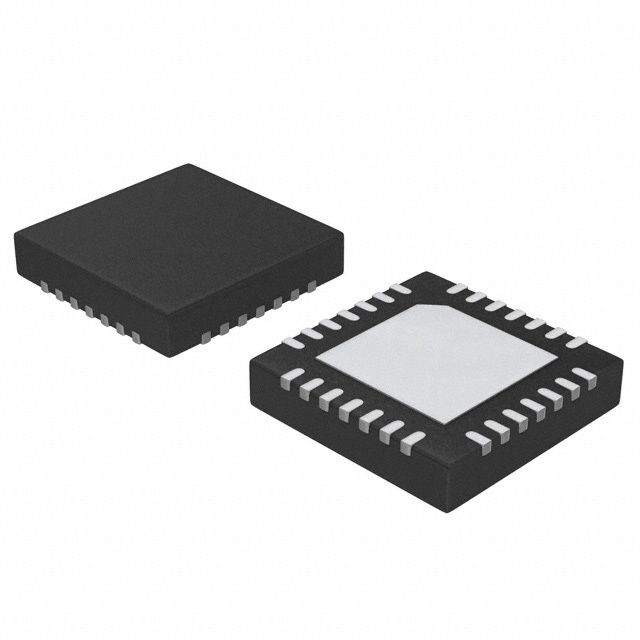
- Part No.:
- MGC3130-I/MQ
- Manufacturer:
- Microchip Technology
- Category:
- Specialized
- Package:
- 28-VFQFN Exposed Pad
- Datasheet:
-
 MGC3130-I/MQ.pdf
- Description:
- IC INTERFACE SPECIALIZED 28QFN
- Quantity:
- Payment:

- Shipping:

Inventory:203
Please send an inquiry. Send us your inquiry, and we will respond immediately.
Product details
Overview
MGC3130-I/MQ from Microchip Technology is a 3D gesture recognition and motion tracking controller IC implementing patented GestIC® electrical near-field sensing. It delivers real-time x/y/z positional data and classified hand gestures (flick, circular, touch/tap) using five analog Rx inputs and one Tx output, operating at 44–115 kHz carrier frequency with 200 positions/sec update rate and <1 fF receiver sensitivity. It enables contactless UI in space-constrained consumer and industrial devices.
For engineers reviewing the MGC3130-I/MQ datasheet, MGC3130-I/MQ pinout, MGC3130-I/MQ application, or MGC3130-I/MQ equivalent, key selection criteria include on-chip Colibri Suite execution, deep-sleep power (9 µA), I²C interface configuration, QFN-28 package compatibility, and electrode material flexibility (PCB, ITO, conductive paint).
Technical Context
The MGC3130-I/MQ integrates a low-noise analog front end with frequency-adaptive input path for automatic noise suppression, a digital signal processing unit (SPU) running the Colibri Suite, and hardware-accelerated Hidden Markov Model (HMM)-based gesture classification. Its E-field sensing architecture uses one transmit electrode and five receive electrodes to detect femtofarad-level capacitance shifts caused by hand intrusion.
It supports autonomous operation via Gesture Port mapping to five EIO pins, programmable self-wake-up from deep sleep (9 µA), and on-chip auto-calibration across temperature (-20°C to +85°C) and environmental drift. Carrier frequency hopping and dual-stage (analog + digital) filtering ensure robustness against EMI without host intervention.
Key Specifications
| Parameter | Value and Actual Design Meaning |
|---|---|
| Gesture & Position Output | Real-time 3D hand position (x/y/z) + classified gestures (flick/circular/touch); enables host-free UI control |
| Detection Range | 0–10 cm free-space sensing; supports proximity-triggered wake-up and mid-air interaction |
| Position Rate | 200 positions/sec; ensures sub-5 ms latency for responsive motion tracking |
| Spatial Resolution | Up to 150 dpi; enables precise finger-level localization within sensing frame |
| Power Modes | Deep Sleep: 9 µA @ 3.3V; Self Wake-up: 110 µA; Processing: 20 mA - supports battery-powered designs |
| Carrier Frequency | 44–115 kHz; avoids regulated RF bands and provides immunity to radio interference |
| Receiver Sensitivity | <1 fF; detects minute hand-induced capacitance changes without external amplification |
| Operating Voltage | 3.3 V ±5%; single-supply operation with internal 3V analog and 1.8V digital regulators |
Pinout & Package
Package: 28-pin QFN (5 mm × 5 mm, 0.5 mm pitch), thermally enhanced with exposed pad (EXP) requiring ground connection.
| Pin/Terminal | Circuit Role | Design Meaning |
|---|---|---|
| VCAPS | Power supply decoupling | Connect to VDD; stabilizes internal analog regulator reference |
| RX0–RX4 | Analog input | Five dedicated receive electrode inputs for spatial field sampling |
| TXD | Analog output | Transmit electrode driver; generates controlled E-field at 44–115 kHz |
| EIO0/TS–EIO7/SI3 | Configurable I/O | Eight extended I/Os; EIO0–EIO4 support gesture event mapping (toggle/pulse/high/low) |
| MCLR | Digital input | Active-low reset; requires external 10 kΩ pull-up for reliable initialization |
| VDD / VSS1–VSS3 | Power & ground | Separate analog/digital ground references (VSS2/VSS3) minimize noise coupling |
| VCAPA / VCAPD | Filter capacitor terminals | External 4.7 µF capacitors stabilize internal 3V analog and 1.8V digital LDOs |
| EXP | Thermal pad | Exposed pad must be soldered to PCB ground plane for thermal dissipation and EMI reduction |
Key Features
| Feature | Design Value |
|---|---|
| On-chip Colibri Suite | Full gesture classification and 3D position tracking executed internally - eliminates host CPU load and software development effort |
| Approach Detection with Self Wake-up | Autonomous periodic scanning at 110 µA enables instant wake-on-hand-approach without host polling |
| Multi-electrode E-field Architecture | One Tx + five Rx channels enable distortion-based 3D coordinate reconstruction - no optical components or cameras required |
| Electrode Material Agnosticism | Supports PCB traces, ITO layers, conductive paint, LDS, and foil - reduces BOM cost and enables seamless integration into existing mechanical designs |
| I²C Interface + Gesture Port | I²C (EIO4/SI0 & EIO5/SI1) configures parameters and streams raw/gesture data; five EIO pins deliver direct hardware-level gesture triggers |
| Noise Immunity Architecture | Combined on-chip analog filtering, digital filtering, and automatic frequency hopping suppresses ambient EMI without firmware tuning |
Applications
| Audio Control Interface | Notebook Proximity UI |
|---|---|
Use Scenario: Volume, mute, and playback control on smart speakers and soundbars using mid-air hand gestures. IC Role / Device Role / Timing Role: Primary 3D gesture sensor and position tracker; replaces physical buttons and IR remotes with zero-contact interaction. Use Value: Enables sleek, sealed industrial design with IP54-rated enclosures while maintaining responsive, low-latency control (200 Hz position rate). |
Use Scenario: Wake-from-sleep, screen dimming, and navigation gestures on premium ultrabooks and 2-in-1 laptops. IC Role / Device Role / Timing Role: Always-on proximity detector and gesture classifier; operates in deep-sleep mode (9 µA) until hand approach triggers full processing. Use Value: Extends battery life by eliminating continuous host polling; supports OEM-specific gesture sets via field-upgradable Colibri Library. |
| Smart Home Wall Switch | Medical Device Touchless Panel |
Use Scenario: Contactless light dimming, scene selection, and HVAC control on wall-mounted smart switches with glass or plastic overlays. IC Role / Device Role / Timing Role: Capacitive-free proximity and gesture engine; interfaces directly to MCU via I²C and drives status LEDs via EIO pins. Use Value: Eliminates mechanical wear and contamination risk; works through 10 mm non-conductive materials using low-cost PCB electrodes. |
Use Scenario: Sterile-mode operation of infusion pumps, diagnostic monitors, and surgical displays in clinical environments. IC Role / Device Role / Timing Role: Isolated gesture interface; processes all motion data on-chip to prevent host-side latency or software failure during critical procedures. Use Value: Meets IEC 60601-1 creepage/clearance requirements via galvanically isolated electrode layout; immune to glove interference and ambient light. |
Equivalent & Alternatives
The following parts are listed as comparable options for similar 3D gesture sensing applications.
| Alternative Part | Technical Difference | Application Difference | Selection Advice |
|---|---|---|---|
| MPR121QR2 | Capacitive touch-only (2D), no position tracking or free-space gesture; 12-channel, no Tx/Rx E-field architecture | Limited to button/slider replacement; cannot detect flick, airwheel, or z-axis motion | Select only for simple proximity/touch where 3D motion is unnecessary |
| ADUX1020 | Optical time-of-flight sensor; requires lens, IR LED, and ambient light rejection; higher power (1.5 mA active) | Suitable for longer-range (up to 20 cm) but fails in direct sunlight or with dark gloves | Choose when depth imaging or object presence (not gesture semantics) is primary requirement |
Compared with MPR121QR2 and ADUX1020, the MGC3130-I/MQ uniquely delivers true 3D free-space gesture classification and real-time x/y/z position at ultra-low power using E-field sensing - enabling robust, material-agnostic, and optically invariant user interfaces without host processing overhead.
Availability
MGC3130-I/MQ is available at Aetrix Electronics and suitable for audio control interfaces, notebook proximity UIs, smart home wall switches, and medical device touchless panels requiring stable component supply, long-term lifecycle assurance, and traceable sourcing.
Supply support for MGC3130-I/MQ includes scheduled delivery planning, volume procurement assistance, BOM continuity management, traceable sourcing, and lifecycle availability coordination for OEM customers, industrial embedded developers, connected-device designers, and electronics production programs.
Manufacturer
Microchip Technology Inc. is a global semiconductor company specializing in microcontrollers, analog devices, and timing solutions, with a focus on embedded control and low-power system integration.
The MGC3130-I/MQ belongs to Microchip's GestIC® family of 3D gesture controllers, designed specifically for contactless human-machine interfaces in consumer, industrial, and medical applications where optical sensing fails.
FAQ
What is the primary sensing technology used by the MGC3130-I/MQ?
The MGC3130-I/MQ uses Microchip's patented GestIC® electrical near-field (E-field) sensing technology. It generates a low-frequency (44–115 kHz) electric field via a single transmit electrode and detects minute capacitance shifts (<1 fF) caused by hand intrusion using five receive electrodes. This enables true 3D gesture recognition and positional tracking without cameras, IR, or optical components - making it immune to ambient light, sound, and surface reflectivity.
Does the MGC3130-I/MQ support on-chip gesture processing, or is host CPU involvement required?
The MGC3130-I/MQ runs the full Colibri Suite on-chip, including Hidden Markov Model (HMM)-based gesture classification and real-time x/y/z position calculation. No host CPU processing is required for core gesture output - the MGC3130-I/MQ delivers preprocessed gesture events and positional data via I²C or direct EIO pin assertions. This reduces host firmware complexity and accelerates time-to-market.
What are the power consumption characteristics of the MGC3130-I/MQ in different operating modes?
The MGC3130-I/MQ offers three defined power states: Deep Sleep draws 9 µA @ 3.3V for always-on readiness; Programmable Self Wake-up consumes 110 µA during periodic approach scanning; and full Processing Mode draws 20 mA @ 3.3V during active gesture tracking. These modes are hardware-managed and configurable via the GestIC Library, enabling optimized energy use in battery-powered and AC-powered systems alike.
Can the MGC3130-I/MQ work with custom electrode materials like conductive paint or ITO layers?
Yes - the MGC3130-I/MQ is explicitly designed for electrode material flexibility. It supports printed circuit board traces, laser-direct structured (LDS) plastic, conductive paint, conductive foil, and standard touch panel ITO structures. Its high receiver sensitivity (<1 fF) and adaptive analog front end allow reliable operation across these low-cost, non-traditional electrode types without recalibration or performance loss.
How is the MGC3130-I/MQ configured and updated in the field?
The MGC3130-I/MQ is configured and updated via its I²C interface using the GestIC Library loader stored in on-chip Flash memory. The Colibri Suite firmware (gesture models, calibration parameters, EIO mappings) can be reloaded in-system using tools like Microchip's Aurea GUI or an embedded host controller - enabling field upgrades for new gestures, environmental adaptation, or application-specific tuning without hardware modification.
MGC3130-I/MQ Specifications
- Product attributes
- Attribute value
- Manufacturer:
- Microchip Technology
- Series:
- -
- Package/Case:
- 28-VFQFN Exposed Pad
- Packaging:
- Tube
- Product Status:
- Active
- Applications:
- Graphics Controller
- Interface:
- -
- Voltage - Supply:
- -
- Supplier Device Package:
- 28-QFN (5x5)
- Grade:
- -
- Qualification:
- -
- Mounting Type:
- Surface Mount
MGC3130-I/MQ FAQ
1.How can I place an order for MGC3130-I/MQ through Aetrix?
Please submit a Request for Quotation (RFQ) for MGC3130-I/MQ on Aetrix. Our sales agent will provide a competitive quotation and guide you through the order confirmation once you accept the terms.
2.Are the price and stock information for MGC3130-I/MQ reliable?
The price and inventory of MGC3130-I/MQ are updated periodically and may fluctuate due to market conditions. Stock and pricing data are typically refreshed every 24 hours. Quotation validity for MGC3130-I/MQ is usually 5 days.
3.What payment methods are accepted for MGC3130-I/MQ?
We accept Wire Transfer, PayPal, Credit Card, Western Union, MoneyGram, and Escrow for MGC3130-I/MQ transactions.
Note: Certain payment methods may incur a processing fee.
4.How is shipping managed for MGC3130-I/MQ?
MGC3130-I/MQ orders can be shipped via leading logistics carriers, including DHL, UPS, FedEx, TNT, or Registered Mail.
Once your MGC3130-I/MQ order is processed, you will receive an email with the shipment details and tracking number.
Note: Tracking information may take up to 24 hours to appear. Express delivery typically takes 3–5 business days.
5.How can I obtain technical support or documentation for MGC3130-I/MQ?
For technical support, including MGC3130-I/MQ datasheets, pinout diagrams, or application guidance, please contact our engineering support team. They can provide detailed documentation and assistance for your MGC3130-I/MQ requirements.
6.How does Aetrix verify that MGC3130-I/MQ is sourced from the original manufacturer or authorized distributors?
All MGC3130-I/MQ products on Aetrix are procured from qualified distributors and authorized channels. Our dedicated quality assurance team conducts strict verification, including traceability checks and, if necessary, third-party testing. This ensures that MGC3130-I/MQ meets industry standards.
7.What is the process for return or replacement of MGC3130-I/MQ?
All MGC3130-I/MQ units undergo pre-shipment inspection (PSI). If there is an issue with MGC3130-I/MQ, returns or replacements are accepted under the following conditions:
1.Quantity discrepancies, incorrect items, or visible external defects (such as breakage or corrosion), acknowledged by Aetrix.
2.The issue is reported within 90 days of delivery.
3.The MGC3130-I/MQ part is unused and in its original packaging.
Return procedure for MGC3130-I/MQ:
1.Submit a request within 90 days.
2.Obtain a Return Material Authorization (RMA) from Aetrix.
MGC3130-I/MQ Tags
-
NVT4857UKAZ
NXP Semiconductors
-
TCA8418RTWR
Texas Instruments
-
PCA9546APWR
Texas Instruments
-
MD0100N8-G
Microchip Technology
-
PCA9548APW,118
NXP Semiconductors
-
PCA9540BDP,118
NXP Semiconductors
-
PCA9548APWR
Texas Instruments
-
PCA9546APW,118
NXP Semiconductors
-
PTN3360DBS,518
NXP Semiconductors
-
PCA9546ABS,118
NXP Semiconductors
-
PCA9518PWR
Texas Instruments
-
PCA9545APW,118
NXP Semiconductors
Tech Hub

TTL and CMOS logic families differ in thresholds, loading, output drive, power and timing. This engineering guide compares 74HC and 74HCT, calculates noise margins and checks 3.3 V/5 V compatibility.

A practical engineering guide to 3.3V and 5V logic compatibility, input thresholds, resistor dividers, translator ICs, MOSFET level shifting, I2C pull-ups, timing limits and power-sequencing risks.

The 74HC595 uses push-pull logic outputs, while the TPIC6B595 uses 50 V open-drain DMOS sinks for higher-power loads. This guide compares timing, current limits, 3.3 V interfacing, load wiring, thermal…

The 74HC595 converts serial data into eight stable parallel outputs. This guide covers pin functions, shift and storage timing, OE and MR behavior, drive-current limits, cascading, voltage compatibilit…

A technical comparison of level-sensitive latches and edge-triggered flip-flops, covering timing windows, setup and hold limits, master–slave operation, time borrowing, race-through, HDL inference and…

A D latch stores one bit while Enable controls when data can pass. This reference covers gate-level operation, truth tables, transparency, setup and hold timing, LE versus OE, common ICs and practical …

An SR latch stores one bit through cross-coupled feedback. This engineering reference covers NOR and NAND implementations, truth tables, forbidden-state recovery, gated operation, switch debouncing, fa…

Latch circuits retain one bit through feedback. This technical reference covers SR and D latches, truth tables, transparency, timing limits, latch-versus-flip-flop behavior, applications and common log…

An engineering guide to LED driver operation, constant-current and constant-voltage outputs, linear and switching topologies, dimming, IC selection, calculations, replacement compatibility, and fault c…

Operational amplifier guide covering op amp basics, feedback, ideal vs real op amps, common configurations, buffer circuits, offset, bias current, gain-bandwidth, slew rate, rail-to-rail limits and sel…


