
 My Inquiry
 My Account


Microchip Technology MIC1555YD5-TR
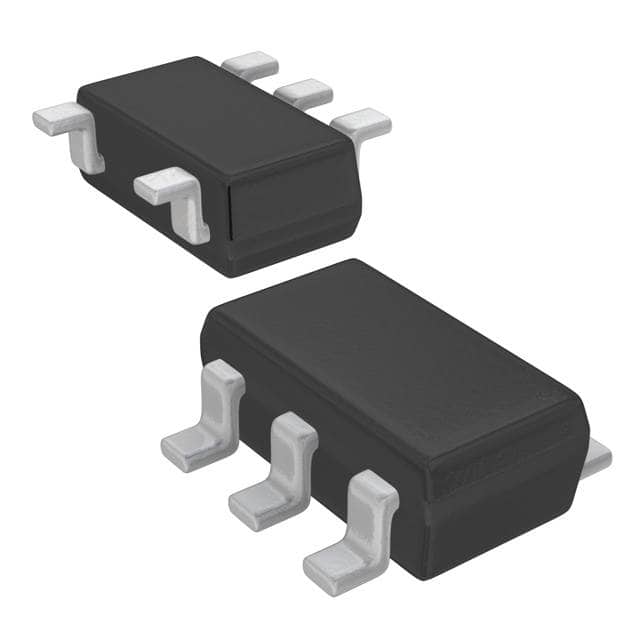
- Part No.:
- MIC1555YD5-TR
- Manufacturer:
- Microchip Technology
- Category:
- Programmable Timers and Oscillators
- Package:
- SOT-23-5 Thin, TSOT-23-5
- Datasheet:
-
 MIC1555YD5-TR.pdf
- Description:
- IC OSC SINGLE TIMER 5MHZ
- Quantity:
- Payment:

- Shipping:

Inventory:8,244
Please send an inquiry. Send us your inquiry, and we will respond immediately.
Product details
Overview
MIC1555YD5-TR from Microchip Technology is a CMOS RC timer/oscillator IC designed for precision monostable (one-shot) and astable operation, featuring separate trigger (TRG) and threshold (THR) inputs, 2.7V–18V supply range, <0.005%/°C temperature stability, and rail-to-rail CMOS output - used in micropower timing circuits such as missing-pulse detection and LED blinkers.
For engineers reviewing the MIC1555YD5-TR datasheet, MIC1555YD5-TR pinout, MIC1555YD5-TR application, or MIC1555YD5-TR equivalent, key selection considerations include its TSOT-23-5 package, 50% square-wave generation with one resistor and capacitor, threshold-dominant input logic, sub-1μA shutdown capability (when configured with external enable), and compatibility with industrial timing designs requiring microsecond-to-hour delays.
Technical Context
The MIC1555YD5-TR implements a BiCMOS RS flip-flop architecture with independent comparator-based TRG (active-low ≤⅓VS) and THR (active-high ≥⅔VS) inputs, where THR takes precedence to ensure deterministic output state transitions. Its internal resistive divider sets precise ⅓VS/⅔VS reference thresholds, enabling stable timing across voltage and temperature variations.
Unlike legacy 555 timers, it omits the discharge (DIS) and control voltage (CV) pins, and does not include chip select (CS) - distinguishing it from MIC1555YMU and MIC1557 variants. It supports both monostable pulse generation (with external R-C timing network) and astable oscillation (via TRG–THR tie), delivering rail-to-rail CMOS output with <15Ω on-resistance and nanosecond-scale rise/fall times.
Key Specifications
| Parameter | Value and Actual Design Meaning |
|---|---|
| Supply Voltage Range | +2.7V to +18V - enables direct operation from single Li-ion, 5V, or 12V rails without regulation. |
| Timing Accuracy | ±2% - ensures predictable monostable pulse width and astable frequency over process, voltage, and temperature. |
| Temp Stability | <0.005%/°C - minimizes drift in long-duration timing applications like time-delay generators. |
| Supply Stability | <0.055%/V - maintains consistent timing across wide input voltage swings, critical for battery-powered systems. |
| Output On-Resistance | <15Ω - allows direct drive of 20mA loads (e.g., LEDs, small MOSFET gates) without external buffers. |
| Trigger/Threshold Leakage | <50nA - preserves RC timing integrity with high-value resistors (>1MΩ) and low-leakage capacitors. |
| Ambient Temp Range | –40°C to +85°C - qualified for industrial and automotive under-hood environments. |
| Max Astable Frequency | 5 MHz - supports high-speed clock generation and audible tone synthesis up to ultrasonic range. |
Pinout & Package
Package: 5-pin Thin SOT-23 (TSOT-23-5), 2.9 mm × 1.6 mm × 0.9 mm profile, surface-mount, RoHS-compliant.
| Pin/Terminal | Circuit Role | Design Meaning |
|---|---|---|
| 1 - VS | Power Supply Input | Accepts +2.7V to +18V; requires local 0.1 μF decoupling for noise immunity in timing-critical paths. |
| 2 - GND | Ground Reference | Return path for all internal circuitry and output current; must be low-impedance connection to minimize timing jitter. |
| 3 - OUT | CMOS Totem-Pole Output | Rail-to-rail switching (0V to VS) with <15Ω on-resistance; drives capacitive loads ≤10 pF directly without overshoot. |
| 4 - TRG | Active-Low Trigger Input | Pulls output high when voltage ≤⅓VS; zero-leakage design avoids RC timing errors in high-impedance trigger networks. |
| 5 - THR | Active-High Threshold Input | Pulls output low when voltage ≥⅔VS; dominant over TRG to prevent metastability during overlapping edge conditions. |
Key Features
| Feature | Design Value |
|---|---|
| Zero-leakage inputs | Enables use of MΩ-range timing resistors and nF-range capacitors without accuracy degradation due to input bias current. |
| Threshold-dominant logic | Guarantees output goes low when THR is asserted, eliminating race conditions in monostable retriggering scenarios. |
| 50% square wave with 1R+1C | Reduces BOM count and PCB area in oscillator designs - no diodes, dual resistors, or precision matching required. |
| Rail-to-rail CMOS output | Eliminates level-shifting components when interfacing with 3.3V or 5V logic families or driving logic-level MOSFETs. |
| Microsecond-to-hour timing range | Supports single-component delay generation from sensor debouncing (μs) to power-on sequencing (hours) without external counters. |
| No cross-conduction spikes | Ensures clean output transitions with no shoot-through current, critical for low-noise analog subsystems and EMI-sensitive layouts. |
Applications
| Missing Pulse Detector | LED Blinker |
|---|---|
Use Scenario: Monitoring periodic signals (e.g., encoder pulses, watchdog timeouts) where absence of expected edges indicates fault or stall. IC Role / Device Role / Timing Role: Monostable one-shot triggered by each incoming pulse; output remains high only if next pulse arrives before timeout expires. Use Value: Detects signal loss within ±2% timing tolerance using only one external capacitor and resistor - no microcontroller or comparator needed. | Use Scenario: Low-power visual indication in battery-operated devices such as smoke detectors, wearables, or remote controls. IC Role / Device Role / Timing Role: Astable oscillator generating precise 0.5–2 Hz blink rate via single R-C network tied to TRG/THR pins. Use Value: Draws only 240–300 μA at 5V, enabling multi-year operation on coin cells while maintaining consistent blink period across temperature. |
| Voltage Converter Driver | Linear Sweep Generator |
Use Scenario: Driving gate of N-channel MOSFET in boost or charge-pump DC-DC converters requiring precise switching timing. IC Role / Device Role / Timing Role: Astable oscillator controlling MOSFET switching frequency; output directly drives logic-level FET gate through series resistor. Use Value: Delivers 5 MHz max frequency and <15Ω output impedance to achieve fast gate charging/discharging - improving converter efficiency and reducing thermal stress. | Use Scenario: Generating linear ramp waveforms for test equipment, analog function generators, or sensor calibration ramps. IC Role / Device Role / Timing Role: Monostable configured with constant-current source charging capacitor; output pulse width defines sweep duration. Use Value: Achieves <0.005%/°C drift and <0.055%/V supply sensitivity - enabling sub-0.1% linearity error in 10-second sweeps without trimming. |
Equivalent & Alternatives
The following parts are listed as comparable options for similar RC timer/oscillator applications.
| Alternative Part | Technical Difference | Application Difference | Selection Advice |
|---|---|---|---|
| NE555DR | Bipolar process; higher quiescent current (2–5 mA); includes DIS and CV pins; no zero-leakage inputs. | Less suitable for micropower or high-impedance timing networks; requires external pull-up for open-collector DIS output. | Select NE555DR only when legacy footprint compatibility or bipolar output drive strength (>200mA) is required. |
| MIC1557YD5-TR | Includes chip select (CS) input; astable-only operation; single T/T pin instead of separate TRG/THR; <1 μA shutdown current. | Optimized for always-on oscillator with on/off control; lacks monostable flexibility of MIC1555YD5-TR. | Choose MIC1557YD5-TR when system requires ultra-low standby power and fixed-frequency oscillation without retriggering capability. |
Compared with NE555DR, MIC1555YD5-TR reduces supply current by >95% and eliminates timing errors from input leakage, while compared with MIC1557YD5-TR, it provides full monostable/astable configurability at the cost of lacking integrated shutdown - making it optimal for adaptive timing architectures requiring both modes.
Availability
MIC1555YD5-TR is available at Aetrix Electronics and suitable for precision timer, pulse generation, and sequential timing applications requiring stable component supply, long-lifecycle support, and industrial-grade temperature performance.
Supply support for MIC1555YD5-TR includes scheduled delivery planning, volume procurement assistance, BOM continuity management, traceable sourcing, and lifecycle availability coordination for OEM customers, industrial embedded developers, connected-device designers, and electronics production programs.
Manufacturer
Microchip Technology is a U.S.-based semiconductor company specializing in microcontrollers, analog devices, and timing solutions, with ISO/TS-16949-certified manufacturing and global technical support infrastructure.
The MIC1555 family was engineered as a low-power, high-accuracy replacement for legacy 555 timers - targeting space-constrained, battery-powered, and industrial timing applications demanding rail-to-rail outputs and minimal external components.
FAQ
What is the operating temperature range of the MIC1555YD5-TR?
The MIC1555YD5-TR is rated for –40°C to +85°C ambient operation, fully qualified per Microchip's industrial temperature specifications. This range ensures reliable monostable and astable timing performance in harsh environments such as factory automation controllers, outdoor sensors, and automotive body electronics - without derating or external thermal compensation.
Can the MIC1555YD5-TR generate a 50% duty cycle square wave?
Yes, the MIC1555YD5-TR can generate a precise 50% duty cycle square wave using only one resistor and one capacitor in astable configuration - achieved by connecting the TRG and THR pins together to form a T/T node. This simplifies layout and reduces component count versus traditional 555-based oscillators requiring two resistors and a diode network.
Does the MIC1555YD5-TR have a shutdown or enable pin?
No, the MIC1555YD5-TR does not include a chip select (CS) or enable pin. That functionality is present only in the MIC1555YMU (10-pin UTDFN) and MIC1557 variants. To disable the MIC1555YD5-TR, external circuitry such as a PMOS high-side switch controlled by a GPIO is required - adding ~1 μA quiescent overhead but preserving full monostable/astable flexibility.
What is the maximum load the MIC1555YD5-TR output can drive?
The MIC1555YD5-TR output delivers rail-to-rail CMOS switching with <15Ω on-resistance, supporting up to 20mA sink/source at VS = 5V (output drop ≤0.5V) and 20mA at VS = 15V (drop ≤1.25V). It can directly drive LEDs, small-signal MOSFET gates, or logic inputs - but not high-current solenoids or relays without an external buffer stage.
How accurate is the timing of the MIC1555YD5-TR over temperature and supply voltage?
The MIC1555YD5-TR achieves ±2% total timing accuracy across –40°C to +85°C and 2.7V–18V supply, with drift contributions of <0.005%/°C (temperature) and <0.055%/V (supply). These values are measured under specified test conditions (e.g., RA = 10kΩ, C = 0.1μF) and reflect worst-case parametric variation - enabling robust design margin for time-critical functions like watchdog timeouts and sequential delays.
MIC1555YD5-TR Specifications
- Product attributes
- Attribute value
- Manufacturer:
- Microchip Technology
- Series:
- IttyBitty®
- Package/Case:
- SOT-23-5 Thin, TSOT-23-5
- Packaging:
- Tape & Reel (TR)
- Product Status:
- Active
- Type:
- Programmable Timer
- Count:
- -
- Frequency:
- 5MHz
- Voltage - Supply:
- 2.7V ~ 18V
- Current - Supply:
- 350 µA
- Operating Temperature:
- -40°C ~ 85°C
- Supplier Device Package:
- TSOT-23-5
- Mounting Type:
- Surface Mount
- Grade:
- -
- Qualification:
- -
MIC1555YD5-TR FAQ
1.How can I place an order for MIC1555YD5-TR through Aetrix?
Please submit a Request for Quotation (RFQ) for MIC1555YD5-TR on Aetrix. Our sales agent will provide a competitive quotation and guide you through the order confirmation once you accept the terms.
2.Are the price and stock information for MIC1555YD5-TR reliable?
The price and inventory of MIC1555YD5-TR are updated periodically and may fluctuate due to market conditions. Stock and pricing data are typically refreshed every 24 hours. Quotation validity for MIC1555YD5-TR is usually 5 days.
3.What payment methods are accepted for MIC1555YD5-TR?
We accept Wire Transfer, PayPal, Credit Card, Western Union, MoneyGram, and Escrow for MIC1555YD5-TR transactions.
Note: Certain payment methods may incur a processing fee.
4.How is shipping managed for MIC1555YD5-TR?
MIC1555YD5-TR orders can be shipped via leading logistics carriers, including DHL, UPS, FedEx, TNT, or Registered Mail.
Once your MIC1555YD5-TR order is processed, you will receive an email with the shipment details and tracking number.
Note: Tracking information may take up to 24 hours to appear. Express delivery typically takes 3–5 business days.
5.How can I obtain technical support or documentation for MIC1555YD5-TR?
For technical support, including MIC1555YD5-TR datasheets, pinout diagrams, or application guidance, please contact our engineering support team. They can provide detailed documentation and assistance for your MIC1555YD5-TR requirements.
6.How does Aetrix verify that MIC1555YD5-TR is sourced from the original manufacturer or authorized distributors?
All MIC1555YD5-TR products on Aetrix are procured from qualified distributors and authorized channels. Our dedicated quality assurance team conducts strict verification, including traceability checks and, if necessary, third-party testing. This ensures that MIC1555YD5-TR meets industry standards.
7.What is the process for return or replacement of MIC1555YD5-TR?
All MIC1555YD5-TR units undergo pre-shipment inspection (PSI). If there is an issue with MIC1555YD5-TR, returns or replacements are accepted under the following conditions:
1.Quantity discrepancies, incorrect items, or visible external defects (such as breakage or corrosion), acknowledged by Aetrix.
2.The issue is reported within 90 days of delivery.
3.The MIC1555YD5-TR part is unused and in its original packaging.
Return procedure for MIC1555YD5-TR:
1.Submit a request within 90 days.
2.Obtain a Return Material Authorization (RMA) from Aetrix.
MIC1555YD5-TR Tags

-
NE555DR
Texas Instruments
-
SA555DR
Texas Instruments
-
NA555DR
Texas Instruments
-
SE555DR
Texas Instruments
-
NE555P
Texas Instruments
-
CD4541BM96
Texas Instruments
-
CD4541BE
Texas Instruments
-
TLC555QDR
Texas Instruments
-
TLC555IDR
Texas Instruments
-
TLC555QDRQ1
Texas Instruments

-
TPL5010DDCR
Texas Instruments
-
TLC555CP
Texas Instruments
Tech Hub

TTL and CMOS logic families differ in thresholds, loading, output drive, power and timing. This engineering guide compares 74HC and 74HCT, calculates noise margins and checks 3.3 V/5 V compatibility.

A practical engineering guide to 3.3V and 5V logic compatibility, input thresholds, resistor dividers, translator ICs, MOSFET level shifting, I2C pull-ups, timing limits and power-sequencing risks.

The 74HC595 uses push-pull logic outputs, while the TPIC6B595 uses 50 V open-drain DMOS sinks for higher-power loads. This guide compares timing, current limits, 3.3 V interfacing, load wiring, thermal…

The 74HC595 converts serial data into eight stable parallel outputs. This guide covers pin functions, shift and storage timing, OE and MR behavior, drive-current limits, cascading, voltage compatibilit…

A technical comparison of level-sensitive latches and edge-triggered flip-flops, covering timing windows, setup and hold limits, master–slave operation, time borrowing, race-through, HDL inference and…

A D latch stores one bit while Enable controls when data can pass. This reference covers gate-level operation, truth tables, transparency, setup and hold timing, LE versus OE, common ICs and practical …

An SR latch stores one bit through cross-coupled feedback. This engineering reference covers NOR and NAND implementations, truth tables, forbidden-state recovery, gated operation, switch debouncing, fa…

Latch circuits retain one bit through feedback. This technical reference covers SR and D latches, truth tables, transparency, timing limits, latch-versus-flip-flop behavior, applications and common log…

An engineering guide to LED driver operation, constant-current and constant-voltage outputs, linear and switching topologies, dimming, IC selection, calculations, replacement compatibility, and fault c…

Operational amplifier guide covering op amp basics, feedback, ideal vs real op amps, common configurations, buffer circuits, offset, bias current, gain-bandwidth, slew rate, rail-to-rail limits and sel…


