
 My Inquiry
 My Account


Microchip Technology MIC3289-16YD6-TR
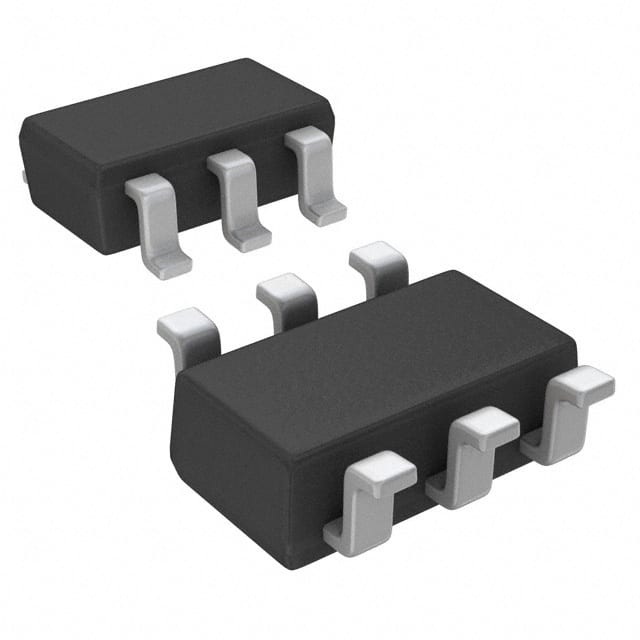
- Part No.:
- MIC3289-16YD6-TR
- Manufacturer:
- Microchip Technology
- Category:
- LED Drivers
- Package:
- SOT-23-6 Thin, TSOT-23-6
- Datasheet:
-
 MIC3289-16YD6-TR.pdf
- Description:
- IC LED DRVR RGLTR 1.2A TSOT23-6
- Quantity:
- Payment:

- Shipping:

Inventory:2,762
Please send an inquiry. Send us your inquiry, and we will respond immediately.
Product details
Overview
MIC3289-16YD6-TR from Micrel is a 1.2MHz PWM white LED driver IC with internal Schottky diode and true 1-wire digital control, designed for constant-current backlighting in portable devices. It delivers up to 500mA switch current, operates from 2.5V–6.5V input, features 250mV feedback reference voltage, ±5% LED current accuracy, and 16V overvoltage protection - enabling efficient drive of up to four series white LEDs in cell phones and GPS systems.
For engineers reviewing the MIC3289-16YD6-TR datasheet, MIC3289-16YD6-TR pinout, MIC3289-16YD6-TR application, or MIC3289-16YD6-TR equivalent, key selection considerations include its single-wire logarithmic 16-step dimming interface, shutdown current <1µA, TSOT23-6 package footprint, and compatibility with Li-ion and multi-cell alkaline/NiMH battery sources.
Technical Context
The MIC3289-16YD6-TR implements a constant-frequency current-mode PWM boost regulator architecture with integrated bipolar switch and internal Schottky diode. Its 1.2MHz oscillator enables compact external passive sizing while minimizing input ripple and EMI.
Feedback is derived from a 250mV reference applied across an external sense resistor, enabling precise LED current regulation independent of forward voltage variation. The device uses a true 1-wire digital interface with programmable startup brightness and edge-triggered mode switching (Count Up/Down) for deterministic brightness control without continuous processor intervention.
Key Specifications
| Parameter | Value and Actual Design Meaning |
|---|---|
| Input Voltage Range | 2.5V to 6.5V - supports direct operation from single-cell Li-ion or 3–4-cell NiMH/alkaline batteries. |
| Switching Frequency | 1.2MHz - reduces size of inductor and output capacitor; lowers conducted EMI into power rail. |
| Feedback Reference Voltage | 250mV ±5% - enables high-efficiency current sensing with low power loss in external sense resistor. |
| OVP Threshold | 16V nominal - protects circuit when driving up to four series white LEDs (≈3.2V each). |
| Shutdown Current | <1µA - preserves battery life during display-off states in portable electronics. |
| Digital Control Interface | Single-wire, edge-triggered, 16-level logarithmic dimming - matches human eye sensitivity and eliminates need for external PWM generator. |
| Max Switch Current | 750mA typical - supports robust LED string drive with margin for transient loads. |
Pinout & Package
Package: Thin SOT23-6 (TSOT23-6), 2.9mm × 1.6mm × 1.0mm profile, -40°C to +125°C junction temperature range.
| Pin/Terminal | Circuit Role | Design Meaning |
|---|---|---|
| 1 (OUT) | Output / OVP Node | Connects to LED anode and OVP sensing point; clamps at 16V to protect LED string. |
| 2 (VIN) | Power Input | Supplies internal circuitry; accepts 2.5V–6.5V; UVLO activates below 2.1V. |
| 3 (DC) | Digital Control | Single-wire interface for 16-step dimming and shutdown; edge-triggered with defined pulse timing windows. |
| 4 (GND) | Ground Return | Primary ground reference for analog and digital sections; connects to PCB ground plane. |
| 5 (SW) | Switch Node | Bipolar collector output node; connects to inductor and Schottky cathode; handles high dI/dt switching. |
| 6 (FB) | Feedback Input | Senses LED current via external resistor; referenced to 250mV; high-impedance input (450nA max). |
Key Features
| Feature | Design Value |
|---|---|
| True 1-wire digital interface | Enables full 16-step logarithmic dimming and shutdown using one GPIO - no I²C/SPI overhead or external timing components required. |
| Integrated Schottky diode | Eliminates external rectifier, reducing BOM count to only 4 external components (inductor, capacitor, sense resistor, LED string). |
| Presettable startup brightness | Allows configuration of initial LED current level (0–15) during power-up sequence - avoids default full-brightness flash. |
| 16V overvoltage protection | Hardware-enforced clamp prevents LED string overvoltage during open-circuit or thermal foldback conditions. |
| Current-mode PWM control | Provides inherent cycle-by-cycle current limiting and stable regulation across wide input/output voltage ranges. |
Applications
| Cell Phone Backlighting | GPS System Display |
|---|---|
Use Scenario: Driving 3–4 series white LEDs in ultra-thin mobile handset displays with dynamic brightness adjustment. IC Role / Device Role / Timing Role: Constant-current boost driver with 1-wire dimming interface; regulates LED current independently of VF drift. Use Value: Enables smooth, eye-matched brightness control using minimal MCU resources and zero external PWM generation. |
Use Scenario: Powering outdoor-readable TFT backlights in automotive-grade GPS units operating across wide temperature and supply ranges. IC Role / Device Role / Timing Role: High-efficiency LED driver with 1.2MHz switching and 16V OVP; maintains stable current under 2.5V–6.5V input transients. Use Value: Delivers consistent luminance across battery discharge and cold-start conditions while meeting automotive thermal limits (–40°C to +125°C). |
| Digital Camera LCD Backlight | MP3 Player OLED Support |
Use Scenario: Illuminating small-format LCD viewfinders requiring rapid on/off response and low quiescent power. IC Role / Device Role / Timing Role: Fast-turn-on LED driver with 140µs start-up delay and sub-1µA shutdown current. Use Value: Minimizes display latency and extends standby time between photo captures without compromising brightness resolution. |
Use Scenario: Supplying regulated current to monochrome OLED segments in portable audio players with button-based brightness control. IC Role / Device Role / Timing Role: Single-wire programmable current source supporting "one-step" brightness increment/decrement via keypad events. Use Value: Eliminates firmware polling or timer-based PWM management - simplifies UI logic and reduces MCU interrupt load. |
Equivalent & Alternatives
The following parts are listed as comparable options for similar white LED driver applications.
| Alternative Part | Technical Difference | Application Difference | Selection Advice |
|---|---|---|---|
| MAX16832ATA+T | Higher 2MHz switching frequency; requires external Schottky; no integrated 1-wire interface - uses analog dimming or PWM input. | Targets higher-power LED strings (>500mA); lacks logarithmic dimming resolution and preprogrammable startup. | Choose when board space is extremely constrained and external control logic already provides PWM; avoid if single-GPIO simplicity is required. |
| TPS61165DRVR | 1.2MHz boost driver with internal MOSFET (not bipolar); supports I²C interface; no true 1-wire mode - uses I²C register writes for 256-step dimming. | Offers finer dimming granularity and fault reporting; requires two-wire bus and additional firmware stack. | Prefer when system already uses I²C peripherals and needs diagnostics; MIC3289-16YD6-TR remains optimal for minimal GPIO count and lowest firmware overhead. |
Compared with MAX16832ATA+T and TPS61165DRVR, the MIC3289-16YD6-TR uniquely combines true 1-wire control, integrated Schottky, and presettable startup in a TSOT23-6 package - delivering lowest component count and simplest MCU integration for mid-power portable backlighting.
Availability
MIC3289-16YD6-TR is available at Aetrix Electronics and suitable for cell phone backlighting, GPS display illumination, and digital camera LCD power management requiring stable component supply, long-lifecycle support, and RoHS-compliant packaging.
Supply support for MIC3289-16YD6-TR includes scheduled delivery planning, volume procurement assistance, BOM continuity management, traceable sourcing, and lifecycle availability coordination for OEM customers, industrial embedded developers, connected-device designers, and electronics production programs.
Manufacturer
Micrel Inc. was a U.S.-based semiconductor company specializing in analog, power management, and timing solutions before its acquisition by Microchip Technology in 2015. Its legacy LED driver portfolio emphasizes integration, efficiency, and ease of use in portable electronics.
The MIC3289-16YD6-TR belongs to Micrel's white LED driver product line, engineered specifically for space-constrained, battery-powered backlighting applications where minimal external components, ultra-low shutdown current, and intuitive digital dimming are critical design requirements.
FAQ
What is the function of the DC pin on the MIC3289-16YD6-TR?
The DC pin on the MIC3289-16YD6-TR serves as a single-wire digital interface for both LED brightness control and shutdown. It accepts edge-triggered pulses to select among 16 logarithmic dimming levels or enter sub-1µA shutdown mode. Pulse widths are strictly defined: tSHUTDOWN ≥1260µs for shutdown, tMODE_UP = 100–160µs to switch to Count Up mode, and tPROG_HIGH/tPROG_LOW = 1–32µs for brightness steps. No external pull-up or clock is needed - the MIC3289-16YD6-TR handles all timing internally.
Does the MIC3289-16YD6-TR require an external Schottky diode?
No, the MIC3289-16YD6-TR integrates a Schottky diode internally, eliminating the need for an external rectifier. This integration reduces total component count to just four external parts: input capacitor, output capacitor, power inductor, and current-sense resistor. The internal diode has a typical forward drop of 0.9V at 150mA and leakage <4µA at 30V reverse bias - verified in the MIC3289-16YD6-TR datasheet electrical characteristics table.
What is the maximum number of white LEDs the MIC3289-16YD6-TR can drive?
The MIC3289-16YD6-TR supports up to four series white LEDs when configured with the 16V overvoltage protection option. With typical white LED forward voltage of 3.2V per device, four LEDs require ~12.8V output - well within the 16V OVP clamp. Driving five or six LEDs would exceed this limit and trigger protection; for those configurations, the MIC3289-24YD6 variant (24V OVP) is required. The MIC3289-16YD6-TR's 750mA switch current rating ensures headroom for peak currents during startup and dimming transitions.
How does the MIC3289-16YD6-TR achieve ±5% LED current accuracy?
The MIC3289-16YD6-TR achieves ±5% LED current accuracy through a precision 250mV feedback reference voltage (VFB = 237–263mV) combined with low-input-bias-current feedback sensing (<450nA). The LED current is set by ILED = 250mV / RSENSE, making accuracy dependent primarily on resistor tolerance and temperature coefficient. External resistor selection, layout symmetry, and thermal management of the sense resistor directly impact final accuracy - the MIC3289-16YD6-TR itself contributes minimal error beyond the specified VFB tolerance band.
Can the MIC3289-16YD6-TR be used with a 2.5V input supply?
Yes, the MIC3289-16YD6-TR operates down to 2.5V input, making it compatible with deeply discharged Li-ion cells and 3-cell alkaline/NiMH batteries. At 2.5V, the device maintains regulation for LED strings requiring ≤10V output (e.g., three 3.2V LEDs), provided the inductor DCR and Schottky losses remain within budget. Startup is guaranteed above the 2.1V UVLO threshold, and efficiency remains >80% across the full 2.5V–6.5V range - confirmed in MIC3289-16YD6-TR typical performance curves.
MIC3289-16YD6-TR Specifications
- Product attributes
- Attribute value
- Manufacturer:
- Microchip Technology
- Series:
- -
- Package/Case:
- SOT-23-6 Thin, TSOT-23-6
- Packaging:
- Tape & Reel (TR)
- Product Status:
- Obsolete
- Type:
- DC DC Regulator
- Topology:
- Step-Up (Boost)
- Internal Switch(s):
- Yes
- Number of Outputs:
- 1
- Voltage - Supply (Min):
- 2.5V
- Voltage - Supply (Max):
- 6.5V
- Voltage - Output:
- -
- Current - Output / Channel:
- 1.2A (Switch)
- Frequency:
- 1.2MHz
- Dimming:
- -
- Applications:
- Backlight
- Operating Temperature:
- -40°C ~ 125°C (TJ)
- Grade:
- -
- Qualification:
- -
- Mounting Type:
- Surface Mount
- Supplier Device Package:
- TSOT-23-6
MIC3289-16YD6-TR FAQ
1.How can I place an order for MIC3289-16YD6-TR through Aetrix?
Please submit a Request for Quotation (RFQ) for MIC3289-16YD6-TR on Aetrix. Our sales agent will provide a competitive quotation and guide you through the order confirmation once you accept the terms.
2.Are the price and stock information for MIC3289-16YD6-TR reliable?
The price and inventory of MIC3289-16YD6-TR are updated periodically and may fluctuate due to market conditions. Stock and pricing data are typically refreshed every 24 hours. Quotation validity for MIC3289-16YD6-TR is usually 5 days.
3.What payment methods are accepted for MIC3289-16YD6-TR?
We accept Wire Transfer, PayPal, Credit Card, Western Union, MoneyGram, and Escrow for MIC3289-16YD6-TR transactions.
Note: Certain payment methods may incur a processing fee.
4.How is shipping managed for MIC3289-16YD6-TR?
MIC3289-16YD6-TR orders can be shipped via leading logistics carriers, including DHL, UPS, FedEx, TNT, or Registered Mail.
Once your MIC3289-16YD6-TR order is processed, you will receive an email with the shipment details and tracking number.
Note: Tracking information may take up to 24 hours to appear. Express delivery typically takes 3–5 business days.
5.How can I obtain technical support or documentation for MIC3289-16YD6-TR?
For technical support, including MIC3289-16YD6-TR datasheets, pinout diagrams, or application guidance, please contact our engineering support team. They can provide detailed documentation and assistance for your MIC3289-16YD6-TR requirements.
6.How does Aetrix verify that MIC3289-16YD6-TR is sourced from the original manufacturer or authorized distributors?
All MIC3289-16YD6-TR products on Aetrix are procured from qualified distributors and authorized channels. Our dedicated quality assurance team conducts strict verification, including traceability checks and, if necessary, third-party testing. This ensures that MIC3289-16YD6-TR meets industry standards.
7.What is the process for return or replacement of MIC3289-16YD6-TR?
All MIC3289-16YD6-TR units undergo pre-shipment inspection (PSI). If there is an issue with MIC3289-16YD6-TR, returns or replacements are accepted under the following conditions:
1.Quantity discrepancies, incorrect items, or visible external defects (such as breakage or corrosion), acknowledged by Aetrix.
2.The issue is reported within 90 days of delivery.
3.The MIC3289-16YD6-TR part is unused and in its original packaging.
Return procedure for MIC3289-16YD6-TR:
1.Submit a request within 90 days.
2.Obtain a Return Material Authorization (RMA) from Aetrix.
MIC3289-16YD6-TR Tags
-
BCR402RE6327HTSA1
Infineon Technologies

-
BCR430UXTSA2
Infineon Technologies
-
BCR420UE6433HTMA1
Infineon Technologies
-
BCR420UE6327HTSA1
Infineon Technologies
-
BCR421UE6327HTSA1
Infineon Technologies
-
LYT1604D-TL
Power Integrations

-
HV9910CLG-G
Microchip Technology

-
CL2N8-G
Microchip Technology
-
BCR420UW6-7
Diodes Incorporated
-
BCR421UW6-7
Diodes Incorporated
-
BCR420UFD-7
Diodes Incorporated
-
BCR421UFD-7
Diodes Incorporated
Tech Hub

TTL and CMOS logic families differ in thresholds, loading, output drive, power and timing. This engineering guide compares 74HC and 74HCT, calculates noise margins and checks 3.3 V/5 V compatibility.

A practical engineering guide to 3.3V and 5V logic compatibility, input thresholds, resistor dividers, translator ICs, MOSFET level shifting, I2C pull-ups, timing limits and power-sequencing risks.

The 74HC595 uses push-pull logic outputs, while the TPIC6B595 uses 50 V open-drain DMOS sinks for higher-power loads. This guide compares timing, current limits, 3.3 V interfacing, load wiring, thermal…

The 74HC595 converts serial data into eight stable parallel outputs. This guide covers pin functions, shift and storage timing, OE and MR behavior, drive-current limits, cascading, voltage compatibilit…

A technical comparison of level-sensitive latches and edge-triggered flip-flops, covering timing windows, setup and hold limits, master–slave operation, time borrowing, race-through, HDL inference and…

A D latch stores one bit while Enable controls when data can pass. This reference covers gate-level operation, truth tables, transparency, setup and hold timing, LE versus OE, common ICs and practical …

An SR latch stores one bit through cross-coupled feedback. This engineering reference covers NOR and NAND implementations, truth tables, forbidden-state recovery, gated operation, switch debouncing, fa…

Latch circuits retain one bit through feedback. This technical reference covers SR and D latches, truth tables, transparency, timing limits, latch-versus-flip-flop behavior, applications and common log…

An engineering guide to LED driver operation, constant-current and constant-voltage outputs, linear and switching topologies, dimming, IC selection, calculations, replacement compatibility, and fault c…

Operational amplifier guide covering op amp basics, feedback, ideal vs real op amps, common configurations, buffer circuits, offset, bias current, gain-bandwidth, slew rate, rail-to-rail limits and sel…


