
 My Inquiry
 My Account


Microchip Technology MIC3289-16YML-TR
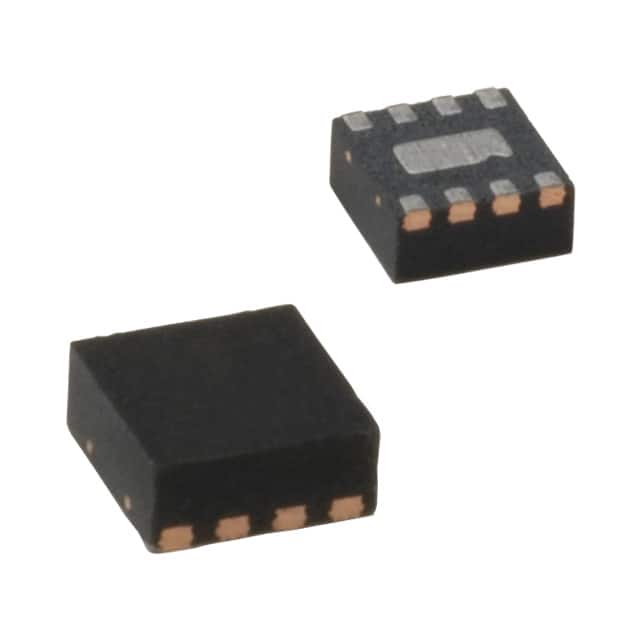
- Part No.:
- MIC3289-16YML-TR
- Manufacturer:
- Microchip Technology
- Category:
- LED Drivers
- Package:
- 8-VFDFN Exposed Pad, 8-MLF®
- Datasheet:
-
 MIC3289-16YML-TR.pdf
- Description:
- IC LED DRIVER RGLTR 1.2A 8MLF
- Quantity:
- Payment:

- Shipping:

Inventory:2,272
Please send an inquiry. Send us your inquiry, and we will respond immediately.
Product details
Overview
MIC3289-16YML-TR from Micrel is a 1.2MHz PWM white LED driver IC with internal Schottky diode and true 1-wire digital control, delivering constant-current output up to 500mA switch current, 250mV feedback reference voltage, and ±5% LED current accuracy for backlighting in portable devices.
For engineers reviewing the MIC3289-16YML-TR datasheet, MIC3289-16YML-TR pinout, MIC3289-16YML-TR application, or MIC3289-16YML-TR equivalent, this device offers logarithmic 16-step dimming, 16V overvoltage protection, -40°C to +125°C operation, and MLF®-8L package compatibility-key selection criteria for battery-powered LED backlight systems.
Technical Context
The MIC3289-16YML-TR implements constant-frequency current-mode PWM control at 1.2MHz using an internal bipolar switch and slope-compensated current amplifier. Its gm error amplifier compares LED current (sensed via external resistor) against a 250mV reference to regulate output with <0.5% load/line regulation.
Digital interface logic interprets pulse-width-modulated signals on the single DC pin to select among 16 logarithmic brightness levels or enter shutdown mode. Preprogramming during startup allows user-defined initial brightness without processor intervention.
Key Specifications
| Parameter | Value and Actual Design Meaning |
|---|---|
| Switching Frequency | 1.2 MHz - Enables compact external inductor (e.g., 4.7 µH) and capacitor (e.g., 0.27 µF), reducing board area and input ripple. |
| Feedback Reference Voltage | 250 mV ±5% - Minimizes power loss across sense resistor while maintaining high current accuracy for white LEDs. |
| OVP Threshold | 16 V nominal (13–16 V range) - Supports up to 4-series white LEDs with margin against transient overvoltage. |
| Input Voltage Range | 2.5 V to 6.5 V - Directly powers from single-cell Li-ion (3.0–4.2 V) or 3–4-cell alkaline/NiMH batteries. |
| Shutdown Current | <1 µA - Extends battery life in standby mode for portable consumer electronics. |
| Max Switch Current | 750 mA typical - Sustains >500 mA continuous switch conduction for multi-LED strings at full brightness. |
| Junction Temperature Range | –40°C to +125°C - Ensures reliable operation in handheld devices under thermal stress or high ambient conditions. |
Pinout & Package
The MIC3289-16YML-TR is housed in a 2 mm × 2 mm, 8-pin leadless MLF® (Micro Lead Frame) package with exposed thermal pad. Pin 1 is marked by dot; pins are numbered counterclockwise. GND is connected to both pin 4, pin 8, and the backside thermal pad for low-impedance return path and thermal dissipation.
| Pin/Terminal | Circuit Role | Design Meaning |
|---|---|---|
| 1 (OUT) | Output / OVP Sense Node | Connects to cathode of LED string; monitors output voltage for 16V overvoltage protection triggering. |
| 2 (VIN) | Power Input | Accepts 2.5–6.5 V supply; powers internal circuitry including oscillator and digital logic. |
| 3 (DC) | Digital Control Input | Single-wire interface: negative-edge pulses set brightness (16 log steps) or initiate shutdown (>1260 µs low). |
| 4, 8 (GND) | Ground Return | Primary ground connections; pin 4 and pin 8 plus backside pad ensure low-noise, low-impedance return for analog and power paths. |
| 5 (N/C) | No Connect | Internally unconnected; must remain floating-no external connection permitted. |
| 6 (FB) | Feedback Input | Connects to LED cathode via external sense resistor; regulates LED current based on 250 mV reference. |
| 7 (SW) | Switch Node | Internal bipolar collector node; connects to inductor and Schottky anode for boost topology operation. |
Key Features
| Feature | Design Value |
|---|---|
| True 1-wire digital interface | Eliminates need for dedicated PWM generator or I²C/SPI controller-reduces MCU GPIO usage and firmware overhead. |
| Internal Schottky diode | Removes external rectifier requirement, cutting BOM count to only 4 components (inductor, capacitor, sense resistor, LED string). |
| Logarithmic 16-step dimming | Matches human eye sensitivity: finer resolution at low currents (e.g., 1–2 mA) improves perceived dimming smoothness. |
| Presettable startup brightness | Allows hardware-defined initial LED level (e.g., level 6) via DC pin pulses during tPROG_SETUP window-no software initialization needed. |
| 16V overvoltage protection | Hardware-enforced clamping prevents LED string damage during open-circuit or transient events in 4-LED configurations. |
Applications
| Cell Phone Backlighting | PDA Display Illumination |
|---|---|
|
Use Scenario: Driving 4-series white LEDs in ultra-thin mobile handsets powered by single-cell Li-ion battery. IC Role / Device Role / Timing Role: Constant-current boost driver with 1.2MHz switching and 1-wire brightness control. Use Value: Achieves >85% efficiency at 20mA per LED while enabling silent, flicker-free dimming via simple GPIO pulses-no PWM timer resource required. |
Use Scenario: Powering high-brightness QVGA LCD backlight in battery-operated PDAs with tight PCB space constraints. IC Role / Device Role / Timing Role: Compact 2×2 mm MLF-packaged LED driver with integrated Schottky and 16V OVP. Use Value: Reduces solution footprint by eliminating external diode and enabling use of sub-5µH inductors-critical for stacked-board designs. |
| Digital Camera Flash Assist | GPS Handheld Backlight |
|
Use Scenario: Providing adjustable auxiliary illumination during low-light image capture in compact digital cameras. IC Role / Device Role / Timing Role: Fast-startup (140 µs turn-on delay), preprogrammable LED driver supporting burst-mode dimming. Use Value: Enables instant-on preview lighting at user-selected brightness without MCU polling-preserves system responsiveness. |
Use Scenario: Delivering consistent backlight intensity across wide temperature ranges (-20°C to +60°C ambient) in outdoor GPS units. IC Role / Device Role / Timing Role: Wide-input (2.5–6.5 V), high-temp-rated (–40°C to +125°C) LED driver with UVLO and thermal shutdown. Use Value: Maintains stable LED current despite battery voltage sag and enclosure heating-prevents display washout or flicker. |
Equivalent & Alternatives
The following parts are listed as comparable options for similar white LED driver applications.
| Alternative Part | Technical Difference | Application Difference | Selection Advice |
|---|---|---|---|
| MAX1910ETE+ | 2.7–5.5 V input; 1.3 MHz switching; no internal Schottky; requires external diode. | Lacks true 1-wire interface-uses I²C control; supports only 8-step linear dimming. | Select when I²C bus availability and higher input voltage tolerance outweigh simplicity and dimming resolution benefits. |
| TPS61160DRVR | 2.7–6.5 V input; 1.2 MHz; internal MOSFET but no integrated Schottky; 1-wire compatible but non-logarithmic 32-step dimming. | Requires external Schottky; uses different pulse timing protocol; lacks preprogramming capability. | Choose when higher max LED current (400 mA vs. 500 mA) and wider dimming granularity justify added component count and layout complexity. |
Compared with MAX1910ETE+ and TPS61160DRVR, the MIC3289-16YML-TR uniquely integrates Schottky diode and logarithmic 1-wire control in a 2×2 mm MLF package-enabling lowest-component-count, lowest-firmware-overhead solutions for space-constrained portable backlighting.
Availability
MIC3289-16YML-TR is available at Aetrix Electronics and suitable for cell phone backlighting, PDA display illumination, and GPS handheld backlighting requiring stable component supply, long-lifecycle support, and RoHS-compliant packaging.
Supply support for MIC3289-16YML-TR includes scheduled delivery planning, volume procurement assistance, BOM continuity management, traceable sourcing, and lifecycle availability coordination for OEM customers, industrial embedded developers, connected-device designers, and electronics production programs.
Manufacturer
Micrel Inc. was a U.S.-based semiconductor company specializing in analog, power management, and timing solutions before its acquisition by Microchip Technology in 2015. It emphasized high-efficiency, small-footprint ICs for portable electronics.
The MIC3289 product line was designed specifically for constant-current white LED backlighting in battery-powered handheld devices-prioritizing integration (internal Schottky), minimal external components, and intuitive digital control.
FAQ
What is the function of the N/C pin on the MIC3289-16YML-TR?
The N/C (No Connect) pin on the MIC3289-16YML-TR is internally unconnected and must remain electrically floating-no external component or trace should be attached. This pin exists for mechanical symmetry and package compatibility but carries no electrical function. Leaving it unconnected ensures proper operation and avoids unintended coupling or leakage paths that could affect the 250 mV feedback accuracy or 1-wire digital timing integrity of the MIC3289-16YML-TR.
How does the MIC3289-16YML-TR achieve logarithmic dimming across 16 steps?
The MIC3289-16YML-TR implements logarithmic dimming via internal D/A conversion and current-mode PWM control: each of the 16 brightness levels corresponds to a discrete reference voltage applied to the gm error amplifier, scaled to match human eye sensitivity. At lower levels (e.g., step 1–4), current changes are <1 mA, providing fine-grained control; at higher levels (e.g., step 12–15), steps increase by ~3–5 mA. This mapping is fixed in silicon and requires no external calibration-enabling consistent, perceptually uniform dimming directly from the MIC3289-16YML-TR's digital interface.
Can the MIC3289-16YML-TR drive 6 white LEDs in series?
No-the MIC3289-16YML-TR is rated for 16V overvoltage protection and is specified for up to 4-series white LEDs (typical VF ≈ 3.2–3.6 V each, totaling ≤14.4 V). Driving 6 LEDs would require ≥19.2 V output, exceeding the 16V OVP threshold and risking premature shutdown or failure. For 6-LED strings, the MIC3289-24YML variant-with 24V OVP-is required. The MIC3289-16YML-TR's internal protection circuitry will clamp or disable output if sensed voltage exceeds 16V, making it unsuitable for 6-LED configurations.
What is the minimum pulse width required to change brightness on the MIC3289-16YML-TR?
The MIC3289-16YML-TR requires programming pulses with tPROG_LOW and tPROG_HIGH each between 1 µs and 32 µs for valid brightness adjustment. Pulses shorter than 1 µs are ignored by the internal state machine; longer than 32 µs may be misinterpreted as mode-change commands (e.g., Count Up/Down toggle). A falling edge within this window decrements or increments brightness depending on current counter mode. All timing is referenced to the DC pin and validated across the full –40°C to +125°C junction range for the MIC3289-16YML-TR.
Does the MIC3289-16YML-TR require an external Schottky diode?
No-the MIC3289-16YML-TR integrates a Schottky diode internally, confirmed by datasheet features, functional diagram, and absolute maximum ratings (VSW up to 27 V). This eliminates the need for any external rectifier, reducing total component count to just four: inductor, output capacitor, LED string, and current-sense resistor. The internal diode has a typical forward drop of 0.8–1.0 V at 150 mA and leakage <4 µA at 30 V-fully specified and characterized for the MIC3289-16YML-TR's operating conditions.
MIC3289-16YML-TR Specifications
- Product attributes
- Attribute value
- Manufacturer:
- Microchip Technology
- Series:
- -
- Package/Case:
- 8-VFDFN Exposed Pad, 8-MLF®
- Packaging:
- Tape & Reel (TR)
- Product Status:
- Active
- Type:
- DC DC Regulator
- Topology:
- Step-Up (Boost)
- Internal Switch(s):
- Yes
- Number of Outputs:
- 1
- Voltage - Supply (Min):
- 2.5V
- Voltage - Supply (Max):
- 6.5V
- Voltage - Output:
- -
- Current - Output / Channel:
- 1.2A (Switch)
- Frequency:
- 1.2MHz
- Dimming:
- -
- Applications:
- Backlight
- Operating Temperature:
- -40°C ~ 125°C (TJ)
- Grade:
- -
- Qualification:
- -
- Mounting Type:
- Surface Mount
- Supplier Device Package:
- 8-MLF® (2x2)
MIC3289-16YML-TR FAQ
1.How can I place an order for MIC3289-16YML-TR through Aetrix?
Please submit a Request for Quotation (RFQ) for MIC3289-16YML-TR on Aetrix. Our sales agent will provide a competitive quotation and guide you through the order confirmation once you accept the terms.
2.Are the price and stock information for MIC3289-16YML-TR reliable?
The price and inventory of MIC3289-16YML-TR are updated periodically and may fluctuate due to market conditions. Stock and pricing data are typically refreshed every 24 hours. Quotation validity for MIC3289-16YML-TR is usually 5 days.
3.What payment methods are accepted for MIC3289-16YML-TR?
We accept Wire Transfer, PayPal, Credit Card, Western Union, MoneyGram, and Escrow for MIC3289-16YML-TR transactions.
Note: Certain payment methods may incur a processing fee.
4.How is shipping managed for MIC3289-16YML-TR?
MIC3289-16YML-TR orders can be shipped via leading logistics carriers, including DHL, UPS, FedEx, TNT, or Registered Mail.
Once your MIC3289-16YML-TR order is processed, you will receive an email with the shipment details and tracking number.
Note: Tracking information may take up to 24 hours to appear. Express delivery typically takes 3–5 business days.
5.How can I obtain technical support or documentation for MIC3289-16YML-TR?
For technical support, including MIC3289-16YML-TR datasheets, pinout diagrams, or application guidance, please contact our engineering support team. They can provide detailed documentation and assistance for your MIC3289-16YML-TR requirements.
6.How does Aetrix verify that MIC3289-16YML-TR is sourced from the original manufacturer or authorized distributors?
All MIC3289-16YML-TR products on Aetrix are procured from qualified distributors and authorized channels. Our dedicated quality assurance team conducts strict verification, including traceability checks and, if necessary, third-party testing. This ensures that MIC3289-16YML-TR meets industry standards.
7.What is the process for return or replacement of MIC3289-16YML-TR?
All MIC3289-16YML-TR units undergo pre-shipment inspection (PSI). If there is an issue with MIC3289-16YML-TR, returns or replacements are accepted under the following conditions:
1.Quantity discrepancies, incorrect items, or visible external defects (such as breakage or corrosion), acknowledged by Aetrix.
2.The issue is reported within 90 days of delivery.
3.The MIC3289-16YML-TR part is unused and in its original packaging.
Return procedure for MIC3289-16YML-TR:
1.Submit a request within 90 days.
2.Obtain a Return Material Authorization (RMA) from Aetrix.
MIC3289-16YML-TR Tags
-
BCR402RE6327HTSA1
Infineon Technologies

-
BCR430UXTSA2
Infineon Technologies
-
BCR420UE6433HTMA1
Infineon Technologies
-
BCR420UE6327HTSA1
Infineon Technologies
-
BCR421UE6327HTSA1
Infineon Technologies
-
LYT1604D-TL
Power Integrations

-
HV9910CLG-G
Microchip Technology

-
CL2N8-G
Microchip Technology
-
BCR420UW6-7
Diodes Incorporated
-
BCR421UW6-7
Diodes Incorporated
-
BCR420UFD-7
Diodes Incorporated
-
BCR421UFD-7
Diodes Incorporated
Tech Hub

TTL and CMOS logic families differ in thresholds, loading, output drive, power and timing. This engineering guide compares 74HC and 74HCT, calculates noise margins and checks 3.3 V/5 V compatibility.

A practical engineering guide to 3.3V and 5V logic compatibility, input thresholds, resistor dividers, translator ICs, MOSFET level shifting, I2C pull-ups, timing limits and power-sequencing risks.

The 74HC595 uses push-pull logic outputs, while the TPIC6B595 uses 50 V open-drain DMOS sinks for higher-power loads. This guide compares timing, current limits, 3.3 V interfacing, load wiring, thermal…

The 74HC595 converts serial data into eight stable parallel outputs. This guide covers pin functions, shift and storage timing, OE and MR behavior, drive-current limits, cascading, voltage compatibilit…

A technical comparison of level-sensitive latches and edge-triggered flip-flops, covering timing windows, setup and hold limits, master–slave operation, time borrowing, race-through, HDL inference and…

A D latch stores one bit while Enable controls when data can pass. This reference covers gate-level operation, truth tables, transparency, setup and hold timing, LE versus OE, common ICs and practical …

An SR latch stores one bit through cross-coupled feedback. This engineering reference covers NOR and NAND implementations, truth tables, forbidden-state recovery, gated operation, switch debouncing, fa…

Latch circuits retain one bit through feedback. This technical reference covers SR and D latches, truth tables, transparency, timing limits, latch-versus-flip-flop behavior, applications and common log…

An engineering guide to LED driver operation, constant-current and constant-voltage outputs, linear and switching topologies, dimming, IC selection, calculations, replacement compatibility, and fault c…

Operational amplifier guide covering op amp basics, feedback, ideal vs real op amps, common configurations, buffer circuits, offset, bias current, gain-bandwidth, slew rate, rail-to-rail limits and sel…


