
 My Inquiry
 My Account


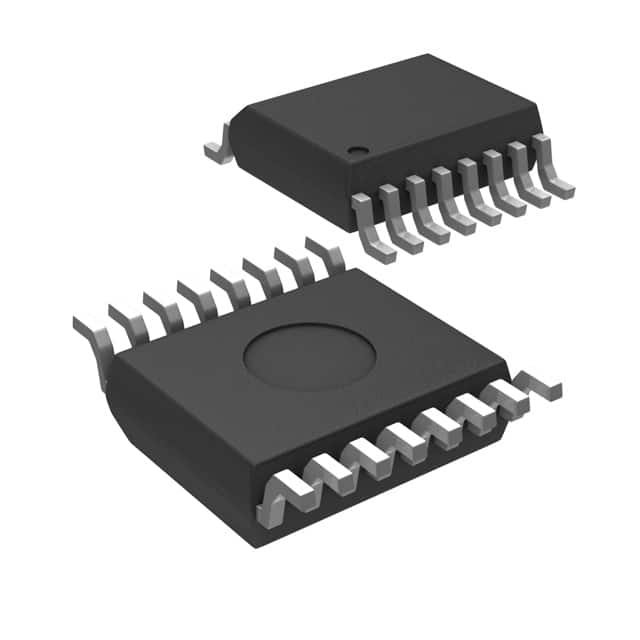
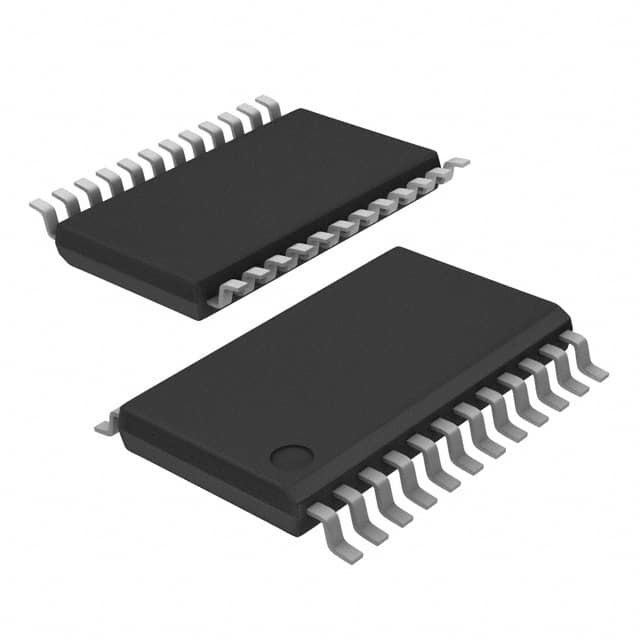
Microchip Technology MIC74BQS-TR
- Part No.:
- MIC74BQS-TR
- Manufacturer:
- Microchip Technology
- Category:
- I/O Expanders
- Package:
- 16-SSOP (0.154", 3.90mm Width)
- Datasheet:
-
 MIC74BQS-TR.pdf
- Description:
- IC XPNDR 100KHZ I2C SMBUS 16QSOP
- Quantity:
- Payment:

- Shipping:

Inventory:4,637
Please send an inquiry. Send us your inquiry, and we will respond immediately.
Product details
Overview
MIC74BQS-TR from Microchip Technology is an SMBus/I²C-compatible 8-bit serial-to-parallel I/O expander with integrated fan speed control logic, operating from 2.7V to 3.6V, featuring 5V-tolerant I/O pins, 2 µA typical quiescent current, and programmable push-pull or open-drain outputs-used in PC system management and microcontroller I/O expansion.
For engineers reviewing the MIC74BQS-TR datasheet, MIC74BQS-TR pinout, MIC74BQS-TR application, or MIC74BQS-TR equivalent, key selection considerations include its QSOP-16 package, interrupt-on-change capability via /ALERT, fan mode configuration (P7–P4 as /FS2–/FS0 and /SHDN), register-based I/O direction/output type control, and support for up to eight devices per bus.
Technical Context
The MIC74BQS-TR implements a 2-wire SMBus/I²C interface with standard Read_Byte/Write_Byte protocols and Alert Response Address (ARA = 0x14) handling. It uses seven internal registers-including DEV_CFG, DIR, OUT_CFG, STATUS, INT_MASK, DATA, and FAN_SPEED-to configure I/O direction, output drive type, interrupt masking, and fan control states.
Its dual-mode operation supports general-purpose I/O expansion (P0–P7 as configurable inputs/outputs) and dedicated fan control mode where P4–P7 become /SHDN and /FS2–/FS0 outputs driven by the FAN_SPEED register, with automatic tSTART (~1 s) startup sequencing and internal state-machine timing control-eliminating host bit-banging overhead.
Key Specifications
| Parameter | Value and Actual Design Meaning |
|---|---|
| Interface | SMBus™/I²C™-compatible 2-wire serial bus with /ALERT interrupt output |
| I/O Count | 8-bit parallel I/O (P0–P7), individually programmable as input or output |
| Supply Voltage | 2.7V to 3.6V - compatible with 3.3V system rails; supports 5V-tolerant I/O |
| Quiescent Current | 2 µA typical - enables ultra-low-power operation in standby and active I/O modes |
| Fan Control Logic | Integrated hardware fan speed sequencer with /SHDN and /FS2–/FS0 outputs; no host firmware timing required |
| Interrupt Latency | <4 µs from input change to /ALERT assertion - enables responsive host event handling |
| Bus Capacity | Up to 8 devices per bus via A0–A2 address pins (7-bit client address range 0x20–0x27) |
Pinout & Package
The MIC74BQS-TR is housed in a 16-pin QSOP (Quarter-Size Outline Package) with 0.65 mm lead pitch and 1.9 mm body height - optimized for space-constrained portable and desktop PCB layouts.
| Pin/Terminal | Circuit Role | Design Meaning |
|---|---|---|
| A0–A2 | Address Input | Set three LSBs of 7-bit SMBus client address (0x20–0x27); sampled once at power-on |
| P0–P3 | General-Purpose I/O | Programmable as input or output; push-pull or open-drain; support interrupt-on-change |
| P4 (/SHDN) | Fan Shutdown Output | Active-low shutdown signal for external fan driver; asserted during fan start-up and shutdown sequences |
| P5–P7 (/FS0–/FS2) | Fan Speed Control Outputs | 3-bit encoded fan speed signals; automatically enabled when FAN bit = 1 in DEV_CFG register |
| /ALERT | Interrupt Output | Open-drain, active-low interrupt signaling input changes; cleared on ARA response or STATUS read |
| CLK | Serial Clock Input | Host-provided clock for SMBus transactions; supports standard timing (tLOW ≥ 4.7 µs, tHIGH ≥ 4 µs) |
| DATA | Serial Data I/O | Open-drain bidirectional data line; requires external pull-up resistor |
| VDD, GND | Power Supply | 2.7V–3.6V supply and ground reference; thermal resistance θJA = 163°C/W (QSOP-16) |
Key Features
| Feature | Design Value |
|---|---|
| Register-Based I/O Configuration | Eight independent I/O bits controlled via DIR (direction), OUT_CFG (push-pull/open-drain), and INT_MASK (interrupt enable) registers |
| Hardware Fan Sequencing | Internal oscillator and state machine generate tSTART (~1 s) startup pulse and precise /SHDN–/FS timing without host intervention |
| Interrupt Efficiency | /ALERT asserts within <4 µs of input change; eliminates polling overhead and reduces bus traffic |
| Multi-Device Bus Scalability | Three address pins (A0–A2) enable up to eight MIC74BQS-TR devices on one SMBus, delivering 64 total I/O bits |
| Robust I/O Drive | 10 mA sink capability per output (IOL @ VOL = 0.4 V) - directly drives LEDs or fan control logic without external buffers |
Applications
| PC System Management | Microcontroller I/O Expansion |
|---|---|
Use Scenario: Monitoring thermal sensors, power-good signals, and chassis intrusion switches in desktop/laptop motherboards. IC Role / Device Role / Timing Role: Acts as SMBus slave providing real-time status updates and interrupt-driven alerts to the EC or BMC. Use Value: Reduces EC firmware complexity by offloading input monitoring and interrupt generation; supports hot-plug detection with sub-4 µs latency. | Use Scenario: Adding GPIOs to resource-constrained MCU designs (e.g., PIC, ARM Cortex-M0+) for button sensing, LED control, or sensor interfacing. IC Role / Device Role / Timing Role: Serial peripheral extending parallel I/O capability via two MCU pins (SCL/SDA), preserving valuable native GPIOs. Use Value: Enables 8 additional programmable I/Os with interrupt capability using only 2 MCU pins and minimal firmware overhead. |
| Fan Speed Control | Distributed Sensing & Control |
Use Scenario: Regulating cooling fans in embedded systems (NAS, industrial gateways) based on temperature readings. IC Role / Device Role / Timing Role: Dedicated fan controller generating /SHDN and /FS2–/FS0 signals per FAN_SPEED register value; manages startup/shutdown sequencing. Use Value: Eliminates need for custom fan PWM logic or external timers; ensures reliable fan spin-up at low speeds via built-in tSTART pulse. | Use Scenario: Remote monitoring of door/window sensors, motion detectors, or environmental nodes in building automation networks. IC Role / Device Role / Timing Role: Local I/O hub collecting digital inputs and driving local indicators or relays, communicating status over shared SMBus backbone. Use Value: Supports distributed architecture with centralized host control; enables scalable node count via unique A0–A2 addressing (up to 8 nodes per bus). |
Equivalent & Alternatives
The following parts are listed as comparable options for similar I/O expansion applications.
| Alternative Part | Technical Difference | Application Difference | Selection Advice |
|---|---|---|---|
| PCA9555DWR | 16-bit I/O expander; no integrated fan control; higher 10 µA quiescent current; supports 1.65V–5.5V supply | Lacks hardware fan sequencing; requires external logic or MCU firmware for fan timing | Choose when higher I/O count and wider voltage range outweigh fan control needs |
| TCA6408APWR | 8-bit expander with interrupt output; no fan mode; 1 µA typical quiescent current; supports 1.65V–5.5V | No /SHDN or /FS outputs; interrupt behavior identical but no fan-specific registers or timing | Prefer for ultra-low-power 3.3V/5V systems requiring only basic I/O expansion and interrupt notification |
Compared with PCA9555DWR and TCA6408APWR, the MIC74BQS-TR uniquely integrates fan control logic with automatic startup sequencing and dedicated /SHDN+/FS outputs-reducing BOM count and firmware burden in thermal management applications, while maintaining identical 8-bit I/O expandability and SMBus compatibility.
Availability
MIC74BQS-TR is available at Aetrix Electronics and suitable for PC system management, microcontroller I/O expansion, and fan control applications requiring stable component supply, long-term lifecycle support, and consistent QSOP-16 packaging.
Supply support for MIC74BQS-TR includes scheduled delivery planning, volume procurement assistance, BOM continuity management, traceable sourcing, and lifecycle availability coordination for OEM customers, industrial embedded developers, connected-device designers, and electronics production programs.
Manufacturer
Microchip Technology is a U.S.-based semiconductor company specializing in microcontrollers, analog devices, and interface ICs, with a focus on embedded control and system management solutions.
The MIC74 product line is designed specifically for SMBus-based I/O expansion and thermal subsystem control in computing and embedded platforms-emphasizing low power, interrupt efficiency, and integrated fan logic.
FAQ
What is the primary function of the MIC74BQS-TR?
The MIC74BQS-TR is an 8-bit SMBus/I²C-compatible I/O expander with integrated fan speed control logic. It provides programmable general-purpose I/O (P0–P7), interrupt-on-change capability via /ALERT, and hardware-managed fan control outputs (/SHDN, /FS2–/FS0). Its core function is to extend microcontroller or EC GPIO resources while offloading thermal management tasks - all in a single QSOP-16 package. The MIC74BQS-TR achieves this through seven internal registers that configure I/O direction, drive type, interrupt masking, and fan behavior without host firmware timing loops.
Does the MIC74BQS-TR support 5V logic levels on its I/O pins?
Yes, the MIC74BQS-TR features 5V-tolerant I/O pins (P0–P7, A0–A2, /ALERT), meaning it can safely accept input voltages up to 5.5V regardless of its 2.7V–3.6V VDD supply. This allows direct interfacing with 5V sensors, switches, or LED drivers without level-shifting circuitry. However, output high voltage is limited to VDD (max 3.6V), so external pull-ups to 5V must be used only on inputs or open-drain outputs like /ALERT and DATA - not on push-pull outputs. The MIC74BQS-TR's 5V tolerance is explicitly specified in its Absolute Maximum Ratings and Electrical Characteristics tables.
How does fan control work on the MIC74BQS-TR?
Fan control on the MIC74BQS-TR is activated by setting the FAN bit (D1) in the DEV_CFG register (address 0x00). When enabled, P4–P7 become dedicated outputs: P4 = /SHDN, P5 = /FS0, P6 = /FS1, P7 = /FS2. Their states are governed solely by the 3-bit FAN_SPEED register (address 0x06), which selects one of eight fan profiles (off + seven speeds). Crucially, the MIC74BQS-TR includes built-in timing logic: writing a non-zero value to FAN_SPEED triggers a ~1-second tSTART pulse where /FS2–/FS0 go high and /SHDN is deasserted first, ensuring reliable fan spin-up - all handled autonomously without MCU involvement. This hardware sequencing is a defining feature of the MIC74BQS-TR.
What is the purpose of the /ALERT pin on the MIC74BQS-TR?
On the MIC74BQS-TR, the /ALERT pin is an open-drain, active-low interrupt output that signals input state changes on configured I/O pins (P0–P3 in I/O mode; no interrupts in fan mode). It asserts within <4 µs of a qualifying edge (per INT_MASK and global IE bit settings) and remains active until cleared - either by the host reading the STATUS register or responding to the Alert Response Address (ARA = 0x14). This eliminates polling, reduces SMBus traffic, and enables immediate host response to events like button presses or sensor triggers. The MIC74BQS-TR's /ALERT behavior is fully compliant with SMBus specification requirements for interrupt reporting and clearing.
Can multiple MIC74BQS-TR devices share the same SMBus?
Yes, up to eight MIC74BQS-TR devices can operate on a single SMBus. Each device uses its A0, A1, and A2 pins to set the three least-significant bits of its 7-bit client address, yielding addresses from 0x20 to 0x27. These pins are sampled only once at power-on, so address configuration is static after initial power-up. This multi-drop capability allows scalable I/O expansion - for example, eight MIC74BQS-TR units provide 64 total programmable I/O lines with shared clock/data lines and a single /ALERT wire per device. The MIC74BQS-TR's address mapping and bus arbitration are fully SMBus-compliant and verified in Microchip's DS20005969A datasheet.
MIC74BQS-TR Specifications
- Product attributes
- Attribute value
- Manufacturer:
- Microchip Technology
- Series:
- -
- Package/Case:
- 16-SSOP (0.154", 3.90mm Width)
- Packaging:
- Tape & Reel (TR)
- Product Status:
- Discontinued at Digi-Key
- Programmable:
- Not Verified
- Number of I/O:
- 8
- Interface:
- I2C, SMBus
- Interrupt Output:
- Yes
- Features:
- Fan Speed Controller
- Output Type:
- Open Drain, Push-Pull
- Current - Output Source/Sink:
- 7mA, 10mA
- Clock Frequency:
- 100 kHz
- Voltage - Supply:
- 2.7V ~ 3.6V
- Operating Temperature:
- -40°C ~ 85°C
- Grade:
- -
- Qualification:
- -
- Mounting Type:
- Surface Mount
- Supplier Device Package:
- 16-QSOP
MIC74BQS-TR FAQ
1.How can I place an order for MIC74BQS-TR through Aetrix?
Please submit a Request for Quotation (RFQ) for MIC74BQS-TR on Aetrix. Our sales agent will provide a competitive quotation and guide you through the order confirmation once you accept the terms.
2.Are the price and stock information for MIC74BQS-TR reliable?
The price and inventory of MIC74BQS-TR are updated periodically and may fluctuate due to market conditions. Stock and pricing data are typically refreshed every 24 hours. Quotation validity for MIC74BQS-TR is usually 5 days.
3.What payment methods are accepted for MIC74BQS-TR?
We accept Wire Transfer, PayPal, Credit Card, Western Union, MoneyGram, and Escrow for MIC74BQS-TR transactions.
Note: Certain payment methods may incur a processing fee.
4.How is shipping managed for MIC74BQS-TR?
MIC74BQS-TR orders can be shipped via leading logistics carriers, including DHL, UPS, FedEx, TNT, or Registered Mail.
Once your MIC74BQS-TR order is processed, you will receive an email with the shipment details and tracking number.
Note: Tracking information may take up to 24 hours to appear. Express delivery typically takes 3–5 business days.
5.How can I obtain technical support or documentation for MIC74BQS-TR?
For technical support, including MIC74BQS-TR datasheets, pinout diagrams, or application guidance, please contact our engineering support team. They can provide detailed documentation and assistance for your MIC74BQS-TR requirements.
6.How does Aetrix verify that MIC74BQS-TR is sourced from the original manufacturer or authorized distributors?
All MIC74BQS-TR products on Aetrix are procured from qualified distributors and authorized channels. Our dedicated quality assurance team conducts strict verification, including traceability checks and, if necessary, third-party testing. This ensures that MIC74BQS-TR meets industry standards.
7.What is the process for return or replacement of MIC74BQS-TR?
All MIC74BQS-TR units undergo pre-shipment inspection (PSI). If there is an issue with MIC74BQS-TR, returns or replacements are accepted under the following conditions:
1.Quantity discrepancies, incorrect items, or visible external defects (such as breakage or corrosion), acknowledged by Aetrix.
2.The issue is reported within 90 days of delivery.
3.The MIC74BQS-TR part is unused and in its original packaging.
Return procedure for MIC74BQS-TR:
1.Submit a request within 90 days.
2.Obtain a Return Material Authorization (RMA) from Aetrix.
MIC74BQS-TR Tags
-
TCA6408ARSVR
Texas Instruments
-
TCA9535RTWR
Texas Instruments
-
FXL6408UMX
onsemi
-
PCF8574ADWR
Texas Instruments
-
PCF8574APWR
Texas Instruments
-
TCA9555PWR
Texas Instruments
-
TCA9554PWR
Texas Instruments
-
TCA9554APWR
Texas Instruments
-
TCA9539PWR
Texas Instruments
-
TCA9534PWR
Texas Instruments
-
TCA9555RTWR
Texas Instruments
-
TCA9535PWR
Texas Instruments
Tech Hub

TTL and CMOS logic families differ in thresholds, loading, output drive, power and timing. This engineering guide compares 74HC and 74HCT, calculates noise margins and checks 3.3 V/5 V compatibility.

A practical engineering guide to 3.3V and 5V logic compatibility, input thresholds, resistor dividers, translator ICs, MOSFET level shifting, I2C pull-ups, timing limits and power-sequencing risks.

The 74HC595 uses push-pull logic outputs, while the TPIC6B595 uses 50 V open-drain DMOS sinks for higher-power loads. This guide compares timing, current limits, 3.3 V interfacing, load wiring, thermal…

The 74HC595 converts serial data into eight stable parallel outputs. This guide covers pin functions, shift and storage timing, OE and MR behavior, drive-current limits, cascading, voltage compatibilit…

A technical comparison of level-sensitive latches and edge-triggered flip-flops, covering timing windows, setup and hold limits, master–slave operation, time borrowing, race-through, HDL inference and…

A D latch stores one bit while Enable controls when data can pass. This reference covers gate-level operation, truth tables, transparency, setup and hold timing, LE versus OE, common ICs and practical …

An SR latch stores one bit through cross-coupled feedback. This engineering reference covers NOR and NAND implementations, truth tables, forbidden-state recovery, gated operation, switch debouncing, fa…

Latch circuits retain one bit through feedback. This technical reference covers SR and D latches, truth tables, transparency, timing limits, latch-versus-flip-flop behavior, applications and common log…

An engineering guide to LED driver operation, constant-current and constant-voltage outputs, linear and switching topologies, dimming, IC selection, calculations, replacement compatibility, and fault c…

Operational amplifier guide covering op amp basics, feedback, ideal vs real op amps, common configurations, buffer circuits, offset, bias current, gain-bandwidth, slew rate, rail-to-rail limits and sel…


