
 My Inquiry
 My Account


NXP Semiconductors MIMX8QP5AVUFFAB
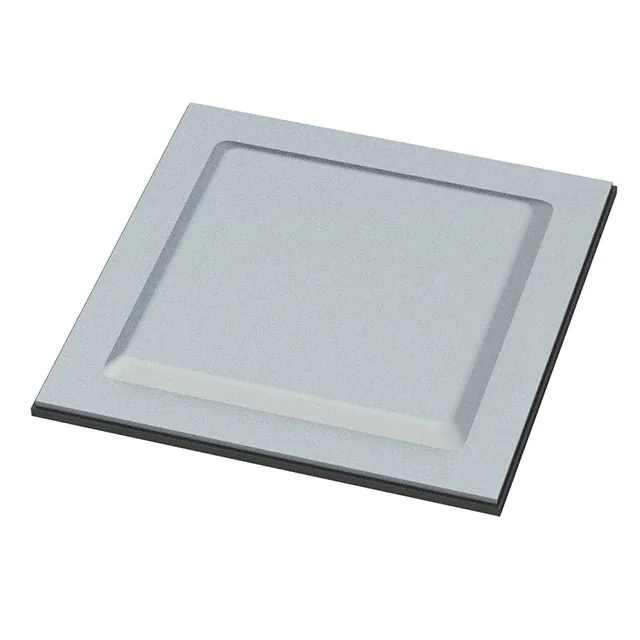
- Part No.:
- MIMX8QP5AVUFFAB
- Manufacturer:
- NXP Semiconductors
- Category:
- Microprocessors
- Package:
- 1313-BFBGA
- Datasheet:
-
 MIMX8QP5AVUFFAB.pdf
- Description:
- IC MPU 266MHZ/1.2/1.6GHZ 1313BGA
- Quantity:
- Payment:

- Shipping:

Inventory:137
Please send an inquiry. Send us your inquiry, and we will respond immediately.
Product details
Overview
MIMX8QP5AVUFFAB from NXP Semiconductors is an automotive-grade i.MX 8QuadPlus applications processor featuring one Arm Cortex-A72 core @ 1.6 GHz, four Arm Cortex-A53 cores @ 1.2 GHz, two Arm Cortex-M4F cores @ 264 MHz, dual GC7000XSVX GPUs (625 MHz), and a H.265-capable VPU for 4Kp60 decode - deployed in infotainment head units requiring secure multi-display, audio processing, and real-time control.
For engineers reviewing the MIMX8QP5AVUFFAB datasheet, MIMX8QP5AVUFFAB pinout, MIMX8QP5AVUFFAB application, or MIMX8QP5AVUFFAB equivalent, key selection considerations include AEC-Q100 qualification, FCPBGA 29 × 29 mm 0.75 mm pitch packaging, LPDDR4-1600 memory interface, PCIe 3.0/USB 3.0/SATA 3.0 connectivity, and integrated CAAM security engine with AHAB boot.
Technical Context
The MIMX8QP5AVUFFAB implements a heterogeneous multicore architecture: the Cortex-A72/A53 cluster handles rich OS execution (Linux/Android) and multimedia workloads, while dual Cortex-M4F cores manage deterministic real-time tasks like CAN FD gatewaying and display failover control via SafeAssure. The SCU manages power, clocks, and resource domains across all subsystems.
Its media subsystem integrates a 4Kp60 H.265 VPU, Tensilica HiFi 4 DSP (666 MHz), dual display controllers with MIPI-DSI/HDMI/eDP/LVDS outputs, and dual 1 Gb Ethernet with AVB - all coordinated through a Cache Coherent Interconnect (CCI-400) and System MMU-500 for virtualized memory management.
Key Specifications
| Parameter | Value and Actual Design Meaning |
|---|---|
| CPU Cores | 1× Cortex-A72 @ 1.6 GHz + 4× Cortex-A53 @ 1.2 GHz + 2× Cortex-M4F @ 264 MHz - enables concurrent Linux-based UI, Android Auto, and ASIL-B–capable real-time firmware. |
| GPU | Dual GC7000XSVX @ 625 MHz (8 shaders each) - supports OpenGL ES 3.2, Vulkan, and dual independent 1080p60 displays or single 4Kp60 output. |
| VPU | H.265 decode up to 4Kp60, H.264 encode up to 1080p30 - enables high-resolution video playback and rear-seat entertainment recording. |
| Memory Interface | 64-bit LPDDR4 @ 1600 MHz - delivers 25.6 GB/s bandwidth for graphics, video, and AI inference buffers. |
| Security | CAAM with AES-128/256, SHA-256/512, RSA-4096, ECDSA, AHAB secure boot, and 64 KB secure RAM - meets UNECE R155/R156 compliance requirements. |
| Automotive Qualification | AEC-Q100 Grade 2 (−40°C to +105°C) - validated for under-dash infotainment and digital cluster deployment. |
| I/O Interfaces | PCIe 3.0 (2-lane), USB 3.0 + 2× USB 2.0, 2× 1Gb Ethernet w/ AVB, 3× CAN-FD, 2× MIPI-CSI, 2× MIPI-DSI, HDMI 2.0a/eDP 1.4 - enables full vehicle domain controller integration. |
Pinout & Package
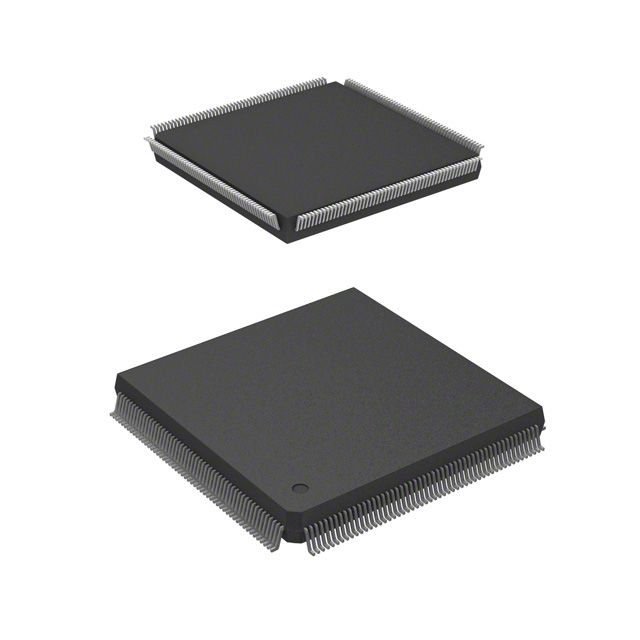
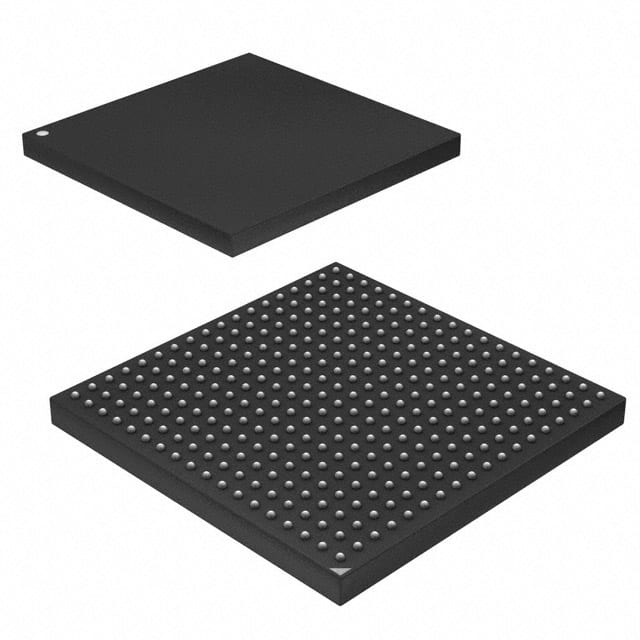
Package: FCBGA (Fine-Pitch Chip Scale Ball Grid Array), 29 mm × 29 mm, 0.75 mm ball pitch, lidded - designed for automotive thermal cycling reliability and board-level rework compatibility.
| Pin/Terminal | Circuit Role | Design Meaning |
|---|---|---|
| VDD_ARM | Core Power Supply | 1.0 V ±3% supply for Cortex-A72/A53 clusters - requires low-noise, high-PSRR regulation with dedicated decoupling. |
| VDD_SOC | System Power Supply | 0.85 V ±3% supply for GPU, VPU, DDR PHY, and interconnect - critical for 4K video pipeline stability. |
| VDD_M4 | Real-Time Core Supply | 1.05 V ±3% supply for dual Cortex-M4F cores - isolated to prevent noise coupling from high-speed interfaces. |
| CLKIN_24M | Primary Oscillator Input | 24 MHz crystal reference for system clock generation - used by on-chip PLLs to derive CPU, GPU, and peripheral clocks. |
| CLKIN_32K | RTC Oscillator Input | 32.768 kHz crystal input for SNVS RTC and low-power wake-up timers - essential for always-on vehicle functions. |
| SDA/SCL_0 | I²C Bus 0 (SCU) | PMIC communication interface - tightly coupled to System Control Unit for dynamic voltage/frequency scaling and thermal management. |
| MDIO/MDC | Ethernet Management Interface | IEEE 802.3-compliant MDIO bus for configuring 2× 1Gb Ethernet PHYs - supports AVB time-synchronization register access. |
| PCIE_RX0/PCIE_TX0 | PCIe 3.0 Differential Pair | First lane of 2-lane PCIe root complex - supports NVMe storage or external ADAS sensor bridging with Gen3 signaling integrity. |
Key Features
| Feature | Design Value |
|---|---|
| SafeAssure Display Failover | Dual display controllers with hardware-managed backup path - ensures uninterrupted instrument cluster rendering during primary software crash. |
| FlexSPI Boot Support | Octal/quad SPI interface with configurable sequence engine - enables secure, fast boot from encrypted NOR flash without external ROM. |
| CAAM Cryptographic Acceleration | Hardware-accelerated AES-XTS, SHA-512, and ECDSA signing - reduces CPU load for OTA update verification and secure logging. |
| Tensilica HiFi 4 DSP | 666 MHz fixed/vector-FP audio processor with 448 KB OCRAM - offloads echo cancellation, beamforming, and voice wake-word detection from main CPUs. |
| Resource Domain Controller (RDC) | Hardware-enforced memory/peripheral partitioning - isolates safety-critical M4F firmware from non-safety Linux domains per ISO 26262 ASIL-B. |
Applications
| Automotive Digital Instrument Cluster | Central Infotainment Head Unit |
|---|---|
Use Scenario: Real-time rendering of vehicle speed, ADAS alerts, navigation turn-by-turn, and media status on a 12.3″ TFT-LCD with 1920×720 resolution. IC Role / Device Role / Timing Role: Primary SoC executing QNX Safety OS on Cortex-M4F cores for display composition and failover, while Cortex-A72/A53 run Qt-based UI and navigation stack. Use Value: Integrated dual display controllers eliminate external TCON, reducing BOM cost and latency; SafeAssure ensures ASIL-B–compliant visual continuity during faults. |
Use Scenario: Multi-zone audio playback, wireless Android Auto projection, rear-seat video streaming, and over-the-air (OTA) firmware updates in a premium sedan platform. IC Role / Device Role / Timing Role: Main applications processor hosting Linux with Wayland compositor, HiFi 4 DSP for multi-mic far-field voice processing, and CAAM for signed OTA package decryption. Use Value: H.265 4Kp60 decode + dual MIPI-DSI enables simultaneous front/rear entertainment; PCIe 3.0 supports high-speed eMMC 5.1 and NVMe storage for low-latency map loading. |
| Vehicle Connectivity Gateway | Advanced Driver Assistance Display |
Use Scenario: Aggregating CAN FD, Ethernet AVB, and LIN data from ADAS ECUs, translating protocols, and forwarding to cloud via LTE modem. IC Role / Device Role / Timing Role: Real-time protocol translation engine using dual Cortex-M4F cores for CAN FD message filtering/timing, while Cortex-A53 runs containerized middleware services. Use Value: 3× CAN-FD interfaces + dual Ethernet AVB enable synchronized sensor fusion; RDC enforces strict isolation between safety and non-safety domains. |
Use Scenario: AR HUD projection with dynamic road sign overlay, pedestrian detection bounding boxes, and head-up navigation arrows rendered at 60 Hz. IC Role / Device Role / Timing Role: Graphics-intensive compute node driving eDP 1.4 interface to DLP-based HUD optics, leveraging GC7000XSVX GPU and 2D blit engine for low-latency compositing. Use Value: Dual GPU mode provides dedicated rendering and warping pipelines; LVDS TX support enables legacy HUD panel compatibility during transition phases. |
Equivalent & Alternatives
The following parts are listed as comparable options for similar automotive applications processor applications.
| Alternative Part | Technical Difference | Application Difference | Selection Advice |
|---|---|---|---|
| MIMX8QP6AVUFFAB | Adds Tensilica HiFi 4 DSP (666 MHz) alongside VPU - same CPU/GPU/VPU configuration but includes dedicated audio DSP. | Required when advanced voice processing (e.g., multi-mic beamforming, keyword spotting) is needed beyond basic audio playback. | Select MIMX8QP6AVUFFAB if HiFi 4 DSP functionality is mandatory; MIMX8QP5AVUFFAB omits this block to reduce cost and power in display/audio-light designs. |
| S32G274A | NXP S32G2 series; Arm Cortex-A53 + Cortex-M7, no GPU/VPU, focused on networking/security - lacks multimedia acceleration and display engines. | Targeted at zonal gateway and vehicle server roles, not infotainment or display-centric applications. | Choose S32G274A only for pure networking/security gateways; MIMX8QP5AVUFFAB remains required where display, video, or rich UI execution is central. |
Compared with MIMX8QP6AVUFFAB, the MIMX8QP5AVUFFAB removes the HiFi 4 DSP to lower cost and thermal envelope for display-focused infotainment; versus S32G274A, it delivers full multimedia capability but lacks automotive Ethernet switch and hardware firewall features needed for backbone routing.
Availability
MIMX8QP5AVUFFAB is available at Aetrix Electronics and suitable for automotive infotainment head units, digital instrument clusters, vehicle connectivity gateways, and advanced driver assistance displays requiring stable component supply across extended temperature ranges and long production lifecycles.
Supply support for MIMX8QP5AVUFFAB includes scheduled delivery planning, volume procurement assistance, BOM continuity management, traceable sourcing, and lifecycle availability coordination for OEM customers, industrial embedded developers, connected-device designers, and electronics production programs.
Manufacturer
NXP Semiconductors is a global semiconductor company headquartered in Eindhoven, Netherlands, specializing in secure connectivity solutions for automotive, industrial, and IoT markets - with leadership in automotive MCUs, radar processors, and edge AI SoCs.
The i.MX 8QuadPlus product line was engineered specifically for next-generation automotive infotainment and digital cockpit systems, integrating high-performance application processing, real-time control, advanced graphics, and hardware-enforced security in a single AEC-Q100 qualified package.
FAQ
What is the maximum supported LPDDR4 speed for the MIMX8QP5AVUFFAB?
The MIMX8QP5AVUFFAB supports LPDDR4 memory at 1600 MHz (data rate), delivering 25.6 GB/s aggregate bandwidth across its 64-bit interface. This speed is validated under AEC-Q100 Grade 2 conditions (−40°C to +105°C) and requires strict PCB layout adherence to JEDEC LPDDR4 specifications, including matched trace lengths and controlled impedance routing.
Does the MIMX8QP5AVUFFAB include hardware support for secure boot?
Yes, the MIMX8QP5AVUFFAB includes Advanced High Assurance Boot (AHAB) with cryptographic verification of boot images using RSA-4096 or ECDSA signatures. It leverages the CAAM module and on-die fuse-based key storage to enforce chain-of-trust from ROM to OS, meeting UNECE R155/R156 cybersecurity management system requirements.
Can the MIMX8QP5AVUFFAB drive two independent 1080p60 displays simultaneously?
Yes, the MIMX8QP5AVUFFAB's dual display controllers support up to four independent Full HD 1080p60 displays. Each controller can drive one MIPI-DSI (4-lane), HDMI 2.0a, or LVDS (8-lane) interface concurrently - enabling split-screen instrument clusters or front/rear seat infotainment with zero software compositor overhead.
What is the role of the Cortex-M4F cores in the MIMX8QP5AVUFFAB?
The two Cortex-M4F cores in the MIMX8QP5AVUFFAB execute real-time, deterministic firmware for safety-critical functions such as display failover (SafeAssure), CAN FD protocol handling, and low-latency sensor preprocessing - operating independently from the Linux/Android environment running on the Cortex-A cores to ensure ASIL-B compliance.
Is PCIe 3.0 operation guaranteed on the MIMX8QP5AVUFFAB?
PCIe 3.0 operation is supported on the MIMX8QP5AVUFFAB but requires validation with NXP's latest SCFW and BSP releases; the datasheet states "PCIe 3.0 capable, contact your NXP representative" - meaning Gen3 link training and equalization must be confirmed per board design, signal integrity, and firmware version before deployment.
How does the MIMX8QP5AVUFFAB handle thermal management in automotive environments?
The MIMX8QP5AVUFFAB integrates a die-temperature sensor (TEMPMON) and hardware thermal throttling logic tied to the SCU. When junction temperature exceeds 105°C, it autonomously reduces CPU/GPU frequencies and disables non-critical peripherals - ensuring continued operation within AEC-Q100 Grade 2 limits while providing telemetry for host thermal control algorithms.
MIMX8QP5AVUFFAB Specifications
- Product attributes
- Attribute value
- Manufacturer:
- NXP Semiconductors
- Package/Case:
- 1313-BFBGA
- Series:
- -
- Packaging:
- Tray
- Product Status:
- Active
- Core Processor:
- ARM® Cortex®-A72, ARM® Cortex®-M4F, ARM® Cortex®-A53
- Number of Cores/Bus Width:
- 1, 2, 4
- Speed:
- 266MHz, 1.2GHz, 1.6GHz
- Co-Processors/DSP:
- ARM® Cortex®-M4F
- RAM Controllers:
- LPDDR4, DRAM
- Graphics Acceleration:
- Yes
- Display & Interface Controllers:
- -
- Ethernet:
- -
- SATA:
- -
- USB:
- USB (3)
- Voltage - I/O:
- -
- Operating Temperature:
- -40°C ~ 125°C (TJ)
- Grade:
- -
- Qualification:
- -
- Security Features:
- -
- Mounting Type:
- Surface Mount
- Supplier Device Package:
- 1313-BGA (29x29)
- Additional Interfaces:
- SPI, UART
MIMX8QP5AVUFFAB FAQ
1.How can I place an order for MIMX8QP5AVUFFAB through Aetrix?
Please submit a Request for Quotation (RFQ) for MIMX8QP5AVUFFAB on Aetrix. Our sales agent will provide a competitive quotation and guide you through the order confirmation once you accept the terms.
2.Are the price and stock information for MIMX8QP5AVUFFAB reliable?
The price and inventory of MIMX8QP5AVUFFAB are updated periodically and may fluctuate due to market conditions. Stock and pricing data are typically refreshed every 24 hours. Quotation validity for MIMX8QP5AVUFFAB is usually 5 days.
3.What payment methods are accepted for MIMX8QP5AVUFFAB?
We accept Wire Transfer, PayPal, Credit Card, Western Union, MoneyGram, and Escrow for MIMX8QP5AVUFFAB transactions.
Note: Certain payment methods may incur a processing fee.
4.How is shipping managed for MIMX8QP5AVUFFAB?
MIMX8QP5AVUFFAB orders can be shipped via leading logistics carriers, including DHL, UPS, FedEx, TNT, or Registered Mail.
Once your MIMX8QP5AVUFFAB order is processed, you will receive an email with the shipment details and tracking number.
Note: Tracking information may take up to 24 hours to appear. Express delivery typically takes 3–5 business days.
5.How can I obtain technical support or documentation for MIMX8QP5AVUFFAB?
For technical support, including MIMX8QP5AVUFFAB datasheets, pinout diagrams, or application guidance, please contact our engineering support team. They can provide detailed documentation and assistance for your MIMX8QP5AVUFFAB requirements.
6.How does Aetrix verify that MIMX8QP5AVUFFAB is sourced from the original manufacturer or authorized distributors?
All MIMX8QP5AVUFFAB products on Aetrix are procured from qualified distributors and authorized channels. Our dedicated quality assurance team conducts strict verification, including traceability checks and, if necessary, third-party testing. This ensures that MIMX8QP5AVUFFAB meets industry standards.
7.What is the process for return or replacement of MIMX8QP5AVUFFAB?
All MIMX8QP5AVUFFAB units undergo pre-shipment inspection (PSI). If there is an issue with MIMX8QP5AVUFFAB, returns or replacements are accepted under the following conditions:
1.Quantity discrepancies, incorrect items, or visible external defects (such as breakage or corrosion), acknowledged by Aetrix.
2.The issue is reported within 90 days of delivery.
3.The MIMX8QP5AVUFFAB part is unused and in its original packaging.
Return procedure for MIMX8QP5AVUFFAB:
1.Submit a request within 90 days.
2.Obtain a Return Material Authorization (RMA) from Aetrix.
MIMX8QP5AVUFFAB Tags
-
AT91SAM9260B-CU-999
Microchip Technology
-
AT91SAM9G25-CU
Microchip Technology
-
ATSAMA5D27C-CU
Microchip Technology
-
AT91SAM9X35-CU
Microchip Technology
-
AT91SAM9X25-CU
Microchip Technology
-
MCIMX6Y2CVM08AB
NXP Semiconductors
.JPG)
-
AM3352BZCZ100
Texas Instruments
-
AT91SAM9260B-CU
Microchip Technology
-
AT91SAM9260B-QU
Microchip Technology
-
ATSAMA5D31A-CU
Microchip Technology
-
AT91SAM9G20B-CU-999
Microchip Technology
-
MCIMX6Y2CVM05AB
NXP Semiconductors
Tech Hub

A practical engineering guide to 3.3V and 5V logic compatibility, input thresholds, resistor dividers, translator ICs, MOSFET level shifting, I2C pull-ups, timing limits and power-sequencing risks.

The 74HC595 uses push-pull logic outputs, while the TPIC6B595 uses 50 V open-drain DMOS sinks for higher-power loads. This guide compares timing, current limits, 3.3 V interfacing, load wiring, thermal…

The 74HC595 converts serial data into eight stable parallel outputs. This guide covers pin functions, shift and storage timing, OE and MR behavior, drive-current limits, cascading, voltage compatibilit…

A technical comparison of level-sensitive latches and edge-triggered flip-flops, covering timing windows, setup and hold limits, master–slave operation, time borrowing, race-through, HDL inference and…

A D latch stores one bit while Enable controls when data can pass. This reference covers gate-level operation, truth tables, transparency, setup and hold timing, LE versus OE, common ICs and practical …

An SR latch stores one bit through cross-coupled feedback. This engineering reference covers NOR and NAND implementations, truth tables, forbidden-state recovery, gated operation, switch debouncing, fa…

Latch circuits retain one bit through feedback. This technical reference covers SR and D latches, truth tables, transparency, timing limits, latch-versus-flip-flop behavior, applications and common log…

An engineering guide to LED driver operation, constant-current and constant-voltage outputs, linear and switching topologies, dimming, IC selection, calculations, replacement compatibility, and fault c…

Operational amplifier guide covering op amp basics, feedback, ideal vs real op amps, common configurations, buffer circuits, offset, bias current, gain-bandwidth, slew rate, rail-to-rail limits and sel…

Jumper cables guide covering safe connection order, red and black clamp placement, final ground connection, cable gauge, length, clamp quality, copper vs CCA cables, jump starter comparison and battery…


