
 My Inquiry
 My Account


NXP Semiconductors MIMXRT1173CVM8A
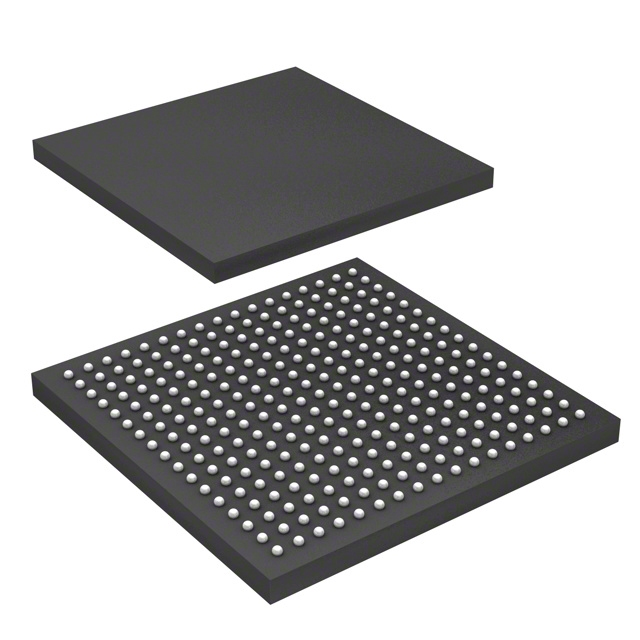
- Part No.:
- MIMXRT1173CVM8A
- Manufacturer:
- NXP Semiconductors
- Category:
- Microcontrollers
- Package:
- 289-LFBGA
- Datasheet:
-
 MIMXRT1173CVM8A.pdf
- Description:
- IC MCU 32BIT EXT MEM 289MAPBGA
- Quantity:
- Payment:

- Shipping:

Inventory:2,400
Please send an inquiry. Send us your inquiry, and we will respond immediately.
Product details
Overview
The MIMXRT1173CVM8A from NXP Semiconductors is a high-performance crossover MCU in the i.MX RT1170 family, integrating an Arm Cortex-M7 core operating up to 1 GHz together with a Cortex-M4 core up to 400 MHz. The device combines microcontroller-level real-time determinism with application-processor-class performance for advanced embedded systems.
Designed for industrial HMI, edge AI, robotics, multimedia control, industrial gateways, audio systems, and smart automation platforms, the MIMXRT1173CVM8A supports high-speed graphics, Ethernet TSN networking, external SDRAM expansion, advanced audio processing, and multimedia interfaces within a compact embedded architecture.
According to the official MIMXRT1173CVM8A datasheet, the processor integrates 2 MB on-chip SRAM, Gigabit Ethernet with TSN capability, MIPI DSI and MIPI CSI interfaces, multiple FlexPWM modules, CAN FD, USB OTG, LCD display engines, and extensive external memory support including SDRAM, HyperRAM, Octal Flash, NAND Flash, and NOR Flash. For engineers designing advanced embedded platforms, the device enables consolidation of GUI processing, industrial networking, and real-time control within a single MCU architecture.
Technical Context
In embedded system architectures, the MIMXRT1173CVM8A is commonly positioned as the main application and real-time processing controller between sensor acquisition, industrial communication, graphics rendering, and actuator control subsystems.
The Cortex-M7 core typically handles GUI rendering, Ethernet communication stacks, DSP computation, edge AI inference, multimedia processing, and RTOS-based application management, while the Cortex-M4 core manages deterministic real-time tasks such as motor control loops, sensor synchronization, PWM timing, and industrial communication servicing.
In industrial HMI systems, the processor operates between LCD display modules, external SDRAM frame buffers, touch interfaces, and Ethernet communication networks. The integrated LCDIFv2 graphics engine, PXP accelerator, and MIPI DSI interface reduce the need for external graphics processors while enabling responsive GUI operation.
For motor control and robotics systems, the integrated FlexPWM modules, QTimer blocks, ADC interfaces, and quadrature decoders allow the MCU to perform real-time motion control, encoder processing, and servo synchronization directly within the processor architecture.
The device also supports high-speed industrial networking through Gigabit Ethernet with TSN capability, IEEE1588 support, CAN FD interfaces, and USB connectivity, making it suitable for Industry 4.0 equipment, industrial gateways, and edge processing platforms requiring deterministic communication.
Key Specifications
| Parameter | Value and Actual Design Meaning |
|---|---|
| CPU Architecture | Dual-core Arm Cortex-M7 up to 1 GHz and Cortex-M4 up to 400 MHz, allowing high-level application processing and deterministic real-time control to operate simultaneously without requiring multiple processors. |
| On-Chip SRAM | 2 MB integrated SRAM including OCRAM and TCM memory regions, helping reduce external memory latency and improving RTOS responsiveness, graphics rendering efficiency, and DSP execution performance. |
| External Memory Support | Supports SDRAM, HyperRAM, Octal Flash, NAND Flash, NOR Flash, and Quad SPI memory, enabling large GUI frame buffers, AI model storage, multimedia assets, and external code execution. |
| Ethernet Connectivity | Integrated Gigabit Ethernet with TSN capability and IEEE1588 support, enabling deterministic industrial communication, synchronized factory networking, and low-latency automation control. |
| Display Interfaces | Includes eLCDIF, LCDIFv2, and MIPI DSI interfaces supporting high-resolution industrial displays and advanced HMI graphics with hardware acceleration capability. |
| Motor Control Resources | Four FlexPWM modules, QTimer modules, and quadrature decoder support simplify implementation of servo drives, robotics control, inverter systems, and industrial motor platforms. |
| Package Type | 289-pin MAPBGA package with 14 mm × 14 mm footprint and 0.8 mm pitch, supporting dense multilayer PCB layouts while maintaining high I/O integration and signal routing flexibility. |
Pinout & Package
The MIMXRT1173CVM8A pinout uses a 289-pin MAPBGA package optimized for high-speed embedded processing, external memory expansion, Ethernet networking, multimedia interfaces, and industrial connectivity.
Dedicated pin groups are assigned for SDRAM routing, Ethernet PHY interfaces, USB OTG, MIPI display interfaces, camera interfaces, audio interfaces, FlexPWM outputs, CAN FD communication, and GPIO expansion. High-speed interfaces such as MIPI DSI, SDRAM buses, and Gigabit Ethernet require controlled impedance PCB routing and proper return path design.
For PCB implementation, engineers typically use multilayer stack-up structures with dedicated power and ground planes to maintain signal integrity across DDR memory routing and high-frequency communication interfaces. The processor also integrates centralized IOMUXC pin multiplexing control to simplify peripheral reassignment and board-level flexibility.
| Pin / Function | PCB Design and Circuit Role |
|---|---|
| SEMC Interface Pins | Used for external SDRAM, NOR Flash, NAND Flash, and HyperRAM routing. PCB trace length matching and impedance control are important for stable high-speed memory operation. |
| MIPI DSI Interface | Supports high-speed display connectivity with integrated PHY. Differential pair routing and matched impedance are required for display stability and EMI performance. |
| Gigabit Ethernet Pins | Provide industrial networking connectivity with TSN support. Differential routing and proper magnetics layout improve communication reliability and EMC performance. |
| FlexPWM Outputs | Used in motor control and inverter applications for PWM signal generation and synchronized switching control. |
| ADC and Analog Pins | Support sensor acquisition, analog monitoring, and industrial feedback processing. PCB analog grounding isolation improves measurement accuracy. |
| JTAG / SWD Debug Pins | Enable firmware programming, debugging, trace analysis, and real-time development support during embedded software validation. |
Key Features
- Automatic dual-core task separation: allows GUI rendering and real-time motor control to operate simultaneously, helping embedded systems maintain deterministic response under heavy processing loads.
- Integrated graphics acceleration engine: supports industrial HMI interfaces, smart display panels, and multimedia control systems while reducing external graphics processor requirements.
- Gigabit Ethernet with TSN support: enables deterministic industrial networking for factory automation equipment, industrial gateways, and synchronized machine communication.
- Comprehensive motor control architecture: FlexPWM, QTimer, ADC, and quadrature decoder resources simplify implementation of robotics, servo drives, and industrial inverter systems.
- High-speed multimedia connectivity: MIPI DSI and MIPI CSI interfaces support display modules and embedded vision systems for smart industrial devices and AI edge platforms.
- Flexible external memory architecture: supports large-capacity frame buffers, RTOS environments, AI workloads, and multimedia assets through SDRAM and HyperRAM expansion.
- Integrated audio subsystem support: SAI, SPDIF, PDM microphone interfaces, and ASRC functionality support professional audio processing and voice-enabled embedded devices.
- Industrial embedded optimization: combines real-time MCU behavior with application-level processing capability for Industry 4.0, edge computing, and advanced automation platforms.
Applications
Industrial HMI SystemsUse Scenario: Used in industrial touchscreen terminals, smart control panels, factory visualization systems, and machine interfaces. IC Role: The MCU manages graphics rendering, LCD display control, Ethernet communication, touch input processing, and RTOS task management. Use Value: Integrated graphics acceleration and display interfaces help reduce external processor requirements while improving GUI responsiveness and industrial system integration. |
Motor Control and RoboticsUse Scenario: Applied in robotics controllers, industrial servo systems, smart actuators, and inverter-based motion platforms. IC Role: The processor executes real-time motor algorithms, PWM signal generation, encoder feedback processing, and deterministic control loops. Use Value: Dual-core architecture allows high-level motion planning and low-latency control execution to operate simultaneously within a single embedded platform. |
Industrial IoT GatewaysUse Scenario: Used in industrial edge gateways, protocol conversion equipment, factory networking nodes, and smart communication platforms. IC Role: The MCU processes Ethernet TSN communication, CAN FD networking, USB connectivity, and local industrial data processing. Use Value: Integrated networking resources help reduce external communication processors while improving deterministic industrial communication performance. |
Professional Audio and Voice SystemsUse Scenario: Applied in digital audio equipment, smart speakers, voice-enabled industrial terminals, and multimedia embedded products. IC Role: The processor performs audio DSP computation, multimedia synchronization, microphone input handling, and digital audio interface management. Use Value: Integrated audio interfaces and high processing throughput enable low-latency audio operation while simplifying embedded multimedia hardware design. |
Equivalent & Alternatives
When evaluating a MIMXRT1173CVM8A equivalent, engineers should compare processing capability, graphics architecture, Ethernet functionality, external memory support, software ecosystem maturity, and real-time control performance.
| Alternative Part | Technical Difference | Application Difference | Selection Advice |
|---|---|---|---|
| MIMXRT1176DVMAA | Provides enhanced graphics and multimedia capability within the same i.MX RT1170 family architecture. | More suitable for display-intensive HMI systems and multimedia-heavy embedded platforms. | Choose MIMXRT1173CVM8A for balanced industrial processing and real-time control. Use RT1176 for graphics-intensive embedded designs. |
| STM32H747XI | Lower Cortex-M7 frequency and different peripheral ecosystem compared with the RT1170 architecture. | Commonly used in STM32-based industrial platforms and lower-power embedded systems. | In the MIMXRT1173CVM8A vs STM32H747XI comparison, the NXP solution is better optimized for multimedia interfaces, TSN networking, and high-performance HMI systems. |
| Renesas RZ/A3UL | More Linux-oriented MPU architecture with different graphics and memory subsystem design. | Often selected for Linux-based HMI products and GUI-focused embedded systems. | Use MIMXRT1173CVM8A equivalent solutions when deterministic MCU behavior and real-time control performance are required together with high-speed processing. |
Selection Recommendation: The MIMXRT1173CVM8A is especially suitable for embedded systems requiring simultaneous real-time control, industrial networking, advanced graphics, and deterministic MCU operation without migrating to a full Linux MPU architecture.
Quality
For reliable industrial deployment, all MIMXRT1173CVM8A devices should be sourced as original NXP Semiconductors components with traceable procurement records, manufacturer labeling verification, and proper ESD-safe handling procedures.
Inspection processes commonly include package inspection, marking verification, moisture-sensitive device control, anti-static storage, and visual quality validation. Additional testing services such as X-ray inspection, decapsulation analysis, solderability verification, and third-party authentication can be arranged according to industrial or high-reliability project requirements.
Because the processor is commonly used in industrial HMI, networking, and automation platforms, PCB assembly conditions, BGA soldering profiles, and storage environment control are important for long-term operational reliability.
Availability
The MIMXRT1173CVM8A is available at Aetrix Electronics and is suitable for engineering evaluation, prototype development, low-volume industrial production, and large-scale embedded system manufacturing.
Supply support may include tray packaging, scheduled delivery planning, batch procurement management, shortage mitigation support, and long-term embedded product lifecycle planning.
For industrial customers requiring stable production continuity, long-term sourcing capability and flexible supply chain management help support HMI platforms, robotics equipment, industrial gateways, and smart automation systems throughout extended production cycles.
Manufacturer
NXP Semiconductors is a leading semiconductor manufacturer focused on automotive electronics, industrial embedded processing, secure connectivity, networking technology, and edge computing solutions.
The i.MX RT crossover MCU family combines real-time microcontroller behavior with application-level processing performance, helping embedded system developers build intelligent industrial equipment, advanced HMI systems, multimedia devices, and connected edge platforms.
NXP is widely recognized for its expertise in industrial networking, automotive processors, microcontrollers, secure authentication technology, wireless communication, and real-time embedded computing architectures.
MIMXRT1173CVM8A Specifications
- Product attributes
- Attribute value
- Manufacturer:
- NXP Semiconductors
- Package/Case:
- 289-LFBGA
- Series:
- RT1170
- Packaging:
- Tray
- Product Status:
- Active
- Programmable:
- Not Verified
- Core Processor:
- ARM® Cortex®-M4, Cortex®-M7
- Core Size:
- 32-Bit Dual-Core
- Speed:
- 400MHz, 800MHz
- Connectivity:
- CANbus, EBI/EMI, Ethernet, I2C, MMC/SD/SDIO, SAI, SPDIF, SPI, UART/USART, USB OTG
- Peripherals:
- Brown-out Detect/Reset, DMA, LCD, POR, PWM, Temp Sensor, WDT
- Number of I/O:
- 13
- Program Memory Size:
- -
- Program Memory Type:
- External Program Memory
- EEPROM Size:
- -
- RAM Size:
- 2M x 8
- Voltage - Supply (Vcc/Vdd):
- 1.65V ~ 1.95V, 3V ~ 3.6V
- Data Converters:
- A/D 20x12b SAR; D/A 1x12b
- Oscillator Type:
- External, Internal
- Operating Temperature:
- -40°C ~ 105°C (TJ)
- Grade:
- -
- Qualification:
- -
- Mounting Type:
- Surface Mount
- Supplier Device Package:
MIMXRT1173CVM8A FAQ
1.How can I place an order for MIMXRT1173CVM8A through Aetrix?
Please submit a Request for Quotation (RFQ) for MIMXRT1173CVM8A on Aetrix. Our sales agent will provide a competitive quotation and guide you through the order confirmation once you accept the terms.
2.Are the price and stock information for MIMXRT1173CVM8A reliable?
The price and inventory of MIMXRT1173CVM8A are updated periodically and may fluctuate due to market conditions. Stock and pricing data are typically refreshed every 24 hours. Quotation validity for MIMXRT1173CVM8A is usually 5 days.
3.What payment methods are accepted for MIMXRT1173CVM8A?
We accept Wire Transfer, PayPal, Credit Card, Western Union, MoneyGram, and Escrow for MIMXRT1173CVM8A transactions.
Note: Certain payment methods may incur a processing fee.
4.How is shipping managed for MIMXRT1173CVM8A?
MIMXRT1173CVM8A orders can be shipped via leading logistics carriers, including DHL, UPS, FedEx, TNT, or Registered Mail.
Once your MIMXRT1173CVM8A order is processed, you will receive an email with the shipment details and tracking number.
Note: Tracking information may take up to 24 hours to appear. Express delivery typically takes 3–5 business days.
5.How can I obtain technical support or documentation for MIMXRT1173CVM8A?
For technical support, including MIMXRT1173CVM8A datasheets, pinout diagrams, or application guidance, please contact our engineering support team. They can provide detailed documentation and assistance for your MIMXRT1173CVM8A requirements.
6.How does Aetrix verify that MIMXRT1173CVM8A is sourced from the original manufacturer or authorized distributors?
All MIMXRT1173CVM8A products on Aetrix are procured from qualified distributors and authorized channels. Our dedicated quality assurance team conducts strict verification, including traceability checks and, if necessary, third-party testing. This ensures that MIMXRT1173CVM8A meets industry standards.
7.What is the process for return or replacement of MIMXRT1173CVM8A?
All MIMXRT1173CVM8A units undergo pre-shipment inspection (PSI). If there is an issue with MIMXRT1173CVM8A, returns or replacements are accepted under the following conditions:
1.Quantity discrepancies, incorrect items, or visible external defects (such as breakage or corrosion), acknowledged by Aetrix.
2.The issue is reported within 90 days of delivery.
3.The MIMXRT1173CVM8A part is unused and in its original packaging.
Return procedure for MIMXRT1173CVM8A:
1.Submit a request within 90 days.
2.Obtain a Return Material Authorization (RMA) from Aetrix.
MIMXRT1173CVM8A Tags

-
ATTINY4-TSHR
Microchip Technology
-
ATTINY10-TSHR
Microchip Technology
-
ATTINY10-TS8R
Microchip Technology

-
ATTINY202-SSNR
Microchip Technology
-
ATTINY202-SSFR
Microchip Technology
-
ATTINY402-SSNR
Microchip Technology

-
PIC16F15213T-I/MF
Microchip Technology
-
PIC16F15213-E/MF
Microchip Technology

-
PIC10F200T-I/OT
Microchip Technology
-
ATTINY412-SSNR
Microchip Technology
-
PIC10F202T-I/OT
Microchip Technology

-
ATTINY404-SSNR
Microchip Technology
Tech Hub
A technical comparison of level-sensitive latches and edge-triggered flip-flops, covering timing windows, setup and hold limits, master–slave operation, time borrowing, race-through, HDL inference and…
A D latch stores one bit while Enable controls when data can pass. This reference covers gate-level operation, truth tables, transparency, setup and hold timing, LE versus OE, common ICs and practical …
An SR latch stores one bit through cross-coupled feedback. This engineering reference covers NOR and NAND implementations, truth tables, forbidden-state recovery, gated operation, switch debouncing, fa…

Latch circuits retain one bit through feedback. This technical reference covers SR and D latches, truth tables, transparency, timing limits, latch-versus-flip-flop behavior, applications and common log…

An engineering guide to LED driver operation, constant-current and constant-voltage outputs, linear and switching topologies, dimming, IC selection, calculations, replacement compatibility, and fault c…

Operational amplifier guide covering op amp basics, feedback, ideal vs real op amps, common configurations, buffer circuits, offset, bias current, gain-bandwidth, slew rate, rail-to-rail limits and sel…

Jumper cables guide covering safe connection order, red and black clamp placement, final ground connection, cable gauge, length, clamp quality, copper vs CCA cables, jump starter comparison and battery…

LDO regulator guide covering low dropout voltage, power dissipation, thermal design, PSRR, output noise, capacitor stability, adjustable LDO circuits, LDO vs buck converter and datasheet selection chec…

Conditional Access Module guide covering CAM meaning, CI/CI+ interface, smart card authorization, DVB security workflow, TV and set-top box compatibility, internal electronics, ESD protection, connecto…

Guide to electronic component obsolescence covering EOL risk, PCN/PDN notices, last-time buy planning, replacement options, form-fit-function validation, counterfeit risk and BOM lifecycle management.


