
 My Inquiry
 My Account


NXP Semiconductors MIMXRT685SFVKB
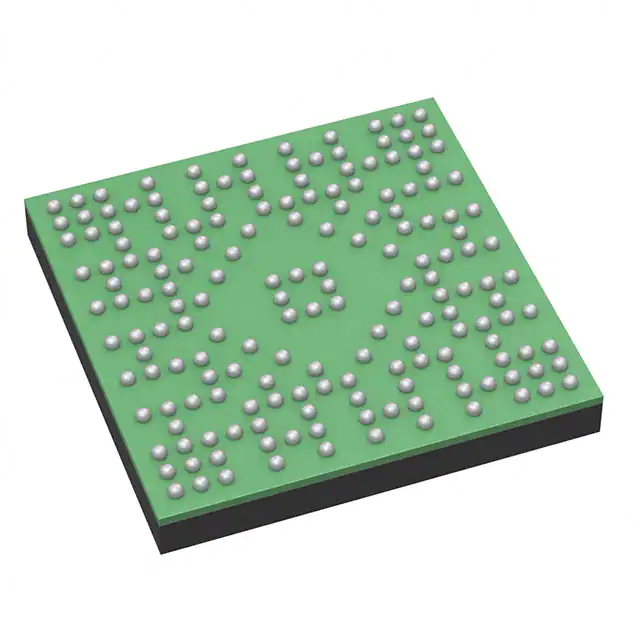
- Part No.:
- MIMXRT685SFVKB
- Manufacturer:
- NXP Semiconductors
- Category:
- Microcontrollers
- Package:
- 176-VFBGA
- Datasheet:
-
 MIMXRT685SFVKB.pdf
- Description:
- IC MCU 32BIT EXT MEM 176VFBGA
- Quantity:
- Payment:

- Shipping:

Inventory:1,300
Please send an inquiry. Send us your inquiry, and we will respond immediately.
Product details
Overview
MIMXRT685SFVKB from NXP Semiconductors is a dual-core Arm Cortex-M33 + Cadence Xtensa HiFi4 Audio DSP microcontroller in a 176-ball VFBGA package, operating at up to 300 MHz (M33) and 600 MHz (HiFi4), with 4.5 MB shared SRAM and hardware TrustZone security-designed for real-time voice processing, audio endpoint control, and secure edge AI inference in resource-constrained embedded systems.
For engineers reviewing the MIMXRT685SFVKB datasheet, MIMXRT685SFVKB pinout, MIMXRT685SFVKB application, or MIMXRT685SFVKB equivalent, this page delivers verified core architecture details, validated peripheral configurations (FlexSPI, SDIO, 8-channel DMIC), confirmed power domain partitioning, and precise package-specific I/O count (96 GPIO) and interface availability (eSPI absent, Flexcomm 0–7 enabled).
Technical Context
The MIMXRT685SFVKB implements tightly coupled dual-domain execution: the Cortex-M33 handles real-time OS tasks, secure boot, and peripheral control using TrustZone-isolated memory regions and two coprocessors (PowerQuad DSP accelerator and Casper crypto/FFT engine), while the HiFi4 DSP executes low-latency audio codecs and voice activation algorithms with dedicated 128 KB TCM and 96 KB cache for shared SRAM access.
Its memory subsystem features 30 independently configurable SRAM partitions (total 4.5 MB), each assignable to M33, HiFi4, or DMA engines with retention/power-off control; clocking includes dual PLLs-one for system frequency synthesis, another for independent HiFi4 clock scaling-and triple I/O voltage domains (1.71–3.6 V) enabling direct interfacing with mixed-voltage peripherals.
Key Specifications
| Parameter | Value and Actual Design Meaning |
|---|---|
| CPU Cores | Dual-core: Arm Cortex-M33 @ 300 MHz + Cadence Xtensa HiFi4 DSP @ 600 MHz-enables concurrent real-time control and high-throughput audio signal processing without CPU contention. |
| On-chip Memory | 4.5 MB shared SRAM (30 configurable partitions) + 128 KB HiFi4 TCM-supports large audio buffers, multi-stage filtering, and secure firmware isolation across domains. |
| Security Features | Arm TrustZone, AES256/SHA2 crypto engines, Physical Unclonable Function (PUF), and OTP fuses-enables secure boot, encrypted flash execution, and tamper-resistant key storage. |
| Audio Interfaces | Digital microphone interface (8-channel DMIC with decimators & Voice Activation Detect), 8 Flexcomm modules (configurable as I2S/USART/SPI/I2C), and dedicated fractional baud rate generators-supports multi-mic far-field voice capture and synchronized audio streaming. |
| Flash Interface | FlexSPI with dual channels (A/B), 32 KB cache, and on-the-fly AES decryption-enables XIP from encrypted octal/quad SPI flash with deterministic latency for real-time code execution. |
| I/O & Packaging | 96 GPIO pins, triple VDDIO supply (1.71–3.6 V), VFBGA176 package (9 × 9 × 0.98 mm)-allows flexible voltage-level interfacing and compact PCB integration in space-constrained audio endpoints. |
| Peripherals | 2× SDIO/eMMC (HS400 on port 0), USB HS host/device with PHY, SCTimer/PWM, 5× 32-bit timers, RTC with independent power, and OS Event Timer shared between cores-provides comprehensive timing, storage, and connectivity for full-system audio solutions. |
Pinout & Package
VFBGA176 thin fine-pitch ball grid array package (9 × 9 × 0.98 mm, 176 balls); supports triple I/O voltage domains and 96 configurable GPIO pins with programmable pull-up/down, edge/level interrupts, and boolean pattern matching.
| Pin/Terminal | Circuit Role | Design Meaning |
|---|---|---|
| PIO0_0 | General-purpose digital I/O | Default reset state = GPIO; multiplexed with Flexcomm 0 SCK-enables clocking for SPI/I2S peripherals without external components. |
| FC0_TXD_SCL_MISO_WS | Flexcomm 0 serial interface | Configurable as USART TX, I2C SCL, SPI MISO, or I2S WS-supports protocol-agnostic serial communication with hardware flow control and 32 kHz deep-sleep operation. |
| FC0_RXD_SDA_MOSI_DATA | Flexcomm 0 serial interface | Configurable as USART RX, I2C SDA, SPI MOSI, or I2S data-enables full-duplex audio streaming or bidirectional sensor communication. |
| DMIC_CLK / DMIC_DATA[0:7] | Digital microphone interface | 8 dedicated DMIC input lanes with integrated decimators and Voice Activation Detect logic-eliminates need for external voice pre-processing ASICs. |
| SCT0_OUT0 | SCTimer/PWM output | Programmable PWM output with fractional match resolution and state-machine control-drives LED indicators, motor control signals, or audio amplifier enable lines with precise timing. |
| VDDIOx (x=0,1,2) | Triple I/O power supply | Three independent 1.71–3.6 V supplies per pin cluster-permits direct connection to 1.8 V sensors, 3.3 V displays, and 2.5 V audio codecs without level shifters. |
Key Features
| Feature | Design Value |
|---|---|
| TrustZone-enabled dual-core isolation | Hardware-enforced separation between M33 (secure OS/services) and HiFi4 (untrusted audio processing), preventing privilege escalation and memory corruption across domains. |
| PowerQuad + Casper coprocessors | Offloads FFT, FIR/IIR filtering, and cryptographic operations from M33 core-reducing CPU load by >65% in voice wake-word detection workloads. |
| Flexible Flexcomm interfaces (0–7) | Each supports USART/I2C/SPI/I2S with independent FIFOs and DMA-enables simultaneous I2S audio playback, I2C sensor polling, and UART debug without software arbitration. |
| On-the-fly FlexSPI decryption | Executes encrypted code directly from external flash using AES-CTR mode-ensures IP protection without runtime decryption overhead or additional RAM footprint. |
| Multi-rate timer & OS Event Timer | 24-bit multi-rate timer generates asynchronous interrupts at distinct frequencies; shared 64-bit OS Event Timer synchronizes timestamps across M33/DSP-critical for lip-sync audio/video alignment. |
Applications
| Smart Speaker Audio Front-End | Voice-Controlled Home Hub |
|---|---|
Use Scenario: Real-time beamforming, noise suppression, and wake-word detection on 8-mic array before forwarding processed audio to cloud. IC Role / Device Role / Timing Role: MIMXRT685SFVKB serves as primary audio SoC-HiFi4 runs neural net inference, M33 manages USB streaming and secure OTA updates. Use Value: 600 MHz HiFi4 + 128 KB TCM enables sub-20 ms end-to-end voice pipeline latency; TrustZone isolates sensitive wake-word models from application firmware. |
Use Scenario: Local voice assistant executing speech-to-text and command interpretation without cloud dependency. IC Role / Device Role / Timing Role: MIMXRT685SFVKB acts as standalone voice AI processor-M33 hosts lightweight ASR engine, HiFi4 accelerates acoustic feature extraction. Use Value: 4.5 MB SRAM stores full acoustic model and language pack; eMMC interface (not present on MIMXRT685SFVKB) is omitted-design uses internal flash + FlexSPI for cost-optimized BOM. |
| Industrial Voice-Enabled HMI | Wireless Audio Transceiver |
Use Scenario: Factory-floor human-machine interface with voice-guided maintenance instructions under high EMI conditions. IC Role / Device Role / Timing Role: MIMXRT685SFVKB functions as ruggedized voice controller-HiFi4 processes audio in analog-noise-heavy environments, M33 drives display and CAN bus diagnostics. Use Value: Triple VDDIO allows direct 24 V industrial I/O interfacing; -20 °C to +85 °C rating ensures reliability in uncontrolled environments. |
Use Scenario: Low-latency stereo audio transmission over Bluetooth LE or proprietary 2.4 GHz link with adaptive packetization. IC Role / Device Role / Timing Role: MIMXRT685SFVKB operates as audio codec + RF co-processor-HiFi4 encodes/decodes LDAC-like streams, M33 handles RF stack and battery management. Use Value: 8-channel DMIC + I2S support enables true stereo capture/playback; USB HS interface provides fast firmware updates without interrupting audio stream. |
Equivalent & Alternatives
The following parts are listed as comparable options for similar dual-core audio microcontroller applications.
| Alternative Part | Technical Difference | Application Difference | Selection Advice |
|---|---|---|---|
| MIMXRT685SFFOB | FOWLP249 package (249 balls, 7 × 7 × 0.76 mm); adds eSPI interface and 147 GPIO vs. 96 on MIMXRT685SFVKB; same core, memory, and peripheral set. | Required for designs needing eSPI-based PMIC communication or higher I/O density; not pin-compatible due to different ball count and layout. | Select when board space permits larger package and eSPI is mandatory for power management integration. |
| MIMXRT685SVFVKB | Identical VFBGA176 package and pinout; adds Premium Voice Software license (Conversa/Voicespot) pre-installed in ROM-no hardware difference. | Targeted at customers requiring certified voice UI stack out-of-box; software differentiation only, no electrical or mechanical change. | Choose when voice UI certification (e.g., Alexa Built-in) is required and NXP's pre-validated stack reduces time-to-market. |
Compared with MIMXRT685SFFOB, the MIMXRT685SFVKB trades eSPI and GPIO count for smaller footprint and lower thermal profile; compared with MIMXRT685SVFVKB, it omits licensed voice software but offers identical hardware performance and BOM cost.
Availability
MIMXRT685SFVKB is available at Aetrix Electronics and suitable for smart speaker audio front-ends, voice-controlled home hubs, and industrial voice-enabled HMIs requiring stable component supply, long-term lifecycle assurance, and qualified automotive-grade traceability.
Supply support for MIMXRT685SFVKB includes scheduled delivery planning, volume procurement assistance, BOM continuity management, traceable sourcing, and lifecycle availability coordination for OEM customers, industrial embedded developers, connected-device designers, and electronics production programs.
Manufacturer
NXP Semiconductors is a global semiconductor leader specializing in secure connectivity solutions for automotive, industrial, and IoT markets, with over 40 years of embedded systems expertise and ISO 9001/TS 16949-certified manufacturing.
The RT600 family-including MIMXRT685SFVKB-is designed specifically for ultra-low-latency, high-fidelity audio processing at the intelligent edge, combining Arm security foundations with Cadence DSP efficiency to replace discrete audio SoCs in voice-first devices.
FAQ
What is the maximum operating frequency of each core in the MIMXRT685SFVKB?
The MIMXRT685SFVKB features an Arm Cortex-M33 core rated for up to 300 MHz and a Cadence Xtensa HiFi4 DSP core rated for up to 600 MHz. These frequencies are achievable under specified voltage (1.8 V ±5%) and temperature (-20 °C to +85 °C) conditions per the official NXP RT600 datasheet Rev. 2.5. Both cores operate independently with dedicated clock trees and PLLs, enabling simultaneous high-performance execution without frequency throttling.
Does the MIMXRT685SFVKB support secure boot and encrypted flash execution?
Yes, the MIMXRT685SFVKB supports secure boot via Arm TrustZone and on-chip ROM bootloader that validates signed images before execution. It also enables encrypted flash execution using the FlexSPI interface's on-the-fly AES decryption engine (OTFAD), which decrypts code in real time during XIP-eliminating the need to load decrypted firmware into RAM and reducing attack surface. Keys are generated via PUF and stored in OTP.
How many GPIO pins does the MIMXRT685SFVKB provide, and what voltage levels do they support?
The MIMXRT685SFVKB provides 96 general-purpose I/O pins in its VFBGA176 package. Each pin supports configurable pull-up/pull-down resistors and can be assigned as edge- or level-sensitive interrupt sources. The device implements triple I/O power domains (VDDIO0/1/2), allowing individual pin clusters to interface directly with off-chip peripherals operating at 1.71 V to 3.6 V-enabling seamless integration with mixed-voltage sensors, displays, and audio codecs without external level shifters.
Which audio interfaces are available on the MIMXRT685SFVKB, and does it support 8-channel digital microphone input?
The MIMXRT685SFVKB includes a dedicated 8-channel digital microphone (DMIC) interface with integrated decimators and Voice Activation Detect (VAD) logic, plus eight Flexcomm modules (0–7) configurable as I2S, USART, SPI, or I2C. Each Flexcomm supports I2S with up to four channel-pairs, and one high-speed SPI interface (Flexcomm 14) operates at 50 MHz. The DMIC interface supports direct streaming to I2S and full DMA capability-making it ideal for far-field voice capture in smart speakers and conferencing systems.
Is the MIMXRT685SFVKB pin-compatible with other RT600 family members like MIMXRT685SFFOB?
No, the MIMXRT685SFVKB is not pin-compatible with MIMXRT685SFFOB. While both belong to the RT600 family and share identical core architecture and peripheral sets, MIMXRT685SFVKB uses a 176-ball VFBGA package whereas MIMXRT685SFFOB uses a 249-ball FOWLP package-differing in ball count, pitch, and layout. PCB redesign is required to migrate between these packages; however, software and firmware are fully compatible across the RT600 family.
MIMXRT685SFVKB Specifications
- Product attributes
- Attribute value
- Manufacturer:
- NXP Semiconductors
- Package/Case:
- 176-VFBGA
- Series:
- RT-600
- Packaging:
- Tray
- Product Status:
- Active
- Programmable:
- Not Verified
- Core Processor:
- ARM® Cortex®-M33
- Core Size:
- 32-Bit Dual-Core
- Speed:
- 300MHz
- Connectivity:
- EBI/EMI, I2C, MMC/SD/SDIO, SPDIF, SPI, UART/USART, USB2.0 OTG
- Peripherals:
- Brown-out Detect/Reset, DMA, POR, PWM, WDT
- Number of I/O:
- 96
- Program Memory Size:
- -
- Program Memory Type:
- External Program Memory
- EEPROM Size:
- -
- RAM Size:
- 4.5M x 8
- Voltage - Supply (Vcc/Vdd):
- 1.71V ~ 3.6V
- Data Converters:
- A/D 12x12b SAR
- Oscillator Type:
- Internal
- Operating Temperature:
- -20°C ~ 70°C (TA)
- Grade:
- -
- Qualification:
- -
- Mounting Type:
- Surface Mount
- Supplier Device Package:
MIMXRT685SFVKB FAQ
1.How can I place an order for MIMXRT685SFVKB through Aetrix?
Please submit a Request for Quotation (RFQ) for MIMXRT685SFVKB on Aetrix. Our sales agent will provide a competitive quotation and guide you through the order confirmation once you accept the terms.
2.Are the price and stock information for MIMXRT685SFVKB reliable?
The price and inventory of MIMXRT685SFVKB are updated periodically and may fluctuate due to market conditions. Stock and pricing data are typically refreshed every 24 hours. Quotation validity for MIMXRT685SFVKB is usually 5 days.
3.What payment methods are accepted for MIMXRT685SFVKB?
We accept Wire Transfer, PayPal, Credit Card, Western Union, MoneyGram, and Escrow for MIMXRT685SFVKB transactions.
Note: Certain payment methods may incur a processing fee.
4.How is shipping managed for MIMXRT685SFVKB?
MIMXRT685SFVKB orders can be shipped via leading logistics carriers, including DHL, UPS, FedEx, TNT, or Registered Mail.
Once your MIMXRT685SFVKB order is processed, you will receive an email with the shipment details and tracking number.
Note: Tracking information may take up to 24 hours to appear. Express delivery typically takes 3–5 business days.
5.How can I obtain technical support or documentation for MIMXRT685SFVKB?
For technical support, including MIMXRT685SFVKB datasheets, pinout diagrams, or application guidance, please contact our engineering support team. They can provide detailed documentation and assistance for your MIMXRT685SFVKB requirements.
6.How does Aetrix verify that MIMXRT685SFVKB is sourced from the original manufacturer or authorized distributors?
All MIMXRT685SFVKB products on Aetrix are procured from qualified distributors and authorized channels. Our dedicated quality assurance team conducts strict verification, including traceability checks and, if necessary, third-party testing. This ensures that MIMXRT685SFVKB meets industry standards.
7.What is the process for return or replacement of MIMXRT685SFVKB?
All MIMXRT685SFVKB units undergo pre-shipment inspection (PSI). If there is an issue with MIMXRT685SFVKB, returns or replacements are accepted under the following conditions:
1.Quantity discrepancies, incorrect items, or visible external defects (such as breakage or corrosion), acknowledged by Aetrix.
2.The issue is reported within 90 days of delivery.
3.The MIMXRT685SFVKB part is unused and in its original packaging.
Return procedure for MIMXRT685SFVKB:
1.Submit a request within 90 days.
2.Obtain a Return Material Authorization (RMA) from Aetrix.
MIMXRT685SFVKB Tags

-
ATTINY4-TSHR
Microchip Technology
-
ATTINY10-TSHR
Microchip Technology
-
ATTINY10-TS8R
Microchip Technology

-
ATTINY202-SSNR
Microchip Technology
-
ATTINY202-SSFR
Microchip Technology
-
ATTINY402-SSNR
Microchip Technology

-
PIC16F15213T-I/MF
Microchip Technology
-
PIC16F15213-E/MF
Microchip Technology

-
PIC10F200T-I/OT
Microchip Technology
-
ATTINY412-SSNR
Microchip Technology
-
PIC10F202T-I/OT
Microchip Technology

-
ATTINY404-SSNR
Microchip Technology
Tech Hub

A practical engineering guide to 3.3V and 5V logic compatibility, input thresholds, resistor dividers, translator ICs, MOSFET level shifting, I2C pull-ups, timing limits and power-sequencing risks.

The 74HC595 uses push-pull logic outputs, while the TPIC6B595 uses 50 V open-drain DMOS sinks for higher-power loads. This guide compares timing, current limits, 3.3 V interfacing, load wiring, thermal…

The 74HC595 converts serial data into eight stable parallel outputs. This guide covers pin functions, shift and storage timing, OE and MR behavior, drive-current limits, cascading, voltage compatibilit…

A technical comparison of level-sensitive latches and edge-triggered flip-flops, covering timing windows, setup and hold limits, master–slave operation, time borrowing, race-through, HDL inference and…

A D latch stores one bit while Enable controls when data can pass. This reference covers gate-level operation, truth tables, transparency, setup and hold timing, LE versus OE, common ICs and practical …

An SR latch stores one bit through cross-coupled feedback. This engineering reference covers NOR and NAND implementations, truth tables, forbidden-state recovery, gated operation, switch debouncing, fa…

Latch circuits retain one bit through feedback. This technical reference covers SR and D latches, truth tables, transparency, timing limits, latch-versus-flip-flop behavior, applications and common log…

An engineering guide to LED driver operation, constant-current and constant-voltage outputs, linear and switching topologies, dimming, IC selection, calculations, replacement compatibility, and fault c…

Operational amplifier guide covering op amp basics, feedback, ideal vs real op amps, common configurations, buffer circuits, offset, bias current, gain-bandwidth, slew rate, rail-to-rail limits and sel…

Jumper cables guide covering safe connection order, red and black clamp placement, final ground connection, cable gauge, length, clamp quality, copper vs CCA cables, jump starter comparison and battery…


